
Identifying Mealybugs on Houseplants, & How to Treat Them
Mealybugs are destructive houseplant pests that are common in spring, summer, and fall. They thrive in warm and humid indoor conditions, allowing them to persist almost all year round on a wide variety of houseplants.
A severe mealybug infestation can weaken and defoliate houseplants, making early identification and control crucial:
- Each female mealybug can lay 100-600 eggs in cottony sacs or live crawlers, which take 1-3 months to develop into wax-coated nymphs and adults.
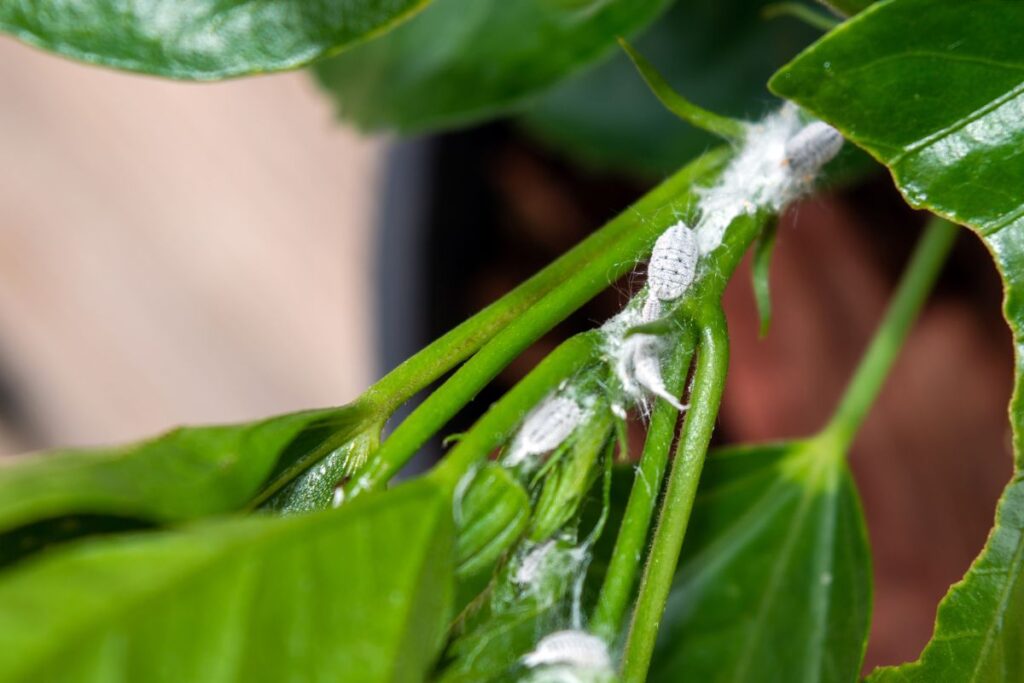
- Adult female mealybugs have oval, segmented bodies (1-4 mm long) coated in powdery white wax, numerous tiny legs that aid in slow mobility, and waxy filaments (tails). They can live for 5-20 days (citrus mealybugs) or up to 60 days (long-tailed and ground mealybugs).
- Adult male mealybugs are mosquito-like with yellow or orange bodies and two wings. They don’t feed on plant sap, thus living only for 1-5 days after emerging from their cottony cocoon.
- Under optimal indoor conditions with moderate temperatures (70-85 °F or 21-29 °C) and humidity (50-60%), mealybugs can produce 6-10 generations annually.
- Mealybugs feed on plant sap from the phloem using sucking mouthparts called stylets.
- They can spread unnoticed through infested plants, soil, tools, or even clothing, capable of affecting entire plant collections.
- The white waxy coating on mealybug nymphs and adult females makes them partially resistant to common organic treatments like neem oil sprays and insecticidal soaps.
- Integrated pest management methods, including isolation, manual removal of pests, and organic treatments, are crucial for managing, eliminating, and preventing a mealybug infestation.
This guide will cover mealybug identification through their appearance and symptoms or plant damage. I’ll also discuss the environmental factors that favor their reproduction and feeding behavior and appropriate treatment and prevention methods in detail.
Quick Guide
| Common Name(s) | Mealybug Citrus Mealybug Long-tailed Mealybug Ground Mealybug |
| Scientific Name | Planococcus citri Pseudococcus longispinus Rhizoecus spp. |
| Pest Type | Insect (Family Pseudococcidae) |
| Commonly Affects | Succulents, flowering plants, fruiting plants, foliage houseplants |
| Size | Adults: 1.6-3.2 mm (1/16-1/8 in) Nymphs: less than 1 mm (1/20 in) |
| Color | White, grayish-white (covered in a cottony or waxy coating) |
| Signs of Infestation | White, cotton-like clusters on leaves, stems, and roots Sticky honeydew residue Sooty mold and ants Yellowing at the site of infestation Wilting Leaf drop |
| Preferred Conditions | Warm, humid environments |
| Damage Level | Mild to Severe |
| Prevention Methods | Quarantine new plants, regular inspections, neem oil spray |
| Treatment Options | Physical removal, rubbing alcohol, neem oil, insecticidal soap, systemic insecticides (for severe infestations) |
Life Cycle, Behavior, and Environmental Triggers
Mealybugs (Family Pseudococcidae) are generalist insect pests that feed on thousands of indoor or outdoor plant species.
Over 275 mealybug species have been identified in the US, but the most common species affecting houseplants include the following:
- Planococcus citri (citrus mealybug)
- Pseudococcus longispinus (long-tailed mealybug)
- Rhizoecus spp. (ground mealybug)
The diagnosis or identification of mealybugs on houseplants is based on the appearance of adult females, which remain on the plant to feed and reproduce.
Here are the physical differences of the female mealybugs at different developmental stages:
| Mealybug Type | Egg | Nymph | Adult Female |
| Citrus Mealybug(Planococcus citri) One generation: 2-4 months | Adult female mealybugs lay 100-600 eggs within 5-20 days and die shortly after. The pale yellow eggs (about 0.3 mm long each) are encased in a white cottony sac (ovisac). Each egg hatches within 2-10 days. | Crawlers: First stage after hatching; pinkish without waxy covering (less than 1 mm) Nymphs: Gradually develop waxy coating after a series of molting Three instar stages over around 2 months Gradually increase in size up to 2 mm with every molt | Segmented body about 3 mm (⅛ in) long and coated in white wax. Oval with 2 legs per segment Inconspicuous waxy filaments at the rear Can live, feed, and lay eggs for 5-20 days |
| Long-tailed Mealybug(Pseudococcus longispinus) One generation: 3-4 months | No eggs Produce hundreds of live crawlers | Crawlers: Orange or pink; (less than 1 mm) without a waxy coating Nymphs: Gradually develop a waxy coating and a noticeable tail through 2-3 instar stages (2-3 months) Gradually increase in size (over 1 mm) with every molt | Over 1.6-3.2 mm (1/16-1/8 in) body Up to 4 mm (⅙ in) long waxy filaments (2-4 tail-like filaments) Can live, feed, and produce live youngs for 1-2 months |
| Ground Mealybug or Root Mealybug(Rhizoecus spp.) One generation: 3-4 months | Some species secrete a cottony ovisac for about a month or so and produce up to 100 eggs, which may hatch within a day if soil temperatures remain above 65 °F (18 °C) Others may produce live crawlers, making early detection challenging | Crawlers: Yellow or pink active crawlers (less than 1mm) without a waxy coating Nymphs: Appear as miniature adults less than 1mm long Develop a waxy coating through three instar stages over 2-3 months | Oblong segmented body 1-5 mm (0.06-0.2 in) long with a white waxy covering Can live and feed for 1-2 months and die shortly after laying eggs |
Male mealybugs, on the other hand, have the following traits (which may have slight variations depending on the species):
- Nymphs: After hatching, the crawlers actively look for a feeding spot and spend two instar (molting) stages feeding on plant sap. They will go through 1-3 more instar stages without feeding and eventually create a fluffy white cocoon, where they’ll emerge as winged adults.
- Adults: Male mealybugs have a mosquito or gnat-like appearance, an orange or yellowish body, and two wings. They live only 1-5 days because they lose their mouthparts during the last 1-3 instar stages and are unable to feed. They spend their brief adult life looking for a female mealybug to mate with.
Note: Mealybugs have a haplodiploid reproductive method. Mated female mealybugs produce fertilized eggs that typically carry female offspring. On the other hand, unmated females can still reproduce asexually by laying eggs with male offspring.
Environmental Factors Favoring Mealybug Infestations
Mealybugs emerge during the warm season because moderate to high temperatures and humid conditions prompt higher plant metabolic activities, resulting in higher moisture and sugar availability in the phloem.
Here are the environmental conditions that favor mealybug growth and reproduction:
- Air temperatures over 70 °F (21 °C) can promote high fertility rates and rapid growth in mealybugs, decreasing development time from egg to adult to as short as one month. Ground mealybugs also rapidly increase in population when soil temperatures remain above 65 °F (18 °C).
- Humidity levels above 50% help maintain leaf health by promoting moderate transpiration rates and lower moisture loss.
- Frequent watering or overwatering can lead to rapid moisture uptake in the leaves, providing a good food source for mealybugs.
- Regular or over-fertilization with excess nitrogen can promote lush growth and abundant food for mealybugs.
- The lack of natural predators like soil nematodes and parasitic wasps indoors allows mealybug populations to grow.
Note: Foliar damage from mealybug feeding is more pronounced in underwatered plants because of pre-existing drought stress, making it seem like the pests are responsible for the overall plant deterioration.
Because of this, other sources claim that underwatered or drought-stressed plants can invite mealybugs. In reality, mealybugs prefer well-watered plants for steady moisture movement through the phloem, which allows them to draw food.
Adaptation to Cold Freezing Conditions
Mealybugs can’t survive freezing conditions. Unlike other plant pests like spider mites, most mealybug species don’t enter diapause (fat-storing behavior and inactivity) during winter.
To ensure their survival, outdoor mealybugs typically show the following defense mechanisms:
- The eggs remain dormant in the ovisac until air temperatures and humidity become favorable for hatching and development.
- Adult foliar mealybugs may gradually move to the soil as temperatures start to drop. They continue feeding on the phloem of the roots belowground (like ground mealybugs), lay eggs, and emerge when soil and air temperatures become warmer.
On the other hand, foliar and ground mealybugs on houseplants are protected from freezing temperatures due to controlled indoor temperatures and can continue to feed and breed multiple generations throughout the year.
Feeding Behavior
Here’s a brief guide on the feeding behaviors of foliar mealybugs and ground mealybugs and their corresponding effects:
| Foliar Mealybugs | Ground Mealybugs |
| Typically form clusters along the veins on leaf undersides for easier access to the sugar-rich sap from the phloem. Crawlers, nymphs, and adult females use piercing mouthparts called stylets to draw plant sap and excrete honeydew. Males, on the other hand, stop feeding after the second instar or molting. Large populations can cause localized yellowing and potential leaf drop. Secondary Issues Honeydew can attract sooty mold fungi and encourage black mycelial growth over the leaf surface, potentially disrupting the leaves’ photosynthetic activities. Ants may also be drawn to honeydew and try nesting in your potting mix. They can become defensive and sting you when you tend to your houseplants. | Feed on the sap from plant roots. Hard to detect without unpotting the plant. Often found on root tips close to the soil surface or the pot’s edges. When unpotting the plant, you will likely see the tiny white pests around the rootball. In severe infestations, ground mealybugs can cause yellowing and wilting of the leaves or stunted growth, especially with younger or smaller plants like African violets. |
Indoor Transmission
Mealybugs can survive 2-3 weeks even without a plant host. As a result, they can enter your home garden and spread to other houseplants in the following ways:
- Infested newly purchased plants may hide unnoticeable crawlers in leaf joints, roots, or stems.
- Mealybugs may hitch a ride on outdoor plants brought indoors.
- Some species may lay eggs or hide in the potting soil.
- Mealybug crawlers transfer between plants through gardening tools, hands, or clothes.
- Ants may carry and protect mealybugs in exchange for honeydew. Ants may also create nests in the soil to house mealybugs during unfavorable conditions.
- Mealybugs can hide in the cracks or nooks in old, uncleaned pots and saucers.
One generation of mealybugs can take 1-4 months to complete, depending on the species, so it can take some time to reveal an infestation. Appropriate inspection and isolation steps are crucial to controlling mealybug indoor garden populations.
Symptoms of Mealybug Infestation
Mealybugs can hardly kill a full-grown plant, even in severe infestations.
For instance, a friend gave me a delicious glass of calamansi juice, prompting me to check out her greenhouse filled with tropical plants. She had five calamansi trees (Citrofotunella microcarpa) laden with fruits but severely infested with citrus mealybugs.
Her greenhouse had a mealybug outbreak in mid-spring, but she didn’t want to use systemic pesticides since most of her plants were fruiting.
Although aesthetically unappealing, the trees were healthy enough to keep bearing fruits despite the infestation.
Houseplants, on the other hand, are treasured for their aesthetic value, and a mealybug infestation can detract from their beauty.
Here are the symptoms of a mealybug infestation:
Early Signs
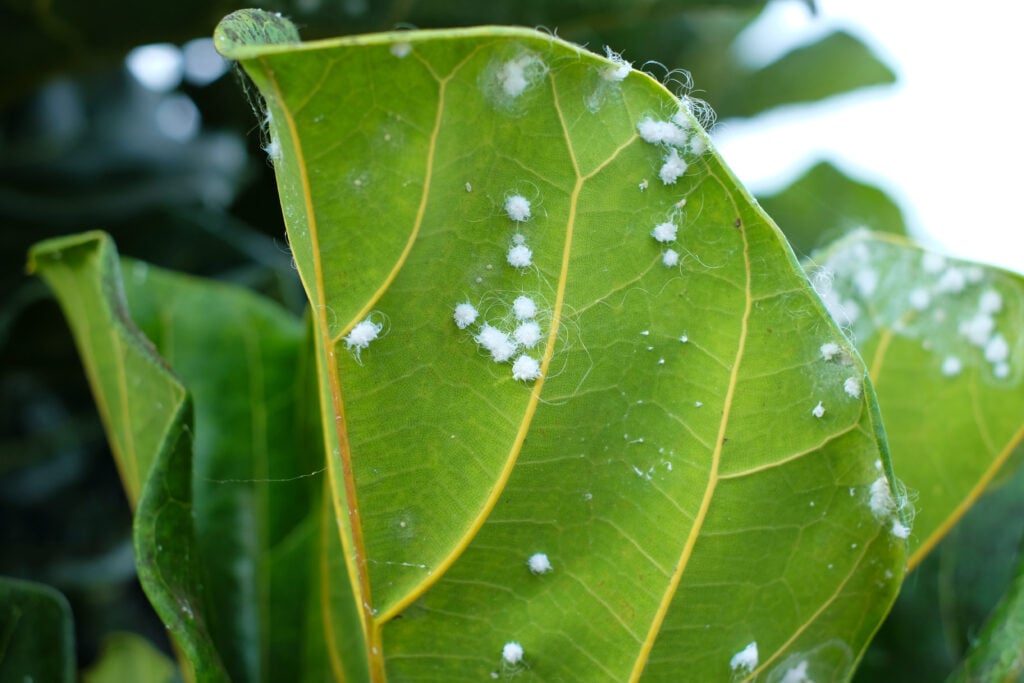
- Small white, cottony masses in leaf joints, undersides, along stems, or on the soil
- Sticky honeydew residue on leaves or soil surface
- Black sooty mold growth on spots with honeydew
- Tiny yellow specks or chlorosis from sap-feeding
Advanced Infestation Symptoms
- Wilting, curling leaves due to prolonged sap loss
- Leaf drop
- Stunted growth in severe cases
Note: Citrus mealybugs have a toxin in their saliva that may cause yellowing, leaf drop, deformation of young leaves, and stunted growth, especially in young, small, or drought-stressed plants.
Confirmatory Tests
You may confirm a mealybug infestation with the following tools or methods:
Magnifying Glass
The wax-coated mealybug nymphs and adult females are visible to the naked eye. However, mealybugs belong to the same superfamily (Coccoidea) as scale insects (Family Coccidae).
Mealybugs share similar physical traits with Cochineal scales (Dactylopius spp.), which also have a waxy white coating over their body. An important difference is that adult female Cochineal scales are immobile, losing their legs after finding a permanent feeding spot.
Use a 10x magnifying glass to inspect the leaf undersides and stems. You may also use a smartphone camera to take a photo of the suspected pest-infested area and zoom in on the photo to look for live pests.
You can identify foliar mealybug nymphs and adult females based on the following physical traits:
- Oval, segmented body covered in white waxy coat
- Slow but noticeable movement
- Two legs for each segment
- 2-4 waxy filaments at the rear (caudal) end (more noticeable on long-tailed species)
Alcohol-Dipped Cotton Swab
Dip the cotton swab in 70% rubbing alcohol and dab it directly on the white coating of the insect. You can confirm mealybug presence if you observe the following changes:
- The alcohol swab may wash away the waxy coating and reveal a light brown, yellow, pink, or orange insect body
- The insect wriggles or tries to crawl away
Note: Adult Cochineal scales and other white scales are coated in a shell-like covering that shields from the elements (i.e., wind or water pressure from misting). The shell also protects them from alcohol swabs, which elicit no response.
Soil Inspection
To identify ground or root mealybugs, choose the appropriate method below:
- Surface inspection (less invasive): Check the soil surface with a magnifying glass for waxy white mealybugs. You may also dig 1-2 inches (2.5-5 cm) into the soil using a hand cultivator, but be careful not to damage the roots. Wash the hand cultivator before and after use with a 10% bleach solution and rinse thoroughly with clean water to remove any pests or pathogens.
- Unpotting: Two days after a deep watering, carefully slide the plant out of the pot. You may run a spatula around the pot’s edges to loosen the soil and minimize damage to the roots. Look around the rootball for the characteristic white, oblong mealybugs. You may also comb through the soil and rootball with a hand cultivator to confirm the extent of the mealybug infestation within the root zone.
Treatment
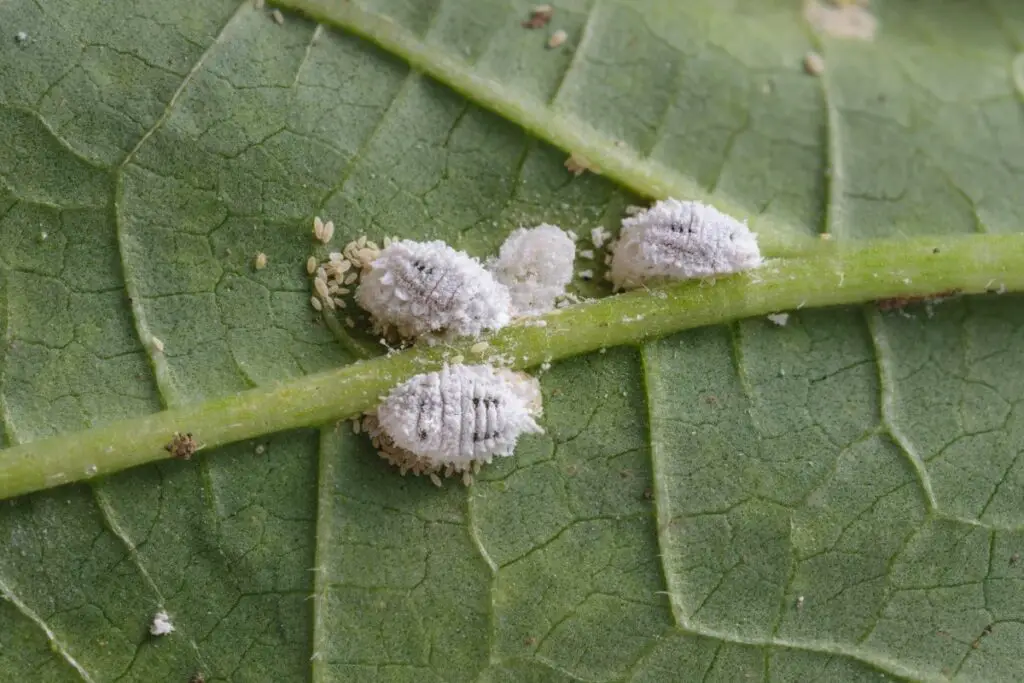
Each female foliar mealybug can feed on plant leaves from nymphs to adults for 1-4 months, while males can feed for 1-2 months. Prompt treatment is crucial to prevent prolonged sap loss that can lead to poor plant health and appearance.
Immediate Actions
Here are the immediate steps to take as soon as you identify foliar mealybugs on your houseplants:
- Isolate the affected plant to prevent spread. Inspect the nearby houseplants, isolate all with signs of moderate to severe infestations for up to 8 weeks to monitor the emergence of new mealybug generations. Place your plants in a separate room with similar environmental conditions as the original spot to prevent relocation shock and worse plant stress.
- Prune heavily infested leaves or stems and dispose of them properly. Focus on removing leaves with cottony ovisacs because they most likely contain eggs and crawlers. Properly discard the leaves to prevent the spread of pests.
- Wipe honeydew and sooty mold off the remaining leaves using a clean, damp cloth to prevent ants from getting to your plants in the isolation room. Repeat this every week until there are no more signs of mealybugs.
For houseplants infested with ground mealybugs, I don’t recommend trying to save them for the following reasons:
- Hot water can damage root tissues, leading to wilting or plant death. Heat treatment kills ground mealybugs, but it requires soaking the potting soil in water heated to over 120 °F (49 °C) for ten minutes or until the root zone heats up to around 115 °F (46 °C). Although it may work on plants native to hot climates, houseplants are generally accustomed to mild soil temperatures and heating the roots can cause injury and thermal shock.
- Neem oil treatment around plant roots can cause hydrophobicity since oil repels water. Moreover, wax-coated eggs, nymphs, and adult females are mildly resistant to oil treatments unless completely soaked in oil for a few minutes.
Pro tip: Discard plants after confirming a ground mealybug infestation and start fresh with a pest-free plant in a clean pot with a sterile potting mix. Choose a reputable source and inspect the soil surface for mealybugs before purchase.
If you still want to explore how to save your houseplant from ground mealybugs, you may try using imidacloprid soil drench or granules, which work against root mealybugs in the landscape. I’ll discuss this further below.
Physical Removal
Manually remove nymphs and adults with a waxy coating because they’re mildly resistant to organic or chemical sprays.
Here are some tips to effectively remove mealybugs from houseplants:
- Alcohol swabs: Use a cotton swab dipped in 70% isopropyl to scrape the mealybugs off the leaves and stems. The alcohol can dissolve the waxy coating and make mealybugs vulnerable to other treatment methods.
- Soapy water: To ensure the mealybugs are eliminated, drop them in soapy water made by mixing 1 tablespoon of liquid detergent in a liter (1 quart) of water. The soapy liquid will further break down the mealybugs’ waxy coating and suffocate them.
Note: Other sources may recommend wiping the mealybugs off with a damp cloth or blasting or hosing down the plant with water to dislodge the insects. However, the waxy, cottony ovisac is water-repellent, protecting the eggs from water-based treatments.
In addition, wiping or hosing won’t kill mealybug nymphs or adults and may only drop them to the soil, giving them a chance to climb back through the stem. A damp cloth or strong water spray from a hose can also spread mealybugs to other plant parts or to nearby plants.
Natural & Organic Remedies
You can prevent the emergence of new mealybug generations by eliminating the vulnerable crawlers with the following organic remedies:
- Neem Oil Spray: Acts as an insecticide and disrupts mealybugs’ life cycle. Mix 1 tbsp neem oil + 1 tsp dish soap + 1 quart water and spray every week for up to 8 weeks. Aim for the leaf undersides where crawlers usually find suitable feeding spots. You may also spray the soil surface to kill the crawlers that fall off the leaves. Apply neem oil after sunset to avoid leaf scorch.
- Insecticidal Soap: Kills mealybugs on contact but requires repeated application every 2-3 days. However, I don’t recommend using insecticidal soaps too often as they typically contain potassium salts of fatty acids, which can degrade the wax on leaves and inhibit photosynthesis. Pro tip: In severe infestations, I apply insecticidal soaps weekly, around 3-4 days after a neem oil treatment, for faster results.
Note: Other sources recommend using pheromone traps to catch flying adult male mealybugs. However, this method isn’t effective in treating a mealybug infestation for the following reasons:
- Adult male mealybugs lose their mouth parts after the second nymphal stage, so they don’t feed on plant sap.
- Adult female mealybugs don’t require a male because they can lay eggs asexually.
- Male mealybugs live for 1-5 days looking for a female to mate with. They can’t fly very fast to cover wide distances, so it requires multiple pheromone traps in close proximity to the cocoons to effectively draw the male’s attention away from the females.
Biological Controls
Outdoors, mealybugs are vulnerable to natural predators and parasitoid wasps, which can significantly control their populations. In contrast, mealybugs thrive in indoor gardens due to the absence of predators.
Pro tip: If you have a large indoor garden that’s separate from your living area, it may be worth investing in predatory insects or parasitic wasps to control pest populations, including mealybugs. However, remember that beneficial insects may also invade other areas indoors.
Let’s explore the pros and cons of different types of beneficial insects so you can weigh your options:
| Beneficial Insect | Pros | Cons |
| Mealybug destroyer beetles (Cryptolaemus montrouzieri) | Most effective biological control The larval and adult forms of the destroyer beetle actively feed on all life stages of mealybugs. Each larva can eat up to 250 mealybugs, aphids, and scale insects. Destroyer beetles occasionally feed on honeydew, reducing the risk of sooty mold fungi and ant infestation. | Require high temperatures over 80 °F (27 °C) to hatch and develop into adults. Need to borrow mealybug ovisac to lay eggs, making them ineffective against non-egg-laying mealybug species, such as long-tailed (Pseudococcus spp.). Fly away when pest populations on the plant are low. |
| Ladybugs (Hippodamia convergens) | Effective against mealybug nymphs Generalist predators that can also feed on aphids, scale insects, and spider mites Cost-effective and widely available in gardening stores | Eggs may take a long time to hatch. Some won’t even hatch at all. Once the pests are gone or at low populations, the predatory bugs will explore outside of the pots and may hide in curtains or couch covers. Ladybugs occasionally bite or pinch when they feel threatened, causing skin irritation. Ladybugs stink when they die. |
| Lacewing larvae (Chrysoperla carnea) | Known as “aphid lions,” they also eat mealybugs. Have a voracious appetite for plant pests | Eggs may take a long time to hatch. Some won’t even hatch at all. As lacewings mature into flying adults, they don’t feed on pests anymore. They may appear like annoying flying insects inside your home. |
| Parasitoid wasps (Anagyrus vladimiri) | Adult females can locate scale insects and mealybugs using their antennae They sting the mealybugs and lay eggs inside the pests’ body As the wasps’ eggs hatch, the larvae feed on the mealybugs from the inside, effectively killing the pests Adults can also feed on mealybugs by drawing fluids | Best for outdoor use because flying adult wasps can be annoying indoors (although they don’t sting humans) Temperature-sensitive; work best at around 77 °F (25 °C). Growth and development significantly decline at temperatures below 55 °F (13 °C) |
Chemical Treatment Options
In case the above tips don’t work against severe infestations, the following chemical treatments are effective last-resort methods against mealybugs:
- Systemic insecticide products containing imidacloprid (i.e., drench or granules) can kill ground mealybugs on contact. Due to moderate indoor lighting and infrequent watering, the chemical can remain in the potting mix for years. However, they have a limited effect on phloem-feeding foliage mealybugs because the active chemicals are transported through the xylem as you water the plant.
- Pyrethrin-based sprays work by disrupting the nervous system of insect pests like mealybugs. Although effective, it only works on contact and must be applied multiple times.
Note: Always read and follow the precautions and instructions on the product label before using chemical treatments on houseplants. Wear gloves, goggles, or a mask as needed to prevent exposure to chemical products.
Signs of Recovery and Post-Isolation Steps

Mealybug crawlers may take a few weeks to secrete enough waxy coating and become visible through a magnifying glass.
After a 6-week isolation and treatment period, monitor the plants for two more weeks for the following signs of recovery:
- No new white clusters forming on stems or leaf undersides
- No honeydew residue or sooty mold growth
- Healthy new growth appearing
If the plant doesn’t show new signs of infestation, you may move it back to its usual spot in your indoor garden.
Pro tip: Clean the area in the isolation room where the plant used to sit. Use a more concentrated soapy solution containing one tablespoon of liquid detergent and a cup (250 ml) of water to eliminate crawlers that may have fallen or reached the floor or tabletop. Rinse the soapy solution thoroughly with clean water afterward.
Troubleshooting Common Problems
Mealybugs are persistent plant pests that may remain undetected without a thorough inspection. Here are practical tips to address common issues with mealybugs:
Treating a Severe Infestation
Since mealybugs have mild resistance to organic treatments like neem oil and insecticidal soaps, it’s best to treat a severe infestation proactively by combining multiple treatment methods. Here’s how:
- Immediately isolate the severely infested plants.
- Prune the leaves with cottony ovisacs to eliminate hundreds of eggs. However, limit pruning to 10-30% of the plant volume to prevent plant shock.
- Physically remove all visible pests with a waxy coating using an alcohol swab and drown them in soapy water.
- Control ant populations in your houseplants by placing a sticky trap or double-sided tape around the pot. Ants tend to protect and transport mealybugs, so be sure to keep
- Spray the plant liberally with neem oil once a week.
- Double up your protection with an insecticidal soap spray 3-4 days after neem oil application.
- If new generations of waxy nymphs or adults keep emerging, treat the plant with imidacloprid- or pyrethrin-based treatment. Be sure to follow the instructions and safety precautions carefully before use for maximum effectiveness.
- Keep treating and monitoring the plant for up to 8 weeks to give it time to recover or reveal a hidden infestation, which you must treat promptly with the same steps above.
Re-Infestation After Treatment
Mealybugs typically have 6-10 generations in moderate indoor conditions. Some generations may overlap, making it challenging to eradicate them from your houseplants completely.
To prevent re-infestations, I strongly recommend using integrated pest management methods, which include all of the following:
- Isolate all plants with moderate to severe infestations.
- Check the leaf undersides, stems, and soil every 2-3 days to catch and physically remove developing nymphs and adult female mealybugs.
- Discard fallen leaves regularly, as they may contain mealybug eggs and crawlers.
- Comply with the weekly neem oil or insecticidal soap application to eliminate newly hatched crawlers. Alternating between the two treatments will offset the mealybugs’ resistance to either treatment, improving the success rate.
- Rake the soil surface and spray with neem oil to kill crawlers that potentially landed on or are hiding in the top inch (2.5 cm) of the potting soil.
- Complete the 6-8-week isolation and treatment period.
- Continue spraying the plant with neem oil every two weeks until late fall for continued protection from mealybugs.
Other Plants Are Getting Infested
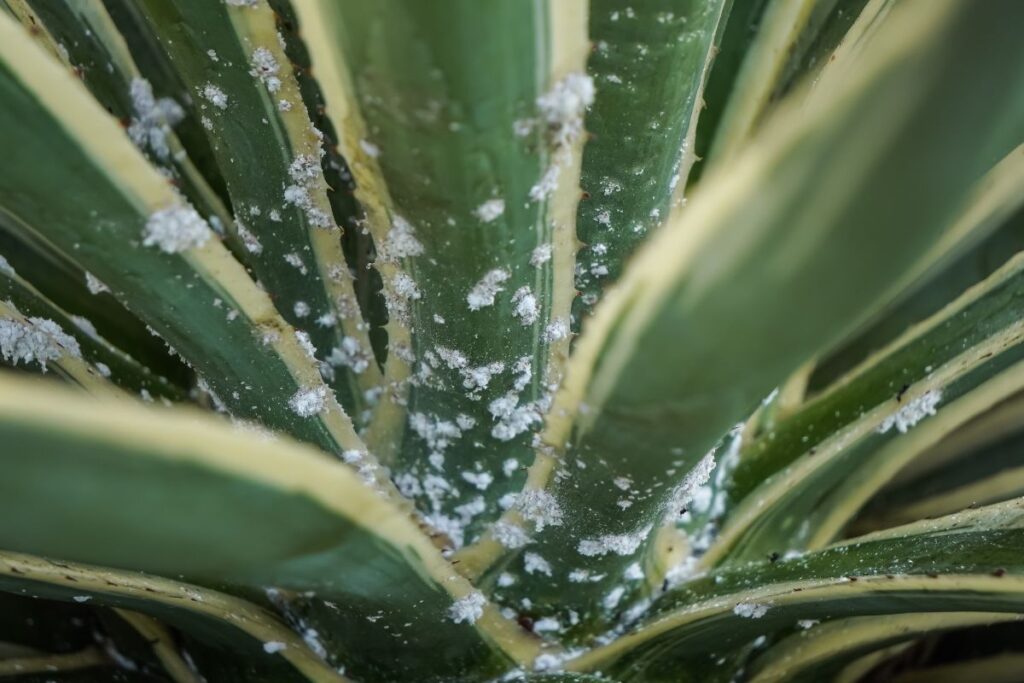
Mealybug crawlers are quite fast and will indiscriminately transfer between nearby plants with touching foliage until they find a suitable feeding spot.
Here are the tips to prevent the spread of foliar mealybugs:
- Keep the leaves of houseplants at least 6 inches (15 cm) apart to give them room for growth while preventing the transmission of pests and diseases.
- Routinely clean the space between pots with soapy water to kill crawlers that try to move from one pot to another.
- While treating visibly infested plants in the isolation room, proactively treat the remaining asymptomatic plants with a neem oil spray every two weeks to prevent the spread of infestation.
Reusing pots and potting soil previously infested with ground mealybugs may also lead to an infestation on the new plants.
Here are some tips to prevent the spread of ground or root mealybugs between plants:
- Discard previously infested potting mix. Avoid reusing contaminated soil, which may contain dormant eggs.
- Sterilize old pots using a 10% bleach solution and rinse thoroughly with clean water. You may also pour freshly boiled water all over the pot to kill any invisible nymphs.
- Ensure each pot has a saucer, especially when placing the pots on a multi-level plant stand, to prevent contaminated or pest-infested water from dripping to the lower plants.
Treatment With Homemade Remedies
DIY gardeners often recommend homemade remedies against common houseplant pests like mealybugs.
Although the following are effective against mealybugs, it’s important to understand the potential risks they may cause to your houseplants:
- Essential Oils: Extracts from mint, thyme, anise, and rosemary have toxic and repellent effects against mealybugs. However, the oil may block the pores or stomata on leaf undersides, inhibiting proper transpiration. Oil on leaf surfaces may also make the plant vulnerable to sunburn.
- Dish Soap Sprays: Homemade insecticidal soaps using liquid detergent or dish soap can dissolve the waxy covering of mealybugs. Unfortunately, the surfactants in dish soaps can wash away the waxy surface layer of the leaves, causing dullness, browning, and poor photosynthetic capacity.
- Vinegar: Although the acetic acid in horticultural (10-30%) or kitchen (5%) vinegar can kill mealybugs, it also has a severe dehydrating effect on plant tissue, turning the leaves brown and crisp.
- Garlic, Onion, Cayenne Pepper: These three home remedies have proven effective deterrents against aphids, mealybugs, scale insects, slugs, and snails. However, DIY blends contain varying amounts of active ingredients, leading to an inconsistency in the results. In addition, they can leave your indoor garden with an unpleasant odor.
Preventative Measures
You can prevent a mealybug infestation in your indoor garden with the tips below:
Quarantine New Plants
Citrus mealybug crawlers typically take 1-2 weeks to morph into wax-coated and visible nymphs. On the other hand, long-tailed mealybugs don’t lay eggs, making it challenging to detect early infestations.
Keep new plants isolated for up to 8 weeks before introducing them to your indoor garden to reveal and treat an existing infestation as needed.
Alternatively, you may proactively eliminate any potential pests by spraying the plant with a neem oil solution every two weeks while in quarantine. Inspect the soil and undersides of leaves before placing the new plants with existing houseplants.
Inspect and Maintain Foliage Health
Inspect the leaves weekly for signs of mealybug infestation, such as cottony white clusters on leaf undersides. Prune infested leaves before an outbreak occurs.
In addition, wipe the leaves weekly with a clean, damp microfiber cloth to remove dust and optimize the plant’s photosynthetic activity.
Use Natural Repellents
In early spring, start spraying the leaves with neem oil every 2-3 weeks to deter mealybugs.
Gardening stores also sell essential oil sprays containing rosemary, mint, or thyme extracts as mild repellents. Avoid applying oil sprays too often if there isn’t any existing infestation. Too much oil can clog the pores on the leaves and inhibit proper transpiration.
Encourage Strong Plant Health
Keeping your plants in great health can improve their resistance to pest damage and their chances of survival.
Here are practical tips to keep your plant in its best shape:
- Avoid overwatering and overfeeding with nitrogen-rich fertilizers, as soft new growth attracts mealybugs.
- Keep the plants in a warm room with moderate temperatures (65-75 °F or 18-24 °C) since higher temperatures can promote rapid reproduction and development in mealybugs.
- Maintain humidity at moderate levels (40-60%) to discourage infestations.
- Space plants at least 6 inches (15 cm) apart to prevent contact between leaves and minimize the spread of mealybug infestation.
Houseplants Prone to Mealybug Infestations and Symptoms
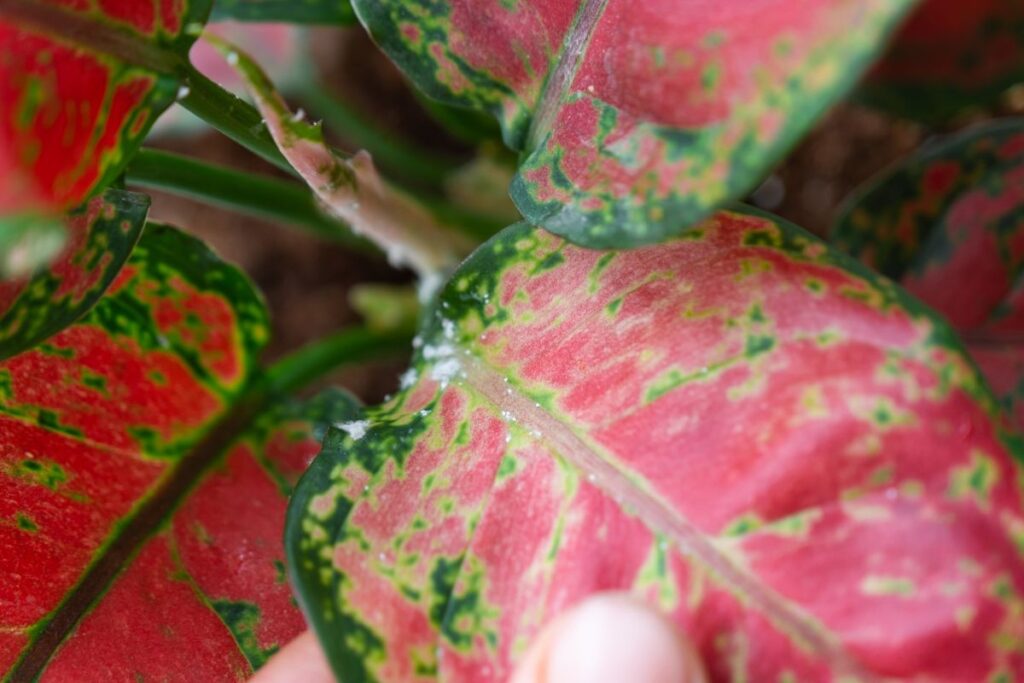
Here’s a list of famous houseplants commonly attacked by mealybugs:
| Plant Name | Mealybug Type | Symptoms |
| African Violet (Saintpaulia ionantha) | Citrus and ground mealybug |
|
| Aloe Vera (Aloe vera) | Citrus mealybug |
|
| Bunny-Ear Cactus (Opuntia microdasys) | Long-tailed mealybug |
|
| Cornstalk Dracaena (Dracaena fragrans) | Citrus mealybug |
|
| Croton (Codiaeum variegatum) | Citrus mealybug |
|
| Dumb Cane (Dieffenbachia seguine) | Citrus and ground mealybug |
|
| English Ivy (Hedera helix) | Citrus and long-tailed mealybug |
|
| Fiddle Leaf Fig (Ficus lyrata) | Citrus mealybug |
|
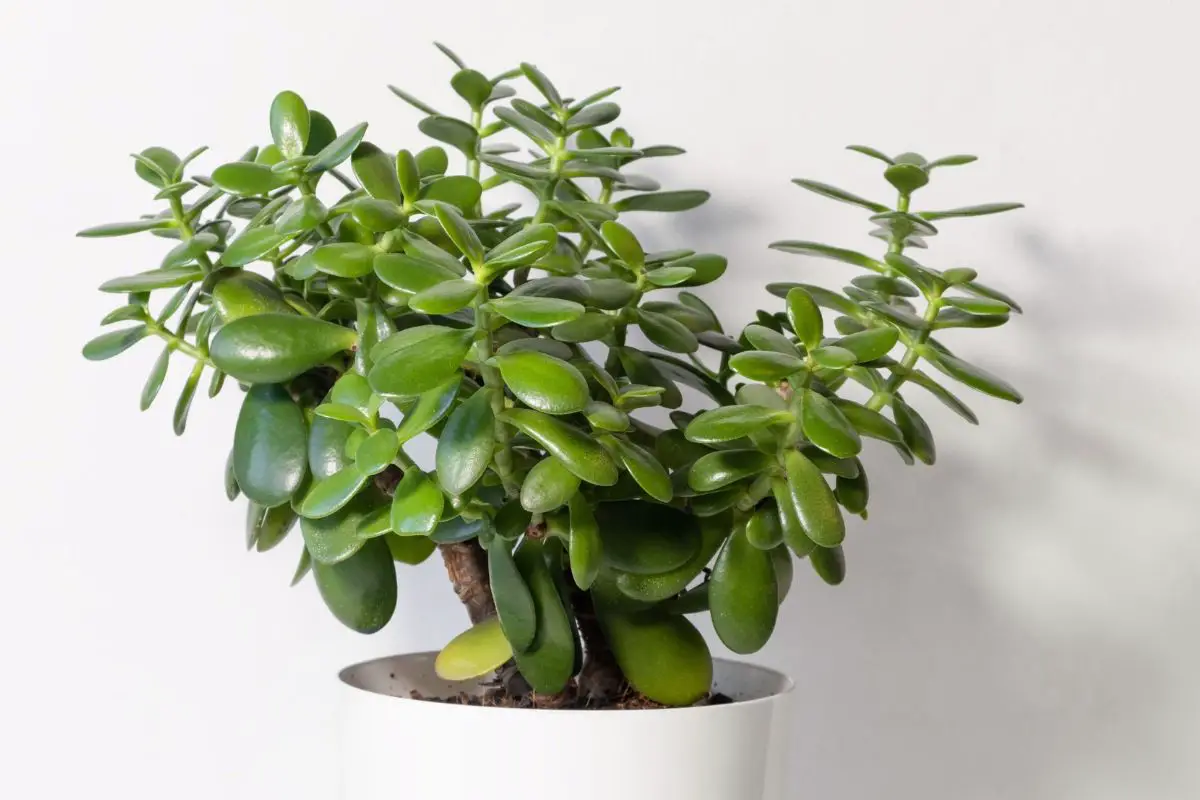
| Jade Plant (Crassula ovata) | Citrus mealybug |
|
| Money Tree (Pachira aquatica) | Citrus mealybug |
|
| Monstera (Monstera deliciosa) | Citrus and long-tailed mealybug |
|
| Parlor Palm (Chamaedorea elegans) | Citrus, ground, and long-tailed mealybug |
|
| Pothos (Epipremnum spp.) | Citrus and long-tailed mealybug |
|
| Prayer Plant (Calathea spp.) | Citrus and ground mealybug |
|
| Snake Plant (Dracaena trifasciata) | Citrus mealybug |
|
| ZZ Plant (Zamioculcas zamiifolia) | Citrus and long-tailed mealybug |
|
Note: Sooty mold ants are common secondary symptoms of a mealybug infestation due to honeydew and are possible for each plant on the list.
Comparison to Other Common Houseplant Pests
Mealybugs are relatively easy to identify due to their unique appearance compared to other common houseplant pests.
Let’s explore their differences below:
| Pest Name | Size and Appearance | Symptoms |
| Mealybugs | 1/16-⅛ in (1.6-3.2 mm) Yellow, orange, or pink body (crawler) with numerous legs and waxy filaments (tail) at the rear White, waxy covering on eggs, nymphs, and adults Eggs wrapped in fluffy white ovisac | White, cottony clusters on leaf undersides, stems, or petioles Localized yellowing at the feeding site near the cluster Honeydew residue often with sooty mold and ants |
| Spider Mites | <1/20 in (<1 mm) Translucent with two dark spots, brown, red | Webbing, speckled leaves |
| Aphids | 1/16-⅛ in (1.6-3.2 mm) Translucent white, green, yellow, brown, or pink insects with 6 legs and 2 rear cornicles | Localized yellowing, curling, or deformed new growth Honeydew residue often with sooty mold and ants |
| Thrips | 1/16-⅛ in (1.6-3.2 mm) Slender body with wings | Silvery or bronze leaf damage, black specks |
| Scale Insects | 1/16-⅛ in (1.6-3.2 mm) Brown, shell-like cover immobile | Hard bumps on stems or along leaf veins Honeydew residue often with sooty mold and ants |
Final Thoughts
Mealybugs are easily identifiable pests due to their fluffy white coating, tiny legs, and waxy filaments. However, the transition from less conspicuous crawlers to wax-coated nymphs and adults can take a month or so.
It’s crucial to quarantine new plants or proactively prevent mealybug infestation with neem oil spray every 1-2 weeks for 6-8 weeks to prevent an outbreak in your indoor garden.
Be consistent in your treatment methods and use multiple steps simultaneously to prevent a reinfestation. Here’s an effective routine to treat and control a mealybug infestation:
- Isolate infested plants right away
- Prune severely infested leaves, especially those with cottony ovisacs
- Manually remove wax-coated nymphs and adults with an alcohol-dipped cotton swab (repeat every 2-3 days)
- Spray with neem oil solution weekly
- Spray with insecticidal soap (optional) 3-4 days after neem oil treatments
- Continue cleaning and inspecting the plant weekly monitor and treat new signs of infestation promptly
If you’ve had a stressful experience with mealybugs on your houseplants, feel free to share how you dealt with the issue or ask questions for more tips in the comments section.