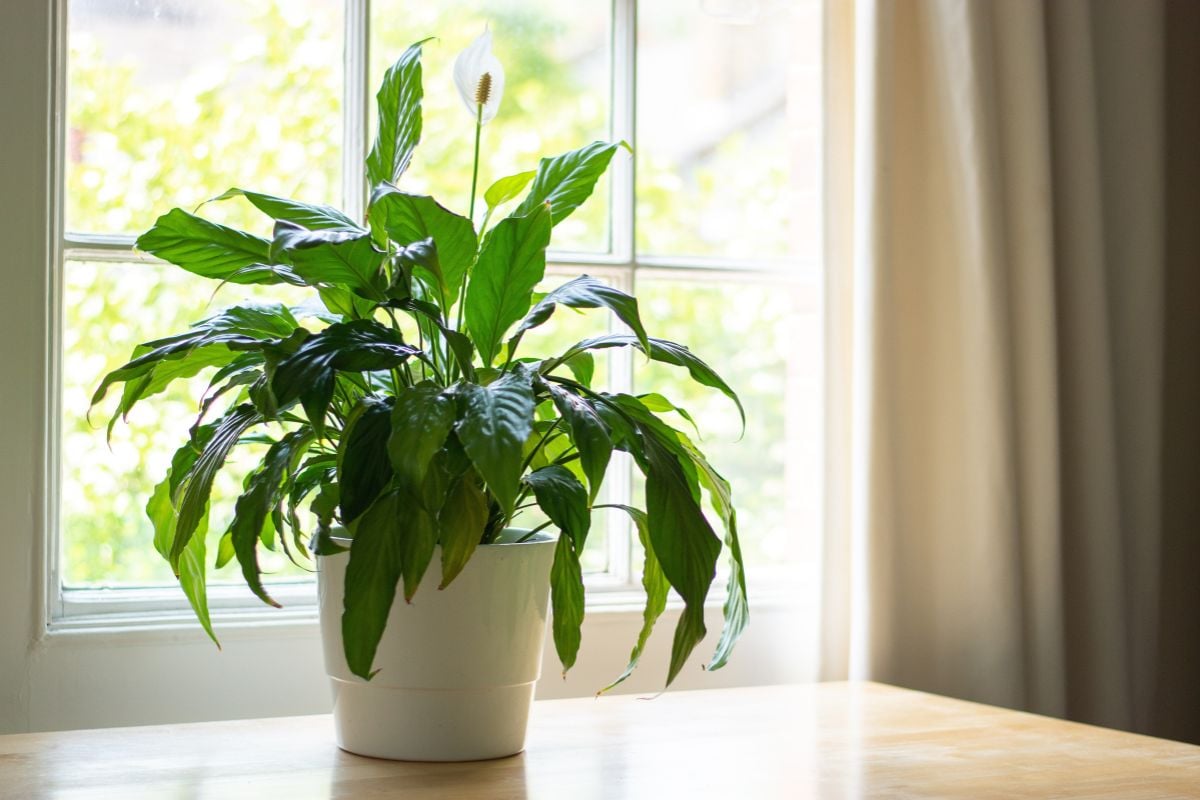

Houseplant Light Requirements: From Low Light to Direct Sun
Light is the single most critical, yet most misunderstood, factor in houseplant success. Providing the correct light is more important than watering, fertilizing, or soil choice.
Here are essential facts about indoor lighting:
- Indoor light is significantly less intense than outdoor light because of obstructions such as trees, roof eaves, or window designs. For instance, spots that receive direct sunlight indoors are >1000 ft-c., whereas deep shade outdoors can be >2000ft-c.
- Desert and tropical plants have different light requirements or tolerances due to varying evolutionary traits influenced by their native habitats.
- Light intensity influences a houseplant’s metabolic activity, consequently affecting its temperature, water, humidity, and nutrient requirements.
- Proper acclimatization is crucial when moving houseplants to different light intensities to prevent transition shock.
This article will provide a comprehensive guide to understanding and measuring the light conditions in your home. It also aims to teach beginners how to match the right plant with the right spot confidently.
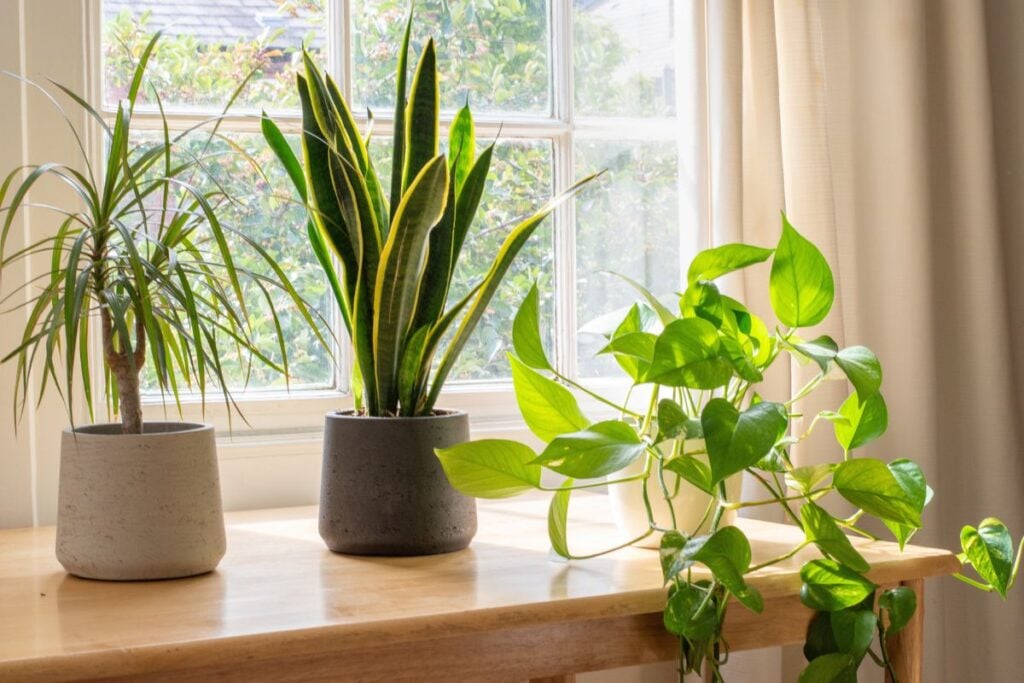
Light Spectrum and Its Effects on Plant Health
Light energy is a crucial part of photosynthesis, enabling plants to function. Photo means light, and synthesis means the chemical formation of compounds. That said, plants use light energy from the sun, carbon dioxide, and water to generate carbohydrates (food).
Without the right amount of light, a plant cannot effectively process water and nutrients, regardless of how well it is otherwise cared for.
Moreover, a plant’s light exposure dictates its watering needs, growth rate, and overall health. Getting the light right makes all other aspects of care easier.
Visible light overlaps with the photosynthetically active radiation (PAR), which consists of colors within the 400-700 nm wavelength range. Among these colors, blue and red are the most vital for photosynthesis.
Here’s how the different colors and wavelengths in sunlight affect plants:
- Blue (400-500 nm): Blue light is absorbed by the cryptochrome in plant chloroplasts and helps with photosynthesis regulation, more compact growth, thicker leaves, and more vivid foliage color (i.e., purplish leaves outdoors will revert to green indoors without sufficient blue light).
- Red (600-700 nm) and far-red: Red and far-red light are absorbed by the phytochrome and help with photosynthesis regulation, elongated stems (taller plants), thinner leaves, and flower bud formation.
- Green (500-550 nm): Green light is often reflected by plants, resulting in the green coloration of the leaves. A small portion of green light can be absorbed by the cryptochrome and help with flowering, albeit not as much as red and far-red light.
- Yellow (550-600 nm): Yellow light has minimal effect on photosynthesis because it isn’t as readily absorbed by plants as blue and red light. However, yellow light has been shown to aid in the accumulation of essential plant pigments, such as flavonoids, which contribute to UV protection and resistance to pests and diseases.
Ultraviolet Light
Although some low-light houseplants can survive indoors with 12-16 hours of artificial light, they won’t be able to maximize their lifespan and are likely to die sooner than their counterparts that receive a few hours of indirect sunlight daily.
Sunlight emits ultraviolet (UV) light, which is also vital for plant function, but too much can damage plant tissue. Not all artificial lights contain UV light because of the potential harm to human health.
Here are the different types of ultraviolet light and how they impact plants:
- Ultraviolet A (315-400 nm): Encourages larger leaves, more abundant flowers and fruits, and higher antioxidant levels. UV-A is less damaging than the other types of ultraviolet light because it’s not readily absorbed by plant DNA.
- Ultraviolet B (280-315 nm): Promotes flavonoid production, speeds up seedling development. Too much UV-B can damage plant DNA and result in deformed leaves or stems, yellowing or browning leaves, and wilting.
- Ultraviolet C (100-280 nm): Low levels of UV-C can help kill plant pathogens. In contrast, high levels can cause DNA damage, leading to yellowing or browning leaves, leaf curling, and wilting.
How Native Origins Shape Plant Light Needs
Understanding a plant’s native habitat is key to understanding its needs. Tolerance or resistance to UV-induced damage also varies depending on plant species. Overall, a plant’s light preference is a direct result of its evolutionary history.
- Sun-Drenched Deserts: Plants such as cacti and most succulents are native to arid environments with constant, intense sunlight. Desert succulents like Opuntia cacti are virtually unaffected by prolonged exposure to sunlight due to the evolved epidermis structure with UV-blocking flavonoids. Desert plants require a few hours of direct sunlight followed by bright indirect light during the day to thrive in indoor gardens.
- Dappled Forest Floors: Many popular tropical plants, such as epiphytes, ferns, and philodendrons, naturally grow on the forest floor or under the dense canopy of larger trees. They are adapted to the filtered, shifting, indirect light that reaches them. This is why they thrive in bright, indirect light indoors and will quickly scorch in prolonged direct sun.
Light Intensity and Exposure
It’s important to understand how the overall light quality, including intensity and duration of exposure, can help tropical and desert plants adapt to home care.
Here’s a brief guide on the different types of light intensity and duration for the optimal health of indoor plants:
| Type of Light | Intensity (in foot candles, lux, and micromole) | Duration of Exposure |
| High | >1000 ft-c >10760 lux >200 μmol | 4-8 hours of unobstructed sunlight 8 hours of filtered or indirect light |
| Medium | 250-1000 ft-c 2690-10760 lux 50-200 μmol | 8-12 hours of bright, indirect light |
| Low | 50-250 ft-c 538-2690 lux <50 μmol | 12-16 hours of low-intensity light Note: African violets and peace lilies require a combined 14-16 hours of exposure to low-intensity sunlight from a north-facing window and grow lamps to thrive and produce flowers. |
Note that light intensity indoors decreases the farther you move from an unobstructed window. Let’s explore the different lighting conditions in an indoor garden below:
High (Direct Sun)
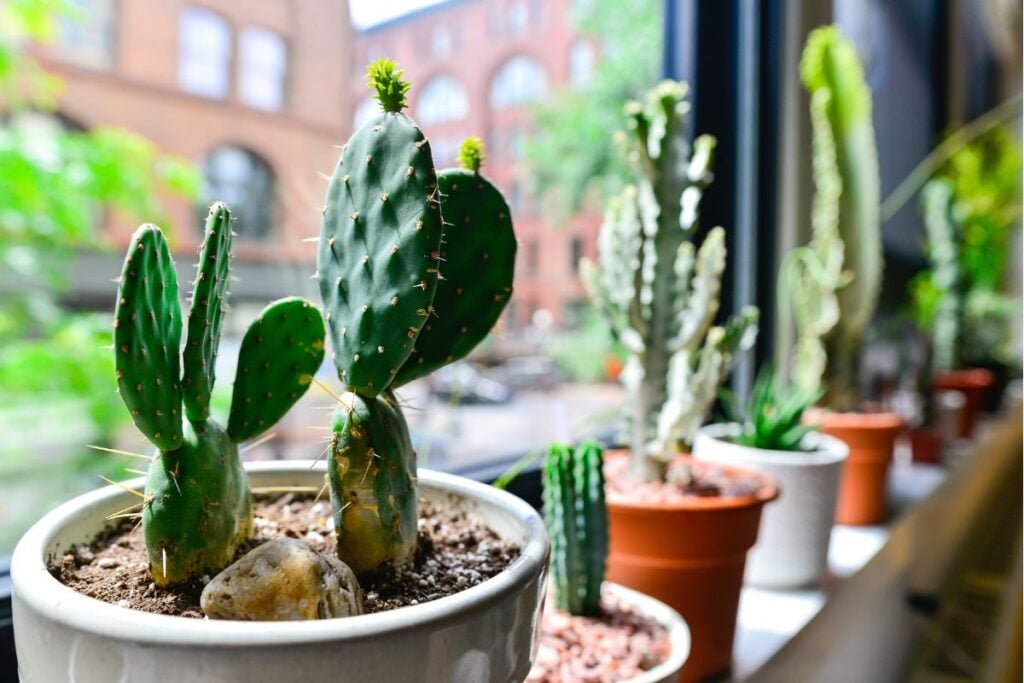
High-intensity light indoors is characterized by over 1000 foot candles (>10760 lux), typically found in a location that receives at least 4-8 hours of direct, unfiltered sunbeams per day.
You can obtain such values next to the following unobstructed windows:
- East: ~4 hours of gentle morning sun and ~8 hours of bright indirect light
- Southeast: 4-8 hours of direct morning sun and ~8 hours of bright indirect light
- South: >8 hours of direct sun, closest to outdoor sun intensity and duration
- West: ~8 hours of indirect light and 4-6 hours of scorching afternoon and evening sun
Note: Estimates are based on the Northern Hemisphere (USA) and the assumption that there are no other windows as a light source. Multiple windows from different directions can increase light intensity and duration of exposure.
Such light conditions are perfect for the following houseplants:
- Desert cacti and succulents
- Flowering shrubs (i.e., hibiscus, gardenia)
- Full-sun palms (i.e., majesty palm, ponytail palm)
- Tropical shrubs or trees when mature and properly acclimated (i.e., croton, money tree, Ficus spp.)
Medium (Bright, Indirect Light)
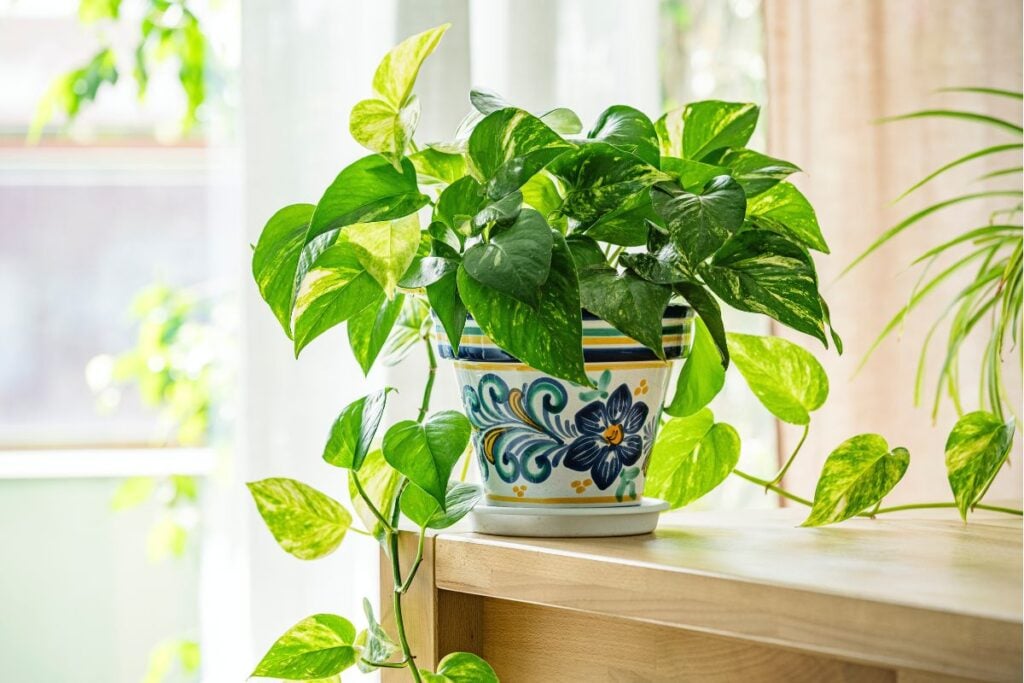
Medium light (approximately 250-1000 ft-c or 2690-10760 lux) can be found in a spot that receives consistent, but not intense, indirect light for most of the day. The plant has a wide view of the sky, but the sun’s rays do not fall directly on its leaves.
Houseplants should receive bright indirect light for 8-12 hours daily for optimal health.
The term bright, indirect light might seem confusing to some beginner gardeners. It simply refers to bright natural light from a sunny window, but the beams don’t fall directly on the plant’s leaves. Such light intensity is typically found at the following spots:
- Up to 4 feet (1.2 m) from east or west windows
- Up to 8 feet (2.4 m) from a south window
Note: Taller or wider windows naturally bathe a larger space indoors with direct sunlight during the day. Moving your plant away from the path of direct sunlight into a well-lit spot should help prevent sunburn.
You can accurately measure the light intensity using a light meter, which I will discuss further below.
The following houseplants thrive in medium light:
- Herbaceous perennials
- Seedlings or Propagules
- Tropical epiphytes and vines (i.e., monstera, pothos, philodendron)
- Tropical succulents
- Young tropical trees (i.e., Ficus spp., money tree)
Low Light
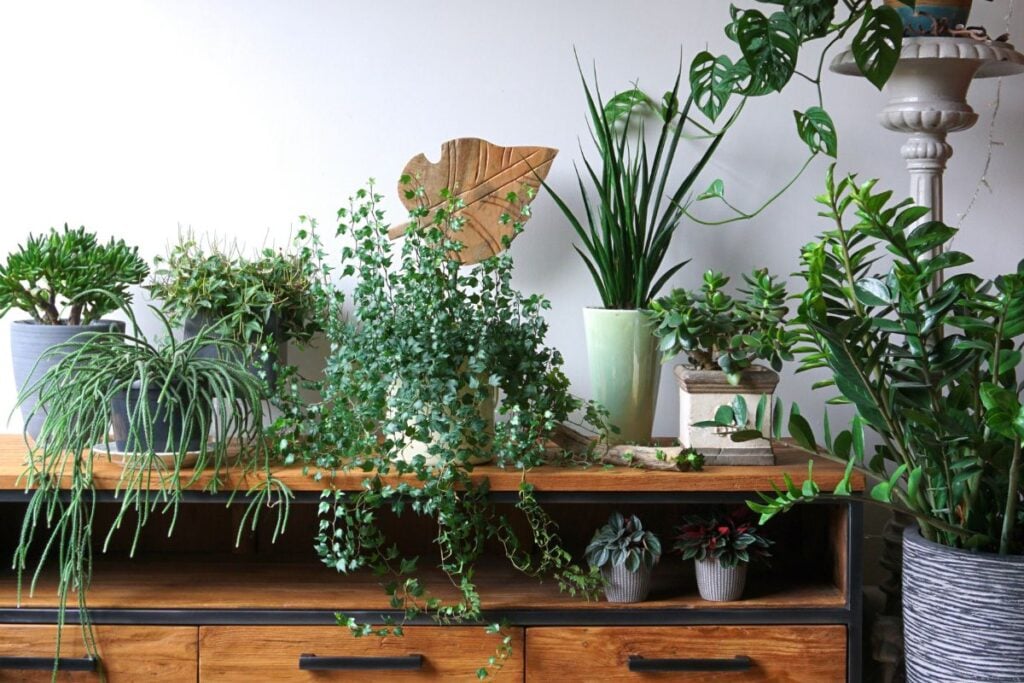
A low-light area for houseplants receives roughly 50-250 ft-c (538-2690 lux), as it receives no direct sunbeams. It’s a space where you could comfortably read a book, but notice it’s not brightly illuminated.
For houseplants to receive low light, you may place them in:
- A spot next to or near a north-facing window (up to 8 hours of low-intensity natural light)
- A hallway or shady corner >8 feet (2.4 m) from a curtained or obstructed window (at least 12 hours or low-intensity natural light)
The following houseplants are very adaptable to low light, but do best at medium light:
- African violets
- Bromeliads
- Dracaenas
- Ferns
- Peace lilies
- Shade palms (i.e., areca palm, parlor palm)
- Tropical vines (i.e., pothos, philodendrons)
- ZZ plants
Note: It’s important to supplement your plant’s light requirements with grow lamps on dark or cloudy days to encourage photosynthesis.
How to Measure Your Home’s Light
Over the years, several friends and relatives have asked for plant recommendations for beginners. My first tip is to evaluate the home’s lighting conditions and the amount of time they can spare for plant care (i.e., once a week, every two weeks, etc.).
Natural light access (including intensity and duration of exposure) is the primary determining factor in how well a plant can survive in your home.
Defining Light Measurement: What is a Foot-Candle and Lux?
Light intensity for houseplants can be measured using one of the following units:
- Foot-Candle (ft-c): Foot-candle is the English unit commonly used in the US. One ft-c is the amount of light cast on a one-square-foot surface by a single candle that is one foot away. It is the scientific measurement used to categorize the light levels defined above.
- Lux (lx): Lux is the metric (International System of Units) equivalent of foot-candles. It measures the light intensity within a one-square-meter area, and 1 foot-candle is approximately 10.76 lux.
- Micromole (μmol): Micromole measures the Photosynthetically Active Radiation (PAR). It quantifies the particles of light (photons) received by a square meter surface per second (μmol/m2/s). To obtain the micromole value, multiply the foot-candle by 0.2.
Note: Many light meters and apps will provide readings in foot-candles and lux. Although foot-candles is commonly used in American horticulture, scientists and botanists use micromoles, as it measures the actual quantity of photons used for photosynthesis.
As a gardening enthusiast, measuring light intensity in foot-candles was reliable enough for me to keep a thriving indoor garden. Moreover, devices measuring light in foot-candles are more readily available than the expensive PAR meters.
Practical Methods for Measuring Light
Below are some methods and tools to measure the light conditions in your home:
The Hand Shadow Test (The Simple Way)

This is a quick and easy way to estimate the light intensity your plants receive, albeit not very accurately.
Stand in the spot you want to test during the brightest part of the day and hold your hand about a foot above a surface to measure the light intensity coming from the windows. The following results can give you a rough idea of how bright the area is for houseplants:
- Sharp, clearly defined shadow: Bright light similar to direct sun (likely 2,000+ ft-c).
- Soft, but visible shadow: Bright indirect or medium light (approximately 1,000-2,000 ft-c).
- Faint, fuzzy shadow with no clear outline: Medium to low light (less than 1,000 ft-c).
Note: Lamp types with higher wattage or Color-Rendering Index (CRI) may provide the same brightness as natural light for human benefit (i.e., visibility and clear color definition). However, brightness doesn’t always translate to the correct wavelengths or photon quantities that can be absorbed and used by plants for photosynthesis.
Flowering plants require light with a higher concentration of red, whereas foliage plants prefer predominantly blue light. As such, the hand shadow test isn’t an accurate way to measure artificial light intensity for houseplants.
Light Meter App (The Accessible Way)
A slightly more accurate method is using a light meter app on your smartphone. Light meter apps use the phone’s camera sensor to provide a foot-candle (ft-c) or lux reading of light that falls on a surface.
In my experience, light meter apps can be inaccurate because various smartphone brands have different camera qualities. Additionally, they lack standardized sensors, resulting in inconsistent readings.
Although not perfectly accurate, a popular app like Photone can give a reliable estimate to help classify a spot’s light level.
To use the app:
- Position the smartphone on the surface where you intend to place houseplants.
- Aim the camera at the light source (i.e., window or lamp).
- Take note of the reading. Most devices allow you to switch between foot-candles and lux.
Light Meter Device (The Pro Way)
A dedicated digital light meter is the most accurate tool for measuring light intensity. Affordable and reliable handheld meters are widely available online or at gardening stores.
Dedicated handheld light meter devices are more accurate than smartphone apps because they incorporate cosine correction for the angle of incident light.
You can select from the following types of light meter devices:
- 3-in-1 Meters: Many gardening stores offer beginner-friendly analog meters (like those from Sonkir) that test light, pH, and moisture. The light meter function on these is less precise, but can still help differentiate between low and high light.
- PAR Meters: Advanced users typically use professional PAR (Photosynthetically Active Radiation) meters, which measure the specific type of light or quantity of photons (in μmol) plants use for photosynthesis.
Here are the steps for using light meter devices:
- Position the device and the sensor at the spot you want to test.
- Aim the sensor toward the window or light source.
- Record the reading in ft-c, lx, or μmol.
Sun Diary (The Observational Way)
Using your chosen method or tool above, you can create a sun diary and map with the following simple steps:
- Take readings at 1-2-hour intervals during the day (i.e., from 6 AM to 6 PM) and record them in a sun diary.
- Note whether direct sun is hitting the spot and for how many hours. This provides a true picture of the light a plant will experience throughout the day and across different seasons.
- Repeat this once every 2-3 months to observe the differences between seasons. You may also record patterns during cloudy or rainy days.
The readings should tell you how much light your plants will get at different times of the day or seasons, so you can make adjustments as needed, including the following:
- Draw curtains during sunny days to prevent leaf scorch.
- Move the pots closer to the window during cloudy days for better access to natural light.
- Supplement the inadequate daylight duration with grow lamps.
Pro Tip: I used to record seasonal observations in a sun diary with a map to identify suitable locations for certain houseplants readily. Although I became more confident in my plants’ lighting needs over time, I still make amendments to the sun diary due to the changing weather patterns and check it for reference when bringing in new, unfamiliar houseplants.
Understanding Window Directions

The direction your windows face is one of the best indicators of the type and intensity of light your home receives. Use a compass or a phone app to determine the direction of each window.
Here’s how different window directions influence light access:
- North-Facing Windows: Provide the most consistent, gentle, and weakest light throughout the day. It never receives direct sunbeams. This is the ideal location for plants that thrive in low light conditions, such as African violets and ZZ plants. Plants that require direct sunlight will struggle here.
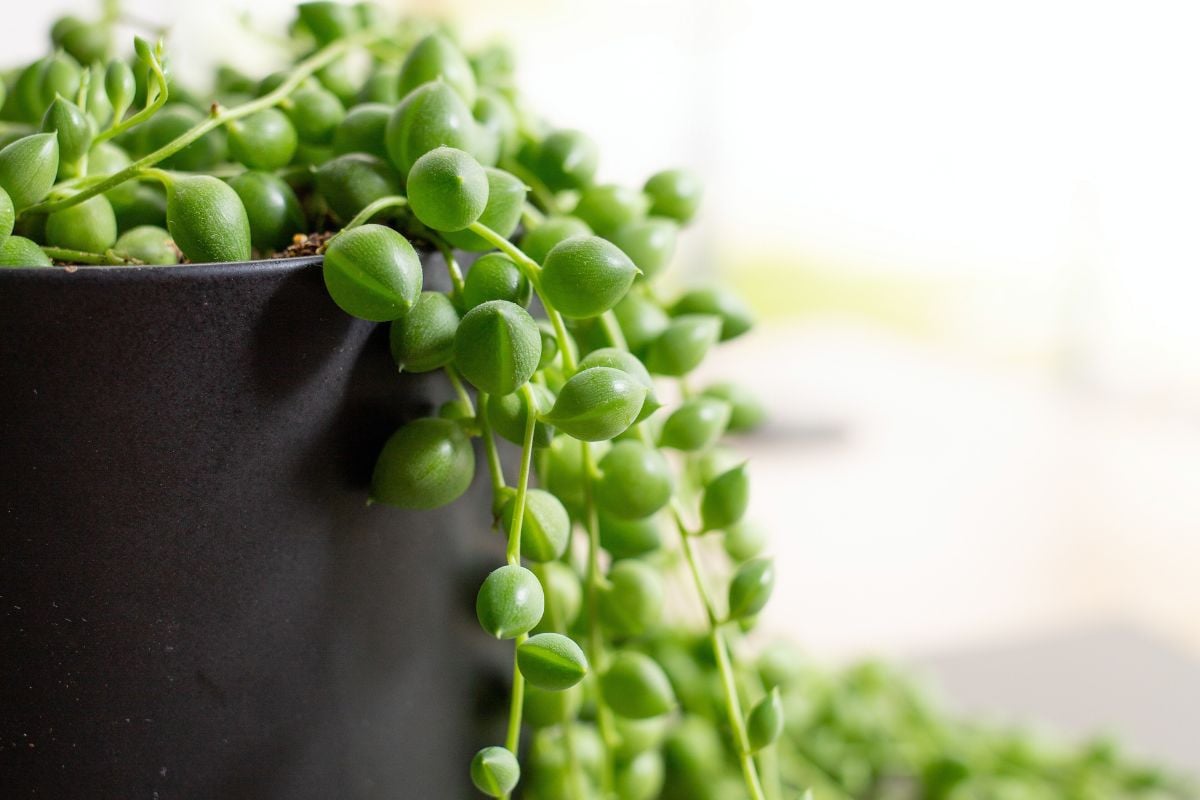
- East-Facing Windows: Receive gentle, direct morning sun that is not intense enough to scorch most plants. For the rest of the day, it provides bright, indirect light. This is a perfect spot for a huge variety of houseplants that need bright light but can’t handle harsh afternoon sun. Small succulents like haworthias, echeverias, and string of pearls do great next to this window.
- South-Facing Windows: Provide strong, direct sun for most of the day. This is the brightest and most intense light you can get indoors. This location is reserved for direct sun lovers, such as cacti and flowering shrubs like gardenia and hibiscus. Most tropical plants will get scorched here unless placed several feet back or behind a sheer curtain.
- West-Facing Windows: Receive bright, indirect light for the first half of the day, followed by several hours of intense, direct afternoon and evening sun. This afternoon sun can be very hot and only suitable for sun-loving plants that can handle the intensity, such as Opuntia cacti and aloe veras. Many plants that enjoy bright, indirect light can also thrive here if placed a few feet back from the window.
Note: The observations above are based on unobstructed natural light conditions through windows in the US, which is found in the northern hemisphere. Remember that these are general rules.
The light from any window can be modified. External factors, such as large trees, nearby buildings, or a deep roof overhang, can significantly reduce light. Internal factors, such as sheer curtains, tinted glass, or even dirty windows, will also reduce the intensity.
Always assess the specific spot, not just the window direction.
Matching Plants to Light and Water Needs
Light energy and water are essential components of photosynthesis, and light has a direct impact on a plant’s water consumption. Plants continue to photosynthesize as long as there is sufficient light, and high intensity can lead to rapid moisture consumption.
Houseplants do best indoors when they receive the light intensity or quantity within their desired range for at least 8 hours (with artificial light supplement as needed). Below are the indoor light conditions plants may require:
- Low: 50-250 ft-c or <50 μmol
- Medium: 250-1000 ft-c or 50-200 μmol
- High: >1000 ft-c or >200 μmol
Many houseplants have flexible lighting needs (i.e., low-medium or medium-high). It’s crucial to adjust your watering routine accordingly, depending on the light intensity.
Here are the houseplant-specific moisture requirements for reference:
- Low: drought-tolerant and requires loose or porous soil. Allow the top half of the soil to dry out completely between waterings.
- Moderate: requires moist, well-draining soil. Allow the top 2-3 inches (5-7.6 cm) to dry out.
- High: moisture-loving but does not like soggy soil. Water as soon as the top inch (2.5 cm) dries out.
Here’s a guide on the most popular houseplants and their corresponding light and water needs:
| Houseplant | Light Intensity | Moisture Requirement |
| African Violet (Saintpaulia ionantha) | Low | Moderate |
| Air Plant (Tillandsia spp.) | Medium | Moderate |
| Aloe Vera (Aloe vera) | High | Low |
| Anthurium (Anthurium andraeanum) | Medium | Moderate |
| Areca Palm (Dypsis lutescens) | Low-Medium | Moderate |
| Asparagus Fern (Asparagus densiflorus) | Medium | Moderate-High |
| Boston Fern (Nephrolepis exaltata) | Low-Medium | High |
| Bromeliads (Famly Bromeliaceae) | Low-Medium | Moderate |
| Bunny Ear Cactus (Opuntia microdasys) | High | Low |
| Cast Iron Plant (Aspidistra elatior) | Low-Medium | Moderate |
| Chinese Evergreen (Aglaonema modestum) | Low-Medium | Moderate |
| Chinese Money Plant (Pilea peperomioides) | Medium | Moderate |
| Christmas Cactus (Schlumbergera spp.) | Medium | Moderate |
| Cornstalk Dracaena (Dracaena fragrans) | Medium | Moderate |
| Croton (Codiaeum variegatum) | High | Moderate-High |
| Crown of Thorns (Euphorbia milii) | High | Low-Moderate |
| Dumb Cane (Dieffenbachia seguine) | Low-Medium | Moderate |
| English Ivy (Hedera helix) | Low-High | Moderate |
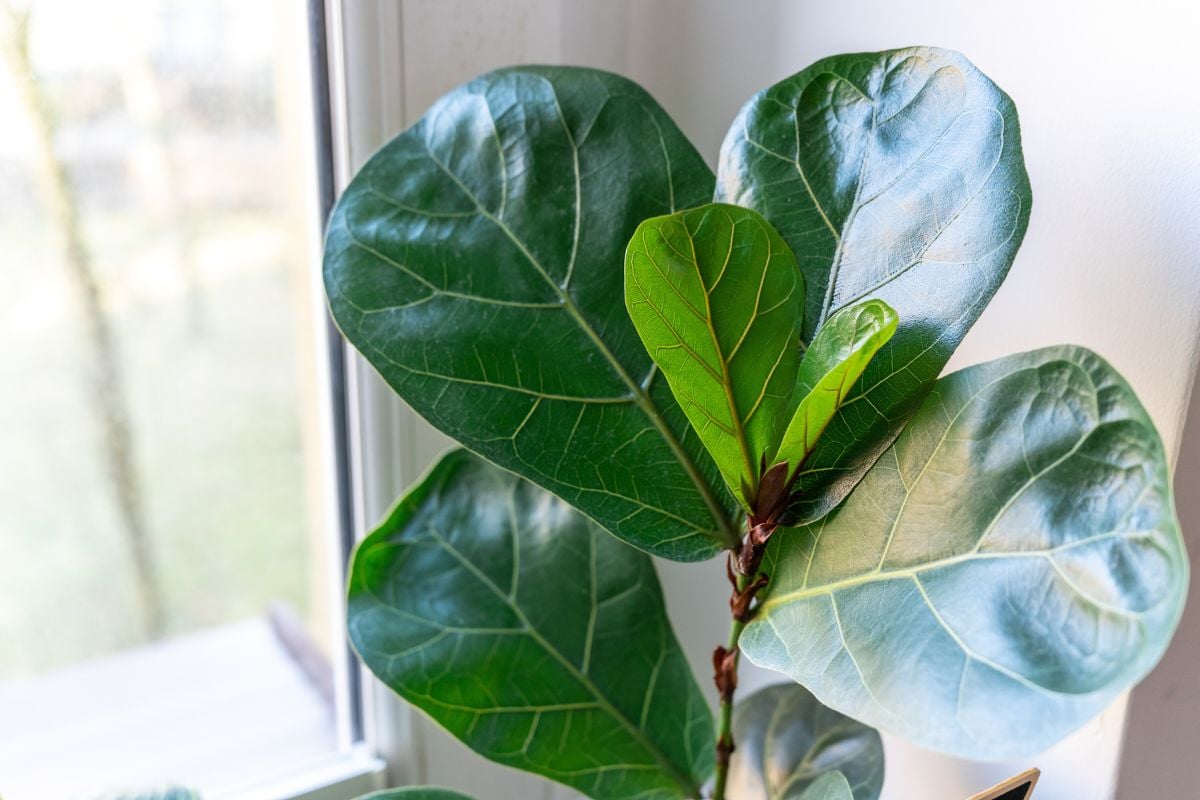
| Fiddle Leaf Fig (Ficus lyrata) | Medium-High | Moderate |
| Gardenia (Gardenia spp.) | Medium-High | Moderate |
| Haworthia (Haworthia or Haworthiopsis spp.) | Medium-High | Low |
| Heartleaf Philodendron (Philodendron hederaceum) | Low-Medium | Moderate |
| Hibiscus (Hibiscus rosa-sinensis) | High | Moderate |
| Jade Plant (Crassula ovata) | Medium-High | Low |
| Kalanchoe (Kalanchoe spp.) | Medium-High | Low |
| Lipstick Echeveria (Echeveria agavoides) | Medium-High | Low |
| Lucky Bamboo (Dracaena sanderiana) | Low-Medium | Moderate |
| Majesty Palm (Ravenea rivularis) | High | Moderate-High |
| Money Tree (Pachira aquatica) | Medium-High | Moderate |
| Monstera (Monstera deliciosa) | Medium | Moderate |
| Nerve Plant (Fittonia albivenis) | Low-Medium | Moderate |
| Oxalis (Oxalis spp.) | Medium | Low-Moderate |
| Parlor Palm (Chamaedorea elegans) | Low-Medium | Moderate |
| Peace Lily (Spathiphyllum spp.) | Low-Medium | Moderate |
| Pearl Echeveria (Echeveria elegans) | Medium-High | Low |
| Ponytail Palm (Beaucarnea recurvata) | Low-Medium | Moderate |
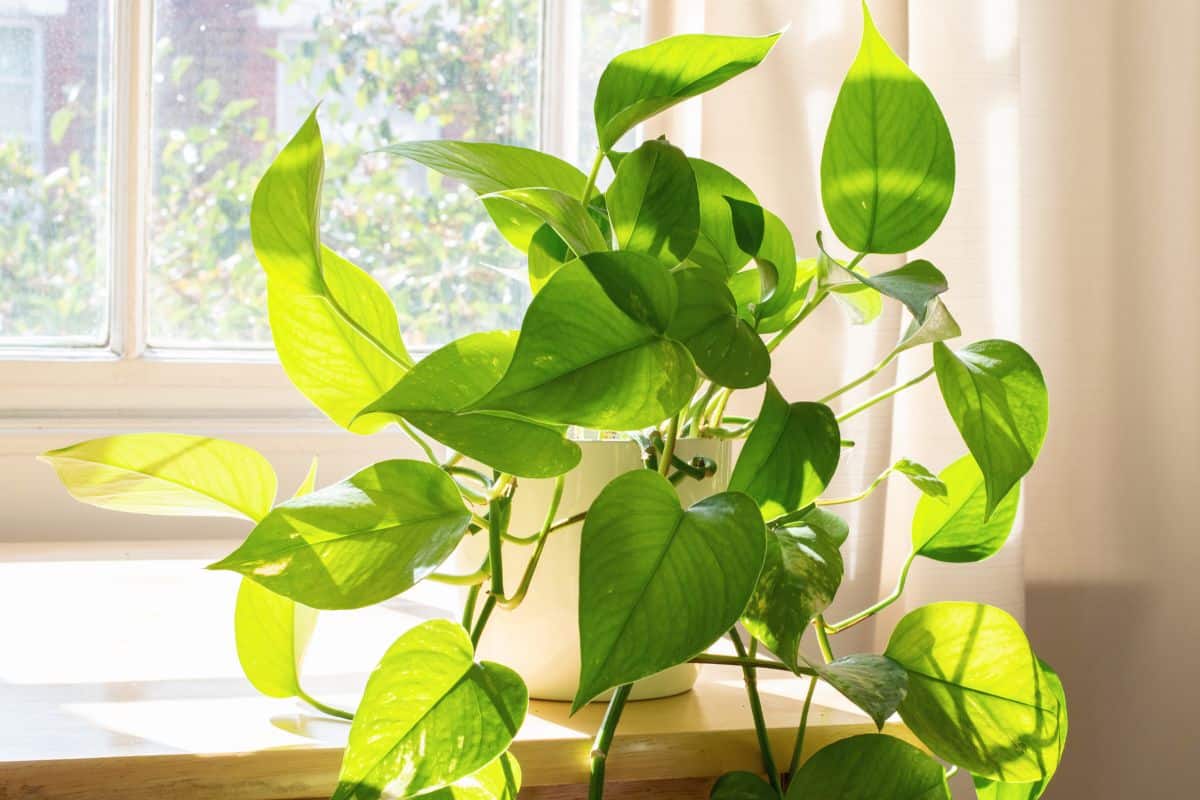
| Pothos (Epipremnum aureum) | Low-Medium | Moderate |
| Prayer Plant (Maranta leuconera) | Low-Medium | Moderate-High |
| Rubber Plant (Ficus elastica) | Medium-High | Moderate |
| Snake Plant (Dracaena trifasciata) | Low-High | Low |
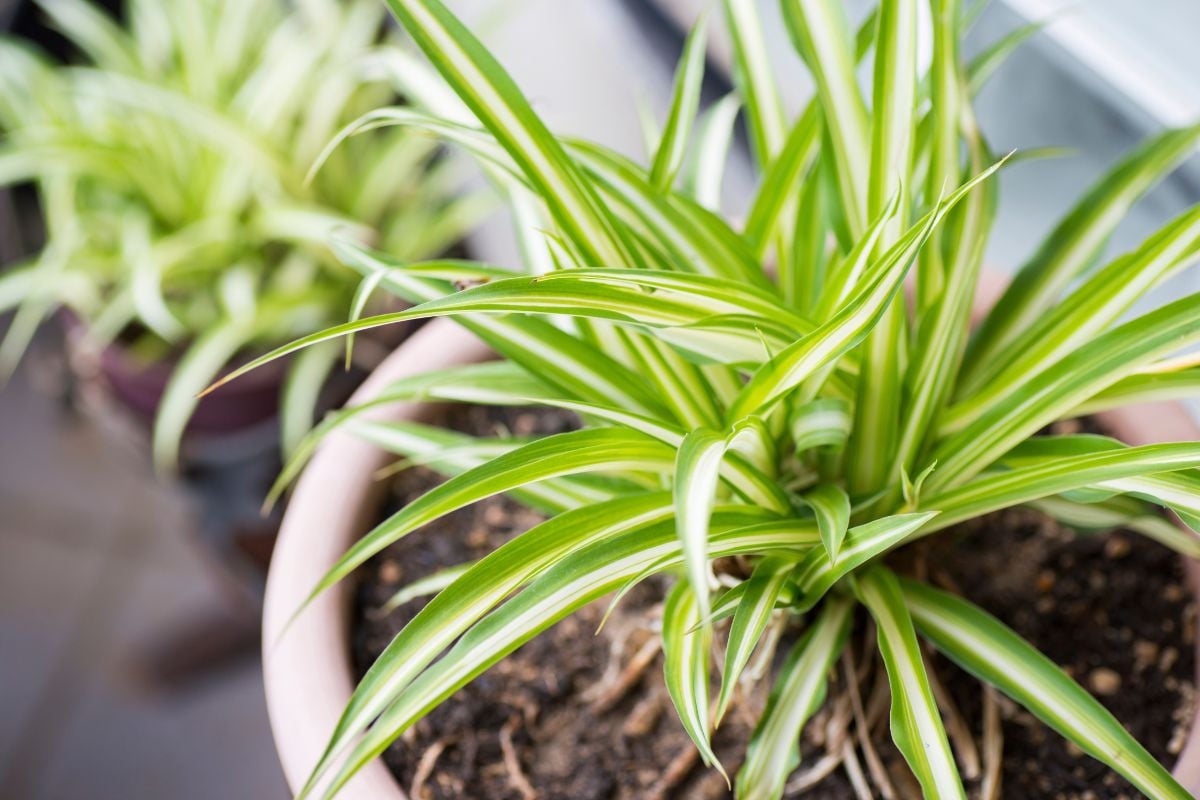
| Spider Plant (Chlorophytum comosum) | Low-Medium | Moderate |
| Staghorn Fern (Platycerium bifurcatum) | Medium | Moderate-High |
| String of Pearls (Curio rowleyanus) | Medium-High | Low |
| Tradescantia (Tradescantia zebrina) | Medium | Moderate |
| Tree Philodendron (Philodendron bipinnatifidum) | Low-Medium | Moderate |
| Wax Plant (Hoya spp.) | Low-Medium | Low |
| ZZ Plant (Zamioculcas zamiifolia) | Low-Medium | Low |
Note: Indoor temperature and humidity can also influence a houseplant’s metabolic rate and water consumption. The values above are based on warm temperatures (65-80 °F or 18-27 °C) and moderate humidity (30-60%).
In addition, ensure that your plant is grown in appropriate well-draining soil to optimize water use and drainage.
Symptoms of Incorrect Lighting
Plants often show telltale signs of light stress that can help you properly diagnose and treat the issue.
Here are the common signs of light stress in houseplants with their corresponding solutions:
Signs of Too Little Light
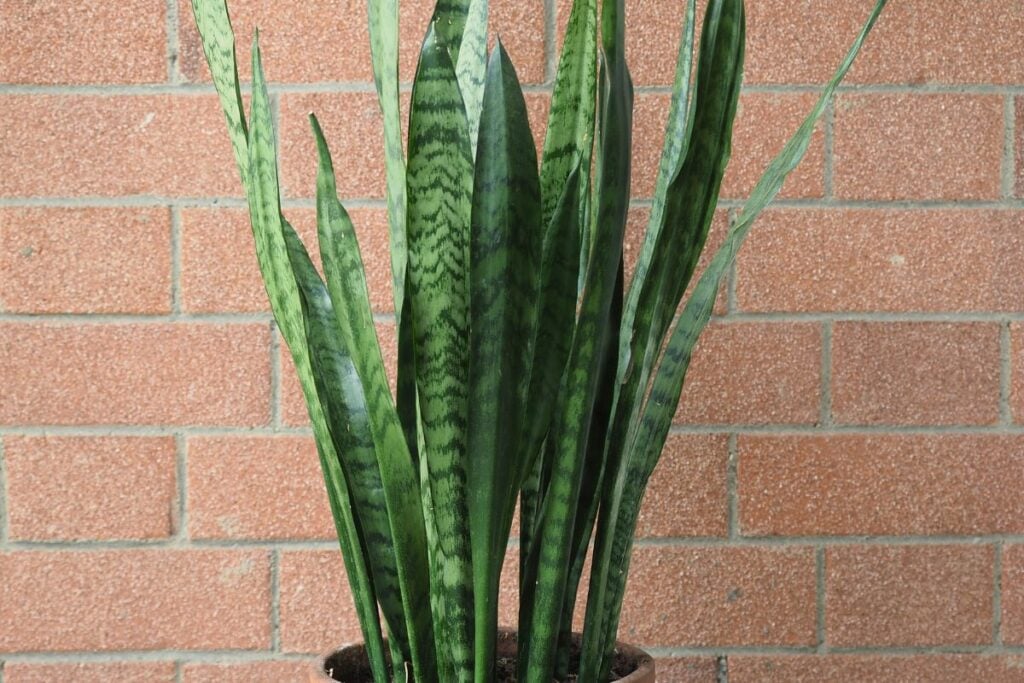
Plants that are exposed to insufficient light will show the following stress symptoms:
- Slow Growth: Lack of new leaves even during the growing season due to insufficient light energy.
- Pale or Small New Leaves: New growth is smaller and lighter in color than older leaves.
- Loss of Variegation: Colorful patterns on leaves revert to solid green, such as in the case of snake plants, because of increased chlorophyll concentrations to maximize light absorption.
- Leaning: The entire plant noticeably leans or stretches towards the nearest light source.
- Leggy Growth: Prolonged exposure to insufficient light will prompt stems to become longer and stretch toward the light source with sparse leaves.
The following tips can help your plant produce healthier growth and regain its vibrant color or attractive variegations:
- Move the plant a few feet (+0.6 m) closer to a brighter area.
- Supplement natural light with artificial light so the plant receives 12-16 hours of daylight.
- Prune odd-looking or leggy stems to a quarter-inch (0.6 cm) above a leaf node to encourage branching. For plants that grow on stalks like ZZ plants, you can cut back the leggy stalks close to the soil and new ones will emerge after improving the lighting conditions.
- Rotate the pot by 90-180° weekly or every time you water to promote balanced growth and a bushy appearance.
Signs of Too Much Light
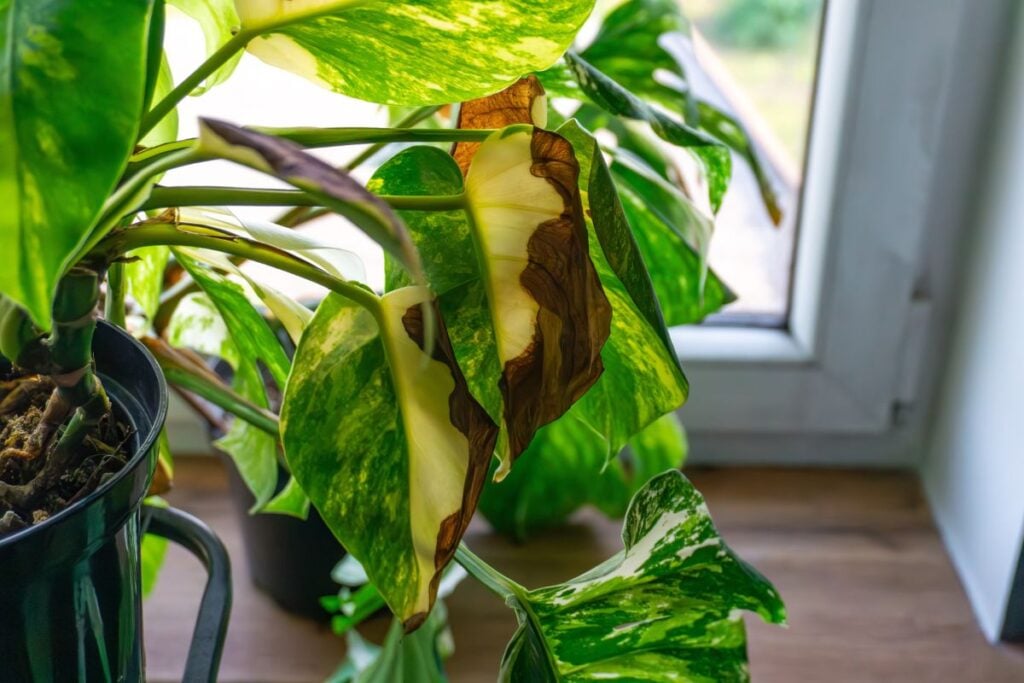
Too much sunlight can lead to the following stress symptoms:
- Scorched Spots: Brown, crispy, or white/yellow patches on the leaves exposed to the sun.
- Wilting: The plant droops during the hottest part of the day, even if the soil is moist.
- Crispy Edges: The edges of the leaves turn brown and dry.
- Faded Color: The leaves look washed-out, bleached, or pale.
Sun-damaged leaves are irreversible, and the affected plant requires the following recovery tips:
- Prune severely discolored leaves using sharp, sterile shears or scissors. For plants with large leaves, such as fiddle leaf figs, you can cut out only the brown or yellow edges. The green sections can still help with photosynthesis.
- Move the pot several feet (+0.6 m) away from the window to avoid direct sunlight.
- Hang sheer curtains to diffuse or filter the light during sunny days or at midday.
- Rotate the plant weekly to give the leaves respite from intense sunlight and give the other leaves some time to bask in the light.
- Water the plant regularly to improve its tolerance to sun and heat stress.
Signs of Ideal Lighting
You’ll know your plant is in the perfect spot when you see the following responses to light:
- Steady, Healthy Growth: The plant produces new leaves regularly during the growing season. New leaves are appropriately sized and spaced.
- Vibrant Color: The leaves have rich, deep coloring. Variegated plants show crisp, clear patterns.
- Strong Stems: The plant grows upright and appears strong, not needing to lean or stretch for light.
- Flowering: For flowering species, the plant produces blooms as expected during its season.
Transitioning Plants Between Light Levels and Seasons

Seasonal and weather changes can alter indoor lighting conditions. Although houseplants can adapt to these minor changes, a drastic transition from low to high light or vice versa can cause stress symptoms similar to those discussed in the section above.
Let’s explore how to mitigate stress from light changes:
Acclimatization
Before moving plants from low to high light conditions, they need to be acclimatized gradually over a week or two to prevent shock and sunburn.
Here’s how to transition houseplants between different light intensities.
- Move the pot about 2 feet (0.6 m) closer to the new, brighter light source.
- Leave it there for 1-2 weeks, observing for stress (yellowing, drooping).
- If the plant is fine, move it another 2 feet (0.6 m).
- Repeat until it reaches the desired location.
Adjusting to Seasonal Changes
Even if a plant doesn’t move, its environment changes. Most tropical houseplants don’t enter dormancy, but noticeably slow their growth in the shorter, darker days of fall and winter. Adjust your care routine accordingly.
- Light: In fall and winter, maximize available light by wiping dust from leaves and windows. Consider moving plants closer to a sealed window or supplementing with a grow light. In summer, use sheer curtains to protect plants from intense afternoon sun.
- Water: Water less frequently in fall and winter as the plant’s needs decrease. Wait for the soil to dry out more than you would in summer.
- Temperature & Humidity: Keep plants away from cold drafts in winter. Use a humidifier, group houseplants together, or place compact pots over a pebbled tray with water to counteract the drying effect of indoor heating.
- Fertilizer: Avoid fertilizing in fall and winter. Slower growth means the plant can’t use the nutrients, increasing the risk of fertilizer burn.
- Pruning: Save major pruning for spring and summer. In fall and winter, only remove unhealthy or dead leaves to help the plant conserve energy.
Using Artificial Light

When I was a beginner gardener, I used to think that the regular fluorescent lamps in my office were enough to provide my plants’ light needs. After several months of exposure to inappropriate lighting, I noticed that the plants began to wilt despite regular watering.
After using light meter devices, I’ve eventually learned that regular LED, fluorescent, or incandescent lamps in the ceiling can provide similar intensity as low natural light (50-250 ft-c or 538-2690 lux)—sometimes even lower.
The quality or intensity of artificial lights is usually measured using two standards:
- Color-Rendering Index (CRI): This rating ranges from 0 to 100. Ratings close to 100 indicate the lamp’s brightness, and the definition or visibility of colors is close to that of natural light. One downside is that the rating doesn’t always translate to the photon quantities that plants can utilize.
- Correlated Color Temperature (CCT): This label is measured in Kelvin (K). Products labeled around 6500K consist of cool white light and are ideal for foliage houseplants. On the other hand, those ranging from 2500-3000K are rich in warm, red light, perfect for flowering plants.
Here are the common types of lamps you can use indoors:
- Light-Emitting Diode (LED) Lamps: White LEDs (around 6500K) emit a wide spectrum, including red, orange, yellow, green, blue, and sometimes ultraviolet (UV) and infrared (IR).
- Fluorescent Lamps: Can vary depending on the brand and specifications (around 5000-6500K). Some products are predominantly green-yellow or predominantly blue.
- Incandescent Lamps: Predominantly red and/or far-red (around 2700-3000K).
It’s best to use full-spectrum lamps (around 6500K) to supplement natural light or serve as the sole light source. Such lamps make it possible to grow plants in windowless rooms or dark corners. They should also be set at an appropriate distance from the plants for optimal intensity.
Pro Tip: Regardless of the lamp type, be sure to use protective lenses (i.e., sunglasses) when installing and testing for lighting. I have experienced flash blindness the first few times I installed grow lamps, and it was uncomfortable.
Here are essential factors to consider to tailor artificial lighting to an indoor garden:
- Source: Purchase a lamp from a reputable gardening store, as they sell lamps specifically designed for general indoor garden use or for specific houseplants (i.e., those with higher blue light concentration for foliage plants or more red light for flowering plants).
- Fixture Design: Use a fixture that cups the sides of the lamp, so the light doesn’t spread too wide and focuses on the plant(s).
- Placement for Compact Plants: Position the lamp 6-12 inches (15-30 cm) above compact houseplants. Pro Tip: Use a stand that allows you to adjust the lamp’s height to accommodate plant growth.
- Angle for Taller Plants: Position the lamp at a 45° angle, 6-12 inches (15-30 cm) away from taller plants to illuminate the leaves below.
- Duration of Exposure: A good rule of thumb is to give foliage plants at least 12 hours of daylight (natural and artificial) or up to 16 hours for flowering plants. Ideally, you must use artificial lights only to supplement the missing hours during dark, cloudy days.
- Regular Rotation: Rotate the pots or reposition the lamp stand regularly (weekly or at watering) to promote balanced growth.
Outdoor Considerations
Indoor lighting is notably less intense than natural outdoor lighting, and houseplants cultivated under mild indoor light are less tolerant of intense outdoor sun.
I occasionally bring a few houseplants outdoors in late spring to summer to encourage robust growth and thicker trunks, especially in Ficus plants like fiddle leaf figs and rubber trees.
This routine is quite complex and requires keen observation of the plant’s response to the change.
Below are essential facts and tips for the appropriate transition of houseplants to outdoor environments:
- When to Move Plants Outside: Wait until all danger of frost has passed and nighttime temperatures are consistently above 50-55 °F (10-13 °C). This is typically in late spring or early summer.
- The Power of Outdoor Light: Even “full shade” outdoors is significantly brighter (often 1000+ ft-c) than “bright, indirect light” indoors. Only plants that receive a bit of direct sun indoors are likely to adapt to outdoor light.
- Acclimatization is Crucial: Houseplants must be moved outdoors gradually, starting with an hour in a deeply shaded area for a week, and then slowly increasing the duration while moving to a brighter spot over several weeks to prevent severe sunburn and heat stress.
On the other hand, it’s also important to help the plants adapt to lower light intensity before bringing them back indoors to avoid transition or relocation shock.
Follow the tips below to safely transition plants back to indoor care for the cold seasons:
- In early fall, allow the plants to receive morning sun from their usual shaded spot.
- Move them back indoors to a spot with bright indirect light in the afternoon.
- About a week before nighttime temperatures drop below 50 °F (10 °C) in the fall, you can permanently keep the plants indoors.
Note: Inspect any plants thoroughly for pests before bringing them back indoors. Watch out for caterpillars, snails, slugs, pillbugs, and leafminers, which are common outdoors.
Final Thoughts
The right approach to starting an indoor garden is first to assess your lighting and then choose a plant that matches it.
Take a day to observe the light in your own home. Use the shadow test and check your window directions to confidently map out the potential growing spaces before buying your next plant.
Desert plants generally prefer direct sunlight and require indoor spaces with high light intensity, such as those next to an east, west, or south-facing window. Tropical plants, on the other hand, do best in spots with medium or bright, indirect light several feet from a sunny window.
Keep an eye on your plant’s response to the light conditions and adjust accordingly. Leaning and legginess are telltale signs that the plant isn’t getting enough light. In contrast, bleached or burnt leaves are signs of excessive light.