
7 Common Pests on Houseplants & How to Spot and Manage Them
Plant pests can be a serious problem in indoor gardens, where predatory insects cannot keep pest populations under control. Even healthy-looking houseplants can be affected by a variety of tiny, often hidden intruders.
Here are the common pests affecting houseplants:
- Aphids
- Mealybugs
- Spider mites
- Scale insects
- Thrips
- Whiteflies
- Fungus gnats
In this article, I’ll help you identify the most common houseplant pests, including their symptoms. I’ll also share practical treatment and prevention strategies that work against pests regardless of plant type.
Houseplant Cultivation and Pest Receptiveness
Plants have long been recognized for their medicinal benefits to humanity.
Here’s how plants have gradually made their way into homes throughout history:
- Ancient people from over 5,000 years ago (3,000 BC) brought various plants indoors for medicinal use (i.e., aloe vera) and enjoyment.
- People from the Victorian era were among the first to popularize indoor gardening as they cultivated plants with captivating foliage, particularly palms.
- Over the years, home gardeners have explored various plants that thrive indoors, paving the way to a diversity of houseplants that we know today, including tropical plants, flowering plants, and succulents.
Houseplants have long adapted to indoor environments with natural light through windows, stable temperatures, and moderate humidity.
Unfortunately, bringing plants indoors also introduced sap-feeding pests into homes.
Left unaddressed, pests flourish all year round in indoor gardens due to:
- The absence of natural predators that should biologically control pest populations
- Warm temperatures (65-85 °F or 18-29 °C)
- Moderate humidity (30-60%)
- Poor airflow
An essential part of indoor gardening includes routine monitoring to catch early signs of pest infestations, maintain plant health, and avoid pest spread across a plant collection.
Note: Proper pest management can prevent secondary problems like sooty mold and ants.
Phloem-feeding pests like aphids, mealybugs, scale insects, and whiteflies excrete honeydew (sugary residue) that can fall on the leaf surface and cause the following issues:
- Sooty mold fungal spores may land on the residue, forming black threadlike structures (mycelia) that create a black film over the leaf surface. Sooty mold doesn’t damage plants, but a wide coverage on the leaf surface can inhibit photosynthesis and cause yellowing on the affected leaves.
- Ants, especially in warmer climates, are drawn to the sugary residue on the leaves. They also protect or farm honeydew-producing pests to secure their food source. Ants can fight against natural predators, rendering biological control methods ineffective. As such, it’s important to also manage ants when treating pest infestations. I’ll discuss this further below.
Symptoms of Infestations
Pest infestations can significantly reduce a plant’s aesthetic quality. In addition, many pests that invade indoor gardens are polyphagous, allowing them to damage an entire plant collection.
Spotting symptoms early can prevent irreversible plant damage. It’s also crucial to distinguish them from other common symptoms of plant stress, such as underwatering, overwatering, or bacterial/fungal infections, for proper treatment.
Early Signs
Houseplant pests cause specific signs that help distinguish them from other pests or stress symptoms:
| Symptoms | Common Culprits |
| Yellowing of young growth only | Aphids |
| Localized yellowing on infested leaves (with crawlers visible through a 10-30x magnifying glass) | Aphids, mealybugs, scale insects, whiteflies |
| Honeydew, sooty mold, and ants (in warmer regions) | Aphids, mealybugs, scale insects, whiteflies |
| Stippling or fine yellow or white specks | Spider mites |
| Webbing on leaves or between stems and leaves | Spider mites |
| Fluffy white mass on leaf undersides | Mealybugs, scale insects |
| Tiny brown bumps on stems, petioles, or leaf undersides | Scale insects |
| Silvery white, dry patches on the leaf surface | Thrips |
| Tiny black fecal specks on the leaves | Thrips |
| Tiny winged insects flutter when the leaves are disturbed | Thrips (brown or yellow with fringed wings) Whiteflies (white, waxy wings) Fungus gnats (black or grey wings with Y-shaped venation) Winged aphids (brown, yellow, or black with cornicles on the rear) |
Advanced Symptoms
Prolonged infestations from any houseplant pests that are left untreated can lead to the following severe symptoms:
- Yellowing spots on leaves with brown or necrotic centers (houseplant pests can vector viral, bacterial, or fungal diseases)
- Curling leaves
- Deformed or distorted new growth
- Leaf drop
- Stunted growth
Note: Although the advanced symptoms may look similar to stress damage, observing the preceding pest symptoms in the table above can help you distinguish pest infestation from plant stress.
Inspection Techniques and Tools
A practical way to keep pest populations in check is to inspect your plants weekly or every time you water them.
You can use the tools and methods listed below to confirm an infestation and identify the pests responsible:
Plant Shake Test
Winged pests tend to hide on leaf undersides to feed, rest, or lay eggs. Rustle the leaves with your hands or hold the stem firmly and gently shake the plant to disturb and reveal any flying insects.
White Paper Test
Place a sheet of white paper over the soil as you shake the plant to catch tiny, wingless pests and visually identify them using a magnifying glass or smartphone camera.
Roll a pencil or wooden chopstick over the paper to squish and confirm the presence of microscopic pests like spider mites.
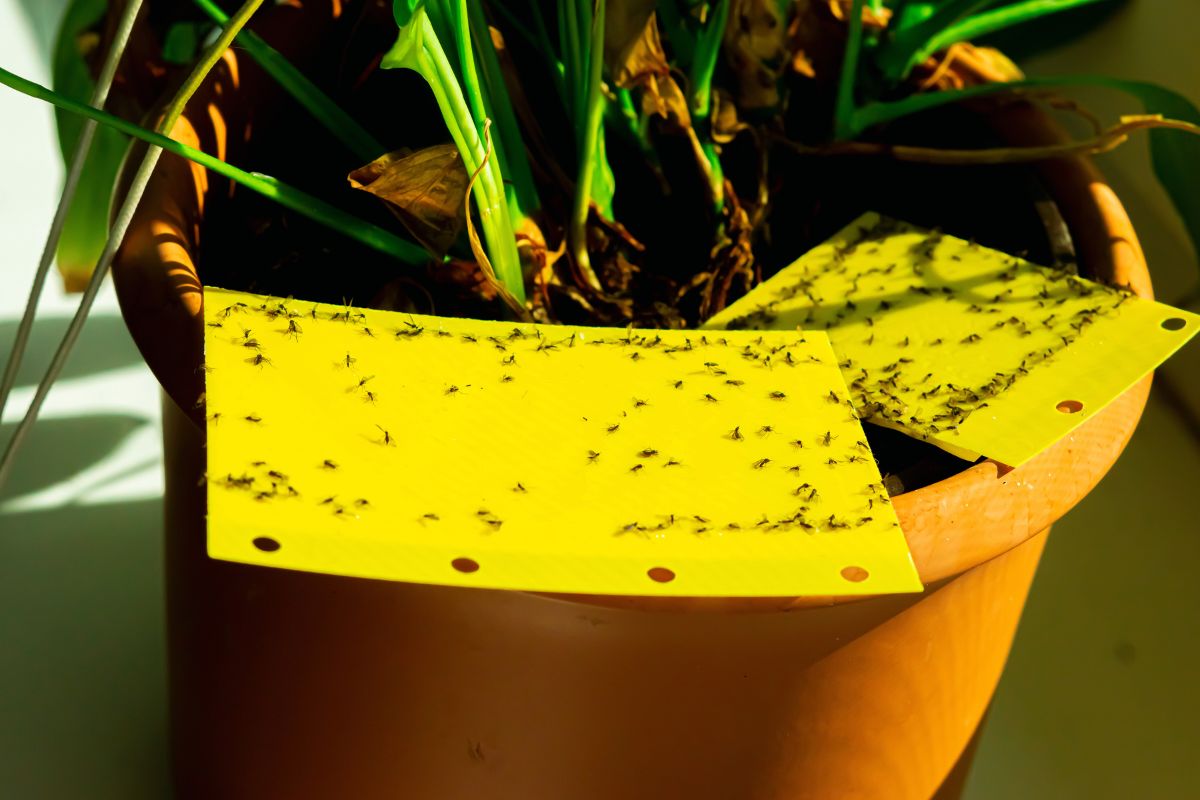
Yellow Sticky Trap
Stake small yellow fly traps into the soil for shorter plants or hang the traps near the canopy of taller plants. Flying insects are attracted to the yellow traps, which resemble nectar-rich flowers. Pests like winged aphids can also visually perceive yellow better than other colors.
Sticky Tape Test
Lightly dab a clear, sticky tape on the leaf undersides, stems, or petioles to collect the tiny crawlers or nymphs for easier identification. Examine the pests under a magnifying glass or microscope.
Magnifying Glass or Smartphone Camera
Using a 10x-30x magnifying glass or the high-resolution zoom feature of your smartphone camera, inspect the pests caught on the white paper or sticky traps.
You can also use these tools to inspect the leaf undersides, petioles, stems, or the soil for pest eggs, crawlers, or wingless adults.
Microscope
If you have a microscope, you may collect tiny crawlers or nymphs from leaf undersides to examine them. Collect the pests using sticky tape or scrape them off the leaves using a toothpick or a cotton swab, and stick/smear them over a glass slide.
Common Pests
Here’s a brief guide on identifying the common pests that affect houseplants and their associated symptoms of infestation:
1. Aphids
Symptoms of infestation:
- Yellowing on younger leaves
- Distorted or curled new leaves
- Honeydew excretion
- Sooty mold
- Ants
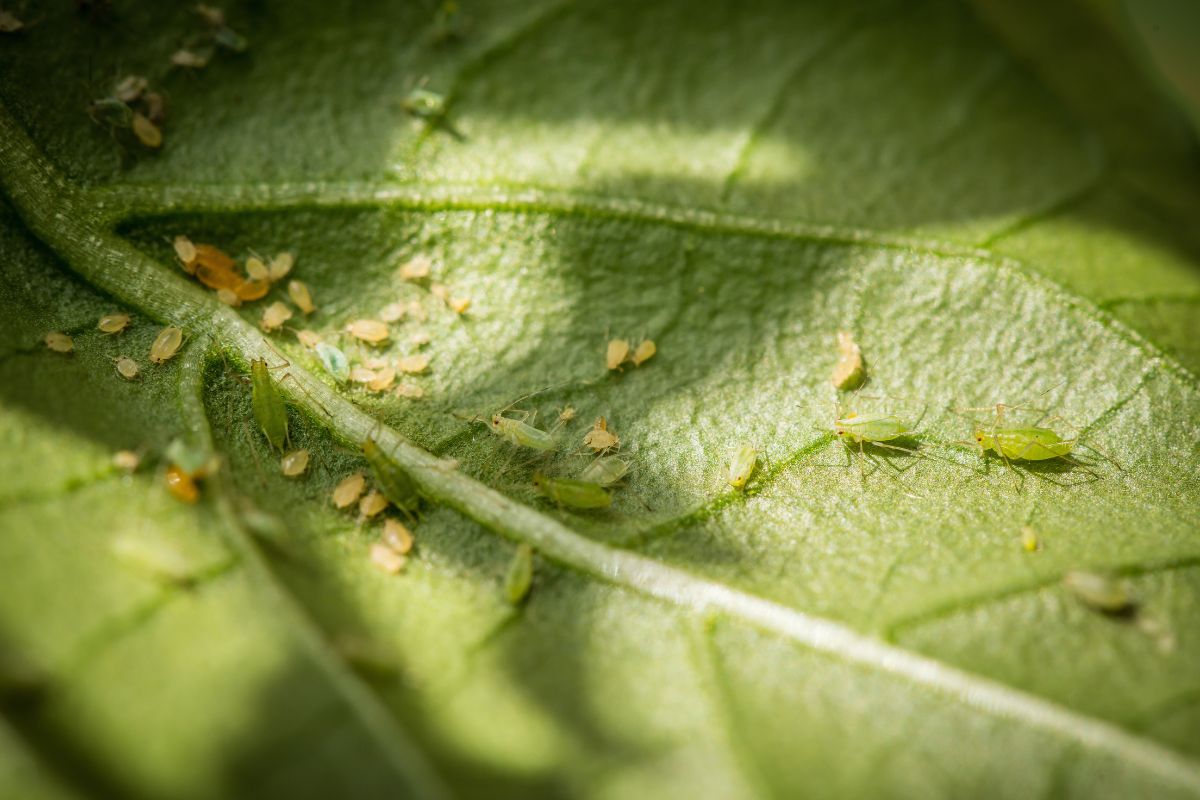
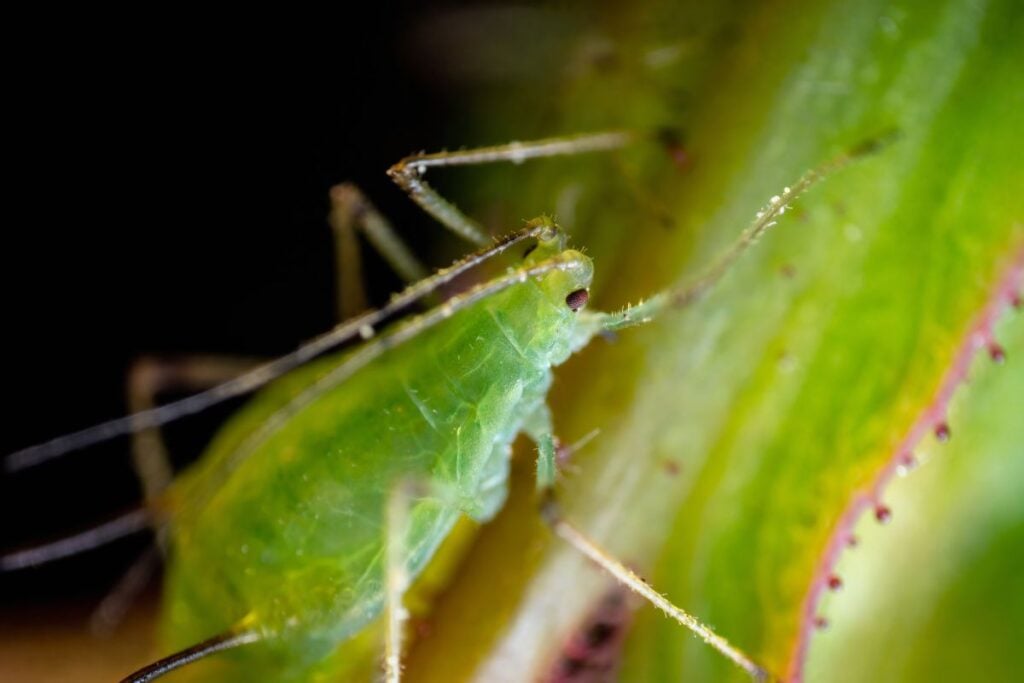
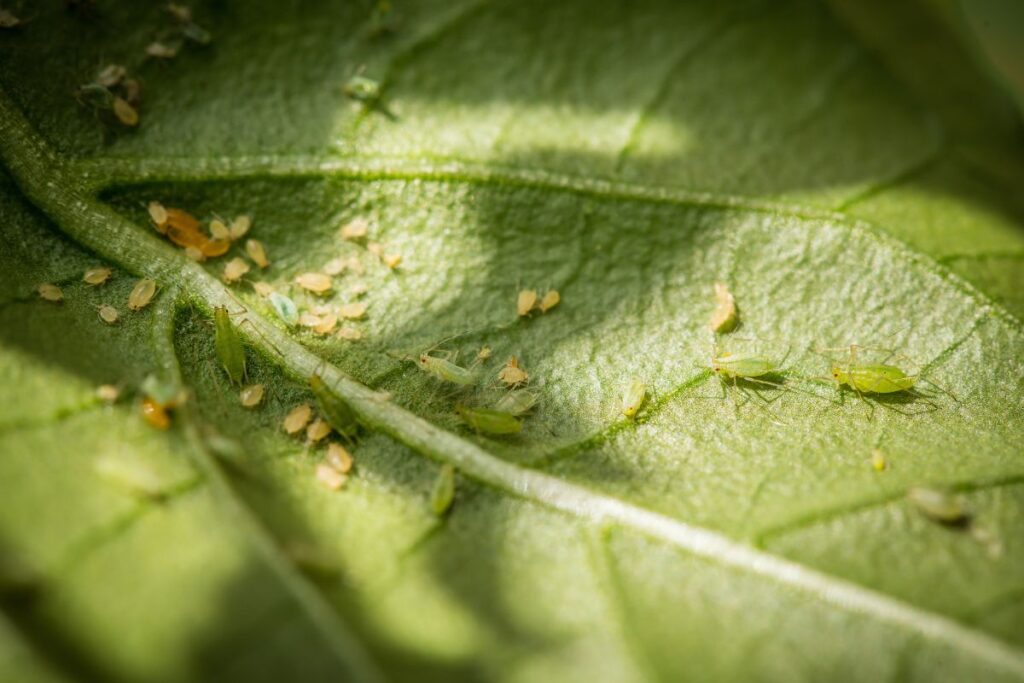
Aphids (Family Aphididae) are destructive plant pests that target soft, new growth in houseplants. They feed on sugar-rich plant sap from the phloem using a piercing-sucking mouthpart (stylet).
You can identify aphids with the following physical traits:
- Size: 1/16-⅛ inches (1.6-3.2 mm)
- Shape: Tiny head with pear-shaped abdomen and six legs, winged adults have a more slender shape than wingless adults; nymphs look like miniature adults
- Color: Translucent green, yellow, pink, orange, or black
- Distinct Marks or Features: Two cornicles at the rear end of the abdomen
Aphids are troublesome indoor pests as polyphagous species can attack a wide range of houseplants, including:
- Broadleaf houseplants
- Flowering plants
- Herbs
- Succulents
Aphids have unique reproductive behaviors that make them a big threat in indoor gardens; they can:
- Reproduce sexually and lay eggs (oviparous) in the fall for overwintering.
- Undergo asexual reproduction, birthing live young (viviparous), resulting in a rapid rise in population during spring and summer.
- Exhibit polyphenism, which allows adults to emerge with wings whenever the host plant is overcrowded with pests or the food quality declines. Winged aphids can easily infest neighboring plants.
As soft-bodied pests, aphids are vulnerable to physical removal using a water hose spray or treatment using organic contact pesticides like neem oil, insecticidal soap, and pyrethrin sprays.
Biological control methods that work specifically on aphids include:
- Ladybugs (Hippodamia convergens)
- Green lacewing larvae (Chrysoperla carnea)
- Parasitoid wasps (Aphidius spp.)
2. Mealybugs
Symptoms of infestation:
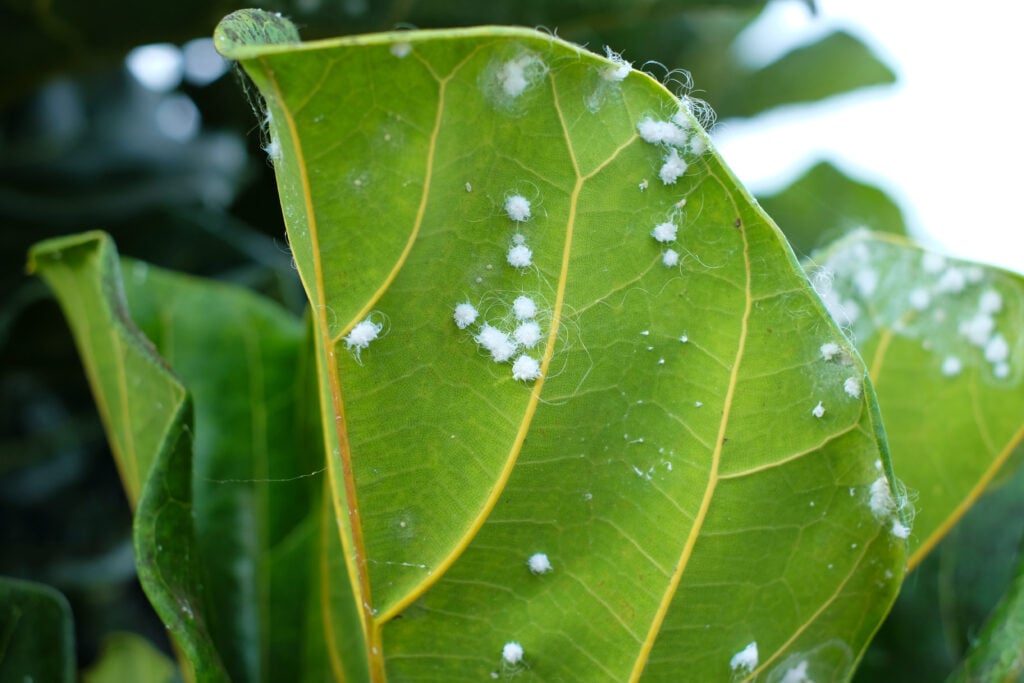
- Fluffy white, cotton-like clumps on leaf undersides, axils, or newly unfurled leaves (egg ovisac or wax-covered nymphs and adults)
- Localized yellowing at the site of infestation
- Honeydew residue
- Sooty mold
- Ants
Mealybugs (Family Pseudococcidae) are also sap-feeders with stylets used to pierce through plant tissue and draw sap from the phloem.
You can easily distinguish mealybugs from other pests because of the following unique traits:
- Size: 1/16-⅛ inches (1.6-3.2 mm)
- Shape: Oval, segmented body with waxy rear filaments
- Color: White (adult), pinkish (crawlers or early nymphs)
- Distinct Marks or Features: Fluffy, cotton-like coating on older nymphs and adults, and waxy rear filaments (tail)
Mealybugs are highly polyphagous and can infest an entire houseplant collection, including:
- Succulents
- Flowering plants
- Fruit-bearing plants
- Foliage plants
Here are other problematic traits of mealybugs:
- Sexual and asexual reproduction: Adult females can reproduce sexually if there are males present or asexually in the absence or lack of males.
- Possible survival without a host: Nymphs can survive 2-3 weeks without a plant host and may be transmitted to houseplants through unwashed gardening tools and clothing (i.e., gloves).
- Resistance to contact pesticides: Eggs within waxy ovisacs and wax-covered nymphs and adults are mildly resistant to contact pesticides.
- Potential root damage: Nymphs or adults that fall into the soil can infest plant roots or slowly crawl back up to the foliage.
Manual removal using a water hose spray or alcohol swabs (with isopropyl alcohol) usually works against mealybugs. However, ensure minimal contact between the alcohol swab and the leaf surface, as alcohol can degrade the waxy covering and cause yellowing or browning.
Young nymphs or crawlers without a waxy coating are vulnerable to contact pesticides like neem oil, insecticidal soap, and pyrethrin sprays.
Beneficial bugs you can use indoors for the biological control of mealybugs include:
- Ladybugs (H. convergens)
- Green lacewing larvae (C. carnea)
- Parasitoid wasps (Anagyrus vladimiri)
- Mealybug destroyer beetles (Cryptolaemus montrouzieri)
3. Spider Mites

Symptoms of infestation:
- Tiny yellow or white specks (stippling) on the leaves
- Fine webs between leaves and stems or petioles
- Leaf drop
Spider mites (Family Tetranychidae) are microscopic pests that are hard to catch until their populations become large enough to cause the visible symptoms listed above. They’re arachnids (not insects) and are closely related to spiders with eight legs, hence the name.
You may catch spider mites using the white paper test. A close examination of the tiny critters will reveal the following traits:
- Size: <1/25 inch (1 mm)
- Shape: Spider-like body with eight legs (6 on nymphs)
- Color: Red, black, or translucent
- Distinct Marks or Features: To dark spots on the back of two-spotted spider mites (the most common species affecting houseplants)
Spider mites are also polyphagous and commonly found on:
- Succulents
- Fruit-bearing plants
- Flowering plants
- Foliage plants
Spider mites like to feed on drought-stressed plants that retain moisture on their leaves for survival. The lower transpiration rate reduces the humidity around the leaves, allowing the pests to suck as much sap from the leaves and readily excrete the excess moisture.
Note: Other sources claim that boosting the humidity by misting, using pebbled trays, or humidifiers is the primary step in dealing with spider mites. However, I’ve experienced a spider mite infestation even in my humid/tropical indoor garden, which I constantly kept at around 60% humidity using a humidifier.
It’s also not recommended to increase indoor humidity over 60%, as it can lead to mold or mildew growth that can harm human and plant health.
Spider mites can reproduce sexually or asexually. Adult females are guarded by males to mate and produce eggs with female mites. On the other hand, unfertilized females produce eggs with male mites.
You can manually remove spider mites using a shower spray. I recommend thoroughly controlling and eliminating the infestation using neem oil, insecticidal soap, or spinosad-based sprays.
Ladybugs and lacewing larvae may also feed on spider mites.
However, predatory mites are more effective, and you can choose from the following species:
- Amblyseius spp.
- Galendromus spp.
- Neoseiulus spp.
- Phytoseiulus spp.
4. Scale Insects

Symptoms of infestation:
- Immobile brown or tan bumps on stems, leaf veins, or leaf undersides
- Yellowing at the site of infestation
- Honeydew residue
- Sooty mold
- Ants
- Curling leaves
- Leaf drop
Scale insects (Superfamily Coccoidea) can camouflage on plant stems and leaves because of their brown, waxy shells.
Two types of scale insects have distinct appearances and feeding habits:
- Armored scales: They have flat, oyster-like shells detached from the insects’ bodies. Scraping the shells leaves behind the scale insects. Armored scales typically attach to the leaf surface because they feed on cell sap (no honeydew excretion). They have a toxic saliva that causes localized yellow spots at the feeding site.
- Soft scales: They have tortoise-like shells attached to their bodies. Removing the shell can remove the adult scale, but nymphs and eggs may be hidden underneath and remain on the leaves. Soft scales are commonly found on or close to the stems, petioles, or leaf veins because they feed on the phloem sap and excrete honeydew.
You can distinguish scale insects from other sap-feeding pests through the following traits:
- Size: 1/16-⅛ inches (1.6-3.2 mm)
- Shape: Tortoise-like (soft scale) or flat, oyster-like (armored scale) bumps; nymphs are oval and translucent, gradually losing mobility as they start creating a waxy covering
- Color: Tan, brown, yellow, or waxy white
- Distinct Marks or Features: Immobile brown bumps that attach firmly to plant tissue
Scale insects are commonly found on:
- Succulents
- Herbaceous perennials
- Foliage houseplants
The biggest problems with scale insect infestations include the following:
- The adults are resistant to organic contact pesticides and common predators, like ladybugs and lacewings, due to their thick waxy shells. Eggs and live crawlers may also be hiding underneath the shells’ protection.
- Adult females can reproduce sexually or asexually, depending on the availability of males. This results in uninterrupted and multiple generations in warm indoor conditions.
Manually remove the shells using an alcohol swab, an old toothbrush, or your fingernails to expose the crawlers and nymphs. This method makes them vulnerable to contact pesticides like neem oil, insecticidal soap, and pyrethrin. Discard the shells in soapy water to kill any attached adults, eggs, or nymphs.
Distinguishing between armored and soft scales can also help you decide whether systemic treatments are necessary. For instance, imidacloprid soil drench delivers active ingredients through the plant’s xylem, making them effective against armored scales but not soft scales.
Here are predatory bug and parasitoid wasp species that attack soft and armored scales:
- Ladybugs (Chilocorus pustulatus)
- Lacewings (Chrysopidae, Hemerobiidae, Coniopterygidae)
- Parasitoid wasps (Coccophagus lycimnia)
5. Thrips
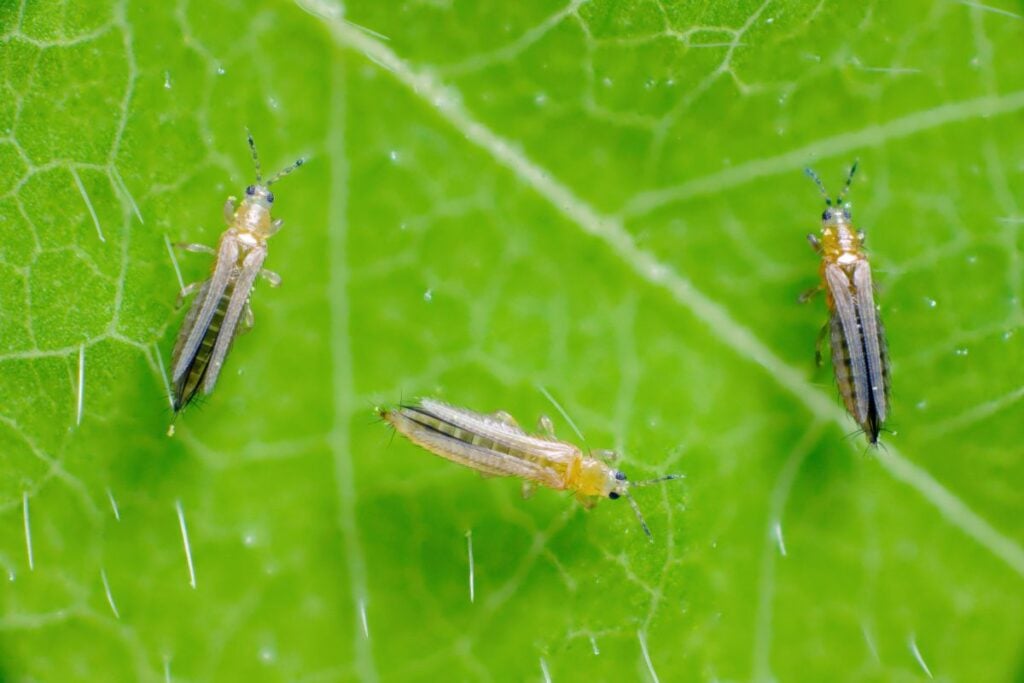
Symptoms of infestation:
- Silvery streaks or scars on the leaf surface
- Stippling on leaves
- Distorted flowers or leaves
- Black specks (excrement)
- Leaf drop
Thrips (Order Thysanoptera) are aesthetically damaging pests as the adults pierce through the leaf tissue and inject their eggs. As the larvae hatch, they begin to feed on cell sap and create the characteristic dry, silvery patches on the leaves.
You can tell thrips apart from other larvae/nymphs and winged adults through the following characteristics:
- Size: 1/16-⅛ inches (1.6-3.2 mm)
- Shape: Slender body with segmented abdomen (larvae and adults)
- Color: Yellow or brown
- Distinct Marks or Features: Segmented abdomen and four fringed wings
Thrips damage may be found on the following types of houseplants:
- Flowering plants
- Foliage houseplants (especially broadleaf)
- Succulents
- Herbs
Due to their burrowing behavior, thrips larvae are resistant to most contact pesticides. Winged adults can also quickly flutter when the leaves are disturbed.
Using OMRI-listed indoor pesticides with systemic activity (i.e., spinosad) can help with thrips management.
Scrape the top inch (2.5 cm) of the soil to remove the larvae that fall and eventually pupate in the soil, and replace it with fresh soil mix. Spraying the leaves and the top layer of the soil with neem oil solution weekly can disrupt thrips development.
Several generalist predatory bugs and thrips-specific parasitoids may also be used for biological control, such as:
- Lacewing larvae (C. carnea)
- Predatory mites (Amblyseius cucumeris)
- Minute pirate bugs (Orius insidiosus)
- Parasitoid wasps (Thripobius semiluteus)
6. Whiteflies

Symptoms of infestation:
- Sticky honeydew
- Yellowing or silvery discoloration on the leaves
- Sooty mold
- Ants
- Leaf drop
- Tiny white insects fly when the leaves are disturbed
- Circular or spiral egg arrangement on leaf undersides
- White waxy film on leaf undersides
Whiteflies (Family Aleyrodidae) are winged sap-feeding pests related to aphids, scale insects, and mealybugs under the Order Hemiptera.
Here are the traits that can help you tell whiteflies apart from other pests:
- Size: 1/16-⅛ inches (1.6-3.2 mm)
- Shape: Short body about 1-2 mm with two long pairs of flat or tent-shaped wings
- Color: Yellow or white body and white, waxy wings
- Distinct Marks or Features: Vasiform orifice (anus-like structure) present in nymphs and adults; grayish zigzag bands on banded-winged whiteflies
It’s common to find whiteflies on the following houseplants:
- Herbs
- Vegetables
- Flowering plants
- Ferns
- Tropical plants
Whiteflies are a serious threat to houseplants because:
- They can carry and transmit plant viruses while feeding on plant sap.
- The silverleaf whitefly (Bemisia tabaci) is resistant to most field-used pesticides.
- They can reproduce sexually or asexually, resulting in a rapid increase in population indoors.
You can quickly remove flying adults using a vacuum cleaner. Disturb the canopy and aim the vacuum at the winged insects. The suction power of a vacuum can kill the soft-bodied whiteflies. Be careful not to draw and physically damage the foliage.
You may also use yellow sticky traps to catch or identify adult whiteflies or alternate among organic contact pesticides like neem oil, insecticidal soap, and pyrethrin sprays.
Pesticide-resistant whiteflies are vulnerable to the following beneficial insects:
- Lady Beetle (Delphastus catalinae)
- Minute pirate bug (Orius insidiosus)
- Parasitoid wasp (Encarsia formosa)
7. Fungus Gnats

Symptoms of infestation:
- Small black flies near the soil
- Larvae slime on the potting mix
- Poor seedling growth
- Rapidly declining root health leading to yellowing leaves and leaf drop
Fungus gnats (Family Sciaridae) are moisture-loving pests that require constantly wet or damp soil to lay eggs in. The larvae require moist soil to hatch and feed on fungi populations, decaying organic matter, and plant roots, aggravating root rot symptoms.
As such, their presence in an indoor garden is usually a sign of overwatering and/or root rot.
You can identify fungus gnats based on the following traits:
- Size: 1/16-⅛ inches (1.6-3.2 mm)
- Shape: Segmented body that may be rounded (female) or pointy (male) and one pair of wings
- Color: Black or dark gray body, gray wings
- Distinct Marks or Features: Y-shaped venation on wings
Sciaridae fungus gnats reproduce sexually, with the adult females having a higher fecundity rate at warm temperatures (around 75 °F or 24 °C). The short-lived males are non-feeding and spend their lives looking for a female to mate with.
Since adult gnats can fly, contact pesticides don’t work on them. Neem oil applied directly onto the top 2 inches (5 cm) of the soil may kill gnat larvae. However, frequent use can inhibit plant growth due to the oil’s water-repellent and allelopathic properties.
I have tried adding a thin layer of pumice (0.5 inches or 1.3 cm) over the soil surface as advised by a fellow gardener. I noticed the simple approach was able to keep the soil surface dry and deter fungus gnats from laying eggs in the potting mix.
Biological control using beneficial insects and bacteria can eliminate fungus gnats.
Here are some options commonly used in indoor gardens:
- Beneficial nematodes (Steinernema feltiae)
- Predatory mites (Hypoaspis miles)
- Hunter flies (Coenosia attenuata)
- Bti (Bacillus thuringiensis israelensis)
Management of Less Common Indoor Plant Pests
Garden pests occasionally enter homes and infest houseplants through the following modes of transmission:
- Use of garden soil in potting mixes: It’s generally not recommended to add garden soil to potting mixes because it likely contains rot-causing pathogens and pests like pillbugs, millipedes, and pupae of Diptera flies. In addition, garden soil compacts quickly, increasing the risk of overwatering or root rot.
- Bringing houseplants outdoors for the summer: Occasional outdoor exposure makes houseplants vulnerable to outdoor pests. The pests may also hitch a ride when you bring the houseplants back indoors in the fall.
- Use of contaminated gardening tools: Improper cleaning of gardening tools like trowels, pruners, or pots can bring outdoor pests and/or diseases to your indoor garden.
- Open doors or windows: Winged insects like butterflies, moths, and Diptera flies can get into indoor gardens through open doors and windows with the help of wind currents.
Here are the less common plant pests you may encounter in your indoor garden:
- Leafminers: Leafminers are the larval form of flies under the Order Diptera. They burrow into the leaves of ornamental or vegetable plants and feed on plant tissue, creating white, hollow trails. Pruning of damaged leaves and the use of spinosad foliar spray can eliminate leafminers.
- Caterpillars: Caterpillars are the larval form of butterflies and moths (Order Lepidoptera). They chew on plant leaves, creating irregular tears. You can handpick caterpillars and drop them in soapy water, or bring them outdoors away from your home. Be careful when handling them, as some may have itchy spines. You can use tweezers or tongs to pick them up.
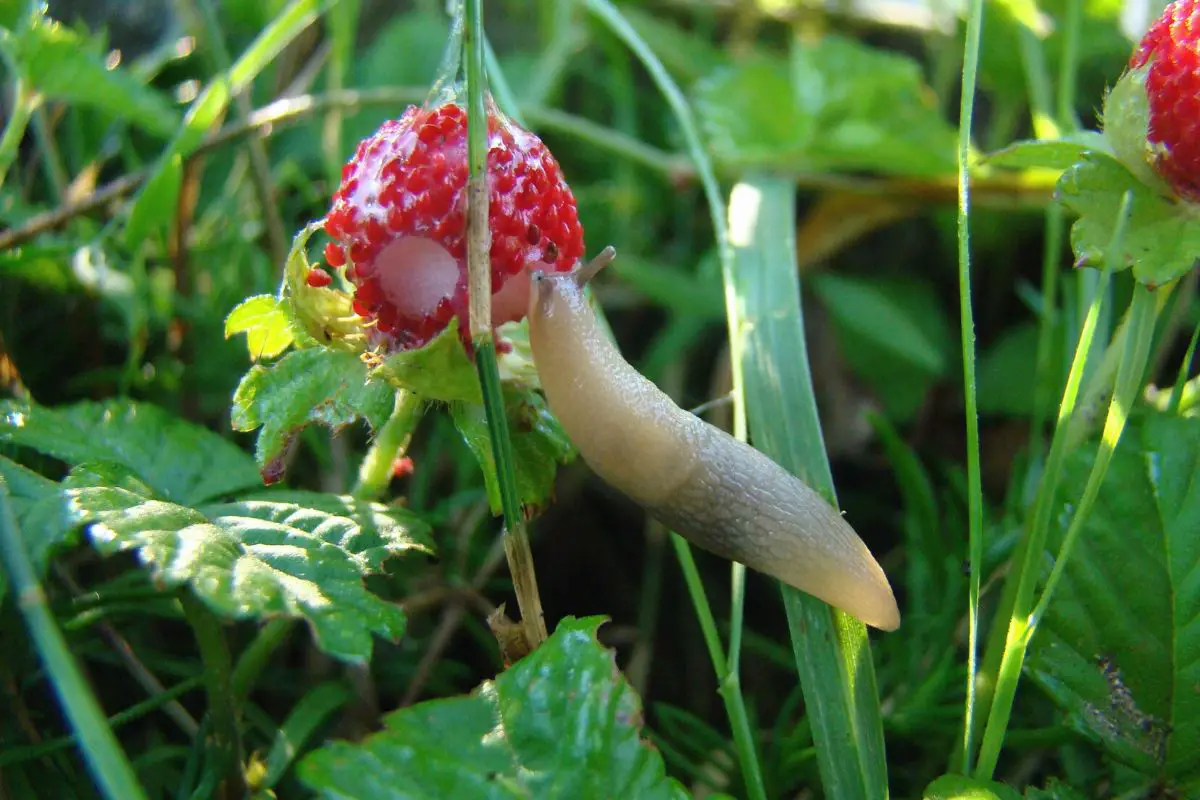
- Slugs & Snails: Slugs and snails are soft-bodied animals that chew on plant leaves. Feeding results in irregular tears or holes on the leaves, and their movement leaves behind a slimy trail. You can handpick the slugs and snails and drop them in salty water (2 cups water, ¼ cup salt) to kill them or relocate them outdoors to a spot where you don’t mind having them.
- Pillbugs & Sowbugs: These land-dwelling crustaceans feed on organic matter found in damp soil. They’re also known as roly-polies because of their ability to roll into a ball when threatened. If there’s a shortage of decaying organic matter, they feed on plant roots and stems. It’s important to repot the plant right away in a fresh, sterile pot and potting mix and discard the old soil to eliminate pillbugs and sowbugs.
- Millipedes: Millipedes may get indoors through cracks or gaps in the walls or floors. They’re drawn to the decaying organic matter in potting mixes. In rare cases, when food is scarce, they may feed on plant roots and stems, especially when the plant is weakened by stress (i.e., overwatering). Repotting in fresh, sterile soil can eliminate millipedes. Seal wall or floor cracks with tape or caulk to prevent indoor infestations.
- Springtails: Springtails are wingless pests that like humid conditions and damp soil. They feed on fungi, algae, and decaying organic matter, so you’ll likely see them in overwatered plants. Their feeding behavior doesn’t cause noticeable damage to healthy houseplants, but they can be a nuisance, as they can jump from one pot to another. Maintain moderate indoor humidity (30-50%) and allow the top 2 inches (5 cm) of the soil to dry out to drive away springtails from your indoor garden.
Integrated Pest Management (IPM)
Integrated Pest Management (IPM) is a holistic, step-by-step approach that combines early detection, targeted treatments, and preventive care for long-term pest control.
It’s important to utilize multiple methods to eliminate pests and prevent a re-infestation effectively.
Below, I’ll explore a comprehensive guide that works on all houseplants and pests.
Immediate Actions
I remember my first encounter with houseplant pests as an indoor gardener, and my first instinct was to discard the infested plants right away and start over. However, after decades of houseplant care, I’ve tried several methods and found effective control methods (and those that don’t work).
So if you’ve found pests on your houseplants, don’t panic.
Follow these four emergency steps:
- Isolate: Immediately move the infested plant away from all your other plants to prevent it from spreading. Choose a spot with similar light, temperature, and humidity conditions to prevent relocation stress.
- Identify: Use our comprehensive guide above to figure out exactly which pest you’re dealing with.
- Clean or Rinse: Take the plant to a sink or shower and give it a thorough, gentle rinse with lukewarm water to physically knock off as many pests as possible.
- Treat: Begin your first round of treatment, such as manually removing the remaining pests or applying a neem oil spray.
Natural and Organic Remedies

You can employ the following natural remedies to control minor infestations effectively:
- Pruning: Prune infested and symptomatic leaves using sharp and sterile pruning shears, scissors, or a knife. Spray the blades with rubbing alcohol between cuts to avoid spreading pests (or diseases). Discard the pruned plant parts into a garbage bag for burning or disposal.
- Shower Spray: After confirming a pest infestation, you can take sturdy plants to a bathtub or shaded spot outdoors and spray the leaves with water to dislodge the pests and ants (if any). For succulents or plants that dislike excess moisture, you can tilt them on the side and use a gentle shower spray setting to dislodge pests without wetting the soil.
- Leaf Cleaning: Wipe the leaves dry with a lint-free cloth to remove remaining pests or honeydew with sooty mold.
- Manual Removal: Use tweezers to pluck or scrape stubborn pests like scale insects and drop them into a cup of soapy water. Alternatively, gently shake the leaves and use a vacuum to suck in winged insects like whiteflies, thrips, and fungus gnats. You can then pour them out of the vacuum bag into soapy water to kill any survivors.
- Alcohol Swab: Use cotton swabs dipped in alcohol to scrape soft-bodied pests and drop them in soapy water. Avoid excessive contact between the alcohol swab and the leaves because alcohol can damage leaf cuticles and dry out the leaves.
- Traps: Install sticky traps at canopy level for flying insects like whiteflies, thrips, winged aphids, and fungus gnats
- Neem Oil or Horticultural Oil: Buy a pre-mixed horticultural oil spray or make a DIY spray with 1 teaspoon neem oil concentrate, 1 teaspoon castile liquid soap, and 1 quart (1 liter) of water. Spray at night on leaf undersides to deter soft-bodied pests from feeding and disrupt their development. Repeat once weekly for up to 8 weeks or until there are no more signs of pests.
- Insecticidal Soap: Use high-quality, lab-formulated sprays to avoid phytotoxicity on houseplants. Apply at night weekly for early-stage infestations of soft-bodied pests. You may also apply it 3-4 days after a neem oil application to kill newly emerging crawlers that are vulnerable to contact pesticides.
Note: An essential tip when using organic contact pesticides is to choose an OMRI-listed product to minimize the risk of phytotoxic reactions.
When treating sensitive foliage plants like ferns or making homemade/DIY insecticide sprays, test the spray on a small plant area before thorough use.
Here’s how:
- Spray the solution on a green leaf or frond and mark the treated surface with a ribbon or sticker. Do this after sunset to prevent leaf scorch.
- Let the solution sit on the plant for 24-48 hours.
- Check the treated surface for any sign of damage, such as yellowing, bleaching, or browning.
If there’s no damage, you can safely use the solution on the plant.
Chemical Treatments
Severe pest infestations may require chemical pesticides as a last-resort option for more effective management.
General Caution: Carefully read and follow the dosage and application instructions on the product label for safe indoor use.
Remember these tips when using pesticide sprays (organic or chemical):
- Wear gloves, eye goggles, and a face mask to protect yourself from the fumes.
- Apply the solution after sunset, and keep the plant away from direct sunlight during treatment to prevent leaf scorch.
- Although the pesticides listed in the article are generally safe for indoor use, practice extra caution by ensuring good ventilation during use. You can open the windows for an hour after spraying or switch on an electric fan.
Here are some chemical pesticides that I have safely used for houseplants:
- Imidacloprid: The active ingredients of imidacloprid granules or soil drench are translocated through the xylem. On the other hand, the chemicals from foliar sprays can be translocated between leaf cells. This treatment is effective against thrips, armored scales, and ground mealybugs. However, it has mild to no effect on phloem-feeders like aphids, foliar mealybugs, soft scales, and whiteflies.
- Pyrethrin: Pyrethrin-based sprays work on contact and can kill soft-bodied pests like aphids and immature mealybugs, scales, and whiteflies. The spray requires repeat applications (i.e., once weekly) to eliminate pests.
- Spinosad: Spinosad-based sprays have a mild systemic activity that can effectively kill spider mites and thrips. Treat infested plants every 10-14 days and ensure that the room has good ventilation for at least 24 hours after spray application.
Biological Control
You may introduce beneficial bugs indoors to control severe pest infestations naturally.
Some species widely available on the market include:
- Ladybugs or lady beetles: Hippodamia convergens, Delphastus catalinae, Chilocorus pustulatus
- Lacewing larvae: Chrysoperla carnea, Chrysopidae, Hemerobiidae, Coniopterygidae
- Parasitoid wasps: Aphidius spp., Anagyrus vladimiri, Thripobius semiluteus, Encarsia formosa, Coccophagus lycimnia
- Predatory mites: Amblyseius spp., Galendromus spp., Neoseiulus spp., Phytoseiulus spp., Hypoaspis miles
- Minute pirate bugs: Orius insidiosus
- Mealybug destroyer beetles: Cryptolaemus montrouzieri
- Beneficial nematodes: Steinernema feltiae
- Hunter flies: Coenosia attenuata
- Bti: Bacillus thuringiensis israelensis
Although effective at controlling pest populations, introducing beneficial bugs to indoor gardens has several downsides.
Keep the following drawbacks in mind to evaluate your decision before bringing more bugs indoors:
- Vulnerability to pesticides: Stop using organic or chemical pesticides at least one week before introducing beneficial bugs into your indoor garden.
- Failure to hatch or develop: Eggs or larvae are temperature-sensitive and might not hatch or develop if conditions are unfavorable. Be sure to consult your supplier and follow recommendations for the proper storage and release of beneficial bugs.
- Ant attacks: Ants can fight against beneficial bugs to defend their honeydew suppliers (Hemipterans: aphids, mealybugs, scale insects, and whiteflies). You must remove ants using a shower spray or by placing diatomaceous earth (DE) on the soil surface. Alternatively, wrap a double-sided tape around the base of the pot to trap ants and keep them from climbing.
- Nuisance: Once pest populations drop, winged predators and wasps will explore other areas of the home, quickly becoming a nuisance. Ladybugs may also hide in curtains or couch covers and sting when threatened. In addition, dead ladybugs give off a foul odor.
Preventive Measures

The key to keeping your indoor garden pest-free is to prevent an infestation in the first place.
Here’s how:
- Isolation: Quarantine new or infested plants for up to 8 weeks before introducing them to your indoor garden. This should be enough time to inspect the plant thoroughly, reveal a hidden infestation, and treat the problem.
- Preventive Spray: Spray neem oil on leaf undersides or the soil once every 1-2 weeks. Treat new and old plants to proactively eliminate any hidden immature pests (i.e., crawlers and nymphs) and inhibit their reproduction. Spray the plants at night to prevent leaf scorch/sunburn.
- Proper Watering: Allow the top 1-2 inches (2.5-5 cm) of the soil to dry out completely between watering sessions to deter fungus gnats from laying eggs. On the other hand, succulents can wait until the top half of the potting mix is dry. Well-watered plants have better resistance and faster recovery from pest damage.
- Sanitation: Always use fresh, sterile potting mix to avoid hitchhiking pests. Clean tools like pots, hand trowels, gardening gloves, and pruners using a 10% bleach solution and rinse thoroughly with lukewarm water to prevent the transmission of pests and diseases.
- Plant Maintenance: Cleaning the leaves with a damp, lint-free cloth once a week or every time you water your plant will help you catch early signs of a pest infestation. In addition, remove the fallen leaves or plant litter on the soil to remove potential hiding spots for ground pests like fungus gnat larvae or ground mealybugs.
- Airflow & Humidity: Improve ventilation and maintain moderate humidity (30-50%) to prevent rapid pest reproduction. Use an electric fan to improve air circulation or switch on a humidifier for up to 4 hours during the driest part of the day. Keep the humidifier about 2 feet (0.6 m) away from your houseplants to minimize moisture buildup on the leaves.
- Healthy Plants: Ensure plants are not stressed by poor light, temperature swings, or overwatering so they can quickly recover and survive from pest infestations. More importantly, avoid over-fertilizing your plants because the rapid production of soft, new leaves can promote faster pest development and reproduction.
Summary of Pests, Traits, Symptoms, and Treatment
Here’s a summary of the common houseplant pests and their corresponding treatments:
| Pests | Traits | Symptoms | Treatments |
| Aphids | Translucent green, yellow, pink, orange, or black pear-shaped body with two rear cornicles | Distorted or curled new growth Honeydew, sooty mold, and ants |
|
| Mealybugs | Fluffy white waxy covering over a segmented body with waxy rear filaments | Cottony clusters on leaf undersides Localized yellowing Honeydew, sooty mold, and ants |
|
| Spider Mites | Spider-like form with two dark spots on the back (two-spotted spider mites) | Fine webs Stippling (yellow or white specks on leaves) |
|
| Scale Insects | Brown or tan bumps that may appear tortoise-like (soft scale) or oyster-like (armored scales) | Tiny brown, immobile bumps on the stems, petioles, or leaves Localized yellowing Honeydew, sooty mold, and ants |
|
| Thrips | Slender yellow or brown body with four fringed wings | Silvery white patches on the leaves Black fecal spots |
|
| Whiteflies | White or yellow body with four white wax-covered wings Spiral or round-shaped egg formation on leaf undersides |
Fluttering white flies when the leaves are disturbed Localized yellowing Honeydew, sooty mold, and ants |
|
| Fungus Gnats | Black or dark gray body with two thin gray wings with Y-shaped venation | Black flies flutter near the soil level Larvae slime on the potting mix |
|
Final Thoughts
Pest infestations in an indoor garden can quickly become a nightmare, especially when left undiagnosed and untreated. But don’t worry, as pest issues are common—even with great care—and manageable with the right steps.
To effectively eliminate the pests and restore your houseplants’ health, you’ll need a stringent pest management strategy including early detection, consistent monitoring, and layered pest control strategies.
Here’s my recipe for a pest-free indoor garden:
- Identify and isolate all infested plants. Choose a location with similar light, temperature, and humidity to prevent relocation shock and mitigate plant stress.
- Spray the leaves with water in the tub or outdoors using a hose with a shower nozzle to dislodge and kill the pests.
- Clean and dry the leaves to remove sooty mold and prevent secondary issues with microbial infections.
- Manually remove the remaining pests using tweezers or an alcohol swab.
- Spray the plant with contact pesticides, such as neem oil, insecticidal soap, or pyrethrin.
- Use systemic pesticides for severe infestations. Thrips, armored scales, and ground mealybugs may also require systemic treatment.
- Consider using beneficial bugs like natural predators and parasitoid wasps to control severe infestations.
Feel free to leave a comment with questions, share your experience, or offer your own tips to help fellow gardeners struggling with pest problems.