
How to Plant, Grow, and Care for Golden Pothos
Golden pothos is a popular foliage houseplant because of its signature heart-shaped, trailing green-and-yellow variegated leaves. Its rapid growth and low-maintenance requirements also make pothos attractive to beginner gardeners.
Golden pothos is one of the easiest houseplants to grow because it:
- Adapts to various indoor light conditions, ranging from low-intensity light from north-facing windows to moderate-intensity light from east-facing windows.
- Is mildly drought-tolerant, especially at moderate humidity (around 50%), because the aerial roots can draw moisture from the air.
- Has low-nutrient requirements and will grow vigorously when fed with compost or 10-10-10 fertilizer only once or twice during spring and/or summer.
- Is easy to propagate through stem cuttings, which readily root in water, coco peat, or vermiculite within 2-4 weeks. You may also root the stems while still attached to the mother plant in a method called layering.
- Is aesthetically versatile and can be used as a trailing, hanging, or climbing plant in home décor.
This guide will cover the anatomical and reproductive properties of golden pothos and its planting and care requirements. I’ll also discuss common problems and their corresponding solutions so you may enjoy this lovely, easy-going plant.
Quick Guide
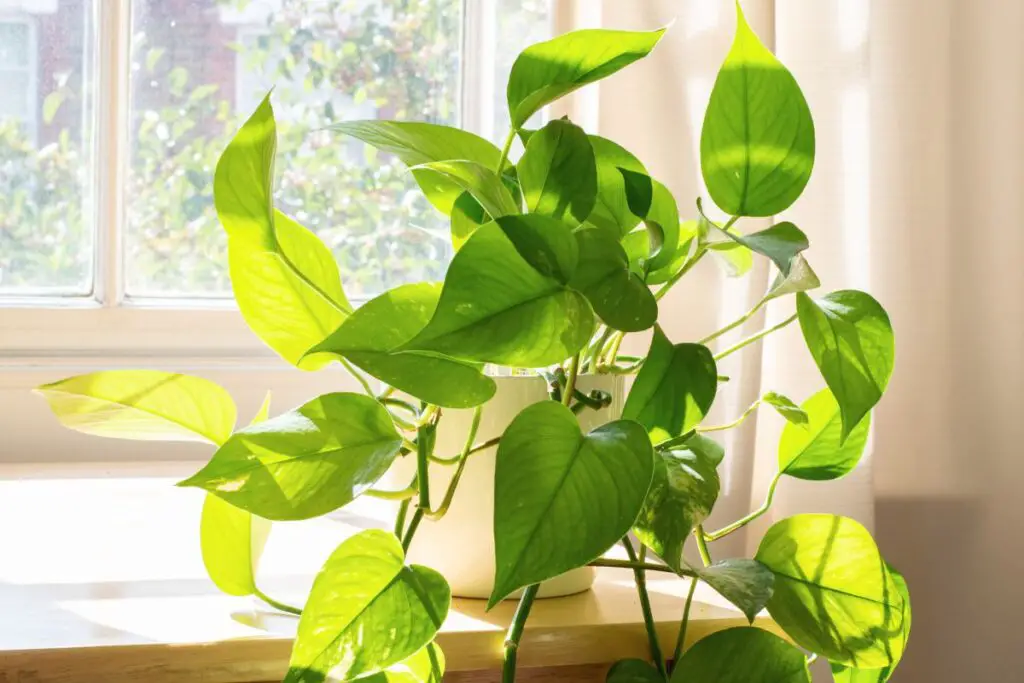
| Common Name(s) | Golden Pothos, Devil’s Ivy, Pothos, Hunter’s Rove, Taro Vine, Ceylon Creeper |
| Botanical Name | Epipremnum aureum |
| Family | Araceae |
| Plant Type | Evergreen vine |
| Native Area | Southeast Asia, Oceania (Solomon Islands and French Polynesia) |
| Height & Spread | Trails up to 10+ feet (30 m) indoors |
| Bloom Time | Rarely flowers indoors |
| Flower Structure | Spathe and spadix (rare in indoor conditions) |
| Color | Green with yellow or creamy variegation |
| Sun Exposure | Partial shade; Low to bright indirect light |
| Soil Type | Well-draining, well-aerated potting mix |
| Soil pH | 6.0-7.0 |
| Watering | Moderate; allow the top 1-2 inches (2.5-5 cm) of the soil to dry out |
| Pests, Diseases, Common Problems | Scale insects, mealybugs, spider mites, aphids, thrips, fungus gnats, whiteflies Root rot, leaf blight Yellowing, Browning, Wilting, Loss of variegation |
| Toxicity | Contains calcium oxalate in the leaves and vines Mildly toxic to pets and humans The sap can cause a burning sensation in the mouth when ingested or dermatitis when touched |
| Required Maintenance | Low |
Golden Pothos: An Overview
Golden pothos (Epipremnum aureum), also known as devil’s ivy or simply pothos, is among the most popular foliage plants for indoor use in the U.S. because of its striking foliage and sprawling growth habit.
Let’s explore some facts about golden pothos:
Origin and Natural Habitat
Pothos is a tropical vine native to Southeast Asia and Oceania (Solomon Islands and French Polynesia).
In the wild, pothos vines can grow in two ways:
- Groundcover: The vine of pothos growing in open spaces develops underground roots from the brown aerial root knobs that get in contact with the ground, limiting plant length to only about 6-8 feet (1.8-2.4 m) long.
- Climbers: When surrounded by trees or vertical structures (i.e., walls or rocks), the knobs develop into long and thick aerial roots that cling to the structure, allowing the vine to climb upward to get more sunlight. The vines can reach 40 feet (12 m) or so when allowed to climb.
Anatomy

Each part of the golden pothos’ anatomy has aesthetic and functional values:
- Leaves: Heart-shaped, waxy leaves with golden-yellow variegation borne on long, grooved petioles. The light-colored variegations provide the plant with tolerance to brighter sunlight. As the leaves get bigger atop a canopy, the yellow splotches increase in size and number. The leaves may also develop slits on the sides similar to monsteras (Monstera deliciosa).
- Vine: Long trailing stem that grows as a climber or ground cover. Each golden pothos has a singular vine that may produce a new vine (rarely two) if the growing tip is cut off.
- Roots: Shallow, fibrous roots. The vines have knobs at the leaf nodes that can develop into thick aerial roots that wrap around tree stems as the plant climbs or into underground fibrous roots upon contact with moist soil.
Flowers
Golden pothos is an aroid under the family Araceae, which is a group of flowering plants that produce spadix flowers.
Here are the traits of a golden pothos flower:
- Cream or white spadix 2-4 inches (5-10 cm) long
- A yellowish spathe partially covering the spadix
- Odorless
Pothos rarely flowers indoors or even in the wild, and the absence of flowers is typically associated with the following issues:
- Being stuck in a juvenile state indoors: Due to the suboptimal indoor conditions (limited space, light, and lower humidity), pothos plants remain in their juvenile state. I know very few gardeners who’ve seen flowers on their outdoor-grown climbing pothos that have reached about 20 feet (6 m) long.
- Lack or insufficient levels of the hormone gibberellin: Pothos plants are shy-flowering plants, resulting in few available cultivars. Botanists occasionally induce pothos flowering for hybridization through gibberellin introduction (spray). Alternatively, they create mutant cultivars through irradiation.
Maturity and Reproduction
Golden pothos (Epipremnum aureum) plants rarely produce flowers, as they need to reach reproductive maturity first.
Here are the key indicators and contributors to their maturity:
- Vertical growth: Climbing is an energy-demanding process that requires a pothos plant to consume more light energy and triggers elaborate development in aerial root structure, stem thickness, and foliage size. Consequently, the larger leaves and thicker vines access more light and store enough energy for flowering.
- Thicker vines: Pothos flowers grow from a leaf node, and the vine/stem needs to be thick enough to support the plump flower buds physically.
- Larger leaves: Mature pothos leaves are more than twice the size of horizontally growing juveniles.
Note: Climbing pothos naturally develop thicker vines and larger leaves as they mature because of stronger structural support from aerial roots and more abundant light.
Here’s a contrast in vine and leaf sizes between juvenile and mature pothos:
| Plant Part | Juvenile | Mature |
| Vine | <¼ inch (0.6 cm) in diameter Up to 10 feet (3 m) long | Up to 2 inches (5 cm) in diameter >40 feet (12 m) long |
| Leaf | Trailing/non-climbing: 4-8 inches (10-20 cm) long and 2-6 inches (5-15 cm) wide Climbing (moss pole/trellis): Up to 12 inches (30 cm) long and 8 inches (20 cm) wide | Up to 40 inches (100 cm) long and 18 inches (45 cm) wide |
Juvenile pothos reproduce vegetatively, whereas mature pothos can reproduce both vegetatively and through seeds.
Here’s how:
- Vegetative reproduction: Sprawling pothos vines can root on the ground wherever the aerial root knobs touch moist soil. Even when the vine is severed from the mother plant due to foot traffic (humans or animals), the vine remains alive, becomes a new plant, and continues to grow.
- Seed propagation: Tiny florets found on the spadix may be pollinated by bees, birds, and butterflies to produce a fruit. The seeds may then be dispersed by feeding birds or the wind when the fruit dries out.
Note: With adequate care and environment, each golden pothos vine matures within 2 years and lives up to 25 years.
On average, my trailing golden pothos vines typically reach 5 years or so before losing vitality, and they remain in their juvenile form with small leaves throughout their lifespan. Regular propagation can reactivate the bare nodes to branch out and produce new vines.
On the other hand, vines I’ve trained up moss poles for 4 years have noticeably larger leaves—the largest one is around a foot (30 cm) long.
Dormancy and Growth Rate
In the tropics, golden pothos vines don’t enter dormancy and continue to grow all year round.
On average, the vine grows vigorously at 1-2 feet (0.3-0.6 m) per month, with notably faster growth during the wet season, with the following environmental conditions:
- High precipitation rate (Around 250-1,000 mm per month during the rainy season or 1,000-5,000 mm annually)
- Warm temperatures (70-90 °F or 21-32 °C)
- High humidity (60-95%)
When grown indoors in colder climates, golden pothos vines grow about 1 foot (0.3 m) per month during spring and summer.
They grow relatively slowly as they enter a semi-dormant state in winter due to:
- Lower light conditions
- Cooler temperatures
Note: As the pothos slows growth during the cold season, it consumes less water and requires watering adjustments. Consequently, less watering frequency leads to even slower growth.
Toxicity
All pothos plants contain calcium oxalate crystals in the leaves, vines, and roots, making them toxic to humans and pets.
The following toxicity symptoms may occur in humans:
- Physical contact with the sap can lead to dermatitis (skin rashes) and eye irritation. Wear gloves and eye goggles when handling or pruning the leaves and vines, especially if you have a history of skin irritation from plant sap.
- Ingesting the leaves can lead to a burning sensation in the mouth or stomach upset. Rinse the mouth with water or milk to precipitate and expel the calcium oxalate crystals. Consult your physician for appropriate treatment if you have nausea, vomiting, or diarrhea.
For smaller animals like cats and dogs, ingesting pothos leaves can lead to more severe symptoms, such as:
- Hypersalivation (drooling)
- Vomiting
- Loss of appetite
- Lethargy
Consult a licensed veterinarian for appropriate treatments or medications for affected pets.
Pro Tip: Place the golden pothos in elevated places like hanging baskets or wall shelves to keep curious dogs from reaching the leaves.
On the other hand, cats can be more adventurous and reach the top of the shelves. It’s best to keep your indoor garden off-limits to cats by installing screen doors.
Benefits as Houseplants
The golden pothos is a go-to plant for indoor greenery because of the following benefits:
- Flashy leaves: The striking emerald and yellow variegations of the heart-shaped leaves are the primary selling point of a golden pothos.
- Low-maintenance requirements: A pothos thrives with moderate indoor temperature and humidity conditions. It also needs minimal feeding and infrequent watering.
- Adaptability to various light conditions: The predominantly green foliage of golden pothos allows it to grow in low to bright (indirect) light conditions. I’ve also grown thriving pothos in a room with only artificial lights (regular LED or fluorescent).
- Aesthetic versatility: Young pothos can grow in tabletop pots, whereas older ones with longer vines can trail from hanging baskets or tall shelves. They can also be trained to grow on a moss pole or a trellis.
- Ease of propagation: Due to the shy-flowering nature of pothos plants, they’re mainly propagated through single-node cuttings. Other gardeners recommend using the air-layering technique, but I find water or soil propagation of stem cuttings more practical. I’ll explore these methods further below.
- Positive energy: In Asian culture, pothos is believed to bring good fortune and strength, especially when grown near east-facing doors or windows.
Note: Other sources claim that pothos plants (Epipremnum aureum) have air-purifying qualities. Separate studies from NASA and a group of Japanese scientists confirmed this claim using formaldehyde, xylene, toluene, and acetone.
However, the studies were conducted in a closed chamber with controlled temperatures and pollutant concentrations. That said, the results don’t directly apply to indoor gardens where temperatures fluctuate throughout the day and pollutant concentrations are constantly replenished.
Popular Varieties
Golden pothos is a classic and probably the most popular variety of Epipremnum aureum.
If you want to collect different types of pothos for their unique colorations, you may choose from the varieties below:
| Variety | Physical Traits | Implications |
| Golden Pothos | Emerald leaves with random yellow/golden streaks or splotches 4-8 inches (10-20 cm) long and 2-6 inches (5-15 cm) wide | Tolerant to low light but develops significantly less variegation |
| Jade | Solid emerald leaves Similar size as golden pothos | More tolerant to low light (northern windows) or artificial lighting |
| Marble Queen | Predominantly white leaves with emerald green streaks or splotches in a marbled texture Up to 8 inches (20 cm) long and wide | Tolerant to brighter (indirect) light White variegations turn yellowish at low light |
| Neon | Solid chartreuse-colored leaves Around 3-6 inches (7.6-15 cm) long and wide | Reverts to green at low light |
| Manjula | Cream or white brush-stroked variegation against emerald green leaves | More tolerant to brighter (indirect) light |
| Pearls and Jade Lab-induced mutation of Marble Queen | White leaves with green dots and splotches of different sizes Leaves are smaller and thinner than the Marble Queen; only up to 3 inches (7.6 cm) long and 4-5 inches (10-13 cm) wide | Requires bright, indirect light to retain the white variegations |
| Epipremnum pinnatum ‘Cebu Blue’ Different species from golden pothos | Silvery blue, elongated heart-shaped leaves (non-variegated) Will develop slits or fenestrations in brighter light or when allowed to climb | More tolerant to filtered or low light (northern windows) or artificial lighting |
| Epipremnum pinnatum ‘Baltic Blue’ Different species from golden pothos | Blue-green leaves, elongated, and fenestrated (non-variegated) | Requires bright, filtered light for fenestrations to develop |
| Scindapsus pictus ‘Silver Satin’ Commonly mistaken for a pothos | Deep-green leaves with silver brush-stroked variegation | Requires bright, indirect light to retain the variegations |
Selecting Your Plant

Golden pothos is one of the most readily available plants all year round at my local nursery and nearby gardening stores. My favorite supplier even said different pothos varieties sold like hotcakes during the global lockdowns in 2020 because they’re easy to care for and their lovely foliage brought a sense of peace indoors.
Still, it’s important to carefully choose your plant to ensure it flourishes when you bring it home.
Here are some practical tips for selecting pothos from gardening stores:
- Choose a pot with 5-10 vines so you can expect bushier growth. You’ll also have spare plants in case the others don’t make it due to care and environmental issues (i.e., overwatering, sunburn).
- Ensure the pot has around an inch (2.5 cm) of space around the vines for new growth. It’s best to keep the plant in the same pot for 3-12 months after purchase to acclimatize it to your indoor conditions.
- Check the soil texture using your fingers. Suitable potting soil for pothos should be crumbly for optimal drainage and aeration. Avoid plants with soggy or compacted soil, especially if the lower leaves and stems appear brown and mushy.
- Consider your indoor space and aesthetic vision when choosing the plant size. Aim for a vine at least 6 inches (15 cm) long for a compact tabletop pot. It can also be used for trailing later on because pothos grows up to a foot (30 cm) per month during the warm season with bright indirect light and warm temperatures. On the other hand, choose vines up to 1 foot (30 cm) long if you want to train them up a trellis or moss pole from the get-go.
- Inspect the leaves for signs of pests and diseases. Avoid plants with brown or black patches on the leaves, fluffy white crawlers, and webbing.
- Feel the vines and the leaves with your fingers. The vines should be plump and firm, and the leaves smooth. Avoid plants with mushy stems and/or leaves.
- Read the care tag carefully or ask the supplier for expert tips to help your plant acclimatize to your home environment.
Pro Tip: Purchase or acquire pothos plants in early or mid-spring to give them enough time to adapt to your home before transplanting them to your preferred containers. Transplanting in early to mid-summer allows for active growth that will speed up the plant’s recovery from the potential effects of transplant shock.
Initial Planting
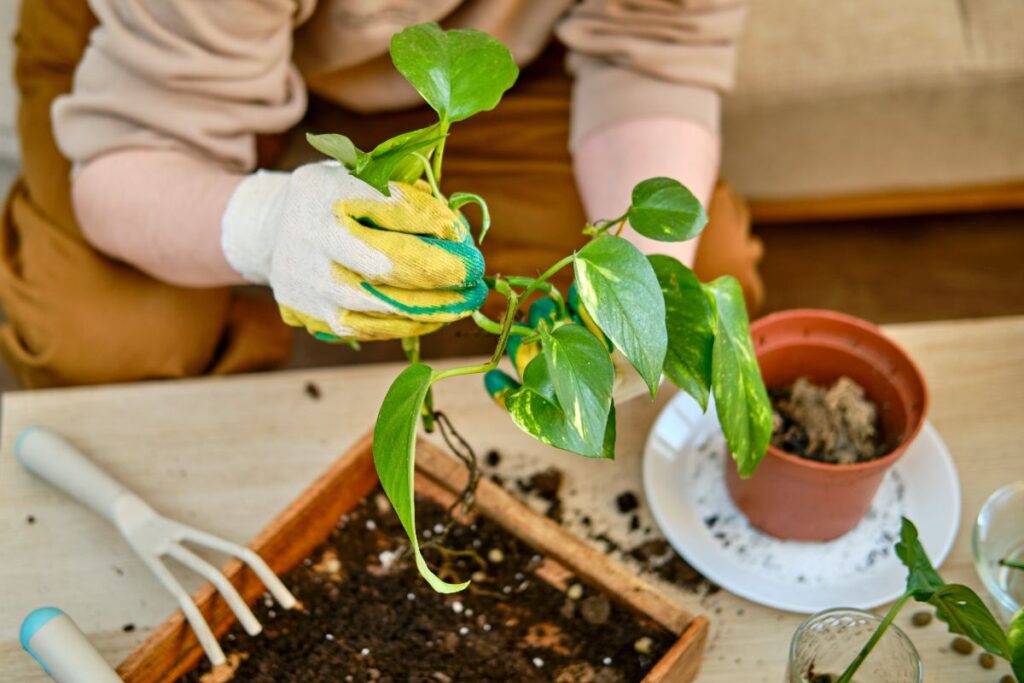
I don’t recommend repotting the pothos right away after purchase because the roots dislike being disturbed too often.
Instead, keep the plant in the same pot for at least 3 months after purchase for the following reasons:
- Quarantine the plant to reveal any hidden pest infestations or diseases. If possible, return the plant to the supplier or ask for a refund. I don’t recommend asking for a replacement because the other stock plants most likely came from the same source. Check another reputable source for a healthy plant.
- Allow the plant to adapt to your indoor environment. Ensure that the quarantine area has similar light, temperature, and humidity conditions as your prospective final location to prevent relocation stress.
Once you’re ready to transplant your pothos, consider the reminders below:
Choosing the Right Pot
A golden pothos’ lovely leaves will look elegant in any type of pot.
Here are my personal tips for an aesthetic yet functional container that can amplify a pothos’ beauty while keeping it healthy:
- Size: Use a shallow pot only one size larger than the old pot (1-2 inches (2.5-5 cm) wider and deeper). Pothos roots are fibrous and shallow, typically digging only 6-12 inches (15-30 cm) deep into the soil. Transplanting into deeper pots will result in slower leaf and vine growth as the plant will initially focus on root growth. Oversized pots may also increase the risk of overwatering and root rot.
- Material: My personal favorite for pothos is an unglazed terracotta pot because it’s breathable and can wick away excess moisture from the soil. You can also explore other pot types, such as plastic in a decorative cache pot for tabletops, a coco coir basket for hanging planters, or a rectangular ceramic pot on wall shelves.
- Drainage: Regardless of the material, ensure that the pot has drainage holes to remove excess moisture around the roots and prevent root rot.
Soil Selection
After almost 10 years of caring for golden pothos, I’ve discovered that they do best in soil-based potting mixes amended with porous materials to improve aeration and drainage.
Here are my recommended soil mix recipes for golden pothos:
- 3 parts high-quality potting soil, 1 part perlite
- Equal parts high-quality potting soil, compost, and perlite
- 2 parts high-quality potting soil, 1 part orchid bark, 1 part perlite
Note: Orchid bark is an excellent amendment because it’s chunky and breathable. Be careful not to water your plant too often, as constantly moist bark can lead to mold or algae growth.
Step-by-Step Planting Guide
Here are the steps to properly transplant a golden pothos:
- Water the plant deeply about 2 days before transplanting. Partially moist soil is easier to work with.
- Loosen the rootball by squeezing around the synthetic nursery pot. If your pothos came in a hard pot, use a spatula around the edges of the rootball to easily unpot the plant.
- Carefully disentangle the roots from the old soil and inspect for signs of rot. Healthy pothos roots are firm, white, and plump. Removing the old soil and stretching out the roots will allow them to spread more readily in the new soil mix.
- Prune any rotten roots using sterile pruning shears, making sure to sterilize the blade between cuts.
- Fill the bottom 2 inches (5 cm) with fresh, moist soil mix. Be sure to premoisten the soil until it feels as damp as a wrung-out sponge but still fluffy.
- Position the roots over the soil, ensuring that the base of the petioles is above the surface (about an inch or 2.5 cm) below the rim of the pot) when you fill in the spaces with more soil.
- Gently tap the soil down to keep the leaves upright. Avoid pressing too hard because pothos roots like loose soil. There should be about an inch (2.5 cm) of space between the stems/vines and the pot’s edges.
- Position the plant in its usual spot, ideally with bright indirect light, warm temperatures (around 75 °F or 24 °C), and moderate humidity (40-60%).
- Give the plant 7-10 days before the initial deep watering. Note: If you’re transplanting into a hanging planter, you may need to water again in 2-3 days (coco coir basket or unglazed terracotta) or 3-5 days (plastic or ceramic pot). Check the soil moisture daily to confirm if it’s dry 1-2 inches (2.5-5 cm) deep.
Installing A Moss Pole

You can also set up the pothos in a pot with a moss pole, where it can stay throughout its life.
I’ve done this for two golden pothos vines, and they’ve been on the same moss pole for over 4 years now, enlivening a dimmer corner of my living room. I’ve had to extend the pole height three times—by 1 foot (30 cm) per year for the first 2 years and 2 feet (60 cm) in the third year.
Pro Tip: Avoid using oversized moss poles for small pothos vines because the excess, rootless moss at the top can become hydrophobic when fully dry. Keeping it moist, on the other hand, can attract mold or algae (especially in bright locations).
A moss pole that’s one foot (30 cm) taller than the vine is ideal. You may extend the pole as needed when you get a good grasp of your plant’s growth rate.
You’ll need the following materials to grow a golden pothos on a moss pole:
- A 6-inch (15 cm) pot with drainage holes
- Sphagnum moss
- Plastic-backed wire mesh or D-shaped plastic sheet (2 feet (60 cm) tall for young pothos plants less than 1 ft (30 cm) tall)
- Zip ties
- Moss pole clips
- Velcro-garden tape
- Potting mix (1:1 potting mix and perlite/pumice or 100% LECA). The potting mix for pothos growing on moss poles must be chunkier with better drainage and aeration.
Follow the steps below to grow golden pothos on a moss pole:
- Pre-moisten the sphagnum moss with water and squeeze until it has the consistency of a wrung-out sponge. Pro Tip: Dissolve a quarter-strength 10-10-10 fertilizer (liquid concentrate or powder form) in distilled water to add nutrients to the moss.
- Spread the moss over the framework. I used to create moss poles using 360° wire mesh until I discovered the convenient plastic-backed wire mesh, which is perfect for homes with relatively drier air (around 30%), especially in winter. You can also use a D-shaped plastic sheet, which works the same way.
- Leave a 6-inch (15 cm) space at the bottom of the moss pole framework and fill it in with potting mix.
- Lock the wire mesh against the plastic backing using zip ties at 3-inch (7.6 cm) intervals. The aerated side (wire mesh) is typically 2.5-4 inches (6.3-10 cm) wide, providing enough space for aerial roots to grow into later on.
- Position the moss pole in the middle of the pot and fill the spaces around with moist potting mix about 2 inches (5 cm) deep.
- Spread the roots of the vines over the potting mix and fill in the spaces with more soil. Ensure the vines are positioned next to the wire mesh so the aerial root knobs are in contact with the moss.
- Secure the vines against the wire using moss pole clips. I recommend using moss pole clips because they’re reusable and can easily be repositioned. Alternatively, fasten multiple vines against the moss pole using Velcro tape.
- During the first 2 months, water the potting mix directly when the top 1-2 inches (2.5-5 cm) is completely dry.
- Spray the moss with water when the exposed surface appears paler. Avoid letting the moss dry out completely, as it can become hydrophobic.
Routinely inspect the vines for signs of root growth into the sphagnum mix. Once the vines grow taller with aerial roots digging into the moss, you can start watering the sphagnum moss. I’ll discuss the method below.
Optimal Growing Conditions
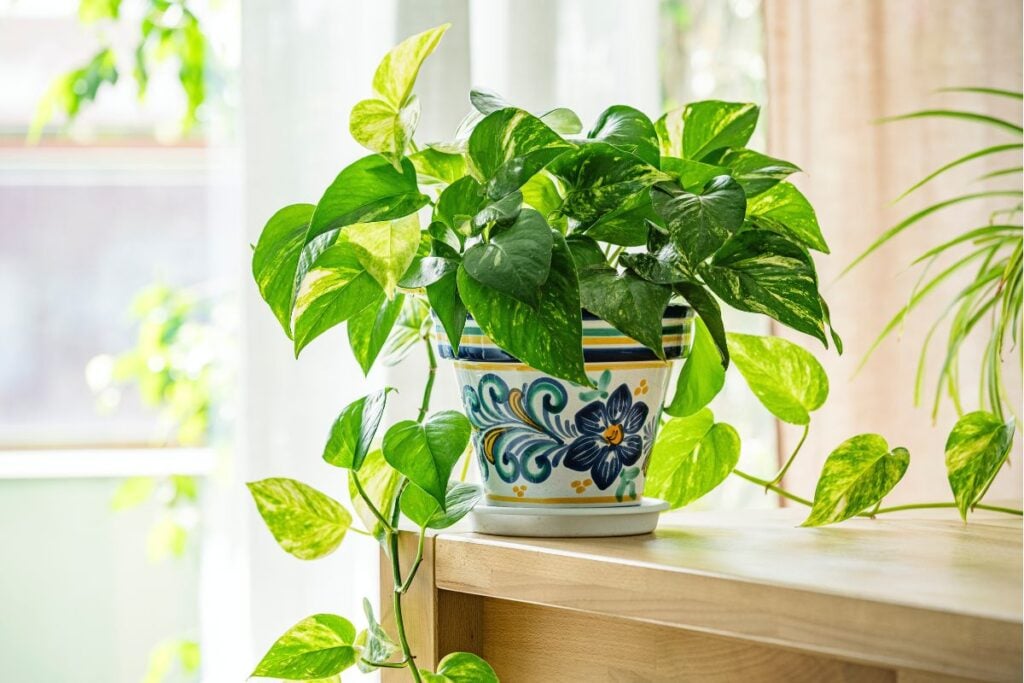
Golden pothos is a sturdy plant and can adapt to various conditions. Still, it’s crucial to provide suitable indoor conditions to reveal the distinct variegations and maximize the longevity of the leaves.
Below are the indoor growing conditions that work best for my golden pothos:
Light Requirements
Golden pothos can adapt to low to moderate indoor lighting and can even tolerate artificial lighting.
They do well with a 12-hour daily exposure to 125 foot candles, which is around the same intensity you can get from a north-facing window or under artificial lights.
You can measure the light intensity your plant receives by using a smartphone light meter app or a gardening light meter device.
Here’s how:
- Position the device on the spot where you intend to place your pothos plant.
- Aim the camera (smartphone app) or sensor (light meter device) toward the light source.
- Get the reading.
- Record this every hour for 12 hours to get the average. Ideally, your pothos should receive around 125 foot candles for 12 hours.
Let’s explore the implications of different indoor light conditions on pothos growth and appearance:
| Light Intensity | Position and Duration of Exposure | Recommended Varieties | Implications |
| High (bright, direct sunlight) Not recommended Over 1,000 foot candles | Next to a sunny window (east, west, south) 4-8 hours of direct morning sun | Marble queen Manjula (Mild tolerance to around 2 hours of direct early morning sun) | Aggressive growth rate and more pronounced variegations Prolonged exposure to direct sunlight can scorch the leaves, leading to a dull surface or dry, bleached, or brown patches |
| Moderate (bright indirect/filtered light) Highly recommended 250-1,000 foot candles | 4-8 feet (1.2-2.4 m) from an east, west, or south-facing window With sheer curtains at midday to filter the light 8-12 hours of bright, indirect light | Golden pothos Jade Marble Queen Manjula Neon | Regular growth rate of around 1 foot (0.3 m) per month during the growing season Distinct variegations (yellow or cream streaks or splotches) |
| Low 50-250 foot candles | Next to a north-facing window 4-6 hours of low-intensity sunlight and up to 8 hours of artificial light | Golden pothos Jade Marble Queen Manjula Neon | Slow to moderate growth rate Small but healthy-looking leaves (3-6 inches or 7.6-15 cm long) Predominantly green leaves with modest variegations |
| Artificial 50-200 foot candles | 12-16 hours under regular fluorescent or LED lamps, such as in offices or windowless rooms | Golden pothos Jade Marble Queen Manjula Neon | Slow growth rate with risks of legginess Predominantly green leaves with minimal variegation |
It’s also important to include the following tips when optimizing the light conditions to preserve the quality and appearance of golden pothos leaves:
- Rotate the pot weekly or at watering to promote balanced growth and variegation. Within a month of facing away from the sun, the leaves start to lose variegations or put out new leaves with solid green color. The vines facing away from the sun may also appear leggier with larger spaces between leaf nodes.
- Hang sheer curtains at midday during the peak of summer to prevent rapid dehydration and sunburn.
- Avoid bringing potted pothos outdoors during spring or summer. Although pothos vines can be planted in shady spots outdoors in frost-free regions in USDA zones 10-12, indoor-cultivated pothos don’t do well with outdoor exposure during the warm season. The stark contrast between intense outdoor sunlight and low-to-medium indoor lighting can scorch pothos leaves.
Note: Vines growing on plastic-back moss poles don’t require rotation. Just ensure the vines are facing the light source.
Watering
Pothos plants have mild drought tolerance due to the plump roots, fleshy stems, and waxy leaf surface that inhibits rapid moisture loss during dry conditions.
Just remember to water your plant when the top 1–2 inches (2.5-5 cm) of the soil is dry.
The rate at which the soil dries to that extent can vary based on the following:
- Pot type: The soil mix in hanging baskets dries out faster than in regular pots because of better aeration and gravity.
- Temperature and light intensity: Plants growing in warmer and brighter light conditions consume water more quickly.
- Plant size: Young pothos plants grow actively and consume water more quickly. In addition, they have underdeveloped roots, vines, and leaves that cannot store much water yet, so the moisture is rapidly lost through transpiration.
To avoid missing your watering schedule, make it a habit to check the soil moisture regularly using your fingers, a wooden chopstick, or a moisture meter (water at 3-4).
I usually schedule my pothos soil inspection based on pot type and reliably refer to the following in spring to early fall:
- Regular pot with drainage holes (plastic, terracotta, ceramic): Every 7-10 days (+5-7 days in late fall and winter)
- Hanging planter with coco coir basket or unglazed terracotta pot: Every 2-3 days (+2-3 days in late fall and winter)
- Hanging planter with plastic or ceramic pot: Every 3-5 days (+2-3 days late fall and winter)
Several opinions exist regarding the dos and don’ts of watering pothos. Years of pothos care showed me how forgiving and resilient they are, adding to their low-maintenance reputation.
Here are essential facts about a golden pothos’ watering needs:
- Tap water is okay. Golden pothos is mildly salt-tolerant and doesn’t mind receiving regular tap water. Good soil and pot drainage also help leach unwanted minerals beyond the reach of the roots, making it unlikely for the plant to show chlorine toxicity.
- The soil must be deeply and evenly saturated to ensure all the individual vines’ roots have access to sufficient moisture. Otherwise, moisture-deprived vines will look limp next to well-hydrated ones.
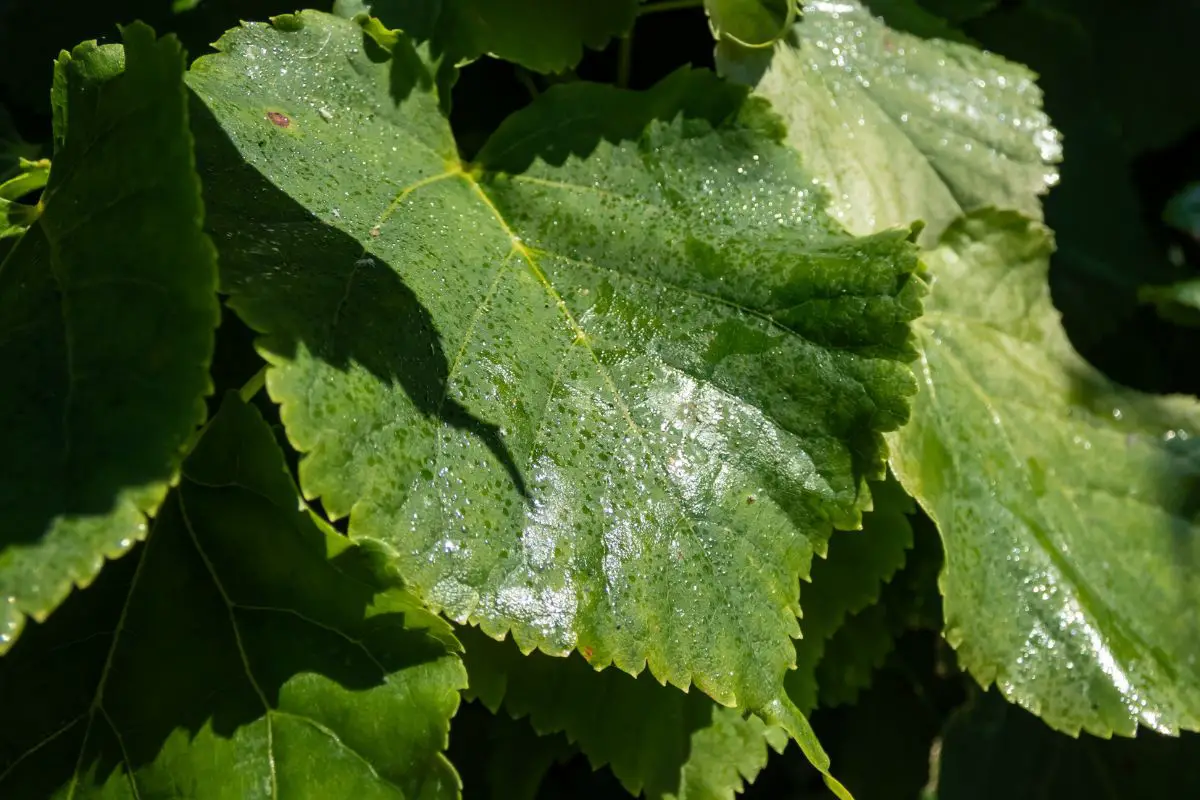
- Pothos can tolerate wet leaves after watering if the room has good ventilation. The leaves can use the extra humidity as the water droplets naturally evaporate within a few hours. Just be sure to water the plant early in the morning and allow the top 1-2 inches (2.5-5 cm) of the soil to dry between watering sessions.
With these in mind, you can choose an appropriate watering method or tool that works for you and your garden space:
- Shower in sink or tub: Bring the pot over to the sink or tub and completely saturate the soil with water from the faucet. This method is suitable for hanging planters and small pots about 4-10 inches (10-25 cm) deep and wide. Let the excess water drain completely before bringing the pot back to its usual spot.
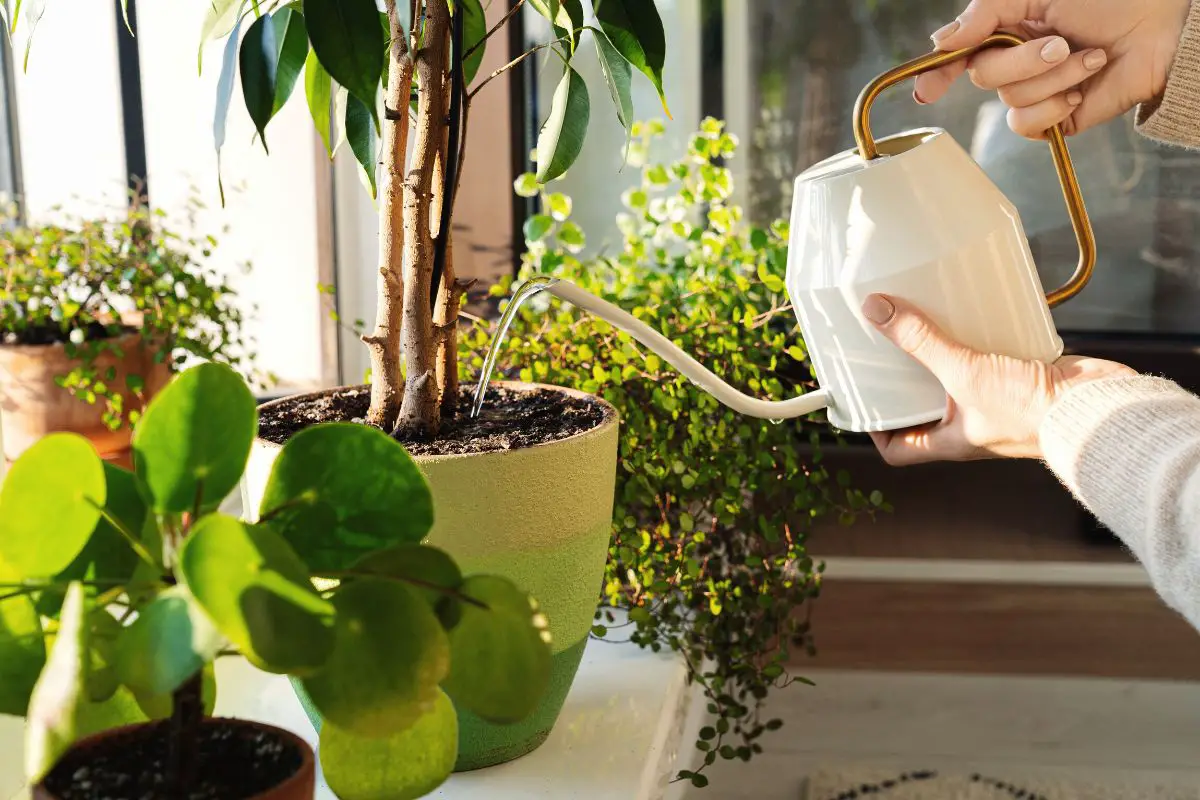
- Watering can: Use a watering can with a fine shower nozzle to slowly and evenly rehydrate the soil. Move the nozzle around over the soil surface and pause to see if the soil is quickly soaking up the water. Keep adding more water until the excess drains from the bottom holes. Top watering with a watering can helps leach unwanted fertilizer salts from the root zone.
- Soak and dry: Soak the bottom half of the pot in a tub of water for up to 30 minutes to evenly saturate the soil from the bottom up. Remove the pot when the soil surface feels moist and allow the excess water to drain freely. Doing this once every 2 months can prevent hydrophobic sections from building up in your potting soil.
- Water bottle for moss pole: Squeeze the moss pole to check how dry it is. A crumpling sound indicates that the moss is ready for water. Place a bottle of water upside down on the moss pole to deliver water downward neatly and evenly. Refill the bottle as needed and repeat until the moss feels damp around ⅘ down. The excess moisture will continue to drip downward into the potting mix below. Proper ventilation in the room is crucial to prevent mold or algae growth on the moss.
My personal favorite is watering potted pothos from the top using a watering can. I then bottom water using the soak-and-dry method once a month or after 3-4 sessions of regular top watering.
Note: Avoid using self-watering planters on pothos as they can keep the soil constantly moist. It’s important to let the soil dry out a bit between watering sessions to allow the roots to breathe. Constantly wet soil can lead to overwatering problems and root rot.
Overwatering Vs. Underwatering
A golden pothos responds differently to underwatering and overwatering.
Here’s how the symptoms progress:
| Watering Issue | Symptoms | Implications |
| Underwatering | Crusty, bone-dry soil Yellowing or brown leaf edges Limp, wilting vines and leaves Thin, crisp leaves | Golden pothos can survive up to 4 weeks without water, even during the warm, sunny growing season. The leaves may shrivel up and fall off, but the remaining green vines will put out new growth once the watering routine is improved. You may even propagate leafless vines as long as they’re still green and firm. |
| Overwatering | Soggy soil Water-soaked spots on leaves Yellowing leaves Brown, mushy leaves Mushy vines close to the soil surface Black, foul-smelling roots | 1-2 weeks of constantly wet soil can kill an entire pothos vine because root rot pathogens can quickly spread through the stem and reach the leaves. |
Temperature & Humidity

One important perk of growing golden pothos is how readily they can adapt to regular indoor temperatures and humidity in the U.S., despite being of tropical origin.
Here are the ideal ranges and reminders for maintaining an optimal environment for indoor pothos:
- Temperature: 18-29 °C (65-85 °F). Pothos vines can tolerate nighttime temperatures as low as 55 °F (13 °C) in winter and as high as 90 °F (32 °C) in summer (if well-watered). Keep the plant away from drafty doors and windows or the path of hot or cold air from the HVAC system. Cold drafts can kill the roots and vines, whereas high temperatures can increase the risk of dehydration.
- Humidity: 40-60%. Pothos will grow well with moderate indoor humidity—although they will grow faster at higher levels (>60%). However, the EPA recommends maintaining indoor humidity at 30-50% for human health and to prevent mold or mildew growth. Group pothos with other tropical plants like philodendrons and monstera for a humid microclimate. You may also use a humidifier and monitor the humidity levels in the indoor garden using a portable hygrometer.
Fertilizing and Nutrient Requirements
A golden pothos will thrive for a year in high-quality potting soil enriched with nutrients and organic matter. I usually repot my young pothos plants (less than 3 years old) once a year in spring, so I don’t add any fertilizer.
On the other hand, I fertilize older pothos a little differently. Here’s how:
- Plants that remain in the same pot for 2 years or so: Add a handful of compost to the soil or sprinkle a thin layer of 3-1-2 or 10-10-10 fertilizer granules in early spring and/or early summer (starting from the second year).
- Pothos growing on a moss pole: Incorporate a half-strength 3-1-2 or 10-10-10 liquid fertilizer into the water bottle and let it drip from the top of the moss pole. Repeat once a month during the growing season.
Hold off on fertilizing in the fall and winter to allow the plant to enter a period of semi-dormancy.
Indoor golden pothos plants seldom show signs of nutrient deficiency when repotted regularly. On the other hand, excess fertilizer salts in the potting soil that don’t leach from regular watering can dehydrate the pothos roots.
Here are the signs of nutrient imbalance in golden pothos and the corresponding treatment recommendations:
| Issue | Symptoms | Solutions |
| Nutrient Deficiency | Yellowing bottom leaves (lack of nitrogen) Interveinal chlorosis or yellowing of the leaf surface between veins (lack of iron or magnesium) Slow or stunted growth even during the warm seasons (overall nutrient depletion in the soil mix) | Feed the plant a half-strength 10-10-10 liquid fertilizer with micronutrients every other time you water during spring until summer or until the symptoms improve. Alternatively, spray a quarter-strength foliar fertilizer every other week until symptoms improve. |
| Over-fertilization / Fertilizer Burn | Rapid production of new leaves that may appear soft or deformed (excess nitrogen) Yellowing leaf tips and edges that gradually turn brown and crisp. Brown, thin, and dry roots Yellow or orange specks on the leaves (manganese toxicity) Symptoms should occur within a month of fertilizer application to rule out other possible issues, such as underwatering or heat and light stress. | Prune severely discolored leaves using sharp, sterile shears. Scrape the visible salt crust on the soil surface using a spoon or trowel (works for granular fertilizers). Flush the soil with distilled water to leach the unwanted salts (for both granular and liquid fertilizers). Repeat flushing the next time you water the plant. Two sessions should be enough to rid well-draining soil of unwanted fertilizer salts. |
Pruning and Maintenance

Pothos plants have minimal pruning needs, and I recommend following a few simple tips:
- Prune 1-2 leaves as needed per month, regardless of the season, going for the aging or damaged leaves first. You can pluck the leaf off the node or cut it using sharp, sterile scissors.
- Avoid pruning too many leaves at once, as the plant may take a long time to recover and grow new leaves.
Fixing Legginess Through Basketing or Layering
Without routine pruning, the golden pothos naturally sheds older leaves close to the potting mix over time. No new leaves will grow on the bare nodes, leaving behind a leggy section on the vine.
You can root bare nodes while still attached to the mother plant through basketing or layering, and promote more vine growth with the following steps:
Basketing
Use this method if there’s still about 2 inches (5 cm) of space around the base of the vines.
- Roll the leafless vines over the soil.
- Let the leafy terminal portion of the vines spill over the pot’s edges.
- Secure the vines into the soil using bobby pins or vine clips. Position the fasteners in such a way that the root knobs on the vines are touching the soil.
Layering
This method works if there’s no more space around the same pot.
- Prepare a 4-6-inch (10-15 cm) pot filled up to an inch (2.5 cm) below the rim with moist pothos soil mix. You may need to elevate the pot using another inverted pot so the vines can easily reach the soil.
- Roll the leafless portion of the vine over the soil surface of the new pot without unpotting the mother plant from the original pot. Let the leafy terminal end of the plant spill out of the pot’s rim.
- Secure the vine into the soil using fasteners like bobby pins or vine clips. Position the fasteners so that the root knobs on the vines are touching the soil.
New growth will continue at the growing tip. When done during the warm season, roots will grow from the knobs over the soil, and new vines may even emerge from the nearby leafless nodes within a month.
Propagation Techniques
Pothos plants have apical dominance, wherein new growth occurs at the growing tip and branching is strongly inhibited. When you prune the growing tip or terminal end of the vine, a branch may grow at the node immediately below the cut.
In older golden pothos vines with bare nodes close to the roots, branches may emerge from the old nodes and form new vines after cutting the growing tip.
It’s impossible to determine where along the vines new branches will come out of and when. To have better control over the growth and appearance of your plant, collect multiple cuttings from leggy vines.
The best time to collect and propagate golden pothos cuttings is in spring or early summer for faster growth.
Note: You can grow new pothos vines from cuttings with single nodes. If you want to start with a larger plant, limit the cutting to at most three leaves so the plant won’t have to maintain too many leaves while developing roots.
You may also propagate leafless nodes. Just ensure there are at least three nodes and one or more aerial roots for faster development.
Here’s how to collect the cuttings:
- Use sharp sterile shears to cut between leaf nodes.
- Trim the stem until there’s only about a half-inch (1.3 cm) below the bottom leaf node.
- Pluck the leaf/leaves off the two bottom nodes of a multi-node cutting.
- Ensure there’s at least one brown knob on each cutting because this is where the roots will grow.
You can then propagate the cuttings using the following methods:
- Water propagation: Faster and visible root development. It also requires less maintenance because the water doesn’t require frequent replacement.
- Soil propagation: Slower but sturdier root development. It requires routine inspection to ensure the roots don’t dry out.
Water Propagation
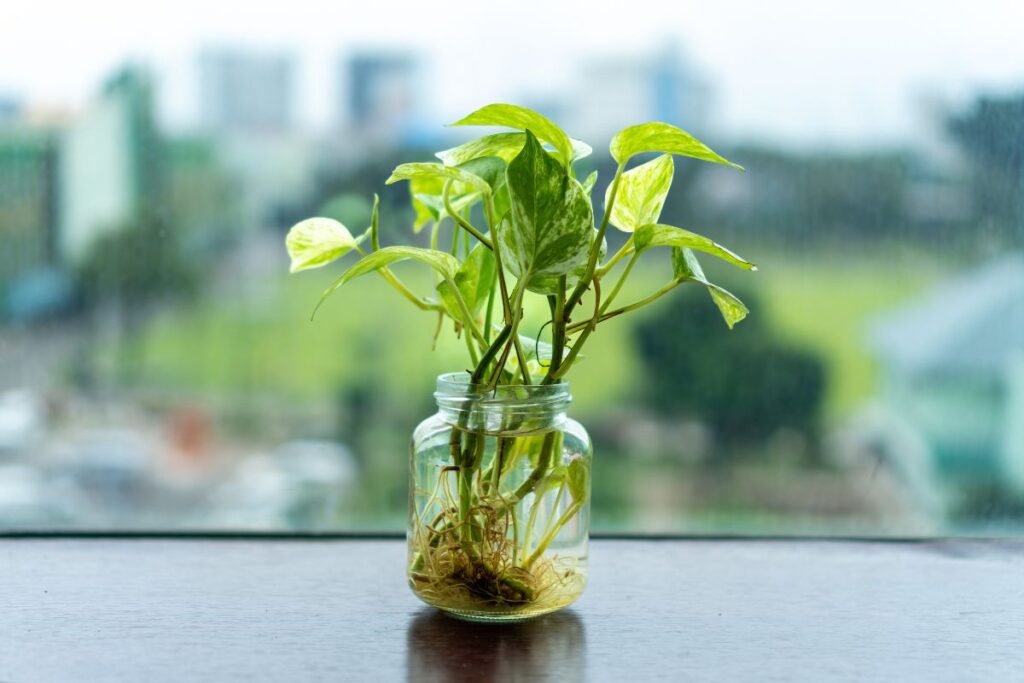
You’ll need the following tools to root pothos cuttings in water:
- Sharp and sterile pruning shears
- Clear glass containers (i.e., test tube, mason jar, glass of water, etc.)
- Distilled or filtered water
Follow the steps below for water propagation:
- Fill the glass container with enough water to submerge the aerial roots.
- Place the cuttings into the glass, ensuring the leaves aren’t touching the water. You can place multiple cuttings in the same container.
- Place the setup in a warm room (around 75 °F or 24 °C) with bright indirect light.
- Refill the water as needed to maintain the level or replace it when it appears murky (typically once every 1-2 weeks).
At optimal conditions, the cuttings should grow roots within a month. You can transplant them into soil when the roots are at least 2 inches (5 cm) long.
Leafless cuttings may take longer to develop long enough roots. Wait until the roots are 2 inches (5 cm) long and the first leaf unfurls before transplanting into the soil.
Soil Propagation
Here’s a list of materials you’ll need for soil propagation:
- A 6-inch (15 cm) pot for 3-5 cuttings with leaves or up to 10 leafless cuttings.
- Pure perlite or standard pothos soil mix (i.e., 3 parts potting soil, 1 part perlite)
- Watering can
Follow the steps below to plant golden pothos cuttings:
- Leave the cutting in a cool room (65-70 °F or 18-21 °C) overnight to form a callus, which helps reduce the risk of rot during the rooting process.
- Fill ¾ of the pot with fresh, moist substrate. I prefer using pure perlite because it retains just enough moisture in its pockets to keep the roots hydrated and drains the excess.
- Poke holes into the substrate using a chopstick or your fingers.
- Bury the two bottom nodes and cover them firmly with the substrate.
- Place in a room with bright indirect light, warm temperatures (around 75 °F or 24 °C), and moderate humidity (around 50%).
- Monitor the moisture on the substrate and water deeply when the top 1-2 inches (2.5-5 cm) dry out.
Avoid disturbing the developing roots with constant inspections. Give the cuttings 2-3 months of consistent care.
You’ll know that the roots are developing well and the cuttings are ready for repotting when you see the following signs:
- The leaves or leafless cuttings remain green and vibrant
- New leaf buds start to appear
- Roots poke out of the drainage holes
Air Layering
Air layering is another propagation method that works well on pothos plants, and you can use various materials successfully, including the following:
Clear Glass With Water Beads
Water beads can provide a moist environment around the nodes and root knobs with little to no risk of root rot because of the slow moisture release.
You can air-layer your pothos vines using water beads with the following steps:
- Fill a clear glass with water beads.
- Cut the leaves from the nodes you want to root.
- Position at least two leafless nodes (with root knobs) over the water beads.
You should see roots developing within 2-4 weeks. When they reach 2-3 inches (5-7.6 cm) long, prune the vine off the mother plant just below the rooted node and transplant it into regular pothos potting soil in a 6-inch (15 cm) pot.
Sphagnum Moss in a Sandwich Bag
Sphagnum moss is the most widely used substrate for air layering because it’s airy and encourages root growth.
Here are the steps to air-layer golden pothos vines using sphagnum moss:
- Soak the moss in water for 15-30 minutes until fully hydrated and squeeze out the excess water. The moss should feel as damp as a wrung-out sponge.
- Cut the leaves off the two leaf nodes where you want roots to form.
- Wrap a handful of moist sphagnum moss around the nodes and root knobs until it’s 2-3 inches (5-7.6 cm) in diameter.
- Cover the moss with a sandwich bag, sealing the top and bottom with soft twist ties.
- After a week, remove the twist tie on top and check if the moss is still moist. Spray some water into the moss and gently squeeze out the excess to avoid damaging the developing roots.
- Wrap the moss again and seal with the twist tie.
After 2-4 weeks, the roots should be visible through the plastic. Cut just below the rooted node and transplant the cutting into potting soil when the roots reach 2-3 inches (5-7.6 cm) long.
Repotting
Pothos vines like snug conditions in the pot because oversized containers can hold extra moisture and increase the risk of rot on the fibrous roots.
Here are some signs that the golden pothos requires repotting:
- The roots are poking out of the drainage holes
- When you unpot the plant, the roots are circling the soil mix
- Slow growth even during the growing season
The repotting frequency can vary depending on your plant’s age and potting conditions. Here are some personal guidelines:
- Young plants (less than 2 years old): Every spring
- Older plants with established roots: Every 1-2 years, depending on how quickly they show the symptoms listed above
- Plants growing on a moss pole: No repotting needed, just extend the moss pole as needed (I’ll discuss this further below)
Follow the tips below to repot your golden pothos properly:
- Water the plant deeply 2 days before repotting to make the soil easier to work with. Well-hydrated roots are also more resistant to transplant shock.
- Disentangle the roots poking out of the drainage holes to remove resistance.
- Firmly hold the base of the vines and slide the rootball out. If there’s resistance, you can run a spatula around the pot’s edges or trim the roots at the drainage holes using sharp, sterile scissors.
- Carefully remove the old soil and disentangle the roots.
- Inspect the individual root systems and isolate vines with signs of root rot.
- Prepare a pot one size bigger (2 inches or 5 cm wider and deeper) than the old pot. Fill the bottom 2 inches (5 cm) with fresh, pothos soil mix.
- Spread the healthy vines’ roots in the middle of the new pot and cover firmly with fresh soil. Position the base of the vines an inch (2.5 cm) below the rim of the pot.
- Water the soil deeply to help the roots adapt to the new soil. Let the excess water drain completely from the drainage holes.
- Place the pot back in its usual spot.
- Water again as soon as the top 1-2 inches (2.5-5 cm) of the soil dries out.
Moss Pole Extension
A pothos plant’s growth rate on a moss pole can vary depending on the environmental conditions.
For instance, my pole-trained golden pothos vines grew slowly in the first 2 years. It may be due to the adjustment period to the moss pole and the moderate lighting they receive at the corner of the room (about 10 feet (3 m) from a south-facing window).
One of the vines was also growing noticeably faster with moderately larger leaves than the other. Collectively, they grew about 1 foot (30 cm) taller every year for the first 2 years. Growth picked up in the third year, and I had to extend the moss pole by 2 feet (60 cm).
The best time to extend your moss pole is when the topmost aerial root is 2-4 inches (5-10 cm) away from the top of the pole.
Here’s how to extend the moss pole for golden pothos vines:
- Fill a new framework (plastic-backed mesh or D-shaped plastic sheet) with pre-moistened sphagnum moss.
- Insert the bottom inch (2.5 cm) of the new framework into the top of the moss pole.
- Carefully insert a PVC pipe into the potting mix right behind the moss pole (plastic back).
- Secure the taller moss pole against a PVC pipe using Velcro garden tape to keep the structure from toppling over. You can tape the pole against the pipe at 6-12-inch (15-30 cm) intervals.
Note: My moss pole is currently 6 feet (1.8 m) tall, and the ceiling above it is 10 feet (3 m) high. At the rate my plant is growing, I can extend the pole by about 2 feet (0.6 m) more and dismantle it if the plant climbs any higher (probably in the 5th or 6th year).
If you place the moss pole in a brighter area (about 4 feet or 1.2 m) from a south-facing window, your pothos may grow faster with larger leaves, and you may need a taller, sturdier pole.
Pest and Disease Management
The golden pothos is pretty easy to care for, but it’s vulnerable to common pest and disease problems in an indoor garden.
Common Pests
Wingless pests spread indoors through contaminated gardening tools, potting mix, or crowded plants. On the other hand, winged pests can get to any plant, such as pothos on hanging baskets or wall planters.
Common indoor plant pests that may explore and feed on nearby pothos plants include:
- Mealybugs: Cottony white wax-covered pests about 1/16-⅛ (1.6-3.2 mm) long. Mealybugs feed on plant sap along the vines, petioles, or leaf veins, causing yellowing at the site of severe infestation. They also excrete honeydew, which can drip to lower leaves and attract sooty mold and/or ants.
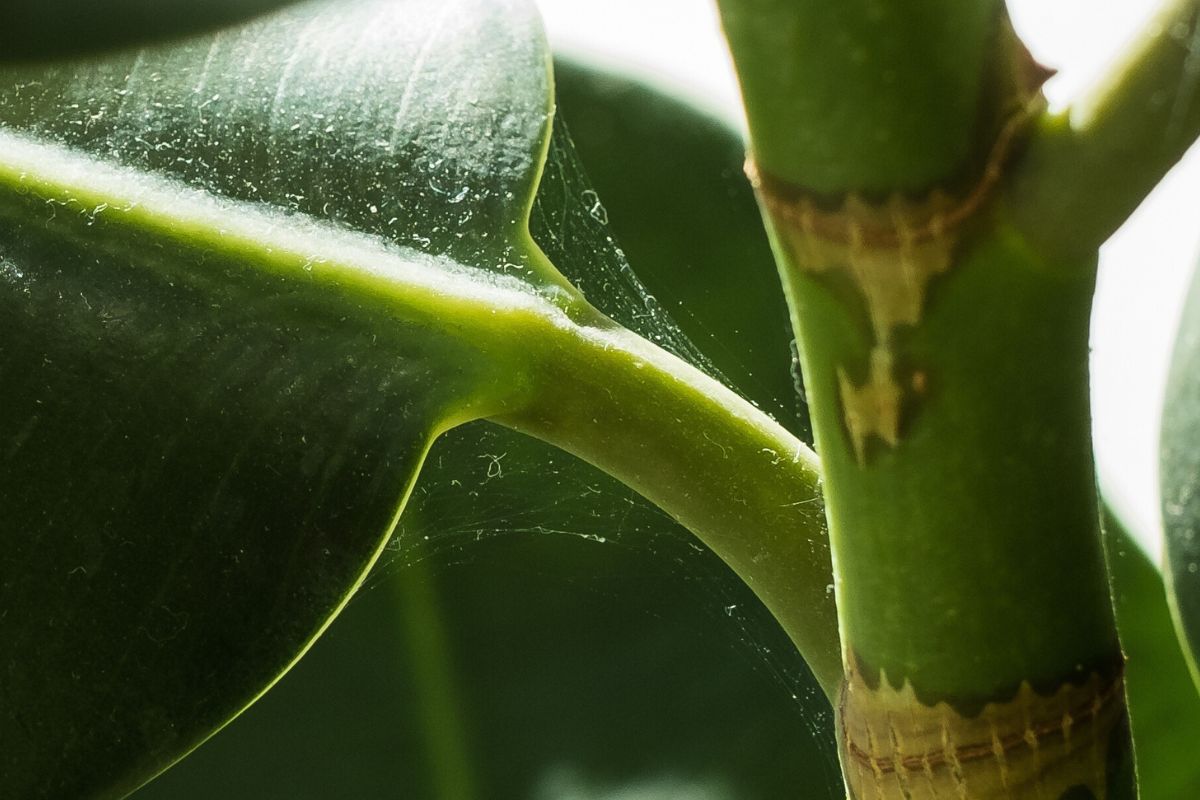
- Spider mites: Microscopic spider-like pests about 1/25 inches (1 mm) long. They draw moisture from the stomata on leaf undersides and cause a speckled white or yellow discoloration on affected leaves, which is distinct from the usual variegations of golden pothos. Spider mites also weave fine webs along the vines.
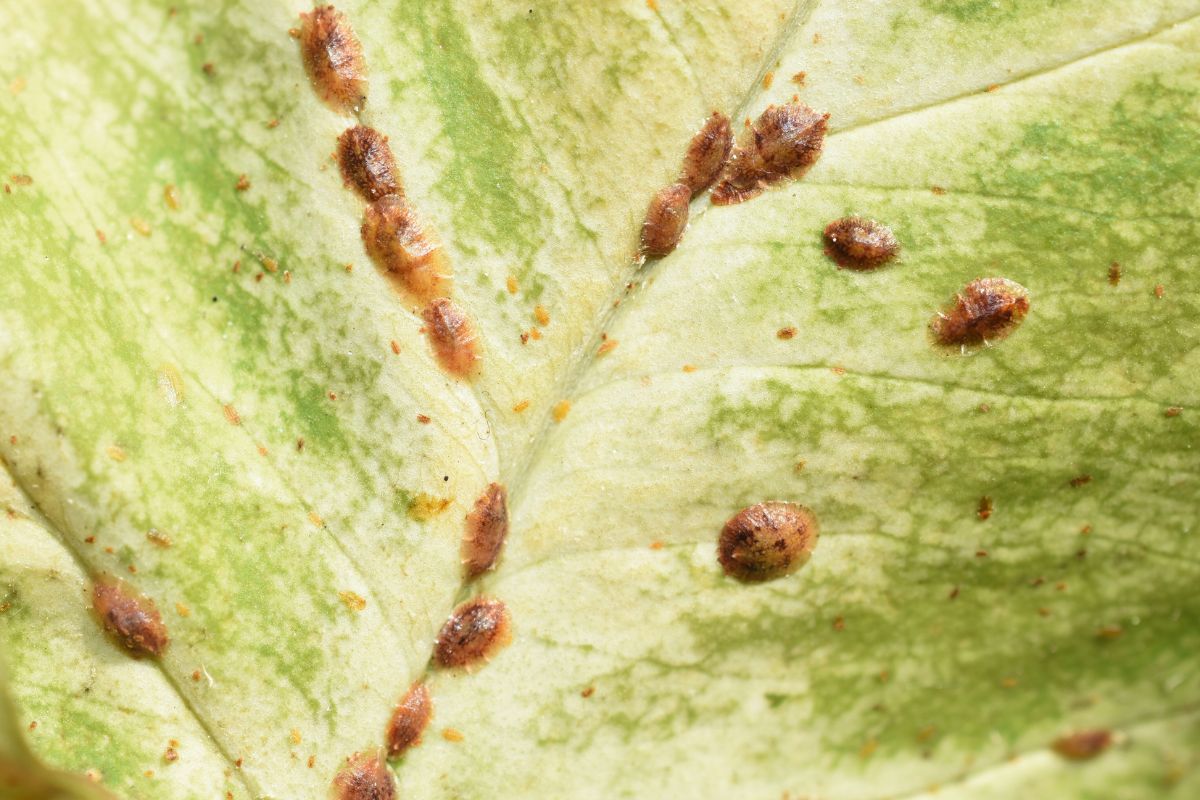
- Scale insects: Tiny brown, immobile bumps about 1/16-⅛ (1.6-3.2 mm) in diameter, and can sometimes be mistaken for aerial root knobs. They usually attach along the vines and petioles to draw sap. At severe infestations, the leaves may limp with yellow spots at the feeding site. Honeydew and sooty mold are also common symptoms.
- Aphids: Pear-shaped insects with translucent bodies about 1/16-⅛ (1.6-3.2 mm) long. Various species come in yellow, green, orange, pink, or black and leave behind white molts that appear as white flakes on leaf surfaces. They feed on sap from soft new growth, causing yellowing and curling. They also produce honeydew.
- Whiteflies: Tiny flies with white waxy wings about 1/16-⅛ (1.6-3.2 mm) long. They feed on phloem sap and excrete honeydew, causing leaf yellowing and potential sooty mold growth on leaf surfaces.
- Thrips: Tiny flies with yellow or brown bodies 1/16-⅛ (1.6-3.2 mm) long with fringed wings. They burrow into leaf tissue to lay eggs and excrete black fecal spots on the leaf surface. The larvae then feed on plant sap, causing a silvery or bronze scar on pothos leaves.
- Fungus Gnats: Tiny black flies around 1/16-⅛ (1.6-3.2 mm) long with thin gray wings with Y-shaped venation. They hover constantly over the overwatered pothos soil to lay eggs. The larvae then feed on organic matter, soil fungal populations, or plant roots. Gnat larvae feeding can speed up plant damage or death caused by root rot.
The first step to take after confirming pest damage is to evaluate the extent of the infestation by examining the leaf undersides, vines, or roots.
Pro Tip: If over 50% of the plant is covered with or damaged by pests, I recommend discarding or burning it (if legally allowed in your community) because pest management can be a tedious process, and it’s much easier to grow a new, pest-free pothos.
If there are only a few pests with no visible damage, you can follow the tips below to eliminate them:
- Isolation: Identify and isolate the plant confirmed to be the source of the infestation. Place the pothos in a separate room with similar environmental conditions as its original spot to prevent relocation shock on top of the stress from pest damage.
- Pruning: Pluck off severely damaged or discolored leaves, especially those with visible egg clusters or silvery or brown patches that may contain thrips larvae.
- Shower spray: Bring the pothos outdoors for a bit or into the bathroom for a shower. Aim the hose or shower spray on the leaf undersides and vines to dislodge the pests.
- Cleaning: Wipe the leaves dry with a clean towel. You may also remove the fine webs (from spider mites), honeydew, or sooty mold in this step.
- Alcohol swab or tweezers: Manually remove remaining and stubborn pests, such as scale insects that firmly attach to the plant tissue. Dip a cotton swab in rubbing alcohol to scrape the pests or use tweezers to pluck the scales off and drop them into a cup of soapy water.
- Neem oil: Use a pre-mixed neem oil solution or dilute a concentrate in the following formula: 1 tablespoon neem oil, 1 tablespoon castile soap, 1 quart (1 liter) water. Spray the leaves and vines thoroughly once a week, especially near the areas where the scale insect shells have been removed. Schedule the applications at night and ensure the plant doesn’t receive any direct sunlight to prevent sunburn.
- Insecticidal spray: You may also use insecticidal soap spray in lieu of neem oil. It’s a contact pesticide without residual effects, so it’s best to reapply every 3-5 days.
- Sticky traps: You may also install sticky trap poles into the potting mix or hang them on walls to draw winged pests away from the pothos vines.
- Spinosad spray: Spider mites and thrips are mildly resistant to contact pesticides but are sensitive to spinosad treatment with mild systemic activity. Read the product label for proper and safe application indoors. It’s usually applied every 10-14 days and effectively eliminates vulnerable pests in 1-2 applications.
- Hydrogen peroxide soak: Reduce the watering frequency and allow the top 2 inches (5 cm) of the soil to dry out between waterings to deter fungus gnats from laying eggs in the potting mix. Dilute hydrogen peroxide to a 1% concentration in your watering can and use it to water the roots deeply. It can help aerate the roots and eliminate rot-causing fungi and gnat larvae.
Common Diseases
Pothos plants are vulnerable to several diseases that may be acquired during propagation at nurseries or gardening stores.
Here’s a list of aesthetically damaging and potentially fatal diseases of golden pothos:
Root Rot
Root rot is the most common consequence of overwatering. Pothos roots are fibrous and require well-aerated and well-draining soil. When kept in constantly wet soil, the dormant fungal spores become activated and cause visible disease symptoms.
Here are common rot-causing fungi that affect golden pothos:
- Phytophthora nicotianae: Causes dark brown or black, mushy leaves, but the vines and leaf veins remain green
- Rhizoctonia solani: Causes wilting of cuttings during rooting, turning them dark brown and mushy. Leaves of established vines develop necrotic dark spots.
Leaf Blight Diseases
It’s rare for established indoor golden pothos to exhibit leaf blight diseases because the infection typically spreads through irrigation and contaminated soil in nurseries.
You can prevent such problems in home gardens by properly inspecting plants before acquisition or purchase.
Leaf blight causes the following symptoms in golden pothos:
- Dark, necrotic sections on leaves
- Curling or deformity on symptomatic leaves
- Yellowing or browning leaf veins and vines
- Stem rot
- White or browning mycelial threads on deformed leaves and vines
Here are common pathogens that cause blight in golden pothos:
- Rhizoctonia solani (Aerial blight)
- Sclerotium rolfsii (Southern blight)
Note: Plants infected with root rot or leaf blight are not suitable for propagation because the pathogens may be present even in asymptomatic plant tissue. It’s best to discard sick plants and start fresh with a healthy pothos plant from a reputable source.
You must also discard contaminated soil and sterilize the pots using 10% bleach.
Troubleshooting Common Problems
Golden pothos are valued for the aesthetic appeal of the leaves. Although leafless vines are resilient and can be revived after improved care, stress damage to the leaves is irreversible, and it can take several months of consistent care to get a vibrant plant.
Here are common problems with golden pothos and their corresponding solutions:
Yellow Leaves
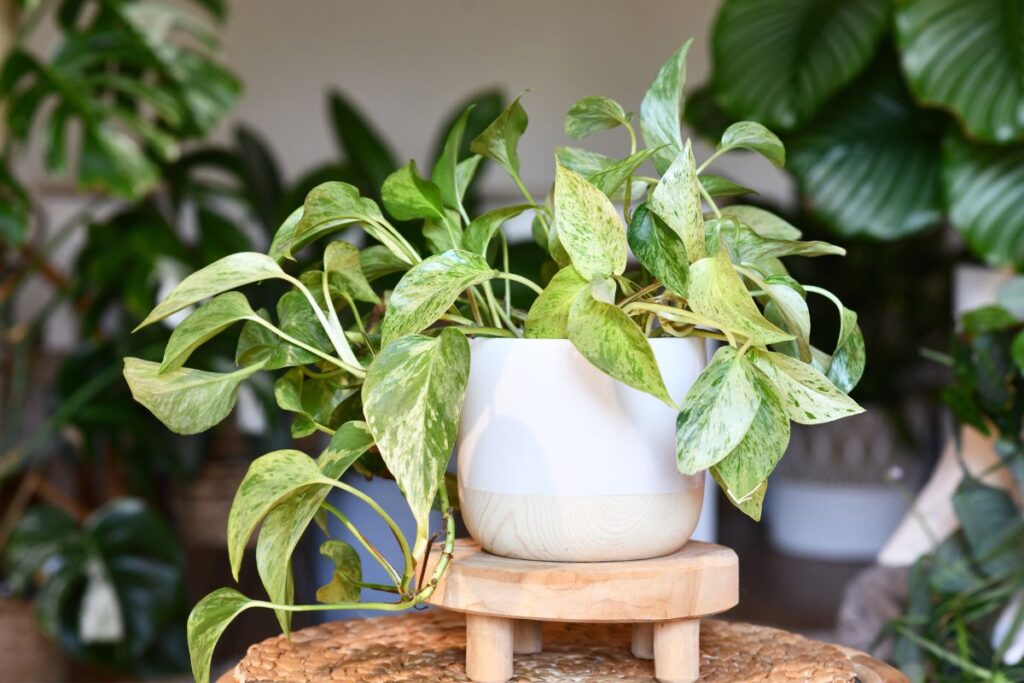
Common causes of unnatural yellowing of golden pothos leaves include:
- Overwatering: The soil remains soggy for several days after watering, and the older leaves closest to the soil turn yellow, sometimes with water-soaked spots. Prune the damaged leaves because water-soaked lesions won’t recover, and the leaves will gradually brown. Cut back on watering and allow the top 1-2 inches (2.5-5 cm) to dry out between waterings.
- Underwatering: The soil feels dry and crusty, and the older leaves turn yellow first. Prolonged underwatering can cause yellow edges on younger leaves. Soak the pot in water to evenly rehydrate the soil and the roots, and allow the excess moisture to drain. Proper hydration can help deliver nutrients to the leaves, allowing them to regain their green color.
- Intense sunlight: Too much direct sunlight can break down the waxy surface on pothos leaves, turning them dull and yellowish. Prune scorched leaves and move the plant several feet (+0.6 m) away from a sunny window or hang sheer curtains to filter the light. Routinely rotate the pot to give the leaves even exposure to and time away from the sun.
- Pest infestations: Stippling or speckled yellow or white discoloration is caused by spider mites. Other pests may show similar yellowing patterns, so it’s best to locate and physically identify the pests. Prune damaged leaves and rinse the pests off the plant. Apply neem oil, insecticidal soap, or spinosad spray to eliminate the remaining pests.
- Low humidity: Dry indoor air (<40%) can worsen the dehydration symptoms caused by underwatering and sun stress, leading to yellowing leaf tips. Ensure the plant is well-watered and switch on a humidifier about 2 feet (0.6 m) from the pothos for around 4 hours to rehydrate the aerial roots and the leaves. Use a portable hygrometer to monitor and maintain the humidity levels at 40-60%.
- High temperatures: Temperatures over 85 °F (29 °C) can be detrimental to drought-stressed pothos (underwatered and exposed to low humidity). The leaf edges can turn yellow and gradually turn brown and dry. Keep the plant away from the path of heating vents and ensure daytime temperatures indoors remain around 75 °F (24 °C).
- Nutrient imbalance: Nutrient deficiency (nitrogen, iron, magnesium) or excess (manganese or overall fertilizer burn) can cause yellowing in pothos leaves. Feed nutrient-deficient plants with a half-strength 10-10-10 liquid fertilizer in spring and summer until symptoms improve. On the other hand, flush the soil of over-fertilized plants using distilled water to leach unwanted fertilizer salts out of the pot.
Browning Leaves

The issues listed above can worsen if left unaddressed, leading to browning. Once the leaves have turned brown, the damage is mostly irreversible and requires pruning. Improving your care routine should encourage new and healthier growth.
Severe issues that cause leaf browning include the following diseases:
- Root rot: Brown, mushy sections on the leaves
- Leaf blight: Dark brown, necrotic spots and mycelial growth on damaged leaves and vines
Browning leaves caused by diseases indicate that the infection has spread along the vines, and the plant is no longer suitable for propagation. I recommended discarding the sick plants and contaminated soil mix to prevent the spread of the infection.
Limp or Wilting Leaves
Golden pothos leaves may remain green but appear limp due to dehydration caused by underwatering.
The symptom may be aggravated by:
- Too much light
- High temperatures
- Low humidity
Choose the appropriate solution below to help the golden pothos leaves perk up:
- Water the plant deeply. If the soil is partially hydrophobic, soak the potting soil in water for up to 30 minutes or until the entire soil and roots are rehydrated.
- Repot plants in fresh, moist potting soil if the old soil has become completely hydrophobic.
- Rehydrate hydrophobic moss poles by bringing the plant outdoors or to a bathtub and showering the moss with water. Place the plant in a well-ventilated space to allow the excess moisture to dissipate.
- Routinely check the soil moisture and water the plant as soon as the top 1-2 inches (2.5-5 cm) dry out. Avoid shallow watering as it can lead to uneven soil hydration, and some vines may appear limp next to vibrant ones.
- Filter intense sunlight using sheer curtains or move the plant a few feet (+0.6 m) away from a sunny window to reduce sun and heat stress.
- Keep the plant away from the path of hot air from heating vents or sunny windows.
Fading Variegation
Golden pothos plants will continue to grow even in low light conditions, such as near north-facing windows or over 8 feet (2.4 m) away from a bright east, west, or south-facing window.
They also don’t mind receiving only 8-12 hours of artificial light (LED or fluorescent) daily, making them perfect for windowless rooms or offices.
However, golden pothos will most likely lose their variegations because predominantly blue light from LED or fluorescent bulbs promotes darker green leaves in foliage plants.
To encourage the growth of new leaves with variegations, you can explore the options below:
- Move the plant closer the a sunny window—about 4-8 feet (1.2-2.4 m) away from an east, west, or south-facing window. Ensure it receives only bright indirect light and filter the midday sun with sheer curtains to prevent leaf scorch.
- Supplement lighting with full-spectrum grow lights. Position a full-spectrum lamp about 1 foot (30 cm) over a pothos pot or at a 45° angle against the leaves trailing from a hanging basket or climbing a moss pole. Keep it on for 6-10 hours daily in addition to low natural or other artificial light sources.
Slow Growth
Golden pothos are fast-growing plants under optimal conditions.
If your plant is growing noticeably slower even during the growing season, it may be due to the following issues:
- Dehydration: Plants require water to keep growing. If the plant is constantly underwatered (shallow watering or large intervals between watering sessions), it won’t put out as much new growth. Water the plant deeply and regularly. Don’t wait until the soil becomes bone-dry, as it’ll repel water and keep the roots dehydrated, even if you water the plant.
- Insufficient light: Although tolerant to low light conditions, pothos vines require sufficient light energy to grow. Ensure that your plant receives 8-12 hours of bright indirect light—ideally 4-8 feet (1.2-2.4 m) from a sunny east, west, or south-facing window.
- Rootbound issues: The lack of root space in the pot can inhibit foliage growth. The overgrown roots may displace the soil and deplete the soil of organic matter to support new growth. Repot your plant into fresh soil in a pot one size bigger when you see roots spilling out of the drainage holes.
- Nutrient deficiency: Soil nutrients can be depleted over time, and fast-growing vines like golden pothos can benefit from occasional feeding. Feed the roots a half-strength 10-10-10 liquid fertilizer or apply a quarter-strength foliar spray once a month from spring until summer or until growth picks up.
Seasonal Care
Indoor potted golden pothos grown in colder climates may require seasonal adjustments to keep them flourishing.
Here are basic adjustments to keep in mind when caring for pothos during winter:
- Lighting: Choose a location in your home that receives sufficient bright indirect light. If you cannot relocate the plant, be sure to routinely clean the windows of dust and snow for maximal light access into your indoor garden. You may also supplement the light using full-spectrum grow lamps set at 6-10 hours daily.
- Watering: Allow the top 2-3 inches of the potting soil to dry out between watering sessions. Due to the lower light, slower metabolism, and semi-dormant state of pothos vines in winter, watering frequency is typically reduced to once every 2-3 weeks for pots or every 7-10 days for hanging baskets and moss poles.
- Temperature: Maintain daytime temperatures of around 70-75 °F (21-24 °C) and 60-65 °F (15.6-18 °C) at night for optimal plant health. Keep the plant away from drafty doors or windows.
- Humidity: Maintain humidity levels at around 50%. You may need to switch on a humidifier at night to counter the drying effects of indoor heaters. Use a hygrometer to monitor the humidity and determine the duration of humidifier usage. You may also group tropical houseplants like monstera and philodendrons with your pothos for a naturally humid microclimate.
- Fertilizing: Stop feeding your plant in the fall until winter to allow it to transition to a semi-dormant state and adapt to lower light and temperatures during the cold season.
In spring, as light intensity increases, you can help the pothos snap out of semi-dormancy by gradually increasing the watering frequency. Water the plant as soon as the top inch (2.5 cm) of the soil dries out.
Display and Companion Plants

You can maximize a golden pothos’ aesthetic potential with the following design ideas:
- Heart-shaped foliage curtain: Let the luscious leaves trail using various visually appealing planters, such as coco coir baskets in stainless hangers or ceramic pots in macrame hangers.
- Wall greenery: You may also plant the trailing vines in rectangular pots and position them atop a wall shelf. Alternatively, you can position a trellis against a wall and place it behind a regular potted golden pothos. Train a few vines with pole clips or garden tapes for 3-6 months, and they’ll eventually climb the trellis on their own.
- Petite pothos pot: Young and bushy golden pothos plants in classic terracotta pots or decorative cache pots can enliven your bare tabletops.
- Climber with large foliage: Golden pothos vines allowed to climb on a moss pole with bright indirect sunlight grow vigorously with larger and vividly variegated leaves, giving your garden space an enchanting jungle vibe.
Golden pothos are also excellent companions to other tropical houseplants, such as the following:
- Tree Philodendron (Philodendron selloum): Tree philodendrons have similar light, temperature, and humidity requirements as golden pothos. Their large, deeply lobed leaves provide an exciting contrast against the heart-shaped golden pothos leaves.
- Monstera (Monstera deliciosa): Monsteras also like bright indirect light and humid conditions, and their large, fenestrated leaves bring diversity to your tropical houseplant collection.
- Peace Lily (Spathiphyllum spp.): Peace lilies also share similar environmental needs with golden pothos. In bright indirect light, they also produce spadix flowers with white spathes, adding color to the deep green garden.
Final Thoughts
Golden pothos are low-maintenance, beautiful, and flexible plants for all indoor gardeners.
You only need to keep the following care tips in mind:
- Use a well-draining, well-aerated soil mix.
- Keep the pot in bright indirect light and rotate weekly or at watering.
- Water the plant deeply as soon as the soil is dry 1-2 knuckles deep.
- Maintain moderate temperatures (65-85 °F or 18-29 °C) and humidity (40-60%).
- Fertilize sparingly using a 10-10-10 granular fertilizer or compost in spring and/or summer.
- Repot every 1-2 years when the roots start spilling out of the drainage holes.
A golden pothos’ reputation as an easy-to-propagate and hard-to-kill plant makes it the perfect confidence booster for beginner gardeners.
Please leave a comment to share your propagation stories, photos, and journey as a golden pothos gardener. You may also ask questions for expert tips and recommendations on pothos care.