
Identifying Fungus Gnats on Houseplants & Management
Fungus gnats are common nuisance pests indoors, as they typically hover over houseplants, food waste, and wherever there’s decaying organic matter. Seeing winged adults around your potted indoor plants can indicate severe issues with soil drainage and potential root damage.
Fungus gnats can be troublesome houseplant pests because they:
- Thrive in warm indoor temperatures. Fungus gnats reproduce quickly when temperatures are around 75 °F (24 °C).
- Lay eggs in moist potting mixes. It typically takes only 3 days for fungus gnat eggs to hatch in moist substrates, so if the soil surface remains soggy for several days, it can attract adult female gnats.
- Have multiple overlapping generations per year. Each egg can reach adulthood within 2-4 weeks, and each adult female can lay up to 200 eggs within 1-2 weeks, which is the average adult lifespan.
- Fly short distances, so they’ll likely infest neighboring houseplants faster with numerous eggs that eventually hatch into root-feeding larvae.
- Can worsen root rot symptoms. Fungus gnat larvae can feed on decaying or even healthy plant roots.
- Can go unnoticed because eggs, larvae, and pupae can stay hidden in the soil for 2-3 weeks before eventually turning into winged adults.
- Cannot be effectively controlled by insecticide sprays. In severe infestations, biological control methods using nematodes or Bacillus thuringiensis may help manage fungus gnat populations. Proper soil drainage and watering intervals can also deter adult gnats from laying eggs in the potting soil.
This article will explore essential details about identifying fungus gnats, the symptoms of infestation, and suitable integrated pest management methods to treat and prevent future infestations.

Quick Guide
| Common Name(s) | Fungus Gnat, Dark-winged Fungus Gnat |
| Scientific Name | Family Sciaridae, Bradysia spp. |
| Pest Type | Insect |
| Commonly Affects | All houseplants, especially those in moist soil |
| Size | Quarantine new plants Drying the soil surface between watering sessions Bottom watering Sticky traps Good soil drainage |
| Color | Adults: Dark gray or black body with grayish wings and long legs Larvae: Transparent with a black head |
| Signs of Infestation | Tiny black flies near the soil Translucent larvae (maggots) and/or pupae on the soil surface Wilting, yellowing, or stunted growth in young plants or seedlings Root rot symptoms (yellowing leaves, mushy roots, wet soil) |
| Preferred Conditions | Moist soil with high organic content Warm and humid indoor conditions |
| Damage Level | Mild for mature plants; severe for seedlings and cuttings |
| Prevention Methods | Quarantine new plants Drying soil surface between watering sessions Bottom watering Sticky traps Good soil drainage |
| Treatment Options | Sticky traps Neem oil soil drench Hydrogen peroxide drench Steinernema nematodes Bacillus thuringiensis soil drench Hypoaspis mites |
Life Cycle, Behavior, and Environmental Triggers
Around 3,000 fungus gnat species have been identified under the family Sciaridae. The most common species affecting indoor ornamentals, such as in homes and greenhouses, belong to the genus Bradysia.
Bradysia species are also known as the dark-winged fungus gnats because of their black or dark gray segmented body and translucent grayish wings.
Here’s how fungus gnats look at different stages:
- Egg: Yellowish-white, less than 1 mm in diameter. Each egg can hatch within 3-7 days.
- Larva: Translucent white body up to 5 mm (⅕ inches) long with a black dotted head. Each larva actively evolves through 4 instar stages within around 10-14 days.
- Pupa: White and plump with a dark tip and around 3 mm (⅛ inches) long. The pupa gradually darkens in 4-7 days before the adult emerges.
- Adult female: Dark body with a rounder belly and shorter antennae. The translucent wings have a distinctive Y-shaped venation. Adult females typically live for 1-2 weeks and can lay up to 200 eggs.
- Adult male: Dark body with a pointier belly and longer antennae. The wings also have Y-shaped veins. Adult males live for about a week, focusing mainly on mating with female gnats.
Note: Adult fungus gnats are often confused with fruit flies (Drosophila spp.). Here’s a brief guide to distinguish between the two insects:
| Traits | Fungus Gnats | Fruit Flies |
| Physical Appearance | Dark brown to black, slender body Inconspicuous dark eyes and long antennae Y-shaped veins on wings | Light brown or yellowish, rounded body Distinct red eyes and short antennae |
| Common Location | Near houseplants with moist soil Occasionally, on wet and decaying fruits or vegetables | Near decaying fruits or vegetables |
Feeding Behavior
Fungus gnats have different feeding behaviors at various life stages:
- Larvae actively feed on organic matter, soil fungi, and plant roots. They gradually increase in size as they feed and evolve through four larval stages (instars). They stop feeding after entering a cocoon (pupal stage).
- Adult females feed on water or nectar for nourishment that aids them in laying eggs.
- Adult males hardly feed on anything and spend their short lives looking for females to mate with. Adult gnats are generally harmless to plants and humans.

Environmental Factors Favoring Fungus Gnat Infestations
Fungus gnats are active during the warm season in the wild, typically from late spring to summer. On average, an egg can complete one life cycle within 17 days under optimal conditions or up to a month otherwise.
Indoors, fungus gnats reproduce and develop rapidly under the following conditions:
- Overwatering and/or poor drainage: Constantly moist soil is attractive to adult fungus gnats because fungi populations and organic matter decomposition rates rapidly increase with sufficient moisture, providing a good food source and a better survival rate for the larvae.
- Organic-rich potting soil: High organic matter content in the soil provides ideal food sources for fungus gnat larvae.
- Warm temperatures: Air temperatures around 75 °F (24 °C) promote higher fecundity in adult female gnats and faster hatching of eggs (around 3 days).
- Humid indoor conditions: Humidity levels above 50% can delay moisture loss from the potting soil by reducing the evaporation rate or plant transpiration rate, providing an optimal environment for the larvae to thrive.
- Lack of predators: The lack of nematodes and mites in potting mixes enables fungus gnat populations to flourish in indoor gardens.
Where Do They Come From?
Fungus gnats are drawn to fungi and decaying organic matter. They can enter your indoor garden through the following:
- Contaminated potting soil: Potting mixes that contain garden soil or unfinished compost may contain fungus gnat eggs or larvae. Immature gnats also tend to hitchhike in soil from nurseries.
- Overwatered houseplants: Constant moisture provides the perfect breeding ground for fungi and fungus gnat larvae.
- Damp organic debris: Dead leaves, unfinished compost, or mulch in pots attract fungus gnats.
- Open doors & windows: Although they’re weak flyers, adult gnats can live for a week or so and can fly into an indoor garden through open doors and windows. They’re attracted to light and may come into your home at night and rest on houseplants.
Symptoms of Fungus Gnat Infestation
Fungus gnats hardly cause severe damage in mature indoor plants with a robust root system.
The presence of adult fungus gnats around your houseplants suggests pre-existing overwatering or poor drainage issues, as well as underlying plant stress that may be exacerbated by the larvae in the soil.
Advanced stress symptoms and plant death are not primarily caused by fungus gnat larvae, but they can play a significant role in accelerating the disease’s progress by further weakening the roots.
Here’s how the symptoms of fungus gnat infestation progress:
Early Signs
- Soggy soil surface
- Tiny black flies hovering near the soil
- Small white larvae visible in wet soil
- A mushroom-like odor from fungal growth in soil
Advanced Infestation Symptoms
- The soil appears slimy from excess fungal growth
- Wilting or yellowing leaves due to root damage (larval feeding on plant roots can create entry points for fungal pathogens to damage the plant)
- Slow or stunted plant growth
- Rare: A snake-like mass of larvae forms over the soil surface, slowly moving to a drier surface shortly before developing into pupae
- Slime trails from a large population of gnat larvae on the potting mix surface (similar to slug or snail slime trails)
Note: Young plants, such as cuttings and seedlings, may incur fatal damage from fungus gnat larvae. On the other hand, mature plants may become more vulnerable to damage from rot-causing pathogens if the roots are severely weakened by the larvae.
Confirmatory Tests
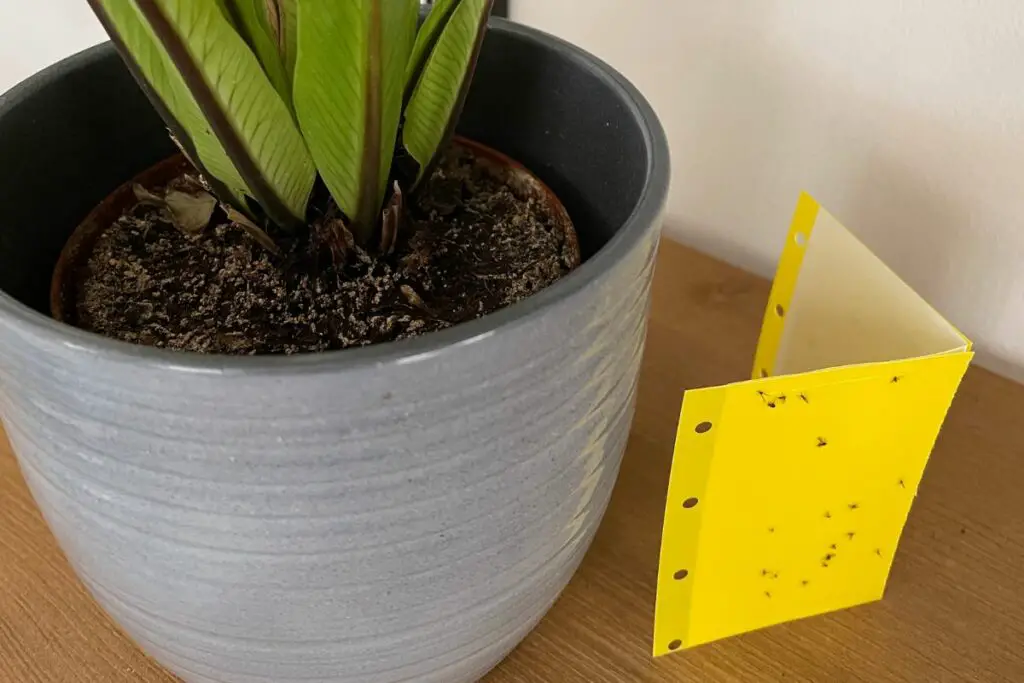
The following methods or tools can confirm a fungus gnat infestation:
- Pot disturbance test: Adult fungus gnats tend to rest on leaf litter or organic matter at the base of the plant. Gently shake the pot or the bottom leaves to disturb the small black flies, which are most likely fungus gnats.
- Sticky trap test: Place yellow sticky traps near the soil to catch flying insects, evaluate their appearance, and distinguish them from regular houseflies or shoreflies (which tend to have a more robust body). In the morning, as daylight shines through the windows, some fungus gnats may fly towards the light, so you can place some traps on the windows as well.
- Potato or carrot slice test: Place small 1-2-inch (2.5-5 cm) cubes of raw potato or carrots on the soil for a few hours. Fungus gnat larvae will be attracted to the cubes and penetrate them.
- Magnifying glass or phone camera: Use a 10x magnifying glass or the zoom function on your phone camera to focus on the larvae in the cubes. After identifying the gnat larvae, soak the cubes in soapy water for about 10 minutes to prevent further gnat development. Properly discard the potatoes and carrots—don’t add them to your compost pile.
Note: The potato or carrot slice test is best used only for diagnosis and not for long-term treatment. Although potatoes and carrots can attract the larvae and keep them off the plant roots, placing raw organic matter in the pot can also attract adult gnats and encourage them to lay eggs in the soil—even if only the peels are exposed to the surface.
Treatment
After confirming a fungus gnat infestation, follow the treatment methods below:
Immediate Actions
I don’t recommend isolating plants infested with gnats. Fungus gnats can fly and most likely have already laid eggs in all the moist potting mixes in your indoor garden. Bringing the pot elsewhere can also risk introducing the pests to a different part of your home.
Instead, you must treat all potted plants and perform the following immediate actions:
- Cleaning: Remove any dead leaves or decaying plant matter on the soil surface to deter adult gnats from visiting the pot.
- Drying out the soil: Stop watering temporarily to let the top half of the soil dry completely. Gnat larvae typically stay in the upper 2-3 inches (5-7.6 cm) of the soil for easy access to moisture, fungi, and decaying organic matter. It also allows them to move to the drier soil surface quickly when it’s time to pupate.
- Inspection: Check all the pots every 2-3 days for flying adults or larvae and pupae in the soil. Adult gnats will try to explore other pots for moist soil when their usual pot is dry.
Physical Removal
You can manually remove the pupae and catch adult gnats with the following methods:
- Pluck the pupae from the soil surface using tweezers. Drop them in a cup of water with 2-3 tablespoons of liquid soap to drown and kill the developing adult. Repeat this every 2-3 days to catch overlapping generations of fungus gnats.
- Install yellow sticky traps near the soil to catch adult fungus gnats. Use small traps with tiny sticks that you can poke into the soil. Just replace them regularly once filled with flies.
Pro Tip: Seedlings and cuttings are most vulnerable to fungus gnat infestations because they require constantly moist conditions for root development. After confirming the infestation, I usually cover the young plants with a mesh dome to block the flying adults. I also pick up the newly formed pupae and poke a few sticky traps in the substrate to catch the emerging adults.
Other sources recommend various methods that may work, but aren’t significantly effective.
Here are some additional methods or tools you can explore to find which works best for you:
- Apple cider vinegar: Fill a shallow bowl with apple cider vinegar. Fungus gnats are attracted to the odor of rotten fruit, which confuses them, causing them to be drawn to the liquid. Cover the top of the bowl with clear plastic and poke some holes using chopsticks to allow the odor to escape and attract fungus gnats. The plastic will then trap the insects until they drown. Place the bowl near the pot, but not directly on the soil surface, as it can risk spilling and may attract more gnats to your plant.
- Vacuuming: Aim the vacuum close to the base of the plant to catch the resting adult gnats quickly. One downside of this method is that it doesn’t kill the adults right away. You can spray an insecticide into the vacuum bag before sealing and discarding it.
Natural & Organic Remedies
You must also use one or more of the following natural remedies to treat a fungus gnat infestation more effectively:
- Regular watering intervals: Let at least the top 2 inches (5 cm) of the soil dry out between watering sessions.
- Bottom watering: Water plants from below to avoid keeping the soil surface moist. I recommend doing this after every 3-4 regular top watering sessions to completely rehydrate the soil and relieve hydrophobic clumps that may have accumulated from letting the soil dry out.
- Neem oil drench: Mix one tablespoon of neem oil concentrate with a quart (1 liter) of distilled water and pour evenly over the soil surface to inhibit larvae from developing. Note: Avoid using this method too often, especially on young plants. Neem oil has allelopathic properties and can wrap around roots, inhibiting plant growth and water uptake.
- Pumice layer: Add a fine layer of pumice over the soil surface. Pumice drains quickly and will prevent adult gnats from laying eggs in your potting mix. Pro Tip: Avoid using sand, as it can form a crusty layer over time and inhibit proper water infiltration into the soil mix below.
On the other hand, here are some popular treatment methods that are not always effective against fungus gnats:
- Diatomaceous earth (DE): Other sources claim that DE can dehydrate and kill gnat larvae. However, one study shows that DE doesn’t reduce the gnat larvae population. DE can dry out the potting mix, but not the gnat larvae. The powder can also create cracks in the soil, allowing gnat larvae to move around and winged adults to emerge from pupae.
- Chamomile tea: Not all components of chamomile tea have a pesticidal effect. The extraction of active ingredients with pesticidal effects must be performed in a laboratory. In addition, diluting the flowers in hot water (as in tea preparation) can denature the essential oils or enzymes, thereby nullifying the pesticidal effect.
Note: Other sources recommend using cinnamon powder due to its antifungal properties, which can consequently control fungus gnat populations.
However, there are some considerable downsides when using this method, including the following:
- Insignificant concentrations of active ingredients: Although numerous essential oils in cinnamon act as a natural fungicide to reduce fungal growth, they may not be present at high concentrations in cinnamon powder. The manufacturing process affects the purity or efficacy of the cinnamon powder.
- Generalist effect on beneficial soil microbes and microorganisms: If the cinnamon product proves effective against rot-causing pathogens, it’s also most likely detrimental to beneficial microbes that help with breaking down organic matter and nutrients in the soil. You also can’t use cinnamon when practicing integrated pest management, as it can kill nematodes or predatory mite larvae.
Biological Controls
You can manage a fungus gnat infestation with the following biological control methods:
| Biological Control | Mode of Action | Special Considerations or Drawbacks |
| Beneficial nematodes (Steinernema feltiae) | Mix the product with distilled water and drench the potting soil. The tiny nematodes will spread and parasitize the fungus gnat larvae and pupae, thereby inhibiting their development into adults. | The nematodes require consistently moist soil to stay alive and hunt gnat larvae and pupae. It’s crucial to let the soil dry out to control a gnat infestation. You may need multiple applications of beneficial nematodes to treat a persistent infestation. |
| Predatory Mites (Hypoaspis miles) | The mature mites dwell in the soil mix and actively feed on fungus gnat larvae. | The mites must be introduced to the soil upon receipt from the supplier because the transport or delivery time can significantly decrease their viability. |
| Bacillus thuringiensis israelensis (Bti) | Available in multiple forms (i.e., liquid concentrate, granules) that can be dissolved in water and applied to the potting mix. Bti is a bacterium that forms spores, which release toxins once ingested by fungus gnat larvae. | Although Bti works against newly hatched gnat larvae, studies show that it’s ineffective against the 2nd and 3rd larval stages (instars). Bti is generally safe for humans, plants, and house pets. However, skin or eye irritation occasionally occurs in susceptible individuals, so it’s crucial to follow application and product safety procedures. |
| Hunter Flies (Coenosia attenuata) | Winged adults actively feed on winged indoor plant pests like fungus gnats, aphids, and whiteflies. Adults lay eggs in potting soil, and the hunter fly larvae feed on gnat larvae. May naturally be found in greenhouses where plant pests thrive | Not native to the U.S. and uncommon in gardening stores or biological pest control suppliers |
Chemical Treatment (As a Last Resort)
For a severe fungus gnat infestation, you can use a hydrogen peroxide soil drench as a last-resort option to kill the larvae and rot-causing pathogens.
Here’s how:
- Mix 1 part 3% hydrogen peroxide with 4 parts water.
- Pour the solution evenly over the soil surface. Avoid wetting the foliage.
- Apply it once and couple your efforts with sticky fly traps and improved watering intervals.
One downside of this treatment is that it may also kill beneficial microbes in the soil, so it’s not recommended for long-term or frequent use. In case of a re-infestation or persistent infestation, you may need to repot your plant. I’ll discuss this further later in the article.
On the other hand, here are chemical treatments I don’t recommend when dealing with fungus gnats:
- Systemic insecticidal sprays are not very effective against fungus gnat larvae because their primary food source is fungi and organic matter in the soil, not exactly plant roots. The adults don’t feed on houseplant sap.
- Pyrethrin-based sprays may kill adult gnats, but some may fly away and evade the treatment. Insecticidal sprays also require multiple applications, which isn’t ideal for indoor conditions.
- Dish soap soil drench or sprays can kill gnat larvae hiding in the soil after coating each larva completely. This requires a high soap concentration to be effective. However, soap can raise the soil pH or leave insoluble residue in the soil that can damage plant root tissue (phytotoxic effect).
Signs of Recovery and Post-Treatment Care

The treatments for fungus gnat infestations should last 6-8 weeks for the best results. It can take about 3 weeks for eggs to hatch and develop into an adult, so the absence of tiny black flies around your plants doesn’t guarantee that the pests are gone.
After at least 6 weeks of a thorough and consistent treatment routine, you’ll know that your garden is rid of a fungus gnat infestation with the following signs:
- No more tiny black flies flying around plants
- No visible larvae or pupae in the soil
- New plant growth appears healthy
Moving forward, maintain good watering practices to prevent soggy soil conditions that may invite fungus gnats back into your indoor garden.
Troubleshooting Common Problems
Fungus gnats can become a nuisance indoors if left unattended due to their high reproductive rate and rapid development.
Here are some common problems associated with fungus gnat infestations and how to address them:
Root Rot and Severe Infestation: When to Repot
Overwatering or poor soil drainage are the primary causes of fungus gnat infestations indoors. Both issues are quite serious and can lead to a rapid decline in plant health, especially when root rot occurs due to constantly wet soil.
If the plant is showing signs of root rot with brown, mushy, and smelly roots, the rot-causing pathogens can spread through the plant roots—and the stems—even after holding off on watering.
That said, it’s time to repot the plant to improve its chances of recovery with the following steps:
- Carefully unpot the plant by sliding out the wet root ball from the pot.
- Remove as much potting soil from the roots as possible using your gloved fingers. Decaying roots will feel mushy and will naturally fall off as you comb through the root ball.
- Inspect the roots for more signs of rot. Use sharp, sterile scissors to cut off all the rotten roots. You can also remove yellow or brown, mushy leaves to balance out the root-to-shoot ratio and speed up plant recovery.
- Rinse the roots under clean, running water to remove the remaining contaminated or gnat-infested soil.
- Soak the roots in 1% hydrogen peroxide solution for 5-10 minutes to eliminate the remaining rot-causing pathogens and gnat larvae.
- Lay the plant over a clean towel or pile of newspaper for 30 minutes to air-dry the roots.
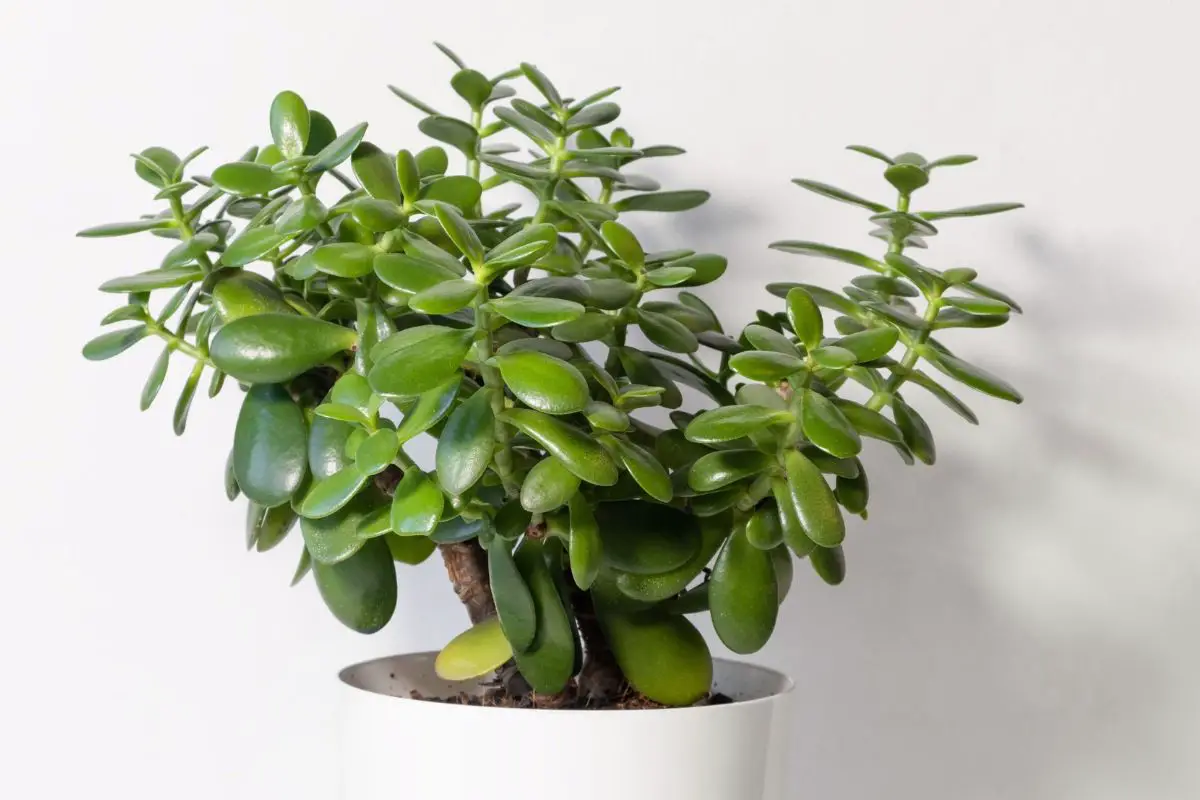
- Prepare a new, sterile pot that’s 2-4 inches (5-10 cm) larger than the newly pruned root ball. A good rule of thumb is to use 2 inches (5 cm) larger for slow-growing plants, such as jade plants, and up to 4 inches (10 cm) for fast-growing plants, like fiddle-leaf figs. Avoid using oversized pots as the larger soil volume can hold excess moisture that may invite fungus gnats.
- Prepare a sterile, well-draining, plant-specific soil mix to prevent waterlogging and recurrence of root rot and/or fungus gnat infestation.
- Allow the soil to dry at least 2 inches (5 cm) deep or halfway down before watering to discourage adult gnats from laying eggs in the soil.
Houseplants with severe root damage from rot and gnat larvae feeding may take several months to recover after repotting, due to the significant loss of roots. Be consistent with your care and avoid overwatering to improve your plant’s recovery rate.
Fungus Gnats Keep Coming Back
Fungus gnats may keep coming back if hidden eggs or larvae survive treatments. To inhibit the eggs from hatching or the development of larvae, you must use multiple treatment methods.
Here’s my go-to combination:
- Clear the soil surface of leaf litter or organic debris. Place a fine layer of pumice over the soil surface.
- Hold back on watering until the soil dries out halfway down. Bottom water once for every 3-4 top watering sessions.
- Cover small or young plants (less than 2 feet or 0.6 m tall) with a mesh dome to keep adult gnats away.
- Place yellow sticky traps near the soil and replace them every 2-3 days.
- Collect all visible pupae every 2-3 days and drop them in soapy water.
- Use a neem oil drench once. Repeat after 3-4 weeks as needed.
With consistent care, the fungus gnat population will die down, and future infestations will become more easily manageable.
Persistent Overwatering or Waterlogging Issues
If the soil remains soggy despite adjusting your watering schedule, it’s best to repot your plant in better potting conditions with the following tips:
- Use a breathable pot with drainage holes. Unglazed clay or terracotta pots are porous and can wick excess moisture away from the soil and plant roots.
- Amend the soil with perlite, pumice, or coarse sand. Adding up to 25% porous materials in your soil mix can improve drainage and prevent waterlogging problems.
- Occasionally poke the soil at the drainage holes with chopsticks to loosen soil plugs. Over time, regular top watering can cause the soil at the bottom of the pot to compact and inhibit proper drainage. Loosening the soil plugs once a month can maintain adequate soil drainage.
Accumulation of Organic Debris
Aging leaves naturally dry up and fall off the plant over time. As the leaves decompose over the soil, they can provide a hiding spot for common adult gnats and a food source for the larvae.
Routinely remove fallen leaves from the soil surface and dispose of them properly.
When topping up the soil mix with compost, use finished compost and work it about an inch (2.5 cm) deep into the soil by raking it in using a hand cultivator.
Although compost is generally beneficial to houseplants, it can retain moisture and nurture fungal populations.
I noticed a few fungus gnats hovering around my houseplants after topping up my potting mixes with compost in the fall for gentle nourishment during the cold season. I then tried sprinkling a fine layer of pumice over the compost, and it helped deter egg-laying adult female gnats.
Preventative Measures
It can be challenging to prevent flying insects from getting into your home, especially if you have plenty of houseplants.
Here are some practical tips to help reduce the risk of indoor gnat transmission:
Quarantine New Plants
Before buying or bringing home new plants, it’s helpful to inspect the soil moisture and foliage for any signs of pest infestations. Avoid plants whose potting mixes feel soggy.
In addition, old houseplants that spent the summers outdoors must also be quarantined before placing them back in their usual spot because fungus gnats may have laid their eggs in the potting soil during your plant’s stay outdoors.
Place new plants in a separate room for at least 3 weeks before introducing them to your indoor garden. This amount of time is necessary to reveal any existing gnat infestation.
Treat any gnat infestation for up to 8 weeks before moving the plant to your indoor garden.
Use Sterile Potting Soil
When repotting houseplants, use a sterile potting mix. I like using commercial soilless mixes or DIY potting mixes that contain perlite or pumice and coco peat. I then usually add high-quality compost to introduce beneficial soil microbes and mild nutrients.
If your old potting mix has a history of problems, such as root rot or soil-dwelling pests (i.e., root mealybugs or gnat larvae), I recommend discarding it and using a fresh, sterile soil mix.
On the other hand, if the old soil mix was problem-free and you want to reuse it, you can sterilize it using boiling water. Simply place the soil in a pot with drainage holes and pour freshly boiled water over it until the excess drains from the holes below.
Hot water (212 °F or 100 °C) can kill soil-dwelling pests and pathogens, but it’ll also kill beneficial microbes.
Here are other soil sterilization methods that are effective but may be impractical for potting soil:
- Soil solarization: This method requires placing the soil underneath a clear plastic and exposing it to direct sunlight for 4-6 weeks. You must also do it at the peak of summer for the soil to heat up to 140 °F (60 °C) to kill soil-dwelling pests and plant pathogens.
- Oven heating: This method is effective if you have a spare oven that you don’t use for food preparation, as it prevents food contamination. Pre-heat the oven to 200 °F (93 °C). Place moist soil in an oven-safe pan covered with aluminum foil and leave it in the oven for 30 minutes to eliminate pests and diseases.
Regular Inspections & Maintenance

Every time you water your plant, perform the following routine care tips to diagnose and treat any problems promptly:
- Rotate the pot weekly or at watering to promote balanced growth. Even light exposure can dry out the soil evenly and kill gnat larvae. Regular rotation can also help you spot any irregularities in your plant, such as leaf discoloration or pest damage.
- Remove dead leaves or decaying plant matter on the soil surface to eliminate fungus gnat food sources and hiding spots. It can also improve your plant’s appearance.
- Avoid placing DIY organic fertilizers like decaying banana peels on the potting mix, as they can attract fungus gnats and even fruit flies to your plants.
Use Natural Repellents
You can also repel fungus gnats with the following tips:
- Proactively add neem oil to your watering can every 3-4 weeks during spring and summer as a preventive measure.
- Install screens on your windows or caulk the gaps to prevent insect pests from entering your home garden.
- Use Bti-treated mosquito dunks in water to kill larvae as soon as they hatch. You can add this to your watering can once every 3-4 weeks in lieu of a neem oil soil drench. Note: Mosquito dunks are plant-safe and chemical-free, making them safe for use in potted houseplants. Follow the product label for the proper dunk size and water volume. You may need to break the dunk into bits depending on the volume of your watering can.
Encourage Strong Plant Health
A healthy houseplant has better tolerance or a higher survival rate from pest infestations. Y
ou can keep your plant in top shape with the following care tips:
- Soil quality: Improve soil drainage by adding up to 25% coarse sand, perlite, or pumice. Blend them properly with your regular plant-specific potting mix to prevent waterlogging. You can also place a thin layer of pumice over the soil surface to deter adult gnats.
- Watering: Make it a habit to allow the top half (or 2-3 inches or 5-7.6 cm) of the soil to dry completely between waterings to inhibit fungus gnat adults from laying eggs in your potting mix.
- Sunlight: Give your houseplants at least 8 hours of bright, indirect light daily to aid in optimal plant respiration and transpiration that naturally draws excess moisture from the roots.
- Temperature: Maintain moderate and stable indoor temperatures (65-75 °F or 18-24 °C) to keep your plants healthy and resistant to pest damage. Keep the plants away from heating vents, as higher temperatures can boost the fungus gnat population.
- Humidity: Keep the humidity at 30-50% for optimal plant transpiration. Additionally, enhance air circulation around your plants by pruning overgrown leaves and branches, and maintain a distance of at least 6 inches (15 cm) between neighboring plants.
Houseplants Prone to Fungus Gnat Infestations and Symptoms
Although fungus gnats can affect all houseplants indiscriminately, some plants are more vulnerable because of the following traits:
- Moderate to high moisture requirements: The plant typically needs water as soon as the top 1-2 inches (2.5-5 cm) of the soil dries out, allowing gnat larvae to persist.
- Low to moderate lighting needs: Soil moisture evaporates more slowly in lower light conditions, promoting gnat larvae growth.
- Soil rich in organic matter: Some plants require nutrient-rich or moisture-retaining soil, which can provide food and optimal growing conditions for gnat larvae.
Here are some common houseplants that are likely to be infested by fungus gnats:
| Houseplants | Care Requirements that Support Fungus Gnat Populations |
| African Violets (Saintpaulia ionantha) |
|
| Anthurium (Anthurium andraeanum) |
|
| Boston Fern (Nephrolepis exaltata) |
|
| Chinese Evergreen (Aglaonema modestum) |
|
| Chinese Money Plant (Pilea peperomioides) |
|
| English Ivy (Hedera helix) |
|
| Fiddle Leaf Figs (Ficus lyrata) |
|
| Gardenia (Gardenia spp.) |
|
| Lucky Bamboo (Dracaena sanderiana) |
|
| Monstera (Monstera deliciosa) |
|
| Parlor Palm (Chamaedorea elegans) |
|
| Peace Lily (Spathiphyllum spp.) |
|
| Pothos (Epipremnum spp.) |
|
| Prayer Plant (Calathea spp.) |
|
| Wandering Jew (Tradescantia zebrina) |
|
Comparison to Other Common Houseplant Pests
Fungus gnats have a distinct feeding behavior compared to other houseplant pests because the larvae target the roots instead of the sap from the foliage.
Let’s explore the differences among common houseplant pests below:
| Pest | Size and Appearance | Symptoms |
| Fungus Gnats | 1/16-⅛ inches (1.6-3.2 mm) Translucent, soil-dwelling larvae with dark heads Black or dark gray body and grayish wings, six legs, two antennae | Tiny black flies hovering over wet soil Rapid progression of root rot symptoms, such as yellowing, wilting, and stunted growth |
| Aphids | 1/16-⅛ inches (1.6-3.2 mm) Translucent white, green, pink, orange, or black body, six legs | Localized yellowing at the feeding site Honeydew Sooty mold and ants |
| Mealybugs | 1/16-⅛ inches (1.6-3.2 mm) Fluffy white waxy covering on eggs, nymphs, and adults | Localized yellowing at the feeding site Fluffy white clusters on leaf undersides, along leaf veins Honeydew Sooty mold and ants |
| Scale Insects | 1/16-⅛ inches (1.6-3.2 mm) Brown, immobile tortoise- or oyster-like shells | Localized yellowing at the feeding site Tiny brown bumps along the stem, petioles, leaf veins, or on leaf surface Honeydew Sooty mold and ants |
| Spider Mites | <1/20 inches (<1 mm) Black, spotted (2 dots), or red body, 8 legs, spider-like | Fine webbing on or between leaves and stems Speckled white or yellow leaves |
| Thrips | 1/16-⅛ inches (1.6-3.2 mm) Two pairs of fringed wings over a slender, yellowish or brown body | Silvery or bronze patches over the leaf surface Tiny black dots (excrement) close to the patches |
Final Thoughts
The presence of adult fungus gnats in an indoor garden is often a warning sign that the plants have watering issues. The flying adults are attracted to wet soil with abundant fungi, which are crucial for larval growth and development.
After female gnats deposit eggs into wet soil, it only takes 17-28 days for a new generation of adults to emerge. This rapid reproduction and growth can lead to overlapping generations of soil-dwelling larvae that voraciously feed on organic matter, fungi, and plant roots.
To effectively manage or eradicate fungus gnat populations, it’s important to use multiple treatment methods simultaneously, including the following:
- Allowing at least the top 2 inches (5 cm) of the soil to dry out
- Physical removal of visible pupae using tweezers
- Catching flying adults using yellow sticky tapes
- Adding a layer of pumice over the soil
- Neem oil or hydrogen peroxide soil drench
- Application of parasitic nematodes, predatory mites, or Bti (cannot be used with neem oil or hydrogen peroxide)
Well-draining soil can inhibit fungus gnat reproduction, and a healthy plant has better resistance to pest damage. That said, monitor your plants regularly for signs of pests and adjust your watering habits as needed.
If you’ve encountered fungus gnats in your indoor garden before, feel free to leave a comment to ask for treatment suggestions or to share practical tips on how to overcome the issue.