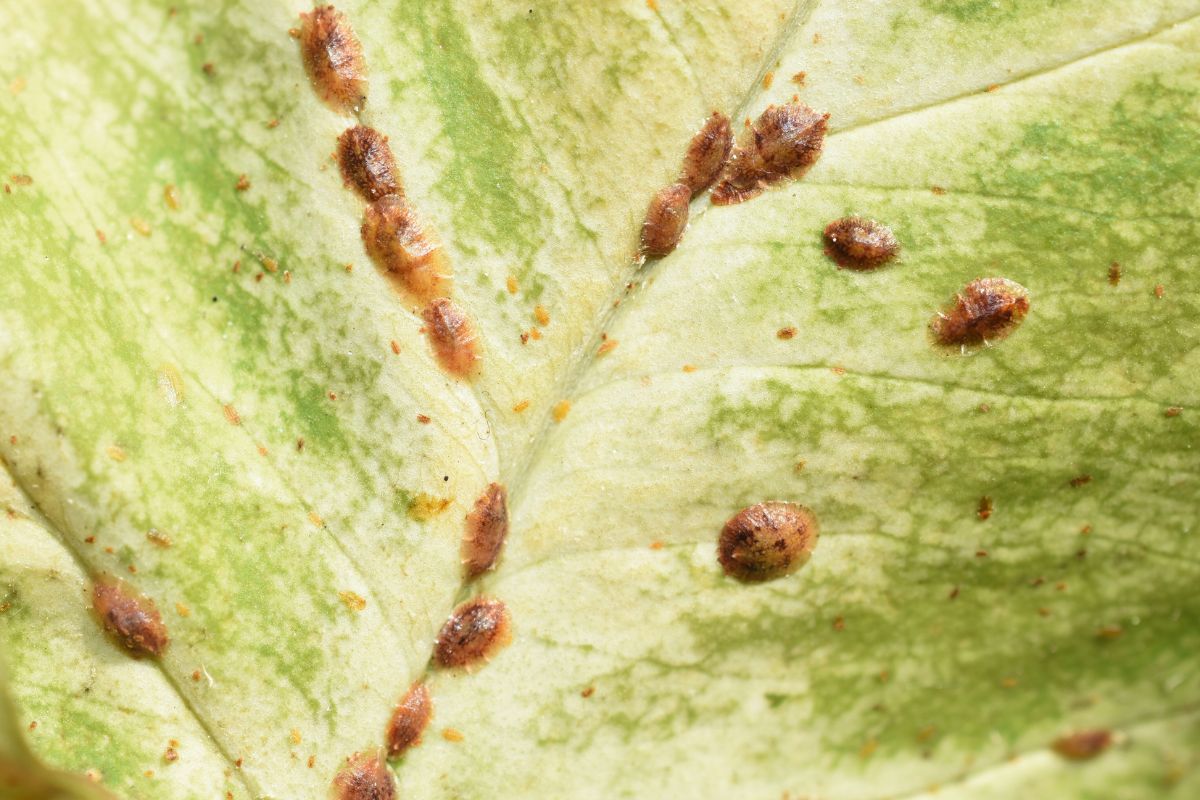

Whitefly Identification & Control on Houseplants
Whiteflies are widespread plant pests, but are often underestimated because they disappear during the cold season outdoors. Without natural predators or biological control, whitefly populations can rapidly increase, causing mild to severe damage to indoor gardens.
Whiteflies can pose a serious threat in indoor gardens or greenhouses because they:
- Thrive in warm and humid environments similar to the conditions maintained in indoor gardens throughout the year.
- Are polyphagous, allowing them to spread to other houseplants in case their preferred host plants are overcrowded with other pests.
- Are easy to miss because the immature stages (egg, crawlers, nymphs) are <0.5 mm and often found on leaf undersides.
- Grow quickly in warm conditions, developing from eggs to egg-laying adults within 18 days.
- Reproduce rapidly, creating up to 13 overlapping generations annually.
- Have a long lifespan. Each adult female can live 1-2 months and produce around 400 eggs.
- Suck sap from leaves and, in severe infestations, may cause leaf yellowing, defoliation, and even stunted growth.
- Spread easily to other houseplants because adults have wings. They can enter indoor gardens through new plant purchases, the outdoor exposure of a potted houseplant in the summer, or contaminated tools.
- Can transmit plant viruses like Tomato Yellow Leaf Curl Virus (TYLCV) and Cucumber Yellow Virus (CYV).
- Are resistant to contact pesticide sprays like neem oil and insecticidal soaps after developing a waxy covering (nymph), fringe (pupa), or wings (adults). They’re also resistant to xylem-transported systemic pesticides, such as imidacloprid.
- Require integrated pest management practices to eliminate. Proper symptomatic plant isolation, pruning, sticky trap installation, and routine organic pesticide application are crucial to managing whitefly populations indoors.
In this article, I’ll provide an in-depth guide on how to identify the physical traits of common whitefly species affecting houseplants and their associated symptoms. I’ll also cover different treatments and long-term prevention methods.

Quick Guide
| Common Name(s) | Whiteflies |
| Scientific Name | Aleyrodidae family |
| Pest Type | Insect |
| Commonly Affects | Herbs, vegetables, flowering plants, ferns, tropical houseplants |
| Size | Nymphs: <1 mm (<0.04 in) Adults: 1-2 mm (0.04-08 in) body & up to 3 mm (0.12 in) wingspan |
| Color | White or yellowish body and powdery white wings |
| Signs of Infestation | Cloud of tiny white insects when touched, yellowing leaves, sticky honeydew |
| Preferred Conditions | Warm, humid, stagnant air |
| Damage Level | Moderate to high (especially in clusters) |
| Prevention Methods | Quarantine new plants, improve air circulation, inspect leaf undersides |
| Treatment Options | Sticky traps, neem oil, insecticidal soap, biological predators, systemic insecticides |
Life Cycle, Behavior, and Environmental Triggers
Whiteflies are winged plant pests that belong to the order Hemiptera (family Aleyrodidae), making them closely related to other sap-feeding pests like aphids, mealybugs, and scale insects.
Roughly 1,300 whitefly species have been identified globally, many of which can cause significant damage to outdoor crops during the warm, growing season. They may also persist throughout the year in areas with stable, warm environments, such as greenhouses and indoor gardens.
Whiteflies can be problematic plant pests because of their distinct defensive and destructive traits at different life stages, including the following:
- Eggs: <0.3 mm, typically have stalks embedded into the epidermal cells on leaf undersides, allowing them to remain firmly attached to the leaves. The eggs are laid in a circular, spiral, or crescent pattern. Young eggs are pale and translucent, gradually darkening shortly before hatching.
- Crawlers: First nymphal stage. Each crawler is around 0.3 mm long and mobile, sampling different leaf areas for food before settling in one spot. This is the stage completely vulnerable to contact with pesticides.
- Nymphs: Four stages (including the crawler and pupa). As nymphs feed, they gradually get bigger from 0.3 mm to up to 1.5 mm long, depending on the species. Once they find a suitable feeding spot, they lose mobility and develop a thin layer of white waxy covering that makes them mildly resistant to contact pesticides.
- Pupae: Fourth or last nymphal stage. The nymph can grow up to 1.5 mm (0.06 in) long and become flatter like a scale insect. The nymphs continue to feed until shortly before developing waxy filaments or fringes, which indicate that they’re pupating.
- Adult females: 1.6-3.2 mm (0.06-0.12 in) long, have two pairs of white, waxy wings, allowing them to flutter around when disturbed and avoid pesticide sprays. Females can live 1-2 months and lay around 400 eggs throughout their lifespan.
- Adult males: Rarely seen as female whiteflies can reproduce asexually through unfertilized eggs, which yield female crawlers. Male whiteflies look identical to females but are relatively smaller (around 1 mm (0.04 in). It’ll be challenging to distinguish between male and female whiteflies without putting them side by side.
The whole life cycle can take as short as 18 days in summer or up to 2 months in spring or fall.
In U.S. homes or greenhouses, common whitefly species include:
- Greenhouse Whitefly (Trialeurodes vaporariorum)
- Tobacco or Silverleaf Whitefly (Bemisia tabaci)
- Banded-winged Whitefly (Trialeurodes abutiloneus)
Note: You can identify the whitefly species after closely inspecting the appearance of the pupae and winged adults.
The table below explores the differences among common whitefly species that affect houseplants:
| Species | Life Stages | Damage |
| Greenhouse Whitefly (Trialeurodes vaporariorum) | Eggs: <0.3 mm, conical, yellowish to purplish grey Nymphs: Green, yellow, or dark brown Pupae: Around 1.5 mm, yellowish-white and fringed Adults: Around 1.6 mm (0.06 in), yellow body and flat white waxy wings | Localized yellowing of infested leaves, followed by wilting or leaf drop Stunted development or distorted appearance of infested young leaves Can infest over 250 plant species Preferred hosts: Fuchsias, herbs, leafy tropicals |
| Tobacco or Silverleaf Whitefly (Bemisia tabaci) | Eggs: Around 0.2 mm, pear-shaped, white to brown Nymphs: 0.3-0.6 mm, translucent white to yellow Pupae: 0.7 mm, flat and oval, yellowish center with distinct red eyes and translucent white edges. Fringe or waxy filaments present only if the host’s leaf is hairy. Adults: Up to 1.5 mm (0.06 in) long, yellow body, and white, tent-shaped wings with a gap in the middle | Yellow or silvery discoloration on leaves (especially on cucurbits), hence the name ‘silverleaf’ Has 11 biotypes (variants) and can infest over 1000 plant species Preferred hosts: Succulents, hibiscus, vegetables Can vector over 120 plant diseases, including Tomato Yellow Leaf Curl Virus (TYLCV) and Cucumber Yellow Virus (CYV) |
| Banded-winged Whitefly (Trialeurodes abutiloneus) | Eggs: <0.2 mm, oblong, pale yellow to pink Nymphs: Around 0.5 mm, translucent white with yellow spots on the sides Pupae: 1-1.6 mm long, oval with a dark spot along the back Adults: 1.6-3.2 mm (0.06-0.12 in) long, have a grayish body and brownish zigzag bands on the front pair of wings | Infested leaf areas turn yellow and dry Can infest over 150 plant species Preferred hosts: Cotton, melons (Cucurbitaceae), and vegetables Occasionally seen on ornamentals in the absence of preferred hosts |
Note: Whiteflies (Hemiptera) can sometimes be mistaken for moths (Lepidoptera), but they belong to different insect orders.
Here are the traits of moths that distinguish them from whiteflies:
- Significantly larger than whiteflies. Moth size can vary depending on the species.
- Hairy body and wings
- Come in different colors (i.e., brown, yellow, orange, green, etc.)
- Larvae (caterpillars) can be found feeding on fabric or houseplants
- Cause irregular holes on plant leaves from chewing
Feeding Behavior and Secondary Problems
The first three nymphal stages and adult whiteflies actively feed on plant sap and excrete sugary waste (honeydew) through the following body parts:
- Stylets: Whiteflies feed on phloem sap using their stylets, which pierce through leaf tissue and work like a straw to extract the sugary liquid.
- Vasiform orifice: After processing the food, the sugary, sticky waste (honeydew) is excreted through the vasiform orifice (anus) at the lower back of whitefly nymphs. This structure is unique to whiteflies (Aleyrodidae) and can be seen under a microscope.
The following secondary problems may occur due to the whiteflies’ manner of feeding:
- Plant diseases can be absorbed by the whiteflies as they feed, allowing them to transfer the infection to other plant parts or neighboring plants as they fly around.
- Sooty mold fungal spores can land on the honeydew and grow mycelia, which are dark, thread-like structures that give the fungi their characteristic sooty appearance. The spores are airborne and present almost wherever there are plants.
- Ants, especially in warmer climates, feed on the honeydew produced by sap-feeding hemipterans. To maintain their food source, ants have symbiotic relationships with aphids, mealybugs, scale insects, and whiteflies. Ants protect these hemipterans from predators and help transport the immature nymphs as needed to different plant parts.
Environmental Factors Favoring Infestations
Outdoors, whiteflies become active in warm, moderately humid conditions.
Although whiteflies can overwinter beneath evergreen leaves in warmer climates, freezing conditions with temperatures below 21 °F (-6 °C) can kill adult whiteflies within 3 hours and nymphs and eggs within 3 days or so.
On the other hand, whiteflies can remain uninterrupted and flourish in indoor gardens with the following environmental conditions:
- Stable warm temperatures of around 77 °F (25 °C) promote optimal fecundity and development rate in whiteflies. Higher temperatures up to 104 °F (40 °C) can further increase their fertility and growth rate. Any higher, and the whiteflies can experience heat shock.
- Overcrowded plants provide abundant food sources and hiding spots for whiteflies, encouraging faster growth and spread.
- The absence of natural predators and parasites can lead to uncontrolled development of whitefly populations indoors.
- Infrequent plant inspections or neglect can leave early whitefly infestations undetected. Early diagnosis is crucial to prevent severe infestations.
- Overfertilization can encourage soft, new growth, which attracts sap-feeding pests, such as whiteflies.
Indoor Transmission
Whiteflies are prevalent in outdoor gardens during the spring and summer, but their populations remain manageable with minimal plant damage if beneficial insects, such as predatory bugs and parasitic wasps, are present.
Whiteflies can enter indoor gardens through the following modes of transmission:
- New plants harboring eggs or nymphs: In colder climates, whiteflies typically enter greenhouses or plant nurseries because of stable warm temperatures and abundant food sources. Purchasing plants from infested greenhouses or nurseries can introduce whiteflies to your home.
- Outdoor exposure during warm months: Whiteflies hide beneath leaves as temperatures slowly drop and hitch a ride on your potted plants.
- Airflow from infested outdoor plants: The wind can carry the tiny adult whiteflies through open windows.
- Contaminated gardening tools or clothes: Although whitefly nymphs require leaves to acquire food, they can cling to pruning tools or gardening gloves and survive for a few hours until they’re carried to a new host plant.
It’s crucial to diagnose a whitefly infestation before bringing plants to your indoor garden. I’ve experienced a whitefly outbreak after bringing my large potted fiddle leaf fig back indoors after a spring and summer exposure outdoors.
Symptoms of Infestation

Whitefly crawlers and nymphs are microscopic and translucent, making them hard to spot with the naked eye. It’s important to identify the symptoms of an early infestation to prevent whitefly populations from getting out of hand.
Here are the signs of a whitefly infestation:
Early Signs
- Tiny white insects flutter around when you move the leaves
- Sticky residue (honeydew) on leaves and surfaces around the pot
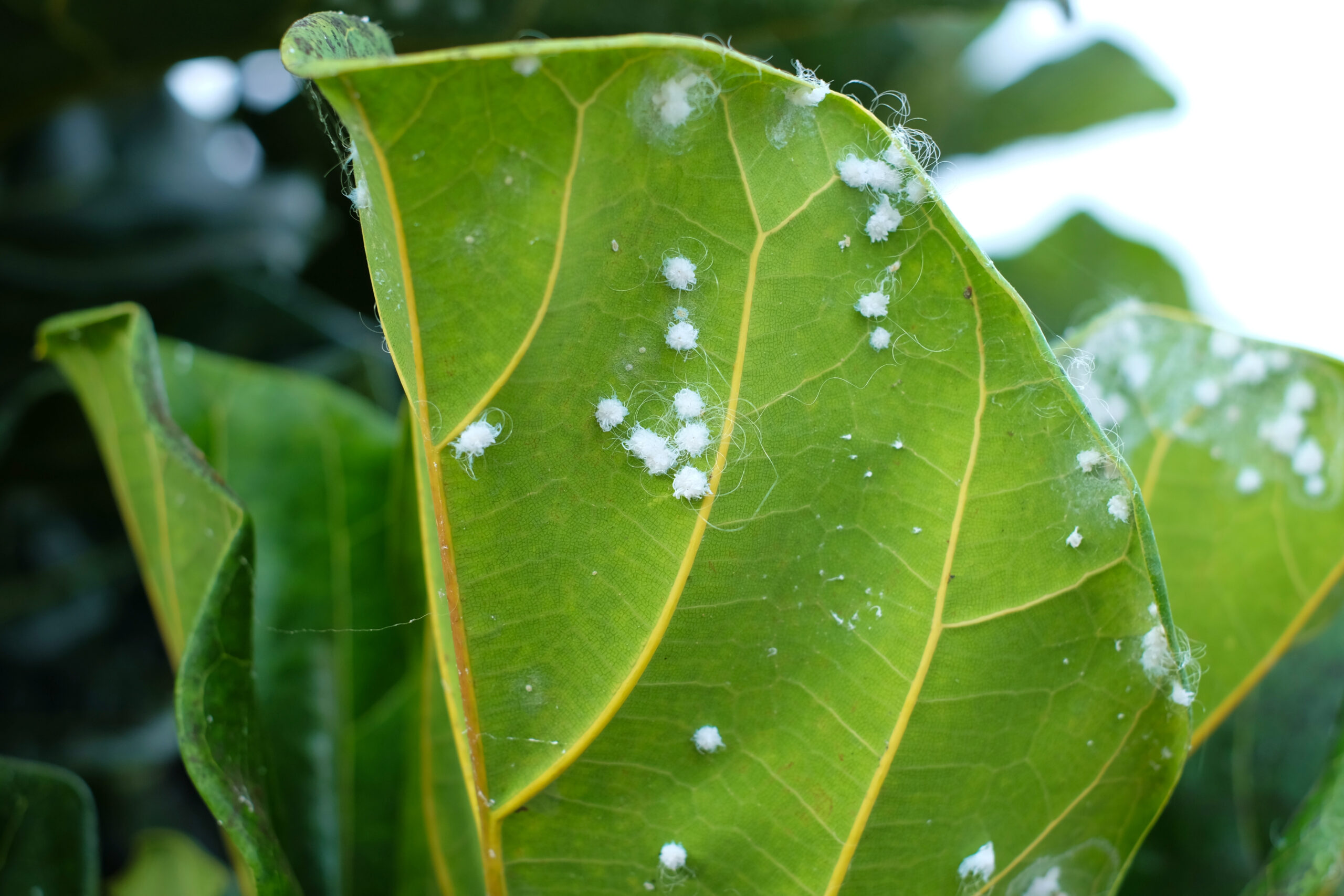
- Circular, spiral, or crescent-shaped formation of pinhead-like eggs on leaf undersides
- Pale or yellow patches on leaves
- White waxy film over the eggs or nymphs on the leaves’ undersides
Advanced Infestation Symptoms
- Leaf drop or curling, especially of young leaves
- Wilting or drying leaves
- Stunted or distorted growth
- Sooty mold growing on honeydew
- Ants climbing through plant stems (common in warmer climates)
Confirmatory Tests
Many symptoms of a whitefly infestation are similar to other sap-feeding pests due to the identical manner of feeding using stylets and excretion of sticky honeydew.
You can confirm that whiteflies are responsible for plant damage through the following tests and tools:
Shake Test
Gently shake the plant leaves and watch out for tiny whiteflies fluttering around. Adult whiteflies can’t fly too fast in a straight line, so they’ll likely settle back on the plant’s leaves after a while.
Yellow Sticky Trap
Install a few stakes with yellow sticky tapes into the potting soil and shake the plant again to catch the winged adults for proper diagnosis. It’ll help you distinguish whiteflies from other winged pests, such as thrips.
Note that thrips have a slender body with four fringed wings, while whiteflies have a yellow body with white waxy wings.
Hand Lens or Phone Camera
You can use a 30x hand lens or a smartphone camera to zoom in on the undersides of the leaves.
Whiteflies exhibit the following unique physical traits:
- Around 40 eggs form a circular pattern
- The pupae are translucent with long, waxy fringes or filaments
- Adults have a yellow body with two pairs of white, waxy wings (with brownish zigzag bands on banded-winged whiteflies)
Microscope
If you have a microscope, you can scrape a few nymphs from the undersides of the leaves and smear them onto a glass slide. Look for the vasiform orifice (anus) on the lower part of the nymph’s body, which is a distinct trait of whiteflies.
Treatment

Address the problem immediately after confirming the presence of whiteflies on your houseplant to prevent them from becoming established in your home.
Here are the treatment methods I found effective in combating whiteflies:
Immediate Actions
Follow these initial steps to prevent the spread of whiteflies to your houseplants effectively:
- Identify and isolate all affected plants. Avoid shaking the leaves excessively when moving your plant to prevent spreading the winged adults. Pro Tip: I use a fine mesh teepee tent in the same room to maintain similar environmental conditions while isolating the whitefly-infested plants. This only works for plants less than 4 feet (1.2 m) tall, which is the height of my tent.
- Remove heavily infested leaves using sharp, sterile scissors. Cut off all leaves with distinct egg circles and translucent nymphs. Spray the blades with rubbing alcohol and wipe dry with cotton balls between cuts.
- Discard all infested plant matter and waste (cotton balls) in a non-compostable garbage bag.
- Wipe down the surfaces in the previous spot with diluted soap or alcohol solution to remove honeydew stains and eliminate any immature whiteflies that have fallen.
- Manage ant populations (if any) to remove the natural protector and cultivator of Whiteflies. Pro Tip: When watering your plant, pour enough water to drench the soil and drive out the ants. Use a lint roller to remove ants crawling along the pot’s walls. Afterward, sprinkle diatomaceous earth (DE) over the soil surface to kill the remaining ants.
- Proactively treat the remaining plants with neem oil spray at night every 2 weeks. You can also install sticky traps in the indoor garden to catch adult whiteflies and confirm infestations (if any).
Physical Removal
After removing most of the visibly infested leaves, focus on removing the remaining pests using any of the following methods:
- Bring the plant to the tub or outdoors to rinse the leaves with water. Tilt the pot to one side and use the gentle shower spray setting of the showerhead or hose to dislodge the crawlers and early nymphs on the leaf undersides. You can leave the plant in a well-ventilated area to dry out the leaves or wipe them dry with a lint-free microfiber cloth to prevent microbial infections.
- Use a handheld vacuum to remove the adults gently. Do this in the early morning when the flies are sluggish, and be careful not to damage the leaves. Pro Tip: Gently shake the plant and vacuum the emerging adults. I recommend using a device with a disposable dust bag for optimal cleaning. Although the suction should kill soft-bodied insects, you can spray the bag with neem oil to kill any surviving whiteflies.
- Stake a few sticky yellow traps into the potting soil to catch flying adults. Replace the trap every few days. Pro Tip: Don’t rely entirely on the sticky traps, as they only work against adult whiteflies.
Natural & Organic Remedies
Whiteflies, especially Bemisia tabaci (silverleaf), are highly likely to develop resistance to pesticides used in the field. In addition, the limited number of organic or chemical pesticides safe for indoor use can present another challenge in managing whitefly populations.
Follow the tips below to use the following organic remedies against whiteflies effectively:
- Neem oil or horticultural spray: Purchase a pre-mixed, diluted oil spray or make a DIY recipe using 1 tbsp neem oil concentrate + 1 tsp Castile soap + 1 quart water. Spray the solution on leaf undersides at night to prevent leaf scorch. A teaspoon of liquid dish soap can be used as an alternative to Castile soap, but it can cause phytotoxic (damaging) effects on leaves when improperly diluted.
- Insecticidal soap: Use a commercially available, lab-formulated product. Avoid using a DIY recipe because regular dish soap diluted in water can break down the leaf cuticle, resulting in brown spots or dullness. Insecticidal soaps work on contact, especially on early-stage nymphs.
- OMRI-listed horticultural oil spray: Products containing a mix of active ingredients from garlic and neem oil are effective at controlling whitefly populations. Follow the product-specific application recommendations for safe and effective treatment.
Pro Tip: Whiteflies can produce several overlapping generations indoors. I recommend using neem oil and insecticidal soap, applied 3-4 days apart, to eliminate the crawlers as they emerge.
There are several natural whitefly repellent or treatment methods that I don’t recommend indoors, including the following:
- Reflective mulches (i.e., aluminum foil): Outdoors, reflecting UV light can deter whiteflies, aphids, and thrips from colonizing plants. It’s not recommended indoors because houseplants are more sensitive to direct sunlight, and reflective mulches like aluminum foil can cause heat and light stress, increasing the risk of leaf scorch.
- Vinegar spray: Vinegar or acetic acid has phytotoxic effects on plants. It can burn leaf cuticles, causing symptoms similar to sunburn, especially when applied to houseplants receiving a few hours of direct sunlight.
- DIY cayenne/garlic/onion spray: Cayenne pepper, garlic, and onions have natural pest-repellent properties. However, DIY processes involving mincing or soaking don’t guarantee the extraction of the active ingredients that repel or kill pests.
Many DIY gardeners vouch for the effectiveness of homemade pesticides, but I don’t recommend them due to the potential phytotoxic effects or the insignificant impact on pests, especially when the formulation is incorrect.
If you want to explore the DIY pesticides listed above, here are my tips:
- Spray the solution on a healthy green leaf at night to reduce the risk of sunburn.
- Wait 24-48 hours and check the leaf for discoloration or damage, such as bleaching or yellowing.
- If there’s no sign of damage, you may spray the plant with the solution, aiming for the hiding spots of pests (i.e., the undersides of leaves).
- If there’s no noticeable reduction in pest populations after 1-2 applications, discontinue use and opt for tried-and-tested lab-formulated indoor plant pesticides.
Chemical Treatment
Pyrethrin-based sprays are plant-safe and effective against whitefly nymphs and adults. Direct contact with and absorption of the pyrethrin compounds can disrupt the pest’s nervous system and kill it.
Although pyrethrins have low toxicity in humans, sensitive individuals may experience skin irritation or even tearing if the solution gets into their eyes.
Remember the following when using pyrethrin sprays:
- Read the product label carefully and follow the dosage guidelines or application frequency before use.
- Ensure the room has good ventilation for at least 24 hours after spraying.
- Wear eye goggles, a face mask, and hand gloves when spraying plants liberally to prevent eye and skin contact.
Note: As phloem-feeders, whiteflies are resistant to systemic insecticides commonly used indoors, like soil-applied imidacloprid granules. The active ingredients are typically transported from the roots to the leaves through the xylem and are unlikely to affect whiteflies.
Whiteflies are also resistant to foliar imidacloprid sprays, although they can be translocated through leaf cells.
Biological Controls
In case of severe infestations, biological control methods using natural predators and parasitoids are effective in managing whitefly populations.
Here are the widely used beneficial bugs to deal with indoor whitefly infestations:
- Lady Beetle (Delphastus catalinae)
- Minute pirate bug (Orius insidiosus)
- Parasitic wasp (Encarsia formosa)
Pro Tip: Beneficial bugs may also be vulnerable to organic and chemical pesticides. As such, release them at least one whole week after the last pesticide application. Avoid using pesticides while the predators or parasitic wasps are active.
| Beneficial Bug | Pros | Cons |
| Lady Beetle (Delphastus catalinae but sometimes marketed as Delphastus pusillus) | Delphastus spp. are the most voracious and host-specific predators of whiteflies Adults can live up to 2 months and feed on around 150 whitefly eggs and 12 nymphs daily Larvae undergo four instar stages within 20 days, during which they can consume 1,000 eggs or 700 nymphs Commercially available Populations are highly dependent on whiteflies as a food source, so they won’t persist indoors without their prey | Requires stable, warm temperatures (77 °F or 25 °C) to remain fertile and active Sensitive to organic and chemical pesticides Vulnerable to ants |
| Minute pirate bug (Orius insidiosus) | Generalist predator that also feeds on eggs, larvae, or nymphs of spider mites, thrips, and aphids Has a needle-like mouth used to pierce and suck the juices out of whitefly nymphs Commercially available | Can bite humans as a defense mechanism, causing itchiness or irritation similar to a mosquito bite Vulnerable to ants |
| Parasitic wasp (Encarsia formosa) | Encarsia formosa is specifically used for the control of whiteflies The wasp can efficiently track whitefly nymphs through olfactory signals Adults damage nymphs by drawing nutrients (feeding) or depositing eggs (parasitizing) Can kill an average of 95 nymphs throughout a lifespan of 12 days Commercially available | Flying adults can be a nuisance indoors Vulnerable to ants |
Signs of Recovery and Post-Isolation Steps

Adult whiteflies can live up to 2 months and deposit eggs on leaf undersides throughout their lifetime, resulting in several overlapping generations. To completely eliminate whiteflies, continue treating isolated plants for 6-8 weeks.
Observe your plant for the following signs of recovery:
- No adult whiteflies fluttering during shake tests
- Absence of circular egg patterns on leaf undersides
- No translucent nymphs on leaf undersides upon close inspection
- Leaves regain color and strength
- No new honeydew deposits or sooty mold growth
After confirming the absence of whiteflies on the treated plant, you can move it back to its usual spot. You can continue spraying the plant with neem oil at night every 2 weeks to prevent a re-infestation.
Troubleshooting Common Problems
Whiteflies have a long lifespan, and immatures may remain undetected in houseplants. I’ve experienced treating my infested houseplants religiously for 6 weeks, but new generations of whiteflies kept coming.
Here are the common problems with whitefly management and their corresponding solutions:
Severe Infestation: When to Consider Discarding
Low levels of whitefly infestations typically don’t cause significant aesthetic damage to mature and sturdy houseplants, except for the occasional sooty mold that you can wipe away using a clean, damp cloth.
In severe infestations, consider discarding your plant and getting a new, pest-free plant when you observe the following issues:
- Whiteflies persist despite over 6 weeks of treatment.
- The plant shows severe leaf drop and poor regrowth.
Whiteflies Keep Returning
As discussed, new generations of whiteflies may emerge from surviving eggs and nymphs if a thorough treatment regimen isn’t implemented.
Here’s a list of integrated pest management methods I use to deal with whiteflies and keep them from coming back:
- Inspect all houseplants in the same area. Isolate all that show symptoms of an infestation.
- Prune 10-30% of the foliage, depending on plant tolerance. Focus on severely infested leaves, and discard them in a sealed garbage bag.
- Rinse the leaf undersides with a shower spray to dislodge early-stage nymphs. If there are ants, spray the stems to dislodge them.
- Wipe the leaves with a damp cloth to remove the remaining honeydew and/or sooty mold.
- Install sticky traps at canopy level to draw flying adults away from the leaves.
- Spray with a neem oil solution once a week at night. Apply insecticidal soap 3-4 days after the neem oil treatment.
- Routinely shake the plant and vacuum any winged adults, inspect the leaf undersides, and prune severely infested or damaged leaves as needed.
After confirming the absence of new whiteflies, I usually give my treated plant another 2 weeks of thorough treatment and inspection before returning it to its usual spot.
Preventative Measures
Whiteflies can be troublesome pests due to their resistance to common pesticides and rapid reproductive rate.
You can prevent them from entering your home garden with the following practical tips:
Quarantine New Plants
Before purchasing or bringing a new plant home, inspect the leaves for any pale or yellow spots, which can indicate poor plant health. Choose a plant with healthy green leaves and free from unusual coloration.
Once at home, isolate the new plant in a separate room with a door for at least 3 weeks. Keeping the door closed should keep any winged pests from flying around your home and landing in your indoor garden.
Be sure to check the undersides of leaves every 5-7 days to catch and treat early signs of infestations.
You may also proactively treat hidden infestations with neem oil spray every week while the plant is in quarantine.
Routine Inspections
I usually rotate the pots every time I water my plants for optimal light exposure on all sides. This movement should be enough to disturb and reveal any winged pests lurking on leaf undersides.
Pro Tip: Set a reminder on your phone to inspect your plant regularly until it becomes a habit. Inspect the leaves individually for honeydew or sooty mold buildup.
Use Natural Repellents
In spring, proactively treat your houseplants with neem oil spray every 2 weeks to prevent the emergence of warm-season pests. Apply the oil at night to prevent leaf scorch or sunburn.
If your indoor garden receives at least 6 hours of direct sunlight daily, you may also grow marigolds in pots. Marigolds release limonene that repels common plant pests. These sun-loving flowers are ideal companions for sun-loving plants, such as succulents, palms, and crotons.
Houseplants Prone to Whitefly Infestations and Symptoms
Whiteflies are highly polyphagous plant pests and readily infest common houseplants, including the following:
| Houseplant | Symptoms |
| African Violets (Saintpaulia ionantha) |
|
| Anthurium (Anthurium andraeanum) |
|
| Chinese Money Plant (Pilea peperomioides) |
|
| Croton (Codaieum variegatum) |
|
| English Ivy (Hedera helix) |
|
| Fiddle Leaf Fig (Ficus lyrata) |
|
| Gardenia (Gardenia spp.) |
|
| Jade Plant (Crassula ovata) |
|
| Kalanchoe (Kalanchoe spp.) |
|
| Majesty Palm (Ravenea rivularis) |
|
| Peace Lily (Spathiphyllum spp.) |
|
| Pothos (Epipremnum spp.) |
|
| Prayer Plant (Calathea spp.) |
|
| Rubber Plant (Ficus elastica) |
|
| ZZ Plant (Zamioculcas zamiifolia) |
|
Comparison to Other Common Houseplant Pests
Symptoms of whitefly damage or infestation are similar to those of other sap-feeding pests, making diagnosis challenging in the absence of visible pests.
Here’s a brief guide to differentiate common houseplant pests:
| Pest | Physical Traits | Plant Damage |
| Whiteflies | 1/16-⅛ inches (1.6-3.2 mm) long Yellow or white body, two pairs of white, waxy wings | Localized yellowing and distorted growth, leaf drop Honeydew, sooty mold, potentially ants |
| Aphids | 1/16-⅛ inches (1.6-3.2 mm) long Pear-shaped translucent green, pink, black, or orange body with two rear cornicles | Yellowing and distorted young leaves Honeydew, sooty mold, potentially ants |
| Mealybugs | 1/16-⅛ inches (1.6-3.2 mm) long Fluffy white wax over soft pink or red body | Localized yellowing, wilting Honeydew, sooty mold, potentially ants |
| Scale Insects | 1/16-⅛ inches (1.6-3.2 mm) long Brown, immobile tortoise or oyster-shaped shell | Localized yellowing on leaves, brown bumps on petioles and leaf veins Honeydew, sooty mold, potentially ants |
| Thrips | 1/16-⅛ inches (1.6-3.2 mm) long Yellow or brown cigar-shaped body with four narrow fringed wings | Silvery or bronze patches on the leaves Black dots (excrement) |
| Fungus Gnats | 1/16-⅛ inches (1.6-3.2 mm) long Black or dark-gray body with gray wings with Y-shaped venation | Larvae creating slimy trails on the soil Aggravated root rot symptoms (i.e., mushy brown roots, yellowing leaves) |
Final Thoughts
Whiteflies may be small, but they’re persistent and damaging if ignored. Upon confirming the presence of whiteflies, it’s essential to act promptly, treat your plant thoroughly, and maintain consistency with follow-up care.
Prevention is the key to controlling or preventing whitefly outbreaks in your indoor garden. Inspecting and isolating new plants, conducting regular checks, maintaining clean habits, and promoting plant health can go a long way in protecting your houseplants.
If you have experience with whitefly infestations in your indoor garden, please share the control methods that worked for you or ask questions in the comments!