
Black Spots on Jade Plant Leaves: Symptoms, Causes, & Fixes
Jade plants are among my favorite succulents because of their beautiful foliage and easy care. Nonetheless, I’ve had my fair share of stress since, despite their resilience, jade plants aren’t immune to common issues like black spots.
Below are the common causes of black spots in jade plants:
- Overwatering
- Sunburn
- Fertilizer burn
- Pest infestation
- Powdery mildew
- Fungal diseases
- Physical injury
Seeing black spots on jade leaves may be alarming, but the underlying causes are usually manageable. The rest of the article will help you identify, understand, and address the problem.

Development of Black Spots: An Overview
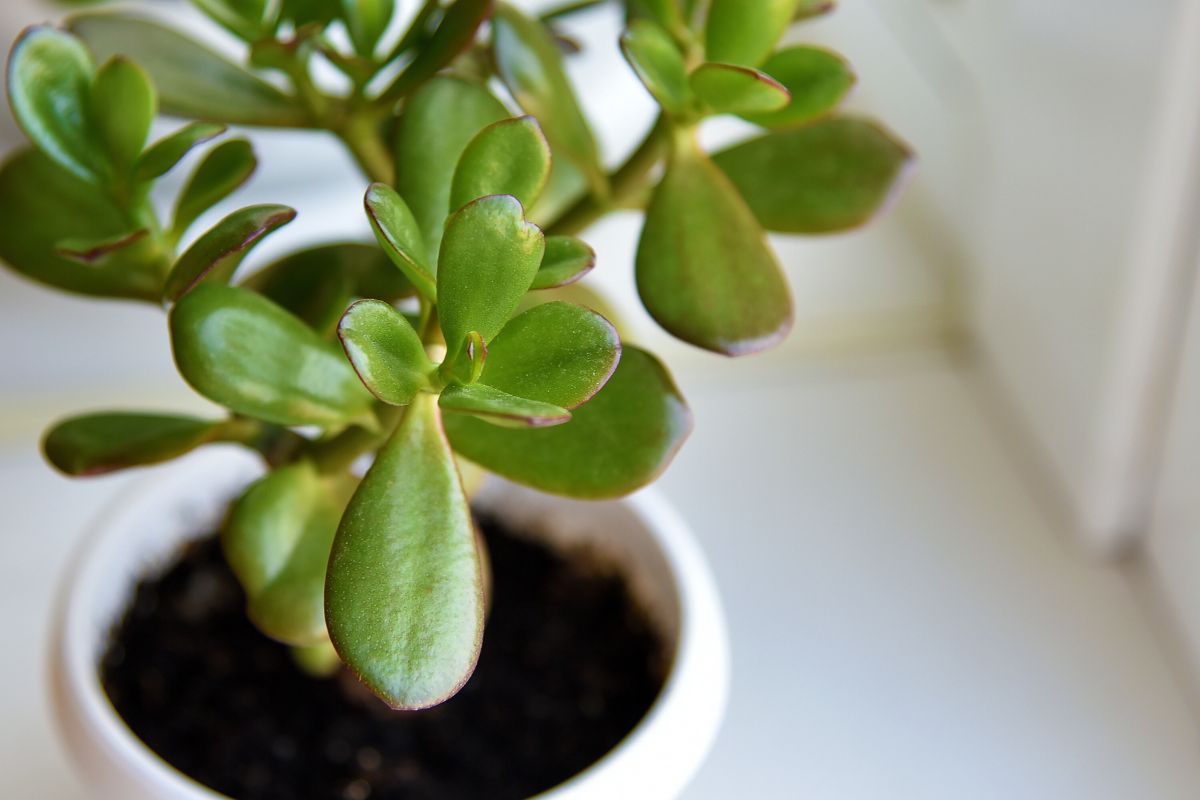
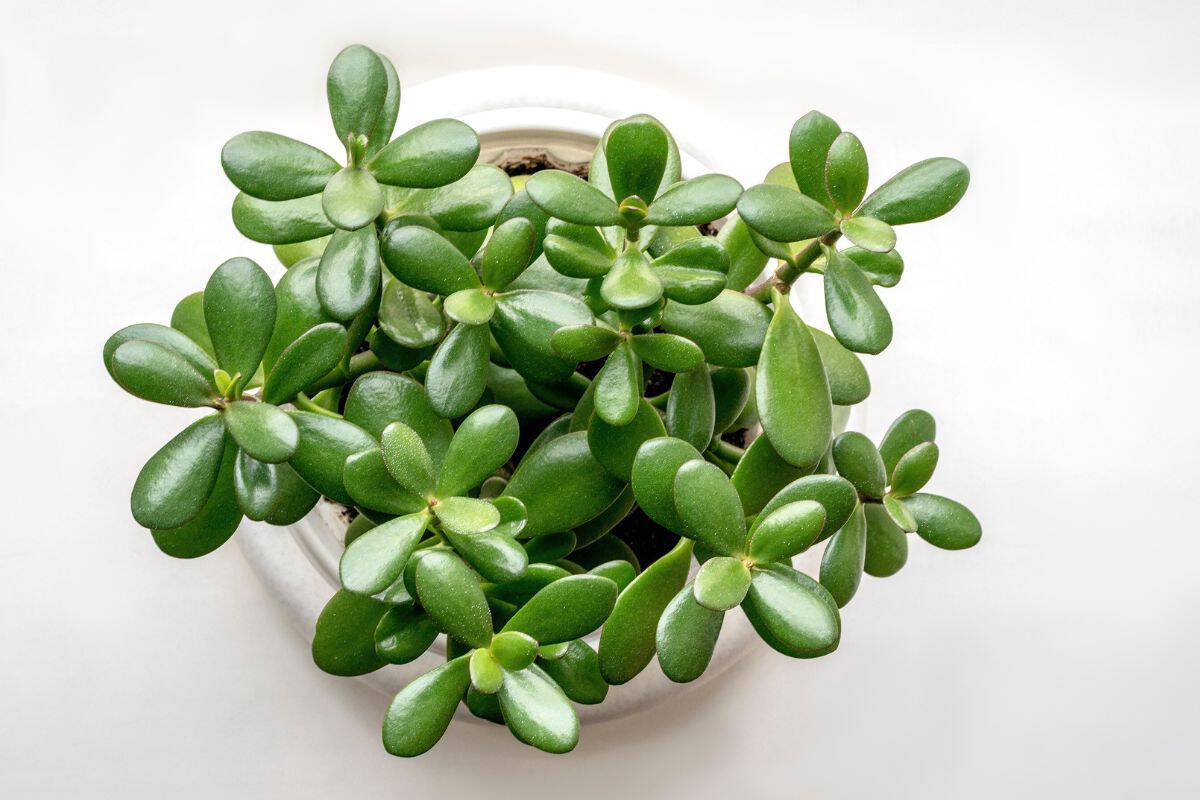
Jade plants (Crassula ovata) are famous for their succulent green leaves that occasionally get red edges in direct sunlight. The leaves are expressive when stressed and can exhibit different types of discoloration, such as yellowing or browning, which can help you identify the problem.
Black spots might also appear on the leaves, often due to rotten plant tissue.
Jade plants have all-cell succulence, wherein all the leaf cells store water and perform photosynthesis. Environmental stress or infection can affect all cells and symptoms can manifest in spots or the entire leaf.
Severely affected cells may rot or become necrotic, giving off the characteristic black spots on the leaf surface. Early detection can help prevent the problem from worsening and damaging the entire plant.
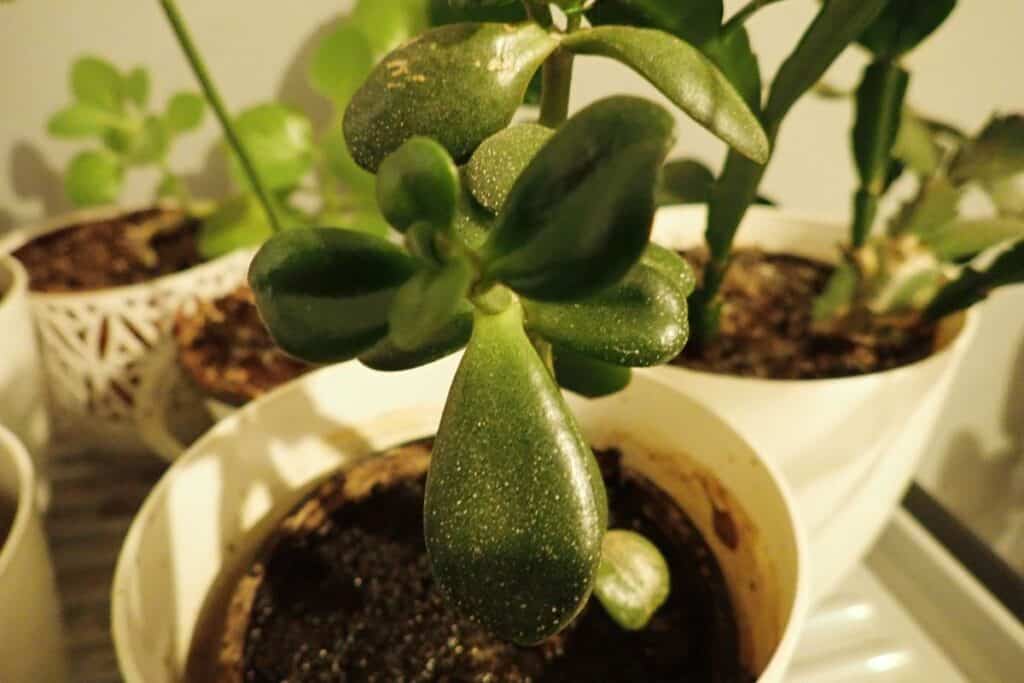
Sometimes, the black spot may also simply sit on the surface without actually damaging the leaves.
Let’s explore this with more symptoms and what they mean.
Symptoms
Jade plants may exhibit early signs of stress that precede the black spots, including the following:
- Yellowing leaves
- Guttation
- Mushy leaves
- Brown leaf edges
- Yellow or brown spots
- Sticky, sugary liquid on the leaf surface
- White, powdery leaf surface
As the condition progresses, the leaves may show the following symptoms:
- Necrotic sections or blisters
- Brownish-black scabs
- Crisp and dry black spots close to the leaf edges with brown or yellow margin
- Thin, black film over the leaf surface
- Black, sticky soot
- Tan to black corky lesions
- Black puncture wounds or leaf edges
Common Causes and Fixes
Jade leaves can develop black spots due to the following causes:
1. Overwatering
Jade plants are well-adapted to arid conditions, which is evident in their native habitat in South Africa. They have succulent leaves with excellent moisture storage capacity and an efficient root system that rapidly absorbs water to maximize rehydration despite the scarce rains.
When you water jade plants, the roots quickly draw moisture and send it to the leaves. The leaf cells then become turgid and the leaves appear plump.
The excess moisture is then lost in the following ways:
- Drainage through the pot’s bottom holes
- Transpiration through the leaves
- Evaporation from the soil
If your plant is overwatered due to frequent watering or poor soil drainage, the soil will remain wet and lead to the following issues:
- At high humidity (over 50%), the leaves will try to release excess moisture through guttation (liquid droplets through leaf pores).
- The cells of younger leaves may burst, leaving tan, brown, or black corky spots or blisters (edema).
- The roots may rot from prolonged waterlogged conditions.
- The leaves will turn yellow or brown due to damaged roots due to the lack of moisture or nutrients.
Before the problem escalates to root rot, you can treat overwatered jade plants with these steps:
- Prune the leaves with black spots or blisters using sterile shears. Sterilize the tool between cuts using rubbing alcohol.
- Switch on a fan in the room to decrease the humidity and promote rapid moisture loss from the soil and leaves.
- Moving forward, wait until the soil is completely dry halfway down before watering your plant. In the fall or winter, wait for the top half of the potting mix to dry out. You can check the moisture by poking a wooden chopstick into multiple spots in the potting mix.
- Maintain warm temperatures (around 70 °F or 21 °C) and low-to-moderate humidity (30-50%) around your plant for optimal metabolic rate and moisture use.
- Give your plant plenty of sunlight—ideally, 4 hours of direct morning light from an eastern window.
Treating Root Rot
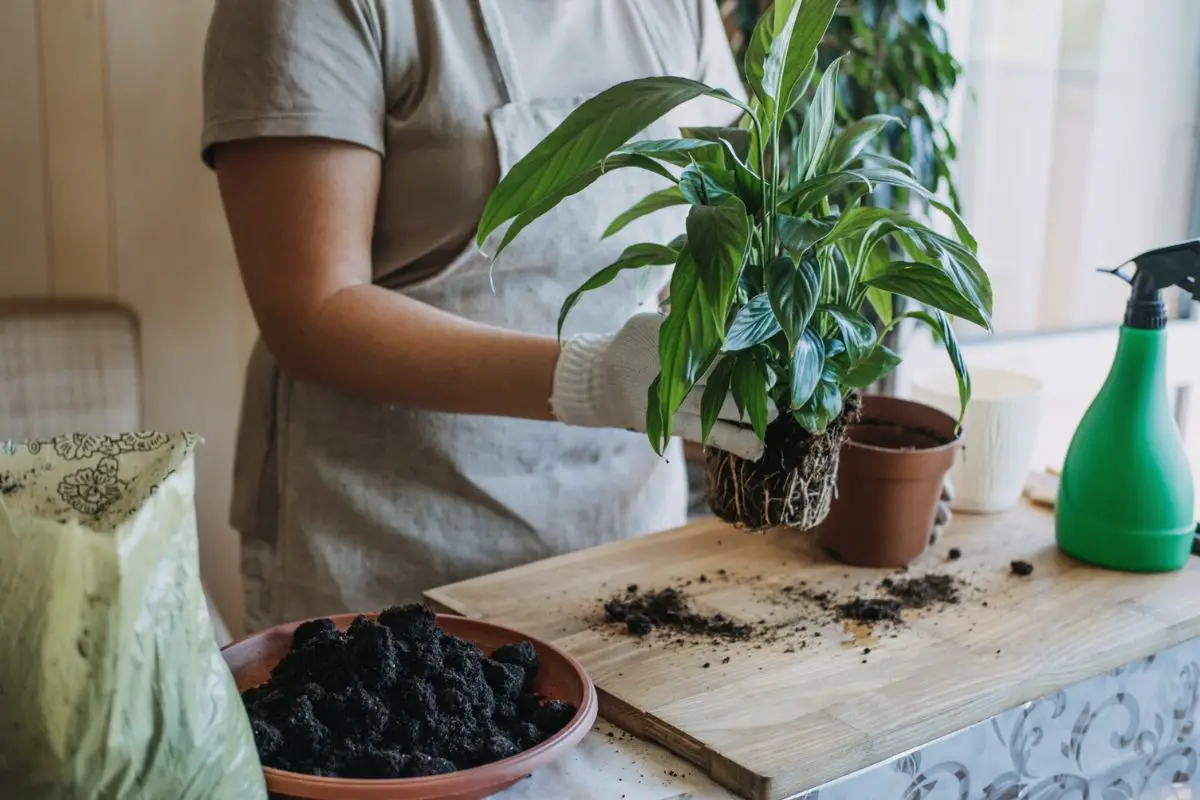
If overwatering occurs due to poor drainage and the plant shows signs of root rot, you must repot the plant in fresh soil.
Here are some tips:
- Scrape the edges of the pot with a spatula to loosen the rootball and minimize damage to the roots.
- Wear disposable gloves and carefully slide the plant out of the pot.
- Loosen the soil off the roots using a wooden chopstick.
- Gently remove the soil from the roots.
- Inspect the roots for signs of rot (i.e., black, mushy, and smelly).
- Prune all the damaged roots using sterile scissors. Pro tip: Don’t worry about removing a big portion of the roots. Jade plants are resilient and can bounce back, even if you remove the entire root system. They’ll grow fresh, healthy roots when moved to better soil and environmental conditions. This method may seem drastic, but it’s effective for treating root rot and helping your plant recover.
- Rinse the remaining soil off the roots with gentle running water. You can also soak them in 1% hydrogen peroxide solution for 5-10 minutes to eliminate the rot-causing pathogens and prevent reinfection.
- Leave the plant unpotted for 5-7 days in a room with moderate temperatures and humidity (around 50%).
- Prepare a breathable pot with drainage holes. Ensure it’s only 2 inches (5 cm) wider and deeper than the rootball.
- Fill the bottom 2 inches (5 cm) with well-draining soil. You can use a high-quality commercial succulent mix or a homemade soil mix with equal parts compost and perlite.
- Spread the roots over the soil and firmly bury them an inch (2.5 cm) deep to keep the plant upright.
- Water the soil deeply until the excess drips from the drainage holes.
- Place the plant in bright, indirect light until you see signs of growth (i.e., new leaves).
Leaf Propagation
Propagating a jade plant may be the last resort if the root rot is severe and has spread to the stems and leaves.
Here’s how to propagate a jade plant through leaf cuttings:
- Look for any remaining healthy leaves without signs of damage or discoloration (i.e., wrinkling, yellowing, black spots). You’ll have better chances of finding viable leaves from the terminal branches.
- Cut a leaf using a sterile knife or pinch it with clean fingernails. Ensure that a bit of the node is still attached to the petiole.
- Leave the cuttings overnight in a cool room with moderate humidity to form a callus.
- Prepare a shallow container about 2 inches (5 cm) deep. I recommend separating the leaves into different containers to prevent the spread of disease in case some leaves exhibit rot symptoms later on.
- Fill the container with your usual jade plant soil mix.
- Spread the leaves horizontally over the surface, ensuring the callused end touches the soil.
- Spray the soil with filtered water until it’s evenly moist but not soggy.
- Keep the setup in a warm room (around 75 °F or 24 °C) with moderate humidity (50%) and bright indirect light.
- Spray the soil again with water every 2-3 days to prevent the leaves from drying.
Asymptomatic but sick leaves will eventually shrivel or rot. On the other hand, healthy leaves should develop roots and new leaf buds after a month of consistent care.
2. Sunburn
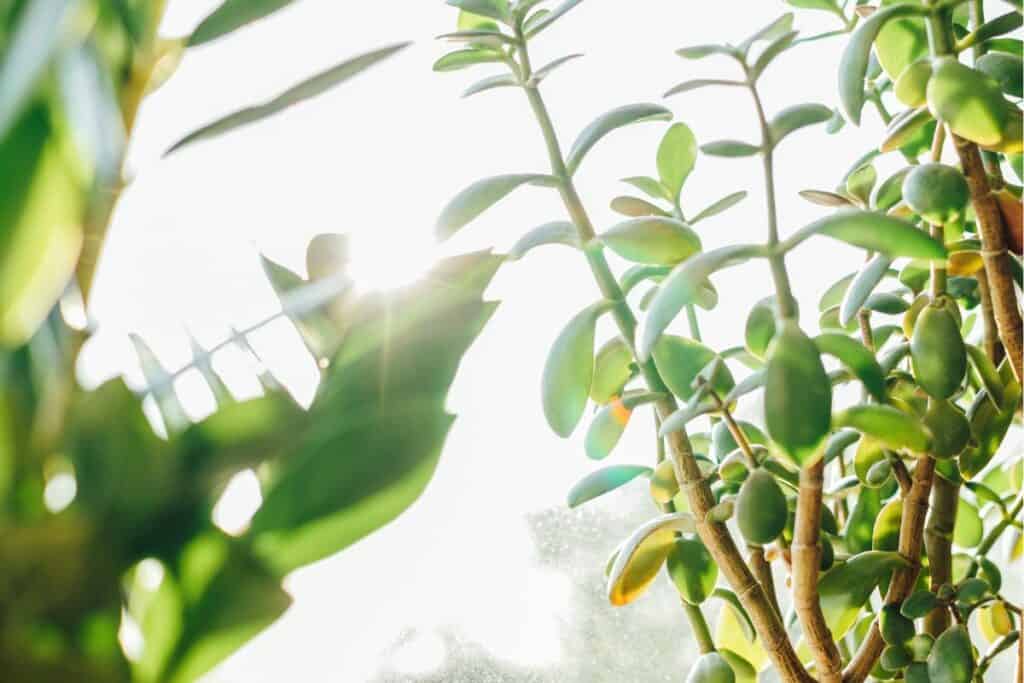
Jade plants are sun-loving succulents, but too much direct sunlight can burn the leaves, especially with the following issues:
- Underwatering
- High temperatures
- Low humidity
Sun-stressed jade plants may exhibit the following symptoms in progression:
- The leaves develop red edges.
- The edges turn yellow or brown and crisp.
- The sun-dried spots become dark brown to almost black (leaf scorch). This is more apparent in younger leaves.
To fix the problem, you must:
- Prune the damaged leaves with sterile shears.
- Move the plant away from intense sunlight to an area with bright, indirect light for 8 hours daily. If you have limited space, you can hang sheer curtains to filter the light.
- Increase the watering frequency. Ensure the plant is properly rehydrated as soon as the top half of the pot is dry.
- Keep your plant away from heating vents. Intense sunlight and heat can dry out the soil and the leaves more quickly.
- Switch on a humidifier about a foot (30 cm) away from your indoor plants. Plants tend to transpire more when it’s dry.
- Rotate the pot by 90-180° every time you water your plant. This can give the leaves temporary respite from intense sunlight while promoting even light exposure and balanced growth.
Pro tip: Jade plants over 5 years old (from leaf or stem propagation) like direct sunlight. Younger plants with fleshy stems and underdeveloped leaves are more susceptible to sunburn. I usually wait until they develop a woody trunk and branches before gradually exposing them to direct sunlight.
3. Fertilizer Burn
Over-fertilization can cause fertilizer burn or leaf scorch. Applying too much granular fertilizer at once and inadequate watering can damage the roots.
Here’s how it progresses:
- The excess salts in the soil can draw moisture from the roots, causing them to dry out.
- The damaged roots can’t send moisture to the leaves.
- The dehydrated leaves develop red edges.
- The edges then turn yellow and brown.
- Prolonged exposure to excess salts in the soil can turn the discoloration to dark brown or black.
To fix the problem, you may follow these steps:
- Scrape the soil’s top ¼ inch (0.63 cm) to remove the white film on the crust containing the undissolved fertilizer salts.
- Top up the soil with fresh compost.
- Flush the soil with filtered water equal to the volume of the pot (i.e., 1 gallon (3.8 l) water per gallon of potting soil).
- Let the excess drip from the drainage holes.
- Prune the damaged leaves with sterile shears.
- Wait until the soil is dry halfway down and repeat the process to leach the remaining salts in the soil.
- Revert to the regular watering routine (i.e., a half gallon (1.9 l) of water for every gallon of potting soil) after the second flushing.
- Avoid fertilizing your plant for the rest of the season. The compost can release nutrients slowly and help nourish your plant as it recovers. Wait until the following spring to fertilize your plant.
4. Pest Infestation
Jade plants have a few pest problems.
However, their succulent leaves may be attractive to sap-feeding insects, such as:
- Mealybugs: White cottony insects that form clumps under leaf surfaces
- Scale insects: Immobile insects with hard covering, looking like brown bumps
- Aphids: Tiny insects with translucent bodies that may be white, green, orange, or pink
These pests excrete honeydew after feeding on plant sap. Honeydew is a sticky, sugary liquid that draws sooty mold fungi. As the fungi feed on the substance, they develop black mycelia (hair-like threads) and take on the shape of the liquid.
Sooty mold may appear like a black spot or film, depending on how much honeydew is on the leaf surface. Although it doesn’t penetrate the plant cells, it can block the sunlight and the underlying cells can’t photosynthesize. Eventually, the leaves may turn yellow.
Here are the steps to fix this problem:
- Wipe the sooty mold off the leaves with a clean, moist cloth.
- Dislodge the pests using a cotton swab with alcohol. You can also use tweezers or scrape the stubborn scale mites with a blunt tool and drop the pests in soapy water.
- Inspect your plant daily for a week and remove the pests as soon as you spot them.
- Check and treat the neighboring plants to prevent re-infestation.
Pro tip: You must isolate severely infested plants and use a chemical treatment, such as a neem oil spray.
Here are the steps to properly and safely use neem oil on jade plants:
- Move the plant to an area with bright indirect light. Avoid direct sunlight throughout the treatment.
- Manually remove visible pests.
- Spray the plant liberally with neem oil solution after sunset. Aim for the spots under the leaves and along the stems where eggs and larvae may hide.
- Repeat the application once a week for around 6 weeks until there are no more signs of pests.
- Gradually return the plant to its usual spot.
- Inspect the plant weekly or every time you water it to catch and eliminate pests promptly.
5. Powdery Mildew
Powdery mildew may cause yellow, brown, or black scabs on jade leaves. Generally, the fungi do not kill the leaves because they feed off living plant tissues. However, they can severely affect the plant’s appearance.
To treat the problem, you can follow these steps:
- Prune the infected leaves using sterile shears.
- Move the plant out of direct sunlight and spray neem oil solution once a week for up to 4 weeks.
6. Fungal Diseases
Anthracnose is a common fungal disease affecting many plant species, including succulents. The fungal spores can spread by wind, water splashes, or contaminated gardening tools.
It’s highly unlikely for indoor jade plants to acquire this disease unless an infected plant is brought inside to spread the fungal spores. Once infected, the leaves may develop tan to black corky lesions.
Although there’s no cure for anthracnose, it’s not a fatal condition.
You can treat it with the following steps:
- Prune the discolored leaves using sterile shears or scissors.
- Clean the blades with 70% isopropyl alcohol between cuts to prevent the spread of the disease.
- Properly discard the affected foliage.
7. Physical Injury
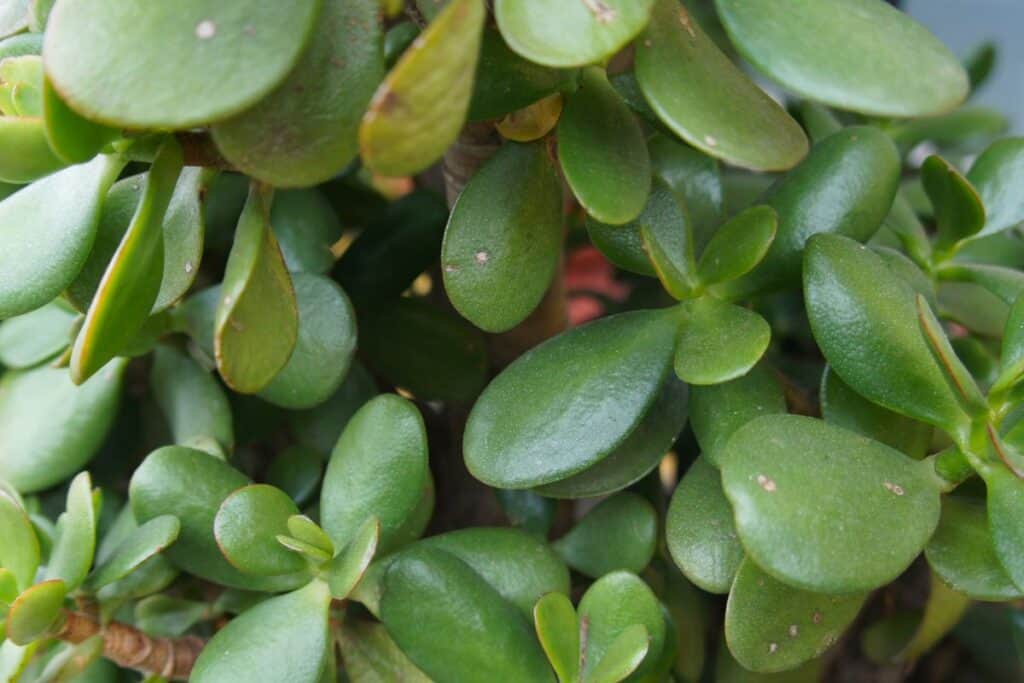
Jade plants in areas with heavy traffic, such as corridors or doorways, are at higher risk of accidental damage from moving people. Curious children may pluck the leaves. Cats or dogs may also nibble on the succulent leaves.
The puncture wounds or tears along the edges of the affected leaves typically develop a pale green or whitish scab as they heal.
However, they can become an entry point for plant pathogens while open. Several pathogens like soft rot bacteria (Erwinia spp.) may damage the cells, causing them to decay and turn black.
You must promptly remove damaged leaves to avoid an infection or prevent the disease from spreading.
Here’s how to address the issue:
- Wash your hands with soap and water and sterilize them with rubbing alcohol.
- Pinch the leaves with bite marks or tears.
- If the leaves have black, necrotic spots, slice the branch below the leaf nodes using a sharp, sterile knife.
- Inspect the layers inside the branch for signs of infection. A healthy branch should have fleshy green layers inside. Any browning or necrotic spots indicate an infection.
- Spray the blade with rubbing alcohol and wipe it dry with cotton balls or a clean piece of cloth.
- If the branch shows signs of disease, slice it off as close to the trunk as possible.
- Brush the wound on the trunk with cinnamon powder to prevent another infection.
- Properly discard the infected branches and leaves.
Note that jade plants are mildly toxic to house pets and can cause several symptoms, including:
- Vomiting
- Diarrhea
- Loss of appetite
- Lethargy
Even young children may exhibit similar symptoms after ingesting the sap from jade leaves. Therefore, it’s crucial to keep jade plants beyond the reach of young children.
You can place the plant on a tall shelf with bright, indirect light all day. You may also keep it in a room that’s inaccessible to cats and dogs.

Preventive Measures for Healthy Jade Plants
Like most common jade plant problems, black spots may be alarming but avoidable.
Here are some recommended preventive measures to keep in mind:
- Use well-draining soil and breathable pots with drainage holes to prevent waterlogging.
- Let the soil dry at least halfway through between watering sessions. Check the soil moisture using a wooden chopstick or a moisture meter to avoid overwatering.
- Give mature plants 4 hours of direct sunlight from an eastern window. Younger plants will do well with 8 hours of bright filtered light daily from a southern window. Rotate the pot every 1-2 weeks to prevent sunburn.
- Keep the plant away from heating or cooling vents and maintain moderate temperatures around 65-75 °F (18-24 °C) during the day and around 60 °F (15.6 °C) at night.
- Maintain the humidity level between 30 and 50% all year round. Avoid wetting the foliage when watering.
- Dust the leaves every 1-2 weeks using a clean, moist cloth. You can also use this time to inspect the plant to catch and treat early signs of stress, pest infestations, or disease.
- Fertilize your plant sparingly. Spread a thin film of 10-10-10 granular fertilizer over the soil in the spring and water it deeply. Water your plant regularly to avoid dehydration and fertilizer burn. Reapply in the summer as needed. Alternatively, you can use a half-strength 10-10-10 liquid fertilizer once every 1-2 months from spring to mid-summer.
Seasonal Adjustments
Proper fall and winter adjustments are also necessary to prevent black spots on jade leaves.
Here are the care and environmental conditions to consider:
- Water: Reduce watering frequency by waiting until the upper ⅔ of the soil is completely dry. Jade plants are less active during the cold season and may take longer to consume the moisture.
- Light: Non-flowering jade plants may be transitioned to bright indirect light during the cold season. However, if you want to encourage your mature plant to bloom, you may gradually reintroduce it to direct sunlight by mid-winter.
- Temperature: Maintain similar daytime temperatures but allow nighttime temperatures to drop to 50-55 °F (10-13 °C) to mimic the plant’s native environment.
- Humidity: Keep low to moderate humidity (30-50%). Avoid reducing the humidity too much, as it can dehydrate a jade plant, especially since it doesn’t get much water during the fall and winter.
- Fertilizer: Avoid fertilizing the plant during the fall and winter. You can start fertilizing in spring and stop by mid-summer or 2-4 weeks before the first fall frost.
Final Thoughts
Jade leaves are valued for their lush green and succulent foliage. Black spots can diminish their value and aesthetic appeal.
Jade plants may survive neglect due to their excellent moisture retention and resilience. However, it may take a while for them to recover from severe stress from prolonged exposure to suboptimal conditions.
Maintaining good watering practices and suitable environmental conditions can help preserve your plant’s health and appearance. Refer to the care tips discussed in the article to help your plant recover from the black spots and prevent them from recurring.
If your plant is plagued with the same issue, feel free to reach out for more practical tips. Meanwhile, if you have expert tips on handling black spots in jade plants, please leave a comment to help the growing community of jade plant enthusiasts.