
How to Plant, Grow, and Care for Snake Plants
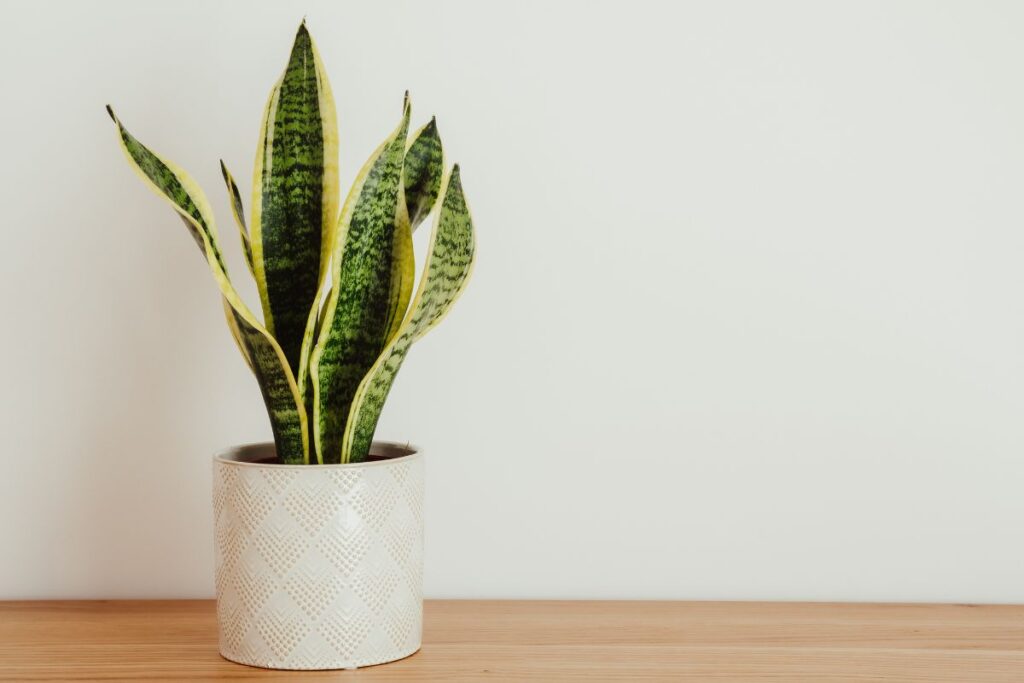
Snake plants (Dracaena trifasciata) are fascinating succulents with long, sword-like, striated upright leaves. They’re beginner-friendly plants that are very adaptable to various indoor conditions, earning them the reputation of being nearly indestructible.
Snake plants are popular, low-maintenance houseplants because they:
- Thrive in low to bright light conditions. Snake plants can sit comfortably next to a northern window or bask in the sun near an east, west, or south-facing window.
- Do well with infrequent watering. Water when the top 2 inches (5 cm) of the soil dries out, which translates to around 2-3 weeks during spring and summer and every 4-6 weeks in the fall and winter. They can also survive around 2 months without water, depending on the light intensity.
- Flourish with a single fertilizer application per year using slow-release granules or compost. You may also apply a half-dose 10-10-10 liquid fertilizer every other time you water in spring until summer to address symptoms of nutrient deficiency, such as yellowing leaves and lack of new growth.
- Stay healthy in regular indoor temperatures and humidity. Snake plants do best at around 65-85 °F (18-29 °C) and dislike cold temperatures below 55 °F (13 °C). They enjoy 30-50% humidity and can tolerate fluctuating levels.
- Require minimal pruning or cleaning. Each leaf can last well over one year before gradually fading. You can prune the aging leaves at the base as they turn yellow or brown to maintain the plant’s vigor. The smooth, upright foliage also hardly accumulates dust and may only need dusting once monthly or every other time you water for optimal light absorption.
- Can sit in the same pot for 3-5 years. In lower light conditions, they can even last 10 years or so before needing repotting. Use a pot only 2 inches (5 cm) wider and deeper than the root ball and fill it with a high-quality succulent mix or a compost-perlite mix for optimal drainage, moisture retention, and aeration.
- Are easy to propagate. New plants can be effortlessly grown from propagating leaves and divisions (offshoots).
- Can live for over 20 years with proper care.
This article will explore everything you need to know to provide the ideal environment and care routine for a thriving indoor snake plant.
Quick Guide
| Common Name(s) | Snake Plant, Mother-in-Law’s Tongue, Variegated Snake Plant |
| Botanical Name | Dracaena trifasciata (formerly Sanseviera trifasciata) |
| Family | Asparagaceae |
| Plant Type | Perennial succulent |
| Native Area | Tropical West Africa South Asia |
| Height & Spread | Each leaf blade can reach ½-5 feet (0.15-1.5 m) tall and 2-4 inches (5-10 cm) wide indoors |
| Bloom Time | Spring |
| Flower Structure | Raceme |
| Color | Green and white |
| Sun Exposure | High – up to 6 hours of direct sunlight from an east, west, or south-facing window Moderate – at least 8 hours of bright indirect light several feet from a bright window Low – at least 8 hours of natural light from a north-facing window or 10-14 hours a day of artificial light |
| Soil Type | Loose, fast-draining Standard cactus or succulent mix |
| Soil pH | 5.5-7.5 |
| Watering | Once every 2-3 weeks or when the soil is almost completely dry |
| Pests, Diseases, Common Problems | Spider mites and mealybugs Root rot Chill injury Broken leaf tips |
| Toxicity | Mildly toxic due to saponins in leaves and flowers Ingestion of leaves or sap can cause vomiting, diarrhea, nausea Skin contact with sap can cause mild irritation or rashes |
| Required Maintenance | Low-maintenance Drought tolerant Heat tolerant Repot or divide plants in bright light every 3-5 years (or every 5-10 years in low light) |
Snake Plants: An Overview
Snake plants (Dracaena spp.) are also known as Mother-in-Law’s Tongue due to the shape of the leaves, which are typically long with a pointed tip. They’re famous among laidback indoor gardeners because of their resilience and low-maintenance needs.
Here are some essential facts about snake plants:
Origin and Natural Habitat
Snake plants are a group of succulents belonging to the genus Dracaena (previously listed under Sanseviera). They are native to the rocky regions of tropical West Africa and some species were also found in desert conditions in South Asia.
Snake plants entered the US market in the 1920s and have been grown successfully in both indoor and outdoor Florida gardens.
Anatomy

The most popular snake plant species grown indoors in the US is Dracaena trifasciata, meaning “three bands or stripes”.
Dracaena trifasciata cultivars possess the following physical traits:
- Leaves: Tall, sword-like green leaves with pale green or silvery striations. Each leaf blade can grow a height of 0.5-5 feet (0.15-1.5 m) and 2-4 inches (5-10 cm) wide.
- Roots: Shallow, rhizomatous roots, adapted for survival in dry, rocky soil conditions.
Note: This article will focus on the care and environmental requirements of Dracaena trifasciata. Each cultivar may have a different appearance and stress tolerance, which I’ll briefly discuss below.
Reproduction
Snake plants are often regarded as invasive plants because they may self-propagate in two ways:
- Through offshoots from rhizomes: Snake plants have underground stems called rhizomes which spread laterally and produce pups or offshoots. You may then dig the offshoots to divide and propagate the plant.
- Through seeds: Flower-bearing snake plant species may also reproduce through seeds. The flower stalks are usually taller than most leaves for easier access to pollinators and convenient wind dispersal of seeds.
Flowers
Dracaena trifasciata is a flowering snake plant species that blooms annually in its native habitat, where it receives a full day of direct sunlight and sufficient rain during the wet season.
In frost-free USDA zones 11 and 12, outdoor snake plants also bloom profusely in early spring when temperatures become warmer and daylight hours get longer. Conversely, it’s very rare for snake plants to bloom indoors due to insufficient light conditions.
Here are some notable traits of snake plant flowers:
- The small greenish-white flower clusters grow in a raceme pattern on a stalk, often about as tall or 6-12 inches (15-30 cm) taller than the leaves.
- The flowers open at night for nocturnal pollinators.
- They give off a sweet scent similar to jasmine, vanilla, or sometimes bananas to attract pollinators.
- The flowers release a sticky nectar.
- Each bloom lasts 2-3 weeks before fading.
- Once pollinated, the flowers turn into green fruits about ¼-½ inches (0.6-1.3 cm) in diameter. The fruits eventually turn orange, producing an orange or tan seed about half the size of the fruit.
Note: Many sources claim snake plants flower under stress, such as when underwatered. It’s worth noting that they naturally prefer infrequent watering and can survive two months or so without water due to the efficient moisture storage in their succulent leaves and rhizomes.
However, prolonged underwatering can inhibit flowering, which is a moisture-dependent and energy-consuming process.
On the other hand, claims that being potbound will prompt snake plants to flower are only partially true.
As an invasive species, Dracaena trifasciata naturally tries to self-propagate through rhizomes. If there isn’t enough space in the pot to spread and the plant has enough resources, it’ll redirect the energy toward producing flowers.
Interestingly, I also had a few non-potbound indoor classic snake plants bloom, proving that they didn’t have to be potbound to flower. The key is to ensure the plant is sufficiently watered, fertilized, and exposed to bright natural light for better chances of flowering.
Dormancy and Growth Rate
Dracaena species don’t naturally enter dormancy in their native habitat because they don’t experience winter. They have a slow-to-moderate growth rate, putting out more noticeable growth during the warm and wet season, especially when exposed to brighter natural light.
When grown indoors in colder climates like the US, snake plants may grow even more slowly during the cold and dark months, making it look like they’ve entered dormancy. Nevertheless, they don’t shed their leaves and will still require regular but less frequent watering.
Note: It can be challenging to distinguish between health-related stunted growth and winter-induced slow growth. Snake plants are resilient, and as long as the leaves appear firm and plump, you shouldn’t worry about slowed growth.
Look out for signs of growth in spring and summer, such as tiny new leaf buds sprouting close to the soil or the center of the plant or an increase in the vertical height of mature leaves.
The lack of development during the growing season may indicate stunted growth and is usually accompanied by other symptoms like wilting and drooping.
Toxicity
The saponins in the sap of snake plant leaves and flowers can be toxic to small pets like cats and dogs.
When ingested, it can lead to the following symptoms:
- Nausea
- Vomiting
- Loss of appetite
- Lethargy
- Diarrhea
On the other hand, susceptible humans may also develop rashes from direct skin contact with snake plant sap.
Pro tip: Use working gloves when pruning, dividing, or propagating snake plants to prevent mild skin irritation.
Benefits as Houseplants
Snake plants are classically used in making bowstring hemp.
However, they’ve become popular among beginner and experienced indoor gardeners alike because of the following traits and benefits:
- Drought tolerant: Snake plants have low moisture requirements and can survive over 2 months without water. However, they’ll look their best when watered regularly during spring and summer.
- Heat and light tolerant: Dracaena trifasciata species are variegated snake plants with excellent tolerance to intense light and heat due to the pale or yellow bands that contain less chlorophyll than their solid-green counterparts. They can also tolerate lower light conditions, but their leaves will appear darker with less noticeable variegations.
- Versatile: Snake plants can adapt to low or bright locations within your home. Avoid moving them too often, as drastic changes in light conditions can cause the leaves to become scorched, leggy, or lanky.
- Low-maintenance: Snake plants have low nutrient needs. They can go a few years without chemical fertilizers if you top the potting mix with fresh compost every year.
- Easy to propagate: You may notice a few pups or offshoots emerging from the base of the plant every year. Each pup can be collected and planted separately to grow a new plant. You may also collect leaf cuttings and root them in soil or water.
Snake plants are also popular in Feng Shui as they symbolize protection and resilience. Placing them near the entrance of your home can help catch positive and ward off negative energy.
Note: Several sources claim that snake plants can improve indoor air quality and oxygen levels based on a 1989 NASA study. However, this benefit has been debunked by NASA, saying that the research was conducted in a closed environment (without airflow) and the results don’t apply to home conditions.
If anything, snake plants are succulents that undergo the crassulacean acid metabolism (CAM) pathway allowing them to transpire more actively at night. This mechanism enables them to draw carbon dioxide into their leaves and slightly boost the local humidity in the indoor garden at night.
Popular Varieties
Dracaena trifasciata, or variegated snake plants, are popular among home gardeners because of their striking foliage, resilience, and easy care requirements.
Depending on the light conditions in your home and your preference for aesthetics, you can choose from the list of popular varieties below:
| Variety or Cultivar | Physical Traits | Distinct Features and Advantages |
| Dracaena trifasciata Classic snake plant | Leaves grow 2-4 feet (0.6-1.2 m) tall and 2-3 inches (5-7.6 cm) wide4-6 leaves per cluster Dark green leaves with silvery green horizontal bands | Tolerant to low to high light intensity |
| Dracaena trifasciata var. ‘Laurentii’ Naturally occurring variety with golden margin | Leaf blades typically reach 2-5 feet (0.6-1.5 m) tall and 2 inches (5 cm) wide 4-8 leaves per plant Pale green horizontal bands against dark green foliage with a yellow margin | One of the most tolerant to direct sunlight among D. trifasciata varieties and cultivars |
| Dracaena trifasciata ‘Bantel’s Sensation’ ‘White Snake Plant’ Flowering cultivar of ‘Laurentii’ | Leaf blades grow 2-3 feet (0.6-0.9 m) long and about 1-2 inches (2.5-5 cm) wide 4-8 leaves per plant Dark grayish green leaves with longitudinal creamy stripes and less conspicuous pale horizontal bands | Unique vertical striations |
| Dracaena trifasciata ‘Black Gold’ A cultivar of unknown origin | Each leaf typically grows up to 2 feet (0.6 m) tall and 2-3 inches (5-7.6 cm) wide 8-12 leaves per plant Dark green leaves with less noticeable pale bands and thick bright yellow margins (0.5 in or 1.3 cm) | Has excellent tolerance to direct sunlight but looks best in bright indirect light where the foliage looks darker and shows distinct contrast between the blackish-green surface and yellow-gold margin |
| Dracaena trifasciata var. ‘Hahnii’ Also known as ‘Bird’s Nest Snake Plant’ | Dwarf-type snake plant with leaf blades 6-10 inches (15-25 cm) tall and 2-3 inches (5-7.6 cm) wide 6-12 leaves per rosette Dark green leaves with silvery horizontal bands | Compact Tolerant to low light conditions, but leaves will appear darker |
| Dracaena trifasciata ‘Golden Hahnii’ A cultivar of ‘Hahnii’ | Dwarf-type snake plant with each leaf growing 6-8 inches (15-20 cm) tall and about 2 inches (5 cm) wide 8-12 leaves per plant in a rosette pattern Dark green leaves with yellow-green horizontal bands and thick yellow or cream margin (½ in or 1.3 cm) | Compact Excellent tolerance to direct sunlight |
| Dracaena trifasciata ‘Emerald Star’ Cultivar of unknown origin | Dwarf-type snake plant, typically less than 12 inches (30 cm) tall and 2-3 inches (5-7.6 cm) wide 10-12 leaves per plant (sometimes more) in a rosette pattern Smooth dark green leaves with thin yellow margins (less than 1/16 in or 1.6 mm) | Compact Excellent in lower light conditions |
| Dracaena trifasciata var. ‘Robusta’ | Leaf blades reach 2-3 feet (0.6-0.9 m) tall and 2-4 inches (5-10 cm) wide 6-10 leaves per plant Dark green leaves with wide silvery green horizontal bands | Tolerant to lower light conditions |
| Dracaena trifasciata ‘Moonshine’ A cultivar of ‘Robusta’ | Can grow up to 2 feet (0.6 m) tall and 2-4 inches (5-10 cm) wide 4-8 leaves per plant Silvery green leaves with dark green edges and thin horizontal bands | Compact Looks best in bright indirect light because low light can darken the leaves, whereas intense direct sunlight can bleach them |
| Dracaena trifasciata‘Twisted Sister’ Cultivar of unknown origin | Leaves grow up to 2 feet (0.6 cm) tall and 2-3 inches (5-7.6 cm) wide but may twist and curl, making them look shorter 6-10 leaves per plant Dark green leaves with light green bands and yellow margins | Compact Unique, curly leaves Winter hardy down to 30-32 °F (-1 to 0 °C) |
Note: A ‘variety’ is a naturally occurring plant, whereas a ‘cultivar’ is scientifically engineered.
Selecting Your Plant
Snake plants have been gaining popularity primarily due to social media platforms like TikTok, Instagram, and YouTube. Because of this, many gardening stores are stocking their shelves with various snake plant cultivars.
If you’ve come across an attractive photo of a snake plant online and want to try your hand at growing one, remember these tips before making your purchase:
- Choose a plant with at least 3 or healthy 4 leaves. Ensure all leaves are plump, glossy, and firm.
- Pick a plant that’s at least 4 inches (10 cm) tall, as it can indicate a good or established root system underneath. Pro tip: If you’re allowed to touch the plants on display, give them a gentle tug to check for mild resistance, which means they have a healthy root system. Conversely, rotten or desiccated roots often fall apart, resulting in poor anchorage and other visible signs on the leaves like wilting and browning.
- Avoid plants with damaged or discolored leaves, such as brown or black spots and red or brown edges, as they may be sick or stressed. Snake plants are resilient and may recover with adequate care, but you wouldn’t want to start your collection with a sick plant.
- Avoid plants with signs of pests, such as brown spots, cottony white crawlers (mealybugs), and fine webs (spider mites).
Initial Planting
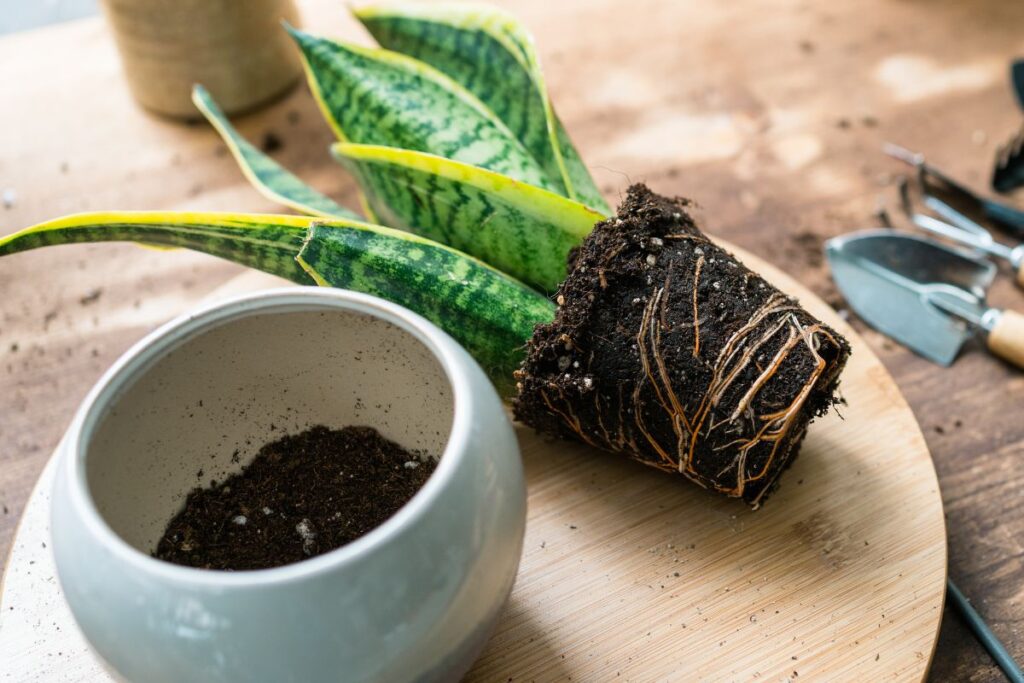
Snake plants are quite hardy and wouldn’t mind being repotted as soon as you bring them home from the store. In fact, I recommend repotting them in fresh soil and an appropriate pot right away, as they’re often mass-produced in low- to average-quality soil at nurseries.
Here are the tried-and-tested practices I follow when planting snake plants:
Choosing the Right Pot
Snake plants are versatile and will thrive and look great in any pot.
However, for optimal health and longevity, follow these tips when choosing the right pot:
Material
You may use plastic, ceramic, or clay pots as long as they have drainage holes at the bottom.
My personal favorite is an unglazed terracotta because of the earthy contrast between the pot and the snake plant’s foliage. Terracotta pots are also breathable, which is perfect for preventing root rot.
Pro tip: A plastic pot is also ideal if you’re not keen on repotting regularly because the rhizomes tend to break the pot if left in the same container for too long. Ensure it has adequate drainage holes to prevent waterlogging.
I recommend placing a plant saucer below the pot to avoid water stains on your table or floor. Be sure to throw away any water that pools in the saucer because snake plants dislike consistently wet soil.
Size
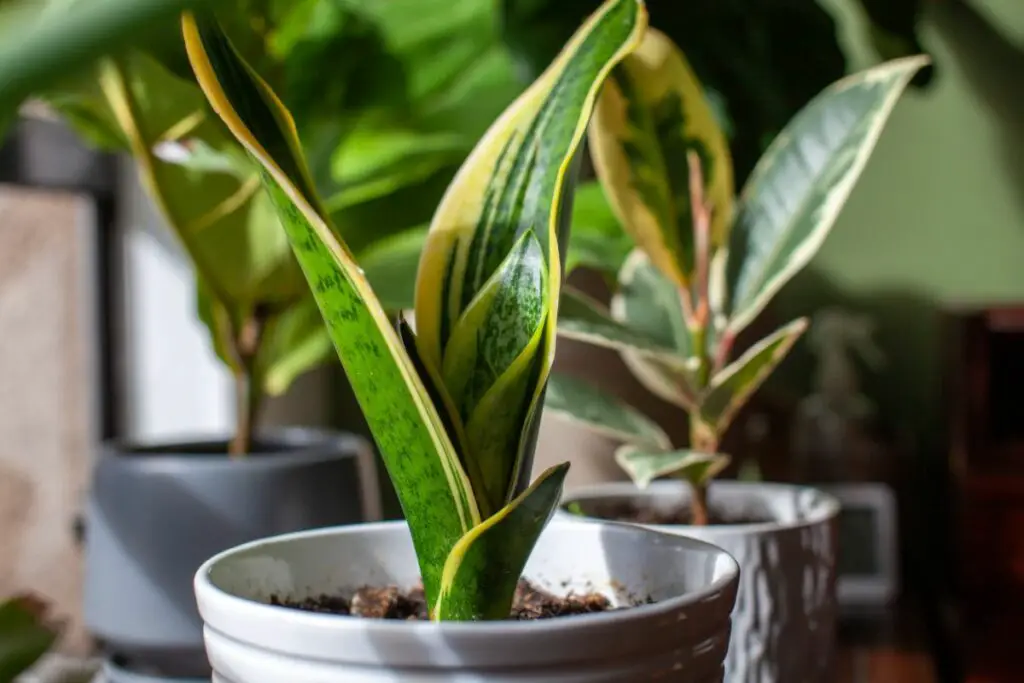
Choose a pot that’s only 2 inches (5 cm) wider and deeper than the old pot. Snake plants grow slowly in low-moderate light conditions indoors and will take several years to outgrow their pots.
Here are some special considerations for different types of snake plants:
- Dwarf (up to 12 inches or 30 cm tall): Use shallow pots only up to 6 inches (15 cm) deep for dwarf snake plant varieties like ‘Hahnii’ and ‘Emerald Star’. When they overcrowd their pots, divide them and transplant the pups into separate similar-sized containers where they can stay for several years.
- Tall (2-5 feet or 0.6-1.5 m tall): Limit pot depth to 12 inches (30 cm) at most. When repotting or transplanting, divide the plant into separate clusters and prepare a new pot based on the size of each cluster instead of the whole plant.
Soil Selection
Snake plants prefer porous, well-draining soil. Adding a bit of compost can add organic matter to the soil mix that will improve moisture and nutrient retention without suffocating the roots.
You can choose from the following soil mixes below:
- High-quality commercial cactus or succulent mix
- Equal parts standard potting soil and perlite or pumice
- Equal parts compost and perlite or pumice
I often use the compost-perlite mix because I use the same for my ZZ plants and have enough supplies on hand. I found that this mix is also perfect for snake plants.
Step-by-Step Planting Guide
Follow the steps below to properly transplant your snake plant:
- Water the plant deeply 1-2 days before transplanting.
- Scrape the edges of the pot to loosen the soil and carefully unpot the plant.
- Break the old soil apart using your hands or a wooden chopstick. Remove as much old soil as possible from the roots.
- Prune rotten (black and mushy) or desiccated (brown, dry, and crisp) roots using sharp, sterile scissors. Sanitize the blade with rubbing alcohol and a clean cloth or cotton balls between cuts.
- Rinse the remaining roots with clean, tepid water to remove the old soil which may contain rot-causing pathogens or pest eggs or larvae.
- Let the plant rest over a clean towel while preparing the new pot and soil.
- Place a wire mesh over the drainage holes to prevent the porous soil from leaking.
- Fill the bottom 2 inches (5 cm) of the new pot with fresh, moist soil.
- Position the plant in the middle of the pot and spread the roots laterally. Surround the roots with more soil until the surface covers no more than an inch (2.5 cm) of the leaves. Avoid burying the leaves too deeply in the soil, as it can cause them to rot.
- Place the pot in a warm room (65-85 °F or 18-29 °C) with at least 8 hours of bright indirect light and moderate humidity (30-50%).
- Wait 7-10 days before watering the plant deeply. You can use cups and count how much it takes to fully saturate the soil until the excess water drains from the holes. You may use this as a reference for future watering sessions.
Optimal Growing Conditions
Snake plants are among the most beginner-friendly houseplants in my collection, and I’ve gifted plenty to my friends and family.
Here are the practical care tips that I shared with them, which they found very helpful:
Light Requirements

Dracaena trifasciata, or variegated snake plants, are the most versatile species when it comes to light requirements.
Here are some placement recommendations and implications of different light conditions:
| Light Condition | Duration of Exposure | Placement | Recommended Varieties | Implications |
| High | 4-8 hours of direct sunlight | Next to an east or south-facing window | Classic Laurentii Golden Hahnii Twisted Sister | Snake plants that receive direct sunlight tend to grow more quickly. They’re also more likely to produce flowers, especially when well-watered. However, too much direct sunlight, especially in summer, can scorch or bleach the leaves by degrading chlorophyll. |
| Moderate | At least 8 hours of bright indirect sunlight | 4-8 feet (1.2-2.4 m) from an unobstructed east or west-facing window 4-8 feet (1.2-2.4 m) from a south-facing window with sheer curtains drawn at midday | Classic Laurentii Hahnii Golden Hahnii Twisted Sister Black Gold Emerald Star Robusta Moonshine | Moderate light conditions can bring out the snake plant’s vibrant colors and distinct variegations |
| Low | At least 8 hours of low-intensity natural light or 10-14 hours of artificial light | Next to an unobstructed north-facing window Under full-spectrum grow lights or fluorescent lights | Emerald Star Hahnii Robusta | Low light conditions can slow a snake plant’s growth rate, keeping them compact for a long time. Low light can also darken the leaves because they need more chlorophyll to capture as much light as they can, resulting in less distinct variegations. |
In addition, remember these tips for balanced and upright growth:
- Give the pot a quarter or a half turn weekly or every time you water the plant.
- Draw sheer curtains at midday for plants near south-facing windows to filter the scorching afternoon sun, especially in summer.
- Wipe the windows regularly to remove dust or snow and ensure optimal light penetration into your home garden.
- When relocating snake plants, do so gradually (about 2 feet or 0.6 m every week) to acclimatize them to the new light conditions.
Watering
Here are some watering tips that worked well for my snake plants over the years:
- Use a potting mix that’s easy to re-wet, such as a compost-perlite mix. Snake plants are drought tolerant and prefer dry soil between waterings. Potting mixes rich in sand or peat moss can become hydrophobic when allowed to dry out. They’re also hard to re-wet, so your snake plant may remain dehydrated even after regular watering.
- Water the plant deeply once every 2-4 weeks in spring and summer. Wait for the soil to dry completely before watering again. Check if the soil is completely dry using a wooden chopstick or a moisture meter (reading of 1-2). Note that plants in brighter light conditions typically need more frequent watering than those in low light.
- Reduce watering frequency to once every 4-6 weeks in the fall and winter. Lower photosynthetic and metabolic activities during the dark cold months will slow down growth, reducing the plant’s water use. Watering too often can cause root rot.
- Avoid shallow watering. Since snake plants receive water infrequently, they should be properly rehydrated during watering time. For snake plants, I typically use water that’s equal to a quarter of the volume of the pot (i.e., ¼ gallon or 1 liter of water for a 1-gallon or 3.8-liter pot). Pour the water gradually and evenly over the soil surface to give the roots time to soak it in. Pouring too quickly will just send the water down the drainage holes due to the porosity of the soil mix.
- Use tepid water (around 68 °F or 20 °C) to avoid cold shock. Snake plants don’t mind the negligible mineral salt content in tap water. They also like pre-collected rainwater as long as it’s not too cold.
Underwatering Vs. Overwatering
Snake plants are highly tolerant to underwatering. In my experience, they can go over 2 months without water (indoors) before showing signs of stress.
Underwatered snake plants may show the following symptoms:
- Wrinkled leaves
- Drooping leaves
- Brown leaf tips or edges (especially when exposed to intense sunlight)
- Yellowing or browning leaves after several months without water
The wrinkled or drooping leaves can perk up after one good soak or deep watering. However, the brown and dry leaf tips or edges won’t recover. You can cut the browned parts off using a sterile knife or remove the entire leaf from the base.
On the other hand, overwatering can cause root rot, which is fatal to snake plants. The short, inconspicuous vertical stem of snake plants makes it easier for rot-causing pathogens to spread to the leaves and cause irreversible damage. Moreover, root rot can kill a mature snake plant within 1-2 weeks if left unattended.
Here are the signs your snake plant has been overwatered:
- Soggy soil surface several days after watering (can indicate poor drainage or compacted soil)
- Pale brown water-soaked spots at the base of the leaves spreading upward
- Soft and mushy leaves
- Drooping leaves
- Yellowing leaves
- Leaf drop
- Black, mushy, stinky roots and rhizomes
You can treat mildly overwatered snake plants with these tips:
- Prune the symptomatic leaves using a sterile knife or shears.
- Aerate the soil using a hand cultivator or wooden chopstick.
- Poke the soil at the drainage hole with a wooden chopstick to relieve soil plugs and facilitate better drainage.
- Let the soil dry out completely between waterings and follow the watering tips above.
If you smell a foul odor similar to rotten eggs while aerating the soil, it’s a clear sign of root rot. I’ll discuss how to treat or manage root rot further below.
Temperature and Humidity
Snake plants thrive in the following indoor conditions:
- Temperature: 65-85 °F (18-29 °C). Snake plants can tolerate temperatures as high as 100 °F (38 °C), which is common in their native environment. However, they are frost-sensitive succulents that dislike temperatures below 55 °F (13 °C), which can cause chill injury or even plant death. It’s best to keep them away from drafty doors and windows or the path of cold air from cooling vents.
- Humidity: 30-50%. Snake plants tolerate a wide range of humidity because of their efficient moisture storage mechanism in their leaves and rhizomes. They thrive at regular indoor humidity without the need for humidifiers and can handle occasional fluctuations. However, high humidity indoors can lead to mold or mildew growth and increase the risk of bacterial or fungal infection on the leaves of houseplants, including snake plants.
Fertilizing and Nutrient Requirements
Snake plants are light feeders and don’t require strict or regular fertilization. Still, they can benefit from occasional feedings for more vibrant leaves and robust growth.
You may choose from the following types of fertilizers below:
- Compost: Apply a handful of compost over the soil surface in spring. Work it into the top inch (2.5 cm) of the soil for better aeration and water infiltration. This is my personal favorite because snake plants are meant to be low-cost, low-maintenance houseplants.
- Granular Fertilizer: Apply a thin layer of slow-release fertilizer (10-10-10) in spring or summer. A single application should be enough for snake plants.
- Liquid Fertilizer: Dilute a 10-10-10 liquid fertilizer to half the recommended strength and apply every other time you water the plant from spring to summer.
Here are some additional fertilizing tips for snake plants:
- Avoid feeding the plant for a year after repotting. The nutrients in a fresh, high-quality potting mix are more than enough to feed a snake plant for a year or so.
- Water your snake plant regularly when applying granular fertilizers to prevent salt buildup that can dry out the roots. Also, keep the granules away from the leaves. I’ve experienced over-fertilizing my snake plants, leading to brown, dry patches on the sides of the leaves.
You can hardly see nutrient deficiency symptoms in snake plants because they store food and water efficiently in their leaves and rhizomes.
However, if you haven’t fertilized or repotted your plant for several years, you may notice the following signs:
- Lack of new growth even during the growing season: Snake plants may grow slowly in low to moderate light conditions, but they typically put out new leaves during spring and summer.
- Yellowing older or outer leaves: Snake plant leaves usually last a year or so before gradually drooping and turning yellow. If the outer leaves are still hard and upright but yellow, this can indicate nutrient deficiency.
Before feeding your plant, you must first rule out other potential problems, such as over- and underwatering. After confirming the symptoms aren’t due to other care problems, you can feed your plant with a half-strength liquid fertilizer for faster absorption and results.
Watch out for any signs of improvement, such as greener foliage and new growth (new leaves or increased vertical height of existing leaves).
Pruning and Maintenance
Snake plants don’t require regular pruning. A healthy leaf can last well over a year before drooping and fading naturally.
You may need to prune the plant in case of the following issues:
- Discolored leaves from poor watering or light conditions
- Damaged leaves from pest infestations or curious pets
- Symptomatic leaves from fungal or bacterial infection
- Lanky or flimsy leaves from insufficient light or underwatering
Here are some tips to properly prune snake plants:
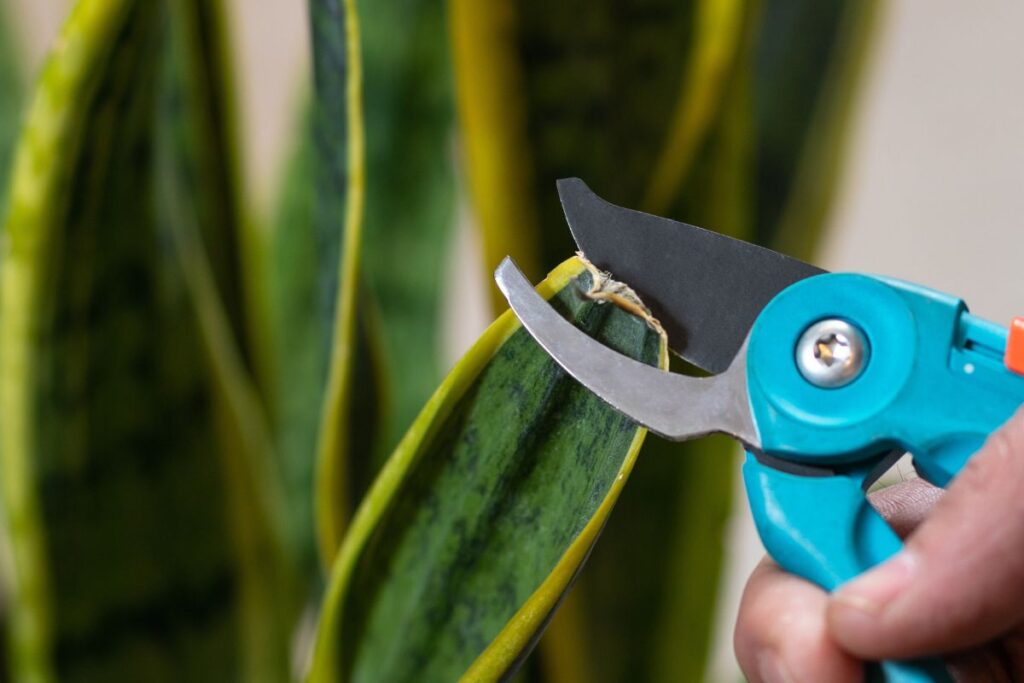
- Always use sterile shears, knife, or scissors when pruning.
- Cut the affected leaves close to the base and sterilize the blades between cuts.
- Prune your plant as needed at any time of the year. If you must remove a lot of leaves at once, schedule pruning in spring for faster recovery and new growth.
Snake plants can also benefit from occasional dusting to improve light absorption and maintain their aesthetic appeal.
Remember these tips for regular cleaning:
- Wipe the leaves with a clean, damp cloth once a month (or every other time you water the plant) to remove dust or dirt.
- Be careful about the pointed tips of the leaves, as they can puncture your skin. You can use a narrow, lint-free duster with a long handle to protect your skin.
- Avoid breaking the leaf tips, as it can inhibit further vertical growth.
Propagation Techniques
Early spring is the best time to propagate snake plants because they’re notorious for growing too slowly. Warm spring and summer temperatures can help boost root growth rate, and with proper care, you may see significant growth by the end of summer.
There are three ways to propagate snake plants:
- Division
- Leaf cuttings
- Seeds
Let’s explore them below:
Division
Division through the pups or offshoot is the best propagation method for Dracaena trifasciata for the following reasons:
- Each pup has a healthy root system and has a higher success rate than seeds or cuttings.
- The pups retain the same variegation as the mother plant.
On average, I divide my sunbathing snake plants every 3 years or so because they grow and spread rather quickly. My low-light snake plants, on the other hand, hardly need divisions or repotting, even after 10 years.
You’ll know it’s time to divide your snake plant when multiple plant clusters have grown and crowded the pot. Small whorls of leaves along the pot’s edges also indicate new pups, which may damage the pot or become deformed as they grow.
Here are the steps for dividing overgrown snake plants:
- Water the plant deeply 2 days before dividing.
- Run a spatula around the pot’s edges to detach the rootball from the pot.
- Carefully remove the plant and inspect the rootball.
- Feel around the rootball for readily separable pups or plant clusters and break them apart from the mother plant. You can use your hands or a sharp, sterile knife. Pro tip: Snake plants are very sturdy and wouldn’t mind rough handling. Just ensure each cluster has a healthy rhizome with a white layer inside and plenty of tiny brown roots around.
- Inspect the roots for damage and prune any rotten or dried roots.
- Transplant each cluster in a separate pot following the planting guide discussed above. You may also plant 2-3 clusters together for a fuller look inside the pot.
Note: I usually care for the divisions as I would before dividing and placing them in their usual spot. However, if they have lost a lot of roots from pruning or the division process, I keep them in moderate light (bright indirect light) until I notice new growth.
It usually takes about 6 months or so before newly divided snake plants produce new leaves because they naturally grow slowly in lower light conditions and most likely have been spending energy expanding the roots. Ensure the fresh soil mix has 10-50% compost to nourish the plant as it grows.
Leaf Cuttings
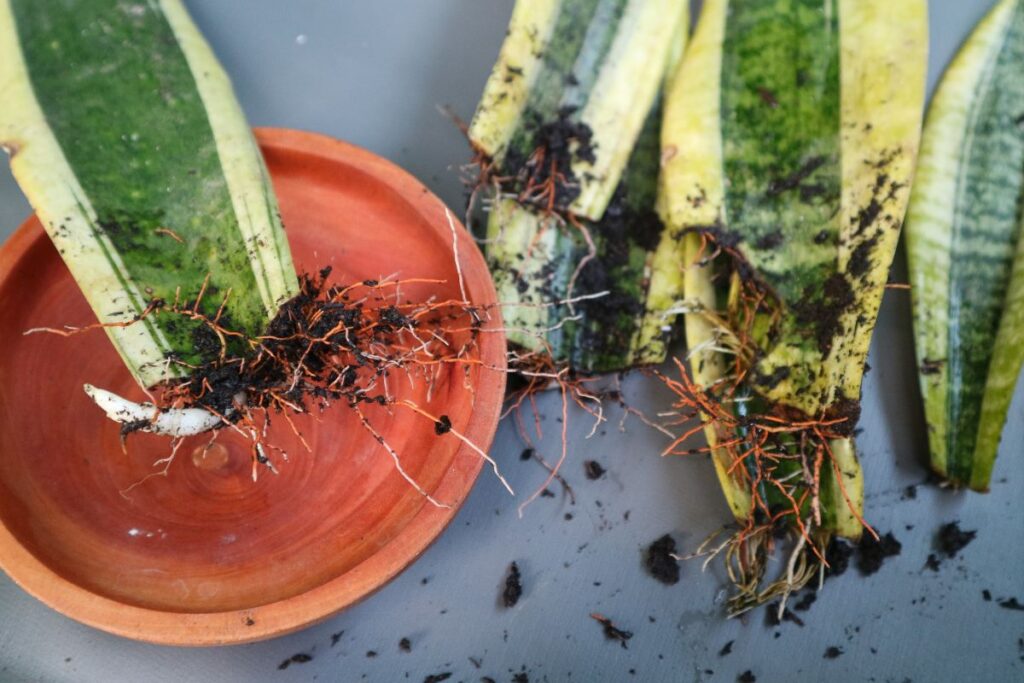
Propagation by leaf cuttings is a convenient way to increase your snake plant collection because:
- You don’t have to wait too long for new pups to emerge because some snake plants grow very slowly.
- You don’t have to unpot the plant to collect cuttings.
- You can use the terminal leaf cuttings to propagate a snake plant dying from root rot.
On the other hand, the downsides include:
- Long rooting time, which typically takes around 2 months, and your plant will be ready for transplant in about 6 months.
- Loss of characteristic variegations, such as the yellow margins in ‘Laurentii’ and ‘Golden Hahnii’ or the wide silvery bands of ‘Moonshine’. The new leaves will look like the classic Dracaena trifasciata, ‘Hahnii’, or ‘Robusta’.
Here are the steps to collect viable leaf cuttings:
- Locate a firm, upright leaf without signs of damage (i.e., brown spots). Avoid drooping leaves because they’re either aging or stressed.
- Make a clean horizontal cut close to the base of the leaves using a sterile knife or pruning shears. For taller snake plants, you can divide the leaf blade into multiple sections 2-3 inches (5-7.6 cm) long. If you plan to collect only the leaf tip, note that the cut leaf will stop growing vertically, and the wound will eventually turn white or pale brown.
- Let the cuttings form a callus overnight. Place the cuttings on a paper plate and leave it in a cool room (around 70 °F or 21 °C) away from direct sunlight.
Note: Before planting middle leaf cuttings, remember which side is up because roots won’t grow if you accidentally plant the cuttings upside down.
You may root the cuttings in water or soil.
Here’s how:
Water Propagation
Snake plant leaf cuttings surprisingly root faster in water than in soil. Depending on the plant’s growth rate and the environmental conditions, they can form roots within 3-6 weeks and be ready for transplant within 2-3 months.
However, I have experienced waiting for roots to come out after over 2 months and another 5-6 months before finally transplanting the rooted cuttings and tiny pups into the soil.
Here are some tips for faster root development:
- Make an inverted V-shaped cut at the bottom of the cutting to improve water absorption and give the new roots room to grow. Alternatively, prepare some toothpicks to keep the cuttings suspended in water.
- Prepare a clear glass and fill it with enough filtered water to submerge the leaf cuttings’ bottom inch (2.5 cm). For whole leaf cuttings, ensure the bottom 25% is submerged in water.
- Position the cuttings vertically in the glass. You may also poke 2-4 toothpicks on each cutting and hang them over the rim to keep the rooting end from touching the bottom of the glass. It will also help keep the growing pups well above the water line later on.
- Place the glass in a warm room (75-85 °F or 24-29 °C) with bright indirect light for faster root growth.
- Replace the water every 3-5 days or as soon as it becomes muggy.
Be patient, as it can take several months before pups grow out from the bottom of the cuttings.
I usually wait until the pups are about 2 inches (5 cm) tall before transplanting them into soil with the following steps:
- Prepare a 3-4-inch (7.6-10 cm) pot with drainage holes.
- Fill ¾ of the pot with your standard snake plant potting mix.
- Remove the rooted cuttings with new pups from the water and plant them into the soil, burying the bottom ½-1 inch (1.3-2.5 cm).
- Keep the pot in a warm room with bright indirect light and moderate humidity (40-50%).
- Spray the soil with water until it’s evenly moist but not soggy. Repeat this every 3-5 days for about two months to prevent sudden plant death because water-rooted cuttings may take some time to adjust to the soil. Gradually increase the watering interval as the pups establish their roots in the soil. I found that adding a half-cup of water every 7-10 days was enough to keep the young plant healthy and growing.
- When the pups grow 2 inches (5 cm) or more in height, carefully dig them out with a chopstick. Optional: You can remove the original leaf cutting with sharp, sterile scissors because it will only take up space in the new pot. It will dry out eventually, but it can take a while (about 6 more months).
- Repot the young plant in a 4-6-inch (10-15 cm) pot. I usually plant 3-6 pups in the same pot for a fuller look.
- Spray the soil with water until it’s evenly moist. Wait until the soil is completely dry before watering again.
Soil Propagation
Soil propagation can take longer than water propagation because the leaf cuttings need adequate moisture to form roots.
In my experience, soil propagation can be unpredictable. Some cuttings rooted within 6 weeks and produced pups after 3 months. Sometimes, it takes 4-6 months of consistent care for the cuttings to develop roots and another 6 months or so to grow pups.
If you want to give it a try, here are the steps to successfully propagate snake plant leaf cuttings in soil:
- Use 2-3-inch (5-7.6 cm) cuttings instead of whole leaves because they’re easier to keep upright in shallow soil. For dwarf snake plants with leaves about 6 inches (15 cm) tall, you can use the entire leaf cuttings.
- Prepare a wide container about 2 inches (5 cm) deep.
- Fill the container with your standard snake plant soil (i.e., cactus or succulent mix or compost-perlite mix). Alternatively, you can use pure coco peat for good aeration and moisture retention.
- Bury the bottom inch (2.5 cm) of the cutting in the soil. You can place multiple cuttings in the same container but keep them 1-2 inches (2.5-5 cm) apart.
- Keep the setup in a warm room (75-85 °F or 24-29 °C) with bright indirect light and moderate humidity (40-50%). You can place a heating pad below the container to keep the soil warm.
- Spray the soil with water until it’s evenly moist. Repeat this every 3-5 days until new pups emerge. If there’s a heating pad below the container, you may need to spray the soil more often—ideally, as soon as the top inch (2.5 cm) is dry.
Once the pups reach about 2 inches (5 cm) tall, follow the transplanting tips after water propagation.
Seed Propagation
My outdoor snake plants, especially the classic Dracaena trifasciata, flower profusely in early or mid-spring. They also grow like weeds in my outdoor garden, so I often can’t tell if the new plants are from offshoots or germinated seeds.
In contrast, snake plants hardly flower indoors due to insufficient natural light. The lack of pollinators like bees and moths inside the home can make it even more unlikely to produce fruits and seeds.
But if you get lucky and end up with the elusive white flowers and fruits from your indoor snake plants, here are the steps to planting the seeds:
- Wait until the fruits ripen or turn orange. I recommend planting the seeds within the same season because their viability significantly declines after a year. For instance, I’ve tried planting year-old seeds without success.
- Put on a pair of latex or disposable gloves. Snake plant fruits also contain saponins, which may cause rashes in susceptible individuals.
- Squeeze the seeds out of the fruits. Alternatively, you can wait for the fruits to fall off and collect the seeds.
- Soak the seeds in water and rub them between your fingers to remove any pulp.
- Prepare a shallow pot about 2 inches (5 cm) deep and fill it with coco peat.
- Bury the seeds about a quarter inch (0.6 cm) deep and an inch (2.5 cm) apart.
- Spray the soil until it’s evenly moist.
- Keep the pot in a warm room (70-75 °F or 21-24 °C) with bright indirect light.
- Moisten the soil every 5-7 days or as soon as the top half-inch (1.3 cm) feels dry. Letting the seeds dry out for too long can delay or abort their germination.
Under optimal conditions, snake plant seeds germinate within 4-6 weeks. The seedlings can then take three months or so to put on significant growth of around 2-3 inches (5-7.6 cm) and be ready for transplant in regular snake plant soil.
Repotting
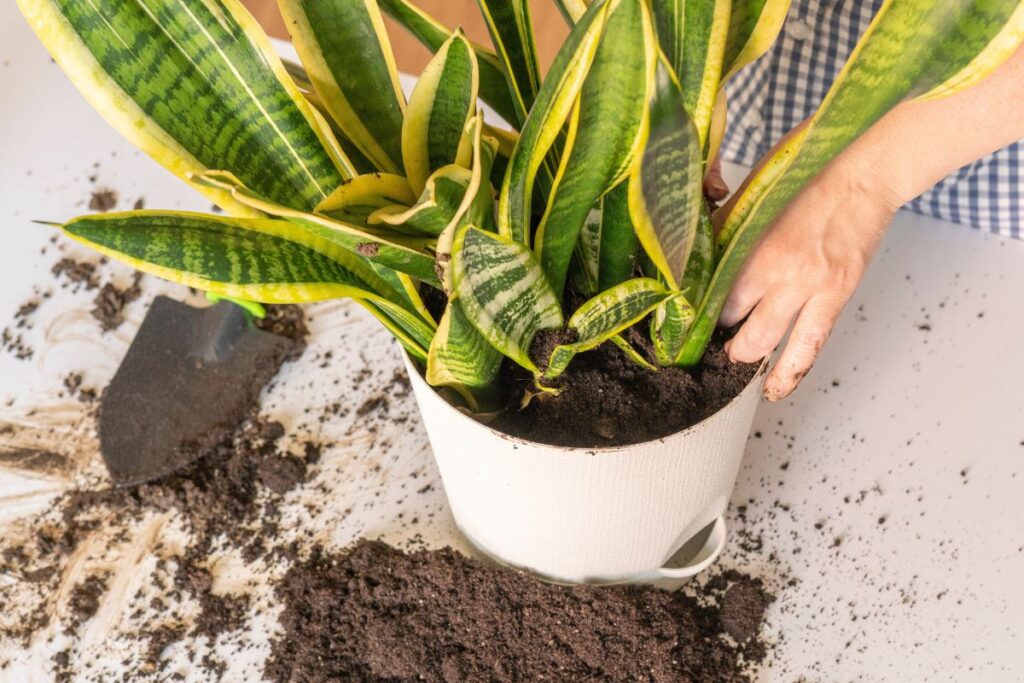
Indoor snake plants don’t require frequent repotting, especially when kept in low to moderate light conditions. Their shallow roots and slow growth allow them to thrive even when rootbound for several years.
On average, here are the repotting frequencies for snake plants at different light intensities:
- High: 3-5 years
- Moderate: 5-10 years
- Low: 10 years or so
Other factors like watering and fertilizing frequency and overall plant health can influence how soon you must repot your snake plant. The best way to decide when to do so is by observing your plant’s growth and appearance.
Here are some signs that snake plants need repotting:
- The plant has multiple clusters or rosettes crowding the pot.
- New pups are growing along the edges of the pot, risking distorted growth or pot damage.
- The plant isn’t putting out new growth despite regular watering, indicating the soil quality has declined.
- The leaves have brown or black mushy spots, indicating root rot.
In general, you must repot your snake plant in spring or early summer. However, if the plant shows signs of rot during the fall or winter, you must repot it immediately, as any delay can reduce the chances of survival.
Here are some essential steps and reminders when repotting snake plants:
- Water the plant deeply 2 days before repotting to make the soil easier to work with.
- Carefully unpot the plant to avoid damaging the developing pups along the edges. You can run a sterile and blunt spatula around the pot’s edges to detach the root ball more easily.
- Locate readily separable pups and carefully but firmly detach them from the mother plant.
- Prepare a breathable terracotta pot with drainage holes just about 2 inches (5 cm) wider and deeper than the root ball. When planting multiple pots in the new pot, ensure there are about 2 inches (5 cm) of space between the collective root ball and the pot’s walls.
- Use high-quality cactus or succulent mix or a homemade blend of equal parts compost and perlite/pumice.
- Firmly bury the roots and rhizomes about an inch (2.5 cm) below the soil surface.
- Withhold watering for about 10-14 days and keep the plant in a warm room with bright indirect light.
- Water the soil deeply when it’s completely dry and let the excess drain freely to prevent waterlogging.
Pest and Disease Management
Because of their anatomy, a healthy snake plant has few pest and disease problems.
Let’s explore these below:
Common Pests
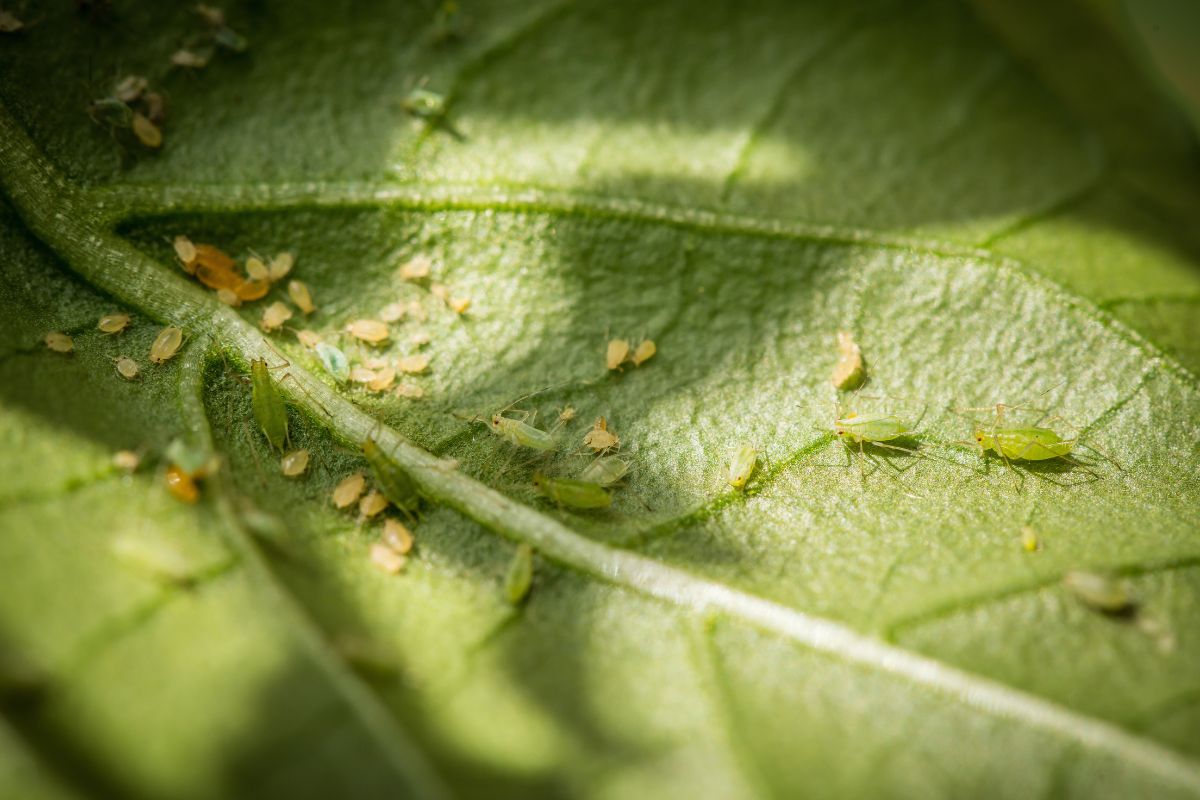
Snake plants have saponins in their sap, making them naturally pest-repellent. Saponins can inhibit insect development and reproduction and are even lethal to common houseplant pests like aphids.
However, a stressed snake plant may be infested by the following pests:
- Mealybugs: More research may be necessary to confirm the resistance of mealybugs to saponin because they’re the most common pests of indoor snake plants. They appear like clusters of fluffy white crawlers about ⅛ inches (3.2 mm) in diameter at the base of the leaves (within rosettes). In severe infestations, they can cause portions of the leaves to turn brown.
- Spider mites: The prolonged dry conditions on snake plant leaves make them inviting to spider mites because there’ll be less risk of their fine webs getting damaged. These spider-like pests are so tiny (about 1 mm) that they appear like quickly moving black dots. They’re even more difficult to spot against the variegations on snake plant leaves.
You may treat pest problems with the following tips:
- Manual removal: Scrape the mealybugs off the leaves using a cotton swab soaked in alcohol and drop them in soapy water. On the other hand, wipe the spider mite webs off the leaves with a clean damp cloth. Alternatively, spray the leaves with water to dislodge the spider mites, especially in narrow spaces, such as between rosettes. The smooth, waxy surface of the leaves will let the water droplets slide down and keep the leaves from staying wet.
- Neem oil spray: Move plants out of direct sunlight into bright indirect light for 6-8 weeks or during the course of treatment. Spray the plant at night with neem oil solution once a week to eliminate the pests.
- Collective treatment and isolation: You must also treat the other neighboring houseplants as needed and isolate severely infested ones to prevent the further spread of pests in your indoor garden.
Note: I don’t recommend using insecticidal soaps on snake plants. They’re effective only upon direct contact with insect pests, requiring frequent applications. The soap or salts in the liquid can damage the waxy coating of the leaves after prolonged and frequent use.
Diseases
Snake plants have excellent resistance to diseases due to the following:
- The thick and waxy coating on the leaves prevents moisture damage because water droplets slide right off.
- Snake plants prefer to be kept relatively dry, making it hard for bacterial or fungal pathogens to proliferate on plant tissues or in the soil.
Overwatering is the primary reason snake plants may succumb to diseases, such as the following:
Anthracnose
Anthracnose is a fungal disease caused by Colletotrichum spp. The spores may spread through wind or water splashes and may remain dormant on snake plant leaves if kept dry.
Puncture wounds or cuts on the leaves give the spores access to plant moisture and nutrients, allowing faster growth and reproduction.
Infected snake plants may show brown spots with concentric rings on the leaves that gradually expand and spread.
To treat the problem, follow these tips:
- Prune affected leaves right away using sterile shears. Sterilize the shears between cuts to prevent the spread of infection.
- Isolate the plant for 2-3 months and look out for any new signs of infection.
- Allow the soil to dry out completely between watering sessions.
If symptoms persist, you must properly discard the plant because the disease has already spread in its system. New pups or cuttings are most likely also infected, so avoid trying to propagate the plant.
Root Rot
Root rot in snake plants is caused by overwatering or poor soil drainage. The thin, fibrous roots can easily decay in soggy soil and break apart. The fleshy rhizomes are also susceptible to attack from rot-causing soil pathogens.
Once the rot takes hold of the rhizomes, it can quickly spread to the leaves because a snake plant’s vertical stems are typically very short (about an inch or 2.5 cm).
Symptoms of root rot include:
- Drooping leaves
- Yellowing leaves
- Brown or black and mushy leaf base
- Black, mushy, and smelly roots and rhizomes
Here are the steps to save your plant:
- Wear disposable gloves and carefully unpot the plant.
- Inspect the roots and cut off rotten sections using sterile scissors. Spray the blades with rubbing alcohol and wipe with a clean cloth or cotton balls between cuts.
- Locate any remaining firm rhizomes and separate them from the rotten ones. Breaking or cutting the rhizome apart from the mother plant should expose a bit of the tissue inside.
- Check if the rhizome’s inner layer is white, indicating good health. Conversely, brown spots indicate rot.
- Rinse the healthy roots and rhizomes with 1% hydrogen peroxide solution. Let them dry over a clean towel for about 30 minutes.
- Prepare a sterile 4-6-inch (10-15 cm) pot to plant the surviving plant clusters separately.
- Fill the bottom 2 inches (5 cm) of the pot with fresh, snake-plant-appropriate soil mix.
- Place the roots and rhizomes over the soil and bury them about an inch (2.5 cm) deep.
- Keep the plant in bright, indirect light.
- Wait one full week before the initial watering. Water the plant deeply and allow the soil to dry completely before watering again.
With adequate care and improved watering practices, the snake plant should bounce back.
However, if all the rhizomes appear rotten, you may collect some cuttings from the terminal ends of firm and asymptomatic leaves. Propagate them in water following the steps discussed above for faster and more visible results.
Troubleshooting Common Problems
Snake plants are famous for being low maintenance, making them prone to neglect.
As such, they occasionally experience the following problems:
Drooping of Floppy Leaves
A healthy snake plant should have firm, stiff, upright leaves (except for dwarf rosettes and curly cultivars).
Drooping of floppy leaves may be caused by the following:
- Overwatering: The symptom may be accompanied by brown or black mushy spots on the leaves and soggy soil. Inspect the soil for signs of rot and repot as needed. Otherwise, prune the damaged leaves and allow the soil to dry out between waterings.
- Prolonged underwatering: It usually takes several months of underwatering before snake plant leaves flop, and when they do, they’ll most likely also appear soft and wrinkly with brown, dried tips. Although they’re drought tolerant, avoid letting them go too long without water. You can set an alarm or reminder (i.e., once a month) and inspect the soil moisture. Be sure to water to adequately rehydrate the plant deeply.
- Aging: If the drooping occurs only on outermost or bottom leaves that are around a year old, it’s most likely due to aging. You can prune the aging leaves down to soil level if they’re negatively affecting the appearance of your plant.
Red Leaf Edges
The red edges on my sunbathing ‘Laurentii’ are a rare yet fascinating sight. They usually come out during summer, most likely because of more intense heat and light.
Moving the plant a few feet (0.6 m) away from a sunny window during the peak of summer gradually relieves the redness.
However, if the red edges turn brown from prolonged exposure to intense light, they won’t revert back to their usual color. I usually leave it alone if it doesn’t affect the plant’s overall appearance. Otherwise, I prune severely damaged leaves.
Bleached or Scorched Leaves
Snake plants are naturally sun-loving plants. However, prolonged exposure to low to moderate indoor light conditions can make them sensitive to sudden exposure to intense sunlight.
Affected plants may have distinct white or pale spots on the sun-exposed part. Unfortunately, the scorch marks won’t recover even after moving the plant out of direct sunlight.
You may prune severely damaged leaves to improve your plant’s appearance. If the tip doesn’t appear affected, you may even cut and propagate it.
Moving forward, you can prevent bleached or scorched snake plant leaves with these tips:
- Acclimatize the plant before moving it to brighter light conditions. Move it about 2 feet (0.6 m) closer to the new spot every week.
- Rotate the pot weekly or right before watering to give the leaves respite from the intense heat and light.
- Water the plant regularly for better heat and light resistance.
Yellowing Leaves
Snake plant leaves may turn yellow due to:
- Overwatering
- Prolonged underwatering
- Nutrient deficiency
- Over-fertilization
- Aging
Improving your watering and fertilizing routines usually helps the leaves revert to their usual variegation.
On the other hand, aging leaves will continue to yellow until they eventually turn brown and fall off. You can prune them sooner to preserve your plant’s beauty.
Browning Leaves

Snake plant leaves may occasionally turn brown due to:
- Overwatering: The leaves may feel mushy at the base and start drooping. Pruning the damaged leaves and letting the soil dry out between waterings should prevent similar symptoms on other leaves.
- Prolonged underwatering: The browning usually starts from the tip, and the leaf appears wrinkly. Watering the plant deeply will make the affected leaves plump and firm again, but they’ll likely stop growing vertically because the growing tip has already dried out. You can cut the brown sections, keeping the plant alive but with blunt tips.
- Sunburn: The edges of yellow-margined leaves typically turn red as an early sign of sunburn before turning brown. The sun-exposed part of the plant may have bleached or brown spots on the surface. This is irreversible damage, and you may need to prune the affected leaves. Move the plant to an area with bright indirect light and rotate the pot regularly for even light distribution.
- Disease: Fungal diseases like root rot and Anthracnose can cause brown spots on snake plant leaves. Repotting the plant and pruning symptomatic leaves can sometimes resolve the issue. Otherwise, you may need to discard the plant to prevent the spread of infection.
- Aging: Older leaves naturally turn yellow and brown over time. You can prune them sooner by cutting the leaves down to soil level to preserve your plant’s vibrant appearance.
Curling Leaves
Snake plant leaves are thick and fleshy, but they may curl when dehydrated due to:
- Prolonged underwatering
- Overwatering and root rot
- Intense sunlight
- High temperatures
Although snake plants can tolerate plenty of natural light and high temperatures, they need sufficient moisture to keep their leaves plump and firm.
Water your plant deeply to ensure proper rehydration. However, let the soil dry between waterings to avoid waterlogged conditions and root rot, which can kill the roots and consequently dehydrate the leaves.
Leaf Spots
Leaf spots on snake plant leaves may be caused by the following:
- Overwatering: Reduce the watering frequency and aerate the soil regularly using a wooden chopstick to improve drainage.
- Root rot: Prune the rotten roots and repot the plant in a sterile pot with fresh, well-draining soil.
- Anthracnose: Prune the damaged leaves and observe the plant for more symptoms in the next 3 months or so. If symptoms persist, discard the plant.
- Mealybug infestation: Manually remove the pests using a cotton swab with alcohol and prevent recurrence by spraying the plant with neem oil solution weekly for 6-8 weeks.
Loss of Variegation
Prolonged exposure to low light conditions will eventually cause the leaves to appear darker, especially the new leaves. Ensure your plant receives at least 8 hours of bright, indirect natural light to bring out the leaves’ vibrant colors.
Seasonal Care
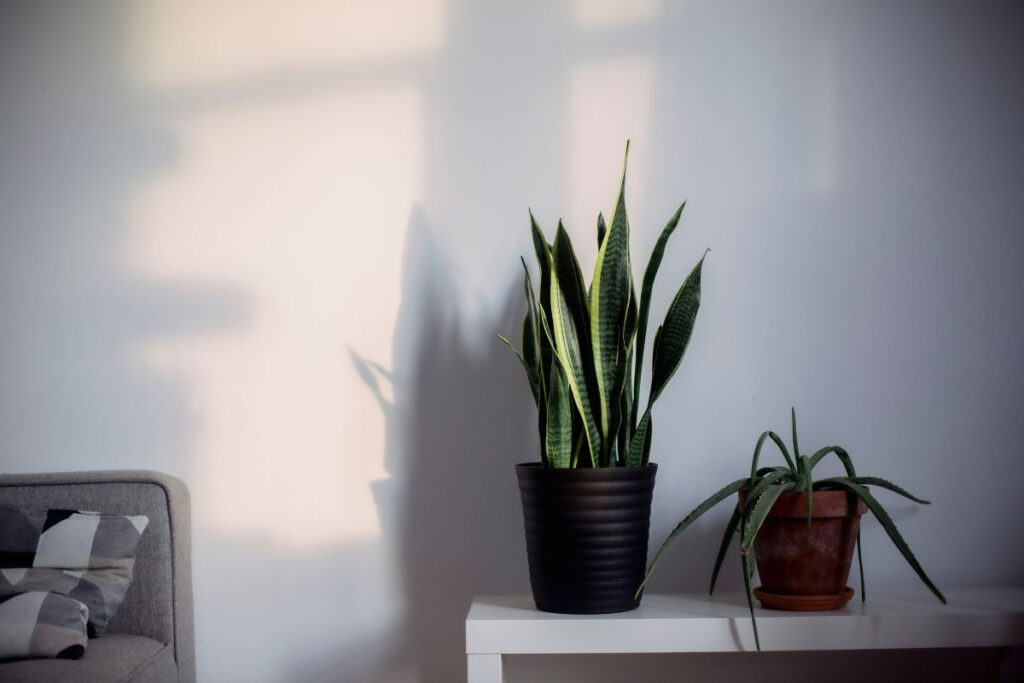
Snake plants may need minor seasonal care adjustments to ensure they keep thriving inside your home.
Here are some tips:
Light
Snake plants growing in bright light don’t require special adjustments during fall and winter. They naturally adapt to the changing light conditions and usually become ‘semi-dormant’ with less conspicuous growth.
Conversely, plants growing near north-facing windows need 6-8 hours of supplemental lighting from artificial lights during the dark months to keep the leaves from leaning or becoming lanky.
Remove snow or condensation on the window regularly to let your indoor garden bask in as much natural light as possible during the dark seasons.
Water
It’s not rare to come across some gardeners who claim to skip watering their snake plants for up to 6 months or during the entire fall and winter and still come back to a thriving plant. I’ve tried that, and it was surprisingly true, but only for those growing in low light.
Snake plants growing in bright light still need regular but less frequent watering in the fall and winter. Otherwise, the leaves will be floppy, yellow, or brown and dry.
I recommend checking the soil once every 4-6 weeks and watering only when it’s completely dry.
You can use the top watering method for regular sessions and occasionally bottom water the plant to properly rehydrate the soil and relieve any hydrophobic clumps.
Follow the steps below for proper watering:
Top Watering
- Prepare room-temperature (68 °F or 20 °C) filtered or tap water. Snake plants don’t mind the extremely low doses of minerals in tap water. Just avoid cold water, which can cause cold shock to the roots.
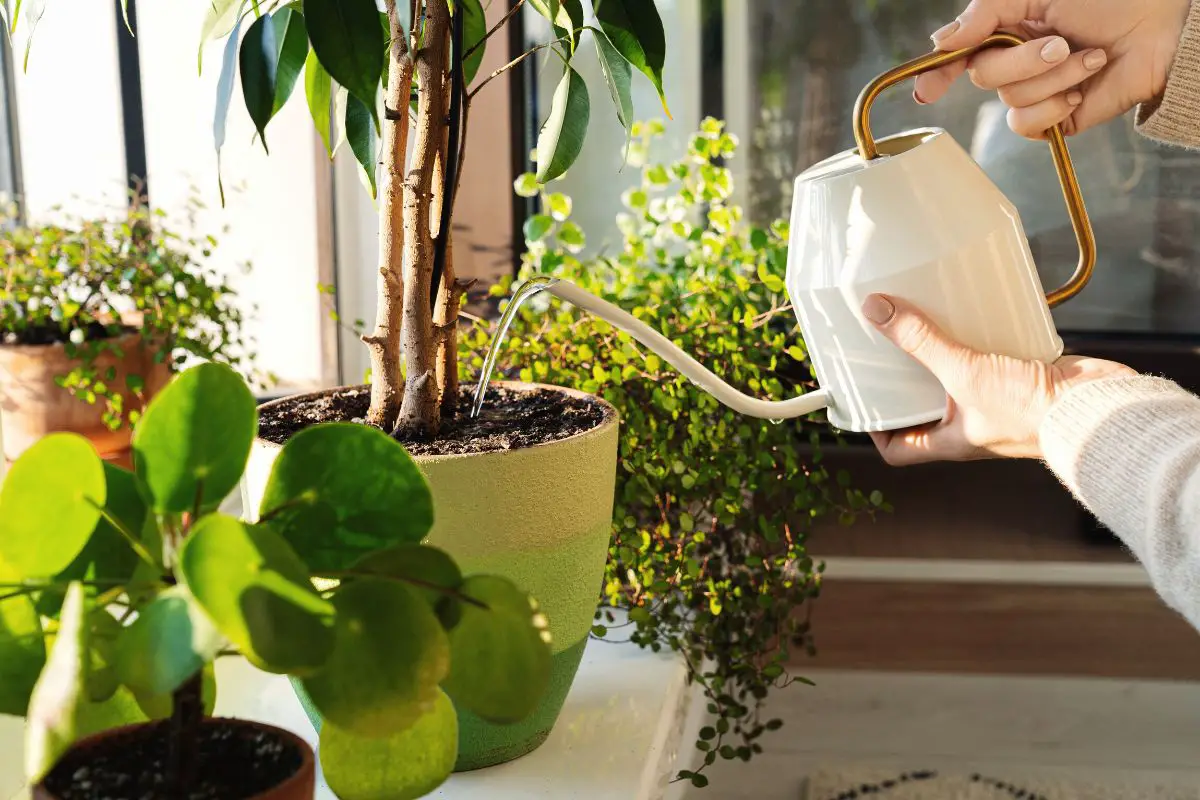
- Use cups or a watering can with a narrow spout.
- Pour the water slowly and evenly over the soil surface, swirling the spout around to drench the root zone.
- Let the excess drain freely at the drainage holes, and empty the plant saucer every 15 minutes or so to prevent reabsorption into the soil that can cause prolonged wet conditions and root rot.
Bottom Watering
- Fill a tub or basin with enough water to submerge the bottom half of the pot.
- Leave the pot in the tub or basin for up to 30 minutes or until the soil surface feels moist.
- Take out the pot and place it over a drip tray or a saucer and let the excess water drain freely.
- Repeat this step after 3-4 times of regular top watering.
Temperature and Humidity
If your area has freezing winters, keep snake plants away from drafty windows during the cold season. If you must keep the plant near a window for natural light, keep the window closed.
Snake plants sitting close to the main door must be moved several feet away to keep them safe from fluctuating temperatures or cold drafts from the busy doorway.
On the other hand, you can keep the humidity between 30 and 50% all year round. Snake plants can tolerate drier air conditions during the cold season if they’re watered regularly.
Fertilization
Avoid feeding snake plants during the fall and winter. Excess fertilizer salts can stay too long in the soil due to the plant’s slower growth rate and infrequent watering needs. As a result, the plant may become more vulnerable to fertilizer burn.
Display and Companion Plants
A snake plant’s striking foliage has a lot of aesthetic potential. Here are my favorite display ideas:
- Tabletop centerpiece: A dwarf snake plant’s rosettes of colorful foliage make an exciting centerpiece in the living room. Excellent options include the ‘Golden Hahnii’ and ‘Emerald Star.’
- Wall design: You can plant multiple clusters of tall snake plants like the classic Dracaena trifasciata’, ‘Laurentii’, or ‘Robusta’ in a rectangular ceramic planter. The variegated foliage makes an excellent decor against a bare wall or along an empty corridor or entryway.
- Makeshift divider: Tall snake plants in rectangular planters also make a lively divider in an open space.
A snake plant also makes a fantastic addition to your indoor garden, along with the following common houseplants:
- Haworthia (Hawortha or Haworthiopsis spp.): The zebra plant looks cute next to a ‘Hahnii’ in a shallow rectangular pot next to an east or northeast-facing window. You can also surround a ‘Golden Hahnii’ with truncated haworthias in a shallow round pot.
- Monstera (Monstera deliciosa): Snake plants may also blend in well with jungle babies like Monstera because they don’t mind high humidity as long as the soil remains relatively dry. The nighttime transpiration of succulents like snake plants can also slightly boost the local humidity and benefit the monstera.
- ZZ Plants (Zamioculcas zamiifolia): Snake plants and ZZ plants have similar tropical origins and share the same environmental and care requirements. The stark contrast in their foliage color and shape can add an exciting diversity to your home garden.
Final Thoughts
Snake plants are the perfect houseplants for beginner and experienced gardeners alike. They’re fuss-free, aesthetically pleasing, and rewarding houseplants to grace your indoor garden.
Follow these simple care tips for a trouble-free plant care journey:
- Use porous, well-draining soil.
- Place the pot in bright, indirect light.
- Water the plant only when the soil dries out completely.
- Top up the soil with compost in spring or summer.
- Keep the plant away from drafty doors and windows or cooling vents.
You can also try your hand at propagating snake plants and share the joy of growing them with your friends and family.
If you have questions or ideas for a fun way to care for snake plants, feel free to share your thoughts in the comments.