
Root Rot in Fiddle Leaf Figs: Symptoms, Causes, and Fixes
Fiddle leaf figs are stunning, statement houseplants cherished for their dramatic foliage and tropical aesthetic. As tropical natives, they prefer moist soil and humid conditions. However, too much water in the potting soil can lead to root rot, which is a common and potentially lethal problem for potted fiddle leaf figs.
Here are some factors that can increase the risk of root rot:
- Overwatering
- Poor soil drainage
- Contaminated soil
- High humidity
- Insufficient light
- Overuse of fertilizers
- Low temperature
The rest of the article will discuss the symptoms, causes, and remedies to help you identify and address root rot effectively.
Root Rot Susceptibility in Native and Indoor Conditions
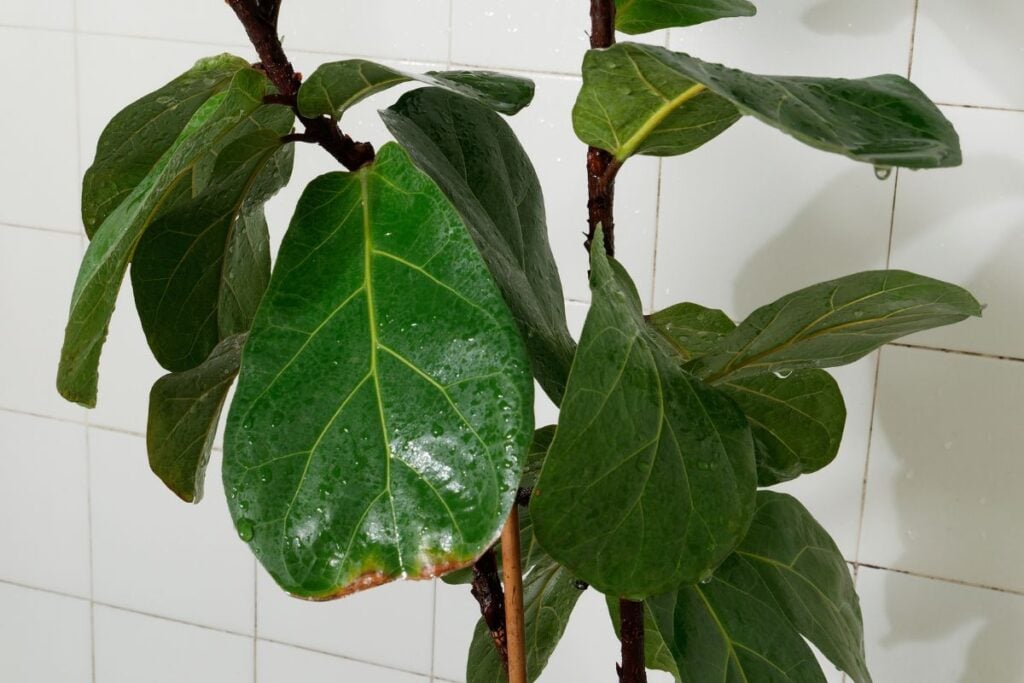
Fiddle leaf figs (Ficus lyrata) are moisture-loving trees from tropical West and Central African rainforests. They thrive in an area with 40-80 inches (100-200 cm) of rainfall annually and an average relative humidity of around 70%.
The warm and moist soil, humid air, and dappled light in tropical rainforests are conducive to the growth of both beneficial and harmful microbes. As soil pathogen populations rise, they can colonize plant roots and cause root rot.
Fiddle leaf figs growing in their native habitat are more likely to avoid root rot because of the following:
- Fiddle leaf figs typically grow in well-draining soil.
- The fibrous roots grow close to the soil surface, where excess moisture drains readily.
- Roots spread laterally, slowing down the potential spread of pathogens across the entire root system.
- Diseased or damaged roots can naturally break apart without affecting the rest of the roots.
On the other hand, indoor fiddle leaf figs grown in pots are more vulnerable to root rot because of the limited soil space and drainage.
The roots may form a dense mat within the pot, making it easier for rot-causing pathogens to spread quickly, especially when the potting soil remains wet for too long. Left unaddressed, the rot can spread to the stems and leaves and kill the plant.
Note: Waterlogged soils don’t always lead to root rot, especially when you use sterile potting mixes when planting.
Instead, the roots suffocate or drown due to the lack of oxygen and the plant may undergo a rapid change in genetic expression, leading to the following symptoms:
- Wilting or drooping leaves due to reduced water movement toward the shoots
- Leaf senescence (yellowing) due to nitrogen deficiency
- Stunted growth due to moisture or nutrient deficiency
- Dead roots that appear dark brown, thin, and brittle (healthy roots are light brown with white tips and don’t break apart between your fingertips)
Suffocated roots don’t turn black, mushy, and smell, which are typical symptoms of root rot.
Symptoms and Progression of the Disease
Catching root rot symptoms early is crucial to improving a fiddle leaf fig’s chances of recovery.
Early Symptoms
Overwatered fiddle leaf figs typically show warning signs before the roots begin to decay. Treating the problem sooner can prevent the progression of root rot.
Watch out for the following signs of overwatering:
- Persistent wet or soggy soil
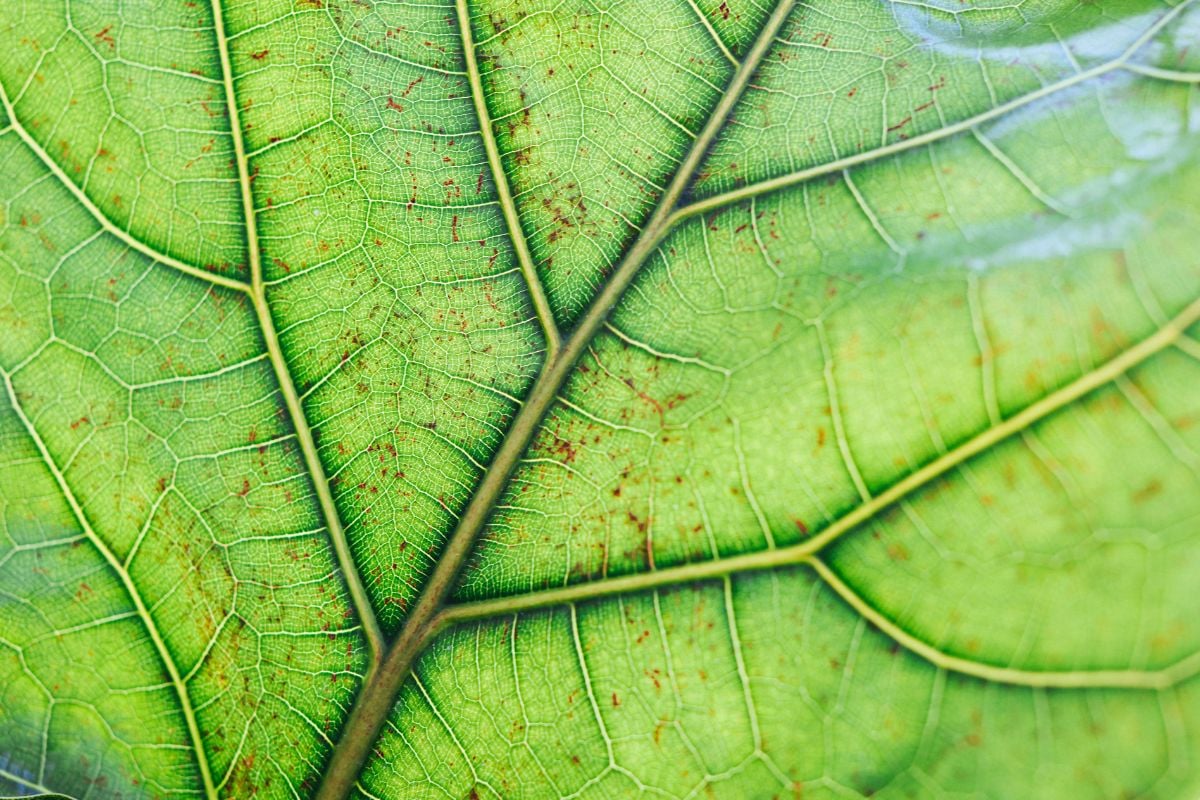
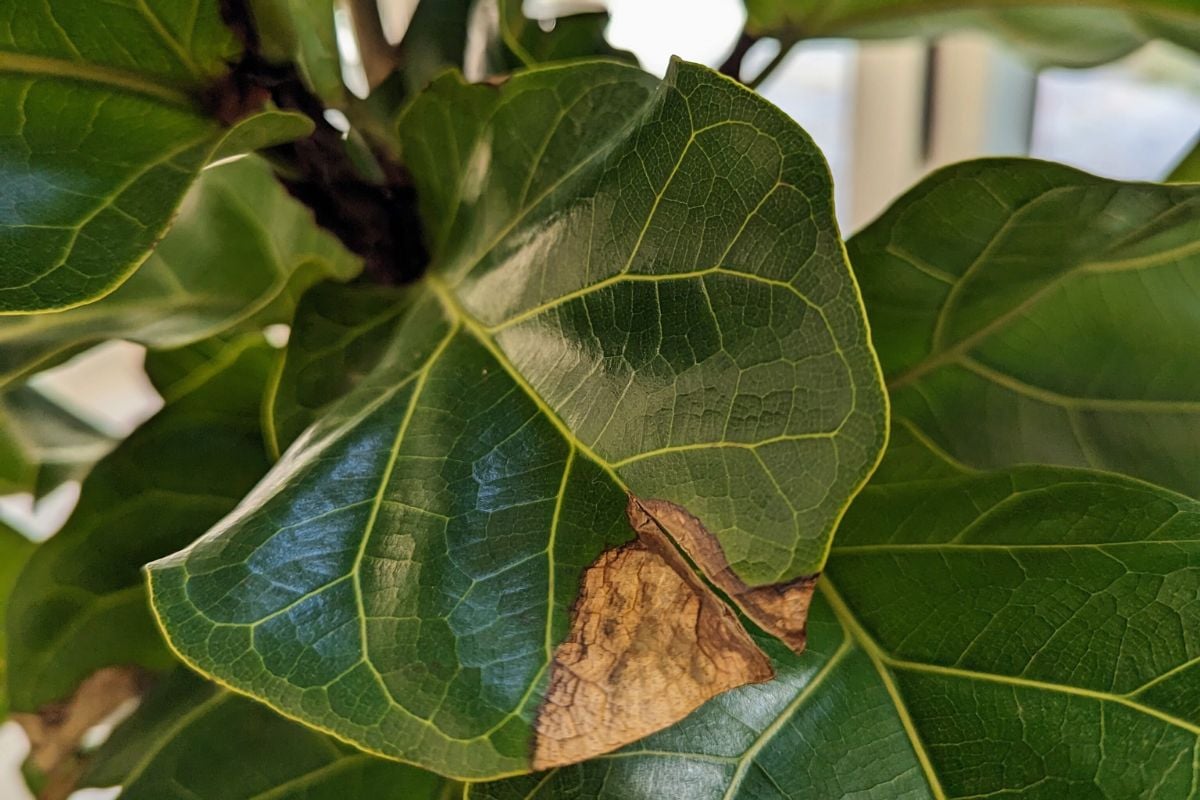
- Reddish brown spots or blisters (edema) on the leaves
- Mushy brown spots on the leaves that may spread to the edges
- Leaf drop
Advanced Symptoms
If the plant remains overwatered in contaminated soil (containing rot-causing pathogens), it can take only about 2 weeks or so before root rot symptoms appear.
You can confirm root rot without unpotting the plant by looking for these signs:
- Foul odor from the soil (similar to rotten eggs)
- Mushy, blackened roots (1-2 inches (2.5-5 cm) below the soil surface)
- Dark brown or black spots on the leaves
- Black or mushy spots on stems
- Drooping or wilting leaves, even in moist soil
- Yellowing leaves due to lack of nutrients
- Crisp and brown leaf edges due to dehydration due to lack of moisture from decayed roots
- Stunted growth or lack of new leaves or branches, even during the growing season (spring and summer)
After identifying the symptoms, I recommend unpotting the plant to examine the extent of the root rot damage.
Follow these steps to carefully unpot the plant and avoid further damage to the roots:
- Wear a pair of latex gloves to prevent contaminants from reaching your hands and fingernails.
- Cut off any roots poking out of the drainage holes at the bottom of the pot to avoid resistance. Be sure to use sterile scissors and clean the blades with rubbing alcohol between cuts.
- Scrape the inner edges of the pot using a sterile spatula to loosen the soil and easily slide out the root ball.
- Gently disentangle the roots using a wooden chopstick or hand cultivator. If the plant is rootbound, use sterile scissors to make 3-4 vertical cuts around the root ball.
- Remove as much old soil as possible to inspect the extent of the damage. If less than a third of the root volume is rotten, there’s a good chance your plant will recover. If more than a third is rotten, the plant may struggle to recover, but you may still try to propagate the remaining healthy terminal branches. I’ll discuss this further below.
- Prune all the black, mushy roots and sterilize the scissors or root pruners between cuts to prevent further spread of infection.
Fungus Gnats as Indicators
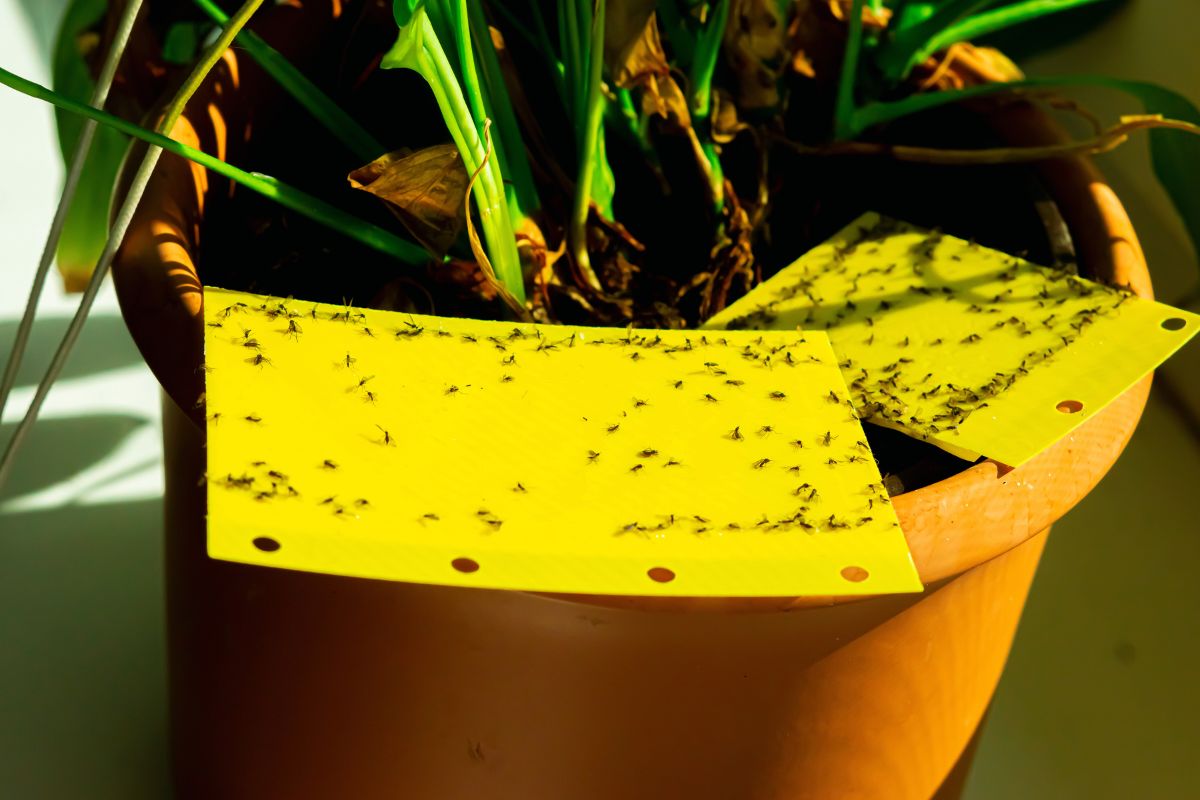
Adult fungus gnats hovering over your fiddle leaf fig pot are another indicator of overwatering and root rot.
The winged, mosquito-like adults lay their eggs in wet soil for better chances of survival. As the eggs hatch, the larvae feed on decaying roots and the growing fungal population in the soil.
Common Causes
Several issues with a fiddle leaf fig’s care and environment can either directly cause root rot or aggravate the damage.
Let’s explore them below:
1. Overwatering
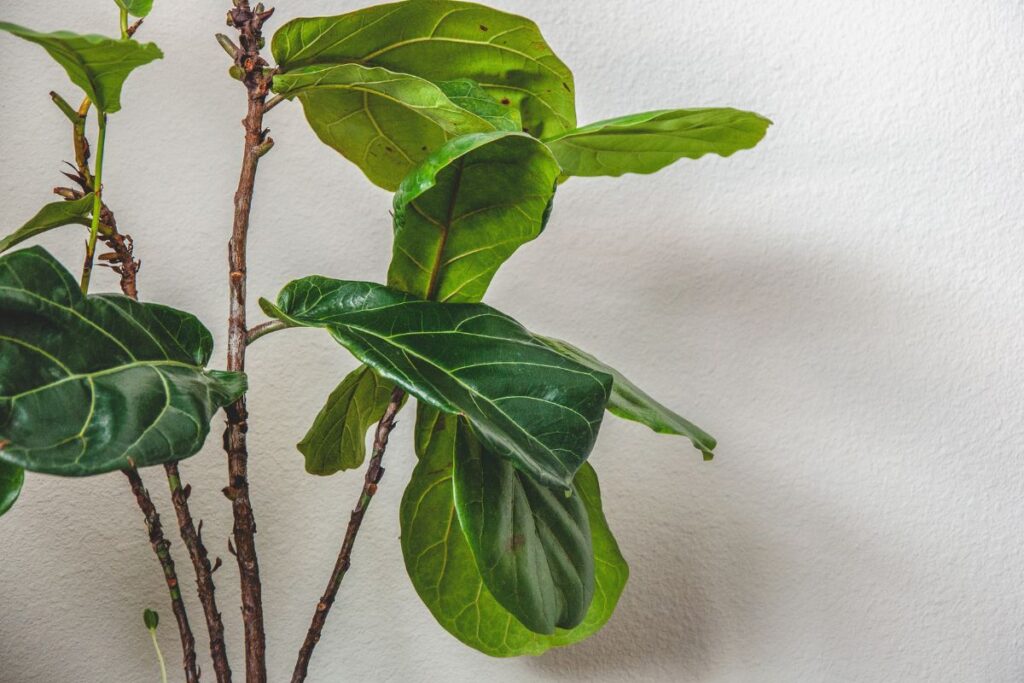
Overwatering is one of the primary causes of root rot. Frequent watering without letting the soil dry enough between sessions can weaken the roots due to the lack of oxygen.
Anaerobic conditions also favor the growth of rot-causing fungi, which can colonize the weakened roots.
Early signs of overwatering include:
- Soggy soil
- Edema or red spots (blisters)
- Mushy brown spots on the leaves
- Leaf drop
You can fix overwatering problems with the following tips:
- Check if the soil is dry 2 inches (5 cm) deep using your finger or a calibrated wooden chopstick. You may also use a moisture meter and water only when the reading shows 4. Insert the metal prong ⅔ deep into 3-4 spots around the soil to get the average reading. Be sure to wipe the prong with a clean, dry towel between readings for accuracy.
- For larger pots (over 12 inches or 30 cm wide and deep), water only when the soil is dry at least ⅓ or halfway down.
- Let the excess water drain completely from the drainage holes before placing the pot back over its saucer.
- Pour out any water that accumulates in the saucer to prevent reabsorption and prolonged wet soil conditions.
Note: Other sources recommend placing gravel or a foam block at the bottom of the pot to keep the root ball dry. However, the larger particle sizes of gravel at the bottom of the pot will inhibit proper drainage of excess moisture until the finer soil particles within the root zone are fully saturated, keeping the roots sitting in wet soil.
If overwatering problems persist, you may need to repot your plant in an appropriate pot and potting mix. I’ll discuss this further below.
2. Poor Soil Drainage and Improper Potting
The soil can hold unwanted extra water and increase the risk of root rot in the following potting conditions:
- Clayey or peaty soil mixes that retain excess moisture
- Pots without drainage holes
- Non-breathable materials like plastic or glazed ceramic
- Oversized pots
Here are some tips to properly pot fiddle leaf figs:
- Use a mix of 2 parts potting soil, 1 part perlite, and 10% compost for optimal aeration and drainage.
- Use pots with drainage holes and breathable materials like unglazed terracotta.
- Ensure the pot is only 2-4 inches (5-10 cm) wider and deeper than the rootball.
3. Contaminated Soil, Pots, or Gardening Tools
Rot-causing fungi, fungi-like pathogens (Pythium and Phytophthora), and bacteria can lay dormant in un-sterilized pots, potting soil, or even gardening tools. Reusing contaminated materials can spread the pathogens and make the plant vulnerable to root rot.
The pathogens can be activated when the environmental conditions in the soil (warm and moist) become conducive for growth.
In addition, fungi can be transmitted through airborne spores, so any infected houseplant can be a source of plant pathogens that can spread indoors.
Follow these tips to fix or prevent the problem:
- Always sterilize pots and gardening tools like pruning shears and trowels before use. You can wash them with 10% bleach and rinse thoroughly with clean water. Rinsing with freshly boiled water (212 °F or 100 °C) can also kill most plant pathogens.
- Use fresh, pathogen-free soil when repotting. I recommend choosing a high-quality sterile potting mix and perlite. You may introduce beneficial microbes to the mix by adding 10% compost.
Note: I used to have a plant shelf against a bright white wall where I placed my pots on different levels. After watering the plants, some excess water droplets inevitably exit from the drainage holes of the pots on top and fall into the plants below. Unfortunately, this is another possible mode of transmission of infection.
Ensure the excess water drains completely before placing the plant back on its spot on the shelf. It also helps to place a saucer underneath each pot and throw away the water pooling in it every few hours.
4. High Humidity
Fiddle leaf figs like high humidity (over 70%). However, high humidity indoors can reduce the plant’s transpiration rate and the soil moisture’s evaporation rate, leaving the soil wet for longer.
Humid conditions can also encourage mold, mildew, or fungal growth that can spread through spores. In addition, green algae growth over the soil surface can indicate excessive moisture and poor aeration.
Here are some tips to fix the problem:
- Maintain humidity levels between 40 and 60%. You can switch on a fan several feet (+ 0.6m) from the indoor garden to lower the humidity. However, avoid keeping it on for too long, as it can dry the air too much for fiddle leaf figs. You can monitor the relative humidity around your plant using a portable hygrometer.
- Keep the fiddle leaf figs away from humid areas, like laundry rooms, bathrooms, or kitchens, where humidity and temperature can fluctuate drastically all day.
5. Insufficient Light
Insufficient light can reduce the plant’s metabolic activity and moisture uptake. It can also slow down the soil moisture’s evaporation rate. As a result, the soil may stay wet for longer.
Here are some signs your plant isn’t getting enough light:
- Stems start leaning toward the windows or light bulbs
- Stems get longer or leggy trying to grow toward the light source
- Sparse leaves on the sun-deprived part of the plant
- Lopsided appearance with denser foliage at the sun-exposed part
Remember the tips below for optimal light exposure for fiddle leaf figs:
- Ensure the plant receives at least 8 hours of bright indirect light daily. You may place it around 5 feet (1.5 m) from an unobstructed southern window. Be sure to draw the curtains at midday to avoid leaf scorch.
- Give older plants with darker leaves up to 4 hours of direct morning sun from an eastern window. They need bright light to photosynthesize and generate enough energy to put out new growth.
- Rotate the pot every time you water the plant to ensure balanced light exposure to the foliage. It can also help the soil dry evenly.
- Supplement with grow lights if necessary during cloudy or dark days. Position the lights at an angle (45°) a few feet (+ 0.6m) from the plant to ensure the bottom leaves can also get illuminated since FLFs can grow too tall. Keep the lights on up to 6 hours after sunset.
- Remove dust or snow from the windows regularly for better light infiltration to your indoor garden.
- Wipe dust or dirt from the leaves weekly to encourage proper light absorption and optimal moisture use.
6. Overuse of Fertilizers
Excess fertilizer salts in the soil can dehydrate roots through osmosis, weakening them and making them more vulnerable to root rot pathogens.
Over-fertilization can also encourage excessive leaf and stem growth, leading to an imbalance in the plant’s moisture requirements.
An over-fertilized fiddle leaf fig may show the following symptoms:
- Yellowing or browning of leaves, starting at the edges.
- Crusty white deposits on the soil surface.
- Slowed or stunted root growth despite lush above-ground foliage.
Here are some tips to remedy the problem:
- Stop fertilizing immediately if root rot symptoms appear.
- Flush the soil with distilled water to remove excess salts.
- Resume fertilizing only after the plant recovers. Use a half-strength, 3-1-2 liquid fertilizer every other time you water the plant during the growing season (spring and summer).
7. Low Temperature
Cold conditions slow down plant metabolism and water absorption, leaving the soil wet for longer. Sudden temperature drops can also stress roots, making them more susceptible to pathogens.
Moreover, some species of root rot pathogens, like Fusarium and Pythium, are active even at low temperatures (55-68 °F or 13-20 °C).
Follow these tips to maintain ideal temperatures around your fiddle leaf figs:
- Maintain indoor temperatures between 65-75°F (18-24°C).
- Avoid placing the plant near drafty windows, doors, or air vents.
- If overwatering or root rot symptoms occur during winter, reduce watering frequency and ensure the soil dries out halfway through between waterings.
Diagnosing Root Rot
It’s important to carefully evaluate your fiddle leaf fig’s condition before resorting to repotting, which may cause more stress to the already weak plant.
Put on disposable gloves and carefully dig into the top 2 inches (5 cm) of the soil with your fingers or a hand trowel. If the root crown and the roots appear firm and light brown, you may only need to adjust your watering frequency.
On the other hand, in the case of root rot, you should be able to observe the following signs:
- Soggy soil
- Sulfuric smell (like rotten eggs) wafting from the soil
- Mushy root crown at the base of the stem
- Black, mushy roots
Immediate Actions to Take

After confirming root rot, you must carefully unpot the plant and remove all the decayed roots.
Here are the steps:
- Spread old newspapers over the working area to contain the contaminated soil and plant matter while working. I recommend working close to a water source with proper drainage, such as a bathroom.
- Run a spatula around the edges of the pot to loosen the rootball and make it easier to slide out.
- Remove as much soil as possible from the roots using your gloved hands and/or a hand cultivator.
- Prune all the black and mushy roots using sharp, sterile scissors.
- Sanitize the scissors between cuts to prevent the spread of rot-causing pathogens. Pro tip: Use 70% isopropyl alcohol spray and cotton balls for easier cleanup and disposal of contaminated waste.
- Prune up to 20% of the foliage. Remove the severely damage leaves to reduce the load the roots have to support later as they recover. Avoid removing too many leaves at once to prevent further plant stress.
- Rinse the remaining soil off the roots with clean, tepid water.
- Soak the roots in 1% hydrogen peroxide solution for 5-10 minutes to kill the remaining pathogens and prevent the recurrence of root rot. Alternatively, you may pour the solution over the roots if the plant is too big and has to be laid on its side.
- Lay the plant over a clean, dry towel to breathe and air dry for about 30 minutes.
Note: Other sources recommend using fungicide solutions or root supplements to treat and prevent root rot.
Here’s my take on these products after years of caring for fiddle leaf figs:
- Fungicide solutions: I don’t recommend using fungicide solutions (spray or root soak) because most products are species-specific, meaning they don’t work for all types of rot-causing bacteria or fungi. Also, having your plant tested in the lab to identify the specific pathogen that caused the disease can be costly. Hydrogen peroxide, on the other hand, works on all living microbes.
- Root supplements: I’ve explored several root supplements early in my indoor gardening journey and found that they don’t make your plant immune to root rot. They only add up to the total cost of gardening. Instead, focus on a solid gardening routine that can prevent plant stress. Use an appropriate soil mix and be mindful of your watering routine and indoor environment.
Propagating as a Last Resort
In case of severe damage where you must remove more than half of the root system or the rot has spread to the stem, the only option may be to propagate any remaining healthy branches from the terminal end of the plant.
Here are some tips to properly collect and propagate viable cuttings:
- Choose a terminal branch with healthy green leaves without signs of discoloration (i.e., brown spots, yellow or brown edges).
- Cut about ¼-½ inch (0.6-1.3 cm) below a node 4-6 inches (10-15 cm) from the growing tip. Use sterile pruning shears and ensure there are at least three nodes on the cutting.
- Cut the bottom at a 45° angle and wipe the sap off the wound with a clean, damp cloth.
- Pinch or cut the leaves at the bottom node.
- Optional: Dip the cut end in rooting hormone for a higher success rate and faster root development.
- Prop the cutting in a glass of clean, filtered water. Ensure the bottom node is submerged in the water and the leaves are securely above the water line.
- Place the setup in a warm room (around 75 °F or 24 °C) with bright indirect light to encourage it to root quickly. It’s also important to maintain the humidity at around 50% to prevent the large leaves from drying out.
- Replace the water every 3-5 days or as soon as it looks murky.
- Transplant the cutting in your standard fiddle leaf fig soil mix in a 6-inch (15 cm) pot when the roots are at least 2 inches (5 cm) long. This may take 8 weeks or so under optimal conditions.
Note: I don’t recommend propagating FLF cuttings in soil or soilless substrate when dealing with root rot. The cuttings might not yet show signs of stress, but they may be weak if the infection has spread.
I prefer water propagation so I can see the progress of the root development. In addition, it’s easier to maintain the cuttings in water, as the leaves are more likely to dry out when planted in soil, reducing the success rate of propagation.
Repotting and Aftercare

If you pruned less than 50% of the root system, your fiddle leaf fig may have a good chance to recover when repotted in fresh soil and a sterile pot.
Follow these repotting steps for the best results:
- Prepare a sterile pot 2-4 inches (5-10 cm) wider and deeper than the newly pruned rootball. Choose a breathable pot (i.e., unglazed terracotta) with adequate drainage holes.
- Place a wire mesh over the drainage holes to keep the soil within the pot and prevent the buildup of soil plugs that can inhibit proper drainage.
- Moisten the soil mix until it feels like a wrung-out sponge. I recommend using an even mixture of 2 parts potting soil, 1 part perlite or pumice, and 10% compost for optimal drainage and aeration.
- Fill the bottom 2 inches (5 cm) of the pot with a mound of well-draining soil mix.
- Spread the roots of the fiddle leaf fig over the mound and fan the roots outward for better anchorage.
- Cover the roots with moist soil mix and tamp it down firmly to keep the tree upright.
- Ensure the root crown is partially exposed to avoid future problems with root rot.
- Keep the soil surface about an inch (2.5 cm) below the mouth of the pot to prevent spills when watering the plant.
- Place the plant in a warm room (around 70 °F or 21 °C) with 8 hours of bright indirect light daily and 40-60% humidity. Supplement light as needed using grow lights for about 6 hours after sunset. Moderate temperature, light, and humidity conditions are vital for the plant’s recovery, as any extreme conditions can cause transplant shock.
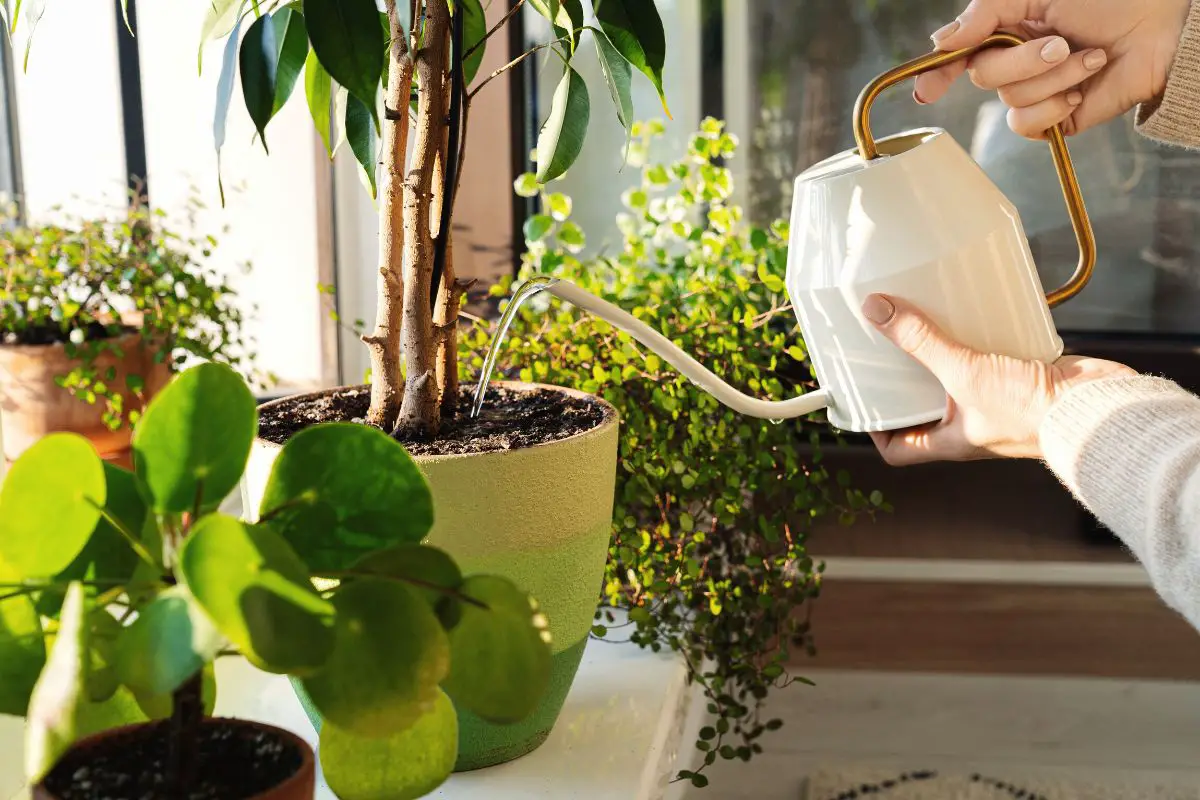
- Wait about a week before watering the plant deeply. Pour the water evenly from the top using a watering can with a narrow spout. Let the excess drain completely from the holes at the bottom of the pot.
- Deeply water the plant again only when the top 2 inches (5 cm) of the soil is completely dry. For pots over 12 inches (30 cm) deep, you can wait until the soil is dry ⅓ or halfway down to avoid overwatering and root rot problems.
Recovery and Monitoring
After treating root rot and repotting a fiddle leaf fig, it’s common for the plant to shed a few more leaves. Leaf drop may seem alarming, but it helps to set realistic expectations: fiddle leaf figs don’t recover from root rot overnight.
Based on experience, it can take 2 weeks or so to see signs of improvement—longer if the rot and repotting occurred during the cold and dark season when the plant is less active metabolically.
You’ll know your plant is recovering if you see the following tell-tale signs after more than 2 weeks:
- No new leaf discolorations (i.e., brown spots or yellowing leaves)
- No new leaf drops
- Sprouting of new leaf buds or branches
Preventative Measures
Root rot may be a serious issue in fiddle leaf figs, but it can be easily prevented with proper care and environment.
Follow the tips below to ensure your fiddle leaf fig maintains optimal health:
- Soil drainage: Use a sterile and well-draining soil mix. You may use a high-quality potting mix and amend it with 30% perlite or pumice. Introduce fresh organic matter and beneficial microbes using 10% compost.
- Pot quality: Use breathable pots like unglazed terracotta. You may also use aesthetic ceramic pots but ensure they have drainage holes and be mindful of your watering routine.
- Watering routine: Wait until the soil is dry 2 knuckles deep, and water the plant deeply from the top until the excess moisture drains from the holes below. This watering method can help leach excess fertilizer salts. You can occasionally bottom water using the soak-and-dry method to evenly rehydrate the soil and prevent hydrophobic soil conditions.
- Light conditions: Give young plants at least 8 hours of bright indirect light from an east or south-facing window. Older plants (over 5 years old) will thrive with up to 4 hours of direct morning sun from an eastern window when properly acclimated. It’s also important to rotate the pot weekly or at watering to give all leaves access to light and promote balanced growth.
- Temperature and humidity: Maintain stable and moderate temperatures of 65-75 °F (18-24 °C) and humidity levels of 40-60% around your fiddle leaf figs. Avoid areas with fluctuating conditions, such as bathrooms, laundry rooms, kitchens, and near drafty windows.
- Regular inspections: Check the soil moisture 5-7 days after watering to see if it’s drying properly and has no signs of root rot (i.e., foul odor). In addition, inspect the leaves for any discoloration like edema, brown spots, or yellowing.
- Fertilizer management: Apply a half-strength 3-1-2 liquid fertilizer every other time you water your plant in the spring and summer. When using granular fertilizers, apply a thin layer and top water your plant regularly to activate the nutrients and leach the excess salts. Limit application to once every 2 months during the growing season.
Seasonal Adjustments
Here are some tips for cold season care adjustments to prevent root rot in fiddle leaf figs:
- Water: Reduce watering frequency in colder months when growth slows. You may let the soil dry out a bit more between watering sessions (up to halfway down), but don’t let the soil become bone dry.
- Light: Move FLF to a spot with better light conditions, such as a few feet (+ 0.6 m) closer to a bright window. Wipe the snow, dust, or condensation on windows to ensure maximum light infiltration into your home. You may also supplement the plant’s light needs using grow lights for up to 6 hours after sunset. Since FLFs can grow very tall, position the lights at a 45° angle a few feet (+ 0.6 m) away to ensure the bottom leaves also have light access.
- Temperature: Maintain stable temperatures and keep plants away from drafty windows or from the path of hot air from heating vents.
- Fertilization: Avoid applying inorganic or chemical fertilizers during the fall or winter because the plant might not be able to use them due to slower growth, leading to risks of over-fertilization. You can instead work an inch (2.5 cm) of compost over the soil for insulation and a gentle dose of nutrients.
Final Thoughts
Root rot is a preventable and treatable issue with the right care. Focus on proper watering, good soil drainage, and regular monitoring to keep your fiddle leaf fig thriving.
With prompt intervention and consistent care, even a fiddle leaf fig with root rot can recover and return to its lush, vibrant self.
Share your experiences with root rot or fiddle leaf fig care in the comments to foster a community of plant enthusiasts.