
When and How Often to Water Jade Plants
Jade plants are the perfect choice for beginner gardeners because they’re resilient and require minimal care. They also have excellent drought tolerance, making them suitable for gardeners who lack the time for meticulous plant care.
Although hardy, proper watering is still key to keeping your jade plant healthy. Keep these essential watering tips in mind:
- Water jade plants when the top half or ⅔ of the pot is completely dry.
- Alternatively, you can wait until the leaves bend between your fingers.
- In well-draining soil, this can be every 1-2 weeks in spring and summer or every 3-4 weeks in the fall and winter.
Establishing a solid watering routine will help your jade plants be healthy and maximize their long lifespan. This article will share practical tips for simple but efficient watering practices tailored for jade plants.

Jade Plant Watering Needs: An Overview
Jade plants (Crassula ovata) are native to arid or semi-arid regions in South Africa, where the summers tend to be hot with more frequent but shallow rains every 3 days or so. Conversely, winters are cold but frost-free with sporadic rains.
The dry environmental conditions have influenced the following morphological adaptations in various Crassula species:
- Shallow roots that absorb water quickly
- Succulent leaves that store extra moisture
- Stomata that close during the day to prevent rapid moisture loss from transpiration
- Waxy coating on the leaves for lower cuticular transpiration rate
- Thick, fleshy stems that transport water efficiently from the roots to the leaves while also storing extra moisture
These efficient water-retaining traits help jade plants thrive in periods of drought. They can continue with photosynthetic and metabolic activities without entering dormancy during winter. Instead, they grow more slowly to conserve water.
In contrast, jade plants are sensitive to overwatering and high humidity, which increase the risk of root rot. Prolonged wet conditions can kill even a mature jade plant within 2 weeks or so.
Although indoor conditions can vary significantly, it’s essential to replicate the environmental conditions in their native habitat as closely as possible. Once you have a good grasp of the environmental conditions in your home, it also helps to tailor your watering routine for indoor jade plants.
Here are the factors that may affect a jade plant’s watering needs:
| Factor | Optimal Conditions | Implications |
| Plant Size or Age |
| Smaller and younger plants have underdeveloped roots and leaves, so they may require more frequent watering. In addition, they grow in smaller pots with lower soil volume, causing them to dry out more quickly. Mature plants with a robust root system and dense foliage can survive several weeks without water before showing signs of stress. |
| Soil Type |
| Loose soil mixes with low amounts of organic matter or moisture-retaining materials need more frequent watering. |
| Light Intensity |
| Plants growing in direct light consume moisture more quickly and require deep watering more often than those growing in lower light levels. |
| Temperature |
| Warmer temperatures boost a plant’s metabolism and the soil’s evaporation rate. At higher temperatures, jade plants naturally need more frequent watering. |
| Humidity |
| Humid conditions can slow down moisture loss, whereas dry conditions promote higher transpiration rates. You may need to water jade plants more often if the humidity is too low. |
Timing & Frequency
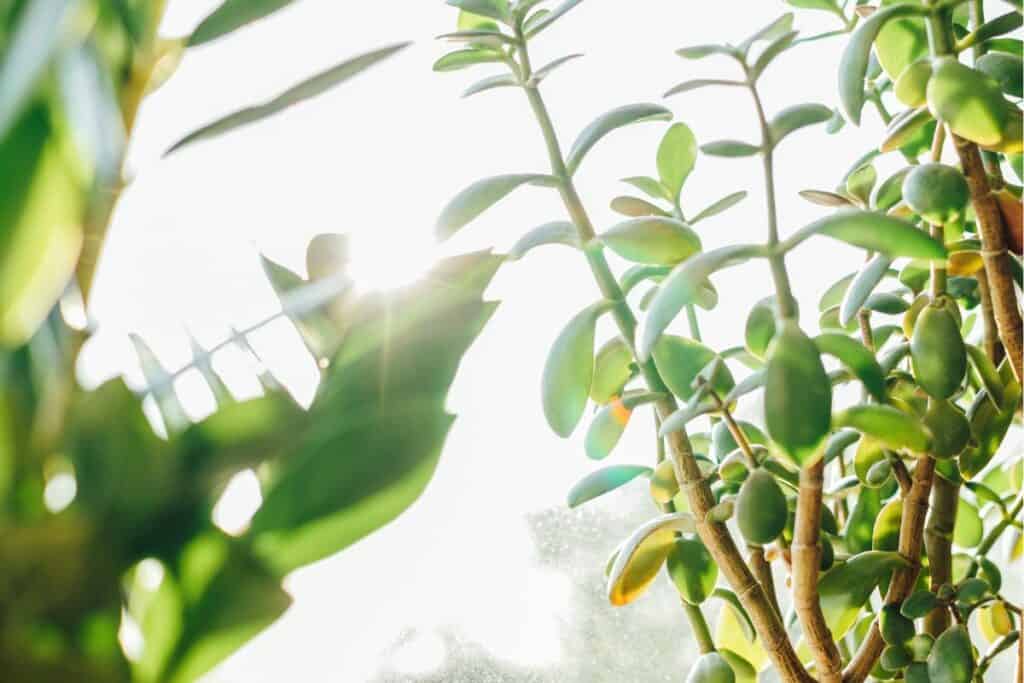
Jade plants are among the most drought-tolerant succulents in my collection. In my experience, they can go over 2 months without water, even during the growing season.
However, prolonged dry conditions will lead to the following symptoms:
- Wrinkled leaves
- Soft leaves that bend between your fingers
- Yellowing leaves
- Drooping leaves and branches
- Leaf drop
Here’s a set of factors and guidelines I consider when deciding the proper timing for watering jade plants:
Soil Moisture Levels
A good rule of thumb is to wait until the soil is completely dry, at least halfway down the pot. Jade plants can tolerate drier conditions, but I find this rule effective in keeping my plants vibrant, especially during the growing season.
I avoid letting the soil become bone dry between waterings, as it can become hydrophobic. Moreover, jade plants have fragile fibrous roots that tend to break apart when desiccated.
To check the soil moisture, you can choose from the following methods:
- Chopstick test: Mark a wooden chopstick with a pen at about half the depth of your pot to easily tell if it’s buried deep enough. Wiggle it between your fingers while poking it into the soil to avoid damaging the roots. Avoid using bamboo sticks or skewers, as they are water-repellent and won’t give you an accurate idea of how moist the soil is.
- Finger test: If you have a shallow pot, you can poke a finger two knuckles (about 2 inches or 5 cm) deep to see if the soil has dried out.
- Moisture meter: This is suitable for deep pots because of the long metal probe. Insert the probe in multiple spots around the pot for a more accurate reading since the results may vary due to soil content or fertilizer residue. You can water the plant when the average reading shows 2-3 (dry).
- Weight test: Dry soil is naturally lighter than wet soil. You can check the weight of the pot before and after watering to gauge the difference and readily tell next time when your plant needs watering.
Pot Type and Size
I also adjust my watering schedule based on the quality of the container.
Here are some insights:
- Breathable pots like unglazed terracotta dry out more quickly because the porous walls wick away the excess moisture from the soil. I can confidently water the plant as soon as the top half of the potting mix is dry.
- Plastic or ceramic pots may hold moisture for longer, so you may need to wait longer before watering your jade plant. Err on the side of caution, and water your plant when the soil is dry ⅔ of the way.
- Shallow pots hold less soil so they dry out faster. Check the soil moisture more often to keep the plant from becoming dehydrated.
- Deep pots naturally hold more soil and moisture, so you must water the plant less frequently. Avoid overpotting jade plants, as it increases the risk of overwatering and root rot. I recommend choosing a pot that’s only 2 inches (5 cm) wider and deeper than the rootball.
Regardless of the material or size, ensure the pot has a drainage hole to prevent waterlogging and root rot.
Seasonal Variations
Jade plants require more water during the growing season in the spring and summer and less in the fall and winter. You can replicate this indoors to establish a natural growth cycle (and potential flowering) similar to their native habitat.
Spring and Summer
At moderate spring temperatures, you can water your jade plant every 10-14 days. If indoor conditions are affected by hot and dry summers, you may need to water your plant every 7-10 days.
Be sure to check the soil moisture regularly, and water your plant when the top half is dry.
Fall and Winter
About 2 weeks before the first fall frost, gradually increase the interval between watering sessions to signal the jade plant of the changing seasons. Wait until the top ⅔ of the soil is completely dry before watering.
Lower moisture levels can prompt slower growth, so you may need to water your plant every 3-4 weeks. You can maintain this watering schedule until late winter.
Watering Tips and Methods
For safe and efficient watering, follow these general tips:
- You can use moderately hard tap water (up to 150 mg/L of calcium and/or magnesium salts) because jade plants will absorb the salts from the soil and expel the excess through their leaves. The salts may leave white, crystalline residues on the leaf surface that you can just wipe away. If your tap water contains higher concentrations, opt for pre-collected rainwater or filtered water.
- Use tepid water (around 68 °F or 20 °C) to avoid heat stress or cold shock that can lead to leaf drop.
- Avoid misting or wetting the leaves to prevent pests and diseases.
Top Watering
Top watering is the preferred method for jade plants, as it helps leach excess fertilizer salts from the soil. It’s also practical for fully-grown plants in heavy pots.
Here are the steps for proper top watering:
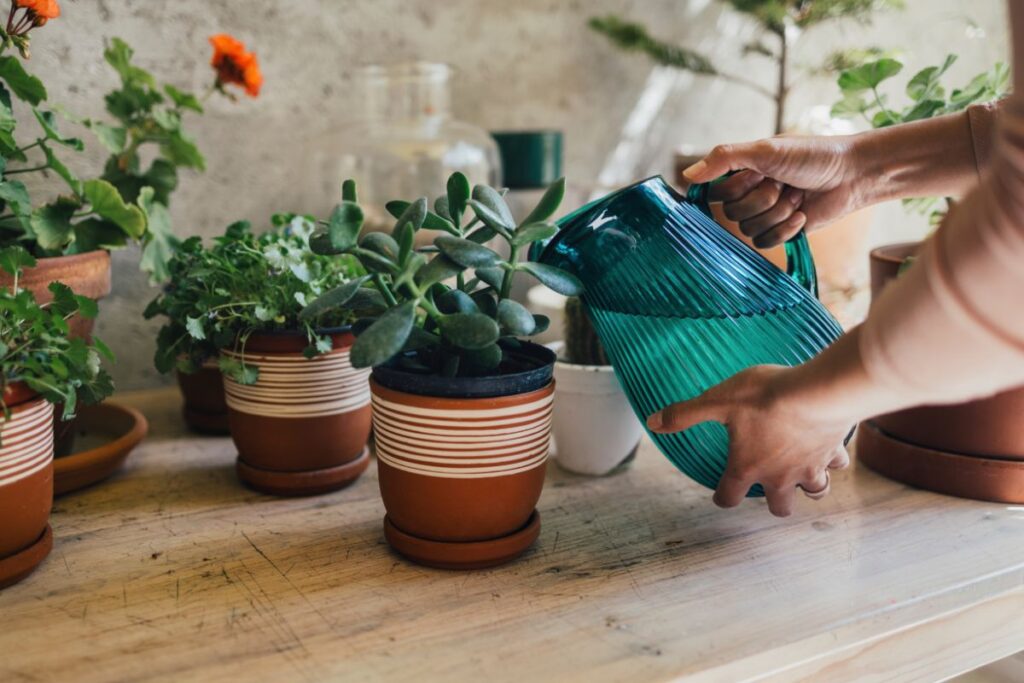
- Choose a watering can with a narrow spout and fill it with water. You’ll need about half the total volume of the pot. For instance, a 1-gallon (3.8 L) pot typically needs ½ gal (1.9 L) of water.
- Pour the water directly into the soil while repositioning the spout in several spots around the pot. This will help evenly saturate the root zone.
- Keep adding water until the excess drips out of the drainage holes.
- Let the excess moisture drain completely before placing the plant back on its saucer. Pro tip: Place large plants with heavy pots on a plant stand to easily catch and discard excess water from the drainage holes.
Bottom Watering
I find that occasional bottom watering can do wonders in preserving soil quality for jade plants. For instance, it effectively rehydrates the soil and prevents it from becoming hydrophobic so that your plant can thrive in the same pot for several years.
Here are the steps and additional considerations:
- Fill a tub with enough water to soak the lower half or ¾ of the pot. You can place multiple pots at the same time if you have a large tub.
- Leave the pot in water for 10-30 minutes. Check the soil at 5-minute intervals and take the pot out when the soil surface feels moist.
- Place the pot on a drip tray to drain the excess water before putting it back on the saucer.
- Repeat the process once every 2 months during the growing season or once every 3 months in the fall and winter.
Common Mistakes (& Fixes)
Although jade plants are famous for their resilience, long exposure to poor watering conditions may lead to severe problems that require tedious solutions. Moreover, due to their slow-growing nature, they may take too long to recover.
Here are some common mistakes to avoid:
Underwatering
Many online sources claim that jade plants thrive on neglect. However, while it’s true that jade plants can survive long periods of drought, they likely won’t look their best.
Underwatered jade plants may exhibit the following symptoms:
- Dry, crusty soil with low water infiltration
- Cracked soil surface
- Wrinkled leaves
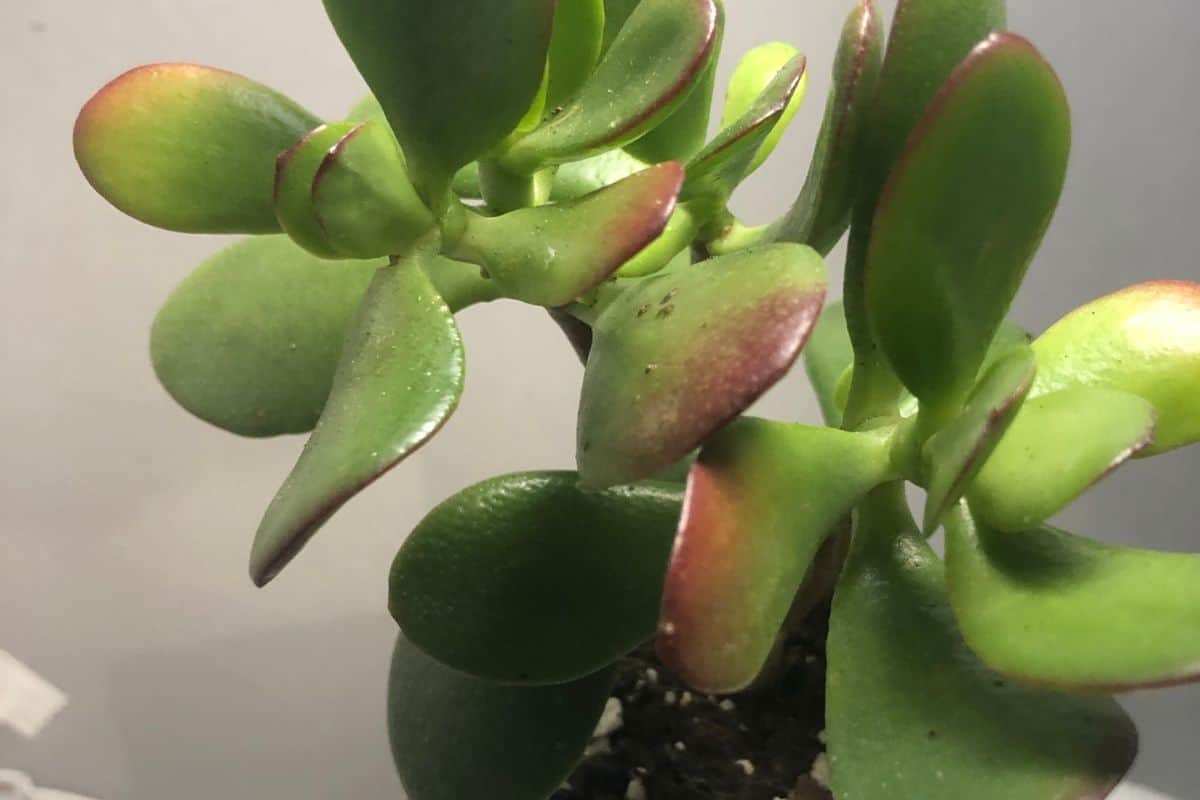
- Red leaf edges
- Yellowing leaves
- Brown and dry edges or spots
- Dry and thin leaves
- Leaf drop
To fix the problem, water your plant more often. Check the soil moisture regularly to prevent the soil from becoming bone dry.
You may also need to bottom water the plant every 2 months to ensure the soil is evenly rehydrated.
If the soil has become hydrophobic, carefully unpot the plant and transplant it in a fresh soil mix. I recommend the following soil mix recipes below for optimal moisture retention and drainage:
- Equal parts compost and perlite: Compost can hold moisture and nourish the plant, whereas perlite can drain the excess water.
- Equal parts potting soil, coarse sand, and perlite/pumice: Standard potting soil contains peat and loam, which can help hold enough moisture for jade roots while coarse sand and perlite/pumice help prevent waterlogging.
Overwatering
Jade plants shouldn’t be allowed to sit too long in wet soil. Overwatering is the primary culprit of plant death, as it can put the plant at higher risk for the following problems:
- Root rot
- Pest infestations
- Fungal or bacterial infections
Here are the symptoms of overwatering
- Soggy soil several days after watering
- Guttation
- Soft, mushy leaves
- Edema (brown or black blisters on the leaves)
To fix the problem, reduce the watering frequency accordingly. Allow the soil to dry out more between watering (up to ¾ deep).
You may have a case of root rot if the issue progresses with the following symptoms:
- Black, smelly, and mushy roots
- Yellowing leaves
- Leaf drop
- Soft, mushy stems and leaves
In case of root rot, you must prune all the rotten roots and repot your plant in fresh soil and a sterile pot.
Advanced Tips
As discussed, a jade plant’s watering needs can vary depending on the season and its environment. Here are some advanced tips to help you improve your watering routine:
Check the Soil Moisture Regularly
Make it a habit to check the soil moisture before watering. As a beginner gardener, it may be tricky to check soil moisture objectively when using chopsticks or your fingers. I recommend using a moisture meter for more accurate readings.
Moisture meters are usually calibrated from 1-10, indicating how dry or wet the soil is. Insert the probe into multiple spots around the soil and get the average reading. Jade plants are safe to water when the reading shows 2-3, which is on the dry scale.
The metal probe may also aerate the soil and improve water infiltration. Consequently, this helps rehydrate the root zone evenly.
Adjust Watering Based on the Plant’s Response
Since indoor conditions can vary across different homes, you may initially follow the guidelines discussed in this article and observe your plant’s response.
Jade plants are pretty expressive and often show signs of stress through their leaves. Look out for signs of over- or underwatering and adjust your watering routine accordingly.
Here’s a brief guide to help improve your watering practices:
| Watering Problem | Factors that Increase the Risk | Symptoms | Fixes / Adjustments |
| Underwatering |
|
| Water: Reduce the interval between watering. Water the plant as soon as the top half of the soil mix is dry. Light: Filter the light at midday using sheer curtains. Temperature: Keep the plant away from heating vents. Curtains can also help reduce the temperature for plants sitting next to the window. Humidity: Place the pot over a pebbled tray with water and group succulents together for a mild humidity boost. Soil: Use a standard succulent mix for better drainage. |
| Overwatering |
|
| Water: Increase the interval between watering. Wait until the soil is almost completely dry (up to ¾ deep). Light: Move the plant to a spot with at least 4 hours of direct morning sun or at least 8 hours of bright indirect light. Temperature: Keep the plant away from cooling vents and drafty doors or windows. Humidity: Lower the humidity to 30-50% using a fan or dehumidifier. Use a hygrometer to monitor the condition. Soil: Use a soil mix with better moisture retention (i.e., compost-perlite mix). |
Final Thoughts
Jade plants have a simple watering requirement: water every 1-2 weeks in spring and summer and less frequently in the fall and winter.
It can be much easier to maintain if you keep your plant within optimal conditions, including the following:
- Loose, well-draining soil
- 4 hours of direct morning sun or 8 hours of bright indirect light daily
- Moderate daytime temperatures of 65-75 °F (18-24 °C) and cool nighttime temperatures
- Low-to-moderate humidity levels (30-50%) all year round
Don’t be afraid to explore your plant’s watering needs because they’re resilient and will readily bounce back with improved care. Just avoid overwatering, as it can severely damage or even kill a jade plant.
If you’re still struggling with watering your jade plants the right way, feel free to reach out with any questions. Experienced gardeners are also welcome to share practical insights that may help the growing community of jade plant enthusiasts.