
6 Common Pests Affecting Jade Plants: Signs and Management
Jade plants are popular for their small, tree-like appearance and easy care. They rarely have pest problems and can handle minor infestations, but they become more vulnerable to pests when stressed.
Here are the most common pests that may affect your jade plants:
- Mealybugs
- Spider mites
- Scale insects
- Aphids
- Fungus gnats
- Whiteflies
In the rest of the article, I’ll help you identify the pests through their distinct signs of infestation. I’ll also share some practical tips on addressing and managing pest problems before they get out of hand.

Jade Plants: An Overview
Jade plants (Crassula ovata) are succulents native to South Africa. To survive the semi-arid conditions in their native habitat, they have evolved with plump leaves that can store extra moisture.
The fleshy leaves are attractive to sap-feeding insects, making jade plants alternative hosts for false codling moth (Thaumatotibia leucotreta) and primary hosts for different species of mealybugs in their native habitat.
Although jade leaves don’t contain known compounds that repel pests, they’re typically resilient and don’t easily succumb to damage.
However, care and environmental problems can stress indoor jade plants, making them more vulnerable to pest infestations.
The most important factor to watch out for is overwatering. Sap-feeding pests are more likely to attack overwatered jade plants because of the high moisture content in the leaves.
Other factors that encourage higher moisture retention in plant cells include:
- Low temperatures
- Insufficient light
- High humidity
Pro tip: Purchase locally grown jade plants to avoid introducing invasive pests to your other houseplants or neighborhood. Jade plants sourced from South Africa may carry false codling moths, which are known to cause severe environmental damage and crop loss when established.
Symptoms of Infestations
Stress and pest infestations can cause similar symptoms in jade plants, including the following:
- Yellowing leaves
- Leaf drop
- Stunted or distorted new growth (younger plants)
Additional symptoms specific to pest infestations include:
- Honeydew or sticky, sugary liquid on leaves
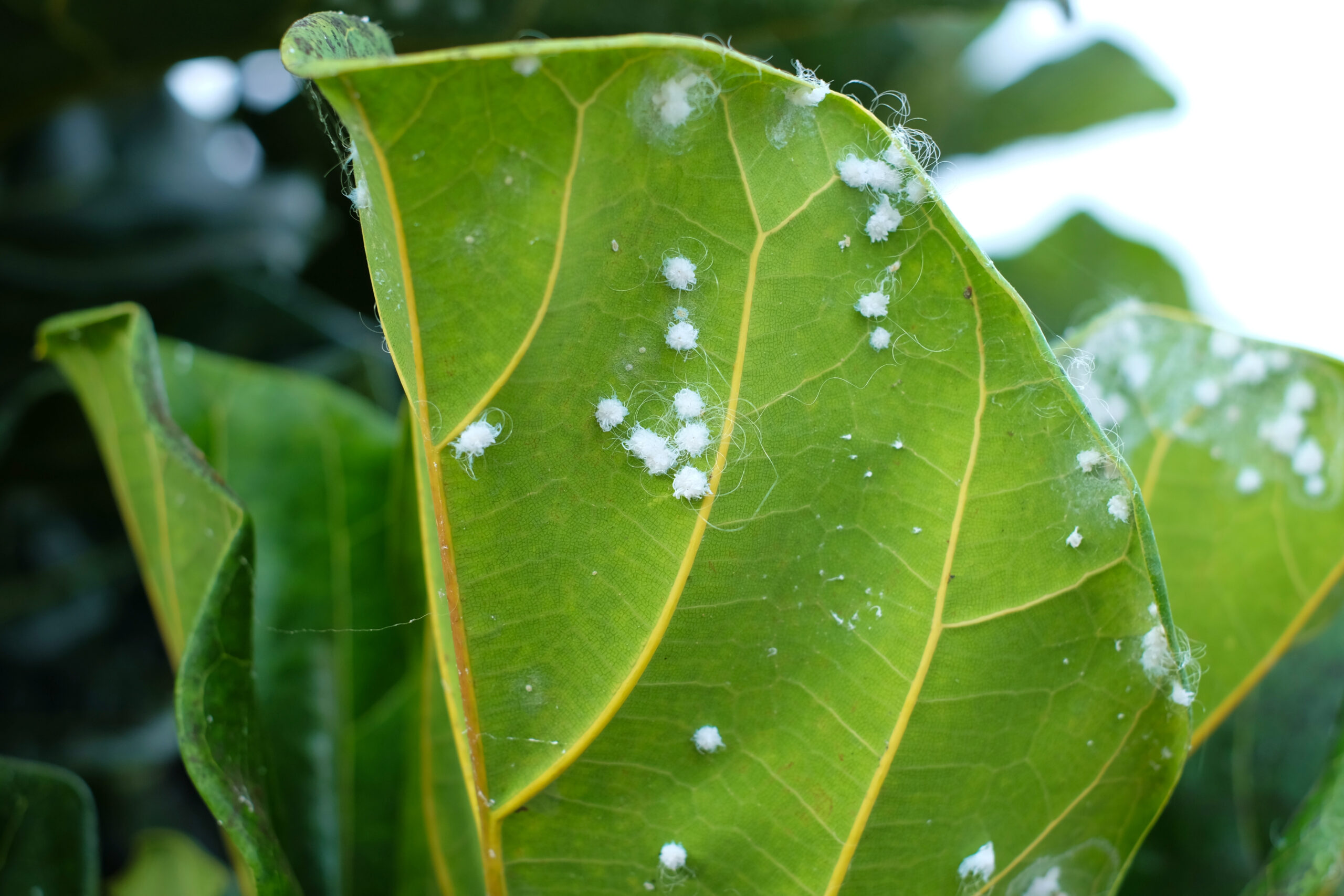
- White fluff (crawling or flying) usually on leaf undersides
- Brown bumps on the leaves or along stems or petioles
- Fine webs on the leaf surface or between branches
- Yellow or white specks on the leaves
You can confirm pest damage with a thorough inspection using the following methods:
- Use a magnifying glass and check underneath leaf surfaces or along the stems.
- Use a flashlight for better visibility.
- Wiggle or tap the leaves over a white sheet of paper to catch crawling insects.
It’s important to spot and treat pests early to limit the damage done to jade plants and prevent the infestation of other houseplants.
Common Pests
The list below will help you identify the pests affecting your jade plant:
1. Mealybugs
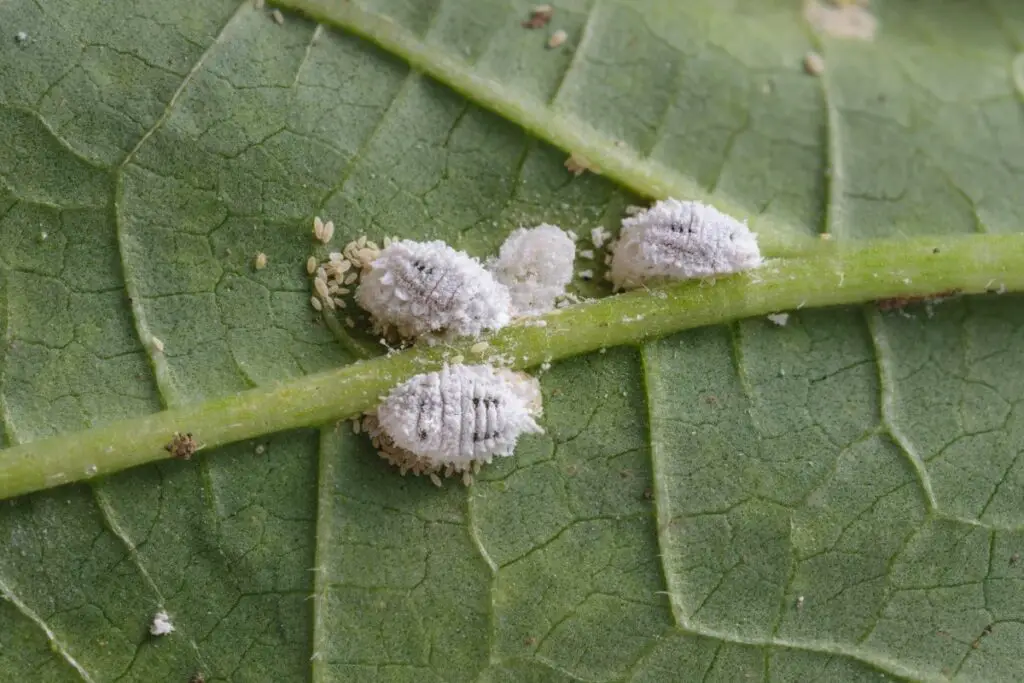
Mealybugs are the most common pests of jade plants. They’re easy to spot, even without a magnifying glass, because of the following traits:
- They form cotton-like masses on or underneath leaf surfaces and along fleshy stems.
- The white, fluffy eggs are about 1/16 inches (1.6 mm) in diameter, whereas adults are about ⅛ inches (3.2 mm).
- They leave trails of honeydew after feeding on leaves. The sugary liquid can attract sooty mold and ants.
- Leaves heavily infested with mealybugs may turn yellow and fall off.
Root mealybugs, belonging to the same family Pseudococcidae as foliar mealybugs, can also infest jade plants. They are often found in jade pots near ornamental houseplants like English ivy and majesty palm because they can spread through contaminated gardening tools, pots, or potting soil.
Although they look almost identical to foliar mealybugs, root or ground mealybugs belong to a different genus (Rhizoecus) and behave a little differently in the following ways:
- Root mealybugs feed on the roots, especially the plump ones close to the base of the plant.
- They may be found concentrated around the plant’s base or along the pot’s edges.
2. Spider Mites
Spider mites are tiny crawlers that are harder to spot because they move very fast. You may need a magnifying glass to see them because they’re less than 1/50-1/20 inches (less than 0.5-1 mm) in diameter.
Their presence is often confirmed through the following:
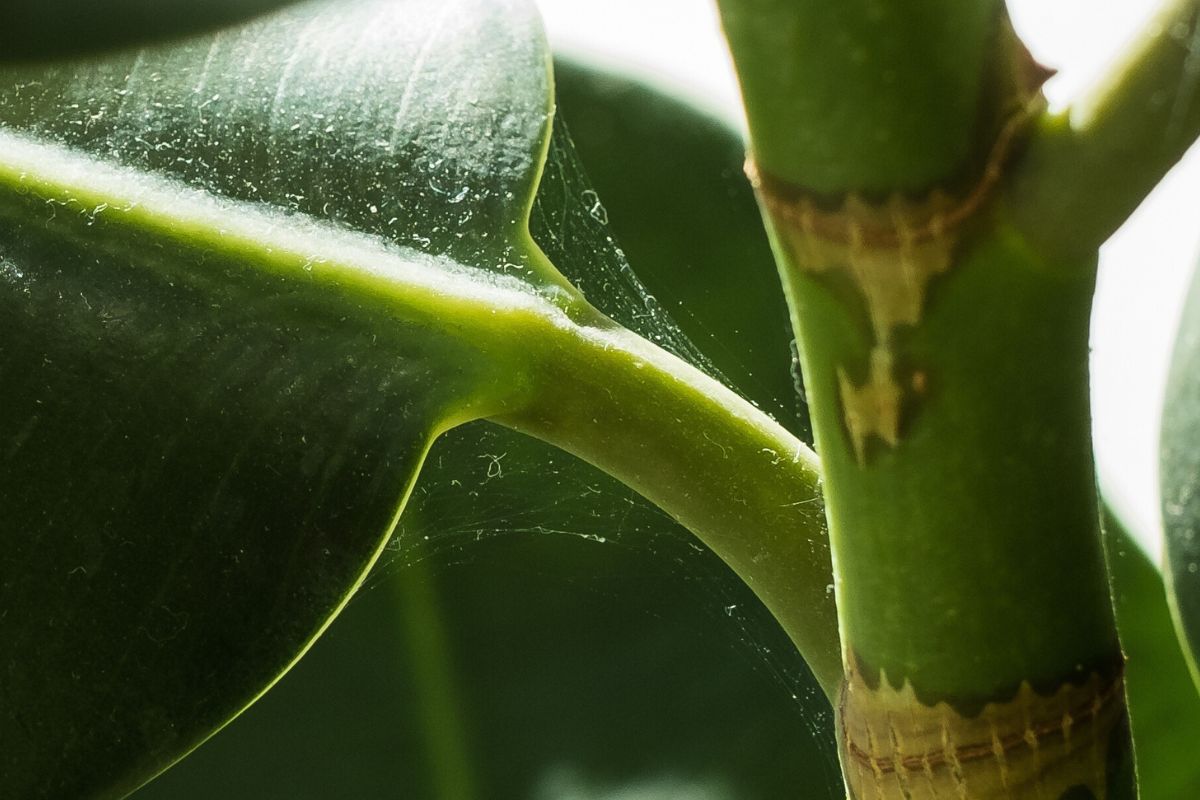
- Fine webs on the leaves or between stems
- White or yellow specks on the leaves
Alternatively, you can confirm a spider mite infestation by tapping the leaves and stems over a white sheet. Smear the paper with your fingers or roll a wooden chopstick over it to squish the tiny crawlers.

3. Scale Insects
Soft scale nymphs are tiny crawlers that are almost invisible.
As they mature, scales develop a brownish outer shell and stay in the same place for the rest of their lifespan. They continue to feed in the same spot for several months. If they feed along leaf petioles of small branches, they may cause yellowing and leaf drop.
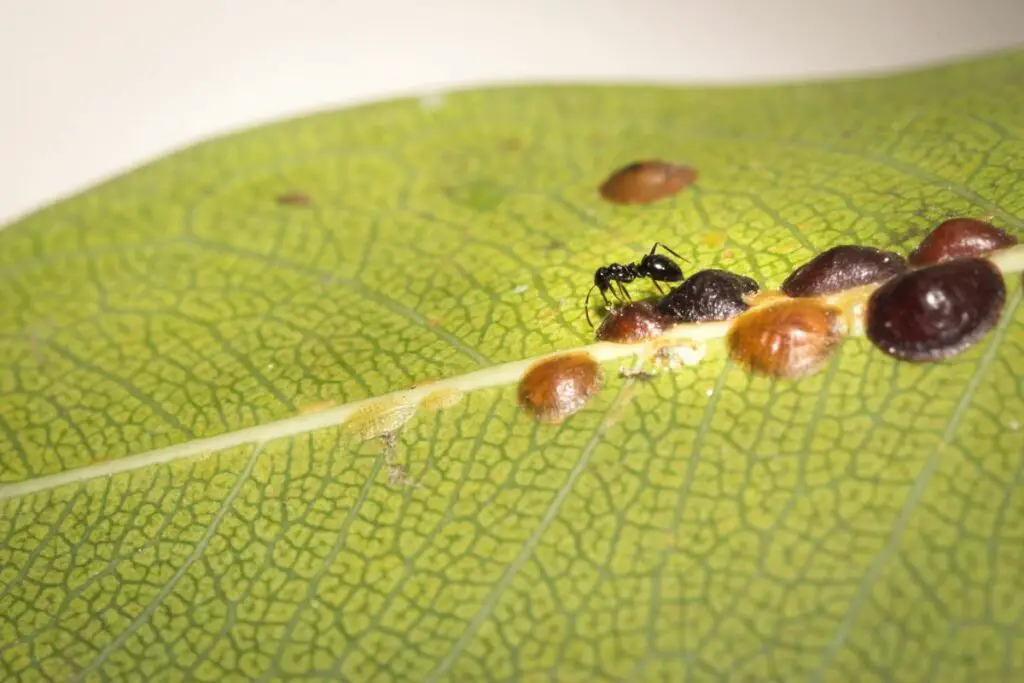
You can identify scale insects with the following signs:
- Brown immobile bumps about ⅛-¼ inches (3.2-6.3 mm) long
- Sugary, sticky liquid because they excrete honeydew
- Sooty mold fungi that appear as black droplets close to the brown bumps
4. Aphids
Aphids are also common pests that may be drawn to your jade plant if there’s an existing infestation in your home garden. They can move from one plant to another through contact between leaves.
Here are the signs to look out for to confirm an aphid infestation:
- Pear-shaped, translucent green, white, or brown crawlers about ⅛ inches (3.2 mm) long.
- Honeydew and sooty mold
- Aphids clumping on fleshy new growth, causing distorted leaves.

5. Fungus Gnats
You can hardly find fungus gnats around jade plants because the soil surface is often too dry for these flying pests to lay their eggs on. They prefer to hover around moist-loving plants, as their eggs require moisture to hatch.
If your jade soil mix remains soggy due to frequent watering or poor soil drainage, fungal populations may rise and increase the risk of root rot. These conditions are attractive to fungus gnats because the larvae feed on fungi and decaying organic matter.
They can worsen the damage caused by root rot, including the following:
- Yellowing leaves
- Wilting
- Mushy leaves with black water-soaked spots
- Black, mushy, smelly roots
- Mushy stems

6. Whiteflies
Whiteflies are also rare jade plant visitors unless there’s an existing infestation in your home garden.
I once brought home a new plant from the nursery store and didn’t have an isolation room. I, unfortunately, didn’t inspect it properly and ended up with a whitefly infestation in my indoor garden.
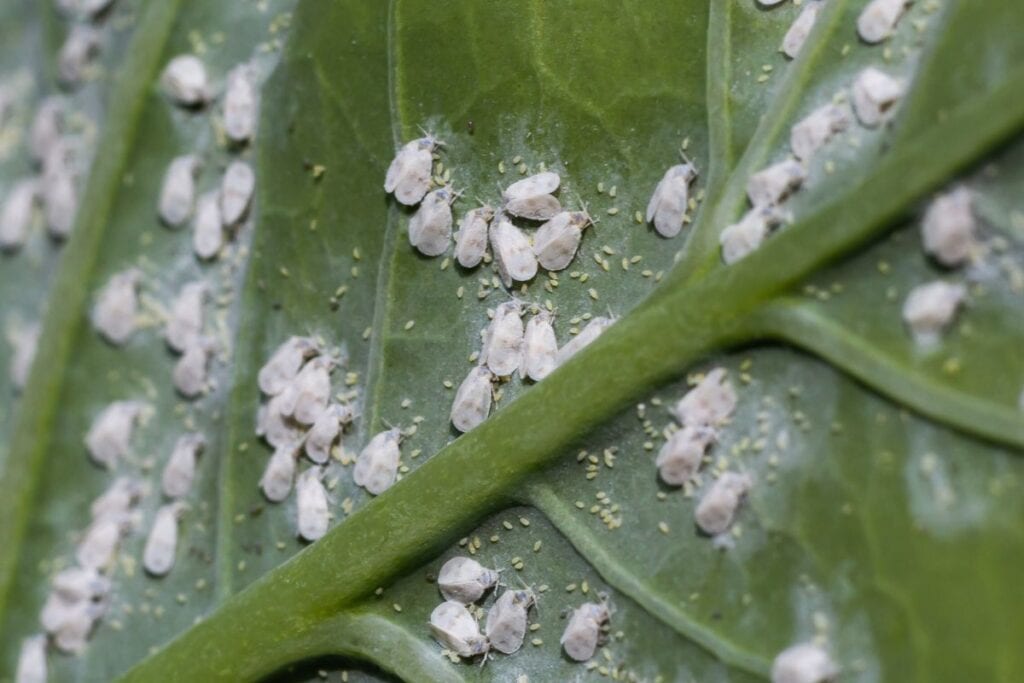
Here are some ways to identify whiteflies:
- They lay eggs in clusters underneath leaf surfaces. The eggs appear like white oval fluffs sometimes mistaken for mealybugs.
- The adults have white, waxy wings and are about 1/16-⅕ inches long (1.5-5 mm).
- They fly away when disturbed (i.e., watering or shaking the leaves).
Other Jade Plant Pests
I sometimes bring my mature jade plants out onto the balcony from mid-spring to summer for better light access.
An outdoor environment exposes them to more pests, such as:
Caterpillars
Moths and butterflies might lay some eggs on jade plants because caterpillars like gnawing on the succulent leaves. They create irregular holes in the affected leaves.
Snails and Slugs
Although less likely, snails may be drawn to the moist soil of jade plant pots, especially the night after rainfall or regular watering. You might not find them during the day because they dislike bright light or heat.
You can confirm their damage through the silvery, slimy trails on affected leaves. They may chew some irregular holes in the leaves or take a chunk off the leaf edges.
Prevention and Management Strategies
Pests can discolor or damage jade leaves, reducing their aesthetic appeal. They can also affect a young jade plant’s health and cause stunted or distorted growth.
It’s important to address an infestation promptly and prevent re-infestation.
Here are some recommendations:
Natural Remedies
Jade plants are generally sensitive to soaps, oils, and chemical insecticides. You can employ plant-safe measures, which are effective for minor infestations.
Here are some examples:
- Pruning: Cut damaged or discolored leaves using sterile shears. You can also pinch them using clean fingernails.
- Manual Removal: Use cotton swabs with 70% isopropyl alcohol to scrape crawling pests off the leaves and drop them in soapy water. Pro tip: Alcohol is effective in killing most houseplant pests, but too much can damage the waxy coating on jade leaves. Minimize contact between the cotton swab and the leaves. Alternatively, you can use tweezers to pick up the pests.
- Traps: Place yellow sticky traps around your plant pots to catch flying insects.
- Repotting: Overwatered plants with signs of root rot and fungus gnat infestation require repotting in fresh, well-draining soil and sterile pots.
In moderate to severe infestations, you can use these alternative solutions:
- Insecticidal Soaps: These products can damage an insect pest’s waxy coating but are only effective upon contact. They don’t have any residual effect and require several applications. Commercial insecticidal soaps are better than homemade recipes because liquid dishwashing soaps may be too harsh on plants.
- Neem Oil Spray: This plant-safe oil can kill pests through suffocation. Due to its oily nature, it can stay on plant leaves for a while and remain effective longer than insecticidal soaps. It requires weekly application to eliminate pests.
Note: Insecticidal soaps and neem oil spray can help eliminate pests but may pose some risks to your plant when used incorrectly or in excess.
Remember the following tips to mitigate the risks associated with soap or oil treatment:
- Refer to the product label for the correct dilution and application instructions.
- Move the plant away from direct sunlight throughout the treatment period and keep it in bright indirect light.
- Apply the solution after sunset because most pests are active at night. It also reduces the risk of sun damage.
Integrated Pest Management (IPM)
I don’t recommend using systemic insecticides on jade plants because they can be harmful to humans and pets when inhaled. They should also be applied outdoors, which can worsen houseplants’ damage due to relocation stress.
Instead, you can combine common and safe pest management methods to control pest populations.
Here are some recommended combinations:
- Isolate severely infested plants to prevent the pests from jumping from one plant to another.
- Inspect your plant regularly and catch pests as soon as you spot them. Remove them using cotton swabs or tweezers.
- Spray the plant with neem oil solution. Focus on the leaf undersides and the soil, as some pest larvae (fungus gnats) hide within the soil’s top inch (2.5 cm).
- Repeat the process weekly until all pests are eliminated.
Here’s the summary of pest-specific management:
| Pest | Identification | Damage | Treatment |
| Mealybugs | White, waxy covering Honeydew and sooty mold | Leaf yellowing or drop | Manual removal using cotton swabs with alcohol Neem oil spray once a week for 4-6 weeks for treatment and another 4 weeks for prevention |
| Spider mites | Fine webs | White or yellow speckled leaf appearance | |
| Scale Insects | Brown, immobile bumps Honeydew and sooty mold | Leaf drop Stunted growth or deformed leaves | |
| Aphids | Translucent white, green, or brown Honeydew and sooty mold | Leaf yellowing or drop | |
| Fungus Gnats | Mosquito-like flying insects | Stunted growth Wilting or yellowing leaves | Repotting in fresh soil and sterile pot Yellow sticky traps |
| Whiteflies | White, waxy, winged insects Honeydew and sooty mold | No severe damage | Neem oil spray for nymphs and eggs Yellow sticky traps for winged adults |
| Caterpillars | Color, size, and appearance can vary depending on moth or butterfly species | Irregular leaf holes | Manual removal and relocation to a different spot outdoors |
| Snails and slugs | Soft-bodied pests (snail has a shell) Slimy trail | Irregular leaf holes | Manual removal and relocation or drop in soapy water |
Preventive Measures

In addition to the remedies discussed above, improving the environmental conditions around your plant will make it more resistant to pest damage.
Here are some tips to prevent pests from attacking your jade plant:
- Avoid overwatering so the leaves won’t be too saturated to attract sap-feeding insects. Wait until the top half or ⅔ of the pot dries out before watering your plant.
- Use well-draining potting soil to keep the surface from staying wet and deter fungus gnats from laying eggs on the soil. A high-quality succulent mix or a compost-perlite mix is ideal for jade plants.
- Clean the leaves regularly to spot pests sooner. Removing fallen leaves habitually can also eliminate hiding spots for pests.
- Quarantine new plants for up to 8 weeks to reveal and treat any pest infestation so they don’t affect your other indoor plants.
- Inspect your plant weekly or every time you water or rotate it to keep pest populations under control.
- Give mature jade plants at least 4 hours of direct morning sunlight for optimum plant health. It can also help remove excess moisture in the soil through evaporation. Younger plants may need 8 hours of bright indirect light because they don’t yet have fully developed roots and leaves.
- Keep temperatures between 65 and 75 °F (18 and 24 °C) to facilitate ideal plant transpiration and soil moisture evaporation. It can also help prevent heat stress or chill injury.
- Maintain humidity levels between 30 and 50%. Good airflow helps jade plants maintain a good transpiration rate, preventing the soil from staying wet for too long.
- Prune the jade plant in spring and/or summer. Use sterile shears or scissors to cut discolored or damaged leaves, unwanted offshoots, and crisscrossing branches. Lighter foliage can help improve air circulation and reduce the hiding spots for pests. However, be sure not to remove more than 30% of the foliage, as it can reduce the plant’s ability to photosynthesize.
Final Thoughts
Jade plants may occasionally be attacked by mealybugs, scale mites, spider mites, whiteflies, and aphids due to their succulent leaves. Overwatered jade plant soil is also attractive to fungus gnats.
Although generally resistant to pest damage, jade plants may experience yellowing or leaf drop in severe infestations. Young plants may even have stunted or deformed growth.
Be proactive in your treatment and management measures to prevent severe plant damage. It also helps to check your plant regularly to catch pests early and treat symptoms promptly.
Feel free to leave a comment if you have questions or suggestions for pest management.