
Fiddle Leaf Fig Dropping Leaves: Symptoms, Causes, & Fixes
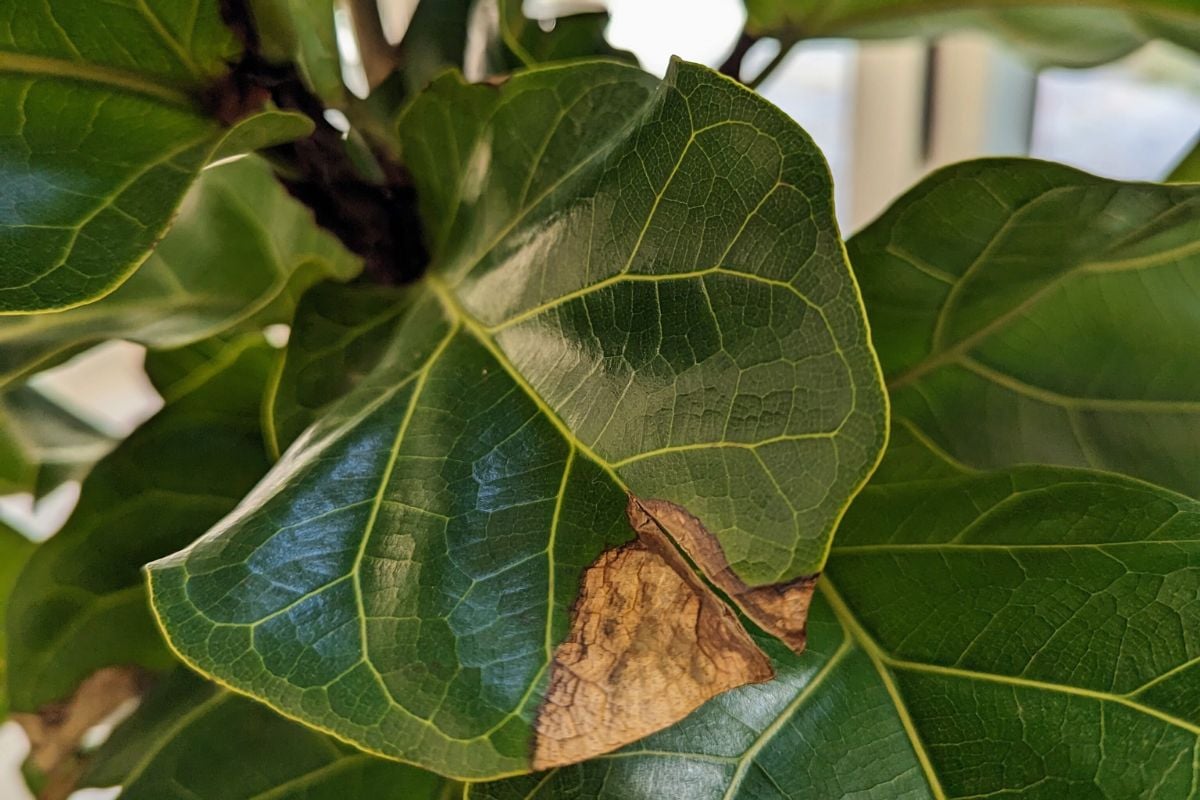
Fiddle leaf figs are popular statement houseplants, valued for their stylish, broad, glossy leaves. However, it can be quite alarming for home gardeners to discover large fallen leaves scattered on the floor.
Here are the common reasons of leaf drop in fiddle leaf figs:
- Underwatering
- Overwatering
- Inadequate Light
- Temperature Stress
- Low Humidity
- Relocation or Transplant Shock
- Nutrient Imbalance
- Diseases
- Pest Infestation
Although shedding aging leaves is natural for fiddle leaf figs, losing a lot of leaves at once can indicate plant stress that requires immediate attention. This article will help you identify the cause of leaf drop and share practical solutions to encourage faster plant recovery.
Native Habitat and Ideal Home Conditions
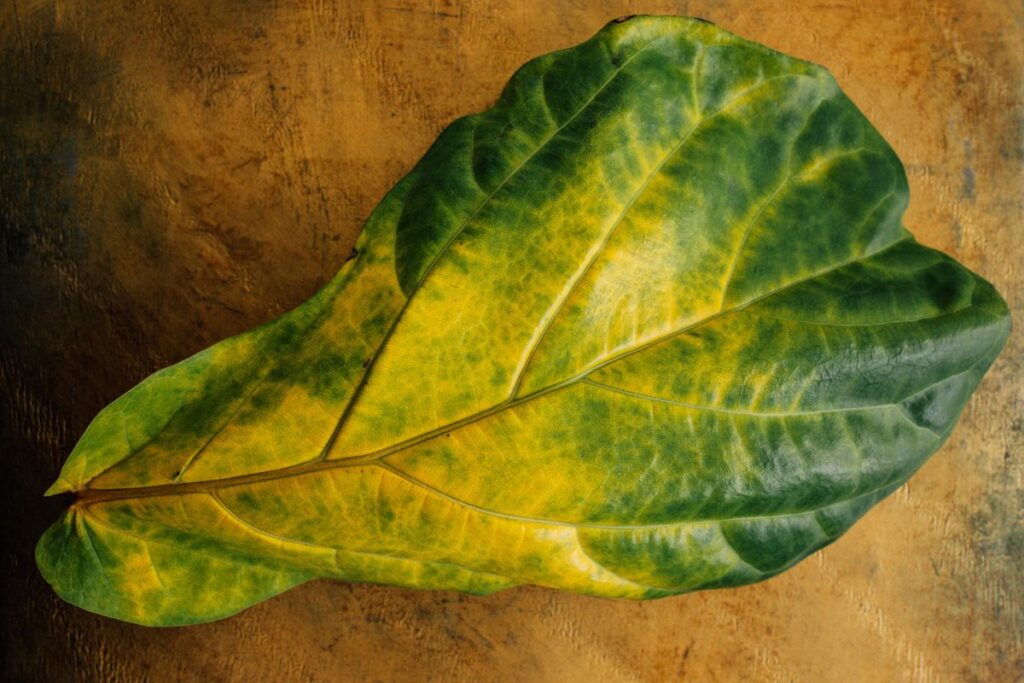
Fiddle leaf figs (Ficus lyrata) are a member of the fig tree family that naturally grow in semi-dense tropical rainforests in West and Central Africa. Their aesthetic value comes from the broad, leathery leaves that resemble a violin or a fiddle.
In their native environment, the following conditions are the key to the overall health and appearance of the fiddle leaf figs’ striking leaves:
- Bright direct sunlight for full-grown or taller trees and dappled sun for shorter or premature plants close to the forest floor
- Abundant rainfall of over 80 inches (200 cm) during the wet season and 40-60 inches (100-120 cm) during drier months
- Warm, frost-free temperatures of around 70-86 °F (21-30 °C)
- High humidity levels (around 70-80%)
- Soil nutrients (predominantly nitrogen and phosphorus) on the rich humic layer from leaf litter from tree canopies
Although it isn’t feasible to replicate these conditions perfectly at home, fiddle leaf figs (FLFs) can adapt to the following indoor care and environment:
- Light: At least 8 hours of bright indirect light from an east and/or south-facing window or up to 4 hours of direct morning sun
- Water: Evenly moist soil and regular watering as soon as the top 1-2 inches (2.5-5 cm) are dry
- Temperature: Moderate and stable at 65-75 °F (18-24 °C)
- Humidity: 40-60%
- Soil: Well-draining and rich in organic matter (2 parts potting mix, 1 part perlite, 10% compost)
- Fertilizer: Half-strength 3-1-2 liquid fertilizer every 1-2 weeks or granular fertilizer every 2 months from spring to summer
Maintaining stable conditions around fiddle leaf figs is crucial because they’re known for being fussy. Drastic changes in the environment or care routine can lead to stress, with symptoms like several leaves dropping at once.
Leaf Drop Symptoms: Aging and Stress
Fiddle leaf figs eventually shed aging leaves, which is a natural plant behavior. I’ve noticed that under optimal conditions, each leaf naturally falls off after 12 months or so.
Before falling off, aging leaves may exhibit the following signs:
- Paleness or loss of shine
- Gradually turning yellow
- Even yellowing of the leaf surface and veins
- Drooping
My fiddle leaf figs shed around 1-2 leaves every 1-2 months—most often during dry winters. As long as the leaf loss occurs only on older leaves and the tree looks healthy overall, there’s no need to worry.
On the other hand, premature leaf drop from terminal or random spots on the tree can indicate stress and may be accompanied by the following symptoms:
- Yellowing or browning leaf edges
- Mushy brown spots on leaf surface
- Dry, crisp spots or leaf edges
- Curling edges
- Bleached, thin spots
- Stunted growth
- Tiny holes on the leaves
- White or yellow specks
- Fine webs
- Sticky residue with sooty mold (black spots)
Fiddle leaf figs exhibit stress symptoms relatively quickly when something’s off with their environment. Although alarming for home gardeners, these symptoms can help diagnose and treat the problem promptly.
If your fiddle leaf fig drops several leaves at once with any of the stress symptoms on the list, be more proactive in identifying the cause to prevent more extensive leaf loss.
Common Causes (& Fixes)
Here are the common causes of leaf drop in fiddle leaf figs:
1. Underwatering
Fiddle leaf figs can lose moisture quickly from transpiring through their large leaves. They require evenly moist soil and regular watering to maintain the lush, green foliage.
Prolonged drought can leave the tree dehydrated, while frequent underwatering can cause the buildup of hydrophobic spots in the soil, leading to uneven rehydration of the root zone.
Here are the signs the plant is underwatered:
- Bone-dry and crusty soil surface
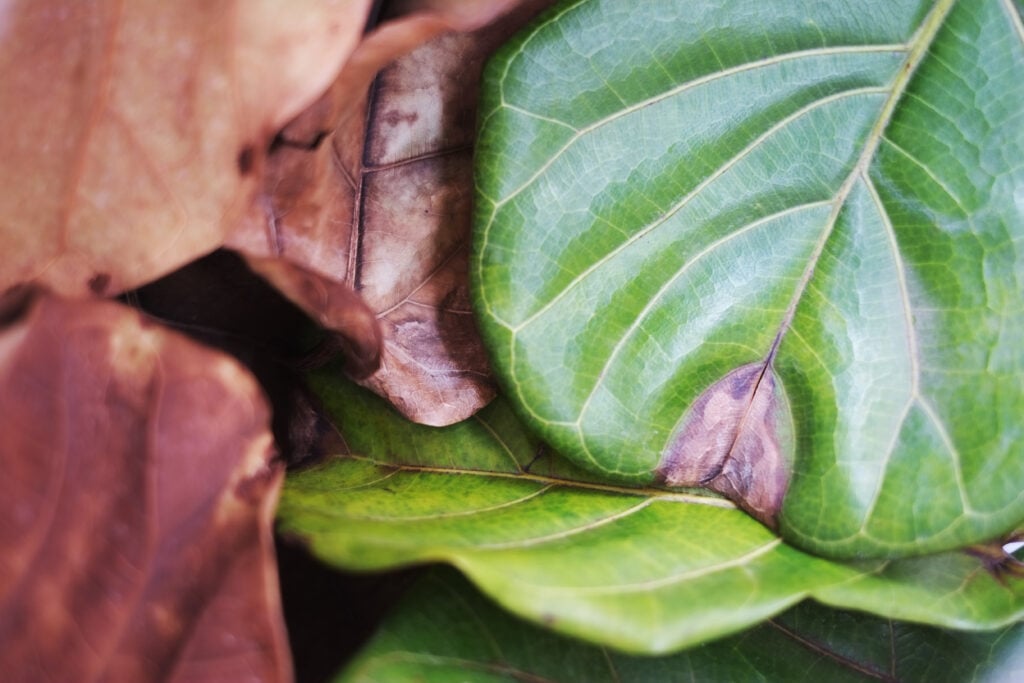
- Yellowing leaf edges
- Brown, dry, and crisp leaf tips
- Discolored leaves start curling inward
- Drooping leaves
- Leaf drop
Underwatering can cause leaf drop in the following ways:
- The fiddle leaf fig will try to preserve moisture by shedding leaves through which water vapor can escape by transpiration.
- Inadequate water in the stems can lead to dry and brittle petioles that can’t hold the weight of the leaves, causing them to fall off.
You can fix the problem with these tips:
- Bottom water smaller plants for about 30 minutes or until the soil surface feels moist. Let the excess water drain freely from the drainage holes before placing the pot back on the saucer. Pro tip: Bottom water your fiddle leaf fig once a month to prevent the buildup of hydrophobic clumps that repel water.
- Deeply water larger plants using a watering can with a narrow spout. Pour the water directly into the soil, slowly moving the spout around to ensure proper infiltration and evenly rehydrate the root zone. Keep adding water (gradually) until the excess drains from the pot’s holes.
- Check the soil moisture 5-7 days after watering using your finger or a wooden chopstick. If the soil is dry 2 knuckles (2 inches or 5 cm) deep, it’s time to water deeply again.
2. Overwatering
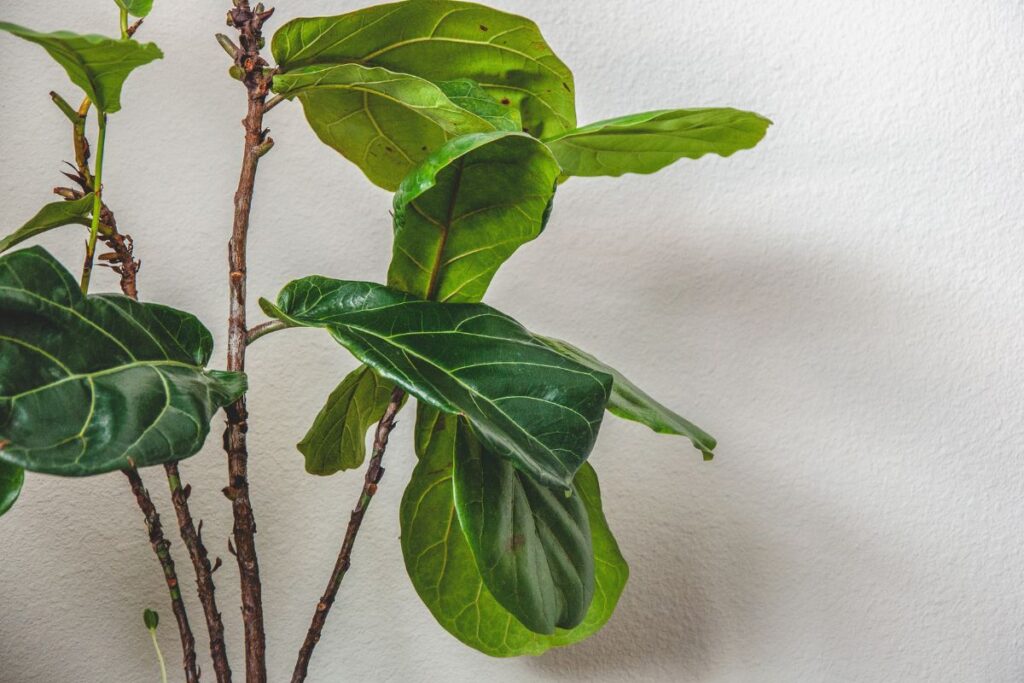
Fiddle leaf figs (FLFs) love moisture but dislike sitting in soggy soil. The excess water can encourage fungal growth in the soil, which can cause root rot and may even kill the plant.
Here are the symptoms to watch out for to confirm overwatering:
- Wet, soggy soil several days after watering: An appropriate FLF soil mix should drain well and the surface should feel slightly damp (not wet) a few days after watering.
- Mushy, brown spots on the leaves: The spots are irregularly sized and may appear anywhere on the leaf surface, including the edges.
- Soft, weak petioles: The petioles of some symptomatic leaves may feel soft, making them more likely to fall off the plant.
It’s crucial to diagnose overwatering promptly before the problem escalates to root rot, which can be challenging to treat.
If the soil remains wet for too long, you may notice these additional symptoms:
- Foul odor from the soil: This usually smells like rotten eggs, which indicates the anaerobic decomposition of plant roots due to the lack of oxygen in soggy soil.
- Black, mushy roots: Affected roots become necrotic (rotten).
- Yellow leaves: Damaged roots can’t send moisture and nutrients to the leaves, turning them yellow.
- Dehydration: The leaves gradually turn brown, dry, and crisp.
- Leaf drop: The plant may shed leaves at any point during the progression of overwatering and root rot symptoms. However, more extensive leaf drop may occur as the problem worsens.
One of the primary causes of overwatering issues in fiddle leaf figs is poor drainage in the soil or pot. The first step to remedy the problem is to reduce the watering frequency. Avoid sticking too strictly to a watering schedule, as varying seasonal conditions can affect how quickly the plant consumes water.
Here are some tips to properly water your fiddle leaf fig and avoid overwatering:
- Use a well-draining soil mix. An excellent FLF soil mix contains 60% high-quality potting soil, 30% perlite, and 10% compost. After trying several mixtures, I found that this formula worked best to keep my plants thriving.
- Use a pot 2-4 inches (5-10 cm) wider and deeper than the rootball and has drainage holes. FLFs are naturally fast-growing, so they can quickly outgrow small pots, leading to underwatering or nutrient deficiency issues. On the other hand, they’re more likely to suffer root rot in oversized pots. Pro tip: The maximum pot size I use for larger FLFs is 24 in (60 cm) wide and 18 in (45 cm) deep. If a large plant needs repotting, I prune the roots and the branches (which I sometimes propagate).
- Wait until the soil is adequately dry 2 knuckles deep before watering the plant. This tip works best if you use appropriate soil and pot. For soil mixes with more peat or moisture-retaining materials, you may need to wait until the soil is dry halfway down.
If adjusting the watering frequency isn’t enough to fix the problem or if there are clear signs of root rot, the only option is to repot the plant.
Treating Root Rot and Repotting
Here’s how to treat rotten roots and repot the fiddle leaf fig:
- Run a sterile spatula around the pot’s edges to loosen the soil from the pot.
- Slide the plant out of the pot carefully to minimize damage to the roots.
- Gently remove the wet soil from the roots using your gloved hands. You can rinse the roots with clean water to remove as much soil as possible.
- Inspect the roots and prune the rotten parts (black and mushy) using sterile scissors. Clean the blades with alcohol and cotton balls between cuts. Pro tip: It’s best to remove all the rotten roots to prevent recurrence. If over 50% of the roots are rotten, consider propagating the plant using the remaining healthy-looking terminal branches.
- Prune damaged leaves using sterile pruning shears to match the root-to-shoot ratio and reduce the number of leaves the roots must maintain while recovering.
- Properly discard infected or damaged plant matter and dirty cotton balls to prevent the spread of infection.
- Soak the remaining roots in 1% hydrogen peroxide solution for 5 minutes to eliminate any remaining rot-causing fungi.
- Let the roots sit over a clean, dry towel for up to 30 minutes while preparing the new pot and soil.
- Prepare a breathable pot with drainage holes (i.e., unglazed terracotta) to avoid future problems with overwatering and root rot. Ensure it is 2-4 inches (5-10 cm) wider and deeper than the rootball.
- Place a wire mesh over the drainage holes.
- Fill the bottom of the pot with a mound of fresh, moist, well-draining soil about 2 inches (5 cm) high. You may use a soil mix with 2 parts potting soil, 1 part perlite, and 10% compost for optimal drainage and moisture retention.
- Place the fiddle leaf fig in the middle of the pot and spread the roots outward over the mound.
- Fill in the space with more soil and tamp it firmly over the roots to keep the plant upright. Using moist soil should add weight to the roots and serve as an adequate source of moisture as the roots recover.
- Keep the plant in bright indirect light and stable temperature (around 70 °F or 21 °C) and humidity (around 50%).
- Avoid watering the newly treated plant right away to prevent overwatering problems from recurring. Wait until the top inch (2.5 cm) of the soil is dry before the first deep watering. Resume regular watering when the soil dries out 2 inches (5 cm) deep.
3. Inadequate Light
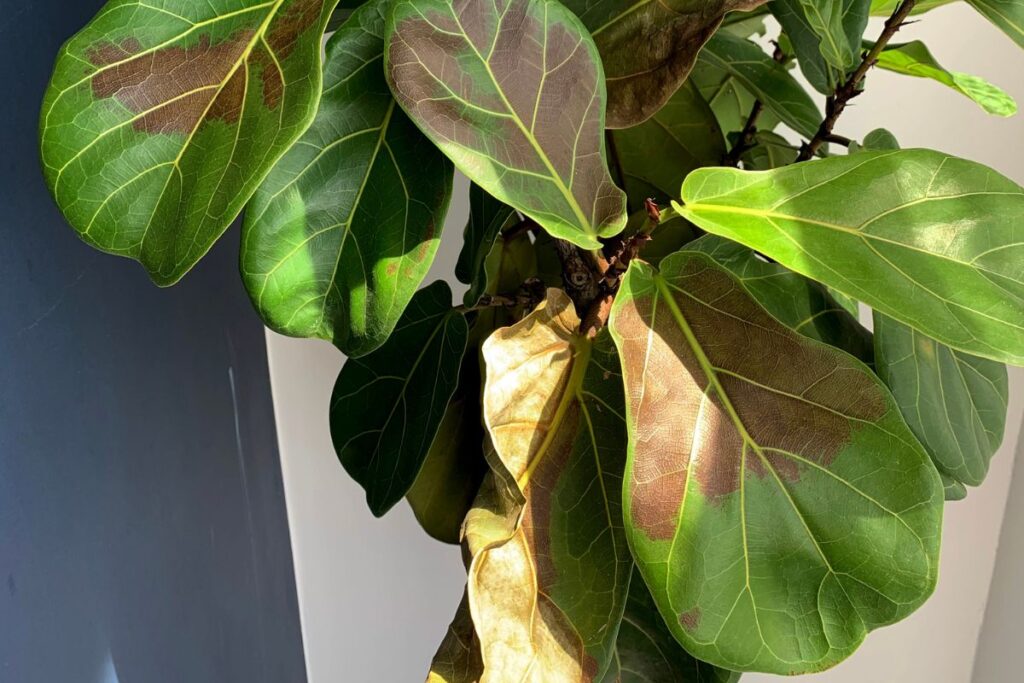
Incorrect lighting conditions can affect fiddle leaf figs in the following ways:
Too Much Sunlight
- Sunburn: Bleached or brown, thin, and dry spots on the leaf surface
- Dehydration: Yellow or brown and curling leaf edges
- Leaf drop: Shedding of damaged leaves
Insufficient Light
- Leggy or lopsided growth: Sparse leaves on the side of the plant without enough light
- Leaning: The stem bends toward the light source (i.e., window or light bulb)
- Leaf drop: Shedding of leaves that don’t receive adequate light, especially bottom or older leaves
Follow the solutions below to fix the problem:
- Move the plant to a spot where it can receive at least 8 hours of bright indirect and natural light daily. Fiddle leaf figs do best near an east-facing window for gentle morning sun or several feet (around 1.5 m) from a south-facing window.
- Regularly clean the windows of dust or snow for better light access.
- Draw sheer curtains at midday to filter the intense sunlight.
- Rotate the pot by 90-180° weekly for even light exposure and balanced growth.
- Prune severely damaged leaves using sterile pruning shears.
- Cut leggy stems or branches down to an inch (2.5 cm) above a leaf node to promote new and healthier growth.
Note: During cloudy or dark days, I supplement my FLF’s light needs using full-spectrum grow lights. They can get pretty tall, so I position the lights a few feet (+ 0.6 m) from the plant at a 45° angle to ensure the bottom leaves also receive adequate light.
You must let your plant receive as much natural light as possible and switch on the grow lights for around 6 hours after sunset. Rotate the pot as usual for balanced light exposure. These simple reminders have proven effective in preventing leaf drop during the colder and darker seasons.
4. Temperature Stress
Fiddle leaf figs like moderate temperatures all year round, and they become susceptible to stress with the following conditions:
- Heat stress: Prolonged exposure to temperatures over 86 °F (30 °C) can increase the risk of dehydration, leading to yellowing or browning leaves and leaf drop.
- Cold shock or chill injury: Cold snaps or prolonged exposure to temperatures below 55 °F (13 °C) can cause mushy brown spots on leaves and consequent leaf drops.
- Fluctuating temperatures: Temperature fluctuations over 10 °F (5-6 °C) throughout the day can stress fiddle leaf figs. As tropical broadleaf trees, fiddle leaf figs regulate their temperature through leaf transpiration. They can’t adjust to drastic temperature changes quickly enough and may shed their leaves to preserve internal temperature.
You may prevent further leaf loss with these tips:
- Maintain temperatures around 75 °F (24 °C) during the day and around 65 °F (18 °C) at night.
- Check and monitor the temperature around your fiddle leaf fig using a portable thermometer.
- Place your plant in a spot with stable temperatures throughout the day. Avoid kitchens and bathrooms because although they have higher humidity, the temperatures can fluctuate significantly (i.e., cooking, boiling, hot showers).
- Keep the plant away from the path of cold or hot air from cooling or heating vents.
- Close the windows in the fall and winter to prevent cold drafts.
- Ensure the leaves aren’t touching hot or cold window panes.
5. Low Humidity
Fiddle leaf figs like humid conditions (around 70-80%) to maintain the quality and appearance of the leaves. They can adapt to moderate indoor humidity of around 40-60% when well-watered and kept in moderate temperatures.
That said, they’re more likely to shed leaves when exposed to drier air conditions (below 40%), irregular watering, and temperature stress.
Your FLF may show the following signs of stress from low humidity:
To fix the problem, you must first check and address other potential problems like watering issues, inadequate light, and temperature stress.
You may then boost the local humidity around your fiddle leaf fig with these tips:
- Place a pebbled tray with water underneath the pot. Use a tray twice the diameter of the pot to help raise the humidity and ensure the water isn’t touching the bottom of the pot. However, this may work only on smaller plants up to 3 feet (0.9 m) tall.
- Switch on a humidifier near the plant for around 4 hours during midday. You can monitor the humidity using a portable hygrometer to determine the proper distance of the humidifier.
- Group houseplants with similar care and environmental needs to create a humid microclimate in your indoor garden. An excellent example includes succulents like jade plants, which transpire at night and help raise the humidity.
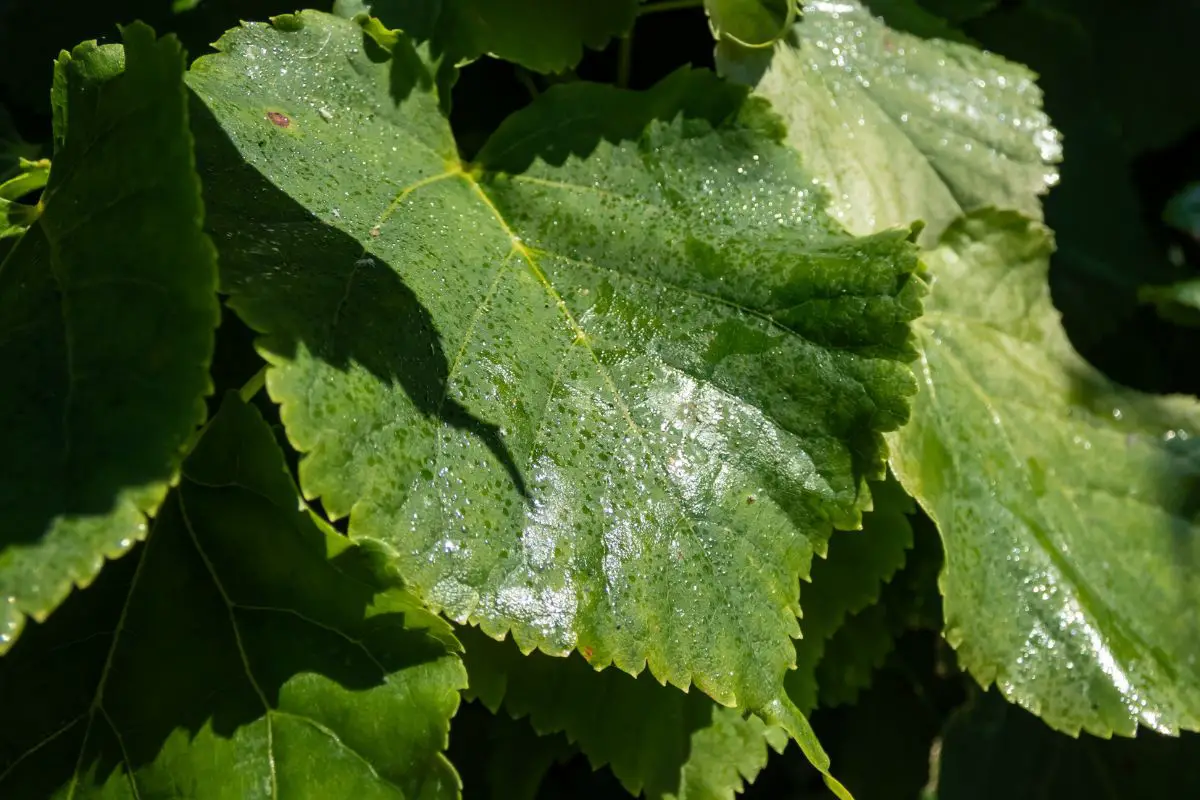
Note: Some sources may recommend misting your fiddle leaf fig daily to boost the local humidity. However, this has minimal, short-lived effects and can potentially harm your plant over time, as consistently moist leaves may lead to a myriad of issues.
Here are some common problems with daily misting:
- Consistently wet leaves can encourage bacterial or fungal growth, leading to bacterial leaf spots and fungal diseases.
- The contaminated water droplets from symptomatic leaves may spread the infection to the lower leaves.
- Mineral salts from tap water (hard water) may remain on the leaves, appearing as a white, powdery residue that can reduce the plant’s photosynthetic rate.
I usually mist my fiddle leaf figs once every 1-2 weeks to clean the foliage—not to boost the humidity. I use distilled or filtered water and wipe the leaves dry with a clean cloth.
6. Relocation or Transplant Shock
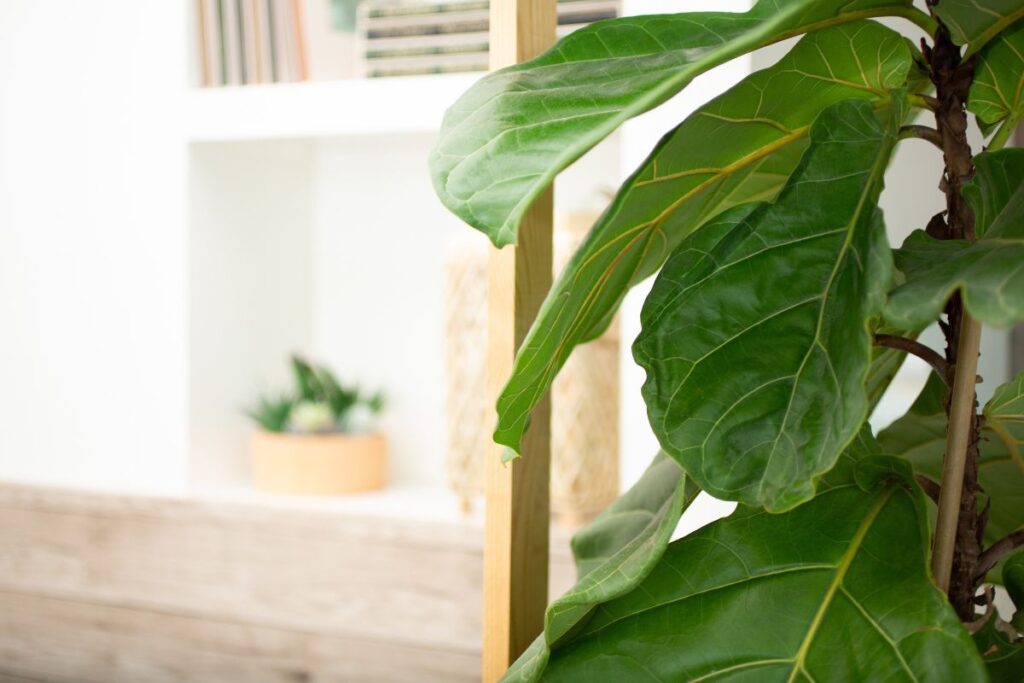
As discussed, fiddle leaf figs thrive in stable environmental conditions, making them sensitive to relocation or transplant shock.
Newly propagated plants are also likely to exhibit the following stress symptoms when exposed to unsuitable conditions:
- Yellowing followed by brown, dry, and crisp leaf edges from dehydration (underwatering, low humidity, high temperature, over-fertilization, sunburn)
- Brown, dry spots (sunburn) on the leaf surface from intense sunlight
- Brown, mushy spots from overwatering
- Drooping leaves
- Leaf drop
- Stunted growth
To minimize the effects of shock and prevent further leaf loss, remember these tips:
- If you must relocate your plant, make gradual changes (i.e., move only a few feet per week), and keep an eye on any changes in your plant’s appearance.
- Adjust the care routine as needed to buffer the changes. For instance, when moving the plant to brighter and warmer conditions, you may need to water more frequently since the soil will dry out more quickly. Monitor the soil moisture regularly and water the plant as needed.
- After relocating or transplanting, keep the plant in moderate and stable conditions. Avoid too much direct sunlight, maintain warm temperatures (around 70 °F or 21 °C), and monitor the humidity (40-60%) to help your plant adapt to the new environment.
7. Nutrient Imbalance
Nutrient imbalance in the soil may also occasionally cause leaf drop in fiddle leaf figs.
Here’s how:
Magnesium Deficiency
Fiddle leaf figs may experience magnesium deficiency if the soil is too acidic (below 5.5) or if they haven’t been fertilized for a long time.
The symptoms typically include:
- Yellowing leaf surface between veins (interveinal chlorosis) in older leaves
- Dropping of discolored leaves
You can choose the appropriate solution below:
- Check the soil acidity using a pH meter. If the reading shows below 5.5, you may need to repot the plant in fresh soil with an appropriate pH (6.0-7.0). Acidic soil can inhibit magnesium uptake, so fertilizing your plant will unlikely resolve the issue.
- Feed your plant with a half-strength 3-1-2 liquid fertilizer with micronutrients (i.e., magnesium) every time you water (during spring and summer) until the symptoms improve. You may then reduce the frequency to every 2 weeks or every other time you water your plant.
Salt Stress or Over-Fertilization
Applying too much granular fertilizer or highly concentrated liquid fertilizer at once can lead to fertilizer burn. The excess salts can build up in the soil, causing water to drain from the roots.
The desiccated roots won’t be able to send moisture to the leaves, resulting in yellowing, browning, or falling leaves.
Follow these steps to treat over-fertilization:
- Scrape the white crust off the soil surface with a spoon or a hand trowel. (Skip if you used liquid fertilizer).
- Rake the soil surface to loosen the soil and improve water infiltration. You may add a handful of compost. You may also poke the soil at the drainage holes to loosen soil plugs and ensure proper drainage.
- Flush the soil with distilled or filtered water equal to the volume of the pot (i.e. 1 gallon or 3.8 liters of water per 1 gal pot). Pour the water gradually and let the excess drain freely from the drainage holes.
- Refrain from fertilizing the plant for the remainder of the year and let the compost provide the plant’s nutrient needs.
- Resume regular feeding the following spring but be mindful of the application amount and frequency. I’ll discuss this further below.
Sometimes, you may need to repot the plant in fresh soil if it is severely over-fertilized (i.e., spilling concentrated liquid fertilizer or mixing in large amounts of granular fertilizer in the soil).
Here are the steps:
- Run a spatula around the pot’s edges to detach the rootball and carefully unpot the plant.
- Optional: Soak the soil in tepid water (around 68 °F or 20 °C) for 5 minutes to make it easier to soften it and make it easier to work with.
- Use a wooden chopstick or hand cultivator to detach the soil from the rootball. Remove as much soil as possible.
- Rinse the roots with filtered or distilled water.
- Repot the plant in fresh, well-draining soil and a similar-sized pot with drainage holes. You may add 10-20% high-quality compost to the soil mix to slowly nourish the plant.
- Water the plant deeply and thoroughly and let the excess water drain completely.
- Refrain from fertilizing the plant for at least 3 months until you see improved conditions (i.e., no discoloration or leaf drop). You may then apply a half-strength 3-1-2 liquid fertilizer every other time you water your plant if it’s still within the growing season. Stop fertilizing in the fall and winter.
8. Diseases
Xanthomonas campestris is a common bacterial pathogen of Ficus plants, including fiddle leaf figs and rubber plants. It can be transmitted through water droplets and contaminated gardening tools.
Once infected, the plant may exhibit the following symptoms:
- Yellow water-soaked spots that eventually turn brown or black in the middle, giving off a brown spot with a yellow halo appearance
- Severe damage can lead to leaf drop
This disease can spread from one leaf to another, so it’s important to treat the problem promptly and follow through with improved care practices.
Here are the steps:
- Cut off infected leaves using sharp, sterile shears.
- Sterilize the blade between cuts.
- Discard infected plant matter properly to prevent the spread of the disease.
- Avoid wetting the leaves when watering the plant. Pour the water directly into the soil.
- Observe the plant for any new signs of infection. If the symptoms persist on other leaves, discard the plant entirely to avoid infecting nearby houseplants, especially Ficus relatives.
9. Pest Infestations
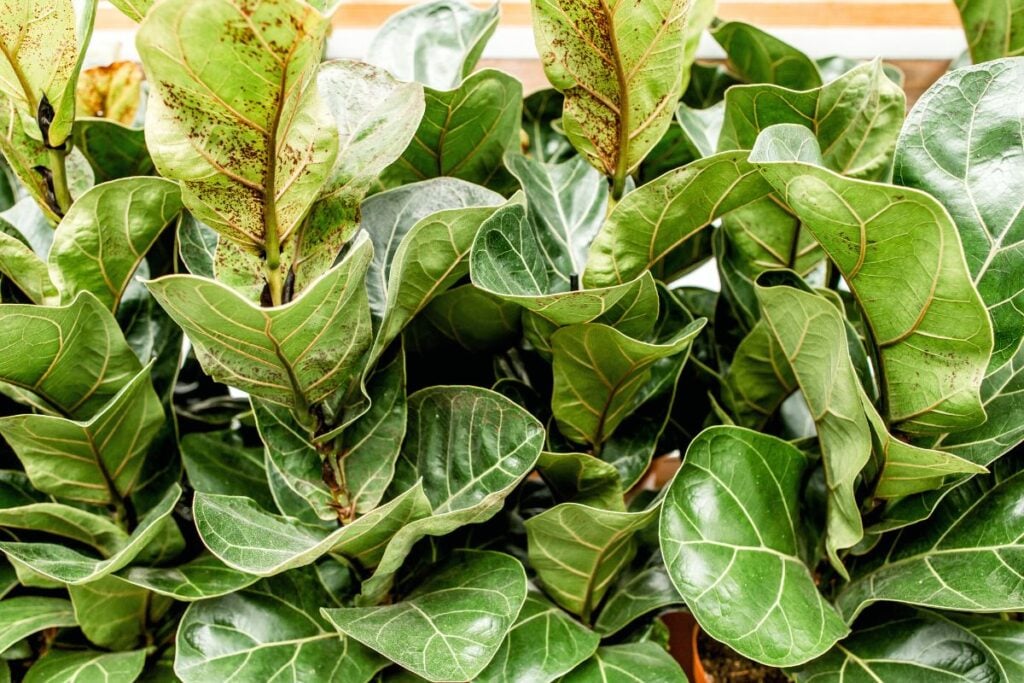
Fiddle leaf figs may also shed leaves severely infested with the following pests:
- Spider mites: Tiny spider-like insects up to 0.04 in (1 mm) long and look like moving black dots. They’re usually identified based on the yellow or white specks and fine webs on the leaves.
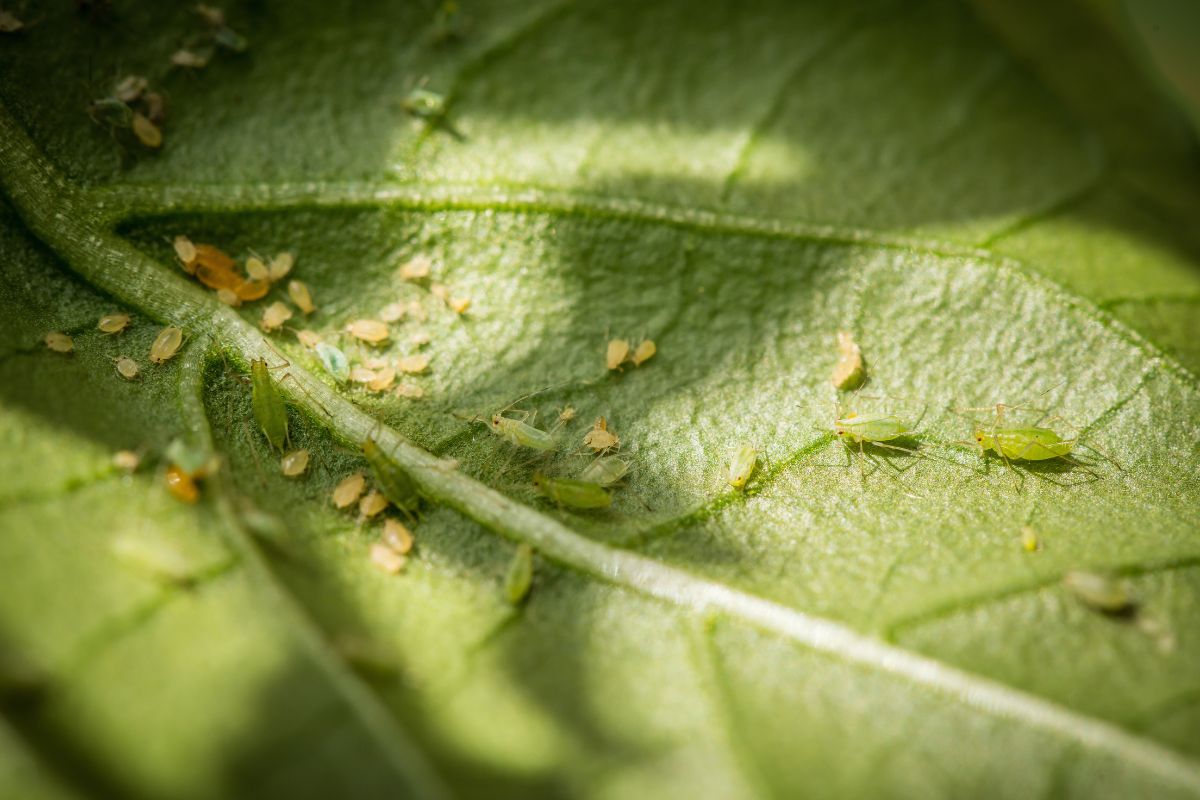
- Aphids: Tiny translucent pests about ⅛ in (3.2 mm) long and may be brown, orange, white, or green. They usually hide underneath the leaves and feed on plant sap. They excrete a sticky liquid called honeydew, which is attractive to ants and sooty mold.
- Mealybugs: Fluffy or cottony white insects the same size as aphids (⅛ in or 3.2 mm) and usually along leaf veins on leaf undersides. They also excrete honeydew after feeding on the plant sap.
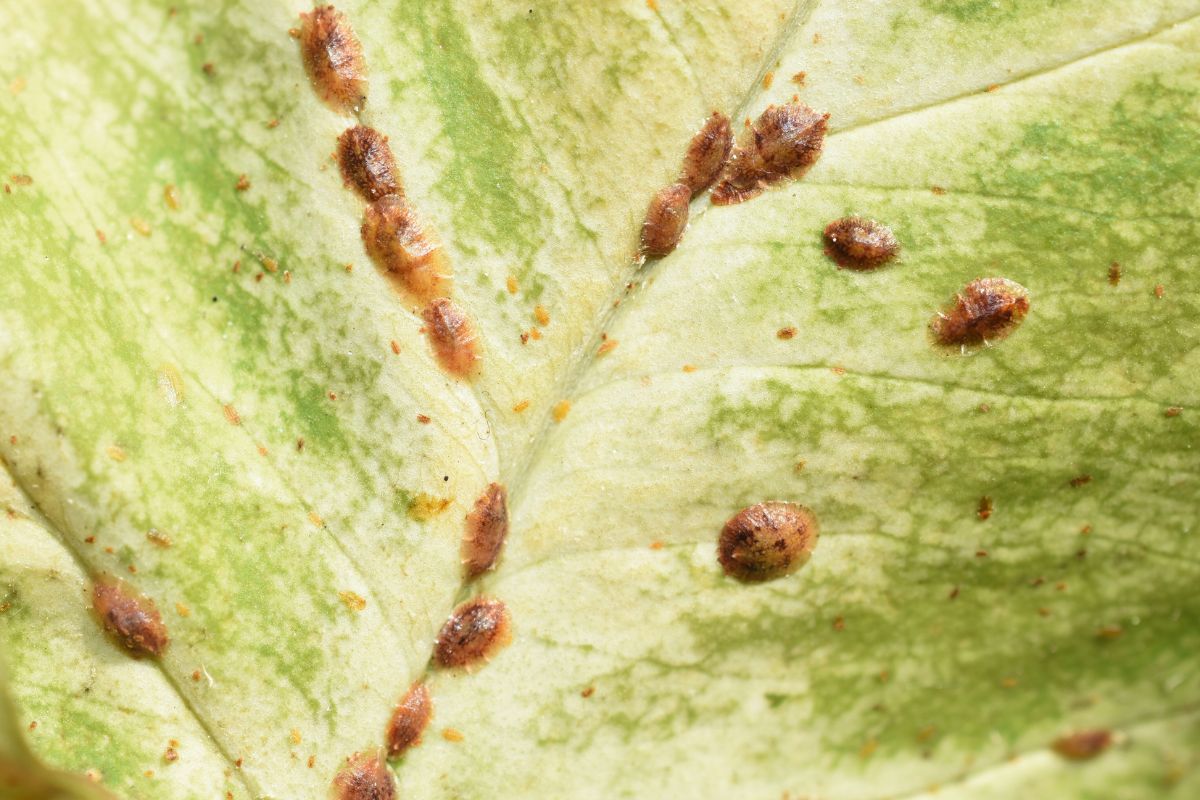
- Scale insects: Brown, immobile insects (female) about ⅛ in (3.2 mm) in diameter that feed on the sap along leaf veins or stems. They excrete honeydew and lay eggs close by because they don’t move from their spot.
- Thrips: Slender, winged insects about 1/16 – ⅛ in (1.6-3.2 mm) long that fly away quickly when disturbed. They feed on plant tissue by burrowing into the leaf surface and leaving silvery or bronze patches (white or brown scars).
To treat pest problems effectively, you may try multiple methods below:
- Isolate severely infested plants to an area with optimal environmental conditions similar to the original spot to prevent further stress.
- Manually remove the pests using tweezers or a cotton swab dipped in rubbing alcohol. Drop the pests into a cup of soapy water. Repeat the process every few days until you don’t see adult pests anymore.
- Spray the plant with a neem oil solution at night once a week for the next 4-6 weeks. This will eliminate pests in their egg, larval, and adult forms.
- Install yellow sticky cards near the soil or the walls to draw winged insects like thrips and male scales away from the plant.
- Use a Spinosad-based spray to treat spider mite or thrip infestation. Apply it every 10-14 days and ensure the room is well-ventilated for 24 hours after application.
Routine Care and Maintenance
Improving your plant care routine and observing stringent and consistent maintenance practices can help prevent leaf drops and other common plant problems.
Your fiddle leaf fig will benefit from the following care tips:
- Watering: Water your plant deeply as soon as the soil’s top 2 inches (5 cm) is dry. You can pour water directly over the soil using a watering can with a narrow spout. Pro tip: Use the “soak and dry” watering method to rehydrate the soil evenly. Simply soak the pot in water for up to 30 minutes, and let the excess water drain completely. You may do this once a month or every 3-4 times of regular top watering.
- Lighting: Younger fiddle leaf figs with paler or underdeveloped leaves do best with bright indirect light, whereas older plants with larger, darker leaves can tolerate up to 4 hours of direct morning sun. Rotate the pot regularly to avoid legginess and promote balanced light exposure and growth.
- Temperature & Humidity Control: Choose a location in your home with stable temperature and humidity conditions and avoid moving your plant around too much. Aim for moderate temperatures of around 65-75 °F (18-24 °C) and humidity levels of 40-60%.
- Pest Monitoring & Maintenance: Spray the leaves with distilled water and wipe dry with a clean cloth to remove dust and improve light access. Doing this weekly can also help monitor signs of pest infestations and promptly address the problem.
- Pruning: Remove discolored or aging leaves to maintain your plant’s vibrant appearance and improve air circulation and light access. You may remove bottom leaves that are in direct contact with the soil or trim damaged or aging leaves anytime, but limit pruning to less than 30% of the plant. Perform any hard pruning in spring for faster recovery and new growth.
- Fertilizing: Feed your plant proactively with a half-strength 3-1-2 liquid fertilizer every 2 weeks (or every other time you water) from spring to summer. A low but regular dose of nutrients can encourage steady growth without the risk of over-fertilization. Alternatively, use granular fertilizers once every 2 months. Apply a thin layer evenly over the soil surface and water the plant regularly to activate the nutrients and leach the excess.
- Repotting: Inspect the soil and drainage holes for emerging roots, and repot the plant in fresh soil and a larger pot. This will help replenish soil nutrients, improve soil quality, provide more space for growth, and extend your fiddle leaf fig’s lifespan.
Final Thoughts
Dropping old leaves is a natural plant behavior to focus energy on younger and healthier growth. However, shedding several leaves at once or within a short time can be alarming.
Leaf drop is a common problem in stressed fiddle leaf figs but it can be treated and prevented with the following solutions:
- Underwatering: Water the plant deeply as soon as the top 1-2 inches (2.5-5 cm) of the soil dries out. Avoid shallow watering, which can cause hydrophobicity. Occasionally use the soak-and-dry method between regular waterings to ensure proper soil rehydration.
- Overwatering: Ensure the soil and the pot have adequate drainage. Wait for the soil to dry out enough between watering sessions to let the roots breathe.
- Inadequate Light: Give your plant at least 8 hours of bright indirect light daily and give the pot a quarter or a half-turn regularly for even light exposure.
- Temperature Stress: Maintain moderate temperatures of around 65-75 °F (18-24 °C) around your plant, and keep it away from heating or cooling vents and drafty windows.
- Low Humidity: Switch on a humidifier during the driest part of the day or during dry seasons to maintain moderate humidity levels (40-60%).
- Relocation or Transplant Shock: Make changes gradually, and adjust your care routine accordingly to accommodate the changes. For instance, increase watering frequency as needed after moving the plant to warmer and brighter conditions.
- Nutrient Imbalance: Feed your fiddle leaf fig regularly for sustained growth and optimal health. Apply a gentle dose at regular intervals to avoid fertilizer burn.
- Diseases: Prune and properly discard infected plant parts. Avoid wetting the foliage when watering, and properly sterilize gardening tools before use to prevent the spread of diseases between plants.
- Pest Infestations: Manually remove visible pests using tweezers or cotton swabs with alcohol, and treat the plant with organic sprays like neem oil. Be mindful when using chemical sprays (i.e., Spinosad).
Remember that fiddle leaf figs require stable conditions to stay healthy and continue thriving. That said, be proactive and consistent in your plant care routine to avoid unnatural and excessive leaf drop.
Feel free to leave a comment to raise questions or share your own experiences with fiddle leaf fig leaf drop.