
Fiddle Leaf Fig Brown Leaf Edges: Symptoms, Causes & Fixes
Fiddle leaf figs are cherished for their large, bold leaves and striking appearance, but they’re also known for their sensitivity to environmental changes. Brown edges or tips on their leaves are a common sign of stress that can detract from their beauty.
Here are the causes of brown leaf edges in fiddle leaf figs:
- Underwatering
- Poor moisture retention in the soil
- Intense sunlight
- Heat stress
- Low humidity
- Nutrient imbalance
- Relocation shock
This article will cover the common causes of brown edges or tips on fiddle leaf figs as well as practical solutions to restore the plant’s health and prevent further damage.
Environmental Conditions and Leaf Development
Fiddle leaf figs (Ficus lyrata) have large fiddle-shaped leaves that can reach up to 18 inches (45 cm) long and 12 inches (30 cm) wide indoors. In their native habitat in tropical West and Central Africa, the leaves can grow over 2 feet (0.6 m) long and 18 inches (45 cm) wide.
The astounding size of the leaves may be attributed to the following:
- Sufficient rainfall in tropical forests keeps the soil evenly moist and plants adequately hydrated
- Loamy, well-draining soil and easy access to nitrogen sources through shallow fibrous roots
- Better access to bright sunlight that seldom reaches the forest floor
- Well-regulated transpiration rates to balance internal temperature. The warm temperatures should naturally draw moisture from the leaves but the high humidity reduces transpiration rate to prevent the leaves from drying out too quickly.
- High nitrogen cycling in the humic layer of the forest floor from decomposing plant debris
All these natural environmental factors contribute to the fascinating anatomy of fiddle leaf fig leaves. However, they also explain why fiddles grown indoors are fussy. Inconsistent light, water, temperature, and humidity conditions can stress them and turn their leaves and leaf edges brown.
Symptoms of Brown Edges
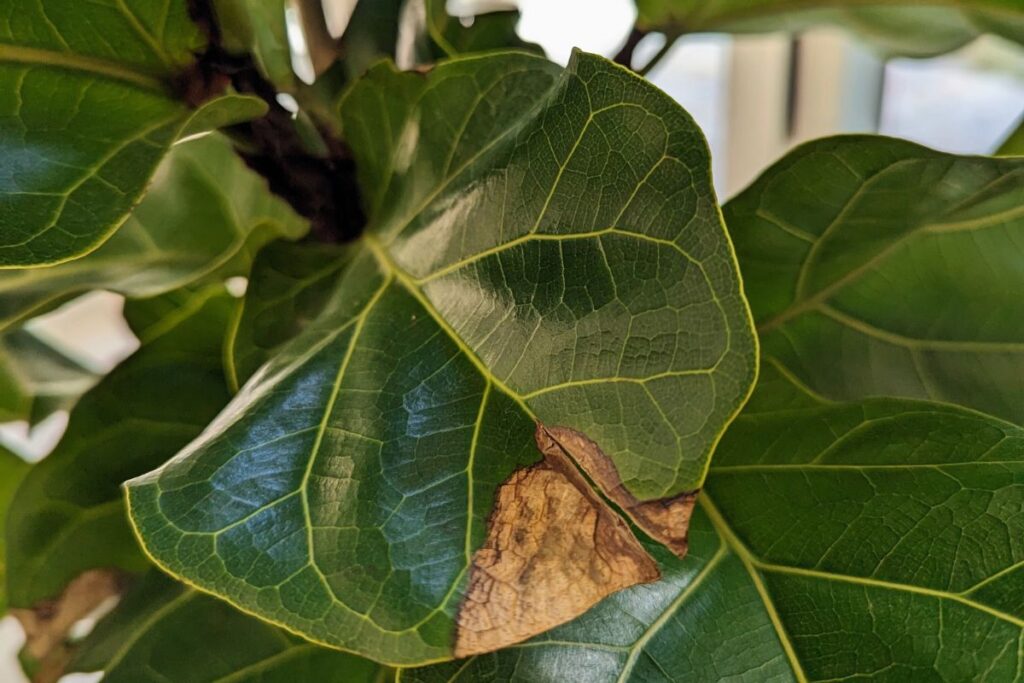
Leaf browning is a common problem in fiddle leaf figs and the discoloration may appear as brown spots or brown leaf tips. Brown spots on FLF leaves are a distinct issue from brown leaf edges.
Although the damage may spread to the leaf tips, brown spots are typically caused by several factors with the corresponding symptoms:
- Overwatering and root rot: Soggy soil, randomly sized water-soaked brown spots on the leaf surface; as the roots rot, they become black and mushy and emit a foul odor. The mushy brown leaf spots and edges gradually turn dry and crisp.
- Sunburn: Brown and crisp spots on the leaves and leaf tips at the sun-exposed side of the plant
- Chill injury: Brown water-soaked spots on the leaves, leaf drop, and mushy stems showing a brown rotten core
- Bacterial infection: Brown spots with a yellow halo randomly spaced on the leaf surface; the disease spreads from infected leaves to lower leaves through water droplets, so the symptom begins from where the pathogens land on the leaf surface.
- Pest infestation: Tiny, reddish-brown spots, bronze patches, or brown bumps on the leaf surface
- Over-fertilization: Brown scorch marks on the leaf surface and edges
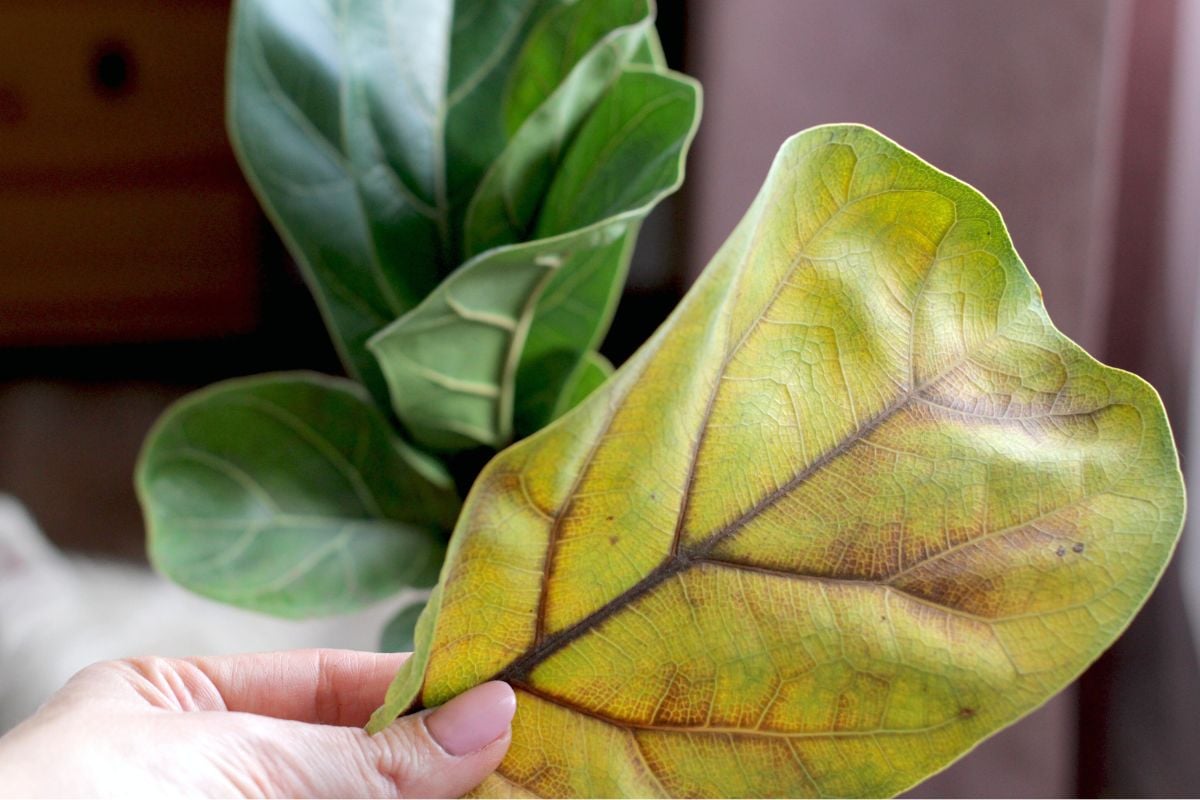
Brown leaf tips, on the other hand, are a common sign of dehydration.
The browning may spread inward, and the affected leaves may exhibit the following symptoms in progression:
- Green leaves start drooping or wilting due to lack of moisture from the soil or the air
- Leaf tips show a trace of yellow before turning brown
- The browning edges feel thin, crisp, and dry
- The dried edges start curling inward
- Symptomatic leaves fall off
Note: In my opinion, browning leaf tips on fiddle leaf figs have simpler, less invasive solutions than brown spots. To correctly identify the underlying cause and treatment, it’s important to distinguish between the two issues.
You can confirm that you’re dealing with brown leaf tips with the following guide:
- Location: The browning is isolated only on the leaf tips. Over time, the discoloration can spread inward if left unaddressed.
- Texture: Browning from dehydration typically feels dry and crisp.
Common Causes and Fixes
Below are the common causes of brown leaf tips on fiddle leaf figs:
1. Underwatering
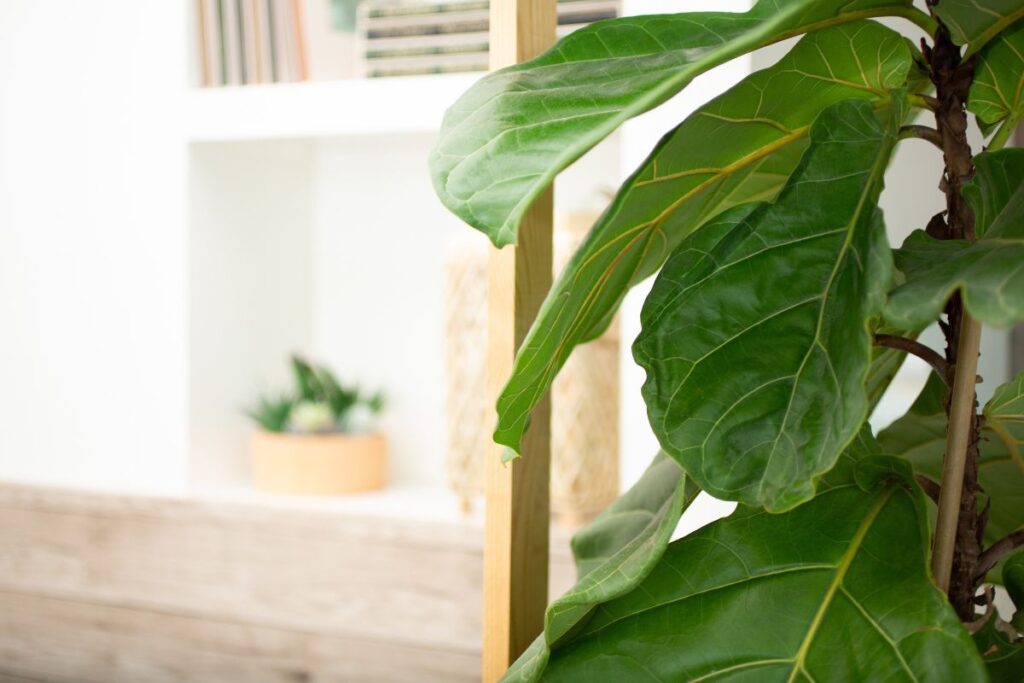
Fiddle leaf figs like evenly moist soil and dislike it when the soil dries out completely between waterings.
I once went on a 2-week summer vacation, so I deeply watered my plants before leaving.
After letting the east-facing fiddles go 2 weeks without water in summer, I came back to thirsty plants with droopy leaves and brown, crisp edges. In contrast, those in bright indirect light about 8 feet (2.4 m) from my south-facing window still looked vibrant.
Note: It’s also important to consider how the light intensity, temperature, and humidity contribute to how quickly the soil dries out, especially in summer.
Prolonged underwatering can cause the soil to become hydrophobic, keeping the plant dehydrated even after watering because the soil repels water from the roots.
Soil-based potting mixes for fiddle leaf figs typically contain peat moss and clay. Peat moss can become hydrophobic and hard to re-wet when allowed to dry out. On the other hand, clay tends to form clumps over time and become impenetrable with water.
The damage from underwatering may escalate in the following ways:
- Dry soil surface
- Leaf tips turn yellow
- Yellow tips gradually turn brown, dry, and crisp
- The edges curl inward
- The leaves eventually fall off
To fix the problem, you may follow these steps:
- Poke the drainage holes to check if the soil is dry all the way down. This will also help loosen soil clumps that may plug the holes. Pro tip: You can use a moisture meter and insert the probe into multiple spots in the soil mix to check how uneven the moisture levels are and confirm the presence of hydrophobic clumps.
- Rake the soil surface to break apart the crusty or clumpy layer and facilitate better water infiltration. You may also add about ½-1 inch (1.3-2.5 cm) of compost over the surface for better texture and moisture retention.
- Soak the pot in a tub of water for around 30 minutes to evenly rehydrate the soil.
- Place the pot over a drip tray to drain the excess water.
- Using sharp, sterile scissors, snip the brown edges to keep your plant green and encourage it to focus on healthy growth.
In addition, you must improve your watering routine with these tips:
- Water the plant regularly, ensuring the top 1-2 inches (2.5-5 cm) of soil are dry before watering.
- Check the soil moisture 5-7 days after watering to confirm if it’s adequately dry. You can
- If your pot is around 12 inches (30 cm) wide and deep, bottom water once a month or after 3-4 times of regular top watering during the growing season to fully hydrate the soil. Note: I don’t bottom water pots larger than 12 inches because they can be too heavy, especially with tall plants like full-grown pileas and FLFs. Instead, use a narrow-spouted watering can and pour it gradually to deliver it directly to the root zone.
2. Poor Moisture Retention in the Soil
To maintain a fiddle leaf fig’s health, the soil must have balanced moisture retention, drainage, and aeration. Poor moisture retention in the soil can increase the risk of dehydration that causes brown leaf edges.
Here are the signs the soil has poor moisture retention:
- Water droplets form on the soil surface, indicating poor moisture infiltration.
- The water quickly drains from through the drainage holes after watering but the root zone feels dry after checking with a chopstick or your fingers.
- When you check the soil moisture on different spots using a moisture meter and get significantly different readings, this can indicate hydrophobic clumps within the potting mix.
To fix the problem, you may use the following tips:
- Rake the soil surface about an inch (2.5 cm) deep using a hand cultivator to break apart the crusty soil layer and improve water infiltration.
- Work a handful of compost into the loosened soil to improve moisture retention.
- Water your plant more frequently—typically as soon as the top 2 inches (5 cm) are dry.
Alternatively, you may repot your plant using the right soil mix.
My recipe for a well-balanced fiddle leaf fig soil mix consists of the following:
- High-quality houseplant potting mix (60%) for good moisture retention
- Perlite (30%) for improved drainage
- Compost (10%) for improved moisture retention and a good source of organic matter and nutrients
3. Intense Sunlight
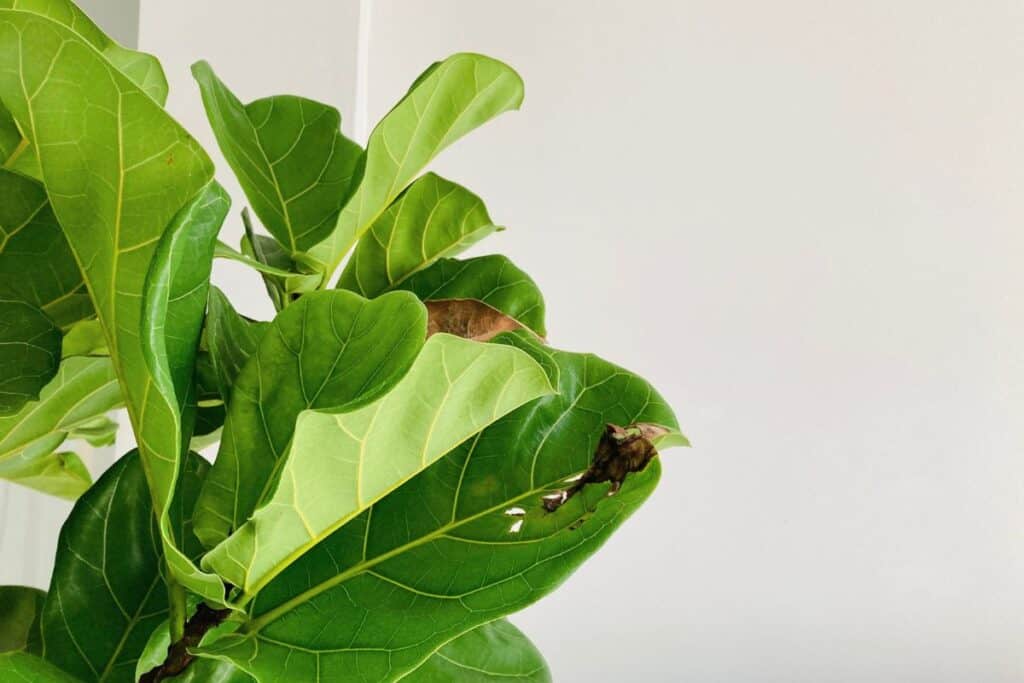
Fiddle leaf figs typically have different levels of tolerance to sunlight at various life stages.
Here’s my general observation regarding optimal light conditions around indoor fiddle leaf figs:
- Young plants with smaller, pale green leaves thrive in at least 8 hours of bright, indirect light about 4-8 feet (1.2-2.4 m) from a sunny window (east, west, or south).
- Well-established fiddle leaf figs with large deep green leaves and extensive roots can handle up to 4 hours of direct morning sun from an eastern window. Those near south-facing windows require protection from harsh midday to afternoon sun.
The leaves exposed to intense sunlight can show the following symptoms:
- Brown, crisp edges
- Pale brown spots on the leaf surface
- Thin, bleached patches
You can relieve the symptoms with the following tips:
- Move the plant a few feet (+ 0.6 m) away from a sunny window into an area with bright indirect light. Alternatively, filter direct sunlight with sheer curtains.
- Pro Tip: Rotate the plant weekly to balance light exposure and prevent leaning.
- Monitor the moisture levels in the soil. A well-hydrated fiddle leaf fig has a better tolerance to intense sunlight and can resist the development of brown leaf edges.
4. Heat Stress
In their native environment, fiddle leaf figs can handle temperatures over 86 °F (30 °C) due to abundant rainfall and high humidity.
In contrast, indoor fiddle leaf figs thrive in moderate temperatures ranging from 65-85 °F (18-29 °C). Higher temperatures can aggravate the effects of dehydration due to underwatering and low indoor humidity.
Heat stress is also likely if there’s a sudden and sharp increase in temperatures without adequate and timely adjustment in the watering routine and humidity levels.
Evaluate the conditions around your fiddle leaf fig and check for any environmental changes that may increase heat exposure, such as:
- Relocating your plant outdoors in the summer
- Switching on heating vents that directly blow hot air into the plant
- Intense heat from sunny windows
You can alleviate your plant’s stress by choosing the appropriate solutions below:
- Trim damaged portions of the leaves.
- Install shade covers over plants moved outdoors for the summer.
- Move the pot away from the path of hot air from heating vents to avoid temperature spikes.
- Move the plant a few feet away from a hot window or hang sheer curtains to reduce the radiant heat from the sun.
- Maintain daytime temperatures around 75 °F (24 °C) and nighttime temperatures around 65 °F (18 °C).
- Monitor your plant’s soil moisture and ensure it stays evenly moist but not soggy.
5. Low Humidity
Dry weather can lead to lower humidity indoors and indirectly cause browning leaf tips, especially if the fiddle leaf fig is exposed to intense light, high temperatures, and dry soil.
As the leaves lose moisture through rapid transpiration, you’ll notice the following changes in your plant:
- Leaf edges start turning yellow, then brown
- Leaves become thin, dry, and crisp and gradually curl inward
You may help your plant recover with the following solutions:
- Address the other primary causes of dehydration, such as underwatering and intense sunlight, based on the suggestions discussed above.
- Place a pebble tray with water under the pot for plants less than 3 feet (0.9 m) tall. Ensure the tray is at least twice the diameter of the pot for a noticeable boost in local humidity.
- For larger plants, switch on a humidifier near your fiddle leaf fig. Monitor the humidity using a portable hygrometer and reposition the humidifier as needed. The goal is to maintain the humidity at around 50% to help the plant recover. You may need to keep the humidifier on for several hours during summer days or on dry winter nights.
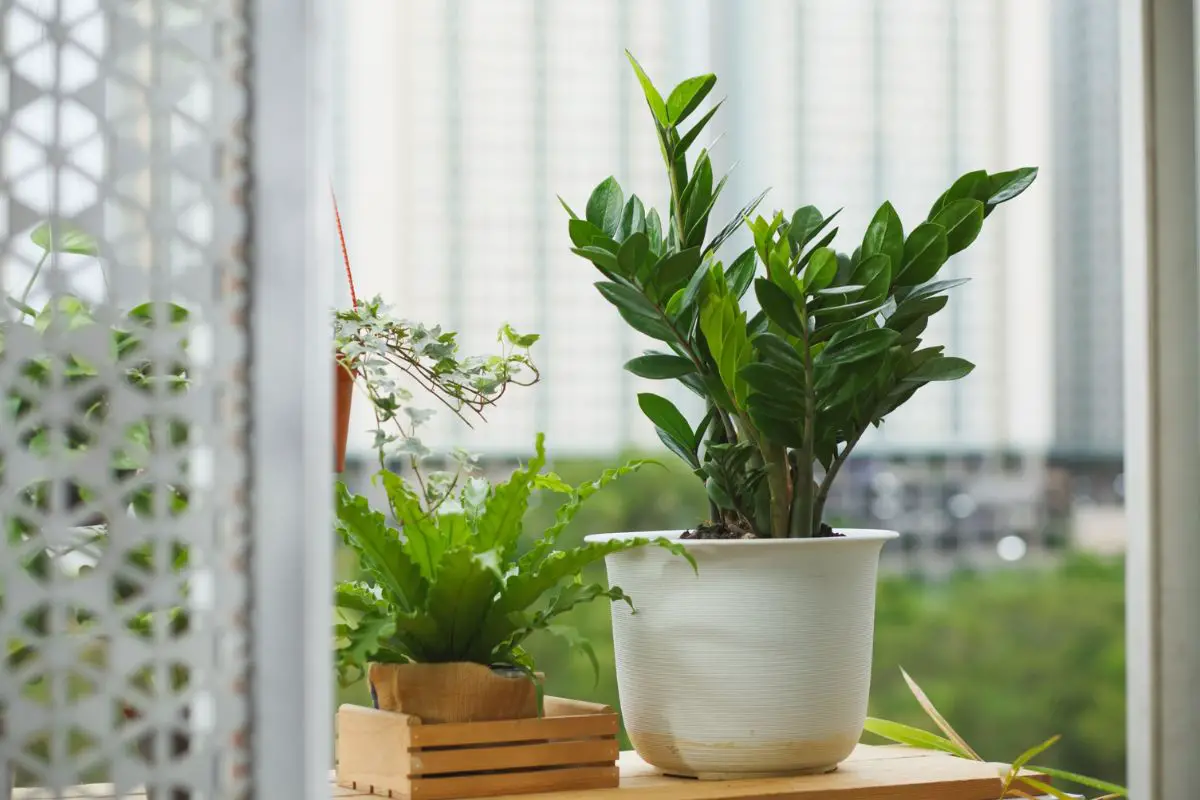
- Group your fiddle leaf figs with other houseplants with similar environmental needs, such as ZZ plants or jade plants, to create a humid microclimate in your indoor garden.
6. Nutrient Imbalance
Fiddle leaf figs may also develop brown edges from nutrient imbalances in the soil.
Salt Stress
Salt can accumulate in the potting soil under the following circumstances:
- Over-application of fertilizers: Insoluble salts from granular fertilizers or excess nutrients from a highly concentrated liquid fertilizer can remain and build up in the soil over time.
- Rootbound conditions: Undisturbed or rootbound fiddle leaf figs can displace the soil, increasing the roots’ exposure to excess fertilizers.
- Underwatering and/or poor soil drainage: These conditions can inhibit the proper leaching of unwanted fertilizer salts.
Over time, these excess salts or nutrients can draw moisture from the roots, dry them out, and inhibit proper moisture uptake to the leaves.
Too much salt in the soil can lead to plant stress with the following symptoms:
- Yellowing or browning leaf tips similar to dehydration
- Curling leaf edges
- Brown, scorched spots on the leaf surface
If your plant is showing salt stress, follow these steps to fix the problem:
- Scrape the visible white crust on the soil surface using a hand trowel or spoon (only for granular fertilizer).
- Rake the soil surface to improve water infiltration and poke the soil at the drainage holes to loosen potential soil plugs.
- Flush the soil with distilled water equal to the volume of the pot. Add the water gradually, allowing the excess to drain freely.
- For granular fertilizers, you may need to repeat the flushing as soon as the soil’s top 2 inches (5 cm) completely dries out. On the other hand, excess nutrients from liquid fertilizers should be diluted to safe levels after a single but thorough flushing.
- Avoid feeding your plant for the remainder of the year. Wait until the following spring to feed your plant. Pro tip: You may spread a thin layer of compost over the soil surface for a mild source of organic nutrients while waiting for the next spring.
Note: In cases where the fiddle leaf fig is severely rootbound or the soil has poor water infiltration, it’s best to repot the plant in fresh, well-draining soil in a pot 2-4 inches (5-10 cm) wider and deeper than the old one.
Moving forward, regular watering and occasional flushing can help prevent salt buildup in the soil.
Here are some tips to prevent salt stress:
- Water the soil regularly during spring and summer, especially after applying fertilizers. Check the soil moisture and water the plant when the top 2 inches (5 cm) are completely dry.
- When using granular fertilizers, remove the old insoluble salts (white crust on the surface) and flush the soil a week before applying fresh fertilizer.
- When using liquid fertilizers, dilute the liquid concentrate to half the recommended strength by doubling the water volume.
Potassium Deficiency
Although rare, potassium deficiency may also occur in fiddle leaf figs and manifest in the following ways:
- Interveinal chlorosis starting from the leaf margin
- The yellowing edges gradually turn brown
The issue may be caused by the following:
- Prolonged lack of fertilization: The plant should also show other signs of nutrient deficiency, such as yellowing older leaves and stunted growth. Trim the brown leaf edges as they won’t turn back to green. Feed your plant a half-strength 3-1-2 liquid fertilizer weekly in spring until the symptoms improve (i.e., new growth appears or yellowing leaves start reverting to green). Gradually increase the interval between feeding and stop fertilizing your plant in the fall.
- Excess magnesium in the soil: The application of Epsom salt to relieve magnesium deficiency symptoms (interveinal chlorosis of older leaves) can result in excess Mg ions in the soil that can inhibit potassium (K) ion uptake in the roots. Adding a teaspoon of wood ash (20% calcium, 5% potassium) over the soil can help relieve the symptoms. The calcium in wood ash can displace the K ions in the soil and make them available for root absorption.
7. Relocation Shock
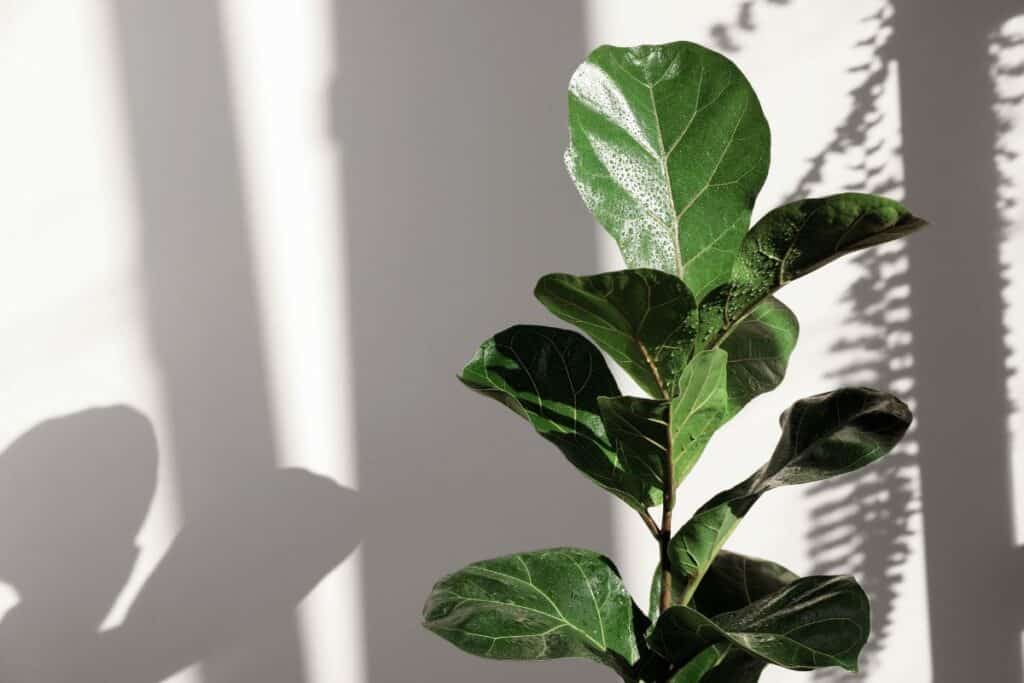
Indoor fiddle leaf figs are sensitive to drastic changes in their environment.
Here are the environmental changes that may lead to shock and brown leaf edges:
- Sudden exposure to intense sunlight: This usually occurs after moving fiddle leaf figs outdoors in spring or summer without proper acclimatization. The brighter outdoor conditions can dry out the plant more quickly, leading to brown leaf edges or crisp brown spots from sunburn.
- Heat stress: Placing fiddle leaf figs near heating vents or spots where temperatures fluctuate throughout the day, such as kitchens and bathrooms, can cause heat stress. As a result, the leaves may droop and the leaf tips turn brown and curl.
- Dry weather and indoor air: Moving the plant to an area with lower humidity or near heaters that dry out indoor air can increase the transpiration rate and turn the leaf tips brown.
You can help the fiddle leaf fig recover from relocation shock with these tips:
- Pruning: Cut off the brown leaf tips using sharp, sterile scissors. If the damage is extensive, remove the entire leaf.
- Light adjustment: Acclimatize the plant when relocating it to a brighter location by moving it only 1-2 feet (0.3-0.6 m) closer to the desired spot every 1-2 weeks. When moving outdoors, start in late spring and expose the plant to direct morning sun and outdoor air for an hour for a week. Choose a spot that receives afternoon shade. Gradually increase the hours weekly until you can safely leave the plant outside.
- Temperature considerations: Keep the plant away from heating vents and choose a spot with stable temperatures of around 65-75 °F (18-24 °C).
- Humidity control: Switch on the humidifier for a few hours daily, gradually decreasing the duration until the plant adjusts to the new environment. Ensure the humidity is between 40 and 60% and keep the plant well-watered to prevent further browning of the leaf tips.
Routine Care and Maintenance
Overall, leaf browning can indicate an issue that hasn’t been promptly addressed.
After fixing the problem, remember the care tips below to prevent recurrence:
- Watering: Water the plant when the top 1-2 inches (2.5-5 cm) of soil are dry. You can use the finger or chopstick test to check the soil moisture. You may also use a moisture meter and water your plant when the average reading shows 4.
- Light: You can provide your fiddle leaf fig up to 4 hours of direct morning sun but avoid direct afternoon sunlight. During hot summer days, you may reduce light exposure by giving your plant only bright indirect light for at least 8 hours daily. Be sure to rotate the pot weekly to give the large leaves respite from intense light.
- Humidity and temperature: Maintain stable temperatures between 65 and 75 °F (18 and 24 °C) and humidity levels around 40-60%.
- Fertilization: Feed the plant every 2 weeks during the growing season with a half-strength 3-1-2 liquid fertilizer for regular application (weekly for symptomatic treatment). You can also use a slow-release granular fertilizer once every 2 months from spring to summer.
- Pruning: Trim dead or damaged leaves regularly using sharp, sterile shears to maintain the lush green foliage. When hard pruning old and discolored leaves, limit pruning to a third of the plant’s volume.
Final Thoughts
Browning leaf edges on fiddle leaf figs can be unsightly and alarming. But don’t worry, as they usually indicate dehydration, which is a reversible issue.
It’s important to evaluate your plant’s environment, determine any changes that may have triggered the symptom, and aptly address the problem.
Observe your plant more closely after treatment and adjust your care routine as needed to prevent further browning and support healthy new growth. Fiddle leaf figs may be fussy but they can be quite sturdy and will bounce back with consistent and improved care.
If you have more questions about fiddle leaf fig care, don’t hesitate to leave a comment. You may also support budding plant enthusiasts by sharing your expert insights into general plant care in the comment section.