
Fiddle Leaf Fig Stunted Growth: Symptoms, Causes, & Fixes
Indoor fiddle leaf figs can grow fast and tall with lush, large leaves when they enjoy their environment. They noticeably grow more actively during spring and summer, so it can be alarming if your plant isn’t putting out new growth even during the growing season.
A fiddle leaf fig may have stunted growth due to the following reasons:
- Inadequate light
- Underwatering
- Overwatering
- Improper potting
- Nutrient deficiency
- Relocation or transplant shock
- Temperature and humidity stress
- Pest infestation
- Age
The rest of the article will help you identify the symptoms and understand how stunted growth occurs in fiddle leaf figs (FLFs). I’ll also share practical tips to encourage your plant to grow more quickly.
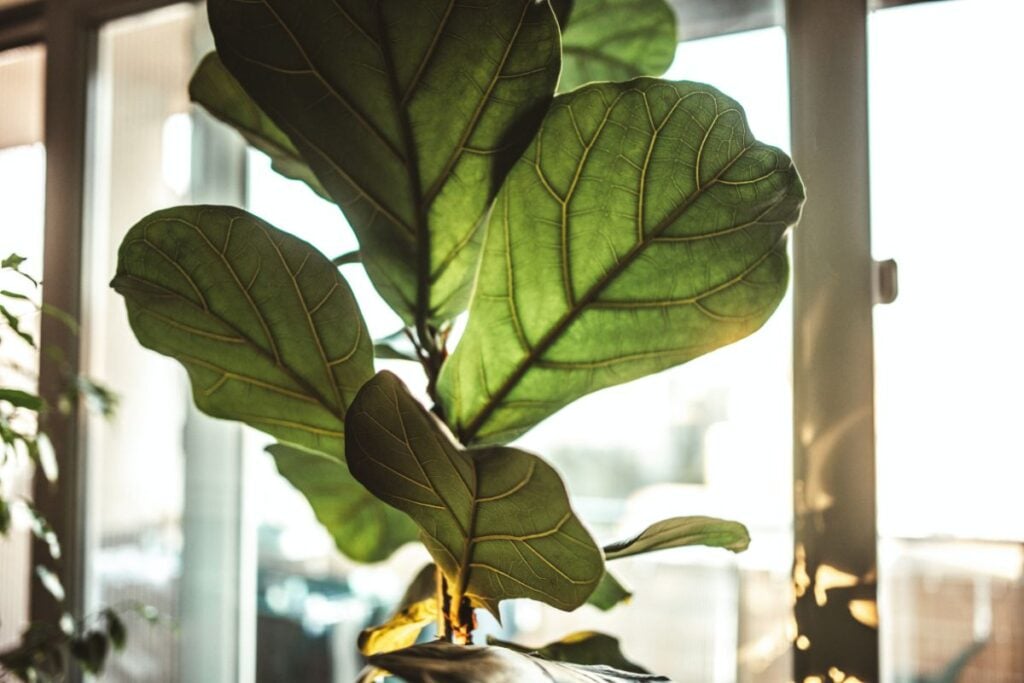
Natural Growth Patterns
Fiddle leaf figs (Ficus lyrata) are fast-growing tropical trees with fascinating growth patterns in their native environment in tropical West and Central Africa.
Here are some of their noteworthy traits:
- Fiddle leaf figs can reach over 50 feet (15 m) throughout their lifetime (25-50 years). They don’t enter dormancy, so they grow continuously throughout the year.
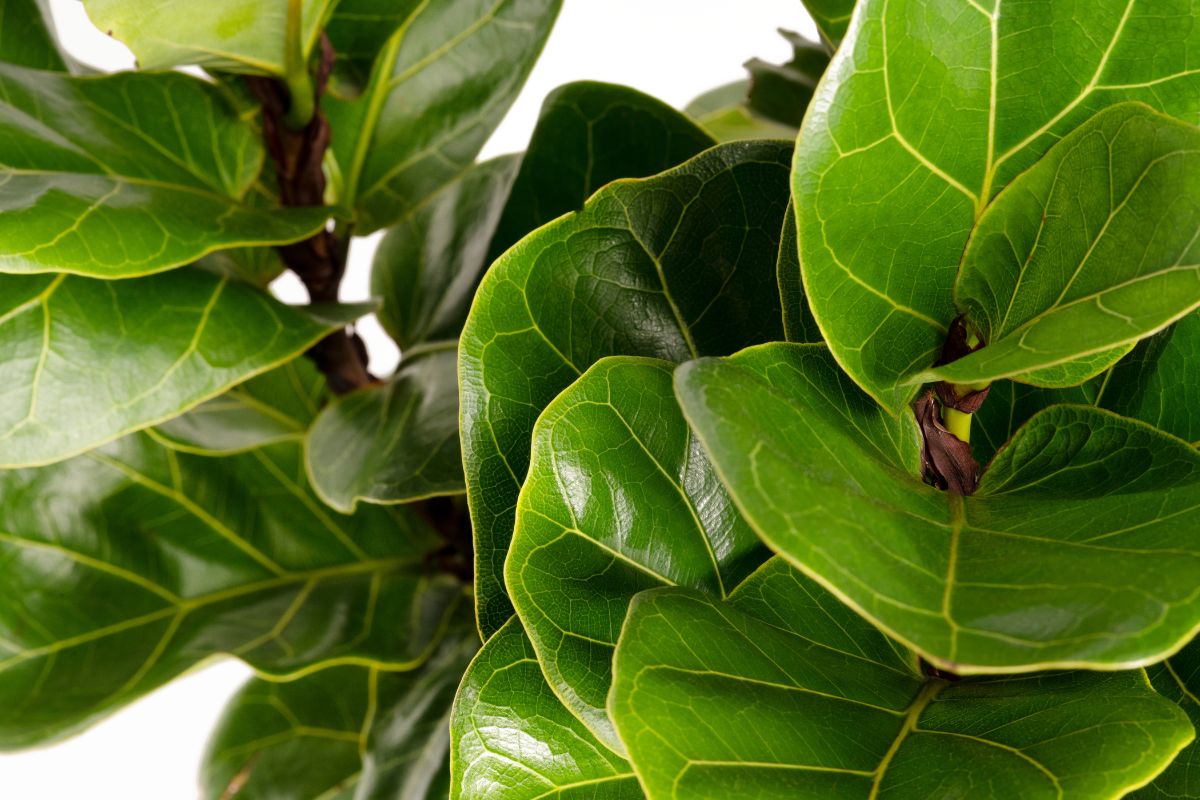
- Each leaf can also get massive, reaching over 2 feet (60 cm) long and 1.5 feet (45 cm) wide.
These growth patterns are possible with natural environmental conditions, including the following:
- Light: Dappled sun for young fiddles through the dense tree canopies and full sun for taller or full-grown trees
- Water: Abundant rainfall with an average of around 40-80 in (100-200 cm) per year
- Temperature: Moderate and frost-free temperatures of around 70-86 °F (21-30 °C) all year round
- Humidity: High humidity levels of around 70-80%
- Soil and nutrients: Nitrogen-rich humic layer from decomposing plant debris in the forest floor. These nutrients are accessible to the fiddle leaf figs due to their shallow roots.
Growth Rate Variation in Indoor Settings
Fiddle leaf figs can adapt to indoor conditions in colder regions like the US but seldom reach over 10 feet (3 m) tall when grown in pots.
They thrive with the following care and environment:
- Light: At least 8 hours of bright indirect light daily or up to 4 hours of direct morning sun for older plants with darker leaves
- Water: Deep watering when the soil is completely dry 1-2 knuckles deep
- Temperature: Around 65-85 °F (18-29 °C) but will do best at stable temperatures with less than 10 °F (5-6 °C) difference throughout the day
- Humidity: 40-60%
- Soil and repotting: Repot young plants (1-3 years old) annually or large plants every 2-3 years in well-draining soil rich in organic matter in a pot 2-4 inches (5-10 cm) larger than the rootball
- Fertilization: Once every other time you water the plant (liquid fertilizer) or once every 2 months (granular/slow-release fertilizer) from spring to summer
- Maintenance: Weekly inspection and cleaning of leaves using a clean, damp cloth to remove dust and allow better light access
With adequate care, here are some growth patterns I observed in my indoor FLFs through the years:
- Vertical growth: The FLFs in my sunroom (with east and south-facing windows) grow more quickly and put on an average of 1-2 feet (0.3-0.6 m) annually. The one in my office with bright indirect light from a south-facing window grows more slowly, with only up to 1 foot (0.3 m) growth per year.
- Foliage density: They grow about 1-2 branches and a few new leaves per branch every 1-2 months during the growing season. Single-stemmed fiddles grow about 1-2 new leaves per month.
- Seasonal growth: Most of the growth (height and number of branches or leaves) occurs in spring and summer because of the warmer and brighter conditions, regular fertilizing, and more frequent watering.
- Leaf size: The leaves grow only 12-18 inches (30-45 cm) long and up to 12 inches (30 cm) wide.
- Aging and growth rate: The growth rate gradually slows down over time—more noticeably when rootbound or roughly 5 years after propagation.
Changes in the growth rate may occur naturally as the fiddle leaf fig ages. In case of unusually slow growth, it’s important to identify which changes are caused by stress and require prompt solutions to prevent worse problems.
Symptoms of Stunted Growth
The common signs of stunted growth in fiddle leaf figs include:
- Noticeably slower vertical growth even during the growing season
- Smaller leaf size
- Lack of new leaf buds or branches
Here are the additional symptoms that may help you identify the underlying cause of stunted growth:
- Paleness or yellowing of leaves
- Leggy or leaning stems
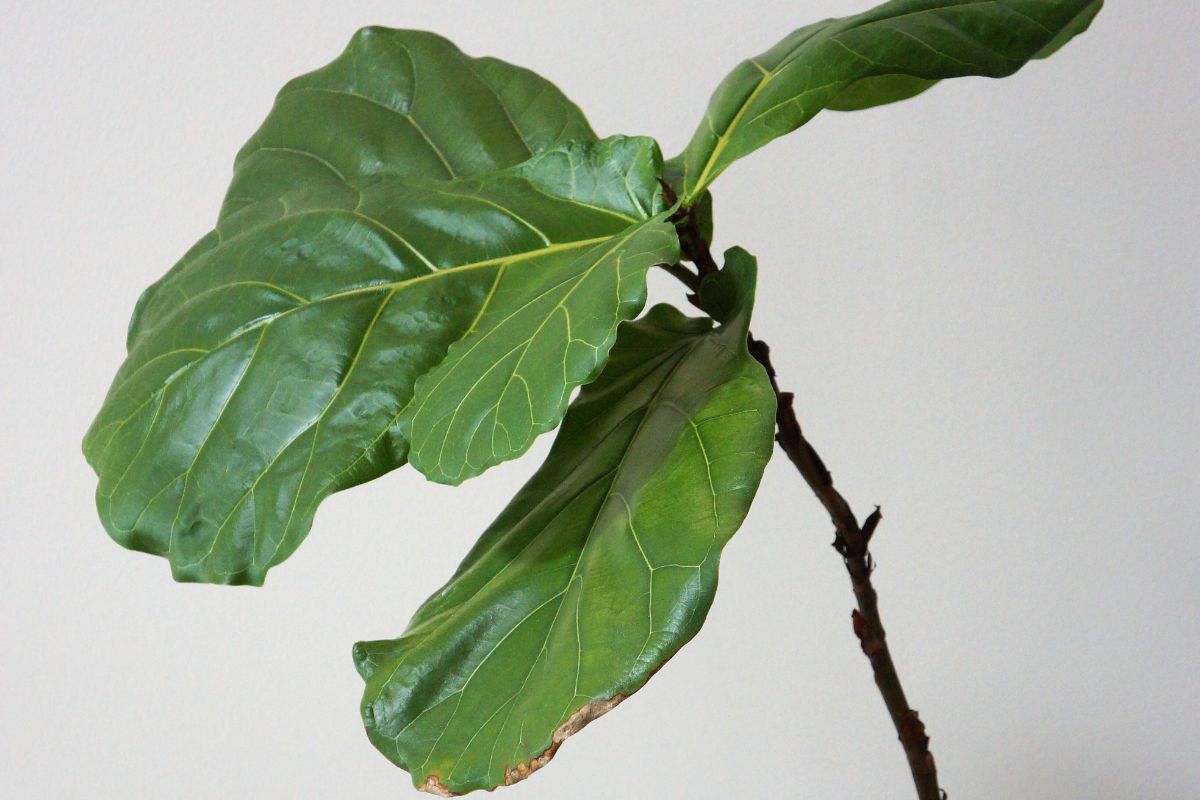
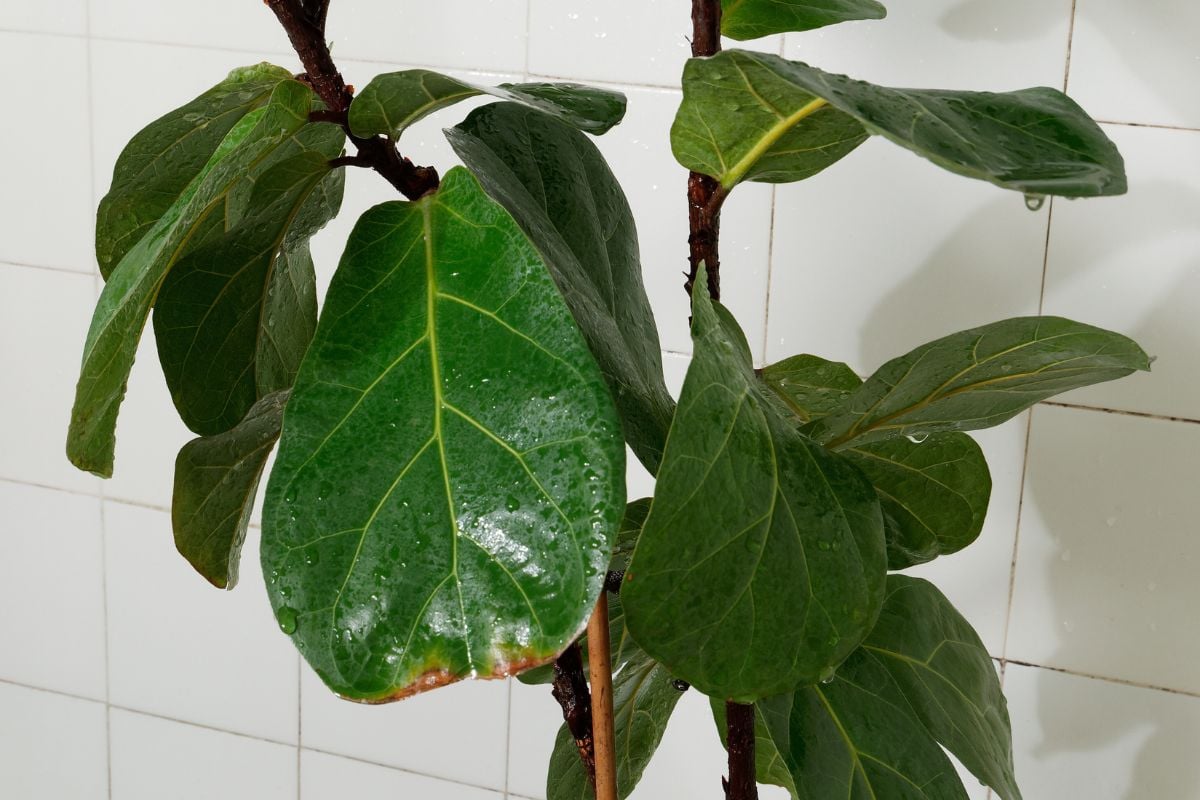
- Brown and dry leaf edges
- Brown mushy spots on the leaf surface
- Roots growing out of the drainage holes
- Curling leaf edges
- Tiny holes, especially on new leaves
- Leaf drop
These symptoms may indicate other common fiddle leaf fig problems, which can worsen over time if left unaddressed.
Common Causes and Fixes
If you suspect your plant’s growth is stunted, explore the causes and their corresponding solutions below:
1. Inadequate Light

Fiddle leaf figs are sun-loving trees that grow tall very quickly so they can bask in direct sunlight in the wild. The high humidity and abundant rainfall in their native habitat also contribute to their resistance to damage from a full day of direct sunlight.
Although the lower humidity levels in most homes (typically around 30-50%) make them less tolerant to direct sunlight indoors, they still require adequate natural light to thrive.
Here are some essential facts about a fiddle leaf fig’s light needs at different growth stages:
- Young fiddle leaf figs (less than 5 years old) do well with moderate light conditions or at least 8 hours of bright, indirect light from a southern window.
- Older plants (over 5 years old) with larger, darker leaves prefer at least four hours of direct morning sun.
Lower light levels can reduce the plant’s photosynthetic rate and cause the following symptoms:
- Paler or yellowing leaves
- Stems leaning toward the window or light bulbs
- Sparse leaves on the light-deprived side of the plant
- Lack of or failure of new leaf buds to open
Here are some immediate steps to take when your fiddle leaf fig has stunted growth due to insufficient light:
- Gradually move the plant closer to a bright east- or south-facing window. You may move it a few feet (0.6 m) closer every 5-7 days and observe for any sign of sunburn, such as brown dry spots on the leaf surface.
- Ensure the plant receives at least 8 hours of bright indirect (natural) light daily. Avoid suddenly exposing the plant to direct sunlight, as this can cause sunburn.
- Rotate the pot by 90-180° weekly or every time you water the plant. This will ensure all the sides of the plant have access to sunlight and develop upright and balanced growth.
- Adjust the watering frequency accordingly. Brighter light conditions can cause faster moisture loss from higher metabolic, evaporation, and transpiration rates. Check the soil moisture 5-7 days after watering and water the plant as needed. (I’ll discuss more watering tips below).
- Dust the leaves regularly to optimize light absorption. You can do this weekly or every time you water the plant. Spray the leaves with filtered water and wipe them dry with a clean cloth at night when the stomata are closed.
Keep an eye on your plant and watch out for signs of growth. After improved light conditions, the plant should put out a dark brown leaf bud or a new branch within a month or so.
Seasonal Adjustments for Optimal Light Exposure
Other sources recommend moving fiddle leaf figs closer to the window in winter for brighter light conditions. However, this increases the risk of chill injury if you have freezing winters and drafty windows.
Here are some tips to ensure your fiddle leaf fig stays safe and healthy while getting as much natural light as possible during the cold season:
- Keep the windows closed to prevent cold drafts.
- Monitor daily temperatures about 2 feet (0.6 m) or so from a bright window to determine the fluctuations. Ideally, there should be less than 10 °F (5-6 °C) difference between daytime and nighttime temperatures for optimal FLF health.
- Gradually move the plant to the desired spot about 2 feet (0.6 m) per week.
- Wipe the windows regularly to remove dust and snow and allow unobstructed natural light to reach your plant.
- Rotate the pot regularly to allow the leaves from all sides of the plant to receive natural light.
Supplementing with Grow Lights
If the room doesn’t have suitable space near a window for natural light, you may use full-spectrum grow lights to supplement your FLF’s needs during cloudy or darker months.
However, I don’t recommend using grow light as the primary light source, as it can be costly and inefficient in the long run. Fiddle leaf figs can grow very tall, and you may need multiple lamps, a tall stand, or a high wall-mounted perch to illuminate the leaves from top to bottom.
I usually position a grow light stand at least 1 foot (0.3 m) taller than the plant about 2 feet (0.6 m) away at a 45° angle and keep it on for up to 6 hours after sunset. Rotating the pot regularly will provide the leaves equal yet alternating exposure to light.
Addressing Legginess

Under prolonged and very low light conditions, the FLF may grow longer stems (leggy) as it attempts to access more light. Legginess due to insufficient light shouldn’t be mistaken for normal growth, as it results in a lanky-looking plant with weak stems and sparse leaves.
Here are the steps to address legginess:
- Cut the leggy stem/branch back to an inch (2.5 cm) above a leaf node. If the main stem has become leggy, note that cutting back the growing tip will inhibit vertical growth and promote branching from the nodes immediately below the cut.
- Wipe the sap off the wound using a clean, damp cloth.
- Brush some cinnamon powder over the cut to prevent bacterial or fungal infection.
- Follow the recommendations below to improve the light conditions around the plant and promote healthier new growth.
2. Underwatering
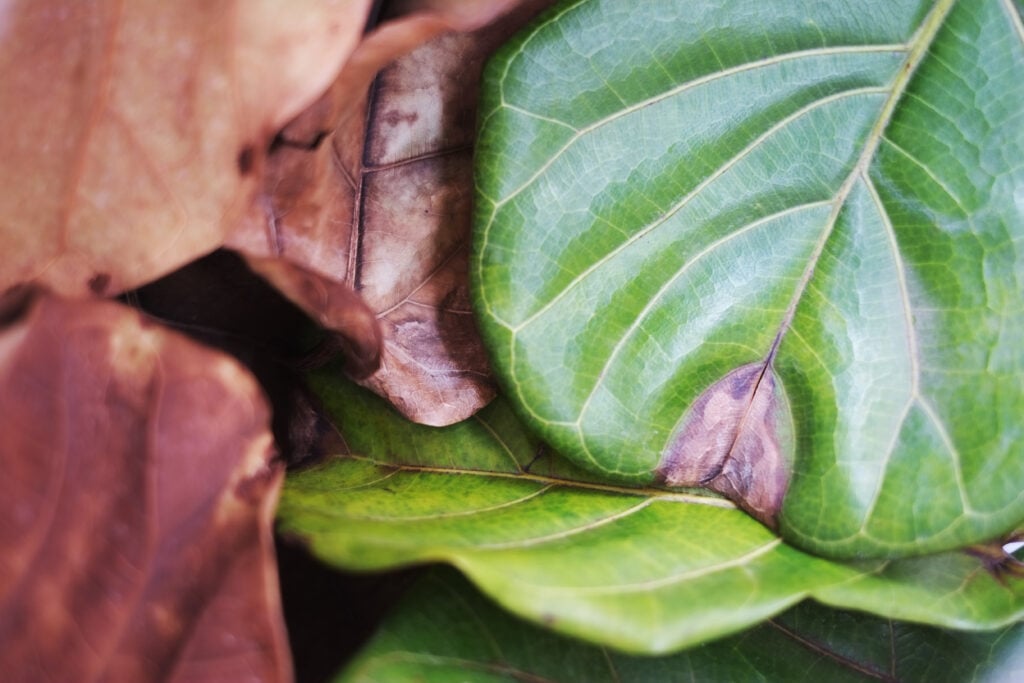
Fiddle leaf figs need evenly moist soil to sustain their rapid growth. Without enough water, the growth rate slows down significantly or may even stop.
Here are additional symptoms of underwatering:
- Crusty or cracked soil surface
- Yellowing leaf edges that spread inward
- Brown, crisp, and dry leaf edges
- Curling leaves
- Drooping or wilting
- Leaf drop
The symptoms of underwatering may sometimes overlap with other stressors like high temperatures, sunburn, low humidity, and even overwatering. Therefore, confirming the plant is indeed underwatered before applying the solutions is important.
You may choose from the methods below:
- Moisture meter: Insert the probe ⅔ deep into the soil. A reading below 4 indicates it’s time to water the plant. Wipe the probe with a clean, dry towel and repeat a few more times into multiple spots around the pot. Varying readings can indicate hydrophobic spots in the soil or shallow or uneven watering.
- Chopstick or finger test: Check if the soil is completely dry 2 knuckles (2 inches or 5 cm) deep. You may also insert the chopstick through the drainage holes to see if the soil has dried out all the way to the bottom, which isn’t recommended for fiddle leaf figs.
Once confirmed, you may treat underwatering symptoms with these tips:
- Use the soak-and-dry method. Soak the pot in water for up to 30 minutes. You may check if the soil is evenly rehydrated using a moisture meter. Let the excess water drain before placing the pot back on its saucer.
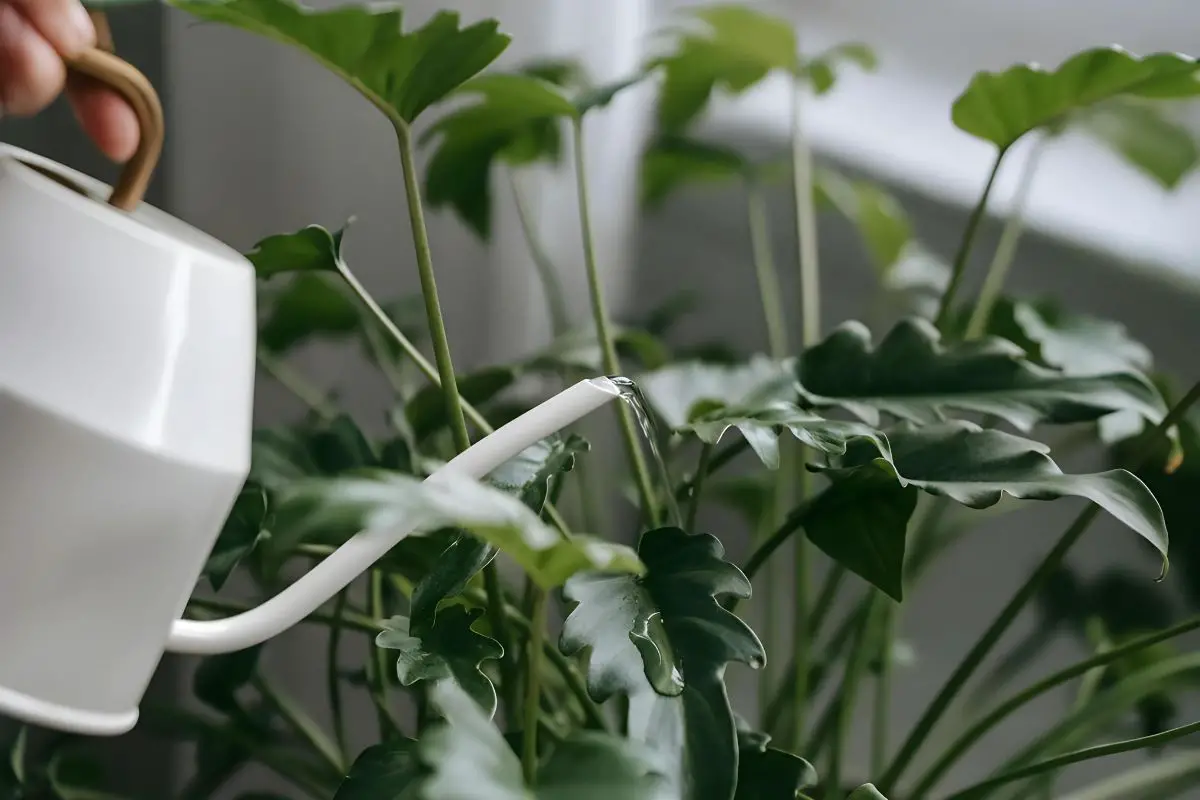
- Water the plant using a can with a narrow spout. You may rake the soil surface to ensure proper water infiltration and pour the water directly into the soil. Move the spout around to ensure the entire root zone is hydrated. You can use this method for regular top watering. It also helps with large and heavy pots you can’t carry and soak in the tub.
- Water the plant regularly—ideally, as soon as the top 2 inches (5 cm) is completely dry. Avoid waiting too long between watering sessions and ensure deep watering every time to prevent hydrophobic portions in the soil. Inspect the soil regularly, as the rate of moisture loss can vary depending on the seasonal light and temperature changes.
- Bottom water the plant once a month. You can do this after 3-4 times of regular top watering to prevent the buildup of hydrophobic portions in the soil.
If the soil shows severe hydrophobicity (it takes longer than 30 minutes to re-wet through the soak-and-dry method), it may be best to repot the plant in fresh soil with better moisture retention.
Here’s how:
- Run a spatula around the pot’s edges to detach the dry soil.
- Carefully unpot the plant and soak the rootball in water for 5 minutes to soften the crusty soil.
- Use a wooden chopstick or a hand cultivator to break apart and remove as much soil from the roots as possible.
- Prepare a pot 2 inches (5 cm) wider and deeper than the old one. Ensure it has adequate drainage holes.
- Fill the pot’s bottom 2 inches (5 cm) with a mound of fresh soil mix (i.e., 2 parts potting soil, 1 part perlite, and 10% compost).
- Spread the roots over the mound and cover firmly with more soil.
- Keep the root crown above the soil line to prevent root rot and bury the mass of fibrous roots at least an inch (2.5 cm) below the surface.
- Water the soil thoroughly using a watering can with a narrow spout until the excess leaks out of the drainage holes.
- Keep the plant in bright indirect light, warm and stable temperatures (around 70 °F or 21 °C), and moderate humidity (50%) until it recovers from repotting and puts out new growth.
- Improve your watering routine with the tips discussed above.
3. Overwatering
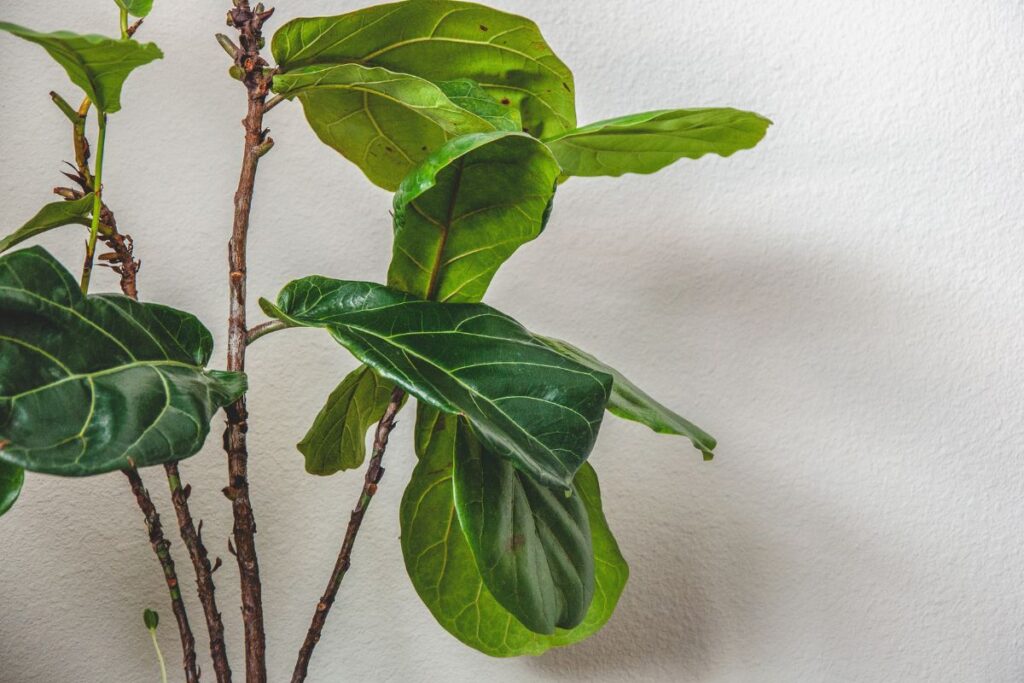
Stunted growth due to overwatering can be worse than underwatering because it usually indicates severe problems, such as fungal disease or root rot.
Here’s how the symptoms progress from overwatering:
- The soil surface remains wet or soggy several days after watering
- Brown or black, water-soaked spots on the leaf surface
- Dropping of discolored leaves
- Black, mushy roots
- Foul odor from the soil
- Yellow leaves due to lack of proper water and nutrient transport from the damaged roots
- Stunted growth
- Brown, dry leaves from dehydration
- Plant death
As you can see, plenty of symptoms appear before the roots rot and the plant becomes stunted. You may potentially save your plant by repotting it.
Root Rot Treatment
Here’s how to repot fiddle leaf figs with signs of root rot:
- Carefully slide the plant out of the pot to minimize further damage to the roots.
- Remove as much wet soil from the roots as possible.
- Prune all the black, mushy roots using sterile scissors. Clean the blades with rubbing alcohol between cuts to prevent the spread of infection. You may also prune the damaged or discolored leaves to help the treated roots focus on healthier plant parts after repotting.
- Rinse the remaining roots with clean water.
- Soak the roots in a 1% hydrogen peroxide solution for 5-10 minutes. If the FLF is too tall, you can safely lay it on the side and run the solution over the roots. This will help eliminate the remaining rot-causing pathogens.
- Let the roots dry for up to 30 minutes as you prepare the new pot and soil.
- Prepare a similar-sized pot with drainage holes. You wouldn’t need a larger pot if you pruned up to 30% of the root mass. Pro tip: Avoid using the contaminated old pot right away, as it can lead to a re-infection. You must wash it with a 10% bleach solution and rinse thoroughly with water if you want to use it on other plants in the future.
- Fill the bottom 2 inches (5 cm) of the pot with a mound of fresh, moist, well-draining soil.
- Spread the roots over the mound and cover it with moist soil. Keep the root crown exposed on the soil surface.
- Avoid watering the plant right away. Let the moisture from the fresh soil mix hydrate the roots as they heal.
- Keep the plant in a warm room with bright indirect light and moderate humidity as it recovers.
- Check the soil moisture using the chopstick or finger test and water the plant deeply when the soil is dry 2 knuckles deep. Keep this in mind for future watering sessions to avoid recurring problems with root rot.
Stem Propagation
If the rot is so severe that you must prune over 50% of the roots, the fiddle leaf fig will have a lower chance of recovering. I lost a few plants due to root rot when I was new to FLF care because I waited too long to repot them.
However, you may save parts of the plant by propagating any remaining healthy branches.
Here are the steps:
- Locate a terminal branch with healthy-looking leaves (i.e., no discoloration or mushy spots).
- Cut about 6 inches (15 cm) from the tip using sharp, sterile pruning shears. Ensure there are at least three nodes.
- Remove the leaves from the bottom node. Slice the bottom at a 45° angle just below the node. Wipe off the sap with a clean, damp cloth.
- Place the cutting in a clear glass with enough filtered water to submerge the bottom node. Ensure the leaves aren’t touching the water.
- Place the glass in a warm room (around 75 °F or 24 °C) with bright indirect light and moderate humidity (50%) for faster root development.
- Replace the water every 3-5 days or as soon as it appears murky.
After a month or so, the roots should start growing. You may plant the cutting in a 6-inch (15 cm) pot with your usual FLF soil when the roots are about 2 inches (5 cm) long.
Note: I prefer propagating stem cuttings in water because monitoring root development is easier. The large leaves are also less likely to dry out.
4. Improper Potting
Improper potting can also inhibit FLF growth in the following ways:
- Too small pots can inhibit root growth or proper soil rehydration.
- Oversized pots may contain too much soil that can hold excess water, increasing the risk of overwatering and root rot.
- Poorly draining soil can remain wet for too long and may also cause root rot.
- Fast-draining soil can dry out too quickly and dehydrate the roots.
It’s crucial to use an appropriate soil mix and pot size for fiddle leaf figs to maintain optimal health. In addition, you must also repot the plant regularly to prevent rootbound issues.
Although most sources recommend repotting every 2-3 years, note that varying light conditions or environmental factors can affect a fiddle leaf fig’s growth rate.
To determine if your plant needs repotting, you must check your plant for any signs of being rootbound, including the following:
- Roots growing out of the drainage holes and circling the pot
- Roots poking through the soil surface
- Poor water infiltration through the soil
- Water quickly runs through the edges of the pot and drains from the holes
- Leaning stem from overgrown roots and displaced soil
- No new leaf buds
Optimal Pot and Soil
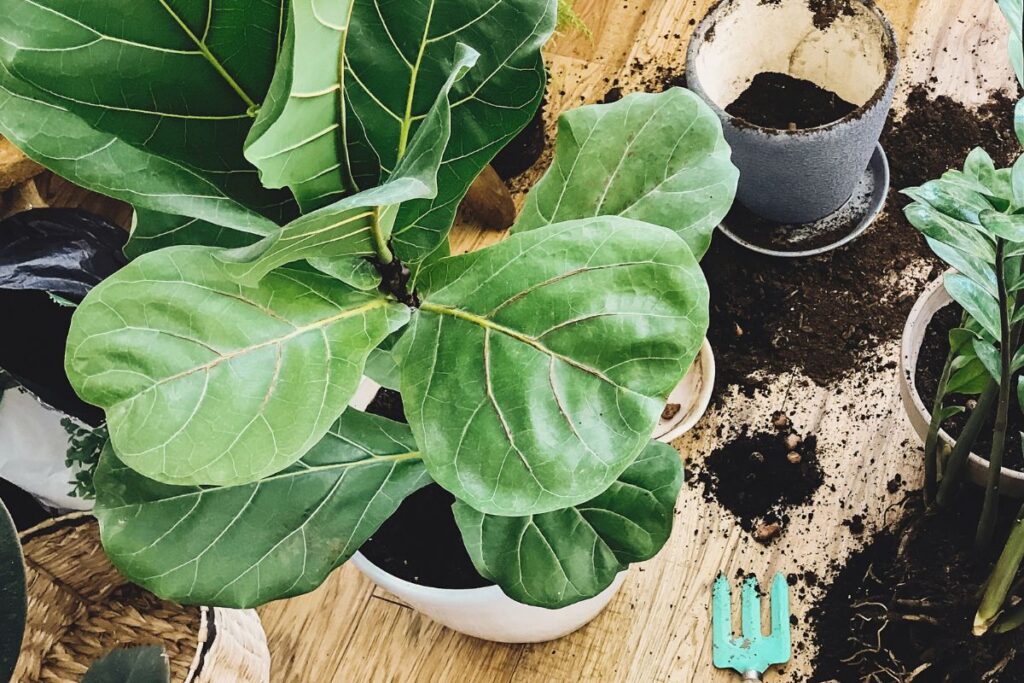
Remember the following tips for the proper potting requirements of fiddle leaf figs:
- Pot size: 2-4 inches (5-10 cm) wider and deeper than the rootball
- Soil mix: 60% high-quality potting soil, 30% perlite, 10% compost
Note: I’ve seen some fellow FLF growers use deeper pots, which worked well for their trees, so I tried the same. However, I find it hard to determine the right watering routine for such deep pots, and I lost my earliest fiddles to root rot.
That’s when I found that the optimal pot size for my oldest and largest fiddle leaf figs (over 8 ft or 2.4 m tall) is 24 in (60 cm) wide and 18 in (45 cm) deep.
My ceiling is 10 feet (3 m) high, so I cut off the top of my FLFs when they reach 6-7 feet (1.8-2.1 m) tall. This promotes lateral branching, so they hardly touch my ceiling. The outward growth also requires a wider base to keep the plant from falling over, making my largest pot perfect for my large fiddles.
Repotting Rootbound Trees
Follow these steps to repot an overgrown or rootbound fiddle leaf fig properly:
- Cut the roots growing out of the drainage holes and around the pot using sharp, sterile scissors to prevent resistance.
- Carefully slide or pull the rootball out of the pot. The rootball has most likely taken on the shape of the pot and circled around the soil.
- Loosen the tightly packed roots by making 3-4 vertical cuts around the rootball. Some roots may fall off in the process, but your plant shouldn’t mind.
- Disentangle the roots and prune any rotten (black and mushy) or desiccated (brown and crisp) sections. Sterilize the scissors between cuts.
- Prepare the pot and place a wire mesh over the drainage holes.
- Fill the bottom 2 inches (5 cm) with a mound of soil.
- Spread the roots outward over the soil to redirect their growth and ensure proper anchorage of the tall plant.
- Cover the roots with more soil, firmly tapping it to remove air pockets. Keep the root crown slightly visible on the soil surface.
- Water the soil deeply. Repeat deep watering as soon as the soil dries out 2 inches (5 cm) deep.
- Keep the plant in bright indirect light, warm and stable temperatures, and moderate humidity until you see new signs of growth. You can then gradually move larger plants back to their usual spot (up to 4 hours of direct morning sun).
Note: Some sources recommend topdressing fully grown fiddle leaf figs that are too large to repot. However, topdressing has a few downsides that may be harmful to your plant in the long run, such as the following:
- Removing the top few inches of soil may damage some roots and cause yellowing or falling leaves.
- Problems like stunted growth, discoloration, and leaf drop may persist because the plant will take a while to recover and grow new roots in the fresh layer of soil.
- The matted old roots below the fresh soil layer may inhibit proper water infiltration and drainage, increasing the risk of root rot.
Although repotting a large and heavy FLF can be too much work, it gives a severely rootbound plant higher chances of recovery.
5. Nutrient Deficiency
As fast-growing plants, fiddle leaf figs need regular feedings during the growing season. Soil nutrients can be lost from plant consumption or leaching due to regular watering, so they need to be replenished regularly.
Otherwise, the plant may exhibit the following symptoms:
- Premature yellowing of bottom leaves (nitrogen deficiency)
- Interveinal chlorosis (magnesium or iron deficiency)
- Yellowing, browning, or curling leaf tips (potassium deficiency)
- Lack of new leaf buds or branches
- Weak stems
You may remedy nutrient deficiency with the following steps:
- Dilute a 3-1-2 liquid fertilizer with micronutrients to half the recommended strength. You can do so by using twice as much water as indicated on the product label.
- Use the fertilizer solution every time you water your plant until the symptoms improve (within 2 weeks or so).
- Gradually increase the feeding interval (i.e., apply only every other time you water the plant) until summer.
- Stop feeding your plant in the fall.
6. Relocation or Transplant Shock
Drastic environmental changes due to relocation or transplant shock can stress fiddle leaf figs, leading to a myriad of problems, including the following:
- Yellowing leaves
- Brown, mushy spots on the leaves (overwatering or chill injury)
- Brown, dry leaf edges (underwatering, heat stress, low humidity)
- Pale brown or white patches on the leaf surface (sunburn or heat stress)
- Leaf drop
- Root rot (overwatering)
- Slow or stunted growth
A stressed plant will typically try to remedy the problem first instead of putting out new growth. For instance, fiddle leaf figs are notorious for shedding leaves when stressed to preserve moisture and energy.
To improve your plant’s health, you must first identify the primary cause of shock (i.e., water, light, temperature, humidity).
After which, you may choose the appropriate solution below:
- Underwatering: Water the plant deeply as soon as the soil dries out 2 knuckles deep. Occasionally bottom water the plant to ensure even rehydration and prevent the buildup of hydrophobic soil clumps.
- Overwatering: Give the soil enough time to dry between waterings. If the soil has poor drainage, poke through the drainage holes using a wooden chopstick to loosen potential plugs.
- Intense light: Move the plant to bright, indirect light or hang sheer curtains to filter the sunlight. If the symptom is caused by moving your plant outdoors, you may
- Heat stress or chill injury: Move the plant away from the source of extreme temperature (i.e., the path of hot or cold air from heating or cooling vents). Maintain temperature between 65 and 75 °F (18 and 24 °C) to prevent further stress symptoms.
- Low humidity: Switch on a humidifier near your plant and maintain the humidity at around 50%.
- Pruning: Remove damaged or discolored leaves to encourage the plant to allocate energy to recovery and new growth.
7. Temperature and Humidity Stress
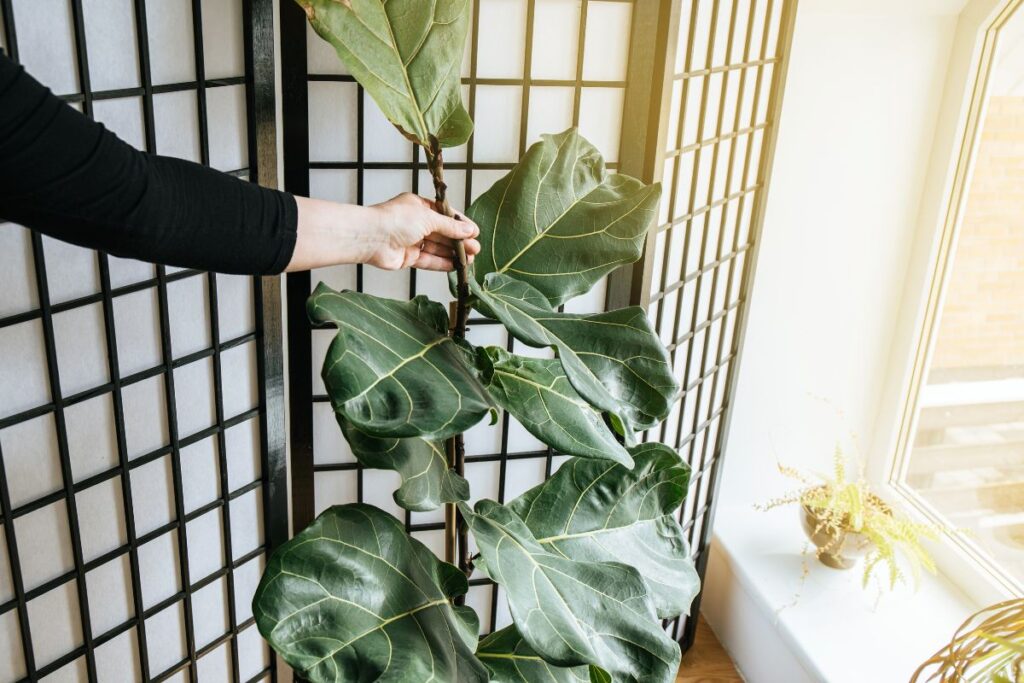
Extreme temperatures and low humidity can stress fiddle leaf figs in the following ways:
Heat Stress
Prolonged exposure to temperatures over 86 °F (30 °C) can increase the risk of dehydration due to faster moisture loss from evaporation and transpiration. Fiddle leaf figs have broad leaves that are more sensitive to heat stress.
As a result, you may notice the following symptoms:
- Yellowing leaf edges
- Brown and dry leaf tips
- Curling leaves
- Leaf drop
- Lack of new growth
You may improve your plant’s condition with the following adjustments:
- Move the plant away from hot, sunny windows at the peak of summer. Alternatively, filter the sun’s light and heat using sheer curtains.
- Switch on a fan several feet (+ 2 m) away from the plant to reduce air temperature during hot days. Avoid keeping the fan too close as it can also reduce the humidity, which can be bad for fiddle leaf figs.
- Keep the plant away from heating vents.
- Increase the watering frequency as needed. The soil may dry out more quickly during hot days so check the soil moisture regularly. Well-hydrated plants have a better tolerance to high temperatures.
Chill Injury
As tropical natives, fiddle leaf figs can’t tolerate temperatures below 55 °F (13 °C).
- Cold snaps from drafty windows or cooling vents can cause brown, mushy spots on the leaves.
- Prolonged exposure to cold or freezing temperatures can damage the plant tissues from the leaves to the roots, leading to stunted growth or even plant death.
Here’s how to evaluate your plant’s condition and see if it can still be saved:
- Give the leaves a gentle tug and remove all that feel loose. Severely injured leaves will fall off without resistance. Removing them will help you determine the extent of the damage.
- Feel the branches or stems to locate any firm and healthy sections. You can also check the wounds from fallen leaves to see if there’s any green (or sign of life) in them.
- Prune soft or mushy stems that appear pale brown inside. The lack of a green layer indicates tissue death. Use sterile shears and clean them with rubbing alcohol between cuts.
- Continue cutting the branches and stems downward until you see a green inner layer. Make one final cut about a half inch (1.3 cm) above a leaf node and brush the wound with cinnamon powder. New growth should occur at the nodes below the cut.
- Move the plant to an area with warm and stable temperatures (65-75 °F or 18-24 °C). Keep drafty windows and doors closed and avoid areas that get cold air from cooling vents.
Low Humidity
Fiddle leaf figs require high humidity to maintain the leaves.
Dry conditions (below 40%) can promote higher transpiration rates, causing the following problems:
- Yellowing leaves
- Browning leaf tips
- Curling leaf tips
- Delayed opening of leaf buds
- Tiny or irregular holes as the young leaves unfurl
You can improve the plant’s condition by switching on a humidifier. Determine the proper placement of the device and the duration of use based on the reading on a portable hygrometer. Aim for a humidity level of around 50-60% for faster recovery.
Note that pebbled trays with water aren’t very helpful for relieving symptoms caused by low humidity due to their minimal and slow effect. They’re also more likely to humidify only the bottom leaves.
8. Pest Infestation
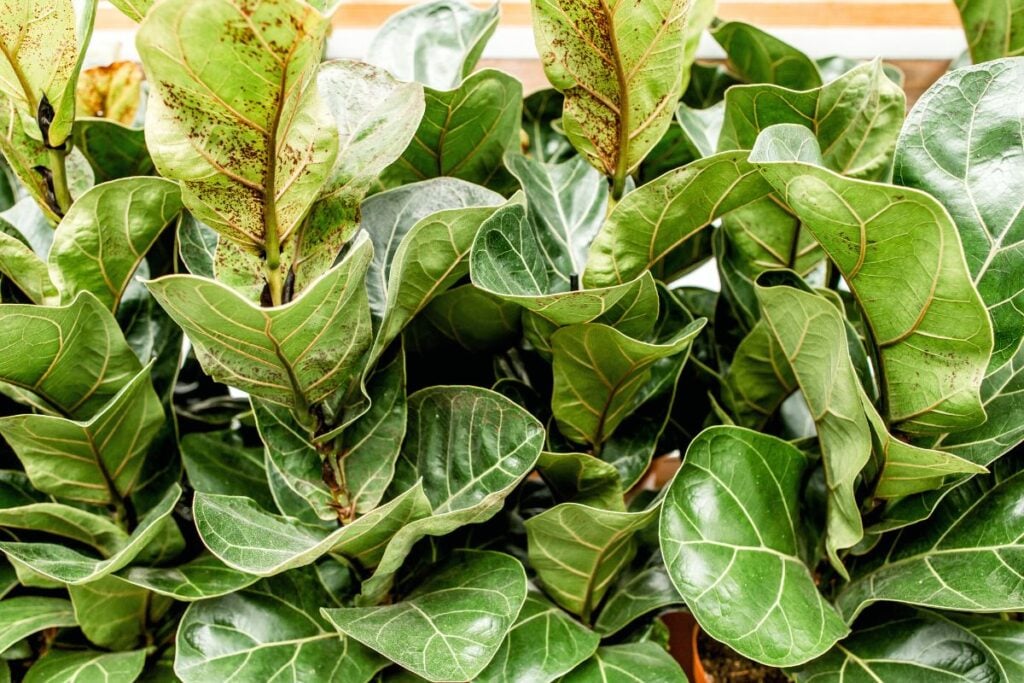
Fiddle leaf figs are naturally resistant to chewing pests due to the calcium oxalate crystals in their plant sap. The soluble oxalic acid, on the other hand, can deter sap-feeding insects and prevent further infestations.
However, young and stressed fiddle leaf figs—especially dehydrated or nutrient-deficient ones—have lower resistance to pests.
Although a severe pest infestation can’t directly inhibit growth in fiddle leaf figs, it can contribute to weakening an already stressed plant and worsen the damage.
Here are some pests to watch out for and their corresponding symptoms:
- Spider mites: They’re the tiniest pests on the list, approximately 0.04 in (1 mm) in diameter, and look like tiny black dots to the naked eye. They weave fine webs over the leaves or between stems. As they feed, they create yellow or white speckled damage on the leaf surface. Younger leaves may develop tiny reddish-brown spots. The discoloration can inhibit photosynthesis, slowing down the plant’s growth.
- Scale insects: Adult female scale insects appear like tiny brown bumps about ⅛ in (3.2 mm) in diameter. They’re immobile and typically stick to the leaf veins to draw sap and release honeydew, which is a sugary liquid that draws sooty mold and ants.
- Aphids: Adult aphids are about ⅛ in (3.2 mm) long and may be white, brown, green, or orange. They typically crawl underneath leaf surfaces, suck the sap out of the leaves, and also excrete honeydew.
- Mealybugs: They’re also about ⅛ in (3.2 mm) in diameter and like hiding underneath leaves. Both the eggs and adults are covered in a fluffy white waxy covering. Adult mealybugs also feed on plant sap. If a large population clusters around a single leaf or branch, it can cause yellowing, leaf drop, and inhibit new growth.
- Thrips: These tiny flying insects up to ⅛ in (3.2 mm) long pierce through the FLF leaves’ waxy coating and feed on plant tissue, leaving behind extensive silvery or bronze patches over the leaf surface. Severe infestations can discolor and damage several leaves, reducing the plant’s ability to photosynthesize and grow.
You must use multiple methods to deal with pest infestations in fiddle leaf figs, including the following:
- Isolation: Isolate severely infested plants to prevent the rapid spread of insect pests among other houseplants.
- Manual removal: Scrape the pests off the leaves using a cotton swab with alcohol. Drop the pests in a cup of soapy water to immobilize and drown them.
- Neem oil spray: Spray the leaves liberally with neem oil solution, especially the undersides, to eliminate pests. Do this after sunset once a week until the pest populations are under control. You may increase the interval to once every 2 weeks to prevent re-infestation.
- Spinosad spray: This works best against spider mites and thrips. Ensure the room has good ventilation before spraying the treatment. Follow the product-specific application instructions. Repeat application every 10-14 days.
- Pruning: Prune severely damaged or discolored leaves to help the plant focus on new growth. Removing leaves with silvery or bronze patches can also eliminate thrips that have burrowed into the leaf tissue.
- Regular monitoring: Inspect your plant weekly to catch signs of pests and prevent re-infestation promptly.
9. Age
Fiddle leaf figs typically live 25-50 years in the wild and reach their ultimate height in 10-20 years. Although they may slow or stop growing vertically, they grow branches laterally and regularly shed and grow new leaves. Indoor fiddle leaf figs may also slow down growth gradually as they age.
They also remain more compact and have shorter lifespans than their native counterparts due to the following reasons:
- Lower light conditions can slow down metabolic rates.
- Suboptimal environmental conditions can inhibit reproductive maturity.
- Limited space (pot size and ceiling height) can restrict plant growth.
You can confirm that the fiddle leaf fig is stunted due to aging when you see these additional symptoms:
- Slower growth rate but otherwise healthy-looking plant without signs of discoloration or damage on the leaves
- More woody, mature stems
- Leaf yellowing only on older leaves about 12 months old
Aging is a natural occurrence and houseplants typically lose vigor over time.
You can maximize your fiddle leaf fig’s lifespan and encourage continuous growth with the following tips:
- Prune older and yellowing leaves regularly to make way for new growth and keep your plant looking green and healthy.
- Occasionally collect viable stem cuttings and propagate them to increase your FLF collection.
Final Thoughts
Fiddle leaf figs are famous for their rapid growth and large foliage, so it can be alarming if your plant isn’t growing as expected.
Stunted growth in fiddle leaf figs is usually a mid to late-stage symptom that indicates a plant care or environmental problem that hasn’t been addressed promptly. Once you notice that your plant isn’t getting taller or putting out new leaves, you must evaluate your care routine thoroughly to identify the root cause.
Be observant of changes in your plant—trust me, fiddle leaf figs are very expressive when unsatisfied with their environment. With proactive and consistent plant care practices, you’ll be rewarded with a flourishing plant that can leave your guests in awe.
Don’t worry about making mistakes as beginner gardeners. As many fellow gardeners will agree, fiddle leaf figs are among the fussiest houseplants to care for. Please leave a comment if you need more tips or have valuable insights about FLF care.