
Holes or Cracks on Fiddle Leaf Fig Leaves: Causes & Fixes
Fiddle leaf figs are admired for their large, glossy leaves shaped like a lyre. However, the leaves are sensitive and can sometimes develop holes or cracks, signaling potential care issues.
Here are the common causes of holes on the leaves of fiddle leaf figs:
- Physical damage
- Underwatering
- Low humidity
- Pest infestation
- Sunburn
- Overwatering
- Fungal or bacterial diseases
- Nutrient imbalance
- Chemical burns
- Transition stress or relocation shock
This article will explore the common causes and associated symptoms and provide practical solutions to restore and protect your plant’s foliage.

Native Habitat, Growth, and Leaf Characteristics
Fiddle leaf figs (Ficus lyrata) are tall trees from West and Central African rainforests. They can reach over 50 feet (15 m) tall, and mature leaves typically grow over 2 feet (0.6 m) long and 1.5 feet (0.45 m) wide.
A fiddle leaf fig’s fascinating height and large foliage make it an excellent shade tree when grown outdoors in frost-free regions in USDA zones 10 to 12.
As tropical natives, fiddle leaf figs are frost-sensitive, so they’re only grown as indoor ornamentals in colder climates. Nevertheless, tall fiddles with large, shiny leaves exude an eye-catching charm in any indoor space.
Large, healthy leaves help fiddle leaf figs maximize the limited amount of natural light available in the indoor garden. Leaf damage, such as tears, holes, or cracks, can reduce the plant’s photosynthetic activities and affect the plant’s overall health and appearance.
Symptoms of Holes or Cracks in Leaves
Leaf holes or cracks in fiddle leaf figs don’t always indicate severe issues, as some may be caused by minor physical damage from passersby. The appearance of the holes, the number of leaves affected, and/or accompanying symptoms will help you determine if the issue needs urgent intervention.
Leaf damage may appear in the following ways:
- Small, needle-sized punctures
- Irregular tears
- Jagged edges
- Cracks along veins or across leaf surfaces
You may identify the underlying cause/s more easily by taking note of associated symptoms, including the following:
| Probable Cause | Common Symptoms |
| Physical Damage | Irregular tears concentrated on the side of the plant exposed to foot traffic |
| Underwatering | Wilting, drooping, yellow or brown and crisp leaf edges, curling leaf tips |
| Low Humidity | Irregular holes on newly unfurled leaves, curling leaf tips on young and older leaves |
| Pest Infestation | Yellowing and tiny punctures near the site of infestation Honeydew, sooty mold near the holes Ants may also appear, especially in warm climates |
| Sunburn | Holes with brown, crisp edges at the side of the plant exposed to sunlight, dull leaves |
| Fungal or Bacterial Leaf Spot | Holes with brown or yellow halos Necrotic brown or black spots with holes at the center |
| Overwatering | Mushy or water-soaked lesions |
| Nutrient Imbalance | A growth spurt following heavy fertilization, causing large, weak leaves with tears, holes, or cracks |
| Chemical Burns | Dull leaves, irregular holes or patches on leaves exposed to chemicals (i.e., bleach) from cleaners |
| Transition Stress or Relocation Shock | Drooping or wilting leaves, leaf drop Slow or stunted growth followed by a growth spurt with new leaves with holes or tears |
Note: Large holes or tears on FLF leaves typically don’t heal. You can keep leaves with minor damage on the plant so they can still contribute to photosynthesis or food generation.
On the other hand, you must prune leaves that exhibit the following issues:
- Mushy or necrotic spots that spread (indicative of potential infection)
- Severely pest-infested leaves
- Large, gaping holes with discoloration that negatively affect the plant’s aesthetic
Catching leaf damage early can help identify the root cause and prevent further deterioration or new holes from developing on the plant.
Common Causes (& Fixes)
Below are the common causes of holes or cracks in FLF leaves:
1. Physical Damage
FLF leaves are vulnerable to physical damage from the following:
- Foot traffic: FLFs placed along hallways or corridors may be hit by moving people with sharp objects, causing irregular holes or tears on the leaves.
- Curious pets: The large FLF leaves are attractive to curious house pets, which can leave puncture or bite marks on the affected leaves. Unfortunately, the sap contains calcium oxalate crystals, which can cause oral irritation and vomiting in cats and dogs.
- Rough handling: Fiddle leaf figs are prone to damage when being transported or moved around (i.e., seasonal adjustments for better lighting or to avoid drafts). The large leaves may hit sharp objects during the move.
Holes caused by physical damage may show the following characteristics:
- Irregular cracks
- Torn edges
- Punctured holes with no signs of disease (i.e., mushiness, yellowing, browning)
Left unattended, the wounds or tears may develop yellow or brown margins. They can also serve as entry points for microbial infections, subjecting your fiddle leaf fig to more serious health problems.
Here are some tips to solve the problem:
- Place the plant in a stable location away from foot traffic, pets, or strong air currents.
- Handle the plant gently when cleaning or moving it. You can place the pot over a plant caddy or plant stand with wheels to make it easier to move around.
- Pro Tip: If a leaf is severely damaged, cut it off using sharp, sterile shears to prevent secondary infections.
2. Underwatering

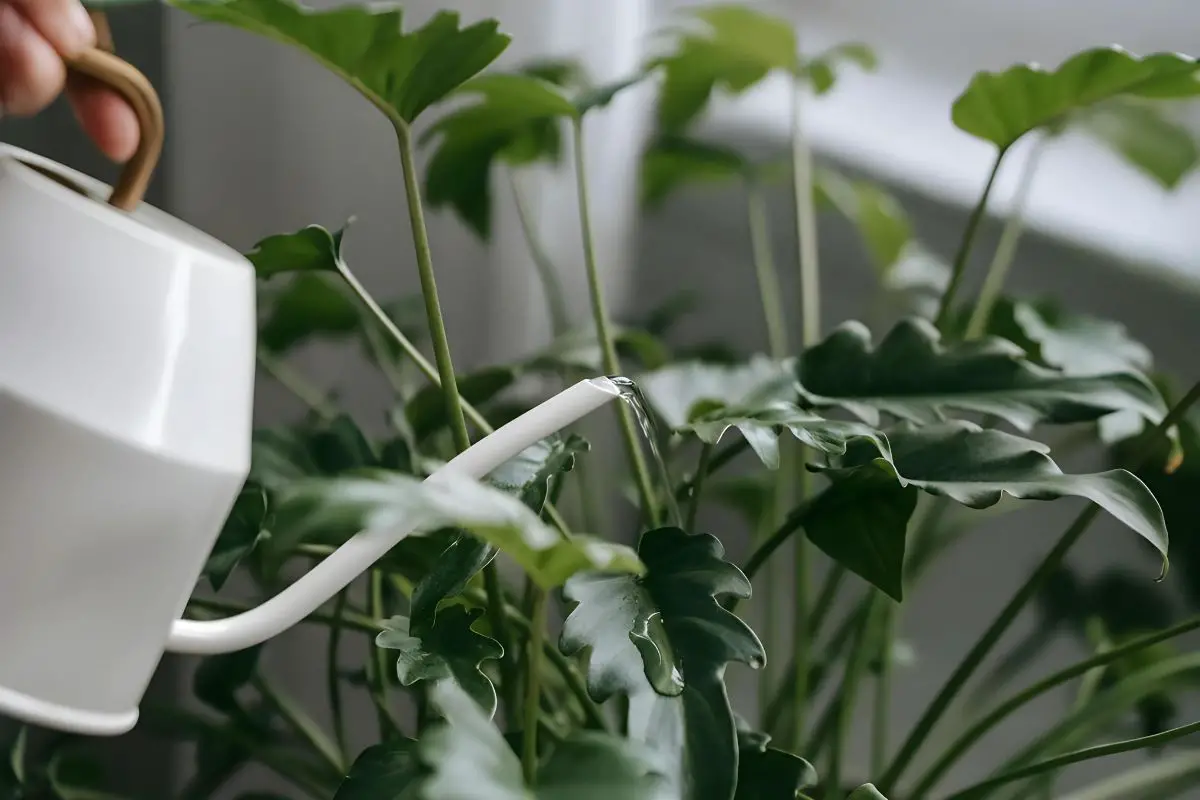
Fiddle leaf figs are moisture-loving plants that require moderate humidity and regular watering for optimal health. Prolonged underwatering can lead to dehydration, which weakens the leaf structure, making it more prone to cracking and tearing.
An underwatered fiddle leaf fig may exhibit the symptoms below:
- Drooping or limp leaves
- Dry, brittle leaves with small cracks or holes
- Holes forming from the dried-out spots on the leaves
- Yellow or brown and crisp leaf edges
- Curling leaf edges
- Wilting
- Leaf drop
To fix the problem, you may choose from the tips below:
- Prune the yellowing or browning leaves using sterile shears because they’re unlikely to revert to green. On the other hand, you can keep the droopy but green leaves on the plant because they’ll gradually perk up once the plant is watered well.
- Water consistently when the top 2 inches (5 cm) of the soil is dry. Use a moisture meter if unsure. Insert the probe into the upper ⅔ of the soil and water the plant deeply when the reading shows 4 or less.
- Soak the pot in water for up to 30 minutes if the soil is showing signs of being hydrophobic (i.e., poor water infiltration through the surface, crusty soil surface, water quickly draining through the holes after pouring).
- Repot the plant in fresh soil if the soaking method doesn’t work. Use a soil mix with at least 10% compost for adequate drainage and moisture retention.
3. Low Humidity
Dry air, especially with less frequent watering and indoor heating in winter, can cause FLF leaves to transpire more.
The rapid moisture loss from the foliage can weaken the leaves and cause the following symptoms:
- Brown, brittle edges or spots
- Cracks along the upper leaf surface
- Curling leaf edges
- As the brittle parts fall off, they leave behind unsightly holes
Young leaf buds may also stop growing when it’s cold and dry. As spring arrives and care adjustments like more frequent watering, brighter light, and fertilization prompt new growth, the leaf buds may unfurl rapidly and develop holes in areas previously cracked by dry air.
Pro tip: Leaves with holes but no discoloration are unlikely to recover, but I recommend keeping them on the plant for a while to continue photosynthesizing and generating food.
However, you may prune them in the following events:
- The hole margins are gradually turning yellow or brown.
- The tattered leaves are negatively affecting the FLF’s overall appearance.
- New leaf buds are unfurling (to focus the energy on new growth).
After deciding on pruning, you must improve the humidity level around your fiddle leaf figs to ensure the new growth doesn’t develop holes or cracks.
Here are some tips to boost the local humidity around your plant:
- Humidifier: Measure the relative humidity within a foot (0.3 m) around your plant using a portable hygrometer. The goal is to keep it within 40-60%. Switch on a humidifier at least 2 feet (0.6 m) away from your houseplants for about 4 hours until the humidity reading rises close to 60%.
- Grouping plants for a humid microclimate: Group houseplants with similar environmental requirements to boost the local humidity as they transpire simultaneously. Excellent companions for fiddle leaf figs include jade plants, ZZ plants, and monstera.
- Pebbled tray with water: Place younger plants (less than 3 feet or 0.9 m tall) over a pebbled tray. Ensure the water on the tray doesn’t touch the pot’s drainage holes to prevent the roots and soil from drawing in excess moisture. As the water in the tray evaporates, it can boost the local humidity around your plant. Pro tip: The water can also keep crawlers (i.e., mealybugs) and ants from climbing up your pot.
- Regular leaf cleaning: Mist the leaves with filtered or distilled water and wipe them with a clean, lint-free cloth. Doing this during midday once a week (between watering sessions). The thin film of moisture may last only a few minutes or hours on the leaves, but it can help mitigate the risk of dehydration from excessive transpiration.
Note: Other sources recommend misting the unfurling buds daily to improve the humidity around them. However, I don’t recommend misting the young buds or anywhere near the foliage, as it can lead to wet spots that can promote bacterial or fungal growth.
Proper use of humidifiers can help humidify the space without leaving excessively wet spots on leaf surfaces. In addition, avoid using tap or hard water because mineral salts may remain on the leaf surface as white, chalky deposits.
4. Pest Infestation

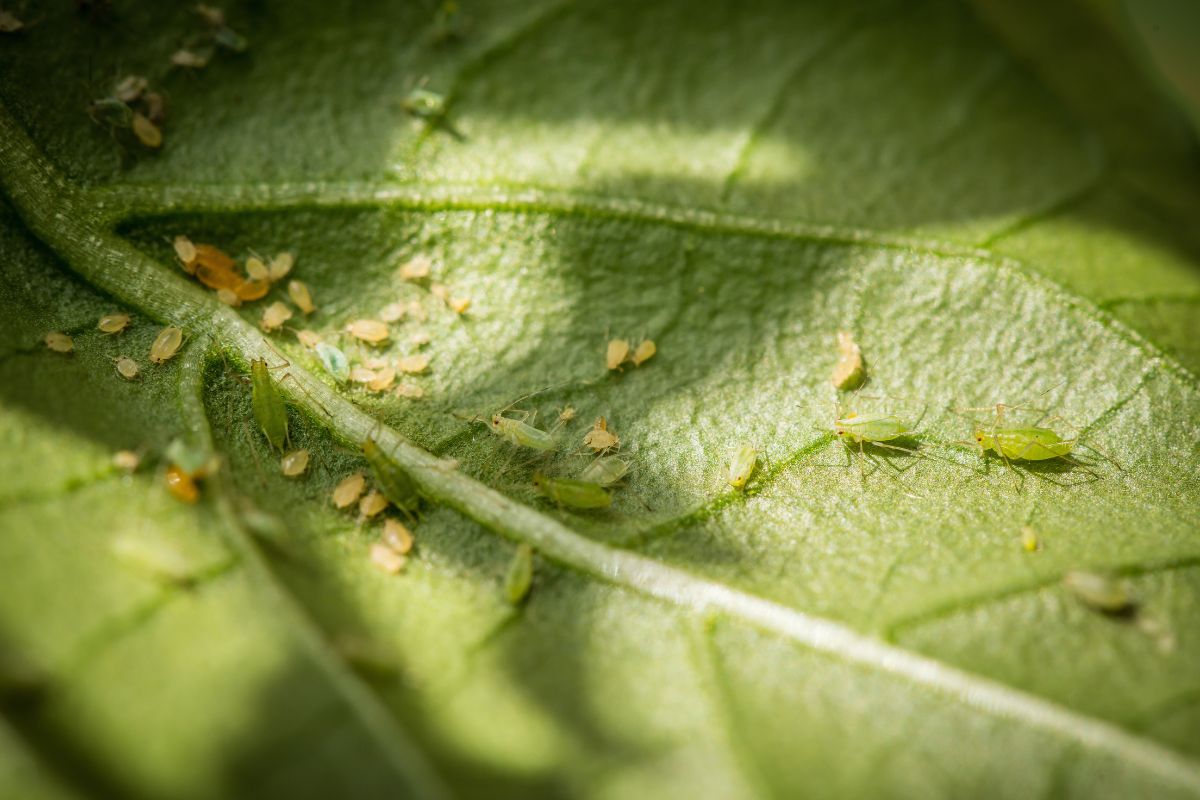
Fiddle leaf figs have a natural protection against chewing insects like caterpillars or slugs due to the calcium oxalate crystals in the sap, which function as irritants to pests. In addition, indoor fiddles are unlikely to be attacked by these outdoor pests. Still, common houseplant sap-feeding pests may cause tiny holes in FLF leaves.
Here are the pests to watch out for:
- Aphids: Translucent green, orange, pink, or black insects about ⅛ inches (3 mm) long
- Mealybugs: Fluffy white wax-coated insects about ⅛ inches (3 mm) in diameter, commonly found in clusters on leaf undersides
- Scale insects: Tiny, brown-shelled, immobile insects up to ⅛ inches (3 mm) in diameter, commonly found along leaf veins and petioles
Once infested, the fiddle leaf figs may show the following signs:
- Localized yellowing on severely infested leaves
- Tiny holes at the site of infestation
- Sticky, sugary residue (honeydew)
- Black spots (sooty mold mycelia spreading over honeydew droplets)
- Ants (drawn to honeydew, common in areas with warmer outdoor climates)

You can treat pest infestations with the following steps:
- Isolate severely infested plants. Place them in a room with similar environmental conditions (light, temperature, humidity) to prevent stress. Keep the plants in isolation for the duration of the treatment (i.e., 6-8 weeks) and 2 weeks more to observe for signs of health improvement and prevent recurrence.
- Prune severely infested leaves, as they may contain invisible eggs and larvae that can lead to new generations of pests.
- Manually remove visible pests with a cotton swab dipped in 70% isopropyl alcohol. You may use tweezers for tougher scale insects. Drop them in a cup of soapy water (1 ml liquid soap in half-cup water). Repeat this every 3-5 days to keep pest populations under control.
- Spray the leaf undersides with neem oil solution after sunset to kill invisible pest larvae. Repeat this once a week for up to 8 weeks until there are no more signs of pests.
- Optional: Spray the leaf undersides with commercial insecticidal soap between neem oil applications for more thorough pest elimination.
5. Sunburn
Indoor fiddles are less tolerant of direct sunlight compared to their native counterparts due to lower humidity levels indoors and low soil moisture in pots. They also require proper acclimatization before moving to brighter light conditions to prevent shock and sunburn.
Prolonged exposure to direct sunlight can burn leaf tissue and increase the risk of dehydration.
As a result, the leaves may show the following signs:
- Cracks on the leaf surface
- Brown or bleached dry spots on sun-exposed leaves
- Dry spots falling off, creating holes
- Yellowing or curling leaf edges
Follow these tips to help relieve sun stress in fiddle leaf figs:
- Prune the leaves with brown or bleached spots and holes to restore your plant’s green appearance. Limit pruning to only 1-2 leaves per week to prevent shock and focus on removing the severely damaged ones first.
- Move the plant a few feet (+0.6 m) away from a sunny window to give it bright, indirect light instead of direct sun exposure.
- Use sheer curtains to diffuse harsh light. Draw the curtains at midday, especially in summer when the sun is hot and bright.
- Rotate the plant 90° every week or before watering for even light exposure.
6. Fungal or Bacterial Infections

Several fungal or bacterial pathogens can cause leaf spot diseases in fiddle leaf figs, including the following:
- Pseudomonas leaf spot (Pseudomonas cichorri)
- Xanthomonas leaf spot (Xanthomonas campestris)
- Anthracnose (Colletotrichum spp.)
- Myrothecium leaf spot (Myrothecium roridum)
FLF leaf spot diseases are common during warm and humid conditions. The pathogens typically spread through water droplets (bacteria) or airborne spores (fungi).
Once infected, the plant may show the following symptoms:
- Wet, mushy patches or water-soaked lesions
- Brown or black necrotic spots with a yellow halo
- Concentric rings with thousands of spores (Anthracnose and Myrothecium)
- Dark spots that turn into holes
Once symptoms appear, you can try the following treatment methods:
- Isolate the symptomatic plant.
- Prune all affected leaves with sterilized shears to remove infected plant matter and improve airflow.
- Avoid overhead watering to prevent the spread of diseases.
- Treat with copper fungicide if necessary. Check and follow the instructions on the product label for maximal treatment effectiveness and personal safety.
- Disinfect gardening and pruning tools with 10% bleach before and after use to avoid spreading infections.
Note: If symptoms persist on the other leaves even after treatment, I recommend properly discarding the infected plant and potting soil to prevent the spread of the disease. Sick FLFs are not suitable for propagation because they may carry pathogens within the leaves and stems.
Sterilize the pot with a 10% bleach solution and rinse thoroughly with clean water before reusing.
7. Overwatering
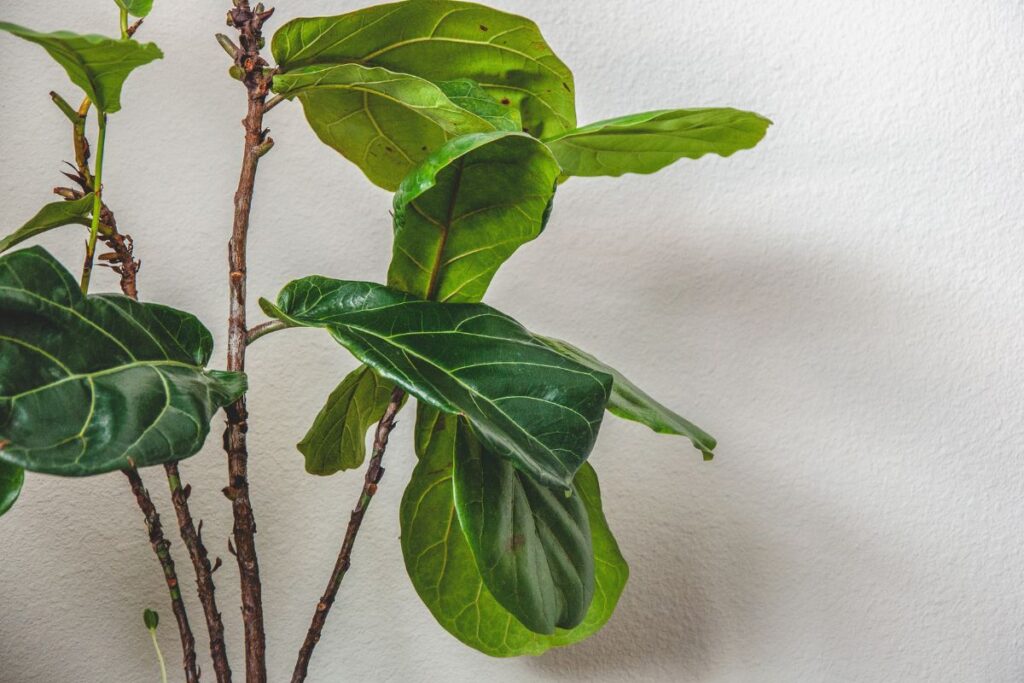
Overwatering may also occasionally cause leaf holes in fiddle leaf figs, as excess soil moisture weakens root function, leading to inadequate nutrient transport and fragile leaves.
Overwatered plants may show the following symptoms:
- Soggy soil
- Brown, mushy spots on the leaves
- Soft, weak leaf spots that easily split or develop holes
- Possible mold growth or algae growth on the soil surface
You may fix the problem with the following steps:
- Prune severely discolored or damaged leaves using sterile shears. Limit pruning to about 10% of the foliage, and give the plant around 1-2 weeks before pruning again.
- Allow the top 2 inches (5 cm) or the upper third of the soil to dry before watering.
- Ensure the pot has drainage holes and use well-draining soil. Poke through the holes using a wooden chopstick to loosen plugs and facilitate better drainage.
Pro Tip: Water with room-temperature, filtered water to prevent additional stress.
8. Nutrient Imbalance
Indoor fiddle leaf figs typically grow more quickly in spring and summer when it’s warmer and brighter, and they’re watered and fertilized regularly.
During fall and winter, they may gradually slow growth due to colder and darker conditions. The leaf buds may also delay unfurling until spring. As discussed, dry indoor air may also cause leaf holes in the developing buds.
Excessive fertilization in spring can promote rapid growth, resulting in new leaves developing weak cell walls and being more susceptible to cracking or developing holes.
You may see plenty of new green growth, but the leaves may be large, thin, and fragile, with visible tears or splits.
To fix the problem:
- Prune large but weak or flimsy leaves using sterile shears.
- Reduce fertilizer dosage and frequency. Dilute the 3-1-2 liquid fertilizer to half the recommended strength and feed your plant only every other time you water during the growing season.
- Gradually increase the interval between fertilizer applications in summer and stop feeding in the fall.
Pro Tip: Provide your fiddle leaf fig at least 8 hours of bright, indirect (natural) light and maintain a moderate temperature (65-75 °F or 18-24 °C) and humidity (40-60%) indoors, even during fall and winter, to encourage steady growth.
In addition, water your plant as soon as the top third of the soil is dry to prevent drought stress that can also contribute to weak leaves.
9. Chemical Burns
Fiddle leaf figs are famous for their large, glossy leaves, so it’s common for indoor gardeners to use leaf shine products or try homemade blends to deter pests. However, some leaf treatment recipes may lead to chemical burns and consequent holes.
Here are some popular homemade FLF leaf treatments that I’ve found to be harsh on the leaves:
- Vinegar spray: This solution is usually prepared by mixing white (5% acetic acid) or horticultural (20%) vinegar and water in equal parts to kill pests or treat fungal diseases. However, FLF leaves are sensitive, and the acidic content of the solution can degrade the waxy surface, leading to dullness and vulnerability to dehydration, cracks, and tears.
- Alcohol spray: Alcohol is also often used to treat pest infestations. Like vinegar, alcohol can also degrade the wax on FLF leaves and weaken the leaf surface.
- Liquid soap spray: Liquid dish soaps can kill insect pests like aphids, mealybugs, and scale insects. However, they’re not formulated to be plant-safe and are likely to wash away the wax on the leaf cuticle.
Note: Home cleaning solutions used to clean windows, tabletops, and floors are also harsh on fiddle leaf figs. They typically contain surfactants and bleach, which can break down the leaf wax or burn holes through the leaves when they accidentally land on the plant.
To treat affected plants, prune severely damaged leaves using sterile shears because they’ll be prone to secondary infections.
Pro Tip: Homemade solutions are appealing to DIY gardeners because they’re cheaper and often effective, although not always plant-safe. Before using a homemade treatment, try spraying it on one leaf and waiting 24-48 hours.
If the leaf doesn’t show discoloration or damage (i.e., cracks or tears), you can use the solution on other leaves. Avoid applying it too often to prevent potential leaf damage from chemical buildup.
I also recommend using high-quality products whenever possible because they’re properly formulated to treat pests or diseases while being safe on the plant.
10. Transition Stress or Relocation Shock
Fiddle leaf figs typically show stress or shock symptoms when moved from the nursery to a home setting with drastically different environmental conditions (i.e., lighting, temperature, and humidity).
In some cases, the commute can also stress the plant because of the environmental conditions in the car. In response, fiddle leaf figs may grow slowly or temporarily stop growing—maybe even shed a few leaves—as they adapt to the new place.
Healthy fiddles will eventually overcome the shock with adequate care. However, due to their fast growth rate, the new leaves that were temporarily halted may appear distorted with irregular tears and holes as they unfurl.
Although the torn new leaves won’t recover, you can keep them on the plant to support photosynthesis. Maintaining a consistent care routine and preventing any more transition or relocation stress will encourage the plant to grow new, damage-free leaves.
Routine Care and Prevention
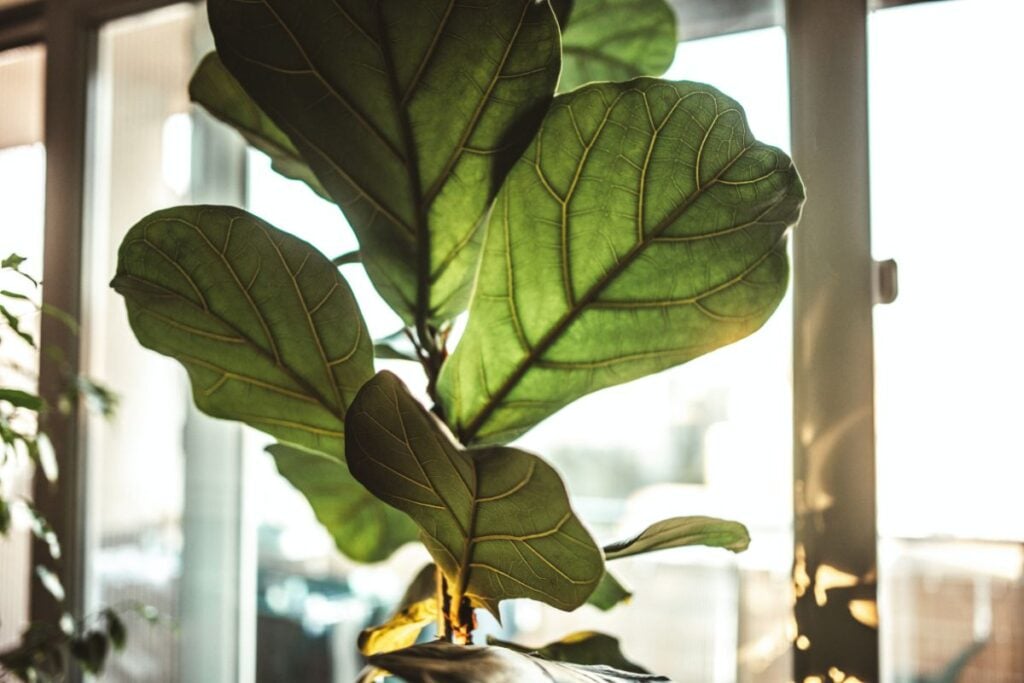
You can protect your fiddle leaf figs from leaf holes, cracks, or tears with proper care, including the tips below:
- Stable placement: Keep the plant in a secure spot away from foot traffic or pet access to prevent physical damage. For instance, keep fiddle leaf figs in a room inaccessible to pets because, other than potential damage, the calcium oxalate crystals in the sap can cause oral discomfort in cats and dogs.
- Balanced watering & fertilization: Water when the top 2 inches (5 cm) or ⅓ of the soil is dry and fertilize only during the growing season using a half-strength 3-1-2 liquid fertilizer.
- Humidity control: Maintain humidity levels between 40-60% to prevent brittle leaves. Group tropical houseplants in the same area and switch on a humidifier as needed during dry days. You can also place small plants on pebbled trays with water.
- Pest management: Regularly inspect leaves for pests—ideally weekly—and treat them early to prevent infestations. Isolate severely infested plants right away to prevent the pests from spreading to neighboring plants.
- Light optimization: Provide bright, indirect light while avoiding intense direct sunlight, especially for young plants. For older plants with well-developed, darker leaves, limit direct exposure to gentle morning sun from an east-facing window. Avoid the scorching midday or afternoon sun by drawing sheer curtains. More importantly, rotate the plant regularly to prevent prolonged exposure to harsh light.
- Leaf cleaning & monitoring: Gently clean leaves once every 1-2 weeks using only distilled water and a lint-free cloth to prevent dust buildup. Inspect the leaves for early signs of stress or pest damage for prompt and appropriate intervention.
Final Thoughts
Fiddle leaf figs are known for being fussy because their large leaves are prone to stress symptoms, such as developing holes or cracks from the following issues:
- Physical damage (rough handling, pets, pests, chemical burns)
- Inadequate care (watering and fertilizing)
- Environmental stress (light and humidity)
- Diseases (bacterial or fungal)
Remember that consistent care, early detection, and appropriate interventions will keep your fiddle leaf fig healthy and thriving.
Feel free to share your experiences, ask questions, and connect with other plant enthusiasts in the comments.