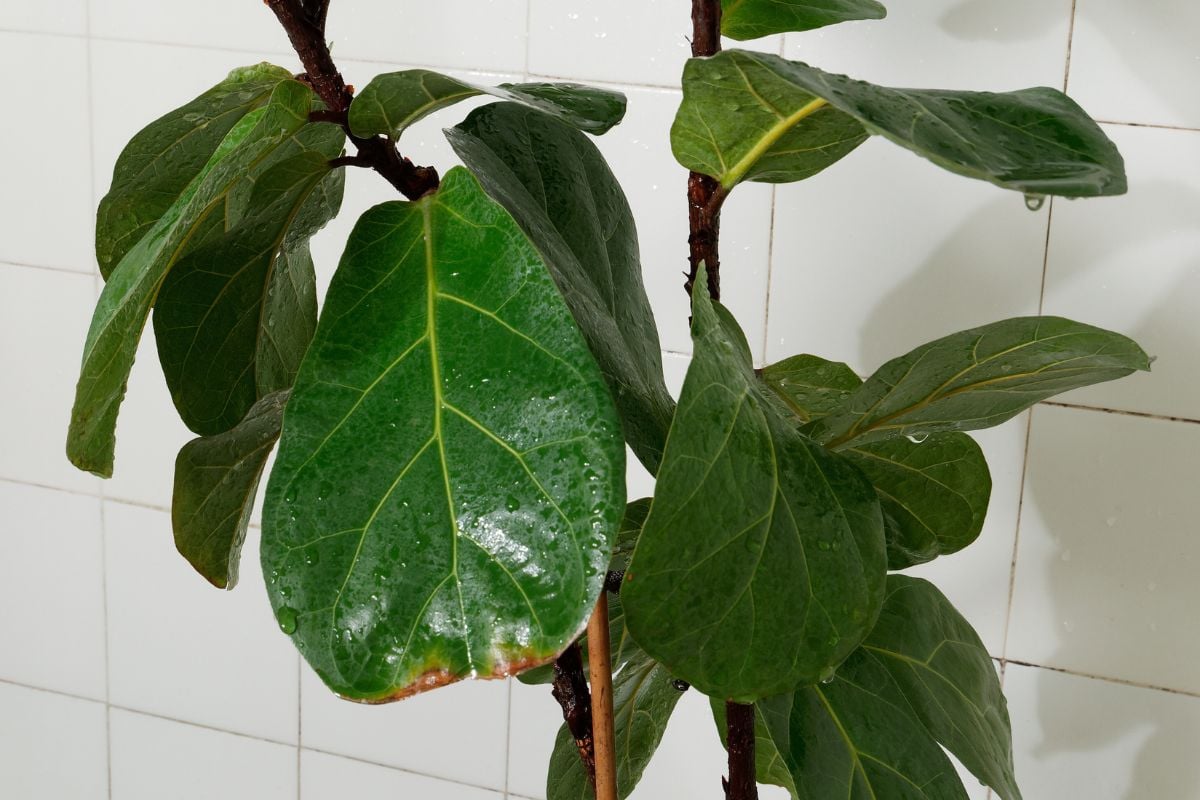

How to Repot a Fiddle Leaf Fig: A Transplanting Guide
Fiddle leaf figs are fast-growing trees that can quickly outgrow their pots, making regular repotting an essential part of their care. Although they can tolerate being rootbound, the heavy top with large foliage will make them prone to toppling over.
Here are important things to remember when repotting fiddle leaf figs:
- Repot the plant when the roots start poking out of the soil surface or drainage holes.
- Schedule repotting in spring for faster recovery and better adjustment to the new soil environment.
- Use a balanced soil mix with good drainage, good moisture retention, a slightly acidic pH (6.0-7.0), and rich in organic matter (compost).
- Prepare a pot 2-4 inches (5-10 cm) taller and wider than the old pot.
- Choose a heavy pot with drainage holes to support the plant’s weight and provide suitable drainage.
- Ensure the pot has a wider mouth than the base to make it easier to unpot the plant the next time you transplant it.
Repotting is crucial to fiddle leaf fig care, providing fresh soil, room for root growth, and preventing root-bound issues. Fiddle leaf figs can be fussy, so it’s important to minimize root damage when repotting and ensure optimal post-transplant care. This article will help you plan and carry out the process correctly and efficiently.
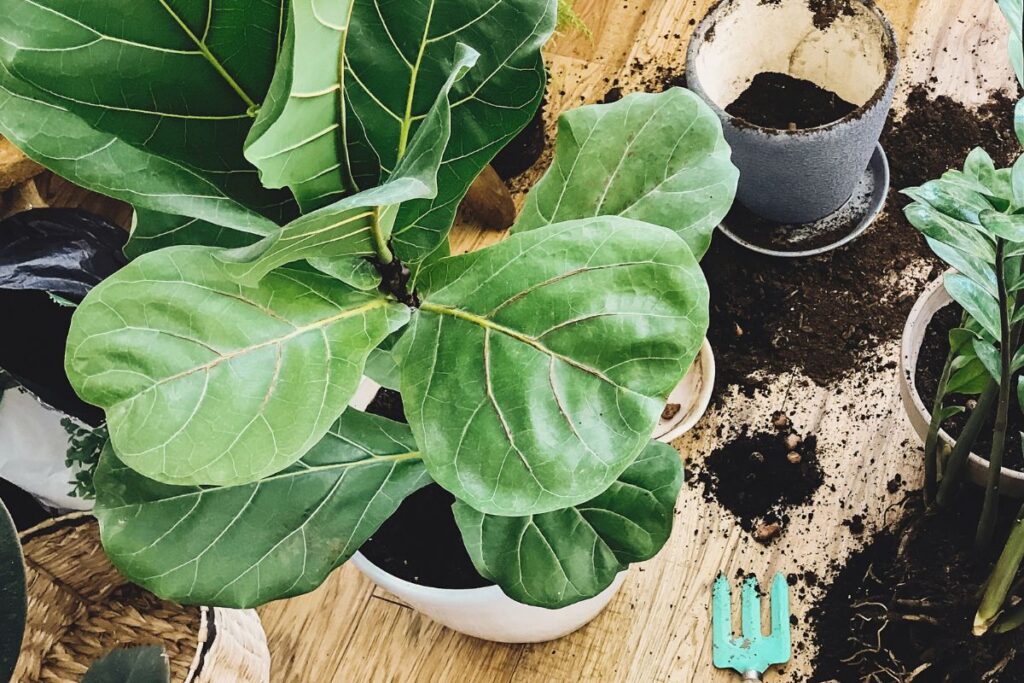
Growth Patterns and Repotting Needs
Fiddle leaf figs (Ficus lyrata) are tall trees native to West and Central African tropical rainforests. They grow rapidly in warm, humid, and bright conditions and can reach around 50 feet (15 m) throughout their lifespan of about 25-50 years.
In the wild, the shallow, fibrous roots can spread through sandy loam soil and draw moisture and nutrients. They also anchor fiddle leaf figs effectively, allowing the trees to maximize their growth potential.
In contrast, the limited soil space in pots and less intense light conditions indoors can keep fiddle leaf figs compact, resulting in shorter plants that grow only up to 10 feet (3 m) tall and live 10-15 years.
It’s important to repot indoor fiddle leaf figs regularly for the following reasons:
- Repotting allows a thorough inspection of the root system to diagnose and treat signs of rot or desiccation as needed.
- New soil has fresh nutrients and better aeration, drainage, and moisture retention.
- A larger pot and soil volume can help anchor the top-heavy plant better and prevent falling over.
- The roots will have more soil space to grow, prompting more active shoot growth.
Understanding When to Repot
Most sources would suggest repotting fiddle leaf figs every 2 years or so. Although this is a good guide to follow, it’s worth noting that some plants may grow faster than others, depending on the environmental conditions.
For instance, my fiddle leaf fig growing in the sunroom with 4-6 hours of bright direct morning sun from east and south-facing windows grows rapidly. Within a year of acquiring the plant, it grew around 4 feet (1.2 m) taller.
On the other hand, the fiddle leaf fig in my home office, with only bright indirect sun from a southern window, puts out only about 1 foot (0.3 m) annually.
Note: Slow growth in fiddle leaf figs doesn’t always mean poor health. I actually prefer to slow down my fig’s growth to keep it at a manageable size. It also requires less frequent repotting.
It’s important to pay attention to your individual fiddle leaf fig’s growth behavior to determine when to repot it.
Signs Your Plant Needs Repotting
Here are some signs that your fiddle leaf fig needs repotting:
- Some root hairs are poking out of the soil surface or the drainage holes.
- The water pools on the soil surface or slides down the edges and drains quickly. Circling roots can make the potting soil more compact and reduce water infiltration.
- The soil dries out more quickly.
- The plant starts leaning or the pot tends to fall over frequently.
- The plant is growing slowly or there are no new leaf buds, even during the growing season.
Best Time of Year for Repotting
I usually repot younger fiddle leaf figs annually to encourage faster growth. I find that you can safely follow this rule until your plant is 3 years old or over 3 feet (0.9 m) tall and the growth rate has noticeably slowed.
Larger fiddles have well-established roots and may be repotted less frequently. Although most sources recommend repotting every 2-3 years, observing your plant’s growth behavior is best, as discussed above.
Older and slow-growing plants may take longer to recover after transplant and proper timing of repotting can help minimize the effects of transplant shock.
The best time to repot fiddle leaf figs is in spring or early summer when they’re actively growing.
The warm conditions and regular watering frequency will give the roots enough time to adapt and spread in the new soil environment. You’ll also see new growth (i.e., new leaf buds) sooner, which can confirm that the plant is adjusting well.
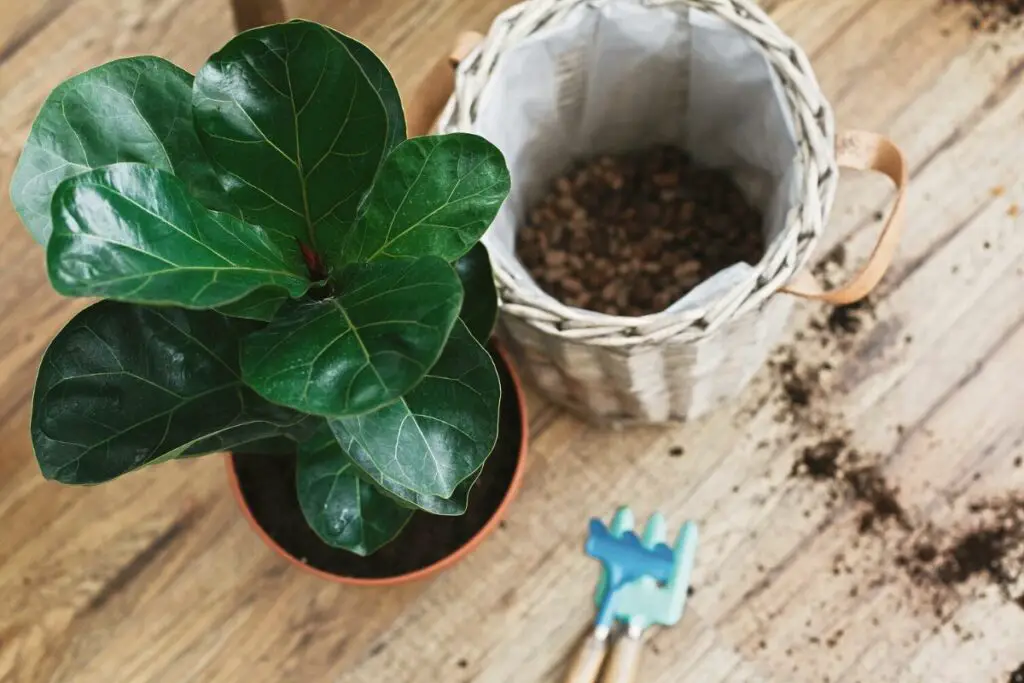
Choosing the Right Pot and Soil
Preparing the right pot and soil can help reduce the risk of transplant shock, as fiddle leaf figs tend to be fussy.
Inadequate potting or soil conditions can cause over- or underwatering problems, leading to problems like leaf discoloration (yellowing, red spots) and leaf drop.
Follow the tips below to avoid transplant shock symptoms after repotting:
Selecting the Ideal Pot
Here are some recommendations to consider when choosing the ideal pot:
- Pot size: Choose a pot 2 inches (5 cm) wider and deeper than the old one if your fiddle leaf fig grows slowly (but healthily) due to the indoor environment. For faster-growing plants, you can use a pot up to 4 inches (10 cm) larger.
- Material: Glazed terracotta or ceramic pots look great with fiddle leaf figs and can help keep the soil evenly moist. They’re also heavier than plastic pots and can support the plant’s heavy foliage. If you want to use porous pots, you may need to water the plants more often, as they can dry out the soil too quickly.
- Drainage: It’s best to choose a pot with multiple drainage holes to prevent waterlogging. If the pot has a singular hole, the roots may eventually plug it and inhibit proper drainage. You may also line the hole with a wire mesh to prevent the roots and soil from plugging it or leaking out of the pot.
- Design: Choose a pot with a wide mouth to make it easier to slide out the rootball the next time you repot the plant. For larger plants, you can use pots with legs to easily catch the dripping water. Alternatively, place the pot over a stand or caddy, which allows drainage. Place a saucer below each pot to catch the water dripping from the drainage holes. Be sure to empty the saucer regularly to prevent soggy soil conditions or water stains on the floor.
- Cleanliness: Wash the new pot with 10% bleach to kill pathogens. Rinse thoroughly with water and let it dry completely before repotting. You can also wipe away the water droplets with a clean cloth.
- Aesthetic: You may use a decorative pot for fiddle leaf figs as long as it has adequate drainage holes. When using a large cache pot, you must grow the plant in a plastic pot with drainage holes and just take it out when watering. Drain the excess water completely before placing the plant back in the cache pot.
Note: Small to moderate-sized houseplants are typically grown in pots about ⅓-½ their height. However, fiddle leaf figs can reach up to 10 feet (3 m) tall indoors, so a pot 3-5 feet (0.9-1.5 m) tall would be impractical.
Fiddle leaf figs also have shallow fibrous roots susceptible to root rot when planted in oversized pots with too much excess soil. That said, avoid using pots over 4 inches (10 cm) taller and wider than the old ones when repotting.
A full-grown fiddle leaf fig around 10 feet (3 m) tall can sit comfortably in a heavy pot up to 2 feet (0.6 m) deep and 18 inches (45 cm) wide.
Optimal Soil Mix
High-quality peat-based commercial potting mixes are usually suitable for fiddle leaf figs. However, I prefer to enhance the drainage by adding perlite to the soil mix.
Here’s a recipe that works perfectly for my fiddle leaf figs:
- 2 parts high-quality potting mix (60%) for good texture and moisture retention
- 1 part perlite (30%) for improved drainage. It drains well and is easier to re-wet than horticultural sand, preventing the buildup of hydrophobic soil clumps in the root zone.
- Compost (10%) for organic matter and healthy populations of beneficial microbes
Mix the ingredients evenly to ensure balanced drainage and moisture retention throughout the root zone.
The Repotting Process
You’ll need the following additional materials for the repotting process:
- Old newspaper or tarp
- Spatula
- Sharp, sterile scissors
- Rubbing alcohol and clean cloth or cotton balls
- Watering can
- Gloves (optional)
- Hand cultivator
- Hand trowel
- New pot
- Wire mesh
- Potting mix
Preparing Your Workspace
Repotting a full-grown fiddle leaf fig is messy and requires a large space.
Here are some tips to prepare the workspace:
- Move the plant to a warm, shady spot outdoors.
- Spread newspaper or a tarp over the ground to contain the soil and water spills.
- Prepare all the tools within an arm’s reach to make the process smoother.
- Sterilize the pot with 10% bleach solution and the tools with rubbing alcohol.
Step-by-Step Guide to Repotting
Follow these steps to properly repot your fiddle leaf fig:
- Water the plant deeply 2-3 days before repotting.
- Loosen the roots clinging outside the pot through the drainage holes. If they hold the rootball back from sliding out of the pot, cut them off using sterile scissors.
- Hold the trunk firmly and lift the plant out of the pot. If the rootball sticks to the pot’s edges, run a spatula around it.
- Tilt the pot to the side and slide out the plant to minimize damage to the roots.
- Lay the plant safely on the side over the tarp or newspaper.
- Inspect the roots for signs of damage.
- If the roots are severely potbound and circling around the old soil, cut through them vertically at 3-4 spots, sterilizing the blade between cuts. This will loosen the clump and redirect root growth, allowing it to spread when repotted in new soil later.
- Prune black and mushy or dried-out roots. It’s natural to lose some roots in the process, but the fiddle leaf fig should be fine if it’s less than one-third of the volume.
- Remove as much old soil from the roots as possible. You may use your gloved hands or the hand cultivator to comb through the remaining roots and detach the old soil.
- Place a wire mesh over the drainage holes and fill the bottom of the pot with 2-3 inches (5-7.6 cm) of fresh soil mix. Form a mound of soil in the middle.
- Position the plant in the center of the pot and spread the roots over and around the mound to prevent compaction over the root mass and improve anchorage.
- Cover the tiny roots with more soil until they’re about an inch (2.5 cm) below the surface but keep the root crown partially exposed over the soil to prevent root rot. Ensure there’s an inch (2.5 cm) of space between the soil surface and the pot’s rim to prevent spills when watering the plant.
- Tamp the soil firmly around the roots to keep the plant upright.
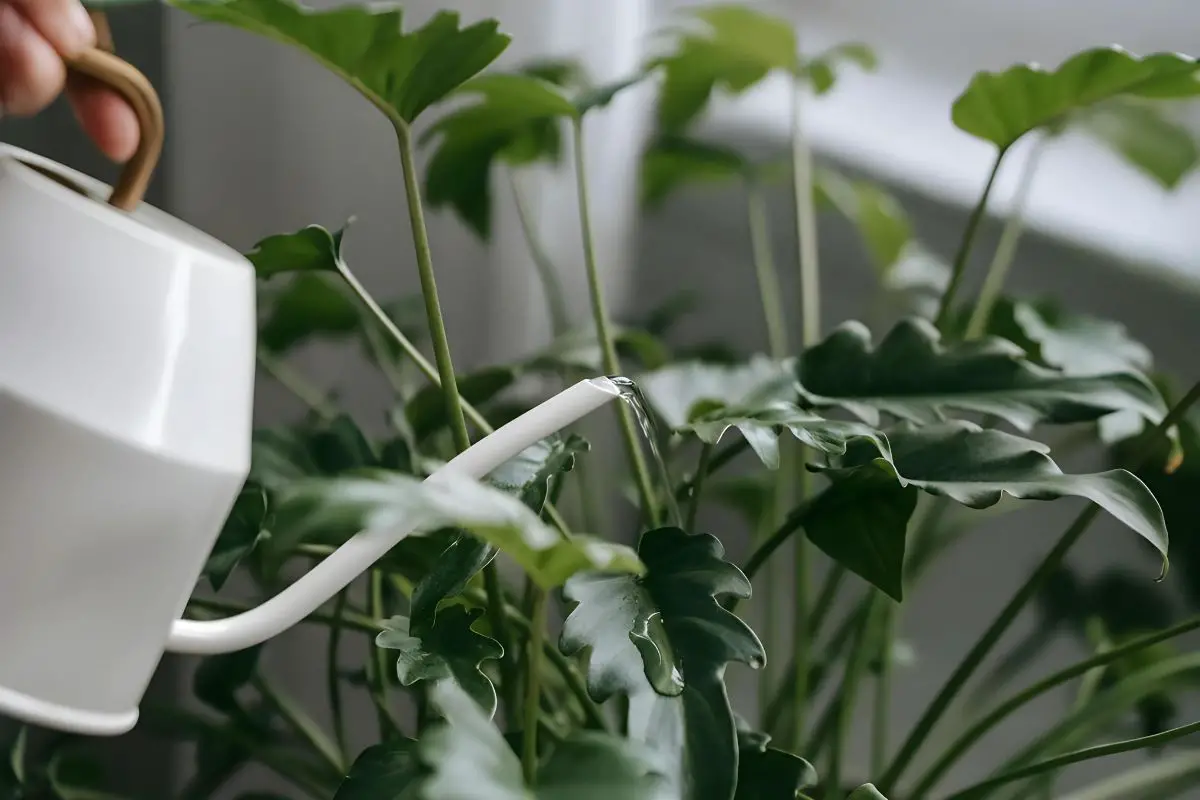
- Water the soil slowly to evenly rehydrate the root zone. Keep adding water until the excess drips from the drainage holes. Proper rehydration can help add weight to the soil to keep the tall fiddle leaf fig upright after repotting. It will also prompt the roots to dig into the soil and gradually anchor the plant to the new environment.
Note: Some sources may suggest adding gravel or rocks to the bottom of the pot to improve drainage. However, I don’t recommend this, as it can encourage the water to move sideways and oversaturate the soil instead of draining properly through the drainage holes.
To improve drainage, you may instead mix about 30% perlite evenly with standard potting soil.
Pruning and Propagation
After repotting, you may perform some additional maintenance procedures for faster recovery and healthy new growth.
Here are some tips:
- Trim discolored leaves (yellow or brown) using sharp, sterile pruning shears. This will help balance the root-to-shoot ratio (especially if you’ve pruned a large volume of the roots) and improve your plant’s recovery rate. It can also improve air circulation and light access through the foliage.
- Wipe the leaves with a clean damp cloth to remove dust and improve light absorption.
If your fiddle leaf fig has grown too large, you can also collect stem cuttings for propagation.
Here are some tips:
- Locate terminal branches at least 4-6 inches (10-15 cm) long with at least 3 nodes and healthy leaves. For single-stemmed figs, you can cut the growing tip. This will promote lateral growth or branching later.
- Use sharp, sterile pruning shears to cut about ½ inch (1.25 cm) below the bottom node at a 45° angle. Wipe the sap away with clean, damp cloth.
- Remove the leaves at the bottom node and place the cutting in a glass with tepid filtered water.
- Place the glass in a warm room with bright, indirect light.
- Replace the water every 3-5 days and new roots should form within a month.
- Plant the rooted cutting in a 6-inch (15 cm) pot in your standard fiddle leaf fig soil mix when the roots are over 2 inches (5 cm) long.
You may also root the cuttings in a 4-inch (10 cm) pot with perlite-coco peat mix. However, the process may be more complex in ensuring proper rooting and preventing the large leaves from drying out.
Here’s how:
- Bury the bottom node about a half inch (1.3 cm) deep into the substrate.
- Spray the substrate with water until it’s evenly moist.
- Cover the pot with a humidity dome to prevent the leaves from drying out.
- Keep the pot in a warm room (75 °F or 24 °C) with 8 hours of bright indirect light.
- Aerate the plant for 10-15 minutes every 2 days and spray the dome with water before placing it back over the pot.
- After 4-6 weeks, gently tug the cutting to see if there’s a resistance, indicating root growth.
- When new leaf buds form on the terminal end of the cutting, you can remove the humidity dome.
- Monitor the soil moisture and water the plant deeply when the soil is dry ½-1 inch (1.3-2.5 cm) from the surface.
Post-Repotting Care
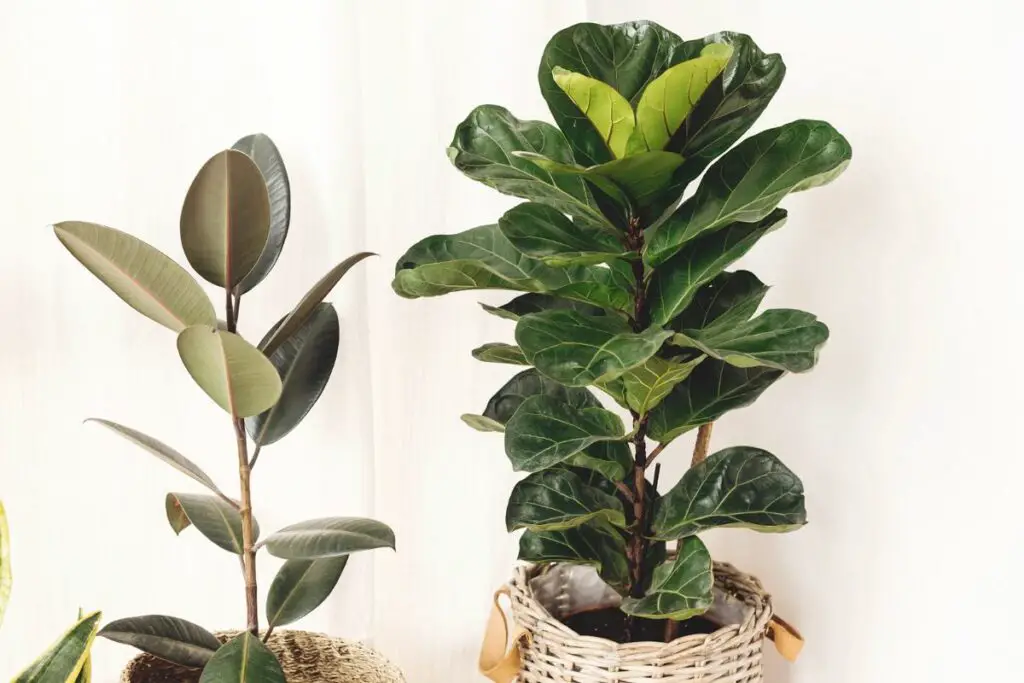
A stringent post-repotting care routine will help prevent transplant shock and help your plant recover.
Initial Care After Repotting
Here are some care tips to maintain for at least 3 months after repotting:
- Water: Water the plant deeply as soon as the top 1-2 inches (2.5-5 cm) dries out completely. Even soil moisture will encourage the roots to grow deeper into the new soil.
- Light: Ensure your fiddle leaf fig receives at least 8 hours of bright, indirect natural light daily after repotting. Although your plant was accustomed to direct sunlight before repotting, it’s best to lower the light intensity a bit after repotting, especially if you pruned the roots. The plant needs time to heal and grow new roots for efficient moisture absorption. Too much sunlight can burn the leaves and delay this process.
- Temperature: Maintain moderate temperatures of around 75 °F (24 °C) for optimal plant health.
- Humidity: Keep the humidity level stable at around 50% to prevent rapid transpiration through the leaves while the roots still adjust to the new soil. You may switch on a humidifier during midday and monitor the humidity using a hygrometer.
- Feeding and Fertilizing: Hold off on fertilizing for at least 3 months after repotting. High-quality soil mixes with compost should be able to sustain a fiddle leaf fig’s nutrient needs for 6-12 months. If your plant is a fast-grower and repotted in spring, you may apply a thin layer of 3-1-2 slow-release/granular fertilizer over the soil in early summer. Ensure the soil remains evenly moist to break down the nutrients and prevent fertilizer burn.
Common Mistakes to Avoid
Fiddle leaf figs are more likely to exhibit symptoms of transplant shock when repotted under the following unsuitable conditions:
- Overpotting: Although they do great with pots 2 sizes (4 inches or 10 cm) bigger, avoid larger pots, especially when you prune up to one-third of the root system. The extra soil can hold excess moisture, increasing the risk of overwatering and root rot.
- Improper Drainage: Using glazed decorative pots for fiddle leaf figs is okay. However, ensure the container has adequate drainage holes to prevent waterlogged conditions, which can drown the roots, cause root rot, and potentially kill the plant.
- Improper Soil Type: The soil mix should have good aeration and drainage to prevent overwatering issues. However, it should also have enough moisture-retaining materials like peat moss and loamy soil from standard potting mixes. Moreover, ensure the soil pH is around 6.5 to maximize nutrient accessibility to the roots.
- Wrong Seasonal Timing: Avoid repotting in the colder months unless you’re treating root rot. The low moisture uptake and slow growth during the cold season can keep the soil wet for longer and cause overwatering problems. The fiddle leaf fig may also take longer to recover from transplant shock.
- Wrong Placement: Healthy fiddle leaf figs don’t mind going back to their usual spot with direct sunlight after repotting. However, if you prune up to one-third of the roots, the plant may take some time to heal the roots and grow new ones, limiting their ability to draw moisture from the soil. Consequently, it can also reduce their tolerance to direct sunlight and be more prone to dehydration and sunburn.
Troubleshooting Common Problems
Fiddle leaf figs are known for being expressive and temperamental and will show signs of distress if there’s something wrong with the repotting process or post-transplant care. Check your plant regularly to catch symptoms early.
Below are common symptoms of transplant shock and their probable causes:
| Symptoms | Causes |
| Yellow leaf edges that turn brown and crisp | Underwatering Low humidity Heat stress Sun stress Fertilizer burn |
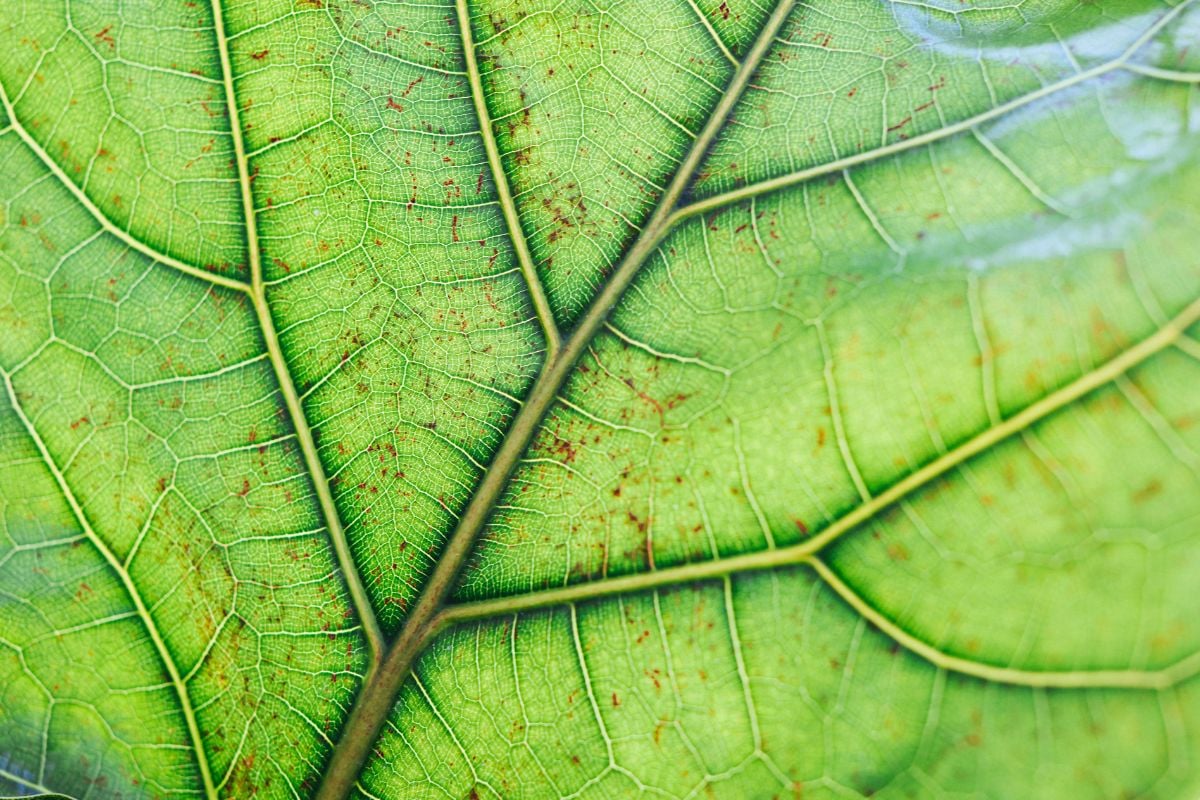
| Red spots or blisters (edema) | Inconsistent watering |
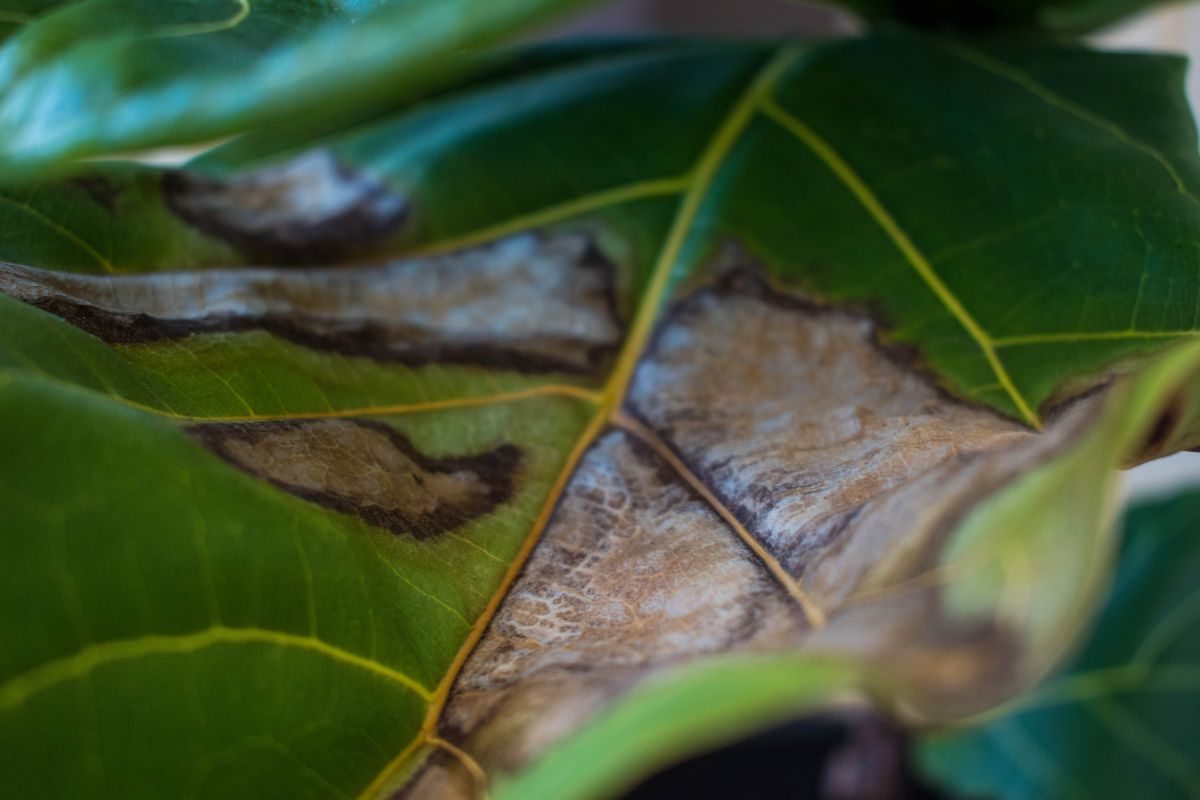
| Brown, mushy spots on leaves (surface or edges): | Overwatering Root rot |
| Brown dry spots on leaf surface (sunburn) | Too much direct sunlight |
| Leaning stems (towards the window) | Insufficient light |
| Leaf drop | Pruning too many roots. Note: The accompanying symptoms from the list above can help determine other possible causes |
Choose the appropriate solution below to help your plant recover:
- Prune severely damaged or brown leaves because they won’t recover. You’ll want your plant to focus on healthy and new growth.
- Check the soil moisture regularly using the finger or chopstick test. Water the soil deeply as soon as the top 1-2 inches (2.5-5 cm) dry out.
- Avoid shallow watering as it won’t evenly rehydrate the soil and worsen the edema or redness.
- Check the drainage holes to ensure there are no plugs and the excess water can drain properly.
- Move your plant away from sunny windows. Avoid direct sunlight to prevent sunburn and rapid dehydration as the roots still adapt and grow.
- Ensure your plant receives at least 8 hours of bright indirect light daily to keep it healthy.
- Rotate the pot by a quarter or a half-turn weekly to prevent uneven growth and improve light exposure.
- Keep the temperature and humidity stable. Move your plant away from areas where the temperature and humidity fluctuate significantly, such as kitchens, bathrooms, or drafty doors and windows.
Long-Term Care Tips
As the fiddle leaf fig puts out new growth and becomes stable, you may adjust it to regular care, including the following:
- Fertilizing Schedule: Feed the plant a half-strength 3-1-2 liquid fertilizer every 2 weeks from spring to summer. Liquid fertilizers are gentle and fast-acting, making them ideal for fiddle leaf figs. Alternatively, you may apply a slow-release granular fertilizer every 2 months during the growing season. However, controlling the amount and rate of nutrients dispersed to the root zone at watering is harder.
- Seasonal Light Adjustments: Gradually introduce more light the following spring as the plant adapts, especially after winter repotting. Properly acclimated fiddle leaf figs enjoy up to 4 hours of direct morning sun daily.
- Routine Inspections for Health: Check weekly for pests, diseases, and signs of stress. You can schedule the inspection at the same time you water and rotate the pot.
- Periodic Pruning and Maintenance: Prune aging, discolored, or damaged leaves and dust the remaining leaves regularly to keep them green and shiny. Pruning can help improve air circulation and prevent pests and diseases from thriving.
Final Thoughts
Fiddle leaf figs are typically fast-growing tropical trees that can quickly deplete soil nutrients and outgrow their pots. Although they can tolerate being rootbound, sitting too long in the same pot can inhibit proper moisture and nutrient uptake and stunt their growth.
It may seem scary to repot a large fiddle leaf fig, especially since it’s notorious for being fussy. However, you may be amazed at how well they can handle repotting when done properly.
Don’t be afraid to repot your fiddle leaf fig because it’s an essential part of their care. Follow the practical tips discussed in the article and monitor your plant more closely for the next 3 months after repotting to catch and treat any signs of transplant shock.
Please leave a comment if you have any concerns or helpful tips about fiddle leaf fig care.