
Humidity Requirements for Fiddle Leaf Figs Explained
The fiddle leaf fig is a stylish and sought-after houseplant known for its dramatic, broad leaves and attention-grabbing height. However, due to its massive size, it’s also easy to see potential damage caused by indoor humidity problems.
Below are key details regarding a fiddle leaf fig’s humidity requirements:
- Fiddle leaf figs thrive in nature with an average annual humidity of over 70%.
- Indoor fiddles can adapt to humidity conditions ranging from 40-60%, especially when well-watered and kept in bright indirect light and moderate temperatures (around 65-75 °F or 18-24 °C).
- Dry conditions (humidity levels below 30%) can exacerbate dehydration symptoms, such as droopy leaves with yellow or brown, crisp edges due to underwatering, intense sunlight, and/or high temperatures.
- Warm and humid conditions indoors can promote pathogen growth, leading to Ficus leaf spot diseases.
This article will explore the optimal humidity requirements for fiddle leaf figs and provide actionable tips to maintain their iconic, lush appearance and health indoors.

Native Conditions and Impact of Humidity on Plant Health
Fiddle leaf figs (Ficus lyrata) are fruit-bearing trees that come from rainforests in West and Central Africa, where relative humidity averages over 70% annually.
The high humidity in tropical African rainforests may be attributed to the following environmental conditions:
- Warm temperatures ranging from 70-86 °F (21-30 °C) allow the air to hold more moisture.
- The high rainfall volume of 40-60 inches (100-150 cm) during the dry season and over 80 inches (200 cm) during the wet season contributes to the high moisture levels in the air.
Warm and rainy conditions provide the following benefits to support the rapid growth and characteristic large, glossy leaves of fiddle leaf figs:
- Nutrient-rich soil: Warm and moist soil promotes the steady growth and activity of beneficial microbes, allowing continuous decomposition of leaf litter for a rich, humic layer in the soil.
- Optimal transpiration rate: The high humidity reduces moisture loss through transpiration, allowing the large leaves to remain hydrated and vibrant despite high temperatures that occasionally reach over 86 °F (30 °C).
In home gardening, it’s common to monitor the indoor relative humidity, which is the amount of moisture in the air (expressed as a percentage) compared to the actual water volume the air can hold at a given temperature.
Similar to nature, the following environmental factors can influence indoor humidity levels:
- Temperature: Higher indoor temperatures increase the air’s vapor-holding capacity.
- Water: The amount of moisture the air can draw depends on the amount of water in the room (i.e., from potting soil, plant cells, or standing water).
Note: Relative humidity (RH) differs from absolute humidity (AH), which refers to the actual amount of water vapor in the air, regardless of the temperature.
Although it isn’t feasible to closely replicate the natural conditions in tropical rainforests, fiddle leaf figs can adapt to moderate humidity levels in an indoor environment because of:
Humidity Requirements
Indoor fiddle leaf figs thrive in moderate relative humidity of around 40-60%.
Extreme humidity levels don’t immediately harm fiddle leaf figs. They can tolerate levels as low as 30% for a short period if kept at optimal care, lighting, and temperature conditions.
On the other hand, prolonged poor humidity conditions can make fiddle leaf figs more vulnerable to damage caused by heat or light stress and over- or underwatering issues.
It’s crucial to maintain stable and moderate humidity levels around fiddle leaf figs for the following reasons:
- Dry conditions (less than 30%) will prompt the large leaves to transpire more, drawing water from the soil like a vacuum, and consequently, they’ll lose moisture, developing yellow or brown leaf tips. Dehydration can lead to more severe issues, such as wilting, leaf drop, and even stunted growth.
- Moderate humidity (40-60%) helps establish a balance in the plant’s metabolic and transpiration rates, allows continuous growth, and maintains leaf vibrance. It can also mitigate the stress caused by incorrect temperatures, lighting, or watering.
- Humid conditions (over 60%) can promote the growth of fungi and bacteria on FLF leaves and roots, thereby increasing the risk of leaf spot diseases or root rot. Additionally, the US Environmental Protection Agency (EPA) recommends maintaining a humidity level of 30-50% indoors to prevent mold growth and promote human health. Note: Mold and mildew grow rapidly indoors at humidity levels over 60%.
Measuring Humidity
Indoor humidity levels can vary significantly in colder regions, such as North America, due to seasonal shifts, especially during winter when outdoor air is naturally dry.
Indoor heaters can also raise the air temperature and pull water from available sources, such as potting soil and plant leaves. Unfortunately, most houseplants, including fiddle leaf figs, require less watering during winter, which increases the risk of dehydration.
You can monitor the relative humidity in your indoor garden using a hygrometer. You can use an electronic hygrometer in either a wall-mounted thermostat or a portable one to accurately measure the levels within 6 inches (15 cm) around your fiddle leaf figs.
Signs of Inadequate Humidity
Catching early signs of improper humidity levels in fiddle leaf figs can help prevent stress and preserve plant health.
Here are the signs to watch out for:
Dry Conditions (Below 30%)
Low humidity can increase the FLF’s transpiration rate, leading to rapid moisture loss from the soil and leaves and the following stress symptoms:
- Drooping or wilting leaves
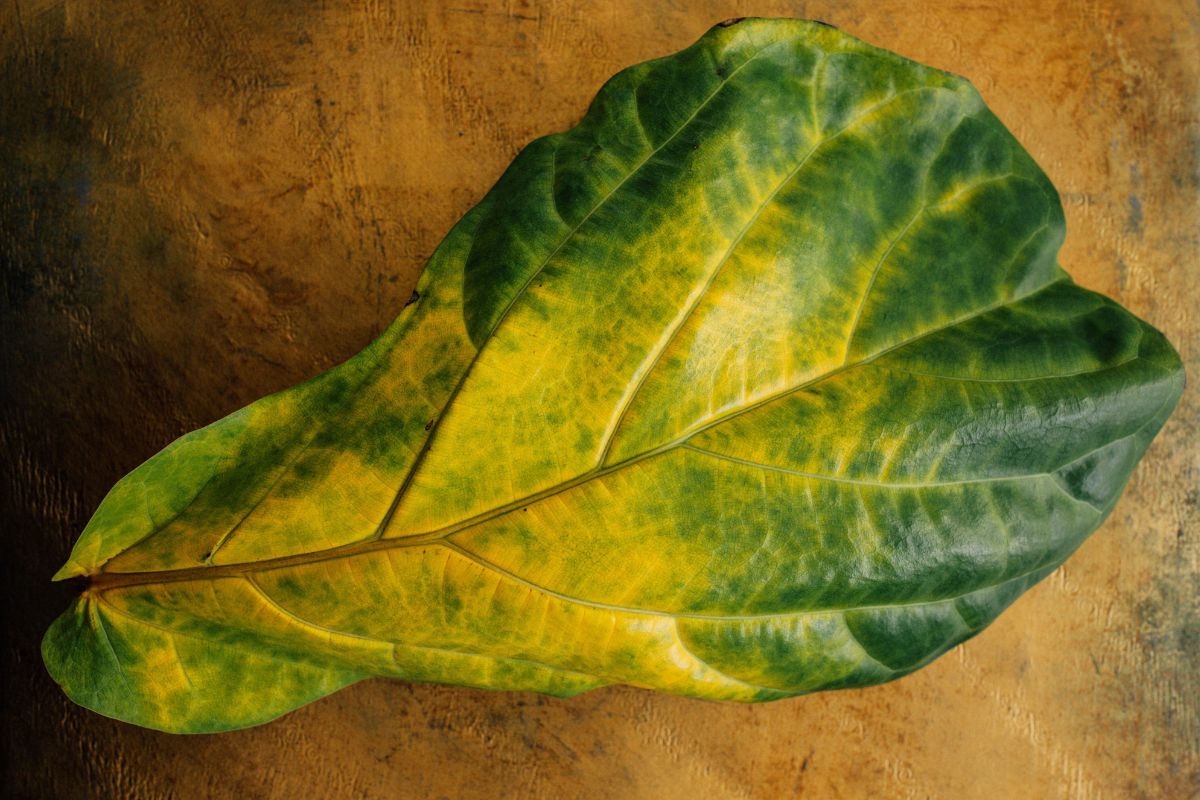
- Yellow leaf edges
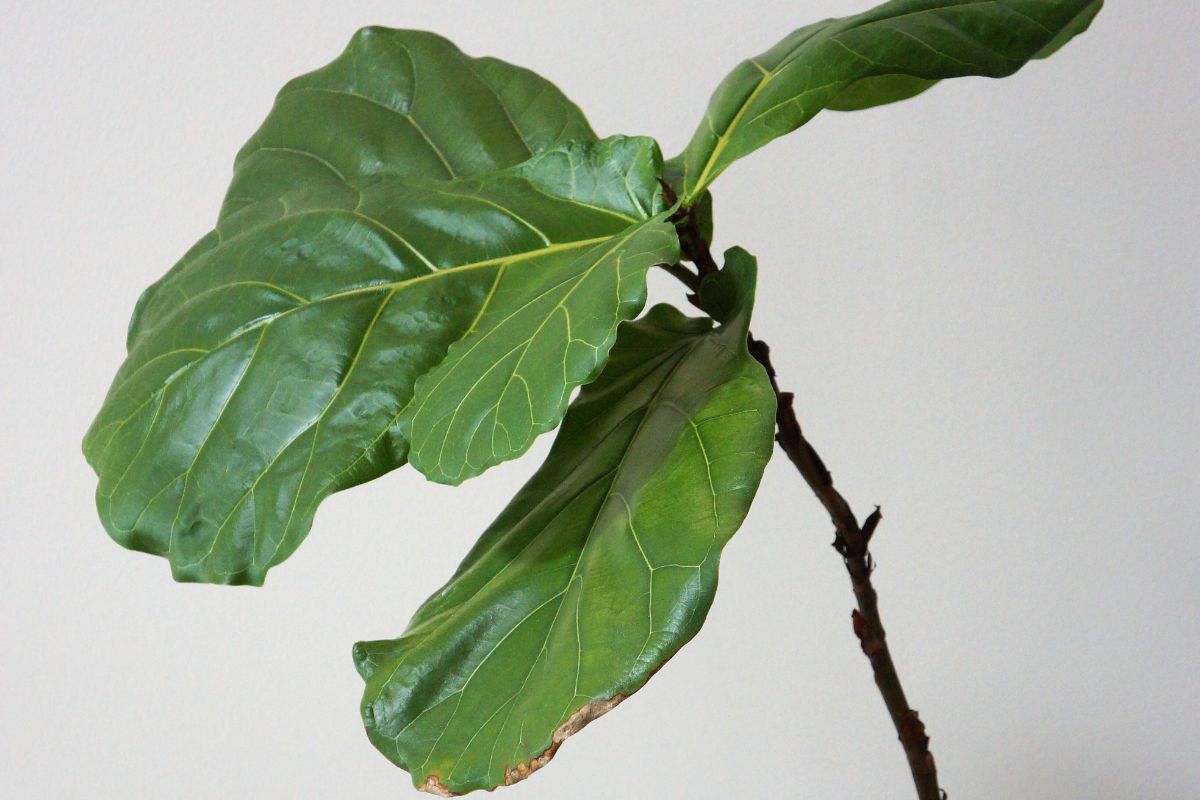
- Brown and crisp leaf edges
- Curling leaf tips
- Shriveled or puckered new leaves
- Holes in young or newly unfurled leaves
- Leaf drop
- Slow or stunted growth
Note: Dry indoor air can also increase the risk of pest infestations. Common houseplant pests like thrips, aphids, and spider mites become more active during warm and dry conditions (i.e., at the peak of summer), especially on drought-stressed fiddle leaf figs.
Drought stress from underwatering and low humidity can increase sugar and nitrogen concentrations in the plant sap, making the leaves more attractive to sap-feeding pests.
Humid Conditions (Over 60%)

In a humid environment, the air has a lower capacity to draw water, so the moisture remains in the soil and the leaves’ cells.
Although high humidity is naturally favorable for fiddle leaf figs, it can lead to severe problems in an indoor garden, including the following:
- Mushy brown spots on the leaves, due to the slow evaporation of excess moisture in the potting soil
- Black, mushy, and foul-smelling roots due to root rot
- Brown or black leaf spots with a yellow halo due to leaf spot diseases
- Leaf drop
- Plant death (from root rot or leaf spot disease)
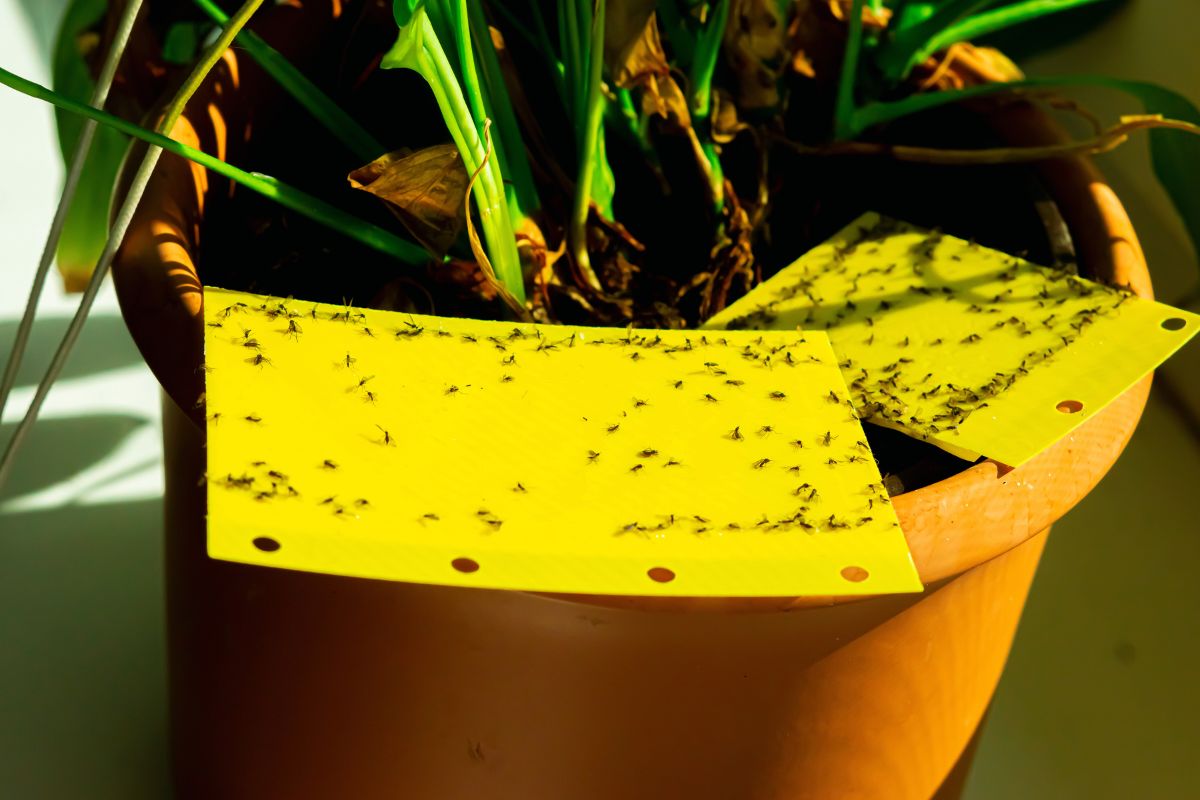
Note: High humidity can also keep the potting soil moist, making it an inviting environment for fungus gnats. The newly hatched fungus gnat larvae can feed on decaying or stressed plant roots, exacerbating the damage caused by root rot.
Troubleshooting and Remedies
You can control indoor humidity using several tools, but depending on your selected method, it can take several hours to see a notable change in the reading on your hygrometer.
Here are some tips to adjust humidity levels around your fiddle leaf figs:
Increasing Humidity
- Humidifier: Use a hygrometer to monitor humidity levels and determine the appropriate distance and duration of use of the device. I’ve found that the most effective method is switching on a humidifier about 2 feet (0.6 m) from my FLFs for around 4 hours at midday. If nighttime humidity drops along with cooling temperatures, I may also switch on the device for a couple of hours.
- Pebble Trays: Smaller fiddles less than 3 feet (0.9 m) tall may benefit from sitting on a pebbled tray with water. As the water evaporates, it can lightly boost the local humidity around your plants. Ensure the water isn’t touching the bottom of the pot to prevent wet soil conditions. However, this method has little to no effect on larger plants.
- Grouping Houseplants: Placing tropical plants with similar light and temperature requirements can help create a naturally humid microclimate in your indoor garden, reducing the need for frequent or prolonged use of humidifiers.
Note: Other sources may recommend misting the FLF leaves to increase local humidity, especially around young leaf buds. However, I don’t recommend it, as misting only provides a temporary and negligible rise in humidity.
In addition, applying water directly to the leaves can increase the risk of fungal or bacterial growth, and the dripping water can spread the infection to lower leaves.
Decreasing Humidity
- Dehumidifiers: Switching on a dehumidifier will yield significant results within hours if you have a small gardening space. In my experience, rainy summers can be quite humid, so I occasionally switch on a dehumidifier in my 250-square-foot (23 sq m) living room (AKA: indoor garden) for 2-4 hours to relieve the mugginess and drop the humidity level from over 60% to around 50-55%.
- Improving Room Ventilation: Opening the windows during the day in spring and summer can help improve the ventilation in your garden. However, when it’s raining and too humid outside, keep your windows closed and switch on a fan around 5 feet (1.5 m) from your indoor garden to lower the humidity.
- Proper Plant Spacing: Keep plants about 6 inches (15 cm) apart to avoid high humidity issues and prevent the leaves of neighboring plants from touching. Note: Bacterial or fungal Ficus leaf spot diseases can spread through water droplets (from misting or overhead watering) when it’s warm and humid.
Optimizing Humidity
You can optimize the humidity levels around your fiddle leaf figs by implementing proper placement plans and making seasonal care adjustments.
Placement Considerations

When I got my first fiddle leaf figs, I focused on choosing a spot that receives bright light and warm temperatures, without much regard for humidity, because I thought humidity didn’t significantly contribute to the plants’ overall health.
However, after years of caring for fiddle leaf figs, I found that keeping fiddles at optimal and stable humidity levels reduced their sensitivity to light and heat stress.
My tropical houseplants had better tolerance to the drying effect of winter conditions (i.e., less frequent watering, indoor heating, and dry outdoor air) when kept at around 50% relative humidity indoors.
Pro Tip: When making a sun map, I recommend also making a humidity map in your prospective gardening area to find spots with stable humidity levels. Measure the humidity using a hygrometer at one-hour intervals throughout the day and take note of the values on your map.
For optimal fiddle leaf fig health and low-maintenance care, choose a spot with suitable environmental conditions, including the following:
- At least 8 hours of bright indirect light per day: Older fiddle leaf figs with fully developed deep green leaves can tolerate up to 4 hours of direct morning sun. However, they can grow steadily and become less susceptible to sunburn, leaning, or legginess when they receive moderate lighting, typically available 4-8 feet (1.2-2.4 m) from a south-facing window.
- Moderate temperatures around 65-75 °F (18-24 °C): Avoid drafty windows, areas that receive hot or cold air from AC vents, and fireplaces because fluctuating temperatures can influence humidity levels.
- Moderate humidity levels around 40-60%: Avoid kitchens, laundry rooms, bathrooms, or nearby areas, as frequent or regular use of hot water can lead to fluctuating temperatures and humidity throughout the day.
Observe your plant’s response to the location, as it’s usual for fiddle leaf figs to droop or shed a few leaves after being brought home from the store. Give it about 2 months to adapt to the spot, and if there are no signs of improvement (i.e., new leaf growth or perky leaves), gradually move it until you find its happy place.
Pruning and Maintenance
Regular pruning can also help improve the humidity around fiddle leaf figs.
For instance, it’s important to prune plants with numerous overlapping branches to reduce the humidity and provide fewer hiding spots for pests. It can also help aerate the remaining leaves and inhibit fungal or bacterial growth.
Here are essential tips when pruning fiddle leaf figs to improve humidity:
- Schedule hard pruning in spring or early summer when the plant is actively growing for faster recovery.
- Always use sharp, sterile shears and clean the blades with rubbing alcohol between cuts.
- Focus on removing severely damaged, discolored, and aging leaves first. Then, consider removing overlapping leaves or a branch where the leaves can trap moisture from humidifiers, promoting fungal or bacterial growth.
- Limit pruning to 10-20% of the foliage. For example, remove only 1-2 leaves every 1-2 weeks and observe for new signs of growth, such as leaf buds unfurling, before plucking new leaves.
- Avoid over-fertilizing your fiddle leaf figs when pruning, as it can promote a growth spurt that would lead to denser or unruly foliage that will be harder to inspect for signs of pests or diseases.
In addition, inspect and clean the leaves every 1-2 weeks with a clean, damp cloth to remove dust and unwanted moisture.
Seasonal Adjustments
Addressing seasonal care issues that primarily cause plant stress can help optimize humidity conditions around your fiddle leaf figs.
Here’s a brief guide for appropriate seasonal care routines for fiddle leaf figs that can mitigate or prevent moisture-related stress:
| Care/Environment | Spring and Summer | Fall and Winter |
| Water | Water your fiddle leaf figs only when the top 2 inches (5 cm) or upper ⅓ of the soil is completely dry to prevent excess moisture that can raise the local humidity around your plant. If the humidity is too high, the leaves will transpire less, and the soil will stay moist for longer, increasing the risk of overwatering and root rot. | Wait until the top half of the soil is dry before watering because FLFs grow more slowly during the cold and dark season. However, avoid letting the soil become bone dry or hydrophobic, as the drying conditions in winter (dry air and indoor heating) can cause drought stress, resulting in yellow or brown, droopy leaves. |
| Light | Give your FLF up to 4 hours of direct morning sun from an east-facing window or at least 8 hours of bright indirect light from a south-facing window. Proper lighting can promote higher photosynthetic and metabolic rates, which can help mitigate the potential stress caused by frequent watering or high humidity during the summer. | Ensure the FLF still receives as much bright indirect light during cold and darker months to keep the leaves green and perky. Clear the windows regularly of dirt or snow to grant your plant maximum access to natural light. |
| Temperature | Maintain moderate temperatures around your fiddle leaf figs. Daytime: Around 75 °F (24 °C) Nighttime: Around 65 °F (18 °C) Hang sheer curtains against a sunny window during the peak of summer to reduce the heat and light intensity from the sun. | Seal the windows with an insulating foam to prevent cold drafts and maintain indoor temperature above 55 °F (13 °C). Ensure the space heaters or heating vents aren’t blowing heat directly toward your houseplants to prevent heat stress. You can use a portable thermometer to determine the appropriate distance between the space heater and your indoor garden. |
Companion Plants
Grouping tropical houseplants in the same spot in an indoor garden can help replicate a nature-like humid microclimate around your fiddle leaf figs and create a visually appealing arrangement.
Here are some excellent houseplants to choose from:
- Monstera (Monstera deliciosa): As tropical epiphytes, monsteras prefer moderate temperature and humidity indoors. They also require bright indirect light similar to FLFs to form their characteristic leaf fenestrations.
- Prayer Plant (Calathea spp.): Prayer plants have similar soil, watering, light, and temperature requirements as FLFs, making them practical companions. Moreover, the fascinating venations on Calathea leaves can add some color to a predominantly green indoor garden.
- Rubber Plant (Ficus elastica): Rubber plants have smooth, elliptic leaves that are a great contrast to the FLF’s fiddle-shaped leaves. They’re also Ficus relatives, which share similar environmental conditions.
Final Thoughts
Moderate indoor humidity, ranging between 40-60% can help fiddle leaf figs better tolerate or survive environmental stressors, such as underwatering, high temperatures, and intense sunlight.
For optimal FLF health and longevity, choose a comfortable spot with moderate light, temperature, and humidity levels, and water your plant regularly to keep the leaves healthy and vibrant.
Proactively monitor the seasonal shifts in temperature and relative humidity in your indoor garden using a portable thermometer and hygrometer, and adjust your care routine accordingly to prevent plant stress.
Don’t forget to leave a comment to share your fiddle leaf fig care experiences, ask questions, or explore additional resources for tropical plant care.