
Jade Plant Dropping Leaves: Symptoms, Causes, and Fixes
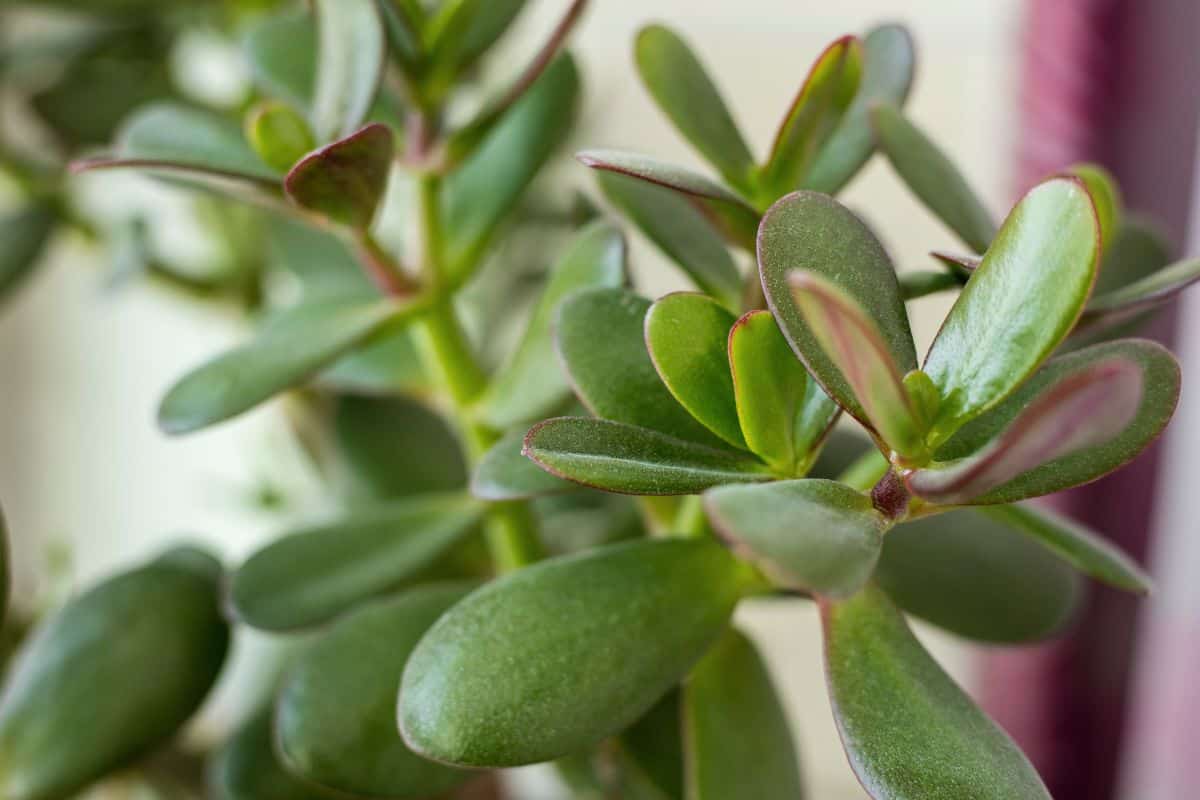
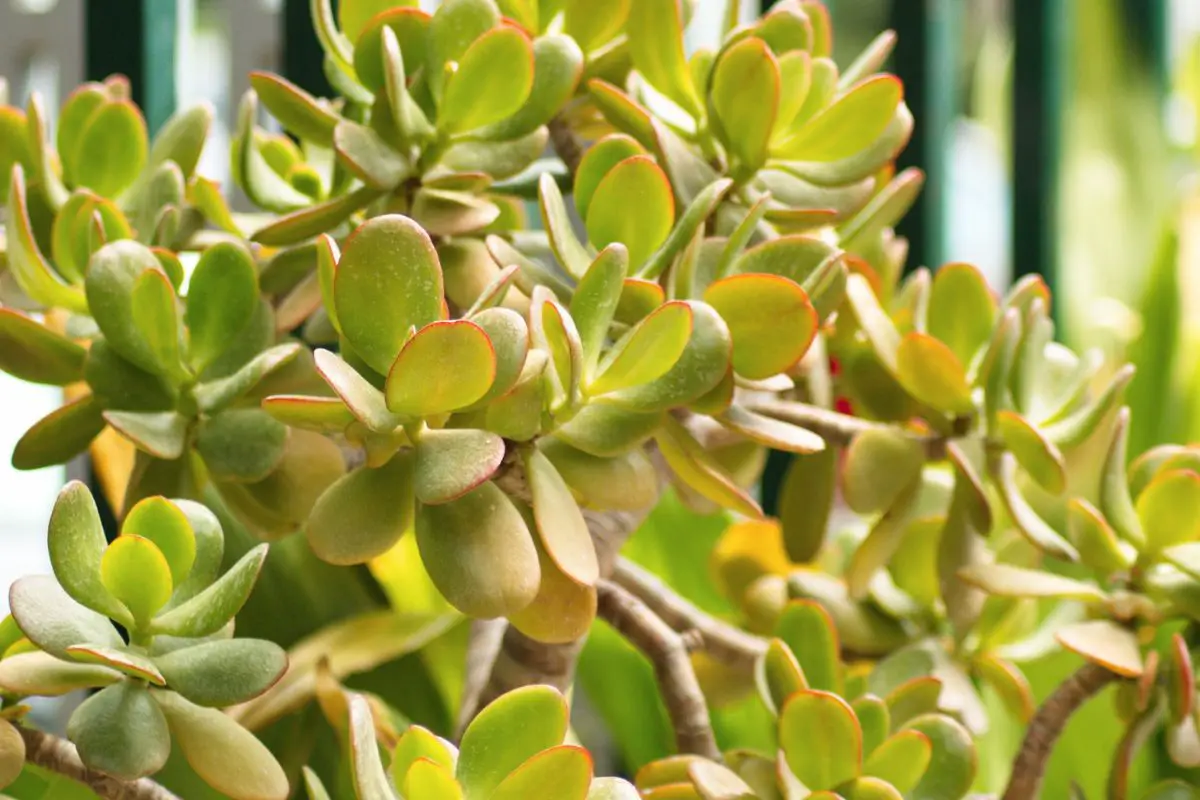
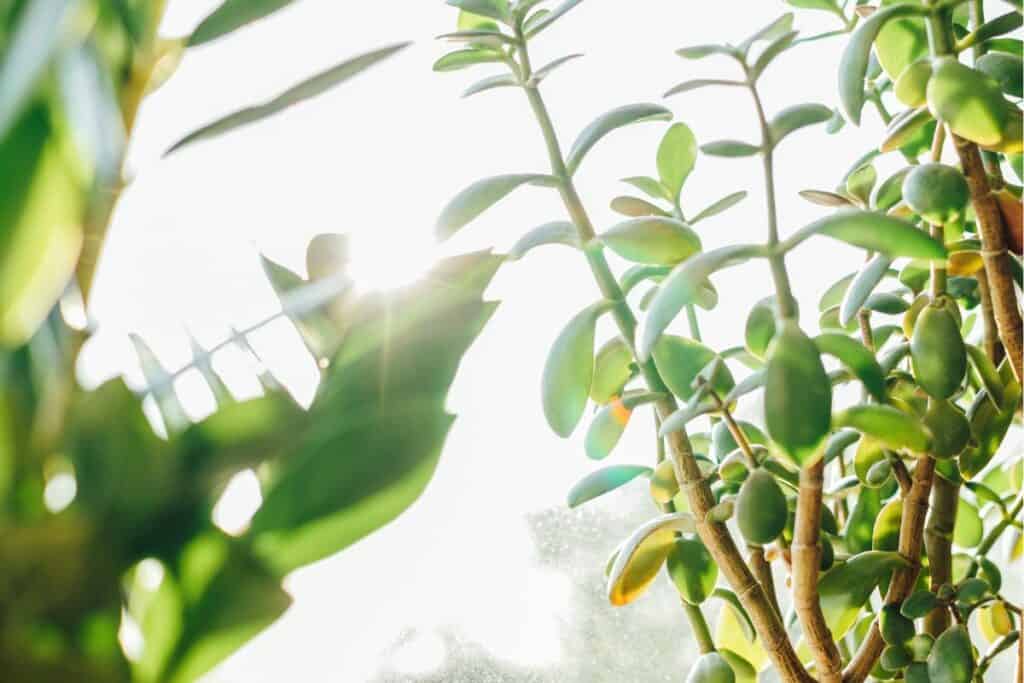
Jade plants are evergreen perennials with green, succulent foliage all year round. The leaves are not only aesthetic but also practical, as they store extra moisture to survive drought. However, jade plants tend to shed their leaves when stressed.
Here’s a list of problems that can cause jade plants to drop their leaves:
- Underwatering
- Overwatering
- Improper lighting
- Temperature and humidity stress
- Transplant or relocation shock
- Pest infestation
- Disease
- Nutrient imbalance
Leaf drop is a common sign of stress in jade plants that requires immediate attention. This article will explore the common causes and provide tips on overcoming them. I’ll also share some preventive measures to help your jade plant maintain its lush foliage.
Jade Plants: An Overview
Jade plants (Crassula ovata) are subtropical succulents that typically don’t enter a dormant state during the cold season. The winters in their native habitat in South Africa seldom drop below 50 °F (10 °C), allowing them to continue growing (albeit more slowly).
The environmental conditions in their native habitat prompted the following morphological adaptations in jade plants:
- Thin, shallow roots draw moisture quickly to take advantage of the scarce and shallow rainfall.
- The succulent, coin-shaped leaves have large, elastic cells that can store water, granting the plant high moisture retention capacity.
- The waxy coating on the leaves minimizes moisture loss from transpiration.
These qualities allow jade plants to retain their foliage year-round, making them one of the most popular succulent houseplants globally.
However, their resilience and low-maintenance requirements make them prone to neglect. Some common mistakes include overestimating a jade plant’s drought tolerance and failing to factor in seasonal changes in environmental conditions.
Note that even the sturdiest houseplants may succumb to the damage caused by poor care and a suboptimal environment. That said, jade plants may occasionally shed their leaves to show stress.
Symptoms of Leaf Drop
Jade plants are among the longest-living houseplants—sometimes even reaching up to 100 years. Their leaves also last several months before naturally falling off and making way for new growth.
Pro tip: Individual jade leaves can last well over 6 months on the stem before fading and falling off. Healthy jade plants tend to shed larger, lower leaves first due to aging. So there’s no need to worry if your plant drops a few leaves if the remaining ones look green and healthy.
Under normal conditions, an old leaf may appear paler or yellow before falling off. It’s common for a mature jade plant to shed 1-2 bottom leaves per week, especially in the fall or winter when there’s a larger interval between watering sessions. New growth then occurs at the terminal end of the branch or stem.
Cascading plant stress may also eventually lead to leaf drop. Here’s how the symptoms may progress:
- The branches and leaves are drooping or wilting.
- The leaves are mushy and have blisters.
- About a quarter of the leaves are discolored (i.e., brown, yellow, black)
- More than a quarter of the foliage falls off within a few weeks.
- The plant is shedding even young, green leaves. Sometimes, the younger leaves feel loose and detach with minimal pressure (from touch).
To prevent unwanted leaf drops, it’s crucial to understand the symptoms and the underlying causes, which I’ll discuss further below.
Common Causes (& Fixes)
The following issues can cause leaf drop in jade plants:
1. Underwatering
Although the succulent leaves hold water, they gradually lose it through transpiration. As such, jade plants shed some leaves during extended periods of drought to preserve moisture.
If your jade plant is severely underwatered, you may notice the following symptoms preceding leaf drop:
- Dry, crusty soil with cracks
- Wrinkled leaves
- Yellowing leaves
- Drooping or wilting branches and leaves
- Red leaf edges
- Brown leaf edges
- Brown, thin, and crisp leaves
Proper watering may help your plant return to its green color and perk up the droopy leaves. Bottom water your plant for 10-30 minutes to rehydrate the soil evenly. You can soak the bottom half of the pot in a tub of water and let the moisture seep through the drainage holes. This method can also relieve hydrophobic soil clumps that might have built up over time.
In case of severe underwatering, the leaves that turn brown and dry or the petioles that become loose will inevitably fall. The best option for mid to long-term recovery and plant health is to improve your watering routine and encourage new growth.
Here are some tips:
- Deeply water your plant until the excess drips out of the drainage holes. Avoid shallow watering, as this will not be enough to rehydrate your plant fully. Frequent underwatering can also lead to drought stress.
- Remove any standing water from the pot saucer. Waterlogged conditions can cause root rot and damage your plant.
- Check the soil moisture around 7-10 days after watering. Use your finger or a wooden chopstick to see if the soil is dry halfway down.
- Water your plant as soon as the top half of the pot is dry. During the cold season, jade plants require less water due to lower metabolic activity. You can wait until the upper ⅔ of the soil mix is dry.
Prolonged underwatering can make the soil severely hydrophobic. The fatty compounds in the soil can wrap around the roots and repel water. As a result, the plant can’t absorb moisture even after watering the soil.
It’s best to repot your plant in fresh soil to overcome this issue.
Here’s how:
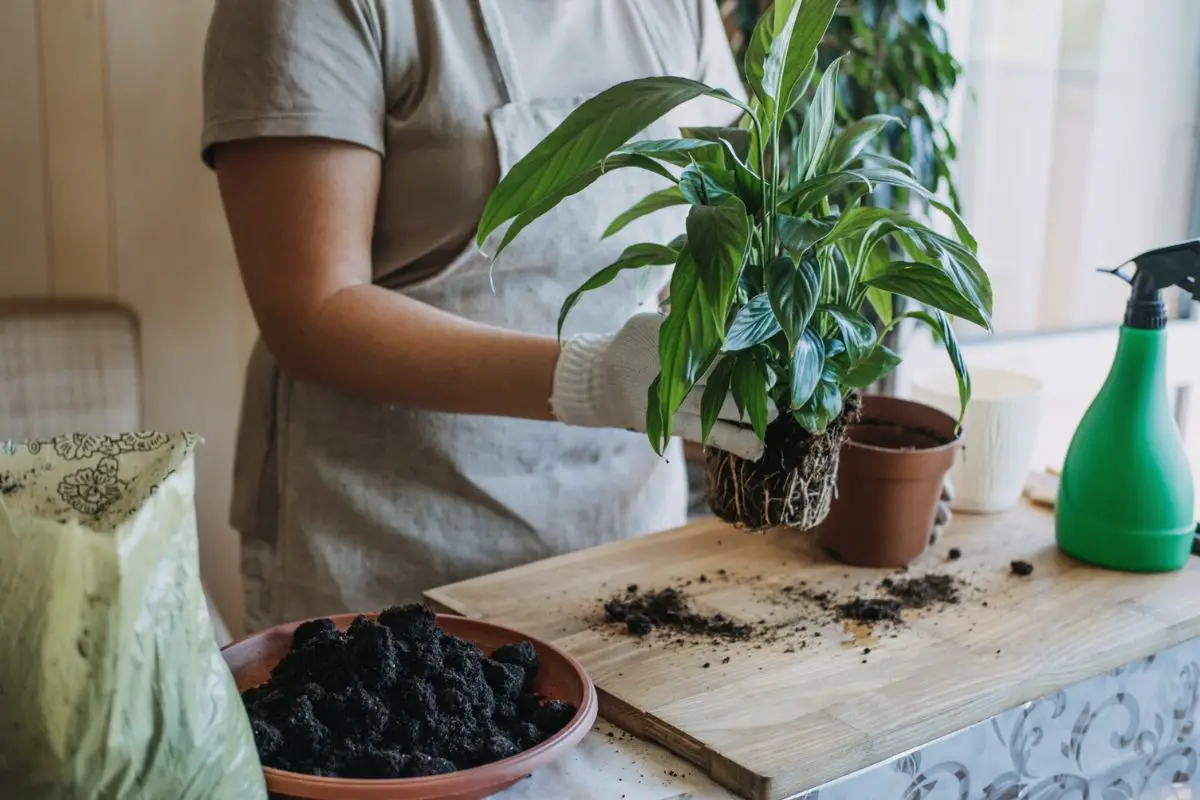
- Submerge the pot in water for around 5 minutes, 2 days before unpotting. You may need to hold it down with a rock. This step will help rehydrate the soil a bit and make it easier to work with, minimizing damage to the roots.
- Run a spatula or flat knife around the edges of the pot to loosen the soil.
- Slide the rootball out of the pot.
- Poke through the soil using a wooden chopstick to loosen it and remove as much as possible.
- Cut the dry and crisp roots using sterile scissors. Sterilize the blade with rubbing alcohol between cuts.
- Soak the roots in filtered water for about 5 minutes.
- Leave the plant unpotted for 2 days in a cool room with moderate humidity and away from direct sunlight.
- Prepare a breathable pot with drainage holes about 2 inches (5 cm) wider and deeper than the rootball.
- Fill the bottom 2 inches (5 cm) with moist succulent mix. You can also use a compost-perlite mix because it’s easier to re-wet than a soil mix rich in sand.
- Spread the roots over the soil and backfill the gaps, burying the roots about an inch (2.5 cm) deep. Tamp the soil firmly around the base to keep the plant upright.
- Avoid watering and keep the plant in bright, indirect light for about a week.
- After a week, water the plant deeply and gradually move closer to an eastern window. You can then return to the regular watering routine recommended above.
Pro tip: Bottom water your jade plant once every 2 months or after 3-4 times of top watering. This will help prevent the soil from accumulating fatty compounds and becoming hydrophobic from infrequent watering.
However, avoid using self-watering pots for jade plants because they keep the soil consistently moist. This can lead to overwatering issues, which I’ll discuss further below.
2. Overwatering
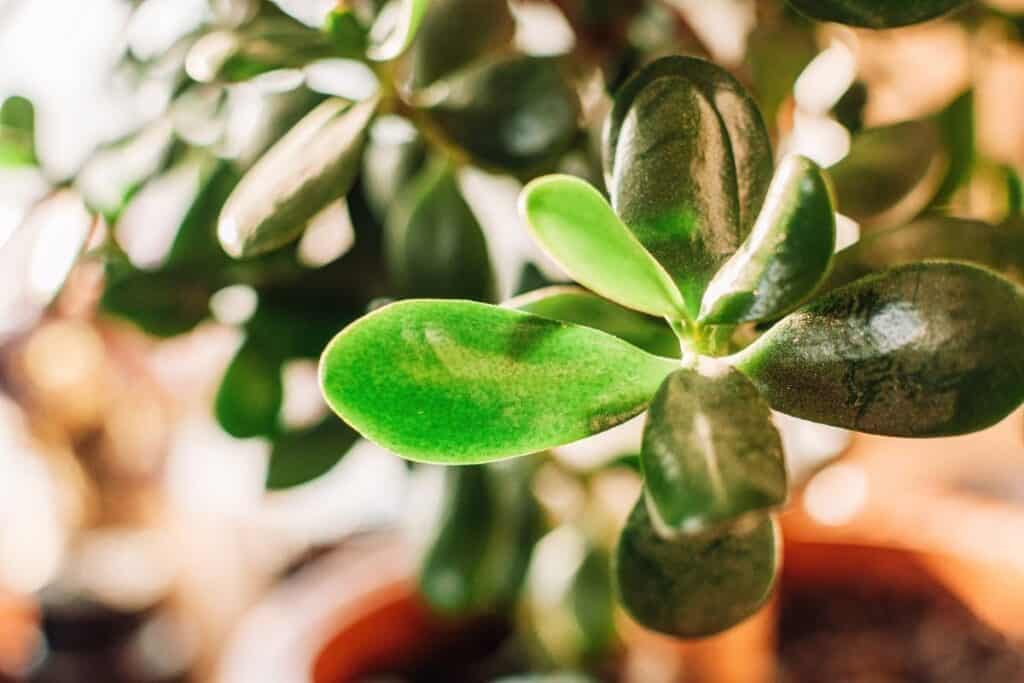
Overwatering can be caused by frequent watering and poor soil or pot drainage. These issues can keep the soil wet for long periods, suffocating the roots. Rot-causing soil pathogens proliferate in wet soil and damage the roots, causing them to rot.
You will notice the following symptoms in progression:
- Soggy soil: The soil may remain wet and soggy several days after watering if there’s poor drainage.
- Moldy soil surface: If the soil remains wet for long periods, fungal spores may grow and produce hairlike structures or mold over the surface. In severe cases, the mold may even spread to the base of the stem or lower leaves.
- Mushy leaves with blisters: Too much water in the cells can make them swell and eventually burst.
- Root rot: The roots become black, mushy, and smelly as they decay from rot-causing pathogens.
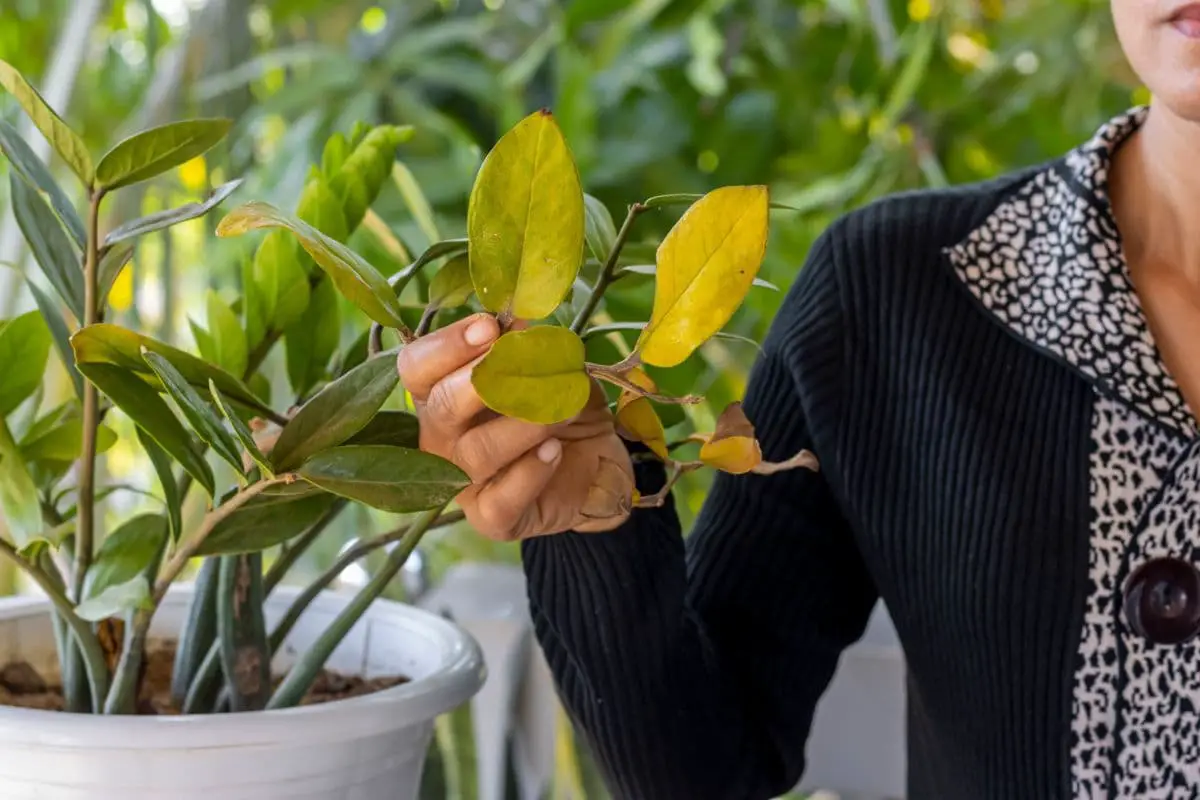
- Yellowing leaves: Damaged roots can’t send moisture or nutrients to the leaves, causing them to turn yellow.
- Leaf drop: The significantly reduced root mass can’t support the dense foliage so the plant sheds leaves.
If your plant is shedding leaves due to overwatering, there’s a high risk of root rot. You must act quickly to improve your chances of saving your plant.
Here are the steps to save a jade plant with root rot:
- Carefully unpot the plant by sliding the damp soil out of the pot.
- Remove the soil around the roots and rinse with clean water to see the roots clearly.
- Cut all the black, mushy roots using sterile scissors. Clean the blades with rubbing alcohol between cuts. Pro tip: Don’t worry about removing a large portion of the root system because jade plants can grow new roots once recovered.
- Soak the remaining roots in 1% hydrogen peroxide solution to eliminate the remaining pathogens and prevent reinfection.
- Leave the plant unpotted for a week in a cool room with moderate humidity away from direct sunlight.
- Repot the plant in fresh, moist soil in a sterile pot with drainage holes. I recommend using a high-quality succulent mix and unglazed terracotta for excellent drainage.
- Wait a week before deeply watering your plant. You can then refer to the watering tips discussed above.
If the rot has spread to the stems, the remaining option may be to propagate your plant using the remaining healthy leaves from the terminal branches.
Here are the steps to propagate jade leaf cuttings:
- Pinch or cut healthy leaves with a bit of the node attached.
- Let the leaves form callus overnight in a cool, dry room.
- Prepare a shallow container about 2 inches (5 cm) deep and fill it with coco peat or perlite. You can also use a standard succulent mix.
- Spread the leaves horizontally, ensuring the callused end touches the substrate. Space the leaves an inch (2.5 cm) apart.
- Spray the substrate with filtered water to keep it evenly moist. Repeat this every 2-3 days to keep the substrate’s top ½-inch (1.3 cm) moist and prevent the leaves from drying out.
- Keep the setup in a room with warm temperatures (70 °F or 21 °C), moderate humidity (30-50%), and bright indirect light.
Healthy leaves will root within a month under optimal conditions.
3. Improper Lighting
Too much or too little light can occasionally cause leaf drops in jade plants.
Here’s how:
Sun Stress
Indoor jade plants generally do well with 4 hours of direct sunlight from an unobstructed eastern window. However, if you have a southern or a western window with scorching sun (especially in the summer), there’s a higher risk of dehydration from rapid moisture loss.
As discussed, drought stress can cause jade plants to shed leaves.
To confirm that too much sunlight is the culprit for leaf drops, here are some symptoms to look for:
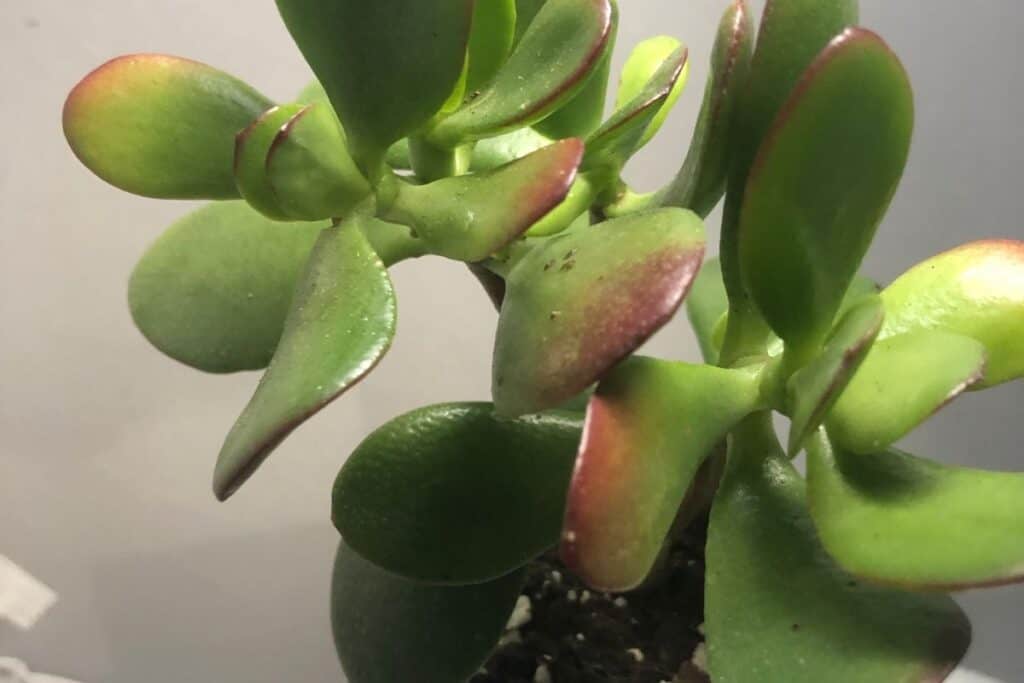
- Red leaf edges: Intense sunlight can stimulate anthocyanin synthesis, a primary defense mechanism for preventing or minimizing sun damage.
- Leaf scorch: The leaves on the sun-exposed part of the plant may show burn marks, which appear as brown or black spots with yellow margins.
You can fix the problem with the following tips:
- Move your plant a few feet (+ 0.6 m) away from a sunny window to an area with at least 8 hours of bright indirect light daily.
- Rotate your plant by 90-180° every time you water. This can encourage even light exposure and balanced growth while also giving the leaves a reprieve from intense sunlight.
Insufficient Light

As sun-loving plants, jade plants require sufficient light to generate food and energy reserves. Insufficient light causes them to drop older leaves and redirect their energy to support new growth.
Here are some additional symptoms:
- The stems and branches may become leggy as they grow longer toward the windows for better access to light.
- The sun-deprived area of the plant will have sparse leaves, whereas more leaf growth will be initiated at the area exposed to light.
- The plant starts leaning from the lopsided growth.
Refer to these tips to improve your plant’s condition and promote balanced growth:
- Prune the leggy branches down to a quarter inch (0.6 cm) from a leaf node. You can also pinch some leaves from the bushy side to balance the weight. Limit leaf removal to less than a third of the volume.
- Gradually move your plant closer to the window (1-2 feet or 0.3-0.6 m per week).
- Rotate the pot regularly. You can double the amount of time the leggy part faces the light to encourage new growth in that area.
- If you don’t have a bright window (east, west, or south), place a full-spectrum grow light a foot (0.3 m) away from the leggy section of the plant at a 45° angle. Once it starts showing significantly improved upright growth, you can reposition the light directly above the plant.
4. Temperature and Humidity Stress
Improper temperature and humidity levels can also stress jade plants and cause leaf drop in the following ways:
- High temperatures and low humidity can increase a plant’s transpiration rate and the risk of dehydration. Jade plants will shed their leaves to minimize moisture loss from transpiration.
- Low and freezing temperatures (below 40 °F or 4 °C) can cause cold shock, which can damage plant cells. Low temperatures can also inhibit photosynthesis or cellular metabolism, prompting jade plants to drop some leaves and preserve themselves.
- High humidity can reduce transpiration and evaporation rates, increasing the risks associated with overwatering.
Here are some tips to fix these problems:
Improve Temperature Conditions
- Move your plant away from heating or cooling vents or keep drafty doors or windows shut. These places have drastically fluctuating temperatures throughout the day.
- Keep your plant in a room with moderate temperatures around 75 °F (24 °C) during the day and 60 °F (15.6 °C) at night.
- During the cold season, avoid temperatures below 50 °F (10 °C).
Improve Humidity
- Increase the humidity by grouping plants with similar environmental needs or switching on a humidifier. You may also place the pot over a pebbled tray with water. However, make sure the water level doesn’t reach the bottom of the pot to prevent the soil from absorbing it.
- Reduce the humidity when it goes over 60% because this condition can encourage mold growth. You can confirm the level using a portable hygrometer around your plants. Switch on a dehumidifier or an electric fan to improve air circulation. You can also prune crisscrossing branches or pinch leaves growing in unwanted spots on the plant. Avoid wetting the foliage when watering your plant.
5. Transplant or Relocation Shock
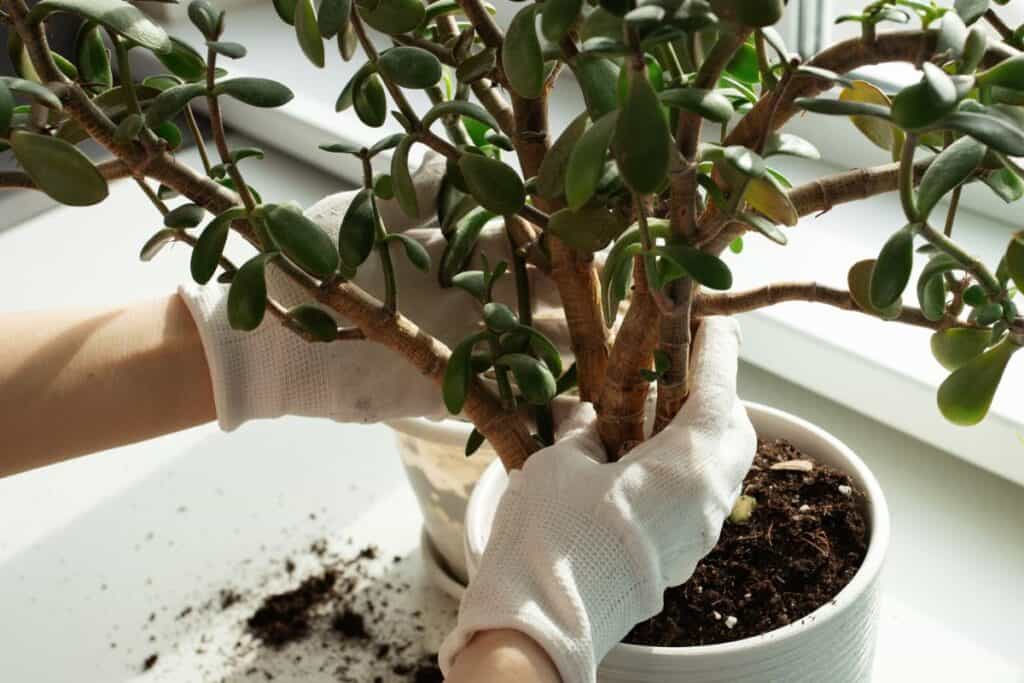
Transplanting or relocation can be stressful for any houseplant because of the new environment.
Here are some factors to consider:
- The reduced root volume when transplanting won’t be able to sustain the entire foliage as it adjusts to the new environment. As such, it’s common for jade plants to shed a few leaves within the next 2-4 weeks after transplant. If your plant drops more than a quarter of its leaves at once, it can indicate a watering or environmental issue.
- Relocating your plant to a new spot without proper acclimatization can cause stress. This is especially true if there’s a large difference between the light conditions between the initial and new locations. The leaves may turn yellow or brown before falling off.
Watch out for signs of stress during the transition, including the following:
- Yellowing leaves
- Red leaf edges
- Leaf scorch on the sun-exposed leaves
- Leaf drop
Give your plant time to adjust to the gradually increasing light conditions before leaving it in the final location.
You can prevent these problems by gradually introducing your plant to the new environment for 2 weeks before the permanent move. For instance, you can move your plant closer to the new environment a few feet (+ 0.6 m) weekly.
If you’re moving your plant outdoors, start by giving your plant an hour of exposure outdoors. Increase the number of hours daily and monitor potential symptoms like wilting or discoloration.
6. Pests Infestations
Jade plants are generally sturdy enough to survive a minor infestation. However, a severe infestation may prompt them to shed a few leaves.
Common houseplant pests that like feeding on the sap of the succulent leaves include the following:
- Mealybugs: These are crawling insects with a cottony white waxy covering. They usually form clusters underneath leaf surfaces.
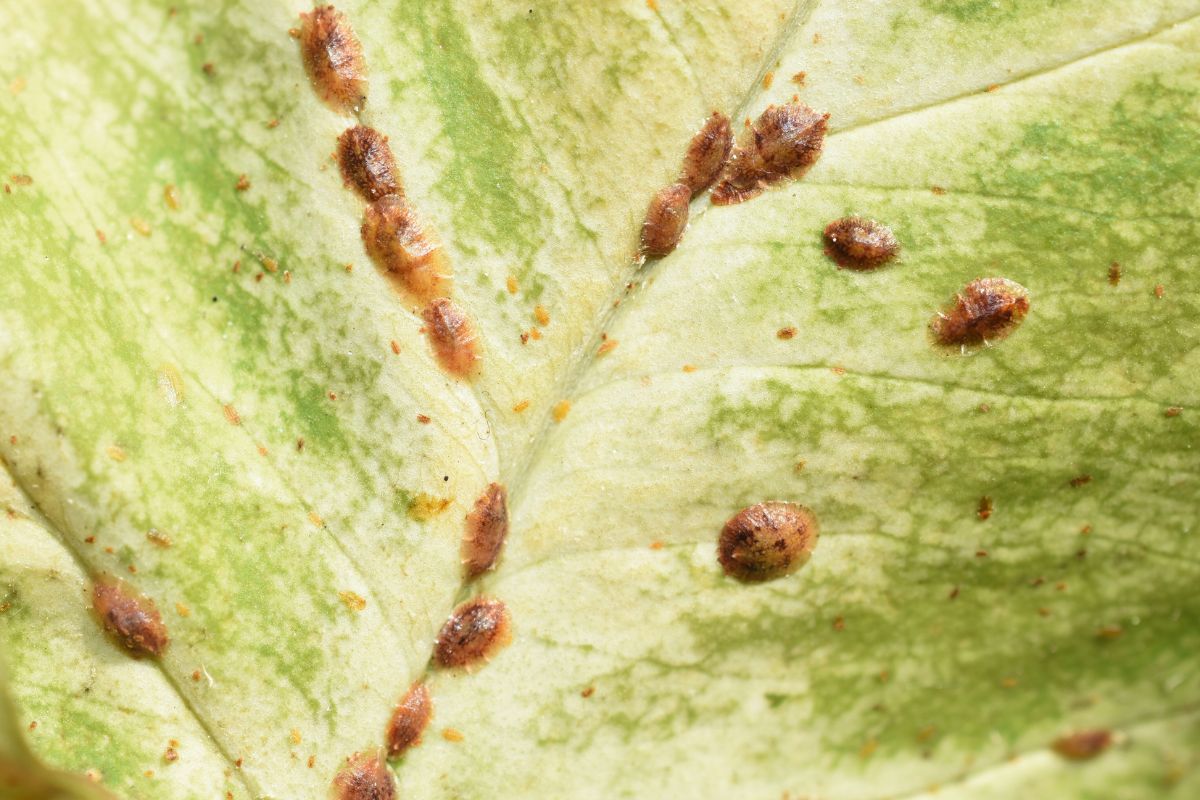
- Scale insects: Their eggs and larvae are almost invisible, whereas mature insects are immobile. They firmly attach to fleshy leaves, petioles, or stems and look like brown bumps.
- Spider mites: These spider-like pests are almost microscopic. You can identify them from the fine webs they weave between branches and leaves.
Manually remove the pests by scraping them using a cotton swab with alcohol. Continue removing pests manually every week until they’re completely eliminated. It also helps to treat the nearby houseplants to prevent re-infestation.
Pro tip: Avoid using neem oil spray or insecticidal soaps on jade plants growing in direct sunlight, as they can burn the leaves. If a severe infestation warrants a chemical treatment, gradually move your plant to a spot with bright indirect light and keep it there for the duration of the treatment.
You can then apply the neem oil spray or insecticidal soap underneath leaves and along stems once a week for the next 6-8 weeks.
7. Diseases
Jade plants are susceptible to bacterial soft rot caused by Erwinia spp. The pathogen can infect the plant from contaminated soil or gardening tools, especially when repotting or pruning.
The disease can spread along the stem, causing it to become mushy. The disrupted water transport system can cause petioles to become weak or loose, and the dehydrated leaves fall off.
This disease has no cure and infected plants must be appropriately discarded to avoid spreading the infection to your other houseplants. Sterilize the pot and potting soil if you wish to reuse them.
8. Nutrient Imbalances
Jade plants don’t require frequent fertilization because of their slow growth rate. Getting their feeding schedule and frequency right is crucial to prevent problems like leaf drop.
Over-Fertilization
Applying too much fertilizer can lead to salt buildup in the soil, which can draw moisture from the roots. The desiccated roots won’t be able to send moisture to the leaves, causing dehydration and leaf scorch. The plant will then shed some leaves to mitigate the damage.
You can fix the problem with the following steps:
- Scrape the top ¼ inch (0.6 cm) of the soil that contains a white crust (granular fertilizer).
- Replenish the surface with fresh jade plant soil mix.
- Flush the soil with filtered water and let the excess drain completely.
- Repeat flushing after 3-7 days.
- Avoid fertilizing your plant for the next 2-3 months.
Nutrient Deficiency
Magnesium deficiency can cause chlorosis (yellowing) and shedding in older leaves. This symptom may be easily mistaken as a natural shedding process due to aging because plants need magnesium only in trace amounts.
Here are some tips to properly fertilize your jade plant:
- Choose a balanced fertilizer (10-10-10) with added micronutrients like magnesium, iron, and calcium.
- In spring, spread a thin layer of slow-release granular fertilizer over the soil surface and water deeply. To promote faster growth, reapply in early summer.
- When using liquid fertilizer, dilute it to half the recommended strength and water directly into the soil once a month from spring to summer.
- Add 10% compost to the succulent mix for a gentle dose of nutrients during repotting.
- Avoid fertilizing your plant in the fall and winter. In the wild, jade plants naturally enter a brief period of rest in the fall to promote flowering in winter. Although jade plants seldom bloom indoors, they still naturally enter a slower growth rate during the cold season.
Routine Care and Maintenance
You can prevent leaf drop and other common jade plant problems with the following care tips:
Watering
Water your plant when the soil is dry halfway through. Make it a habit to check the soil moisture around 10 days after watering.
Avoid letting the soil become bone-dry too often, as it can become hydrophobic. You can bottom water the plant after 3-4 sessions of regular top watering to ensure the soil is properly rehydrated.
Light
Young jade plants (less than 3 years old) typically do well with 8 hours of bright indirect light daily. You can place them 4-8 feet (1.2-2.4 m) away from an east, west, or south-facing window.
On the other hand, mature jade plants grow better if they receive 4 hours of direct sunlight, ideally from an east-facing window. Rotate the pot regularly to ensure balanced exposure and prevent sunburn.
Temperature
Maintain indoor temperatures between 65 and 75 °F (18 and 24 °C) during spring and summer. In the fall and winter, nighttime temperatures should never fall below 50 °F (10 °C).
Pest Management
Inspect the leaves weekly or every time you water your plant. Manually remove pests as soon as you spot them to keep their population under control.
Final Thoughts
Leaf drop is a common but avoidable problem in jade plants. It’s primarily caused by stress due to incorrect watering, unsuitable environmental conditions, nutrient imbalance, pests, and diseases.
Although generally resilient, jade plants require consistent care and attention to keep their leaves healthy and vibrant. Check your plant once every two weeks or when you water it to catch and address symptoms promptly.
Please leave a comment if you have questions or want to share some valuable insights about general jade plant health and care.