
Jade Plant Flowers: Blooming, Ideal Conditions, Care Tips
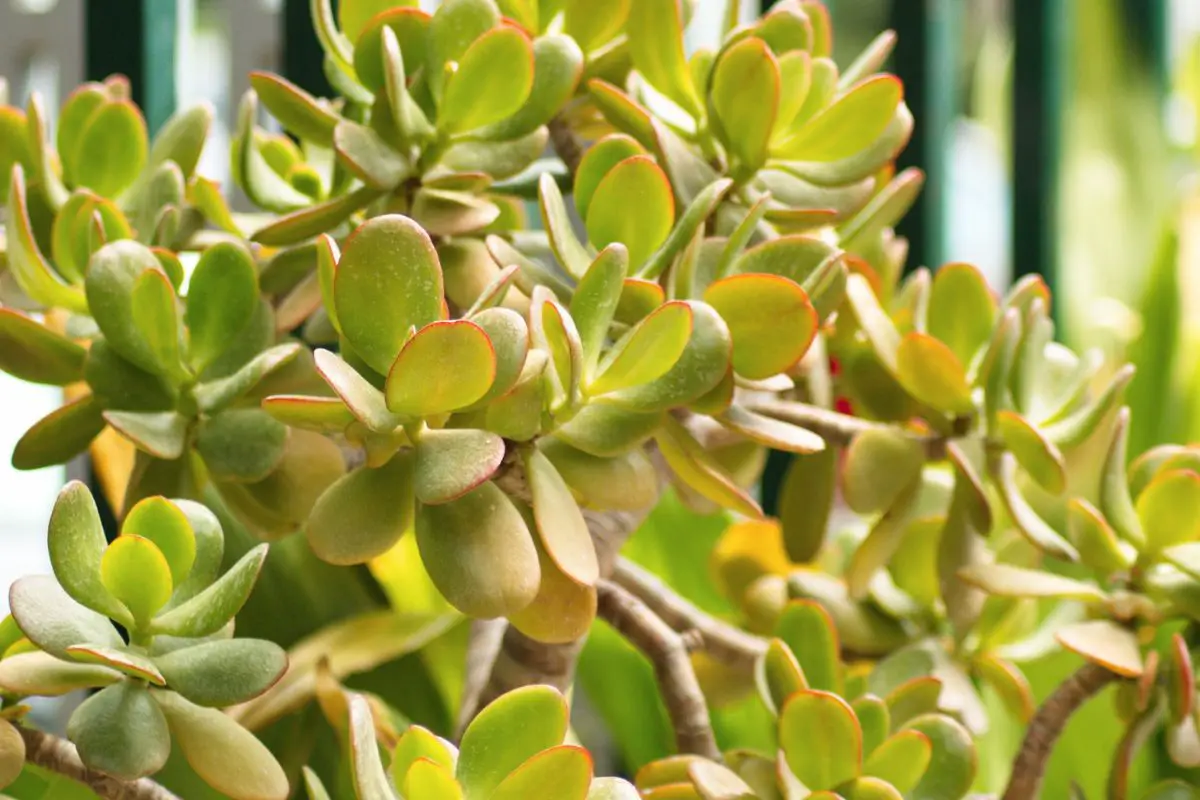
Jade plants are famous for their fleshy, coin-shaped leaves and long lifespan. They can also produce equally fascinating flowers that come out in winter but seldom bloom indoors.
Here are essential facts about jade flowers and their blooming conditions:
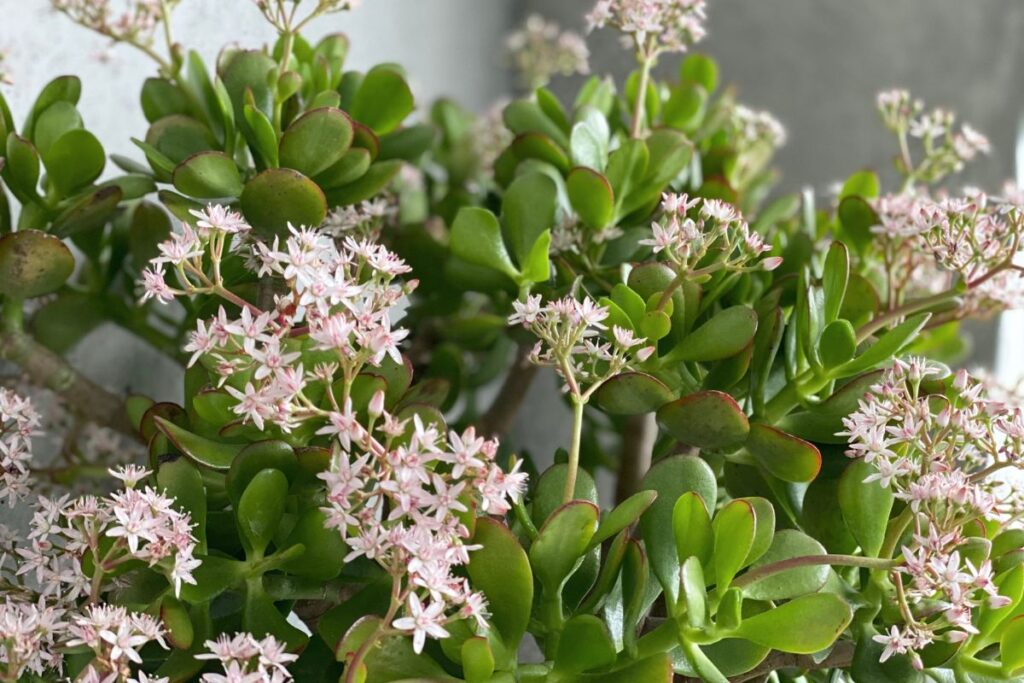
- Jade flowers are clusters of tiny, star-shaped, white or pinkish blooms.
- Jade plants typically need to be at least 5 years old with a robust root system and well-developed stems and leaves before they can produce flowers.
- They hardly bloom when grown in pots indoors because they require long, cool nights with temperatures of 50-55 °F (10-13 °C) in the fall and winter.
- Indoor jade plants have a better chance of blooming if fed with high-phosphorus fertilizer in spring and summer and watered less frequently in the fall and winter.
- Bringing jade plants outdoors in the summer and bringing them back indoors before temperatures drop below 50 °F (10 °C) in the fall can also help promote flowering.
Flowering is often a sign that your jade is healthy and well-cared for. However, even with adequate care, there’s no guarantee that indoor jades will bloom. In this article, I’ll share practical tips that may help encourage your plant to bloom so you can enjoy its rare beauty.
Jade Plant Flowers: An Overview
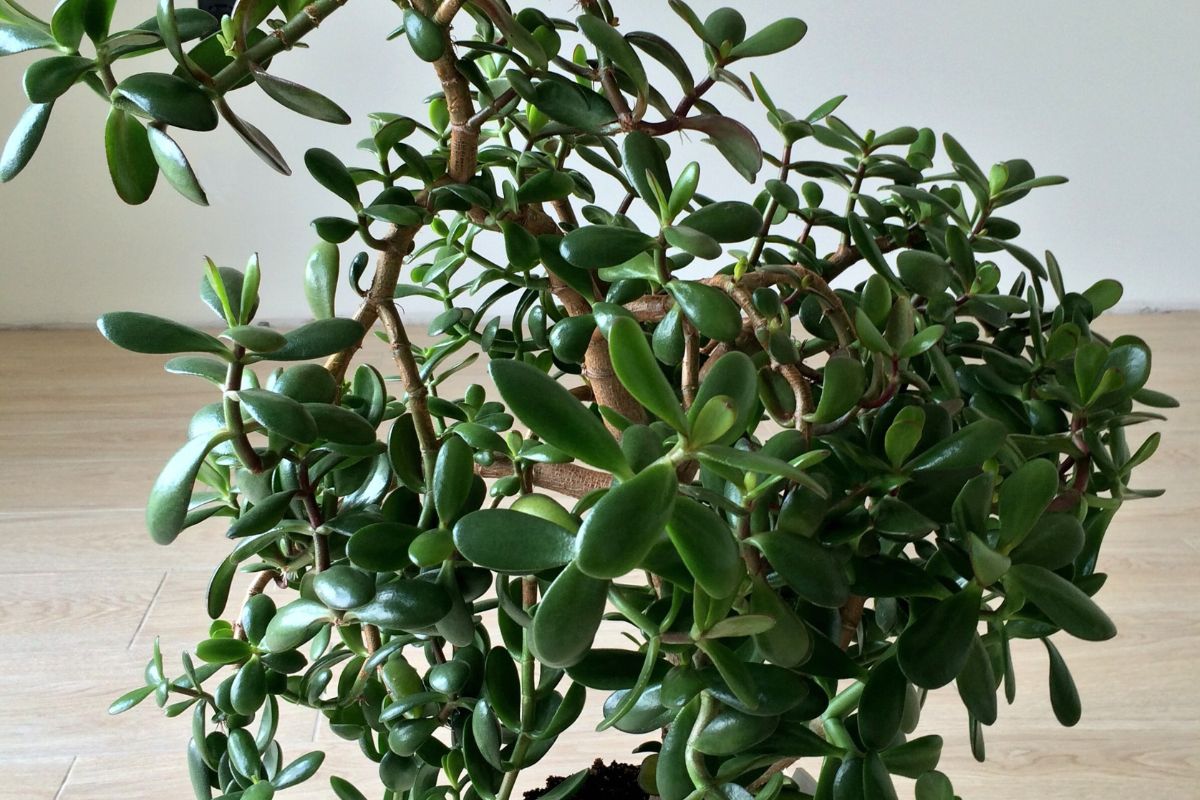
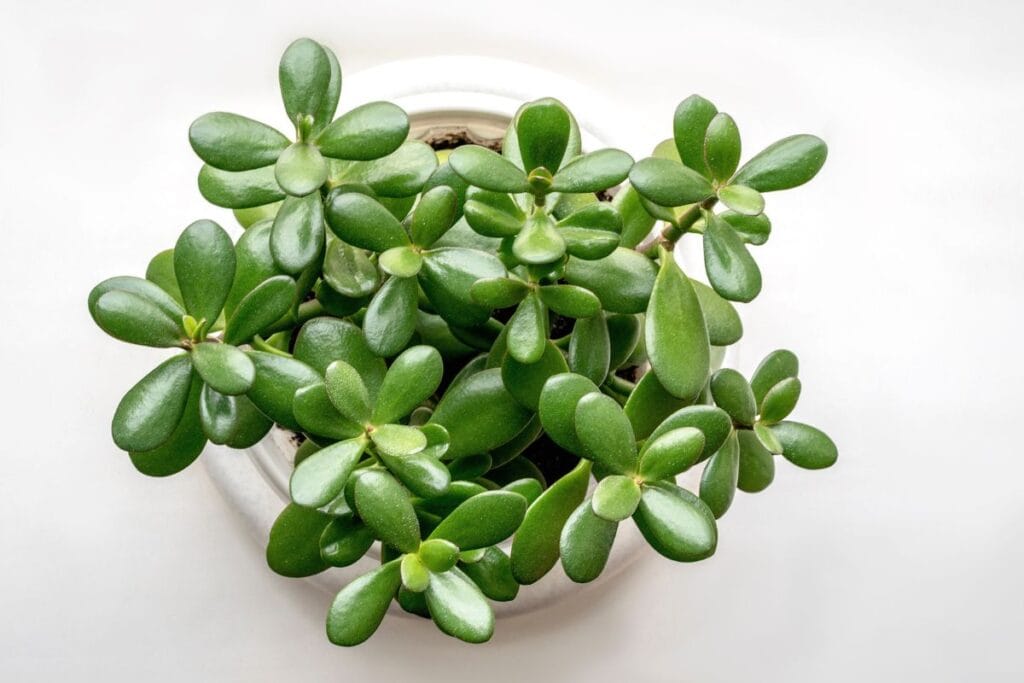
Jade plants (Crassula ovata) are flowering succulent shrubs native to South Africa. They’re popular in the US for their plump leaves, compact form, and low-maintenance needs. Many varieties can also be trained into attractive bonsai forms because of their slow growth and tender stems that eventually become woody.
Not many gardeners collect jade plants for their flowers. Still, anyone will be amazed to see the beautiful but rare blooms.
Here are some vital information about jade flowers:
Reproductive Maturity
When grown from leaf or stem cuttings, jade plants typically reach reproductive maturity after around 5 years. I’ve never seen or heard of jade plants under 5 years old with flowers. They require a robust root system with sturdy stems and full-grown leaves to support the nutritional and structural requirements of the flowers.
Nutrient Requirement
Plants growing in nutrient-poor soil in their native habitat rarely bloom. Nutrients like phosphorus and potassium are necessary for flowering, but they can take a long time to become accessible from material weathering, such as rain and wind. This contributes to the long delay in flowering in jade plants.
Appearance
The flowers are star-shaped and about an inch (2.5 cm) in diameter. They form a cyme with clusters of 10 or more flowers atop a flower stem. The sun-exposed flowers appear white, whereas those that don’t receive much light are pinkish. Either way, they provide a nice contrast against the green foliage.
Scent
The flowers have a faint, sweet smell that’s barely noticeable to humans, but when grown outdoors, they can attract common pollinators like bees and butterflies.
Blooming Time
Under the right conditions, jade plants bloom from early to late winter (between November and February in the northern hemisphere). Consistent care and appropriate seasonal adjustments may encourage them to produce flowers for several consecutive winters.
Cultural Significance
Flowering jades are associated with good fortune and harmony in Feng Shui. Their rarity indicates good plant health and happiness that can radiate within the home.
Blooming: Conditions and Process

Witnessing jade flowers for the first time is exciting because they rarely bloom indoors.
Jade plants are more likely to flower when exposed to the right conditions, including the following:
- Light: Give your plant 4 hours of direct sunlight daily from spring to summer to generate enough energy for flowering. Simulating longer dark hours (10-12 hours) in the fall will help signal an indoor jade of the changing seasons, prompting it to grow more slowly and preserve energy for flower bud formation.
- Water: Water the plant more frequently in the spring and summer and less in the fall and winter to mimic the wet and dry seasons in their native habitat.
- Temperature: Maintain moderate indoor temperatures of 65-75 °F (18-24 °C). Under ideal conditions, letting nighttime temperatures fall to 50-55 °F (10-13 °C) in the fall and winter can help promote bud development.
- Humidity: Maintain the humidity between 30 and 50% all year round.
- Fertilizer: Feed your plant a balanced 10-10-10 fertilizer with micronutrients from spring to summer.
- Repotting: Transplant young plants into a pot that’s a size larger than the old one every 1-2 years to promote faster growth. On the other hand, repotting older plants every 2-3 years can encourage flowering.
- Pruning: Remove aging leaves and branches and unwanted growth in spring and summer to help revitalize the plant and allocate the energy to producing flower buds in the fall.
Below, I’ll explain each of the factors in detail:
Ideal Conditions and Care Tips for Promoting Blooms
Here are some specific care tips to improve your chances of seeing jade flowers:
Lighting and Positioning
Jade plants require sufficient energy for flowering, which they generate through photosynthesis. Adequate natural light is essential for this process, and placing your jade plant near a south-facing window provides the best light conditions to encourage flowering.
Note: An eastern window is ideal for direct morning sun. However, it doesn’t provide sufficient natural light for the rest of the day.
I’ve found that keeping my jade plant next to an eastern window in spring, moving it outdoors in the summer, and moving it back indoors in the fall can sometimes do the trick for better light exposure. These transitions give the plant a stronger impression of the changing seasons.
For jade plants kept exclusively indoors all year round, you may refer to the recommended seasonal adjustments for lighting below:
- Spring and Summer: Give your plant 4 hours of direct sun in the morning. Hang sheer curtains from midday to afternoon for bright indirect light for the next 8-10 hours. Bright light and long daylight hours will help your plant grow more actively.
- Early Fall: Gradually move your plant until it’s up to 8 feet (1.2-2.4 m) from a southern window. If it still receives direct sun, you can hang sheer curtains to filter the light. The goal is to give your plant 8-12 hours of bright, indirect light and 10-12 hours of darkness for at least 2 months in the fall. This will serve as an environmental cue for energy preservation and potential flowering.
- Late Fall: Slowly transition the plant to direct sunlight for up to 6 hours daily. The flower branches or stems require strong sun energy to produce flower buds and consistent light conditions for the buds to bloom.
Give the plant a quarter or a half-turn every time you water it to promote even light distribution and balanced growth.
Pro tip: Fully grown jade plants can be heavy to rotate or move around too much. Moving them around too often may also cause relocation stress, further inhibiting flowering. Make gradual transitions to prevent plant stress. You can move the plant a few feet (0.6 m) every 3-5 days to acclimatize it to the new environment.
Watering Frequency
Jade plants usually bloom after a period of long cool nights and semi-dry conditions. To mimic this indoors, gradually increase the interval between waterings in early fall.
Here are some tips for adjusting the watering routine:
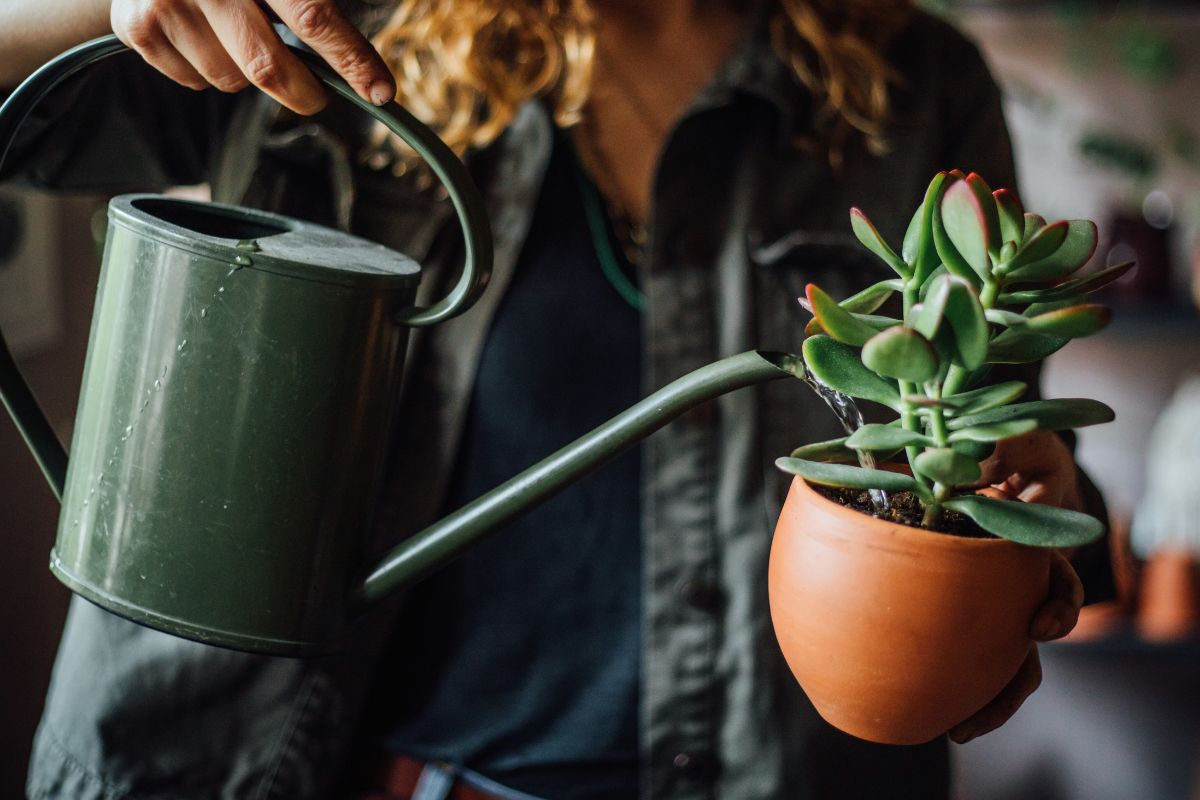
- Spring & Summer: Water the plant as soon as the top half of the potting mix is dry. This can be every 2 weeks in spring or 7-10 days in the summer, depending on the light intensity, temperature, and your plant’s metabolic and transpiration rates.
- Fall & Winter: Starting in September, increase the interval between watering sessions. Wait until the top ⅔ of the soil is completely dry (or every 3-4 weeks). Lower temperatures and light intensity will also slow down moisture loss from the soil, helping with the tailored environmental cues for indoor jade plants.
Note: Many gardeners may even recommend waiting until the soil is dry all the way through. However, bone-dry soil can increase the risk of becoming hydrophobic, subjecting your plant to drought stress and lower chances of flowering.
Similarly, avoid overwatering jade plants because weak or damaged roots can inhibit flowering.
Temperature Control

In their native environment, jade plants experience an average of 55 °F (13 °C) and occasional temperature dips as low as 45 °F (7 °C) in the fall and winter. This is one of the environmental cues that prompt the plant to focus on developing flowers.
More research may be required to fully understand the temperature-sensitive biochemical processes that stimulate flowering in jade plants. However, many online sources, testimonies from fellow jade plant gardeners, and decades of tending to jade plants have proven that distinct seasonal changes in nighttime temperatures can influence flowering.
Under ideal conditions, you should maintain nighttime temperatures of 50-55 °F (10-13 °C) in the fall and winter to encourage indoor jade plants to bloom. However, allowing temperatures to drop this low indoors isn’t practical since it would be too uncomfortable for humans.
Recommended nighttime temperatures for good health and better sleep are around 65 °F (18 °C). Although jade plants thrive at indoor temperatures between 65 and 75 °F (18 and 24 °C) all year round, inadequate nighttime dips to the lower 50s can inhibit flowering.
This is one of the reasons why jade plants are highly unlikely to bloom indoors.
Giving your jade plants a few months outdoors in the summer and moving them back indoors before nighttime temperatures fall below 50 °F (10 °C) in the fall can help distinguish the warm and cold seasons and influence flowering.
If you have exclusively indoor jades, here are some tips that may help promote flowering:
- Check the nighttime temperatures in your home using a portable thermometer with a hygrometer.
- Find a dark spot that falls to around 55 °F (13 °C) at night and has 30-50% humidity (e.g., an unheated garage, conservatory, or cool room in a home without central heating).
- Move your jade plant to that spot after sunset to give it a cool night with 10-12 hours of darkness.
- Move the plant back to its usual spot with bright light in the morning.
Avoid placing jade plants in the following rooms or areas at night as they can inhibit flowering:
- Bedroom or alternative sleeping areas: Comfortable and safe sleeping temperatures are above 65 °F (18 °C). Although jade plants thrive at moderate temperatures, they’ll be less likely to flower without adequate exposure to cool nights.
- Unheated garage if you have freezing winters: Be sure not to let temperatures drop below 40 °F (4 °C) around jade plants as it can cause chilling injury, leaving your plant with mushy leaves and stems. Moreover, frosts can damage the flowers or cause the buds to abort.
Humidity
Maintain low-to-moderate humidity levels of 30-50% around your jade plants all year round to avoid moisture-related problems like overwatering and pest infestations.
Here are some tips for ideal humidity conditions for jade plants:
- Avoid areas where the humidity fluctuates drastically throughout the day, such as kitchens and bathrooms.
- Check the humidity regularly using a hygrometer and adjust as needed. Jade plants can tolerate a wide range of humidity but do best at 30-50%.
- On hot and dry days, raise the humidity by switching on a humidifier around 5 feet (1.5 m) away from jade plants for 4-5 hours during the day. You can also group plants with similar environmental needs or place the pot over a pebbled tray with water. When using space heaters, the water from the pebbled tray will evaporate more quickly, partially raising the humidity around your plants. Ensure the tray doesn’t run out of water, but keep the water from touching the bottom of the pot to prevent the soil from absorbing it and staying wet.
- On rainy, cloudy, or muggy days, reduce the humidity by switching on a fan in the room. You can also keep the windows open for better airflow if the outdoor temperature is moderate.
Fertilization
Jade plants will grow well indoors, even with minimal fertilization. After repotting, a soil mix with compost is usually enough to feed the plant for up to a year.
In general, I recommend repotting jade plants in a fresh soil mix with compost (i.e., equal amounts of compost and perlite). However, it doesn’t contain adequate nutrients to promote flowering.
If you want your jade plant to bloom, you must be proactive in your fertilizer application after repotting it in the spring. It’ll need an extra nutrient boost during the growing season because flowers require energy to produce.
Here are some tips to ensure your jade plants are properly fertilized to bear flowers:
- Choose a balanced (10-10-10) fertilizer with micronutrients like iron, magnesium, calcium, and zinc. I’ve also noticed that a low-nitrogen, high-phosphorus fertilizer (1-3-2) like a tomato fertilizer helps with jade flower development.
- When using granular fertilizers, apply a very thin layer over the soil surface in early to mid-spring and water it in deeply. Water the soil again as soon as the top half of the pot is dry to prevent drought or salt stress. This will also ensure the nutrients are broken down and delivered to your plant’s roots. You may reapply the fertilizer after 2 months or in early summer.
- For liquid fertilizers, dilute them to half the recommended strength. Pour the water directly into the soil once a month from spring to mid-summer.
Proper fertilization can help support the plant’s overall health, making it more likely to bloom. However, avoid over-fertilization, as it can cause fertilizer burn and damage the roots.
I don’t recommend using at-home soil test kits for indoor potted plants because, although cheap, the results have low accuracy rates. These kits can check the soil NPK levels, but the values may include forms that are inaccessible to plant roots.
Using a half-strength formula and timely watering should be enough to leach excess fertilizer through the drainage holes and prevent salt stress.
Note: After the flowers fade in late winter or spring, give the plant at least 4 weeks of rest before fertilizing again.
Repotting
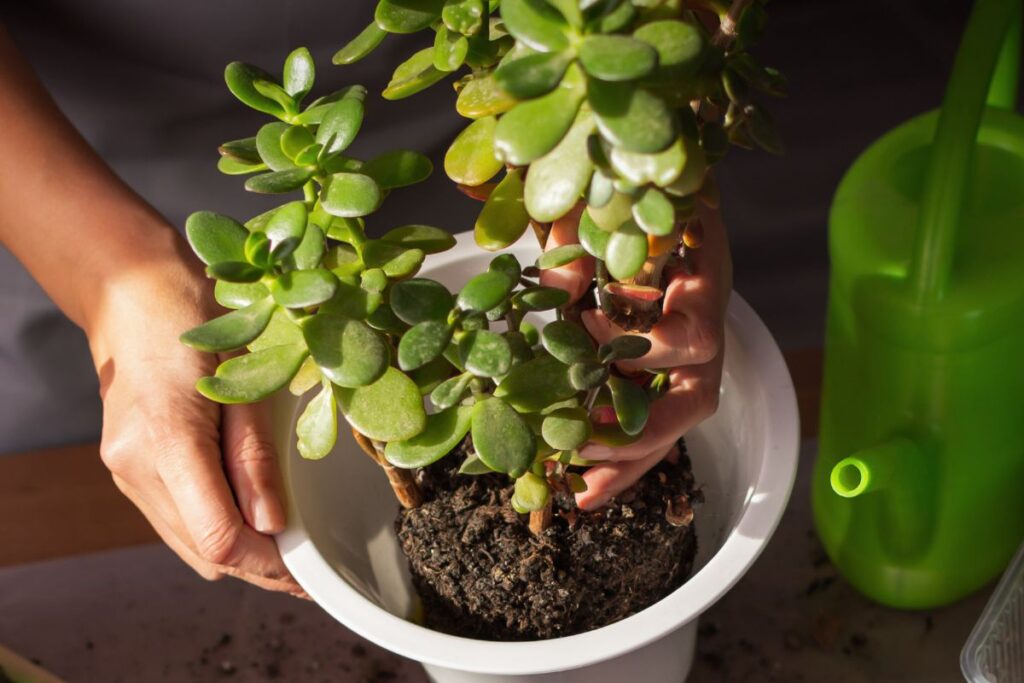
Regular repotting can promote faster growth in jade plants, encouraging them to mature sooner. You must repot young plants (less than 5 years old) once every 1-2 years. Being rootbound in small pots can inhibit growth and delay your plant’s potential for blooming.
Note: Some sources claim that stress from being rootbound can promote flowering. However, limited soil space in severely rootbound plants can inhibit proper water infiltration and absorption by the roots. The fertilizer salts may also accumulate in the root zone, leading to drought and salt stress.
Although older plants can stay comfortably in the same pot for up to 5 years, they may require repotting every 2-3 years if you want better chances to see flowers in winter.
Repotting may also help to replenish soil nutrients and increase the growing space for the roots. The plant will unlikely produce flowers within the same year after repotting as it adapts to the new soil. However, it’ll have a better chance of blooming the following year.
Remember the following tips when repotting jade plants:
- Prepare a pot that’s 2 inches (5 cm) wider and deeper than the old pot.
- Choose a breathable pot with drainage holes to prevent waterlogging and root rot.
- Use a high-quality commercial succulent mix with added nutrients. You can also use a nutrient-rich, well-draining homemade mix with equal parts compost and perlite.
Pruning and Maintenance
Regular pruning can also contribute to plant health and increase the chances of flowering (albeit indirectly).
Follow the tips below for the best pruning and maintenance practices:
- Use sharp, sterile scissors or shears when pruning jade plants. Clean the tools with rubbing alcohol between cuts to prevent the spread of diseases. You can also use clean fingernails when removing small shoots. You’ll need to sanitize your nails with a clean cloth moistened with alcohol before pinching another shoot.
- Cut discolored leaves or branches to keep your plant vibrant. It will also help redirect energy to new and healthy growth.
- Prune or pinch unwanted offshoots any time of the year. Doing so will keep them from growing too long and intersecting with the branches.
- Dust the plant with a clean, moist cloth every 2 weeks. Removing the dust from leaf surfaces regularly can enhance their ability to absorb and utilize light energy.
- Inspect the plant for signs of pests. Promptly remove the pests and treat the plant as needed to prevent an infestation because stressed jade plants are less likely to bloom.
Pro tip: Avoid cutting or pinching the fleshy growing tips of established branches because that’s where the flower buds (if any) will sprout from.
The Blooming Process
After about 2 months of long, cool nights, jade plants will start putting out flower buds in late fall. Bright natural light from late fall to winter will encourage continuous development and the ultimate blooming of the jade flowers.
Note: The buds may abort or all off prematurely if the plant doesn’t receive sufficient sunlight.
There’s no telling how long it takes before the flower buds open, as it largely depends on how much light the plant receives and how happy it is with the other environmental conditions. Mine usually takes 2-4 weeks between bud development and blooming.
But once they open, you may notice the following traits:
- Young flowers have a pinkish tint.
- As they get bigger, they become paler and almost white.
- Flowers exposed to the sun are more likely to turn white. Rotating the pot regularly can help maintain the pinkish-white tint of the flowers.
- Each flower can last 2-4 weeks before fading and falling off.
Common Issues and Troubleshooting
Although jade plants typically don’t bloom indoors, several factors can further lower the odds because of their direct effect on plant health and flower development.
Common Problems Affecting Blooming
Here are some of the common problems to look out for:
- Overwatering & Root Rot: Soggy soil can cause root rot and deprive the shoots of much-needed moisture and nutrients. The leaves may turn yellow or fall off. You may repot the plant in fresher soil, but it will take several months or years to recover. As your plant recovers, it’ll be even less likely to bloom.
- Pests & Diseases: Sap-feeding pests and diseases like root rot and bacterial soft rot may interrupt moisture and nutrient transport. They can negatively affect a jade plant’s health and inhibit flowering.
- Low Light Conditions: As sun-loving plants, jade plants need bright natural light to generate enough energy to produce flowers. Without enough light, jade plants will waste their energy for stem growth to reach light sources, resulting in legginess. Grow lights are not enough to promote flowering because of their lower intensity than natural light. Give your plant 4 hours of direct sunlight in spring, summer, and winter, about 8 hours of bright indirect light, and 10-12 hours of darkness in the fall.
- Short, Warm Nights: Jade plants need long, cool nights to stimulate them to produce flower buds. Warm temperatures at night can cause rapid moisture loss because jade plants transpire at night. This can lead to dehydration or lack of energy for flower development.
- Over-Fertilization: Feeding jade plants too much fertilizer at once to promote flowering can be counterproductive. Considering their infrequent watering needs, the fertilizer salts can remain too long in the soil and draw moisture from the roots. The desiccated roots won’t be able to send moisture and nutrients to the stems and leaves, leading to leaf scorch, yellowing or browning leaves, and stunted growth.
Troubleshooting Non-Blooming Plants
Jade plants are slow growers and may take several years to reach reproductive maturity. That said, finding suitable conditions in your home requires patience and several trials and errors.
Say you’ve followed the care tips discussed above, but your jade plant still refuses to bloom, you may try these additional tips below:
- Assess and adjust your care routine thoroughly. Review of current care practices, such as lighting, watering, and fertilization, to identify areas for improvement. For instance, if your plant receives sufficient light but is drought-stressed, it might not put out flowers. Note that light and water are necessary for plant food or energy storage.
- Make noticeable environmental changes (i.e., light and temperature) for more pronounced seasonal cues. If your plant is exclusively indoors, try giving it 2-3 months outdoors in the summer before moving it back in for the fall. The stark transition from bright light and warm temperatures to lower light and cooler temperatures may trigger flower development.
Just remember: Acclimatize your plant accordingly with gradual changes. Avoid sudden and drastic changes that can stress the plant and further delay or inhibit flowering.
Myths and Misconceptions About Jade Plant Flowering
There are myths going around claiming that constant neglect can prompt jade plants to bear flowers as a defense mechanism. Some may even claim that jade plants will never bloom indoors.
However, after years of caring for jade plants and receiving hand-me-downs from older relatives, here are the facts I’ve collected:
- Constant or severe neglect can stress jade plants and reduce their likelihood of blooming.
- Jade plants will bloom indoors if they’re happy with their environment.
- Some jade plants may look healthy and happy for 10 (or 20) years without blooming, but it doesn’t mean they will never bloom. It took 15 years of consistent care before one of my hand-me-downs bloomed for the first time.
Final Thoughts
Jade plants require simple but consistent care to thrive indoors. Although rare, they can bloom indoors if you mimic the environmental conditions in their native environment. For instance, they want long, cool nights in the fall and bright light in the winter to set buds.
Note that experienced gardeners may struggle to promote blooms in jade plants because it largely depends on plant health and environmental conditions.
I’ve had jade plants put out flowers as early as 5 years, while others are over 10 years old but never bloomed once. In Asian culture, this is often linked to personal luck.
Be patient and keep trying to tweak your care routine and environmental conditions. Jade plants are resilient and will survive slight changes. They can also live for several decades, so you’ll have more chances to see them bloom.
If you’ve had much success with flowering jade plants, please share your experience to help the growing community of gardening enthusiasts. You can also reach out for questions or subscribe to my blog or newsletter for more plant care tips.