
Light Requirements for Fiddle Leaf Figs Explained
Fiddle leaf figs or FLFs are stylish, statement-making houseplants with large, glossy leaves that thrive in proper lighting conditions. Although they prefer bright natural light, they can adapt to moderate indoor lighting.
Here are essential facts about an indoor fiddle leaf fig’s light requirements:
- Light intensity: Young fiddle leaf figs with underdeveloped leaves thrive with at least 8 hours of bright, indirect light from a sunny east or south-facing window. Larger plants with established roots and deep green leaves can tolerate up to 4 hours of direct morning sun from an eastern window and bright indirect light for the rest of the day.
- Growth rate: Brighter light conditions prompt faster growth in fiddle leaf figs. Those growing in low-to-moderate lighting can remain healthy but grow relatively slower.
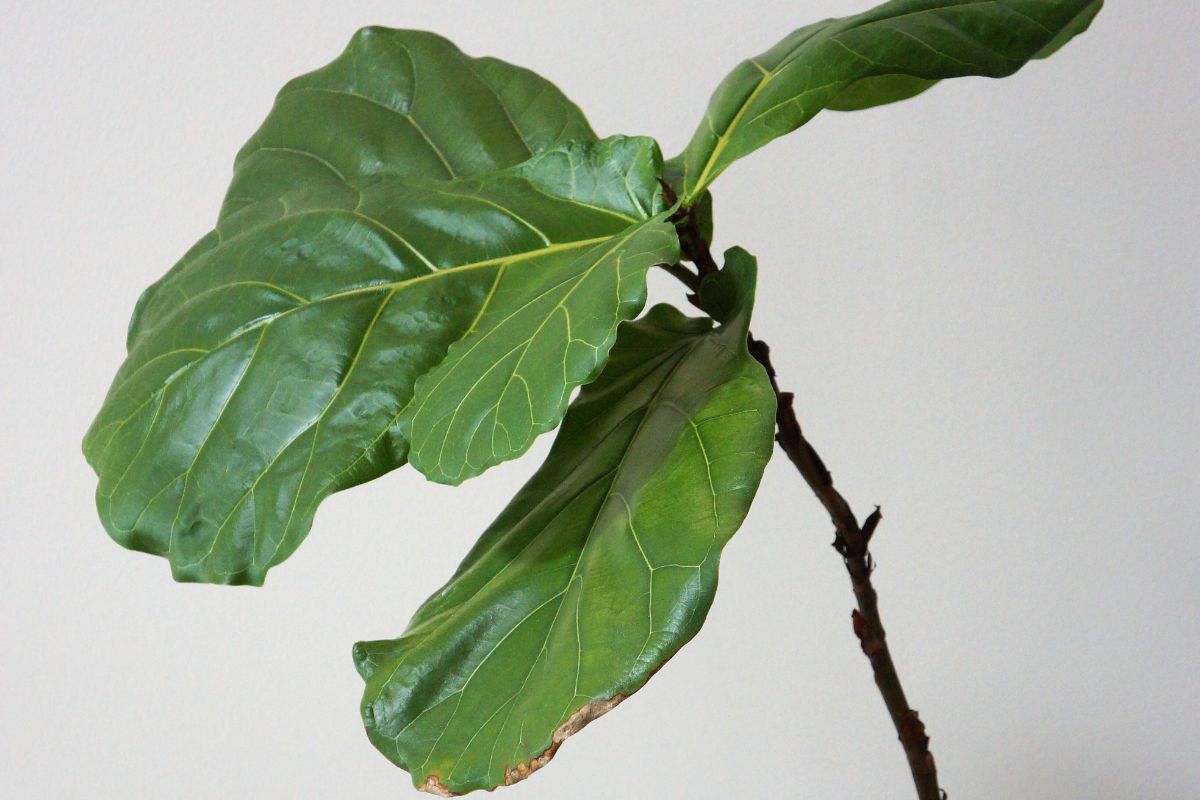
- Problems: Too much direct sunlight can scorch or dehydrate the large FLF leaves, especially without adequate adjustments in watering. Meanwhile, prolonged exposure to insufficient light can lead to leaning or leggy stems.
- Routine maintenance: Occasional pruning of aging leaves or unwanted branches and regular dusting can brighten the plant and provide better access to light energy that fuels photosynthesis. Rotating the pot weekly can also help ensure balanced light exposure and bushy growth.
Proper placement and lighting are crucial in maintaining the fiddle leaf fig’s striking appearance, robust growth, and overall health. The rest of the article will guide you with practical tips for optimizing light exposure.

Fiddle Leaf Figs: An Overview
Fiddle leaf figs (Ficus lyrata) are native to tropical West and Central African rainforests, where mature trees receive partial to full sun (4-8 hours of direct sunlight). In contrast, younger trees receive dappled sunlight (filtered sunlight through tree canopies).
However, it’s not rare to find fiddle leaf figs growing in less dense forests where they bask in unobstructed sunlight all day long.
Effects of Light on Wild FLF Growth Pattern
Here’s an insight into how light intensity and duration of exposure can influence fiddle leaf fig tree growth in the wild:
- Trunk diameter: Trees exposed to direct sunlight and strong winds develop sturdier trunks. FLFs growing outdoors in frost-free areas (USDA zones 11 and 12) tend to have thicker trunks about 1-2 feet (0.3-0.6 m) in diameter.
- Vertical growth: Exposure to intense sunlight all day (i.e., full sun or at least 8 hours of direct sunlight) early in the plant’s growth can slow down vertical growth, leading to a more compact plant with a wider trunk diameter. Those growing inside dense rainforests invest their energy in vertical growth to access brighter light above the canopy. This prompts wild fiddle leaf figs to reach around 50 feet (15 m) tall.
- Crown volume: The slower vertical growth under intense sunlight consequently leads to a wider and denser crown (more branching).
Indoor Growth in Colder Climates
Fiddle leaf figs were introduced to colder climates like Europe and North America around the late 19th-20th century. They were mainly used as indoor ornamentals, but they can be cultivated as outdoor shade trees in regions with mild winters because of their frost sensitivity.
Indoor FLFs receive comparably less natural light than their outdoor counterparts, resulting in the following traits:
- Upright growth on a singular stem: Indoor FLFs tend to grow vertically without branches unless intentionally pruned to promote branching. I’ve had several trees growing for 5-8 years and reaching 6-8 feet (1.8-2.4 m) tall without branching until I cut off their growing tips to prevent them from touching the ceiling.
- Smaller leaves: Although famous for their massive, leathery leaves, you may be surprised to learn that the leaves of indoor FLFs (up to 18×12 in or 45×30 cm) are comparably smaller than those of wild FLFs (up to 30×18 in or 76×45 cm).
- Thinner trunk: The trunks of my over 5-year-old indoor potted FLFs are only 1-2 inches (2.5-5 cm) in diameter at the widest point compared to the 4-6-inch (10-15 cm) wide trunks of my outdoor, in-ground FLFs around the same age.
- Extremely rare flower or fruit development: Insufficient natural light indoors also delays or inhibits reproductive maturity in fiddle leaf figs, making them less likely to flower inside homes or offices.
Note: It’s also important to remember that fiddle leaf figs are sensitive to drastic changes in light exposure and may respond with common problems like leaning, legginess, sunburn, or leaf drop.
I’ll explore this issue in more detail below.
Light Requirements
Fiddle leaf figs have varying light requirements depending on their age or maturity.
Here’s a general overview:
- Younger plants prefer filtered or dappled sun because too much light can burn their underdeveloped, pale leaves. The young, shallow roots are also unable to keep up with the moisture requirements to counter the drying effect of intense sunlight.
- Older or mature trees thrive in full sun or at least 8 hours of direct sunlight daily, which is accessible when they grow beyond the forest canopy. The extensive roots, high humidity, and abundant rain also contribute to FLF trees’ resistance to leaf scorch and dehydration.
Ideal Indoor Light Conditions
Here are some essential details about optimal indoor light conditions for fiddle leaf figs:
- Moderate light intensity of around 200-500 foot candles (2,152-5,380 lux) is ideal.
- With proper acclimatization, humidity, and hydration, indoor FLFs can tolerate over 1,000 ft-c (10,764 lux) in the morning.
- However, they won’t do well with light intensities below 75 ft-c (807 lux), which can cause legginess or pale leaves.
Note: 1 foot candle is equal to 10.764 lux.
The following guide shows the impact of different light intensities on indoor FLFs:
| Light Intensity | Description | Impact on FLFs |
| High | Next to an east-facing window Up to 4 hours of direct morning sun (over 1,000 ft-c in the morning and around 300 ft-c in the afternoon) Note: Avoid direct midday sun from south-facing windows to prevent leaf scorch. | Sturdier and bushier growth Typical growth rate of 1-2 feet (0.3-0.6 m) annually based on personal observation Higher risk of sunburn or leaf scorch from prolonged exposure or sudden transition without proper acclimatization |
| Moderate (Recommended) | Up to 8 feet (2.4 m) from a south-facing window (500-1,000 ft-c) Around 4 feet (1.2 m) from an east or west-facing window (200-500 ft-c) At least 8 hours of bright indirect sunlight | Ideal for newly rooted cuttings or plants less than 3 years old, as it takes about 3 years for indoor FLFs to develop glossier, darker leaves for efficient light absorption and well-established roots for optimal moisture uptake Noticeably slower growth at around 1 foot (0.3 m) per year. |
| Low or Artificial (Not Recommended) | Next to a north-facing window No natural light and less than 12 hours of regular fluorescent LED lamps (10-50 ft-c at 2-6 ft or 0.6-1.8 m distance) | Light conditions below 75-foot candles can lead to unpredictable health conditions with slow or stunted growth, pale leaves, and higher risks of leaning and legginess. |
Note: The light intensity readings in foot candles (ft-c) in the table above are based on the average lighting conditions in my home with unobstructed windows.
Measuring Sunlight Exposure
Here are some tips to help measure sunlight exposure in your home:
- Invest in tools for measuring light: If you’re planning to take on indoor gardening as a hobby, consider using a portable light meter to measure the light intensity in different areas of your home. Follow the product-specific instructions to get an accurate reading. Alternatively, you can use smartphone apps—although they may be less accurate.
- Create a light map and/or sun diary: Track the sunlight exposure in different areas of the home every hour throughout the day and record them in a diary. A spot that receives an average of 200-500 ft=c for at least 8 hours daily is optimal for FLFs. You can create a sun diary for different seasons or specific weather conditions (e.g., stormy or cloudy days) to track how they affect the light conditions for your indoor plants.
Monitoring light levels helps ensure that the fiddle leaf fig’s light requirements are met and prevents common problems like legginess or leaf scorch.
Signs of Inadequate Light
Fiddle leaf figs are fussy houseplants that readily respond to poor indoor lighting conditions with the following symptoms:
Low Light
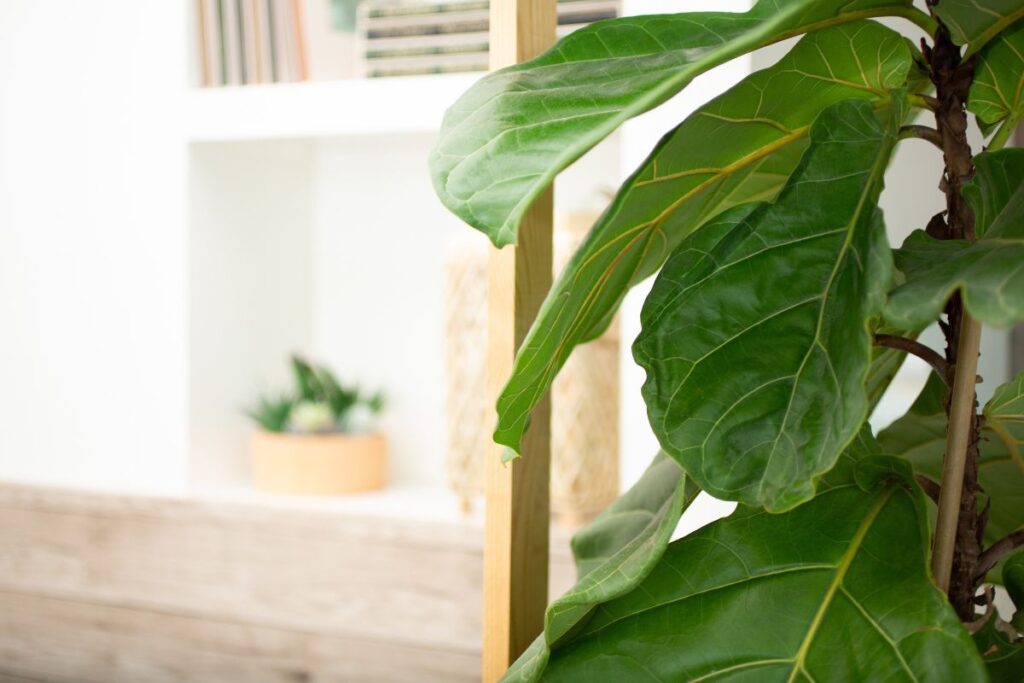
- Pale, dull, or yellowing leaves
- Stems leaning toward the light source
- Leggy stems with sparse leaves on the side facing away from the sun
- Droopy stems and leaves
- Smaller new leaves
- Slow or stunted growth
You can improve your FLF’s health and appearance with the tips below:
- Prune the leggy stem down to the woody, non-leggy section. Use a sharp-sterile knife or pruning shears and cut just above a node. This will prompt new growth with healthy branches.
- Gradually increase the light intensity around your plant. Move the plant a few feet (less than 0.6 m) closer to a sunny window every week to acclimate it to brighter light conditions.
- Supplement light exposure with full-spectrum grow lights. During dark, cloudy days, give your plant as much natural light as possible and an additional 8-12 hours of exposure under grow lights. Position the lights at a 45° angle, approximately 1 foot (0.3 m) above your plant, to illuminate the lower leaves.
- Rotate the pot weekly or right before watering to promote balanced and upright growth.
Too Much Light

- Brown, scorched patches on the leaves exposed to the sun
- White or bleached patches on the leaves
- Dull, dry leaf surface
- Brown and crisp leaf edges
- Curling edges
Follow the tips below to relieve the signs of sun stress:
- Cut off severely damaged leaves using sharp, sterile scissors, but limit pruning to 10% of the foliage. Avoid removing too many leaves at once, as it can lead to an uneven look, especially since sunburn typically occurs only on one side (sun-exposed part) of the plant.
- Move the plant a few feet (+0.6 m) away from the sunny window to reduce the light intensity it receives.
- Filter the light with sheer curtains, especially at midday, if it’s physically impossible to keep the plant away from direct sunlight (i.e., limited indoor space or only south-facing window in the room).
- Rotate the pot regularly to give the leaves respite from intense sunlight. Large pots with tall FLFs can be too heavy to turn, so I recommend placing them on a plant caddy for easier rotation or movement.
- Increase the watering frequency as needed because brighter light conditions can dry out the soil more quickly. Properly hydrated plants have better tolerance to intense light.
- Maintain indoor humidity at around 50% to prevent rapid moisture loss from the leaves through transpiration. You may use a humidifier for a few hours during midday and monitor the humidity levels in your indoor garden using a hygrometer.
Note: Pale or yellowing FLF leaves are often associated with low light and potential overwatering. In contrast, brown, dry leaves (or leaf edges) are typically caused by intense sunlight and dehydration.
Optimizing Light Conditions
Fiddle leaf figs are moderate to high-maintenance plants that won’t readily adapt to a new indoor environment.
It’s not unusual to find a healthy-looking store-bought fiddle suddenly shriveling a few weeks (or even days) after bringing it home, and one of the most common culprits is inadequate lighting.
Here are some tips to tailor your indoor light conditions for a thriving fiddle leaf fig:
Finding the Perfect Spot Indoors
Use the data on your light map or sun diary to find spots that receive 200-500 ft-c for at least 8 hours during the day.
Pro Tip: During clear weather, this light intensity is typically found 4-8 feet (1.2-2.4 m) from an unobstructed east, south, or west-facing window in most US homes (in the Northern Hemisphere). However, not all homes have sufficient access to natural light.
Here are some tips to optimize the light conditions in different home settings:
| Window Direction | Light Exposure | Placement Tips |
| North | Lowest (in the U.S. or countries in the northern hemisphere) | Place the pot next to an unobstructed northern window for maximum possible access to natural light. Supplement with grow lights for around 8-10 hours a day to avoid legginess. |
| East (recommended) | Moderate to high | Place young plants or newly rooted cuttings around 4 feet (1.2 m) from the window for bright indirect light. Position older plants right next to the window for up to 4 hours of gentle morning sun. |
| West | Moderate to high | Keep the plant around 4 feet (1.2 m) from the window to avoid the scorching afternoon sun. |
| South | Highest light exposure throughout the day (in the U.S. or countries in the northern hemisphere) | Keep the plant up to 8 feet (2.4 m) from the window to prevent leaf scorch. Draw light curtains at midday to filter the harsh sun, especially during the peak of summer. |
Moving Between Different Light Intensities
Years of fiddle leaf fig care have taught me that these finicky plants love stable environmental conditions. I’ve tried experimenting with different locations in my home to find the optimal spot.
For instance, I have a sunroom with east and south-facing windows for sun-loving plants like cacti and succulents.
I observed that my FLFs growing in moderate lighting (near east and south windows) thrive in the sunroom as they get older because they’ve been acclimatized early. That said, early exposure to brighter light conditions makes fiddle leaf figs sturdier and more tolerant to movement.
On the other hand, those kept in lower light (north window or far from the south window) were more susceptible to dehydration and sunburn when I moved them to the sunroom as they got bigger. They soon developed yellowing leaf edges or brown spots on the leaves within a week of moving.
Remember the following tips when transitioning plants between different light intensities:
Acclimatization
Move the pot about 2 feet (0.6 m) toward or away from the light source and observe for 1-2 weeks for signs of stress, such as yellowing or drooping leaves. If there are no symptoms, you can proceed with moving it another 2 feet (0.6 m) until it reaches the desired location.
Adjusting Care Needs
If the FLF shows stress symptoms after the move, avoid bringing it back to the original spot right away.
Abrupt or frequent moves can further stress the plant. Instead, adjust the water, temperature, and humidity to optimal levels and give your plant time to adjust to the new environment. Give it about 2-4 weeks before moving it again to your desired spot.
Here are the tricks I use to tailor the care routine and environment to prevent relocation shock when moving fiddle leaf figs:
- Water: Water the plant as soon as the top of the soil feels dry to the touch, about 2 knuckles (2 inches or 5 cm) deep. Larger plants can wait until the top ⅓-½ of the potting mix dries out, especially when moving to lower light levels.
- Temperature: Ensure the new spot has stable temperatures of around 65-75 °F (18-24 °C). Avoid drafty doors or windows and heating or cooling vents.
- Humidity: Maintain a relative humidity of 40-60%. You may need to switch on a humidifier for several hours during midday a few feet from the plant when moving it to a brighter location because higher light intensity can draw moisture from the leaves.
- Maintenance: Rotate the pot regularly to give all the leaves a turn to bask in natural light.
Adjusting to Seasonal Changes

Fiddle leaf figs are tropical trees that don’t naturally enter dormancy because of winter-free conditions in their native habitat. However, in the US, indoor FLFs may grow more slowly during the cold and dark seasons (fall and winter).
If you’ve found the perfect spot for fiddle leaf figs in your home, you can essentially keep them there all year round, regardless of the season.
In my case, here were the perfect spots for them:
- Right next to the east-facing window in the living room, with bright morning sun
- Around 8 feet (2.4 m) from the south-facing window in my home office
Here are some tips to properly equip your indoor FLFs for changing seasons:
| Care or Environment | Spring and Summer | Fall and Winter |
| Light | Hang sheer curtains during hot days with clear skies to filter the light and prevent leaf scorch, especially during summer. | Wipe the dust or snow from the windows regularly to maximize the amount of natural light that can enter your indoor garden. |
| Water | Water the plant as soon as the top 2 inches (5 cm) of the soil dries out to support more active growth during the warm, sunny seasons. | Wait until the top ⅓ or ½ of the pot dries out because FLFs tend to grow more slowly and require less moisture during the cold season. Reducing the watering frequency in winter can help prevent overwatering problems. |
| Temperature | Maintain temperatures around 65-85 °F (18-29 °C). A 10-°F (5-6 °C) difference between daytime and nighttime temperatures can help prevent stress. | Keep the windows closed to prevent cold drafts that can cause chill injury to fiddle leaf figs. Avoid letting indoor temperatures fall below 55 °F (13 °C). |
| Humidity | Maintain the humidity at 40-60%, especially during hot, sunny, and dry days. | Switch on the humidifier to counter the drying effects of indoor heaters during winter. Monitor the level using a hygrometer, ensuring the reading stays around 50%. |
| Fertilizer | Feed the FLF a half-strength 3-1-2 liquid fertilizer every other time you water to sustain the growth spurt during the growing season. Alternatively, apply a thin layer of slow-release granular fertilizer over the soil in early spring and early summer. | Avoid fertilizing the fiddle leaf figs in the fall and winter. The lower light conditions and less frequent watering can increase the risk of fertilizer burn. |
| Pruning | Prune heavily in the spring and summer to rejuvenate the plant. However, limit pruning to 10-20% of the foliage volume at any one time and wait 2-4 weeks before pruning again. Clearing away old, yellowing, or unwanted leaves and branches can ensure optimal light access to the healthier leaves. Adequate light can also stimulate the activation of dormant leaf buds. | Lower light levels and less frequent watering result in fewer energy reserves. Removing 1-2 unhealthy leaves every 2 weeks or so can help redirect the plant’s energy to maintaining healthier parts. |
Using Artificial Light
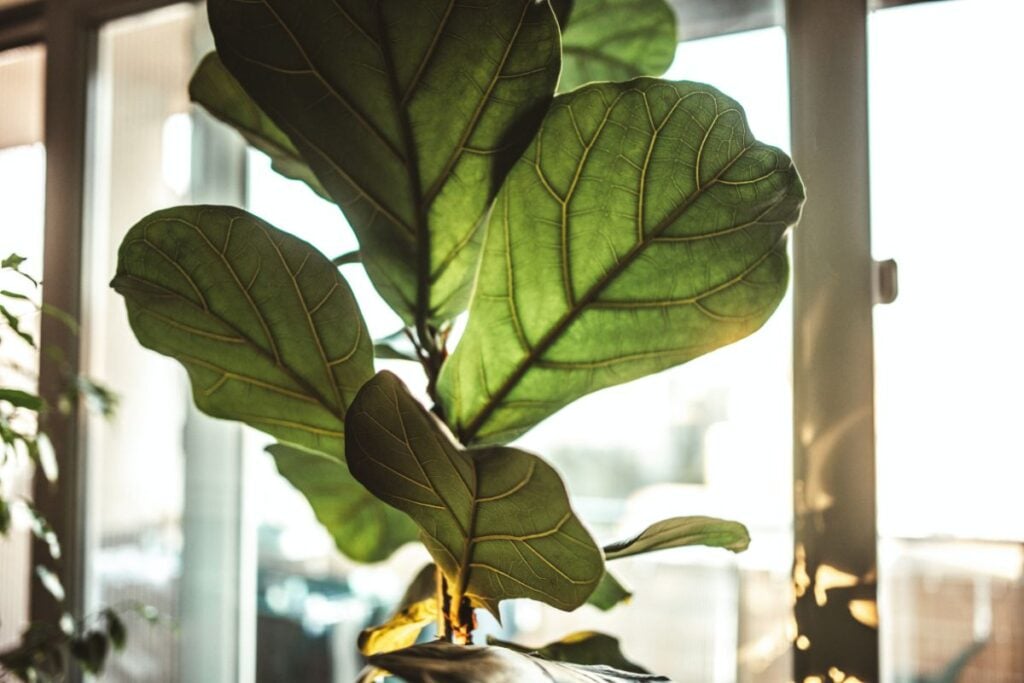
Fiddle leaf figs require natural light for healthier and bushier growth. Remember that artificial light is only recommended for supplementing light needs during cloudy or stormy days, especially in the growing season.
Follow these practical tips to use artificial lights efficiently:
- Use full-spectrum grow lights (40 watts), which you can find at reputable gardening stores. Blue light promotes root health and compact growth, whereas red light supports vegetative growth. Both blue and red are crucial for photosynthesis. Regular indoor lights (LED, fluorescent, incandescent) are usually only half as strong as sunlight and don’t contain all the colors in the spectrum necessary for balanced plant growth and health.
- Position the lamp at a 45° angle about 6-12 inches (15-30 cm) away from the plant. Fiddle leaf figs can grow tall, so the angle can help ensure the top and bottom leaves have access to light.
- Measure the light level the leaves receive at different heights using a light meter or a smartphone app to help you optimize the lamp’s positioning. Aim for a minimum of 200 ft-c—which may require using two 40-watt lamps at a distance of 6-12 inches (15-30 cm).
- Keep the light on for 8-12 hours. You can switch it on 4-6 hours before and another 4-6 hours after sunset.
- Rotate the plant regularly (as you normally do) to ensure all the leaves receive adequate light and prevent leaning or legginess.
Pro Tip: If your indoor garden only has a north-facing window, I don’t recommend getting a fiddle leaf fig. Although they can survive with full-spectrum grow lights for 12-16 hours daily, it can be pretty costly in the long run.
Outdoor Considerations
Early in my fiddle leaf fig journey, I explored several gardening tips, including bringing the plant outdoors in the summer for more robust growth and a sturdier trunk.
I learned that this works well for fiddle leaf figs that already receive a few hours of direct sunlight indoors. Plants that receive only bright, indirect light are more susceptible to relocation shock when brought outdoors.
Follow these tips to transition your fiddle leaf fig to outdoor conditions properly:
- Timing: In late spring, when daytime and nighttime temperatures are steadily above 60 °F (15.6 °C), you can acclimate the plant to outdoor lighting by placing it under the morning sun for an hour. Keep an eye on your plant’s appearance, and gradually increase the number of hours it spends outdoors each week until it can be safely kept outside. Bring the plant back indoors when nighttime temperatures are expected to fall below 60 °F (15.6 °C). Ensure it still receives direct morning sun even when indoors to avoid shock.
- Protection from Intense Sunlight: Choose a spot that receives shade from the harsh midday or afternoon sun. I usually place my FLFs next to an east-facing wall under the eaves of the roof to protect them from too much sun and strong winds. You can also install a shade cover over the fiddle leaf fig to filter intense heat and light.
- Increasing the Watering Frequency: Unpredictable outdoor temperatures, humidity, light, and wind can quickly dry out the potting soil, so it’s helpful to monitor the soil moisture regularly. Use a wooden chopstick or your finger to check the soil, and water it deeply when it’s dry, at a depth of 2 inches (5 cm). In the summer, my outdoor FLFs typically need water every 3-5 days.
Final Thoughts
Young and old fiddle leaf figs thrive indoors, even with moderate lighting (bright indirect light). However, they will grow more slowly and retain their juvenile form or upright growth on a singular, thin stem.
A few hours of direct sunlight—ideally from an eastern window—promotes more robust growth and noticeably thicker stems in older plants (over 3 years old) that can support a bushier, tree-like form.
To ensure fiddle leaf figs will flourish in your home environment, evaluate the light conditions in your prospective garden space using a sun map or diary. This practice also helps determine which other houseplants will thrive in your indoor garden.
Maintain stable light conditions around fiddle leaf figs for optimal plant health. If you must relocate your plant, do so gradually to allow it to acclimate to the new environment. Be sure also to adjust the watering frequency, humidity, and temperature conditions as needed to help the plant adapt to seasonal changes.
Please leave a comment to share about your FLF care experience or ask questions about your plant’s light requirements.