
Light Requirements for Jade Plants Explained
There’s a common belief that jade plants, like most succulents, love direct sunlight. However, several factors influence an indoor jade plant’s tolerance to intense sunlight.
Here are the light requirements of jade plants at different life stages:
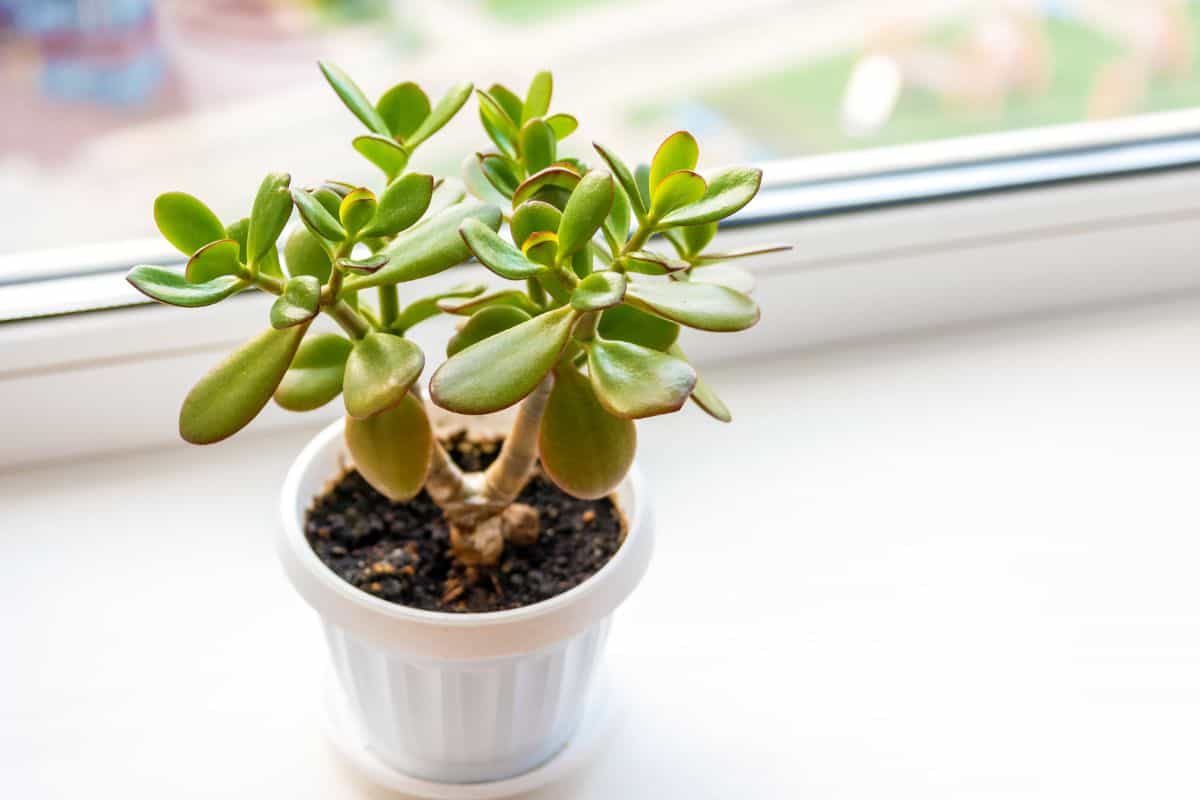
- Young jade plants with fleshy stems and underdeveloped leaves do best with at least 8 hours of bright, indirect light from a south or southeast-facing window.
- Mature plants with a robust root system and dense foliage thrive with 4 hours of direct sunlight daily, preferably from an eastern window.
This article will explore a jade plant’s light requirements at varying growth stages and common issues that may arise from incorrect light exposure. I’ll also provide practical tips to optimize your home environment to meet your jade plant’s light needs.
Natural Habitat and Sunlight Adaptations
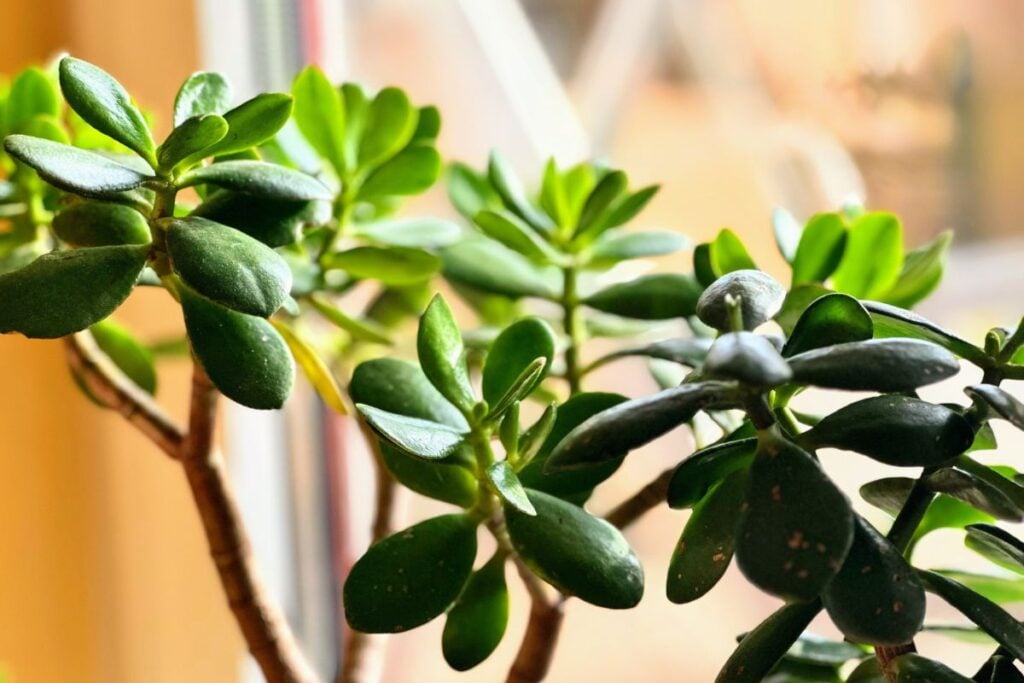
Jade plants (Crassula ovata) predominantly grow along sandy slopes or rocky hills in arid and semi-arid regions in South Africa. They’re usually surrounded by short shrubs, which give them little to no shade from direct sunlight during the day.
Fallen leaves may take root and grow underneath mature jade plants, protecting them from intense sunlight in the early growth stages.
As they get taller, the roots spread wider and the succulent leaves grow up to 3 inches (7.6 cm) long and 1.5 inches (3.8 cm) wide. These developments allow them to absorb and store moisture more efficiently, increasing their tolerance to intense and direct sunlight.
On the other hand, jade plants growing in forests receive filtered or dappled sunlight. This diversity allows jade plants to thrive indoors with moderate-to-bright light intensity.
Light Intensity and Growth Rate
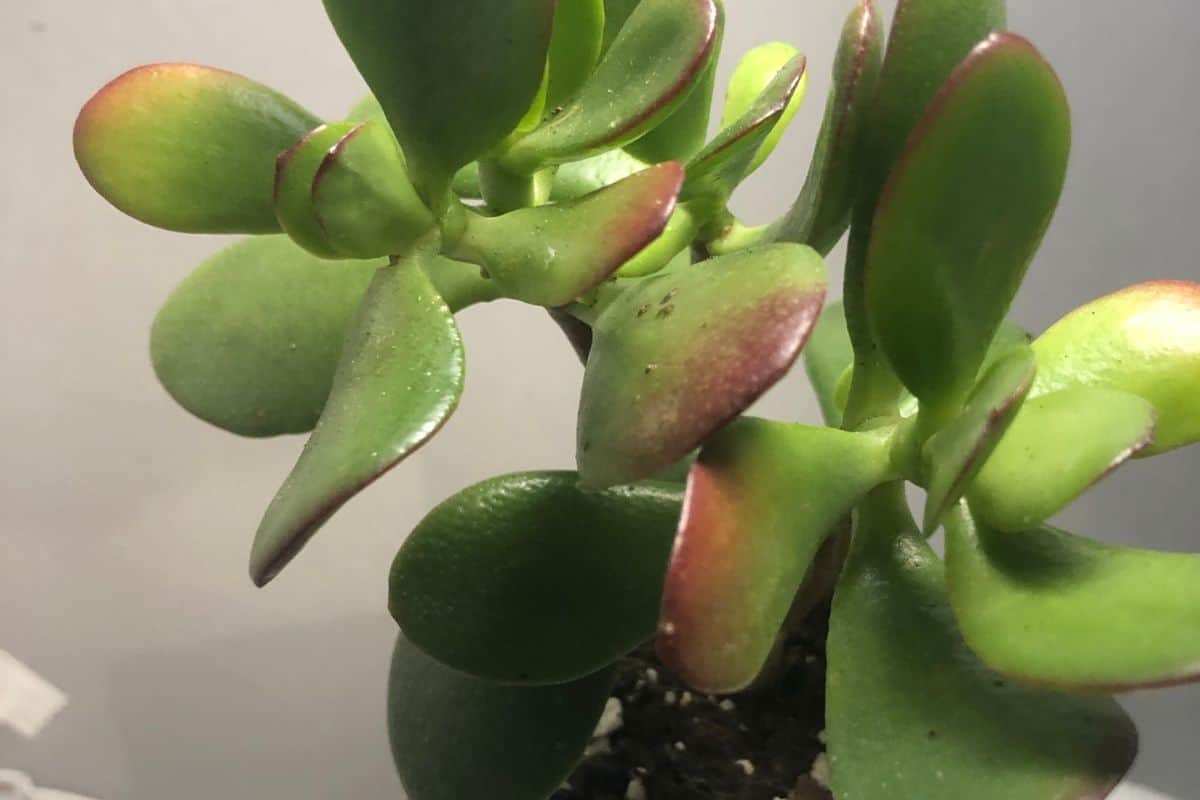
Jade plants in open or exposed areas grow faster due to more active photosynthetic and metabolic activities. They’re also more likely to develop red leaf edges in response to bright light.
Anthocyanin is an enzyme that gives jade leaf edges a red tinge when exposed to intense ultraviolet (UV) light. Research shows that both UVA and UVB lights stimulate anthocyanin synthesis.
The enzyme takes on a red hue to absorb the excess light energy and prevent chloroplast damage. This gives jade plants a natural protection against excessive sunlight.
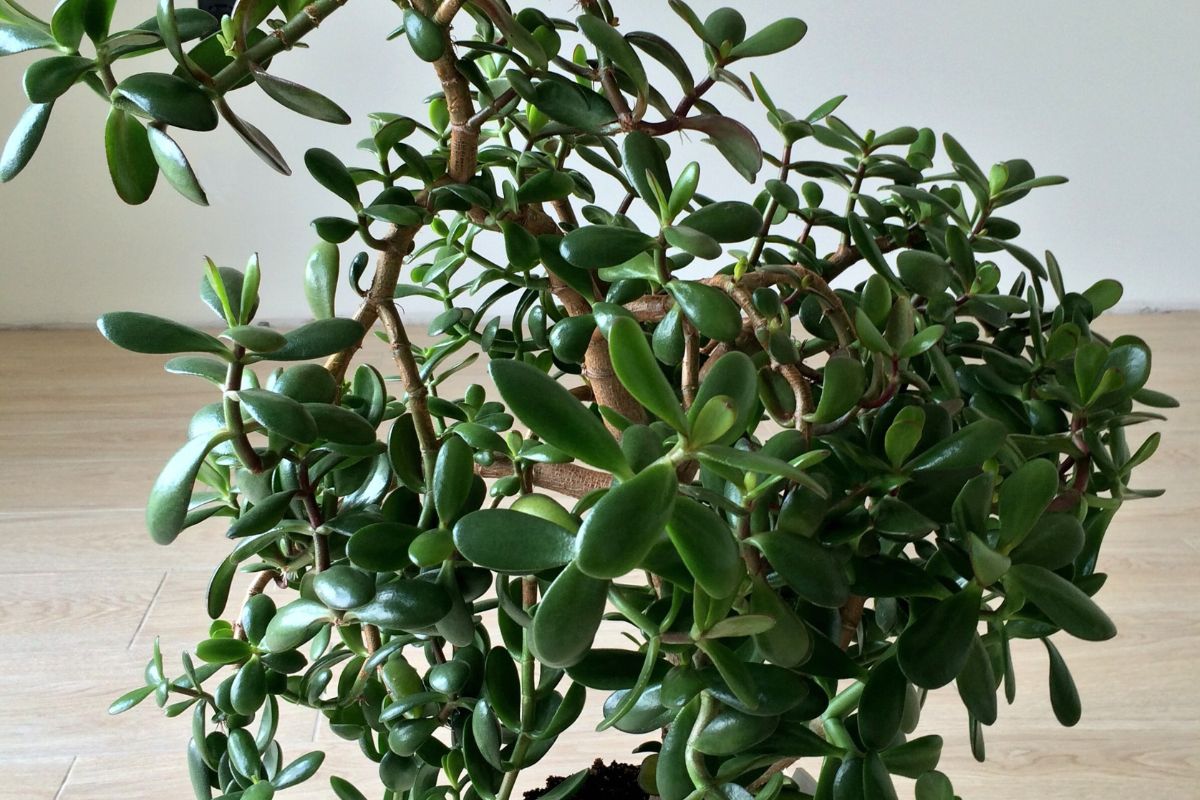
Conversely, jade plants in semi-dense forests naturally grow more slowly due to moderate light levels. They also have solid-green leaves due to higher chlorophyll concentration to maximize light absorption.
The lower light conditions indoors can negatively affect a jade plant’s growth and lead to legginess or stunted growth. On the other hand, sudden exposure to intense sunlight can cause sunburn or sunscald, especially when the plant isn’t given enough time to acclimatize to brighter light conditions.
It helps to understand the light conditions in your home to find the most suitable spot for jade plants.

Light Requirements
Crassula ovata is well-adapted to a full day of direct sunlight or bright but filtered light from tree canopies in the wild. Although versatile, jade plants grown indoors have specific light preferences for optimal health.
This section will guide you through the best conditions to ensure your houseplant flourishes.
Ideal Light Conditions
Here are the metrics and implications of different light conditions around jade plants:
| Light Condition | Location | Light Intensity (in foot-candles or ft-c) | Implications |
| Bright direct | Right next to an unobstructed eastern window | Spring and summer: Over 1000 ft-c in the morning and less than 500 ft-c in the afternoon Fall and winter: 500-1000 ft-c in the morning (around 300 in the afternoon) | Direct morning sunlight and gentle morning temperatures of around 70 °F (21 °C) resulted in faster growth and healthier-looking foliage. There’s also a thin line of red pigment along the leaf edges, adding to the plant’s appeal. |
| Bright indirect | 4-8 feet (1.2-2.4 m) from a southern window (curtained from 11 AM to 3 PM) | Spring and summer: 500-1000 ft-c (less than 500 ft-c when curtained at midday) Fall and winter: Around 300 ft-c (50-200 ft-c on cloudy days) | The plant has a moderate growth rate, and the leaves occasionally develop red tinge in the spring or summer. Without filtering the light in the summer, your plant will be at higher risk of sunburn or leaf scorch. The sun-exposed leaves may develop brown, dry, and wrinkled spots. |
| Moderate indirect | 4-8 feet (1.2-2.4 m) from a western window Pro tip: I don’t recommend placing a jade plant right next to a western window, as the scorching afternoon sun can cause leaf scorch. | Spring and summer: Around 200 ft-c in the morning and 500-1000 ft-c in the afternoon Fall and winter: 50-200 ft-c in the morning and around 400 ft-c in the afternoon | The plant grows slowly, and the leaves are predominantly solid green. |
| Artificial (40-watt full-spectrum grow light) (Low-moderate) | 6-12 inches (15-30 cm) at an angle of 45° | 300 ft-c at 6 inches (15 cm) 100-150 ft-c at 12 inches (30 cm) Spring and summer: 12-16 hours Fall and winter: 10-12 hours | The plant remains compact, and the leaves are solid green. Pro tip: During the growing season in spring and summer, you may need to adjust the height of the lamp by an inch (2.5 cm) every 1-2 months) |
| Low (Not recommended) | North-facing window | Spring and summer: 25-100 ft-c Fall and winter: 10-40 ft-c | The plant has leggy, droopy stems with sparse, tiny, pale, and thin leaves. |
In summary, although jade plants can grow in as little as 25 foot-candles, they will likely become droopy, leggy, or pale.
A jade plant will grow happily at an average of 500-1000 ft-c during the day, but optimal health and vibrant appearance occur when it receives at least 4 hours of over 1000 ft-c in the morning.
Measuring Sunlight Exposure
Proper lighting prevents common issues with jade plants, such as leggy growth and leaf scorch. You can measure the sunlight exposure in your prospective indoor garden to determine if it suits jade plants.
You can use a digital light meter to locate spots that receive 500-1000 ft-c of natural light during the day.
Record the light intensity at one-hour intervals in a sun diary, and create a map to identify the light conditions in multiple areas in your home. Do this once a month, and use the record as a reference for your other houseplants.
Signs of Inadequate Light
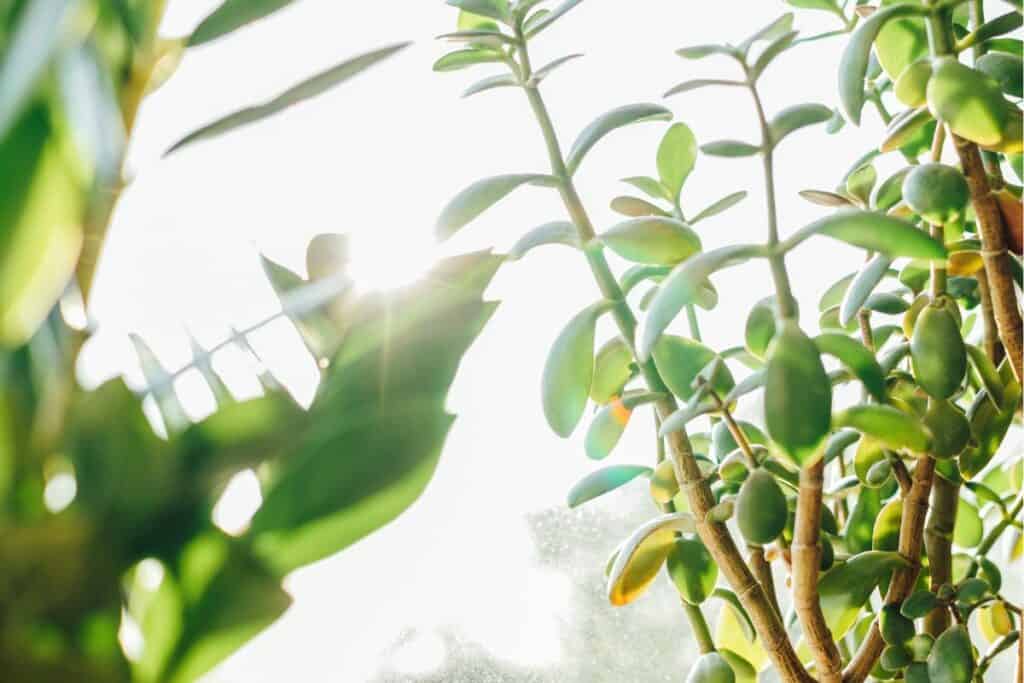
Jade plants typically exhibit stress symptoms when exposed to inadequate light. These signs can help diagnose the problem and adjust the lighting conditions as needed.
Low Light
Jade plants are less tolerant to low-light conditions and may exhibit the following symptoms:
- Stretched, leggy stems
- Sparse, undersized leaves
- Limp or droopy stems
- Slow growth
Follow these tips to fix the problem:
- Cut the leggy stems close to the trunk using sharp, sterile shears.
- Move the plant a few feet (+ 0.6 m) closer to a bright window.
- Increase the watering frequency accordingly, as brighter light conditions can quickly dry out the soil. Check the soil moisture around a week after watering. Water your plant when the top half of the soil is dry to help promote new and healthy growth.
- Rotate the pot by 90-180° every time you water your plant to prevent the new growth from becoming leggy. Proper light exposure can ensure even and balanced growth.
If your home has insufficient natural light, consider installing full-spectrum grow lights above your plant.
Here’s how:
- Place a 40-watt lamp 6-12 inches (15-30 cm) above the plant at a 45° angle.
- Keep it on for 12-16 hours.
- Rotate the pot every week to promote balanced growth.
Too Much Light
Plants accustomed to moderate light conditions indoors may suffer from sun stress if suddenly exposed to excessive sunlight.
The symptoms may include:
- Red leaf edges that get wider
- Red stems
- Yellowing leaves
- Brown leaf spots that appear wrinkly and dry
- Brown to black scorch marks with yellow margins
- Pale leaves
- Wrinkled, shriveled, or curled leaves
- Leaf drop
You can fix the problem with the following methods:
- Move the plant a few feet (+ 0.6 m) away from the window into a spot that receives bright, indirect light. Alternatively, you can hang sheer curtains to filter the light.
- Check the soil moisture, and water the plant deeply if it’s dry halfway down the pot. Pay more attention to the plant’s watering needs, as brighter light can dehydrate the leaves faster. Water the plant again as soon as the top half of the soil is dry (top ⅔ in the fall and winter).
- A day after watering, pinch burnt or damaged leaves with brown or black spots using your clean fingernails or sterile pruning scissors. On the other hand, you can keep pale, red, yellow, or wrinkled leaves, as jade plants can gradually recover when moved to better light conditions.
- Rotate the pot every time you water it to give the leaves respite from intense light.
You must properly acclimate a jade plant before leaving it in brighter conditions. Move the pot a few feet (+ 0.6 m) closer to the bright window weekly, and watch out for the abovementioned symptoms.
Optimizing Light Conditions
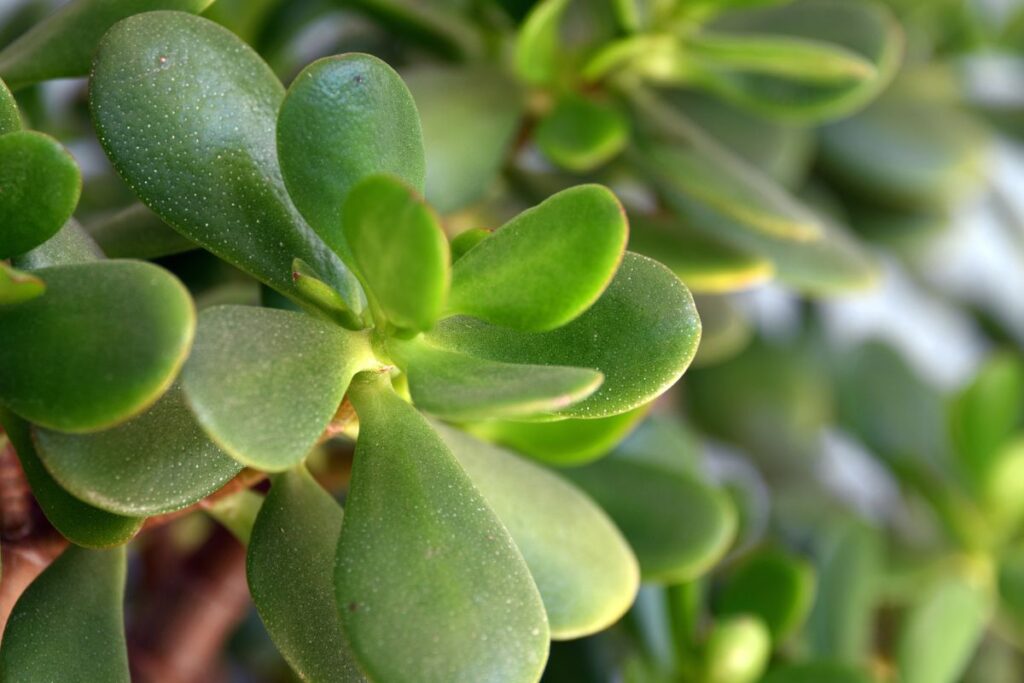
Jade plants are generally resilient and forgiving, so you have more room for mistakes when identifying the perfect spot for them in your home.
Here are some tips that you might find helpful:
Finding the Perfect Spot Indoors
After years of caring for heirloom and propagated jade plants, here are the observations I’ve made regarding their light preferences:
- Around 5 feet (1.5 m) from a west or south-facing window is perfect for young jade plants. It provides at least 8 hours of bright, natural, but indirect light daily.
- Right next to an eastern window is best for mature jade plants, which require at least 4 hours of direct morning sunlight and 8 hours of indirect but natural light.
In addition to light intensity, I recommend creating a gardening map that measures and records the temperature and humidity at hourly intervals. This will help further optimize your jade plant’s position.
Here are the ideal parameters to look for:
- Temperature: 65-75 °F (18-24 °C) during the day and around 60 °F (15.6 °C) at night
- Humidity: 30-50% all year round
Keep in mind that jade plants are adaptable and will tolerate slight deviations from the abovementioned parameters.
Pro tip: Avoid shaded spots or northern windows, which don’t provide sufficient light for jade plants.
I’ve tried setting up jade plants under grow lights (with the same considerations discussed above) for a friend who only had a north-facing window in her apartment. The plant was healthy but grew more slowly than those that received natural light.
One downside, however, was the increased electricity consumption. The experience taught me that, as magnificent as they are, jade plants are not practical for low-light homes.
Moving Between Different Light Intensities
If your plant shows signs of stress from incorrect light exposure, avoid abruptly moving it to a spot with a different light intensity.
If you intend to increase the light exposure, move the plant only up to 2 feet (0.6 m) every 3-5 days closer to a sunny window. The same applies to moving the plant away from intense sunlight.
Give your plant some time to acclimate to better light conditions, as relocation shock can aggravate the symptoms of light stress.
Although jade plants are resilient and likely to survive such stress, they can take a while to grow new and healthy foliage after treating severe symptoms, such as legginess or sunburn.
Adjusting to Seasonal Changes

It’s generally okay to keep jade plants in the same spot all year round once you find an appropriate location. They normally don’t enter dormancy, so the subtle changes in indoor environmental conditions will have little effect on their growth rate.
However, depending on your local climate, you may need to adjust lighting for balanced sunlight exposure and prevent plant stress.
Spring & Summer
Here are some ways to maximize the brighter light conditions during spring and summer:
- Open the windows in the morning (with mild temperatures) for brighter light and better air circulation.
- Hang sheer curtains at midday to filter the light from a sunny window, especially in the summer.
- If you want to move mature jades outdoors for the summer, place them on a plant caddy and acclimate them to outdoor conditions starting in late spring. (I’ll discuss this further below.)
Fall & Winter
Move the plant 2 feet (0.6 m) away from the window or draw the curtains in the late afternoon to reduce light duration and temperature. Colder and longer nights for at least 2 months can help jade plants store enough energy for flowering.
Even if you don’t expect flowers, the slower growth rate in the cold season can help the plant generate enough energy for more active growth in the spring.
You may also need to adjust the following conditions:
- Temperature: Reduce nighttime temperatures to 50-55 °F (10-13 °C). This may be challenging for homes with central heating that stay at around 65 °F (18 °C) throughout the night. You may check the temperatures in different spots in your home and move your plant to an area that cools down closest to the 50s at night (i.e., an unheated garage or conservatory).
- Water: Allow the soil to dry out a bit more between waterings. You can wait until the top ⅔ of the soil is dry.
In late fall or early winter, you can gradually revert the plant to brighter light conditions (4 hours of direct sunlight). Bright and natural light will help the flower buds develop, and the plant will have an increased chance of blooming by late winter or early spring.
Clear the snow or condensation from the windows to give your plants better access to bright light.
Outdoor Considerations
In regions where summers seldom go above 85 °F (29 °C), you can bring a jade plant outdoors to encourage it to grow faster. However, the plant should be properly acclimated to prevent relocation shock and sun stress.
Here are some tips to keep your plant safe during its time outdoors:
- Choose a spot in your outdoor garden that receives morning light and afternoon shade (i.e., east-facing balcony). Avoid areas with unobstructed midday sun because indoor jade plants are less resistant to sunburn or leaf scorch.
- Starting in late spring, place the pot outdoors for an hour a day for an entire week.
- Keep an eye on signs of stress, such as severe reddening or wrinkling of the leaves, indicating rapid dehydration. You must reconsider the location and choose an area with less intense sunlight.
- Gradually increase the number of hours outdoors until the plant no longer shows signs of stress.
- Increase the watering frequency accordingly. Potted jade plants kept outdoors tend to dry out faster, so you might need to water them weekly.
Final Thoughts
Jade plants are excellent succulents to grow in homes with moderate to bright light. Appropriate light conditions can help them maintain their lush foliage and even grace your home with rare but beautiful white flowers.
Conversely, growing jade plants in homes with low-light conditions is impractical. Their stems may become leggy, weak, and limp and the leaves may appear pale, thinner, and smaller.
Don’t be afraid to experiment with different light exposures until you find a condition that works well for your jade plant. Please leave a comment if you have any questions or would like to share the results of your experiment.