
Red Spots on Fiddle Leaf Figs: Symptoms, Causes, & Fixes
Fiddle leaf figs (Ficus lyrata) are popular houseplants admired for their dramatic, glossy foliage. However, they are sensitive to environmental conditions, and one common issue owners encounter is the appearance of red spots or edema on their leaves.
The red spots on fiddle leaf fig leaves may be caused by the following:
- Overwatering
- Poor soil drainage
- Fluctuations in watering
- Pest infestation
- Bacterial leaf spots
- Fungal infection
This article will uncover the causes of red spots or edema on fiddle leaf figs, explain why these conditions occur, and provide actionable solutions to restore your plant’s health.

Leaf Traits and Response to Native Conditions
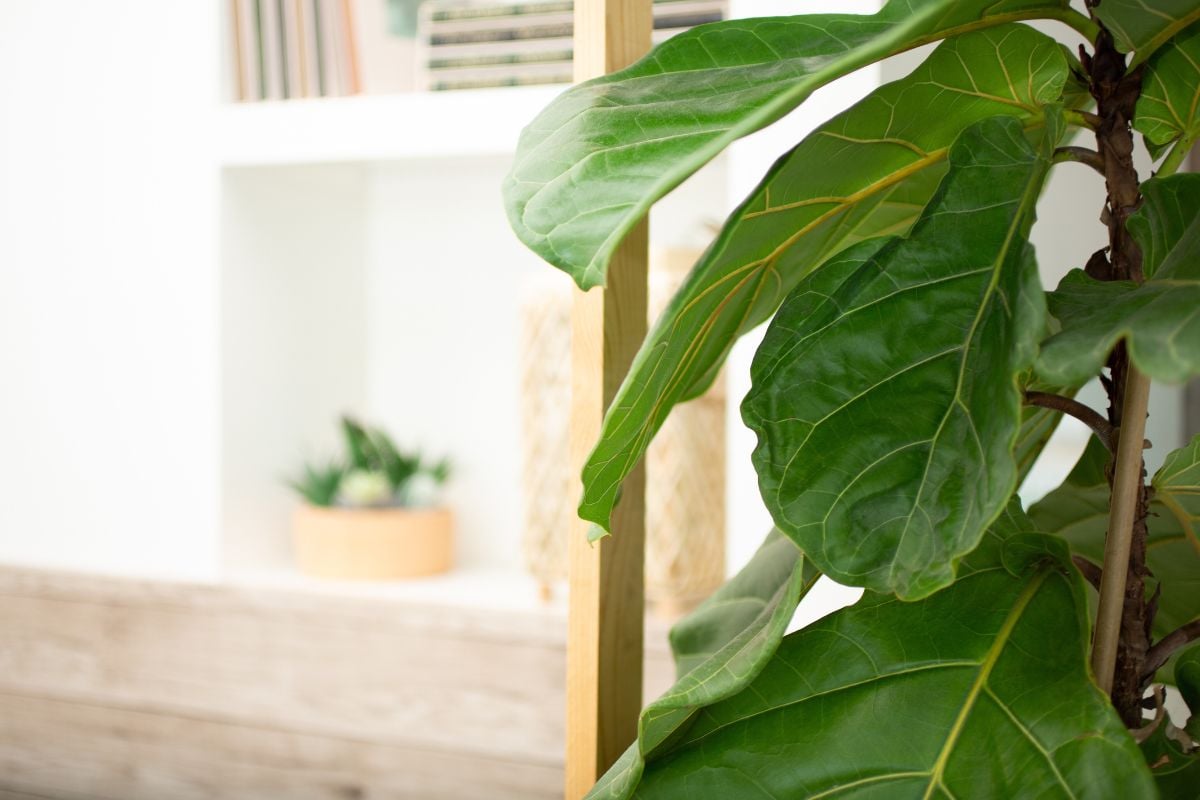
Fiddle leaf figs (FLFs) are native to tropical West and Central Africa. They’ve become famous indoor plants in temperate or colder countries due to their large, leathery green leaves.
Here are some common traits of FLF leaves:
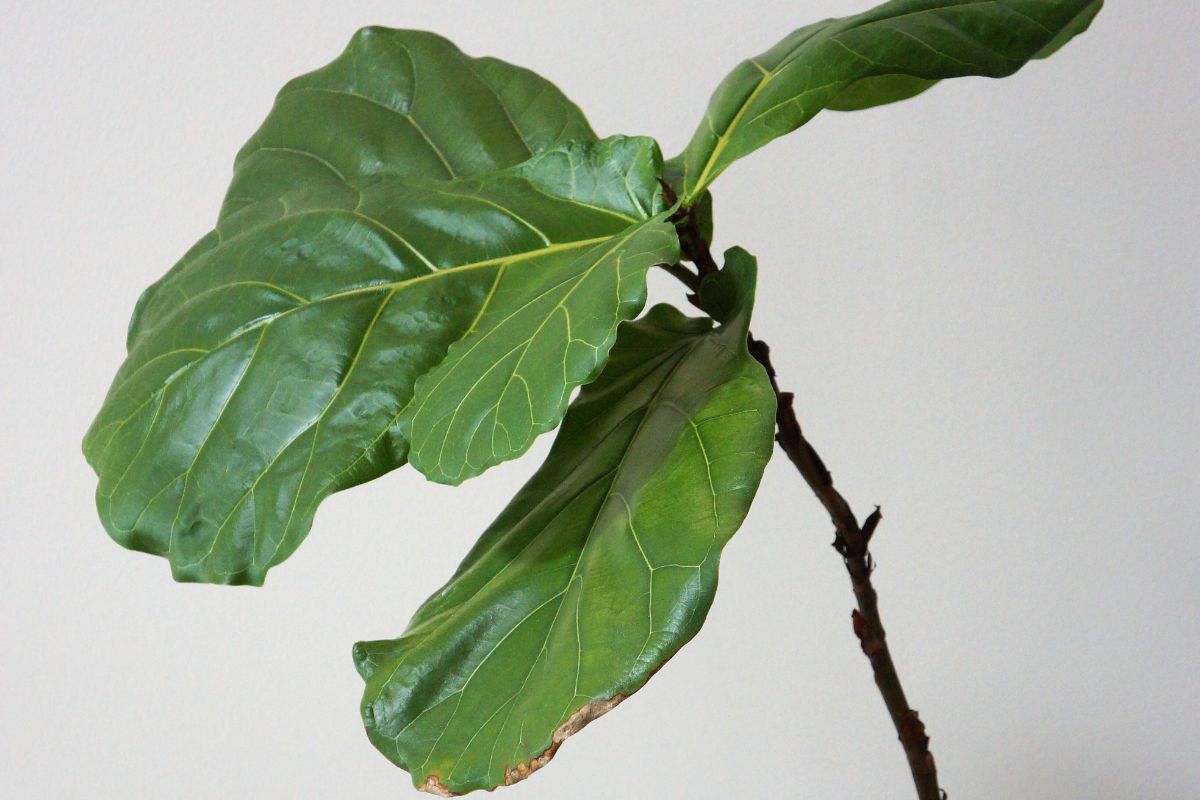
- Each leaf can have varied patterns or sizes, but most look like a fiddle or a violin.
- Younger leaves on the terminal end of the branches or stems are pale or yellow-green.
- The leaves gradually become darker green as they mature.
- On average, the leaves can reach up to 30 inches (76 cm) long and 18 inches (45 cm) wide in their native environment.
Fiddle leaf figs can maintain their glossy green foliage due to the following natural conditions:
- Warm, frost-free environment (70-86 °F or 21-30 °C) all year round
- Abundant rainfall (40-80 in or 100-200 cm annual average)
- High humidity (70-80%)
- Full sun for taller, mature trees and dappled sun for shorter trees
- Nutrient-rich humic layer in the forest floor directly accessible to the shallow, fibrous roots
As a tropical broadleaf tree, the fiddle leaf fig is highly sensitive to unstable environmental conditions when grown in colder regions like the U.S.
Indoor aridity (irregular watering and below 40% relative humidity), especially with high temperatures (above 77 °F or 25 °C), can lead to a shorter lifespan and common problems like leaf drop and discoloration.
Red or reddish brown spots on the leaves are a common stress response, which may occur due to the following damage:
- Bursting cell walls due to high water pressure (edema)
- Physical damage from sap-feeding pests like spider mites
- Lesions or rusty spots from pathogen aggregates
Symptoms of Red Spots
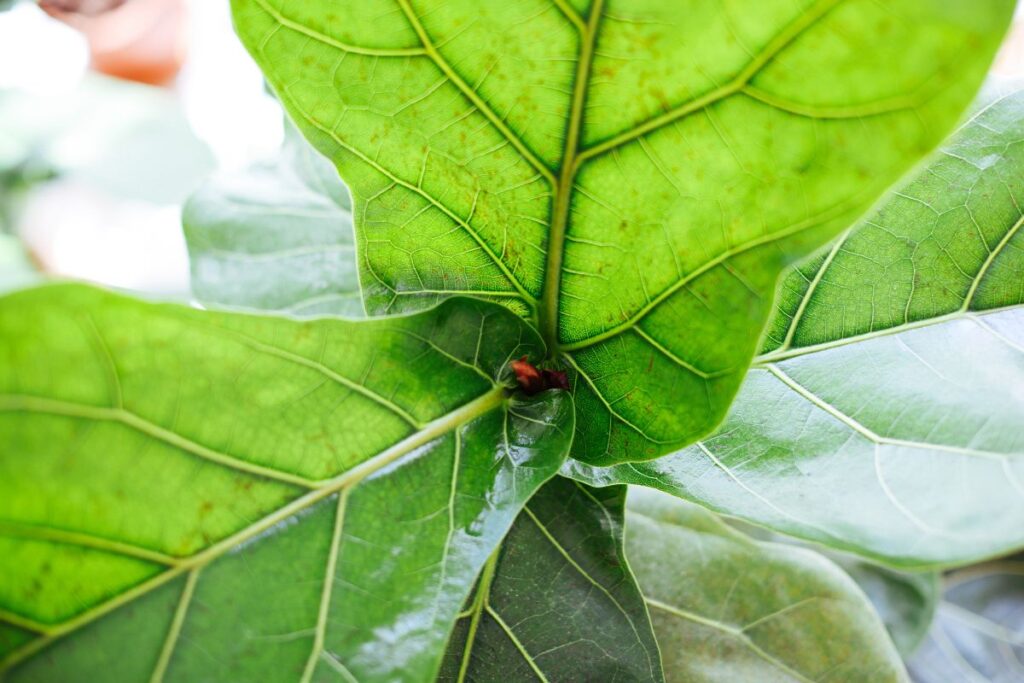
The red spots may have a distinct appearance depending on the underlying cause and may appear in the following ways:
- Tiny spots about 0.04 in (1 mm) in diameter
- Irregularly sized reddish-brown spots
- Rust-colored spots with a yellow halo
They’re also most likely accompanied by the following symptoms:
- Brown, water-soaked spots on older, darker leaves
- Wet or soggy soil
- Root rot (black, mushy, smelly roots)
- Yellow or white speckled appearance on older leaves
- Curling leaf edges
- Drooping or wilting leaves
- Leaf drop
- Stunted growth
Pay attention to the associated symptoms and the appearance or pattern of development of red spots on FLF leaves, as they can help determine the exact cause. Red spots are typically early to mid-stage symptoms, so you can use them for prompt diagnosis and higher chances of saving your plant.
Common Causes (& Fixes)
Here are the primary causes of red spots on fiddle leaf fig leaves:
1. Overwatering
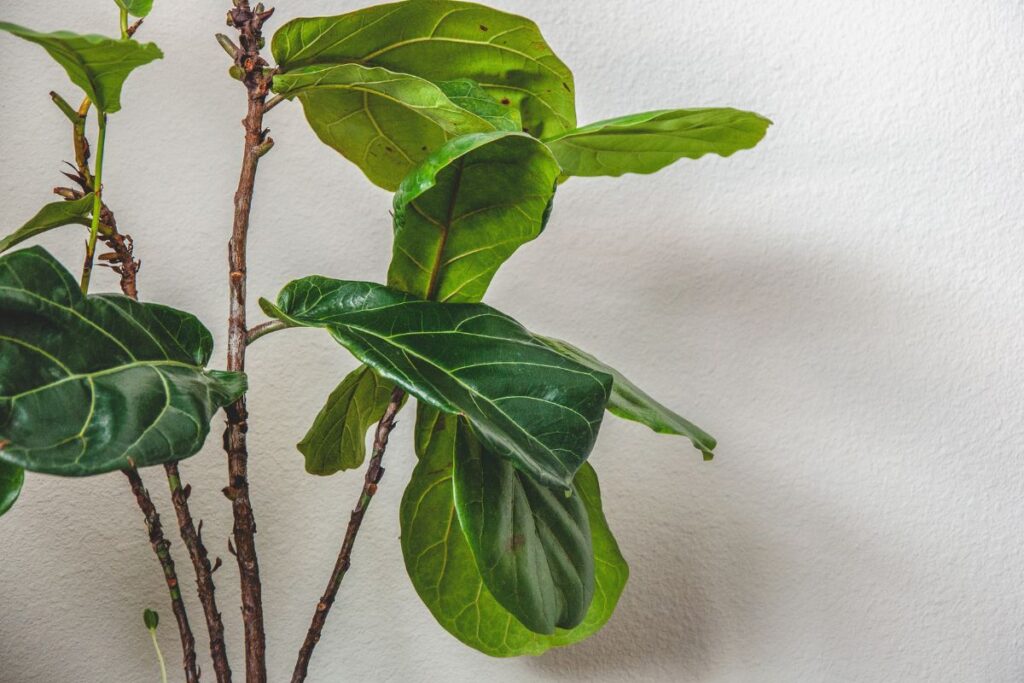
Fiddle leaf figs like moist soil to keep the large leaves hydrated. The key is to deeply water the plant until the soil feels as damp as a wrung-out sponge. It’s also important to let the soil surface dry out 2 knuckles deep before watering the plant again.
On the other hand, watering too often without letting the soil dry out enough can encourage the leaves to absorb more water than they can transpire, leading to higher water retention in leaf cells.
You may then notice the following symptoms in your plant:
- Tiny red spots spread all over the leaf surface
- Wet soil surface
Edema caused by irregular watering or periods of overwatering is more apparent on new or younger leaves. After improving your watering practices, new cells will grow as the leaves further develop, and the red spots will gradually disappear.
The spots indicate burst cell walls (edema) because the young cells might not grow fast enough to withstand the high water uptake. They also lack the secondary cell wall that gives them more resistance to bursting.
Red spots on younger leaves due to overwatering are an early symptom of stress and may be fixed with the following tips:
- Measure the soil moisture using your index finger (2 knuckles deep) or a wooden chopstick. Allow the soil’s top 2 inches (5 cm) to dry out completely before watering.
- Alternatively, you can use a soil moisture meter to prevent watering inconsistencies. Insert the probe ⅔ deep into several spots in the soil, and water your plant when the average reading shows 4.
- Water your plant thoroughly and let the excess drip freely from the drainage holes before placing your plant back on its saucer. If water pools on the saucer after some time, pour it out right away.
Note: It’s also important to adjust your watering frequency depending on the season. Fiddle leaf figs grow more actively during spring and summer due to warmer and brighter conditions. Thus, they require more frequent watering—typically when the top 2 inches (5 cm) or ⅓ of the soil is dry.
On the other hand, cooler and lower light conditions in the fall and winter will prompt fiddle leaf figs to preserve energy and grow more slowly. To avoid overwatering, allow the top half of the potting mix to dry out completely between watering sessions.
2. Poor Soil Drainage
Poor soil drainage is one of the primary causes of overwatering in fiddle leaf figs. The early signs are similar to overwatering: tiny red spots on leaves and soggy soil.
Left unaddressed, the symptoms may escalate to the following:
- Brown, mushy spots on the leaves
- Black, smelly roots (root rot)
- Leaf drop
- Yellowing or browning leaf edges (dehydration from severe root damage)
- Stunted growth
- Plant death
Here are some ways to confirm that your potting mix has poor drainage:
- Check the soil moisture 5-7 days after watering. By this time, a well-draining and excellent fiddle leaf fig soil mix usually dries out 2 inches (5 cm) deep or shows a reading of around 4-5 using a moisture meter. If it’s still too wet, it can indicate poor drainage.
- Poke the soil at the drainage holes to check for resistance. Hard soil clumps at the holes can indicate compaction or plugging that inhibits proper water drainage.
Keeping the roots healthy is crucial in preventing moisture stress symptoms like edema and ensuring that new growth develops properly. Planting fiddle leaf figs in well-draining soil is vital to maintaining root health.
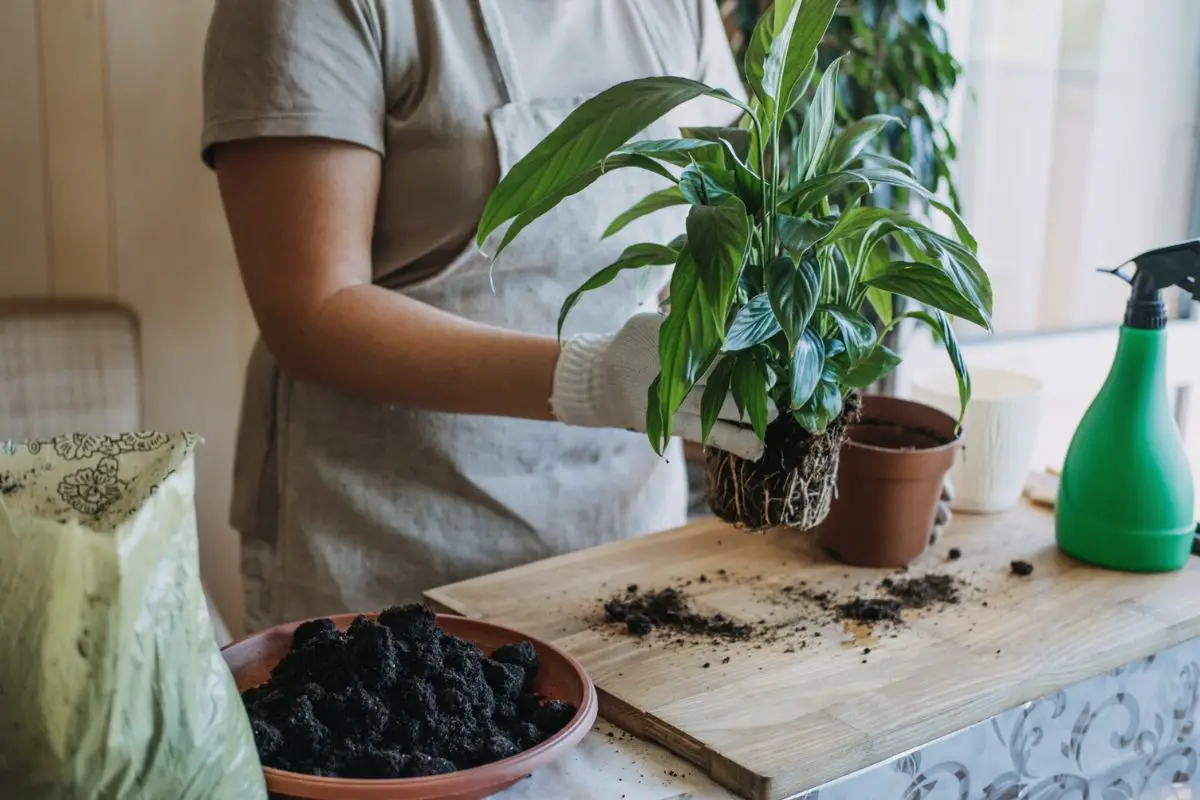
Once you confirm that the soil has poor drainage, the best solution is to repot your fiddle leaf fig in fresh soil.
Follow these steps:
- Run a sterile spatula around the edges of the pot to detach the soil and carefully unpot the plant.
- Use a wooden chopstick to loosen the soil around the soil.
- Break the compacted soil apart and remove as much old soil as possible.
- Inspect the roots for signs of rot (i.e., black, mushy, and smelly sections) and cut them with sterile scissors. Clean the scissors with cotton balls moistened with 70% isopropyl alcohol between cuts to prevent the spread of infection.
- Rinse the remaining roots with clean water. Pro tip: You may also rinse the roots with 1% hydrogen peroxide solution to eliminate rot-causing pathogens. Some fiddle leaf figs are too large to soak in the solution, so rinsing may help.
- Prepare a similar-sized pot if you pruned up to 30% of the roots. You may also use a pot 2 inches (5 cm) wider and deeper so you won’t have to repot the plant for the next 2 years or so. Ensure the pot is sterile and has adequate drainage holes to prevent future issues with infection and waterlogging.
- Cover the drainage holes with a wire mesh and fill the bottom 2 inches (5 cm) of the new pot with a mound of fresh, moist (like a wrung-out sponge), well-draining soil. I recommend using a mix of 60% standard potting soil, 30% perlite, and 10% compost for optimal drainage and water retention, perfect for fiddle leaf figs.
- Spread the roots outward over the mound and cover with moist soil mix to ensure proper anchorage and keep the tree upright.
- Tamp the soil firmly over the roots to remove air pockets and ensure the crown of the roots is partially exposed (about a half inch or 1.3 cm) above the soil line to prevent root rot.
- Refrain from watering the plant right away. Let the moisture in the fresh soil provide moisture for the recovering roots.
- Place the plant in a warm room (around 70 °F or 21 °C) with bright indirect light and moderate humidity (40-60%).
- Water the plant deeply as soon as the soil feels dry 2 inches (5 cm) deep.
With improved soil and watering routine, the red spots should gradually disappear as the leaves mature and get darker.
3. Fluctuations in Watering
Inconsistent watering may also lead to red spots caused by edema.
For instance, deep watering a fiddle leaf fig after leaving the soil to dry out for too long can encourage the thirsty plant to draw moisture rapidly. The cells on young leaves may then burst from the sudden uptake of moisture, leading to red spots.
You may also see these other symptoms:
- Yellowing or browning leaf edges from dehydration
- Curling leaf tips
- Hydrophobic soil or poor water infiltration from prolonged drought
I don’t recommend following a strict watering schedule for fiddle leaf figs because seasonal changes in light, temperature, and humidity levels can influence their growth rate and water consumption.
The best way to confirm when to water your plant is by checking the soil moisture using the finger or chopstick test or a moisture meter.
On average, I observed that a well-draining soil mix dries out 2 knuckles deep or gets a reading of 4-5 on a moisture meter around 5-7 days after watering during the warm season (spring and summer) when the plant is actively growing.
The interval usually increases during the fall and winter, especially when the plant doesn’t get enough light.
Here are some watering tips to keep in mind and prevent watering fluctuations:
- Make it a habit to check the soil moisture regularly—around 5-7 days after watering during spring and summer or 7-10 days in the fall and winter.
- Water your plant deeply and evenly. Avoid shallow watering, as some portions of the soil may remain dry and eventually become hydrophobic, causing uneven rehydration of the roots and leaves. I recommend using a watering can with a narrow spout, which you can move over the soil and ensure proper water infiltration into the root zone.
- Bottom water your plant occasionally—ideally once a month or after 3-4 times or regular top watering. Soak the bottom half of the pot in water for up to 30 minutes or until the soil surface feels moist. Let the excess water drain freely before placing the pot back on its saucer. This will ensure even soil rehydration and prevent hydrophobicity.
4. Pest Infestation
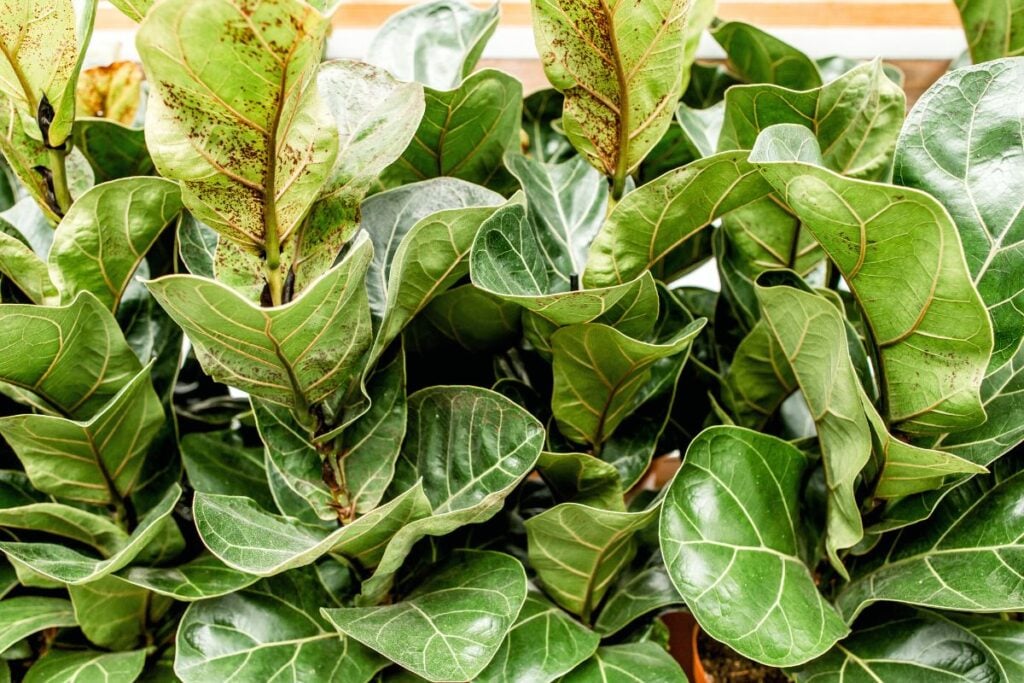
Two groups of pests can cause red spots on fiddle leaf figs: spider mites and flat mites.
Spider Mites
Spider mites are common pests of indoor plants, including fiddle leaf figs. They’re almost microscopic and look like 0.04 in (1 mm) moving black dots upon closer inspection. They typically feed on plant sap from leaf undersides.
A severe infestation can lead to the following symptoms:
- Speckled reddish-brown spots on younger, paler leaves as the piercing mouth parts injure underdeveloped cell walls
- Tiny white or yellow speckled appearance on older, darker leaves
- Fine webs over leaf surfaces or between leaves and stems
- Distorted growth on young leaves
- Dropping of severely damaged leaves
Here are some tips to treat a spider mite infestation on fiddle leaf figs:
- Pruning: Trim severely damaged or discolored leaves using sterile scissors or pruning shears and wipe the sap with a cloth.
- Leaf cleaning: Wipe the leaves with a clean, damp cloth to remove the fine webs. Repeat this every 2-3 days or whenever you see new webs.
- Neem oil spray: Spray the plant liberally with a neem oil solution after sunset. Repeat once a week for up to 4-6 weeks.
- Inspection and isolation: Inspect and treat the neighboring houseplants as needed. It’s also important to isolate severely infested plants during the course of treatment to prevent the spread of spider mites between houseplants.
- Prevention: If there are no more signs of spider mites, you can reduce the neem oil application frequency to once every 2 weeks. This is an excellent way to prevent recurrence. The good news is that spider mites are active only during the warm season, typically in summer.
Note: Avoid misting or hosing down fiddle leaf figs to dislodge the mites, as wet leaves can lead to more problems, like bacterial and fungal diseases (which I’ll discuss further below).
In addition, I don’t recommend using insecticidal soaps, as they can damage the waxy surface of the leaves and reduce your plant’s shine. They also have a short-term effect and require direct contact with the pests to work, which is challenging since spider mites are almost invisible.
Flat Mites
Flat mites are common houseplant pests that resemble spider mites. However, they don’t produce webs, earning them the moniker false spider mites. They’re also relatively smaller at only about 0.3 mm in diameter.
They’re hardly diagnosed in houseplants because of their slow life cycle (60-65 days from eggs to adults) and microscopic sizes that can only be clearly seen using a magnifying glass. In addition, they’re active only during warm seasons.
Severe infestations can lead to the following symptoms:
- Tiny orange or red spots on the leaves less than 0.3 mm in size (flat mite egg and larvae)
- Tiny pale green or yellow spots on the leaves near the larvae
- The spots turn reddish brown
You can treat a flat mite infestation using the same methods as when dealing with spider mites.
5. Bacterial Leaf Spot
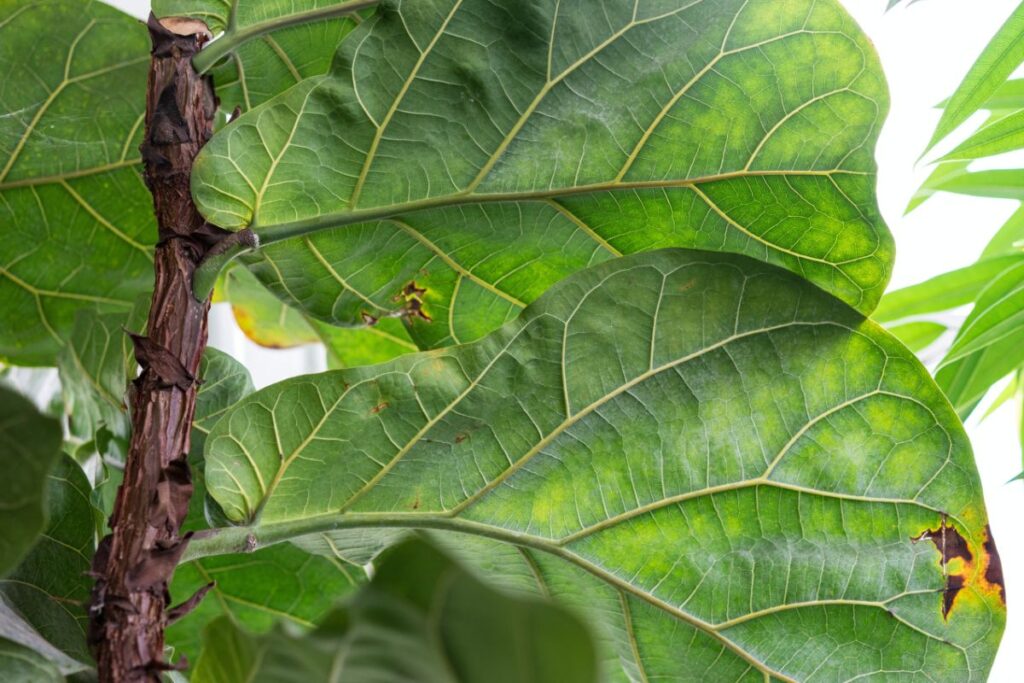
Bacterial and fungal infections are rare in fiddle leaf figs. However, Ficus relatives like rubber plants (Ficus elastica) are susceptible to numerous diseases that can be transmitted to fiddle leaf figs when grown closely together.
A common issue to watch out for is Pseudomonas cichorii infection, a bacterial leaf spot disease that causes the following symptoms:
- Reddish-brown spots with a pale center and surrounded by a yellow halo. They may be angular or round and may appear randomly sized and spaced on infected leaves.
- Leaf drop
The bacteria favor warm and humid conditions and typically spread through water droplets, such as from dripping watering from infected leaves caused by overhead watering or misting.
Once the bacterial pathogens land on the leaves, they can cause water-soaking symptoms, draw moisture and nutrients from plant cells, and eventually cause cell death. The expanding damage appears as reddish-brown or black lesions as nearby cells die.
Early detection is key to preventing the diseases from getting worse.
Here are some tips to help your plant survive the disease and prevent re-infection:
- Cut off symptomatic leaves using sterile pruning shears. You may also remove the bottom leaves which are touching the soil.
- Wipe the blades with cotton balls soaked in 70% isopropyl alcohol.
- Properly discard infected plant matter and contaminated cotton balls in garbage bags to prevent the spread of disease.
- Avoid wetting the foliage when watering your plant. Use a watering can with a narrow spout and pour the water directly into the soil.
- Inspect the leaves for signs of infection before wiping them (routine dusting), as the bacteria can attach to a damp cloth and transfer to the next leaf.
- Always use sterile gardening tools. You may wash them with 10% bleach and rinse thoroughly with clean water.
If the symptoms persist for up to 2 weeks despite improved care, I recommend properly disposing of the sick plant to avoid infecting other houseplants.
6. Fungal Infection
The fungi Corynespora cassiicola may also affect fiddle leaf figs grown near infected and highly susceptible relatives, Ficus benjamina and Ficus nitida.
The disease may cause the following symptoms:
- Irregularly sized round red spots with yellow halo on newly maturing leaves
- Leaf drop
You may treat infected fiddle leaf figs using similar methods discussed under bacterial leaf spot.
I recommend adding the following tips to treat and prevent red spots due to fungal infection:
- Isolation: Fungal infections can spread more quickly by air through the spores, so it’s best to keep sick plants away from other houseplants during treatment. Choose a warm room with bright indirect light and moderate humidity to prevent other stress symptoms.
- Pruning: Thin up to a quarter of the foliage to improve air circulation and inhibit fungal growth. Remove damaged or aging leaves first.
- Neem oil solution: Spray or wipe the leaves with a neem oil solution (½ teaspoon per liter) weekly to inhibit or reduce mycelial growth in C. cassiicola.
- Copper-based fungicide (optional): You may also apply a non-systemic fungicide (following product-specific instructions). However, not all chemical fungicides are safe to use indoors. They also have roughly similar effectiveness as neem oil spray, which is organic and environmentally safe.
Pro tip: If you have a humidifier with an air purifier (with HEPA filter), it can help boost the humidity in the indoor garden while reducing the risk for fungal diseases because the filter can help remove airborne fungal spores.
Other Factors That Increase Susceptibility to Red Spots
The factors below don’t directly cause red spots on FLF leaves, but they can weaken the plant and increase the susceptibility to such issues.
Let’s explore them:
1. Nutrient Deficiency
Plant cell walls require essential nutrients like calcium. Since calcium can’t move from old cells to new cells, a deficiency usually affects new growth or younger leaves. As a result, younger leaves may have weaker cell walls more vulnerable to bursting from high water pressure.
Some signs your plant has nutrient deficiency include:
- Premature yellowing of leaves (lack of nitrogen)
- Interveinal chlorosis (lack of iron or magnesium)
- Yellow or brown leaf edges (lack of potassium)
- Weak stems (lack of calcium)
- Stunted growth (general deficiency)
You may prevent nutrient deficiency problems by regularly feeding your fiddle leaf figs with a 3-1-2 fertilizer with essential micronutrients from spring to summer. Fast-growing fiddle leaf figs are heavy feeders, requiring a mild but steady supply of nutrients during the active growing period.
You may use the following types of fertilizers:
- Liquid fertilizer: Apply at half-strength every other time you water the plant from spring to summer for optimum and steady growth. You may increase the frequency of every watering session to treat signs of deficiency.
- Granular fertilizer: Rake in a thin, even layer on the soil surface and water the plant thoroughly to release the nutrients. Reapply every 2 months from spring to summer to prevent deficiency symptoms. Pro tip: Flush the soil once between applications to leach excess salts and prevent fertilizer burn.
2. Low Humidity and Dry Air
Dry air can cause a vacuum-like reaction in plants, prompting the roots to draw moisture rapidly from the soil to the leaves. When you overwater the plant, the excess moisture can typically be released from the leaves through transpiration.
However, if the small, underdeveloped leaves can’t release the excess water fast enough, the cells may burst, leading to localized cell damage or edema.
Low humidity can cause the following stress symptoms in fiddle leaf figs:
- Yellowing or browning leaf edges
- Curling leaf tips
- Tiny holes on newly unfurled leaves
Here are some tips for maintaining suitable humidity levels (40-60%) around your fiddle leaf fig:
- Place a water tray with pebbles below the pot. Ensure it’s at least twice as wide as the mouth of the pot to have a significant effect. This may work on shorter fiddle leaf figs up to 3 feet (0.9 m) tall. As the water evaporates, it can boost the humidity around your plant.
- Switch on a humidifier for a few hours during the driest time of the day. Use a hygrometer to monitor the humidity around your plant. You may also use the reader to find the appropriate position of the device and the duration of use.
- Put together houseplants with similar environmental needs. Tropical relatives like monsteras enjoy similar humidity levels and light conditions as fiddle leaf figs. On the other hand, succulents like jade plants transpire at night, helping boost local humidity if placed close together.
3. Insufficient Light
Inadequate light conditions can make fiddle leaf figs more vulnerable to red spots by:
- Reducing the plant’s metabolic or photosynthetic rates and ability to use water efficiently
- Inhibiting proper food generation (starch or cellulose) is necessary for stronger plant cell walls
Here are some signs your fiddle leaf fig isn’t receiving enough light:
- Paler leaves (low chlorophyll concentration)
- Stunted growth
- Stems leaning toward the light source (window or light bulb)
- Leggy growth with sparse leaves on the sun-deprived part of the plant
Remember these tips to ensure optimal light exposure for fiddle leaf figs:
- Choose a spot in your home with access to at least 8 hours of bright indirect light daily, such as around 5 feet (1.5 m) from a southern window. This is ideal for younger plants with paler leaves.
- Give older plants with mature, darker leaves up to 4 hours of direct morning sunlight from an eastern window. Avoid scorching midday or afternoon sun, as it can burn the leaves and increase the risk of dehydration.
- Rotate the pot regularly—about 90-180° every time you water your plant. This will ensure the leaves on all sides of the plant have some time in the sun for balanced growth and optimal health.
- Supplement light conditions during darker months or cloudy days using full-spectrum grow lights. Position them a few feet (+ 0.6 m) from the plant at a 45° angle so the bottom leaves can also receive some light. Keep the grow lights on for up to 6 hours after sunset to prevent light deficiency symptoms.
4. Temperature Stress
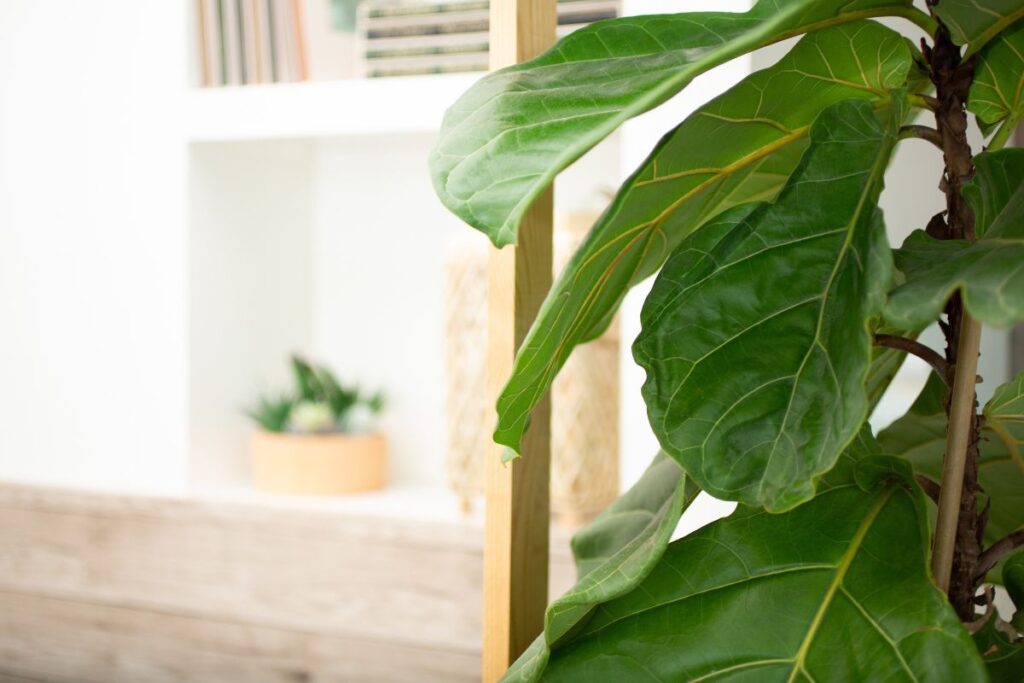
Temperature stress can also weaken fiddle leaf figs in the following ways:
- Chill injury: Fiddle leaf figs prefer temperatures above 55 °F (13 °C). Cold snaps below 40 °F (4 °C) can damage leaf and stem tissues, turning them brown and mushy. Freezing temperatures may even kill the roots.
- Heat stress: Prolonged exposure to temperatures above 86 °F (30 °C) can increase the rate of moisture loss from the soil and plant tissues through evaporation and transpiration. The rapid movement of water through the plant can lead to edema (from overwatering) or desiccation (from underwatering).
It’s crucial to maintain stable and moderate temperatures indoors to prevent stress symptoms, such as the following:
- Yellowing leaves
- Browning leaf edges (hot and dry conditions)
- Mushy brown spots (cold and wet conditions)
- Curling leaf tips
- Leaf drop
- Stunted growth
Here are some tips to maintain optimal temperatures around your fiddle leaf figs:
- Keep the plant in a room with stable temperatures between 65 and 75 °F (18 and 24 °C). Avoid areas in the home with fluctuating temperatures, like kitchens and bathrooms.
- Close windows during the cold season to prevent cold drafts. Keep the leaves from touching cold window panes.
- Keep the plant away from the path of cold or hot air from cooling or heating vents.
- When switching on a space heater during the cold season, monitor the temperature around your plant and keep the device at a safe distance.
Final Thoughts
Red spots on fiddle leaf fig leaves are signs of cellular damage that may occur due to the following:
- Burst cell walls due to high water pressure: Improve your watering practices and create a consistent watering routine. For instance, check the soil moisture regularly and water the plant when the top 1-2 inches (2.5-5 cm) dry out.
- Physical damage from the piercing mouth parts of spider mites: Monitor the plant for signs of pests, such as fine webs, and treat with neem oil solution. A biweekly application can help prevent future infestations.
- Lesions from bacterial or fungal colonies: Prune and properly discard symptomatic leaves. Avoid wetting the foliage when watering the plant. Inspect the leaves for disease symptoms during routine cleaning and prune as needed. Always use sterile gardening tools when handling houseplants.
Observe your plant regularly to catch early signs of stress. Evaluate any environmental or care routine changes that may have caused the problem. Note that fiddle leaf figs like stable conditions and are highly likely to exhibit stress symptoms from inconsistent care.
Let us know some of the hurdles you encountered during your fiddle leaf fig care journey. Ask questions or share some tips for the growing community of plant enthusiasts.