
Root Rot in Jade Plants: Symptoms, Causes, and Fixes
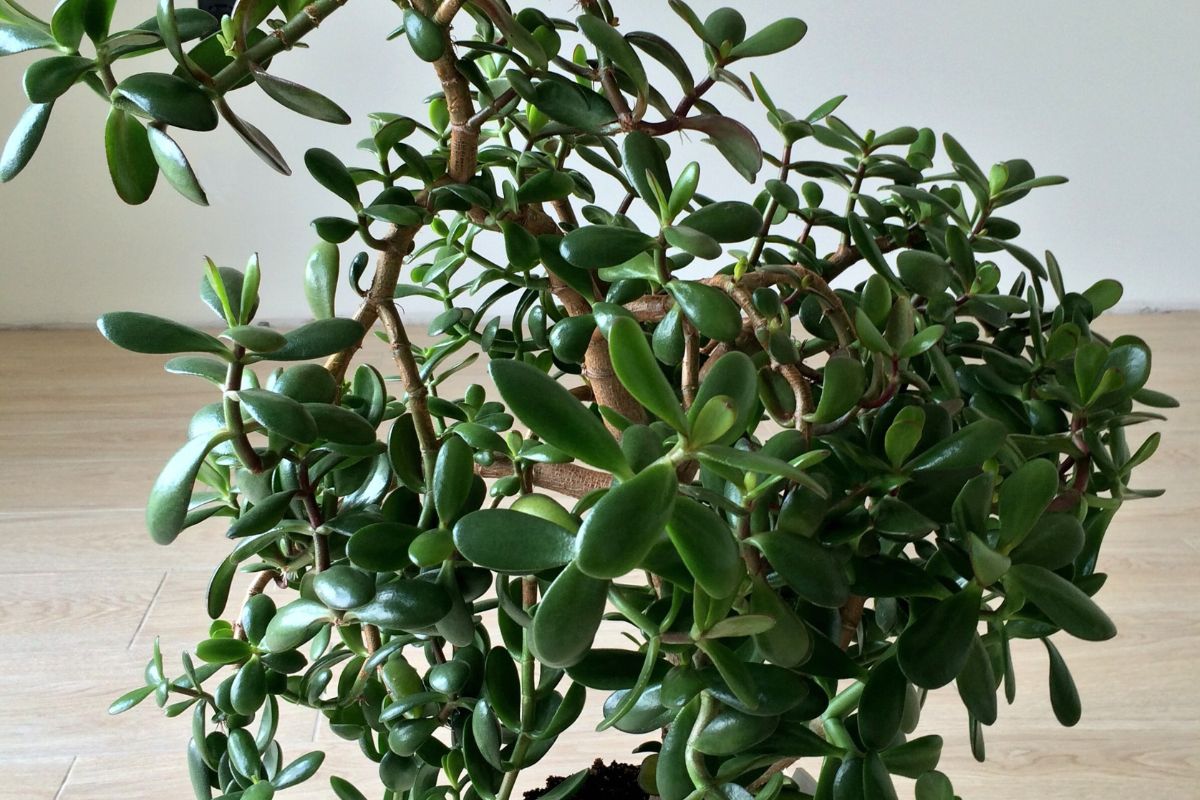
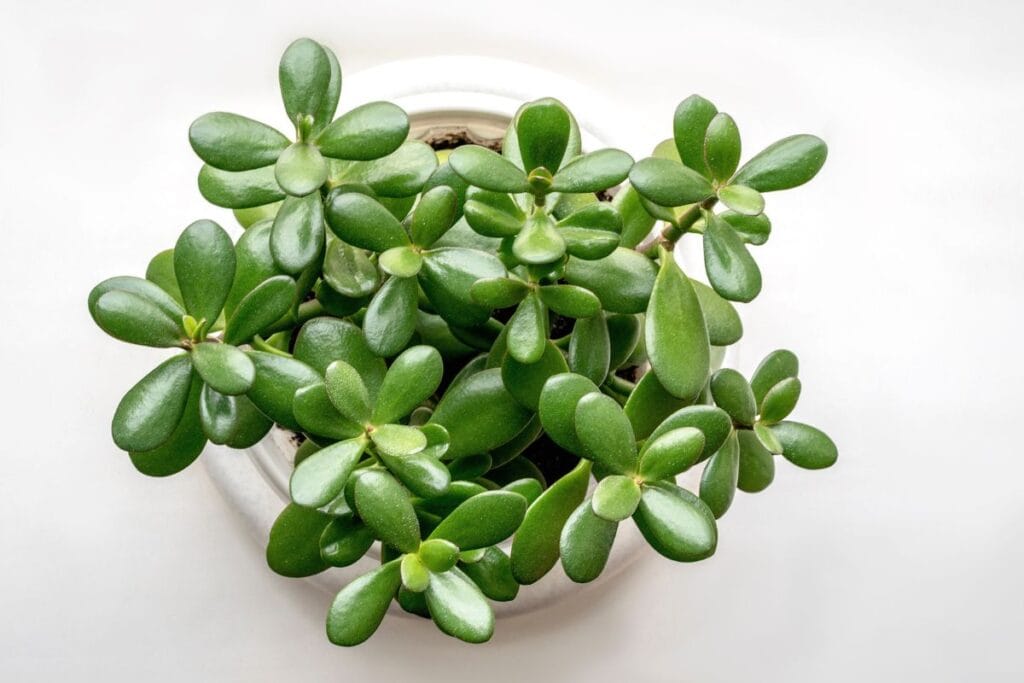
Jade plants (Crassula ovata) are low-maintenance plants that can get by with infrequent watering. Their succulent leaves and stems have efficient moisture storage functions, giving them drought tolerance. On the other hand, jade plants are less tolerant of overly moist soil and highly susceptible to root rot.
Here are the factors that contribute to root rot in jade plants:
- Frequent watering
- Poor soil drainage
- Over-fertilization
- Insufficient light
- Low temperatures
- High humidity
This article will discuss root rot symptoms in jade plants and share tips on fixing the problem. It’s important to identify and address the issue promptly, as it can severely damage jade plants.
Root Rot: An Overview
Root rot is a plant disease caused by numerous soil pathogens. They typically remain dormant or in low-enough populations in the soil where the plants remain unaffected.
Rot-causing pathogens require moisture to grow in size and population. Constantly moist or wet soil can increase fungi and bacteria populations, allowing them to infect plant roots and cause rot.
Jade plants are susceptible to root rot because of their thin, fibrous roots. Excess water in the soil can block the pores, and the lack of oxygen can weaken the roots. In addition, the rapid increase in microbial population can quickly damage the shallow root system.
Left unattended, the rot can spread to the trunk, branches, and leaves, eventually killing a jade plant.
The following sections will help you identify signs of root rot, their underlying causes, and corresponding fixes.
Symptoms
Soggy Soil
The surface of a well-draining substrate should feel as dry as a wrung-out sponge 2 days or so after watering. If it feels soggy, it means the soil has poor drainage for your jade plant, and the roots are soaking in wet soil underneath.
Yellowing and Browning
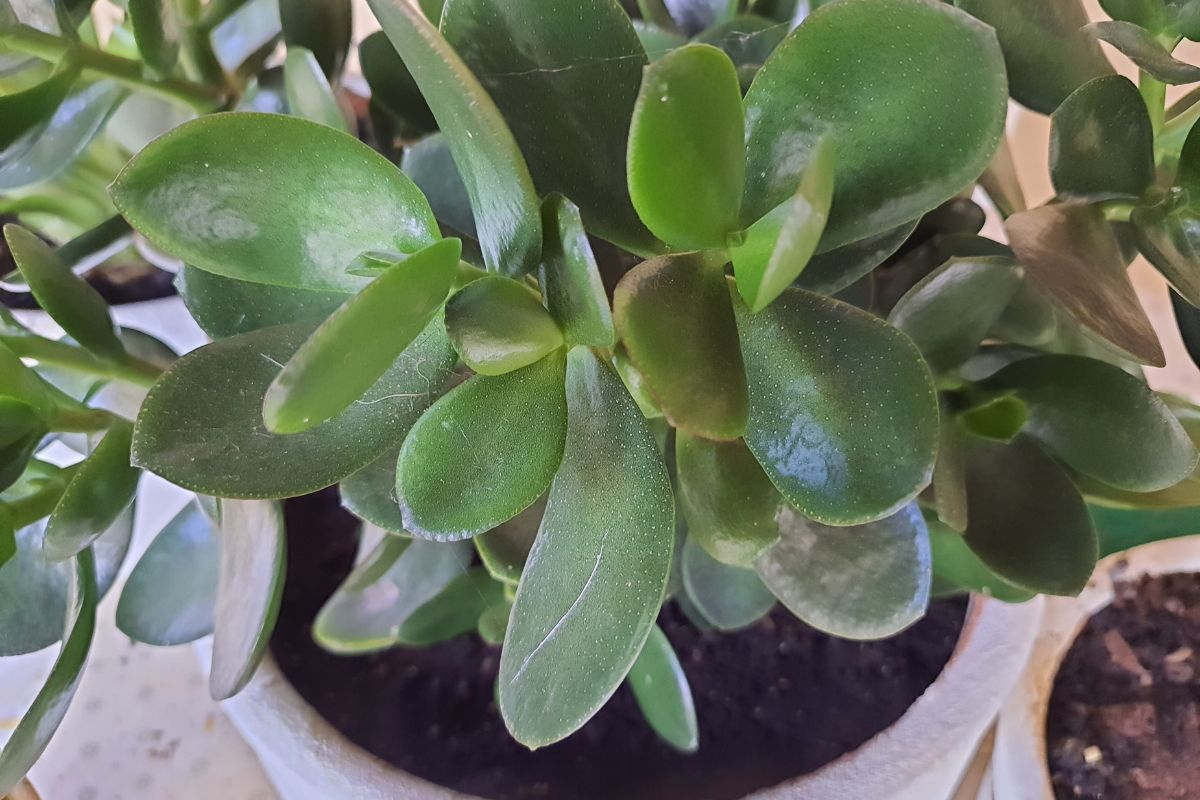
Some leaves may also have brown blisters or edema from plant cells that burst due to rapid moisture uptake before the roots decay.
As the entire root system decays, it can’t send moisture and nutrients to the leaves, turning them yellow. Prolonged dehydration can then turn them wrinkly and brown.
Wilting Leaves
The dehydrated leaves and branches wilt and droop because of the loss of turgor pressure in the plant cells. You can confirm root rot if the soil is still moist or wet several days after watering, yet the plant is wilting.
The weakened petioles and leaves may then eventually fall off. This is also a plant’s way to preserve itself and prevent further moisture loss from transpiration.
Foul Odor
The soil can give off a rotten egg, vinegar, or sulfur smell if there’s root rot. Depending on the severity of the decay or how deep the roots are buried, you may need to unpot the plant to notice the odor.
I’ll discuss the proper unpotting and root inspection procedures in more detail below.
Black Spots
If the rot-causing pathogens climb to the shoots, the affected plant tissues become necrotic, which may rapidly spread. The trunk may show black spots in odd places, whereas the blisters on the leaves may appear black.
Soft, Mushy Roots, Stems, and Leaves
Healthy jade roots are creamy white or light brown with white growing tips. Conversely, rotten roots are black, soft, and mushy.
The pathogens may climb to the stems through the xylem, infect the plant cells along the way, and turn them black and mushy. A jade trunk or stem is usually sturdy but can bend or lean due to mushy, decaying spots.
The distal leaves may take longer to get infected because of the reduced root pressure and moisture transport rate. Nevertheless, pathogens can spread from one cell to another, making the leaves of smaller jade plants more likely to get damaged sooner. Once infected, whole leaves may become mushy.
Stunted Growth
The interrupted moisture and nutrient transport due to root rot can also inhibit growth. The plant won’t put out new leaves or offshoots even in the growing season if the roots are too damaged.

Pests
Fungus gnats are black, mosquito-like plant pests. If you see them hovering over your jade plants, it can indicate a high risk of overwatering or root rot.
Under ideal conditions, fungus gnats hardly visit jade plant pots because the soil surface remains dry. They’re drawn to moist soil, fungi, and organic matter. Their eggs require sufficient moisture to hatch and the larvae feed on decaying organic matter, such as rotten roots.
Common Causes
Here are the common causes of root rot in jade plants:
1. Overwatering
Watering your plant too often without giving the soil enough time to dry can drown the roots.
The high moisture and low-oxygen conditions encourage rot-causing fungal growth and make it easier for the pathogens to attack the weakened roots.
2. Poor Drainage and Improper Potting
Incorrect pot material or size can also increase the risk of root rot.
Here are some factors to consider:
- Moisture-retaining soil: Jade plants dislike materials like peat moss and vermiculite because they hold too much moisture than the roots can take.
- Nonbreathable pot: Glazed or plastic pots can retain moisture longer. Breathable materials like terracotta can help wick away moisture through the pot’s walls.
- Lack of drainage holes: The moisture sitting at the bottom of the pot will have nowhere to go but up, keeping the roots sitting in wet soil.
- Oversized pots: Excess soil in the pot means excess moisture that might not be consumed by the small plant fast enough. As a result, the roots may drown.
- Contaminated soil or pot: Rot-causing pathogens may survive for long periods in un-sterilized soil mixes or pots. They can remain dormant until the environmental conditions become suitable for them to multiply to dangerous levels.
3. Overuse of Fertilizers
Excess fertilizer salts in the soil can also weaken plant roots. The higher salt concentration in the soil will draw moisture from the roots through osmosis, leaving the roots desiccated.
When followed by prolonged wet conditions, opportunistic soil pathogens can take advantage of the partially damaged roots and speed up the effects of root rot.
4. Insufficient Light
Insufficient light can limit the jade plant’s photosynthetic and metabolic activities, lowering moisture consumption. Low light conditions can also slow the soil’s evaporation rate of excess moisture.
5. High Humidity
Jade plants can tolerate a wide range of humidity conditions, but keeping the level between 30 and 50% indoors is best. Levels over 60% indoors can encourage mold and mildew growth. In addition, the plant will have a lower transpiration rate when it’s humid.
Poor air circulation can also reduce transpiration rate and keep the soil moist for longer.
Pro tip: Avoid placing jade plants in bathrooms or kitchens where humidity levels tend to fluctuate drastically throughout the day.
6. Low Temperature
Low temperatures can also increase the risk of root rot because of the lower evaporation rate from the soil and transpiration rate from plant leaves.
The risk is higher in the fall and winter because lower temperatures can reduce the plant’s metabolic rate and further decrease the soil moisture loss rate.
Diagnosing Root Rot
To confirm root rot, you must unpot the plant and inspect the roots thoroughly.
You’ll need the following materials:
- Gloves
- Spatula or flat knife
- Old newspapers or magazines
- Wooden chopsticks or hand cultivator
- Running water
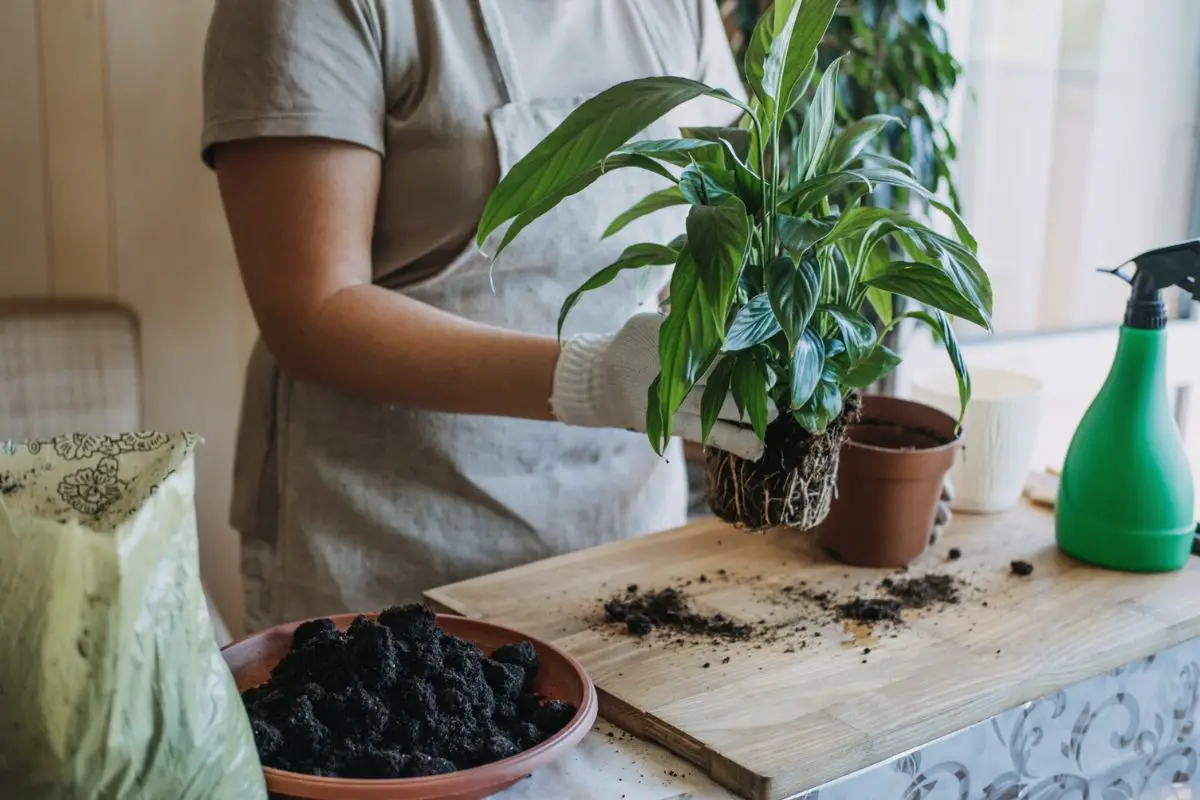
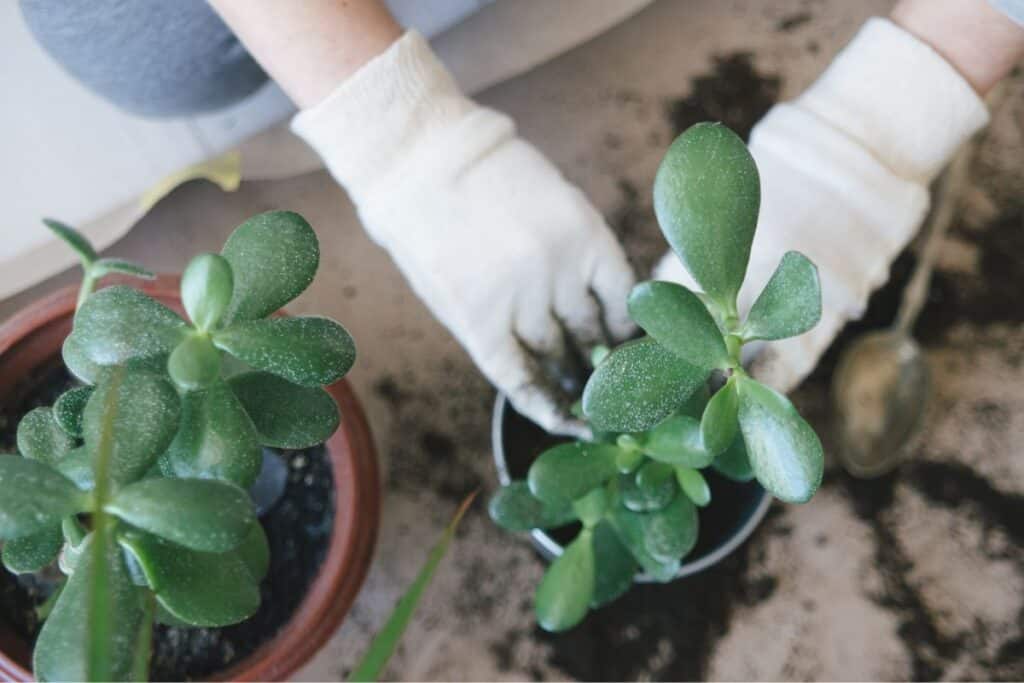
Here are the steps to carefully unpot jade plants that likely have root rot:
- Spread old newspapers or magazines on the workspace to contain the plant and soil debris.
- Put on disposable gloves to keep soil pathogens off your hands
- Scrape the edges of the pot with the spatula or flat knife to make it easier to slide the plant out.
- Hold the base of the plant to catch it out of the pot.
- Use a wooden chopstick or hand cultivator to detach as much soil as possible from the roots.
- Rinse the remaining soil off using tepid and gentle running water.
- Inspect the roots for signs of rot. Black, soft, and mushy roots that break apart between your fingers indicate rot.
Immediate Actions to Take
After confirming that your jade plant has root rot, follow these additional steps:
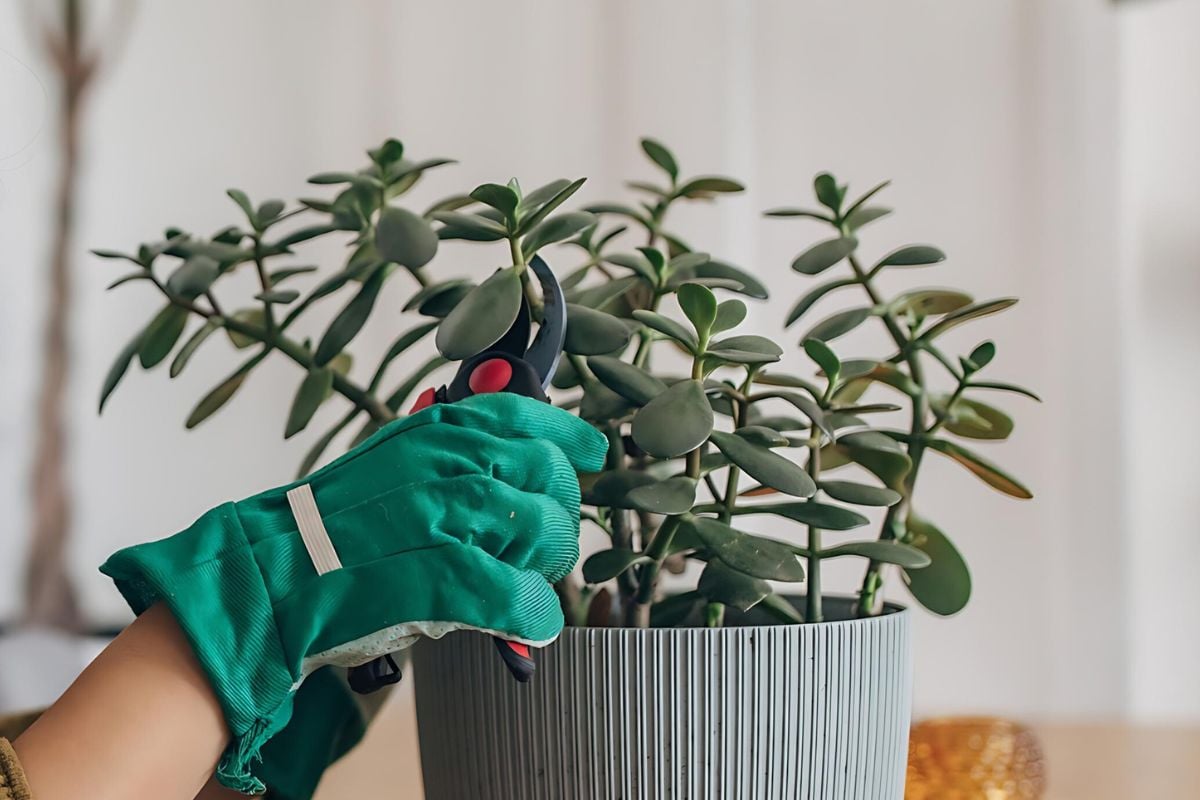
- Cut off all the rotten roots using sterile scissors. Pro tip: Don’t worry if it feels like you have to cut off the entire root system. The goal is to remove all damaged sections, as the disease will continue to spread if they remain on the plant. Once placed under better care and environmental conditions, Jade plants will grow new roots.
- Sanitize the blades between cuts with alcohol and wipe dry with a cotton ball or tissue.
- Prune all damaged or discolored leaves.
- Soak the remaining roots in 1% hydrogen peroxide solution for 5-10 minutes to eliminate any remaining pathogens.
- Leave the plant unpotted for a week to let the wounds heal.
- Dispose of the contaminated soil, plant debris, and other waste in a garbage bag.
- Sterilize the old pot with 10% bleach and rinse thoroughly with water.
In case the rot has spread to the trunk, you may save parts of the plant for propagation with these immediate actions:
- Use a sharp, sterile knife and cut a half-inch (1.3 cm) above the topmost mushy spot on the trunk.
- Check the layers inside. Healthy trunk tissue should be pale to bright green. Brown or black spots indicate decay from rot-causing pathogens.
- Cut another half-inch (1.3 cm) above and inspect again. Keep cutting upwards until there’s no more sign of rot. In severe cases, you might end up with small stem or leaf cuttings. Remember that suitable stem cuttings should be 4-6 inches (10-15 cm) long, whereas leaf cuttings should be green, plump, firm, and free from pest damage.
- Cut off the leaves from the bottom nodes.
- Brush some cinnamon powder on the cuts to prevent fungal or bacterial infection.
- Leave the cutting in a cool room with moderate humidity away from direct sunlight for 3-7 days until it forms a callus. For leaf cuttings, you can leave them overnight.
Repotting and Aftercare
After the treatment, you must repot your jade plant in the appropriate soil and pot. The repotting methods can vary depending on the extent of damage the plant sustained.
Root-Pruned Plant
Here are the steps for jade plants with remaining roots or a full trunk:
- Prepare a sterile pot 2 inches (5 cm) wider and deeper than the rootball. Choose a heavy, breathable pot with drainage holes, such as an unglazed terracotta.
- Fill the pot’s bottom 2 inches (5 cm) with fresh and moist soil mix. I recommend a high-quality succulent mix or a compost-perlite mix for excellent drainage.
- Place the plant over the soil and bury the roots at least an inch (2.5 cm) deep. There should be an inch (2.5 cm) of space between the soil surface and the pot’s rim.
- Tamp the soil down firmly to keep the plant upright.
- Place the pot in bright indirect light, such as 4-8 feet (1.2-2.4 m) from an eastern or western window. Avoid too much sunlight as the plant recovers and tries to grow new roots.
- Wait a whole week before deeply watering your plant. You may consider reducing your watering frequency to prevent recurrence. A jade plant can wait until the upper half or ⅔ of the potting soil is dry before watering.
Stem Cuttings
Rootless stems can be propagated in soilless mixes with the following steps:
- Prepare a 4-inch (10-cm) pot with drainage holes. You can use a nursery or plastic pot because cuttings require more moisture until they develop roots.
- Fill the bottom 2 inches (5 cm) with a moist succulent mix or pure coco peat or perlite.
- Place the cutting over the substrate, and cover the base until it’s 1-1.5 inches (2.5-3.8 cm) deep.
- Spray the substrate with filtered water until it’s evenly moist. Repeat every 2-3 days.
- Leave the pot in a room with moderate temperature (75 °F or 24 °C), humidity (50-60%), and bright indirect light.
Leaf Cuttings
If all the roots and stems are severely damaged, you can propagate the remaining healthy leaves with the steps below:
- Prepare a shallow container about 2 inches (5 cm) deep. You can repurpose used plastic food containers, but make sure to sterilize them with 10% bleach solution. Rinse them thoroughly and air-dry them before use.
- Fill the container with standard jade soil mix.
- Lay the leaves horizontally, ensuring the callused end is touching the substrate.
- Space the leaves an inch (2.5 cm) apart.
- Spray the substrate thoroughly with filtered water. Repeat every 1-2 days.
- Keep the setup in bright, indirect light.
- Maintain moderate temperatures (75 °F or 24 °C) and humidity (50-60%) around the setup to prevent the leaves from drying out.
Recovery and Monitoring
It can take a month or so of consistent care to see improvement in your jade plants after treatment from root rot.
Here are the signs that your plant is recovering:
- The leaves remain green and plump, especially for stem and leaf cuttings.
- New leaf buds are sprouting, which indicates good root health and development.
Plants treated outside of the growing season may take longer to show new growth. As long as the leaves remain healthy, it’s a good sign that the roots are healing or developing in the soil.
Pro tip: Avoid fertilizing your plant for a year after repotting. The roots need to be fully recovered or well-established before introducing fertilizers.
Preventative Measures
You can prevent root rot and several common problems with jade plants with these tried-and-tested care tips:
- Soil Drainage and Pot Qualities: Jade plants require loose soil, such as a standard succulent mix or a homemade compost-perlite mix. Using unglazed terracotta pots with drainage holes can also prevent overwatering-related issues. In addition, use a pot that’s only 2 inches (5 cm) wider and deeper than the rootball to prevent unwanted moisture in the excess soil.
- Water: Ensure the soil is adequately dry (at least halfway down) between watering sessions. Use your finger or a wooden chopstick to check the soil moisture before watering.
- Regular Inspection: Check your plant every time you water it to catch pest infestations early before they get worse. Scrape the pests off the plant using a cotton swab with alcohol.
- Sunlight: Give your plant 4 hours of direct sunlight from an eastern, western, or southern window. Draw some sheer curtains at midday to shield your plant from intense sunlight. Rotate the pot by 90-180° every time you water your plant to prevent legginess or sunburn.
- Temperature: Maintain temperatures between 65 and 75 °F (18 and 24 °C) around your plant. Keep it away from heating or cooling vents and drafty doors or windows.
- Humidity: 30-50% is suitable for jade plants (60% for cuttings) all year round. Avoid wetting the foliage, and keep your plant away from bathrooms or kitchens.
- Fertilization: Feed your plant a year after repotting using a balanced 10-10-10 fertilizer in spring (and/or summer). You can apply a slow-release granular fertilizer once every 2 months until midsummer. Alternatively, use a half-strength liquid fertilizer every month until 2-4 weeks before the first fall frost.
Seasonal Adjustments
Jade plants grow more slowly during the cold season (fall and winter). Therefore, adjusting care routines and environmental conditions to prevent root rot and other common issues is important.
Here are some changes to keep in mind.
- Water: Wait until the upper ⅔ of the soil is dry before watering.
- Light: You can move your plant a few feet (0.6 m) away from a sunny window to a spot where it receives 8 hours of bright indirect light.
- Temperature: Maintain daytime temperatures around 70 °F (21 °C) and allow nighttime temperatures to drop to 50-55 °F (10-13 °C).
- Fertilization: Avoid fertilizing jade plants during fall and winter.
Final Thoughts
Root rot is a serious but avoidable problem in jade plants. These drought-tolerant succulents like loose, well-draining soil to give their fibrous roots a chance to breathe.
Constantly wet soil from overwatering or poor drainage can cause root rot, eventually killing a jade plant within a few weeks without intervention. In severe cases, you might be left with only a few distal leaves to propagate.
That said, timely diagnosis and treatment can improve your chances of saving your plant. Be consistent with your plant care routine to ensure your jade plant thrives and lives several decades as it should.
If you have encountered a similar problem or have questions about general jade plant care, feel free to leave a comment or subscribe to our newsletter for more information.