
Why Fiddle Leaf Figs Get Droopy or Limp
Fiddle leaf figs are a favorite among houseplant enthusiasts for their bold, sculptural leaves. Their tall, upright growth and massive leaves make for an exciting presence indoors, so it can be frustrating to see them become limp.
A fiddle leaf fig may get droopy or limp due to the following reasons:
- Underwatering
- Overwatering
- Inadequate Lighting
- Temperature Stress
- Low Humidity
- Transplant or Relocation Shock
- Nutrient Deficiency
- Pest Infestation
Although fiddle leaf figs can elevate any indoor space, they are known to be temperamental. Droopy or limp leaves are common concerns for owners. This article will delve into the possible reasons behind these issues and provide actionable solutions.
Natural Habitat and Implications for Indoor Care
Fiddle leaf figs (Ficus lyrata), or FLFs, are fast-growing tropical trees that reach towering heights of around 50 feet (15 m) in the wild. They grow large, leathery, fiddle-shaped leaves up to 30 inches (76 cm) long and 18 inches (45 cm) wide.
The following environmental conditions in West and Central African rainforests help fiddle leaf figs achieve their majestic qualities:
- Abundant rainfall of around 40-80 inches (100-200 cm) annually
- Full sun for fully grown trees and dappled sun for juvenile trees
- Loamy, well-draining soil rich in humus on the top layer
- Warm temperatures of around 70-86 °F (21-30 °C) all year round
- High relative humidity (around 70%) all year round
When grown indoors in colder climates, fiddle leaf figs are notorious for being fussy and challenging to keep alive. Proper care and stable indoor conditions are crucial to keep them healthy with leaves.
A healthy indoor fiddle leaf fig typically has the following characteristics:
- Height: The plant grows in a tree-like form 2-10 feet (0.6-3 m) tall.
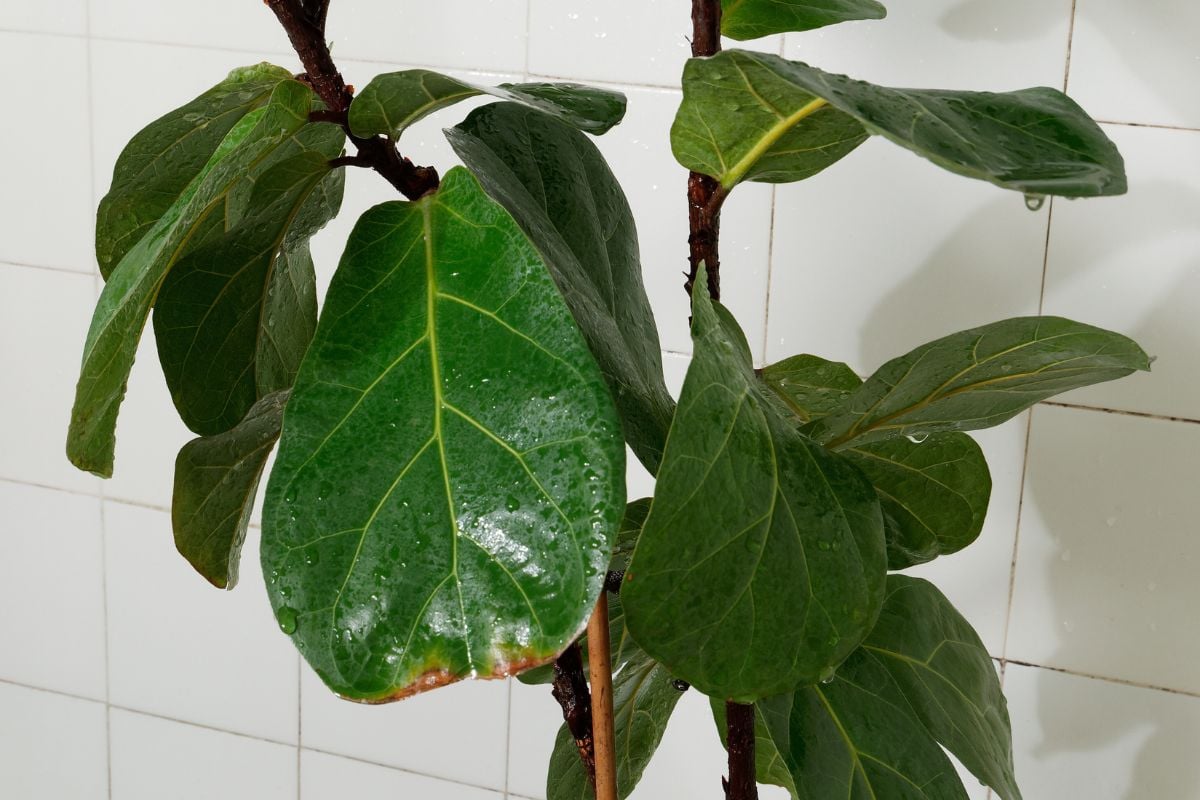
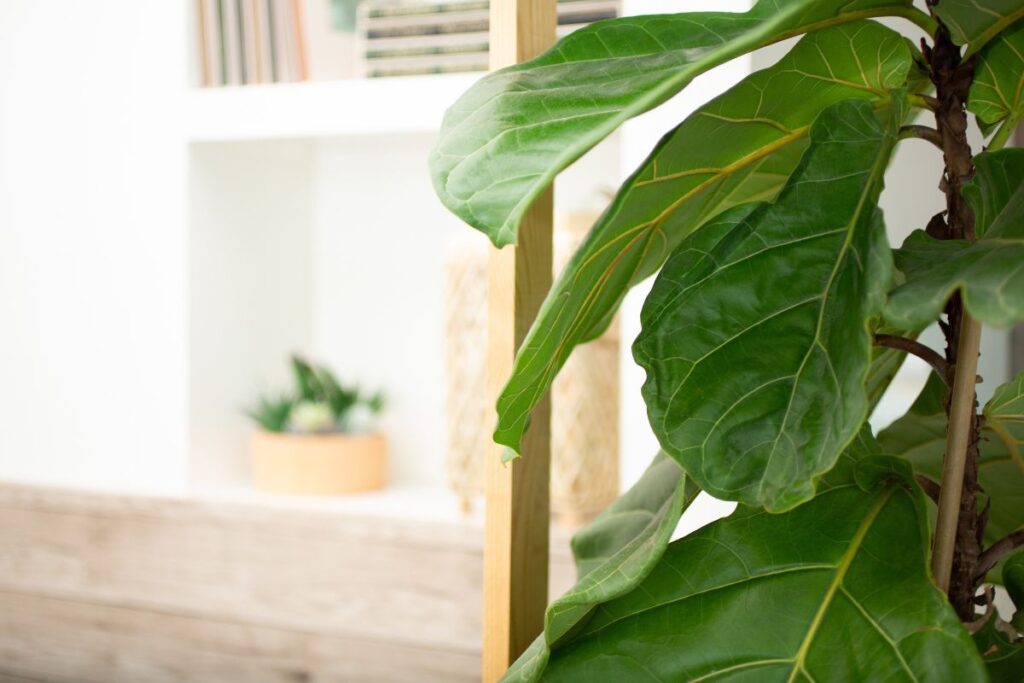
- Foliage: The leaves reach only about 18 inches (45 cm) long and 12 inches (30 cm) wide. Young and mature leaves are dark green and perky with an upward orientation at an angle of 30-45°.
- Trunk: The main trunk thickens to about 1-2 inches (2.5-5 cm) in diameter as the plant grows taller.
FLF leaves may naturally droop without requiring intervention for these reasons:
- Young or freshly unfurled leaves lack the structural integrity of mature leaves and may initially appear flimsy or droopy. As they darken and mature, the leaf veins become sturdier, perking up the leaves.
- As the fiddle leaf fig ages, the bottom or older leaves gradually spread outward and downward due to their size before naturally fading and falling off.
On the other hand, droopy leaves and flimsy, pencil-thin trunks with limp petioles usually indicate issues in the care routine and indoor environment that negatively affect an FLF’s health.
It’s important to promptly and correctly identify the associated symptoms and underlying cause of drooping or limping for faster resolution and recovery. Prolonged exposure to stressful conditions can be fatal for fiddle leaf figs.
Symptoms of Drooping or Limping
Unnatural droopiness is usually an early to mid-stage stress symptom in fiddle leaf figs. They can manifest in the following forms:
- Limp Leaves: Leaves appear droopy and may hang or fold downward instead of standing upright.
- Wilting Stems: Branches or stems may lose their rigidity and start to droop.
Depending on the severity of the problem, drooping may be accompanied by the following symptoms:
- Yellowing leaf edges that gradually turn brown and crisp
- Thin leaves
- Mushy, brown spots on the leaves
- Red spots on the leaves
- Pale or faded leaves
- Leggy or leaning stems and sparse leaves
- Leaf drop
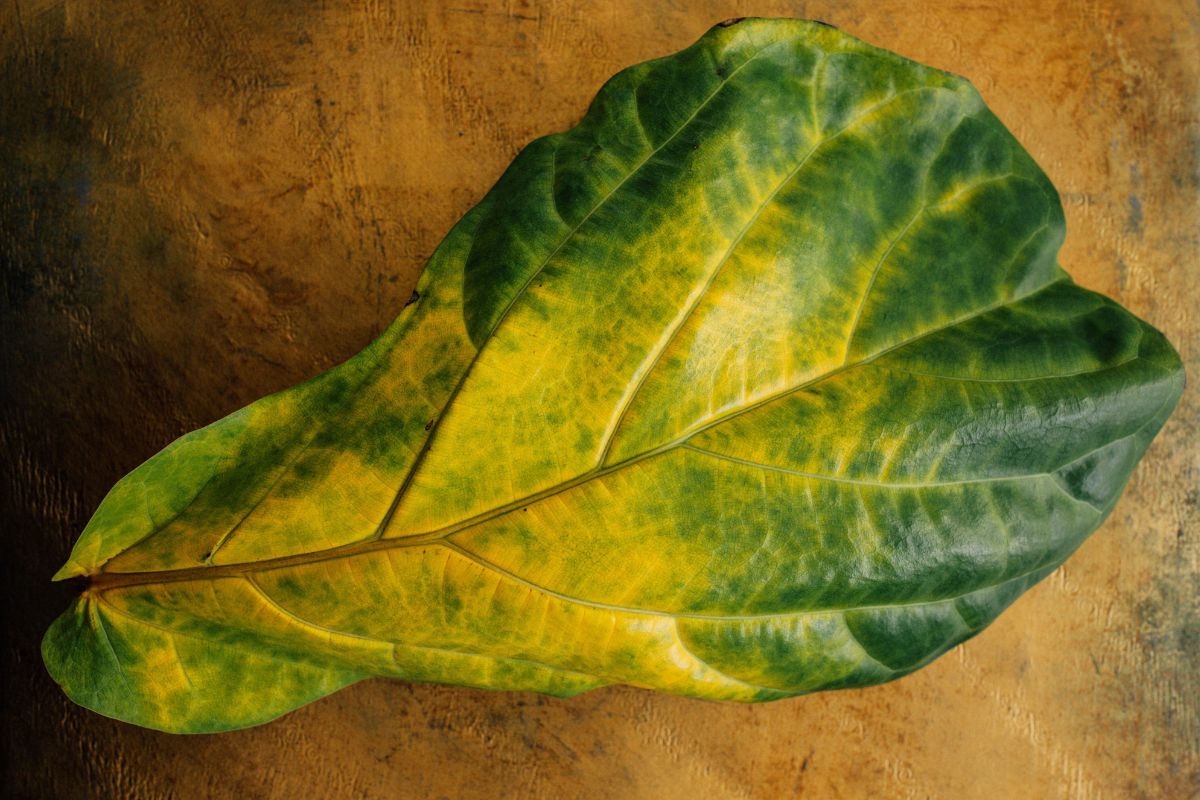
- Interveinal chlorosis or yellowing between leaf veins
- Stunted growth
- Brown bumps along the petioles or central leaf veins
- Fluffy white crawlers on leaf undersides
Common Causes and Fixes
Observe your plant carefully and take note of the accompanying symptoms to help you identify the potential cause and solution, which I’ll explore in the list below.
1. Underwatering
In my observation, underwatering is the most common cause of drooping leaves in fiddle leaf figs. They love moisture because they have evolved in the rainy and humid conditions in their native habitat.
I sometimes wait for the leaves of my older fiddle leaf figs (over five years old) to droop a little before checking the soil moisture. Watering the soil deeply usually perks the leaves back up after 1-2 days.
On the other hand, prolonged and frequent underwatering can be dangerous for them, especially when the soil becomes bone dry. Soil mixes rich in peat or sand can become hydrophobic when completely dry and hard to re-wet.
The water moves through the gaps in the soil straight to the drainage holes without rehydrating the root zone. As a result, the plant remains dehydrated even after watering.
Severely underwatered fiddle leaf figs may show the following symptoms:
- Drooping leaves
- Wrinkled leaves
- Yellowing or browning leaf edges
- Thin leaves that curl from the edges
- Crusty or cracked soil pulling away from the edges of the pot and has poor water infiltration
Here are some tips to fix underwatered fiddle leaf figs:
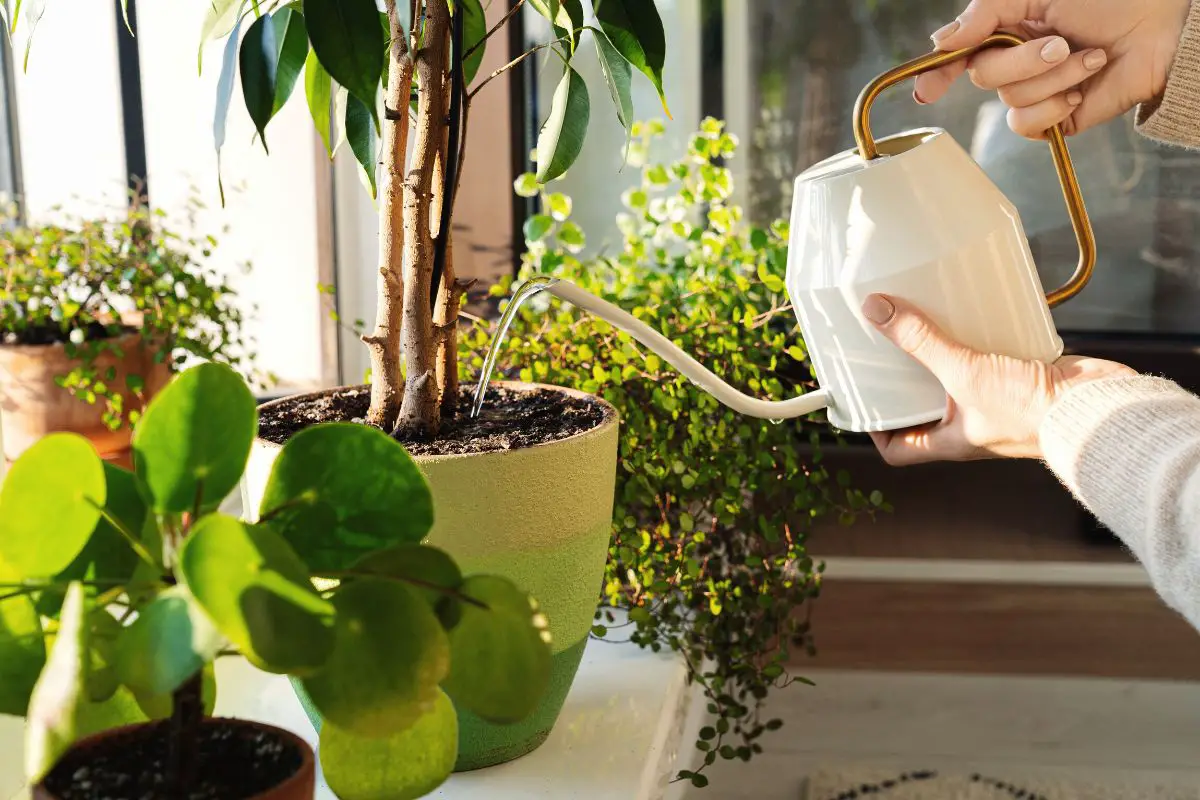
- Rehydrate the Soil: Water thoroughly, allowing excess water to drain out. Use a watering can with a narrow spout to pour water directly into the soil. Move the spout around to moisten the root zone evenly.
- Bottom Water or Soak the Pot in Water: For extremely dry soil, rake the soil surface or poke holes using a wooden chopstick before soaking the pot for 20-30 minutes to help rehydrate the root zone quickly and evenly.
- Monitor the Soil Moisture: A week or so after watering, check the soil moisture using your fingers or a wooden chopstick 2 inches (5 cm) deep and water the soil when it’s completely dry. Alternatively, insert a moisture meter to the top ⅓ or halfway down the pot and water the soil when the reading shows 4.
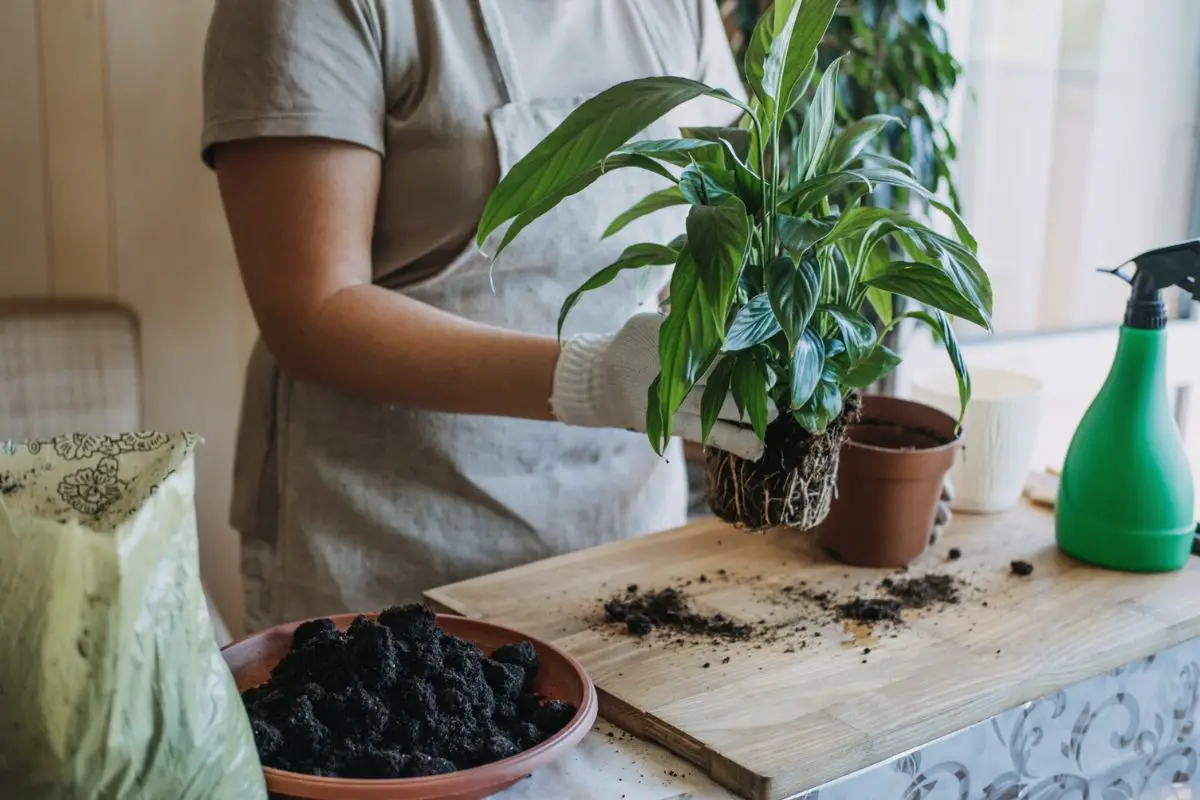
The last resort is to repot the plant if the soil is extremely hydrophobic and doesn’t rehydrate even after soaking for over 30 minutes. Here are the steps to properly repot a fiddle leaf fig with dry soil:
- A day after soaking the soil in water, carefully unpot the plant. Use a spatula to loosen the rootball from the edges of the pot.
- Slide the plant out and poke through the soil with a chopstick or a hand cultivator to detach the hydrophobic soil.
- Prune desiccated roots (brown, thin, crisp) using sterile scissors and rinse off the remaining soil with clean, tepid water.
- Prepare a breathable pot with drainage holes. You may use a similar-sized pot or around 2-4 inches (5-10 cm) wider and 2 inches (5 cm) deeper than the old one to delay repotting for another two years or so.
- Fill the bottom of the pot with a blend of 2 parts high-quality potting soil, 1 part perlite, and 10% compost. This mixture provides the optimal balance between drainage, aeration, and moisture retention that fiddle leaf figs need.
- Spread the rootball over the soil and bury them about an inch (2.5 cm) deep. Ensure the crown of the roots is partially exposed to avoid overwatering problems.
- Deeply water the plant to help it settle in the new pot, provide adequate moisture for the roots, and jumpstart the recovery from dehydration.
- Wait until the top 2 inches (5 cm) or ⅓ of the soil to dry out completely before watering again.
Pro tip: Place the plant in bright, indirect light and moderate temperature (around 70 °F or 21 °C) and humidity (50%) to facilitate faster recovery and mitigate the risk of transplant shock, which can worsen droopiness.
With consistent care and patience, the leaves should bounce back within a month or the new leaves will appear healthier.
2. Overwatering
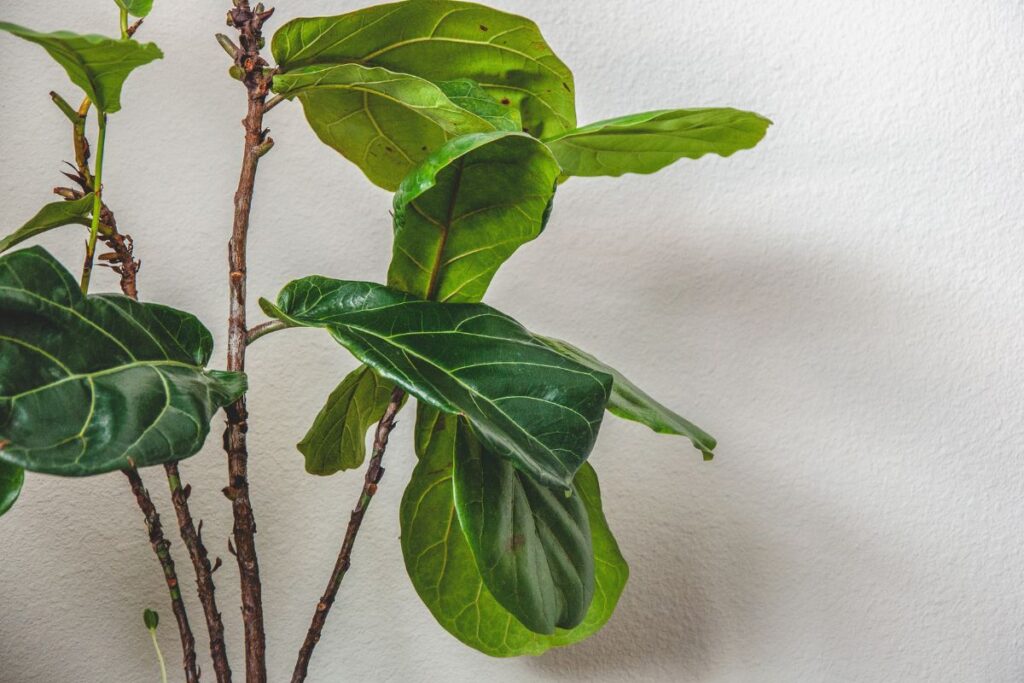
Overwatering can also cause droopiness in fiddle leaf figs because constantly wet soil can lead to root rot and inhibit proper moisture uptake toward the leaves.
Here’s how the symptoms of overwatering can progress:
- Wet and soggy soil
- Brown, mushy spots on the leaves
- Black, smelly roots
- Yellowing leaves
- Drooping leaves
- Brown and crisp leaf edges
- Stunted growth
Drooping leaves usually indicate that root rot has already occurred and the plant needs more invasive treatment. Without prompt treatment, root rot can lead to plant death.
The potting soil may retain too much water if it has poor drainage (i.e., contains a lot of clay or peat moss) or when watered too frequently.
You can confirm poor soil drainage in root rot with the following tips:
- Poke the soil at the bottom of the pot through the drainage holes using a wooden chopstick. Compacted soil can plug the holes and inhibit proper drainage.
- Rake the top inch (2.5 cm) of the soil. Clearing away some wet soil from the surface should release a foul smell from the rotting roots. You may also start seeing black, mushy roots about 2-3 inches (5-7.6 cm) deep.
Here’s how to address root rot in fiddle leaf figs:
- Carefully unpot the plant and remove as much soil from the roots as possible using a hand cultivator.
- If the root ball is too packed, use sharp, sterile scissors and cut vertically to break apart the tangled roots and inspect for damage.
- Prune all black, mushy roots using sterile scissors. Clean the blades between cuts to avoid spreading the pathogens.
- Cut off the discolored leaves because they won’t bounce back. It can also help balance out the root-to-foliage ratio.
- Soak the remaining roots in 1% hydrogen peroxide solution for 5-10 minutes. For larger plants, run the solution evenly over the roots to kill the remaining pathogens.
- Let the roots rest over a clean, dry towel for up to 30 minutes.
- Prepare a heavy, breathable pot (i.e., unglazed terracotta) only 2 inches (5 cm) wider and deeper than the root ball to prevent future overwatering problems.
- Fill the bottom 2 inches (5 cm) of the pot with a mound of fresh, moist, well-draining soil. My go-to recipe contains 2 parts potting soil, 1 part perlite, and 10% compost for optimal drainage, moisture retention, and aeration for fiddle leaf figs.
- Spread the remaining roots over the mound and cover them with moist soil until they’re buried about an inch (2.5 cm) below the soil surface. Ensure the crown of the roots at the base of the trunk is partially exposed to prevent the recurrence of root rot.
- Tamp the soil to keep the plant upright and reduce large air pockets that can inhibit new root growth. The natural porosity of perlite can help prevent soil compaction and promote proper aeration and water infiltration in the root zone.
- Keep the plant in a warm room (around 70 °F or 21 °C) with bright, indirect light and moderate humidity for faster root recovery and growth.
- Water the soil deeply only when the top 2 inches (5 cm) of the soil dries out completely.
Some FLF leaves may still droop or even fall off after repotting because of the root volume lost during treatment and the effect of transplant shock. Be sure to keep the plant within the recommended environment and watering routine to avoid the recurrence of root rot.
3. Inadequate Lighting
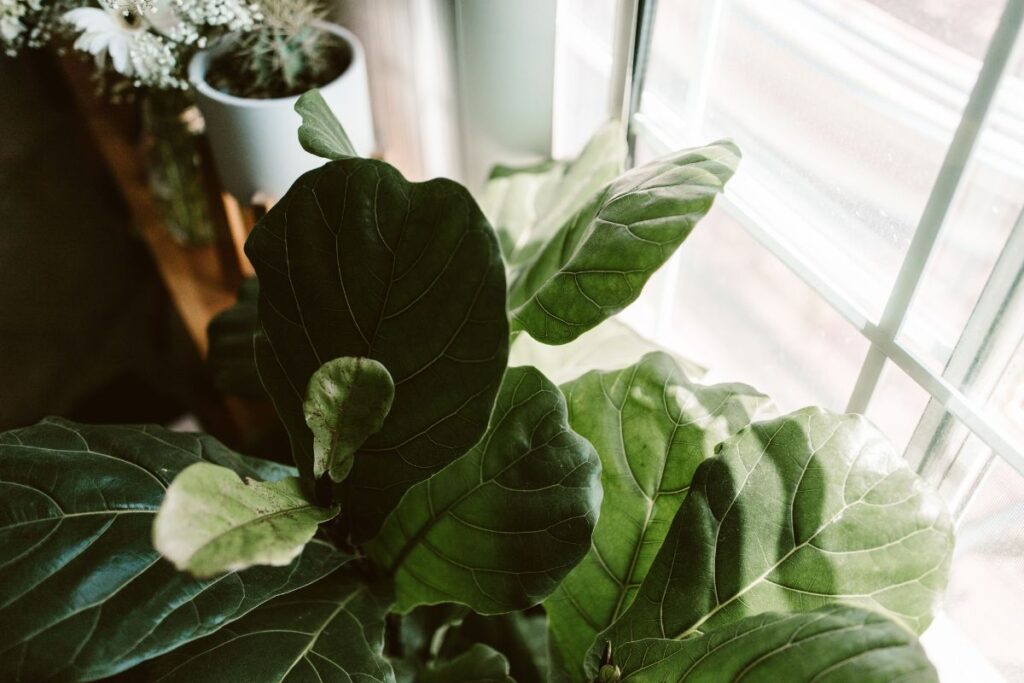
Young fiddle leaf figs require bright, indirect light for at least 8 hours for vibrant and healthy green leaves. Older plants with thicker, darker leaves can even tolerate up to 4 hours of direct morning sun from an eastern window.
Insufficient light can weaken the plant, resulting in droopy leaves and leggy growth. Moreover, dusty leaves have limited access to natural light, inhibiting their ability to photosynthesize and leading to droopiness and overall the loss of vigor.
Here are the signs to look out for:
- Stems and branches lean toward the light source.
- Sparse foliage or pale, droopy leaves, especially at the side facing away from the light
You can fix droopiness caused by insufficient lighting with the following tips:
- Increase Light Exposure: Move the plant closer to a bright, indirect light source, ideally 4-8 feet (1.2-2.4 m) from a sunny south-facing window. Avoid moving the plant too often as it can cause relocation stress. Keep the plant in the new spot for about a month and observe for signs of improvement, such as perkier leaves and straighter stems.
- Rotate the Pot Regularly: Give the pot a quarter or a half turn every week to promote balanced and bushy growth. You may double the exposure time for the side with sparse, droopy leaves to encourage new and healthy leaves.
- Dust the Leaves Regularly: Right before watering the plant, you can mist the leaves with filtered water and wipe them dry with a clean cloth to remove dust and ensure the plant absorbs natural light.
- Use Grow Lights: Supplement natural light with grow lights if needed, especially during winter. You can install full-spectrum lamps at a 45° angle around 1 foot (0.3 m) from the plant to illuminate the top to bottom leaves. Keep the lights on for around 6-10 hours during dark days to give the plant enough energy for photosynthesis.
- Prune Leggy Stems or Branches: Cut back leggy stems using a sharp sterile knife down to about ½-1 inch (1.3-2.5 cm) above a node. Note that there won’t be new vertical growth from the stump, but new branches will grow from the leaf node immediately below it. With improved light conditions, the new foliage will be perky and bushy.
Note: Too much sunlight may also cause leaf scorch (sunburn) and contribute to dehydration symptoms, such as limp leaves with brown, dry spots.
To fix or prevent the problem, shield your plant from direct sunlight at the peak of summer using sheer curtains. Also, make it a habit to rotate the pot before watering to prevent prolonged light exposure on only one side of the plant.
4. Temperature Stress
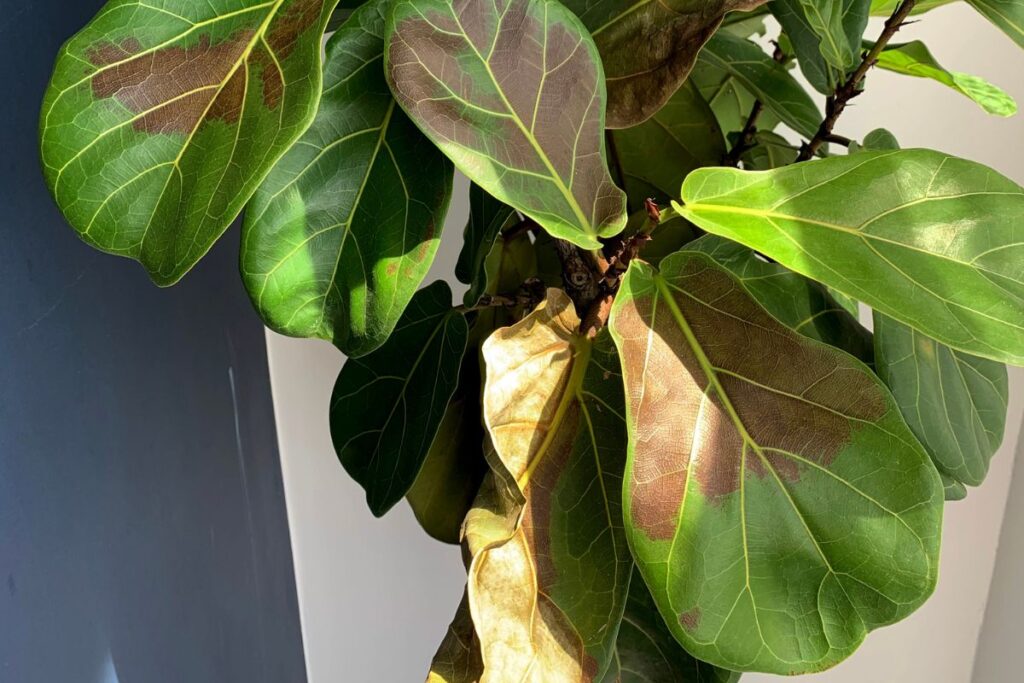
Fiddle leaf figs like moderate and stable temperatures around 65-75 °F (18-24 °C). Suboptimal temperature conditions can cause stress and aggravate the symptoms of other issues, such as overwatering, underwatering, and light stress.
Here are the effects of temperature stress on fiddle leaf figs:
- Heat Stress: FLFs can tolerate warm temperatures up to 86 °F (30 °C). However, prolonged exposure to high temperatures without adequate water or humidity can cause dehydration, leading to droopy, curly, or wrinkled leaves.
- Chill Injury: FLFs are frost-sensitive and dislike temperatures below 55 °F (13 °C). Cold snaps or drafty conditions from open windows or doors can cause the leaves to droop, curl, or become mushy.
- Fluctuating Temperatures: Frequent or drastic temperature fluctuations can also stress fiddle leaf figs and cause droopy or falling leaves.
You can improve your plant’s appearance with the following tips:
- Maintain Stable Conditions: Keep the plant away from drafts, air vents, or direct heat sources.
- Relocate if Necessary: Move to a more temperature-stable spot in the house—away from drafty windows, doorways, kitchen, or bathroom where temperatures fluctuate all day.
I once forgot to move my fiddle leaf fig back indoors before nighttime temperatures fell below 50 °F (10 °C). A few days after moving it to a warmer spot indoors, some leaves still looked limp and even fell off.
I kept the plant in the same spot and it took about 3-4 weeks before the remaining leaves started to perk up again.
5. Low Humidity
Native to tropical climates, fiddle leaf figs thrive in humidity levels of around 70%. They have adapted to indoor spaces with moderate humidity of around 40-60%.
However, drier indoor air (30% or less) can cause stress and worsen the symptoms of underwatering and heat or light stress. The large leaves tend to transpire more when the air is hot or dry, losing essential moisture and leading to the following symptoms:
- Crispy edges or brown spots on leaves
- Drooping leaves
- Irregular holes on newly unfurled leaves
You can boost the local humidity and improve the plant’s appearance with the following tips:
- Prune the brown leaf edges because they won’t bounce back. If the brown surface is large, you may cut off the entire leaf.
- Switch on a humidifier a few feet from your houseplants. You can monitor the humidity using a hygrometer.
- Group your fiddle leaf figs with other houseplants. Humidity-loving plants like monsteras have similar environmental needs. Tropical succulents like snake plants and jade plants can also help with nighttime humidity because they transpire at night.
- Place smaller pots over a pebbled tray with water. The humidity around your fiddle leaf figs may slightly improve as the water evaporates. However, this may work only on smaller plants less than 3 feet (0.9 m) tall.
Note: Other sources may recommend misting the leaves to increase the humidity. However, I don’t recommend this, as misting only raises the humidity slightly and temporarily. Excess moisture on the leaves may also cause secondary problems with bacterial or fungal diseases.
6. Transplant or Relocation Shock
Fiddle leaf figs dislike drastic environmental changes and the first sign of stress is droopiness followed by leaf drop.
The following changes usually trigger the shock symptoms:
- Significantly higher or lower light intensity: Sudden exposure to intense sunlight can cause sunburn and droopiness. On the other hand, prolonged exposure to lower light conditions (compared to the plant’s initial location) can lead to legginess and limp leaves.
- Heat stress, cold shock, or fluctuating temperatures: Extreme temperatures or sudden changes can increase the risk of dehydration or damage leaf cells.
- Low humidity: Dry air conditions can increase moisture loss through transpiration, causing the large FLF leaves to appear limp.
- New soil environment (repotting): The roots will spend more energy growing into the new soil and the temporary suboptimal moisture uptake may cause the leaves to droop.
Limp leaves caused by transplant or relocation shock are often temporary and may be fixed with the following tips:
- Acclimatize your plant to the new spot before the permanent move. When moving an FLF outdoors during the warm season, start by giving it an hour or two under the early morning sun for 3-5 days. Gradually increase the exposure within 4 weeks before leaving the plant outdoors all day. Choose a spot that receives shade from the midday and afternoon sun.
- Monitor the weather and temperature changes using a smartphone weather app. Shield your plant with a shade cover when daytime temperatures are expected to rise over 85 °F (29 °C) in the summer. Move the plant back indoors in the fall when nighttime temperatures are expected to fall below 55 °F (13 °C).
- Water your plant regularly. Since it’s not feasible to control the humidity outdoors, you can hose down the fiddle leaf fig in the early morning during hot, dry days and allow the morning sun and outdoor wind to dry the foliage throughout the day. This can also help dislodge pests that may infest your plant. Before sunset, you can wipe the remaining moisture off the leaves using a clean, lint-free cloth.
- Use a high-quality potting mix and an appropriate pot with drainage holes when repotting. Avoid overfeeding newly repotted plants. The nutrients in the compost or fresh potting mix should be enough to feed the plant for 6-12 months gently.
Pro tip: Avoid moving your fiddle leaf fig too often at the first sign of droopines. As long as the environmental conditions are within optimal range, give your plant around 2-4 weeks to adjust to the new and improved environment.
7. Nutrient Deficiency
A lack of essential nutrients like nitrogen and calcium can weaken the plant structure, causing the following symptoms:
- Slow growth
- Pale or yellowing leaves (whole surface or between leaf veins)
- Lack of new leaf buds, even during spring or summer
- Drooping leaves
- Limp stems or branches
To encourage new and sturdy growth, follow these tips:
- Use a half-strength 3-1-2 liquid fertilizer with micronutrients every time you water during the growing season (spring and summer).
- Watch for greener, healthier leaves 2-3 weeks after fertilization. Liquid fertilizers are fast-acting and you’ll typically see results within a few weeks.
Note: Over-fertilization may also sometimes cause droopiness if there’s excess salt buildup in the soil. Salt deposits around the roots can inhibit proper moisture uptake. During periods between watering sessions, the dry salt may even draw moisture from the roots, leading to dehydration symptoms, such as limp leaves with yellow or brown edges.
Avoid overfeeding your plant to compensate for nutrient deficiency symptoms. More importantly, avoid using too many granular fertilizers at once as they can remain in the soil for extended periods, especially when the plant is watered infrequently or the soil has poor drainage.
8. Pest Infestation
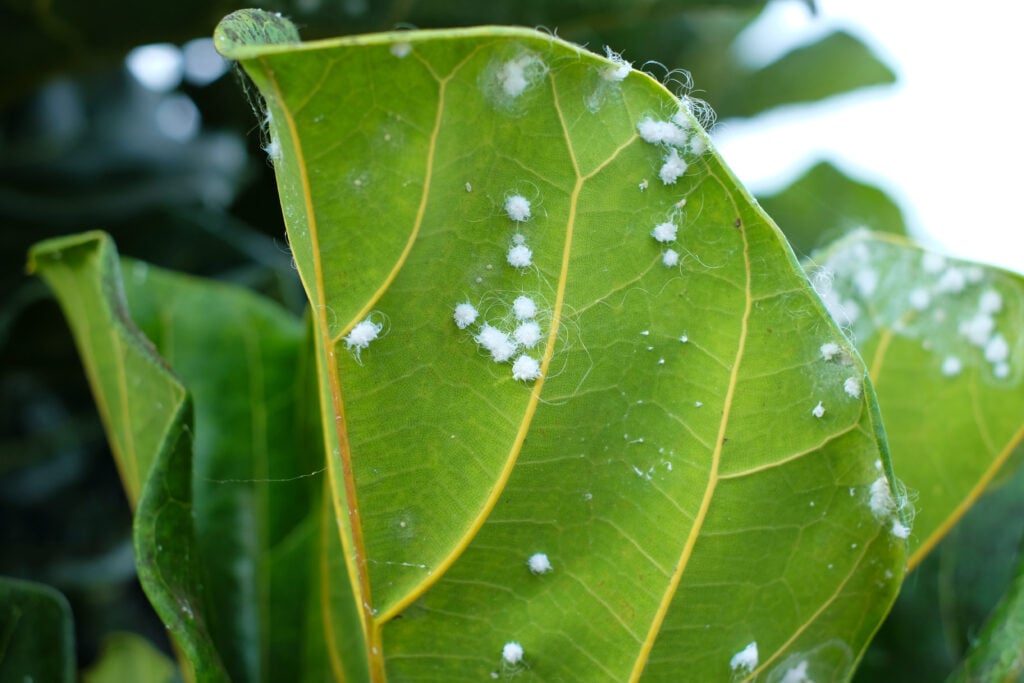
Sap-feeding pests that primarily attack the leaf veins or areas close to the petioles can cause FLF leaves to droop, including the following:
- Scale Insects: Adult female scale insects are immobile and appear like ⅛-inch (3.2 mm) brown bumps along the leaf veins or petioles. They continue feeding in the same area for 3-4 weeks and lay several batches of eggs before dying. Prolonged feeding of a large colony can cause the affected leaves to become limp.
- Mealybugs: Another group of sap-feeding insects, mealybugs are crawling insects about ⅛ inches (3.2 mm) long and covered with a white, waxy shell. They tend to form clusters underneath leaf surfaces and a severe infestation may also cause the leaves to droop.
You can treat and prevent future pest infestations in fiddle leaf figs with these tips:
- Manual Removal: Scrape the pests off the leaves using a cotton swab with alcohol. You can drop them in a cup of soapy water or alcohol.
- Neem Oil Spray: Both scale insects and mealybugs are vulnerable to neem oil because of the systemic damage it causes, inhibiting growth and reproduction. It works as a treatment and pest repellent. Spray the solution generously all over the plant, especially on leaf undersides, once a week after sunset. You may need to move FLFs away from direct sunlight during the course of treatment to prevent sunburn.
Other natural or chemical treatments like insecticidal soaps or systemic insecticides are also effective against scale insects and mealybugs. However, be mindful of the risks:
- Commercial insecticidal soaps can break down the waxy covering of scales and mealybugs. However, they only work upon contact with the pests and don’t work well as repellents. Some eggs or adults covered in waxy shells may survive and continue feeding on the plant. In addition, prolonged and continued use of insecticidal soap spray diminished the glossy appearance of my FLF leaves and caused droopiness.
- Systemic insecticides may be sprayed on the leaves, where they’re absorbed and translocated within the plant’s system through the veins, phloem, and xylem. Sap-feeding pests that absorb the sap die, effectively treating the infestation. However, incorrect application (especially during hot, sunny weather) can cause leaf burn and droopiness.
Pro tip: Read and follow the instructions on the label of your chosen product to ensure effectiveness while minimizing potential leaf damage. You may also be advised to wear gloves, goggles, or a face mask to prevent inhalation of irritants from the chemical treatment.
In case of a severe infestation, I usually isolate my fiddle leaf fig in a well-ventilated room with similar light, temperature, and humidity conditions to prevent further stress. I then spray the plant with neem oil, insecticidal soap, or systemic pesticides (with an antifungal effect) once every 7-14 days for up to 8 weeks until the infestation is under control.
Preventative Measures
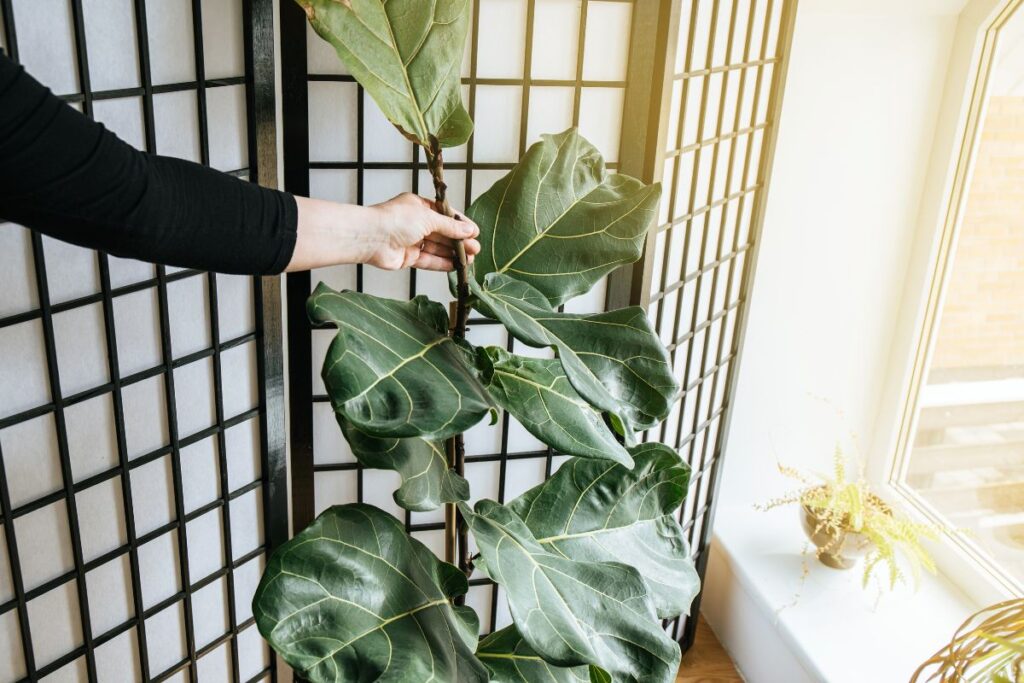
Droopiness is an avoidable problem in fiddle leaf figs. You can maintain your plant’s vigor with the following preventive measures:
Regular Monitoring and Maintenance
Fiddle leaf figs communicate stress quite effectively based on the appearance of their leaves or stems. Pay attention to any changes and be consistent with your care routine.
Here are some tips:
- Check Plant Health Regularly: Inspect leaves, stems, and soil weekly for early signs of trouble, such as pests and leaf discoloration.
- Maintain Consistent Care: Avoid overcorrecting with drastic changes.
- Observe the Plant’s Response to Change: After making seasonal or remedial changes to the environment or care routine, give your plant time to adjust, recover, and thrive.
Proper Care Routine
Fiddle leaf figs may be temperamental, but it’s possible to keep them happy and vibrant with proper care. It’s crucial to provide them with a stable indoor environment and consistent care, including the following:
- Light: Give large plants with darker, fully developed leaves up to 4 hours of direct morning sunlight from an eastern window. Younger plants with paler leaves do best with at least 8 hours of bright, indirect light from a south-facing window. Rotate the pot regularly for balanced and bushy growth.
- Water: Check the soil moisture using your fingers, a wooden chopstick, or a moisture meter about a week after watering. During the growing season, water the plant deeply as soon as the top 2 inches (5 cm) of the soil is dry.
- Soil: Always use a well-draining soil mix rich in organic matter when repotting fiddle leaf figs. I recommend a homemade blend of 2 parts potting soil, 1 part perlite, 10% compost for optimal drainage, moisture retention, and nutrition.
- Temperature: Maintain temperatures between 65 and 75 °F (18-24 °C). Keep the pot away from drafty doors and windows or heating and cooling vents to avoid fluctuations that can stress the plant.
- Humidity: Maintain the humidity at 40-60%. You may switch on a humidifier for 4-5 hours during the driest time of the day and monitor the humidity with a hygrometer. Grouping FLFs with succulents like snake plants and jade plants can help boost the local humidity, especially when the succulents transpire more actively at night.
- Fertilizer: Feed the plant a half-strength 3-1-2 liquid fertilizer every other time you water or apply a slow-release granular fertilizer every 6-8 weeks from spring to summer. Water the plant regularly when using fertilizers for optimal nutrient absorption and to prevent fertilizer burn.
- Repotting: Repot young plants less than 3 feet (0.9 m) tall annually in a pot 2 inches (5 cm) larger. Larger plants can tolerate being rootbound for up to 3 years or so and transplanted in a pot up to 4 inches (10 cm) wider and deeper when the roots start poking out of the soil surface or drainage holes.
- Pruning: Remove damaged or discolored leaves anytime using sharp, sterile shears. Hard pruning and topping (for lateral branching) should be done in spring for faster recovery and visible new growth.
- Maintenance: Wipe the large leaves with a clean, damp cloth every time you water the plant to remove dust and dirt and optimize light absorption for photosynthesis.
- Monitoring and Pest Prevention: Routine leaf cleaning will also make it easier to spot and eliminate pests sooner before they reach unmanageable populations. Apply neem oil spray once weekly for treatment and once every two weeks for prevention, especially during the warm season when most pests are active.
Seasonal Adjustments
As tropical natives, fiddle leaf figs are not accustomed to winter conditions. However, they can adapt to minor environmental changes indoors with the following adjustments:
- Watering: Reduce watering frequency during the cold season because FLFs tend to grow more slowly in cooler and lower light conditions. You can wait until the soil is dry ⅓ to halfway through to avoid waterlogging and root rot.
- Lighting: Regularly clear the windows of dust or snow for optimal light infiltration. Supplement your plant’s exposure with full-spectrum grow lights for about 6-10 hours during dark or cloudy days.
- Temperature: FLFs can tolerate nighttime temperatures around 60 °F (15.6 °C), but avoid letting it fall below 55 °F (13 °C). You must keep the windows closed or move the pot a few feet away from cold drafts and heating vents.
- Humidity: Maintain the humidity at 40-60% using a humidifier to counter the drying effect of indoor heaters or the winter chill.
- Maintenance and Monitoring: Clean the leaves every 1-2 weeks to remove dust, monitor and manage pests, and maximize light absorption during darker days. Keep an eye on the leaves to catch early signs of drooping or limpness.
You must avoid the following during fall and winter to prevent plant stress:
- Hard pruning
- Fertilizing
- Repotting (unless there’s a sign of root rot)
Final Thoughts
Drooping leaves are a common problem in fiddle leaf figs caused by poor watering practices, insufficient light, and unsuitable temperatures and humidity. Nutrient deficiency and pest infestation can also weaken the plant, leading to limp leaves.
You can treat and prevent droopiness in fiddle leaf figs with the following tips:
- Ensure the soil and pot have adequate drainage and water the plant deeply only when the soil is completely dry 2 knuckles deep.
- Give the plant at least 8 hours of bright, indirect light daily and rotate the pot weekly or every time you water.
- Maintain moderate and stable temperatures (65-75 °F or 18-24 °C) and humidity (40-60%).
- Feed the plant a half-strength 3-1-2 liquid fertilizer every time you water it to treat the symptoms. For prevention and continuous growth, feed every other time you water during the growing season. You may also apply a slow-release granular fertilizer every 6-8 weeks from spring to mid-summer.
- Clean the leaves regularly so you can catch early signs of pest infestation. Manually remove the pests and spray the plant with neem oil weekly. Continue application every 2 weeks for pest prevention.
Be confident to follow these tips and give your fiddle leaf fig time to recover and show positive changes, such as greener, livelier leaves.
Share your fiddle leaf fig experiences with fellow plant enthusiasts in the comments and subscribe to the blog for more related plant care articles.