
Why Jade Plants Get Droopy or Limp (and How to Fix It)
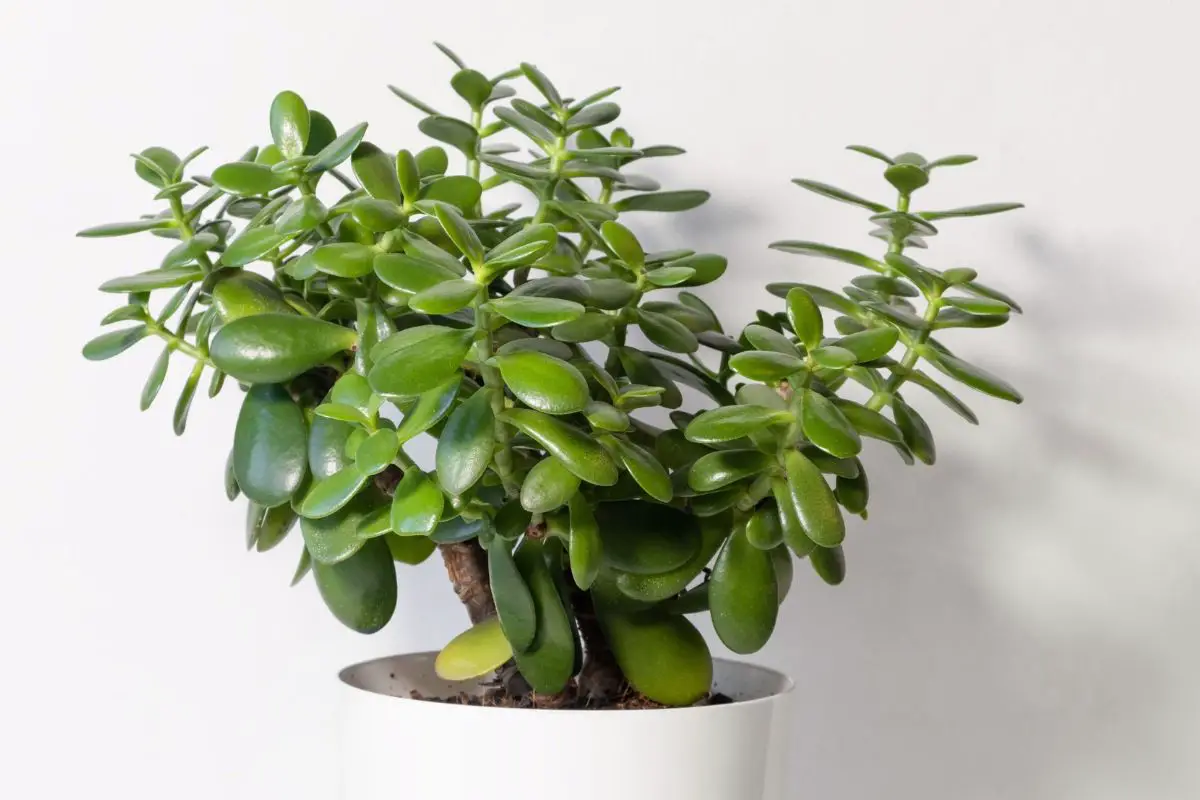
Jade plants are popular succulents with fleshy green stems that become woody over time to support their dense canopy of leaves. However, their trunks and branches can sometimes become limp due to inadequate care.
Here are the reasons jade plants become droopy or limp:
- Overwatering
- Underwatering
- Inadequate lighting
- Temperature stress
- Nutrient imbalance
- Rootbound
- Poor soil quality
- Diseases
- Pest infestation
- Transplant or relocation shock
Jade plants can lose aesthetic value if their stems and leaves start to droop, often signaling plant stress. This article will explore the reasons behind this issue and provide actionable solutions.

Jade Plants: An Overview
Jade plants (Crassula ovata) are succulent shrubs native to arid regions of South Africa. They can reach around 10 feet (3 m) tall in the wild, so they’ve developed some traits that keep them upright.
Here are some of their anatomical traits that help with upright growth:
- Since jade plants grow in loose, sandy soil, their fibrous roots grow laterally to absorb shallow rainfall quickly. The spread of their root systems consequently anchors them to the ground.
- The trunk gradually thickens as the plant ages and develops a woody outer layer (bark) to support the weight of the leaves.
- The cells in the leaves and stems efficiently store moisture, keeping them turgid and maintaining the plant’s upright form.
Jade plants grown in pots typically reach only up to 3 feet (0.9 m) tall. The small soil space limits root growth, keeping the plant compact. Jade plants are usually top-heavy, with short stems that thicken and become woody over time to help them stay upright.
However, poor care and suboptimal conditions can cause plant stress, sometimes leading to weak and droopy stems. To maintain your jade plant’s health and sturdy form, it’s crucial to identify early symptoms of stress and address the problem.
Let’s explore the symptoms below.
Symptoms of Drooping or Limping
A stressed jade plant may droop in the following ways:
- Leaves may appear soft and limp, lacking firmness.
- Stems may sag or lose structural integrity, causing a slumped appearance.
Your plant may also show these additional signs:
- Wrinkled leaves
- Yellowing or browning leaves
- Mushy leaves and stems
- Legginess or leaning
- Slowed or stunted growth
- Leaf drop
A droopy or limp jade plant often indicates something wrong with the care routine or environmental conditions. Take note of the accompanying symptoms to identify and fix the underlying cause.
Common Causes and Fixes
Below are the common causes of drooping in jade plants:
1. Overwatering

Jade plants need adequate water to keep the leaves plump and firm. However, too much water can lead to the following problems:
- The soil remains soggy, so the roots draw the water upward to release it through transpiration. If the humidity is high (over 50%), the plant releases the moisture in liquid form through guttation.
- Plant cells may burst and create blisters or black spots on the leaf surface.
Prolonged overwatering can lead to root rot, which consequently causes drooping in the following ways:
- The damaged roots eventually stop sending moisture to the shoots. The dehydrated leaves and branches will shrivel, turn yellow, and become limp.
- As the rot-causing pathogens climb to the stems and leaves, they can infect plant tissues and turn them mushy. Affected leaves, branches, and stems then become weak and start drooping.
You can still save your plant if the rot hasn’t climbed to the shoots yet. You must promptly repot your plant to improve the plant’s chances for recovery.
Here’s how:
- Carefully unpot the plant and detach the contaminated soil from the roots. You can use a wooden chopstick to loosen the soil or break clumps apart using your gloved hands.
- Rinse off the soil in gentle running water to inspect the roots thoroughly.
- Use sharp, sterile scissors to cut all black, mushy, and smelly roots.
- Rinse the remaining roots in 1% hydrogen peroxide solution.
- Leave the plant in a cool room (70 °F or 21 °C) with moderate humidity (50%) for a week.
- Prepare a heavy, breathable pot with drainage holes. Choose one that’s 2 inches (5 cm) wider and deeper than the rootball.
- Fill the bottom 2 inches (5 cm) with well-draining succulent soil or compost-perlite mix.
- Spread the roots over the soil mix and bury them an inch (2.5 cm) deep. Tamp the soil firmly around the base of the plant to keep it upright.
- Water the soil deeply until the excess drips from the drainage holes. Moving forward, water the plant only when the soil is completely dry halfway (or 2/3) down.
- Keep the plant in bright, indirect light for at least 8 hours daily as it recovers.
- Maintain moderate temperatures of 65-75 °F (18-24 °C). You can use a portable digital thermometer with a hygrometer to measure the temperature and humidity for ideal jade plant positions. Keep the plant away from cold drafts or heating vents to avoid drastic fluctuations in temperature.
- Choose an area with low to moderate humidity (30-50%). Thankfully, these levels are within comfortable human living conditions. You may raise the humidity as needed by switching on a humidifier at midday or grouping plants with similar care needs. Conversely, you can switch on a dehumidifier or a fan to reduce the humidity.
However, if the rot has spread to the stems and turned them mushy, it’s too late to save your plant. You can try propagating the plant through healthy-looking terminal leaves (if any).
Here are the steps to propagate a jade leaf cutting:
- Look for large jade leaves about 2-3 inches (5-7.6 cm) long and an inch (2.5 cm) wide. Ensure it’s free of blemishes and discoloration (i.e., yellowing, browning, or black and white spots.
- Pinch a leaf close to the stem with a bit of the node still attached.
- Leave the cuttings in a cool, dry room overnight to form a callus.
- Prepare a shallow container about 2 inches (5 cm) deep.
- Fill the container with your usual jade soil mix.
- Lay the leaves horizontally over the soil mix. Keep them an inch (2.5 cm) apart.
- Mist the soil until it’s as damp as a wrung-out sponge. Repeat every 1-2 days.
- Keep the setup in a room with bright, indirect light.
The cuttings should form roots after a month or so and new leaves within 2-3 months if planted during the growing season.
2. Underwatering
A dehydrated jade plant may also appear weak and limp. Plant cells require water to stay turgid. Without enough moisture, the cells will collapse and the affected tissues may shrivel and droop.
You can confirm that your plant is underwatered if it exhibits the following signs:
- Crusty or bone-dry soil that pulls away from the edges of the pot
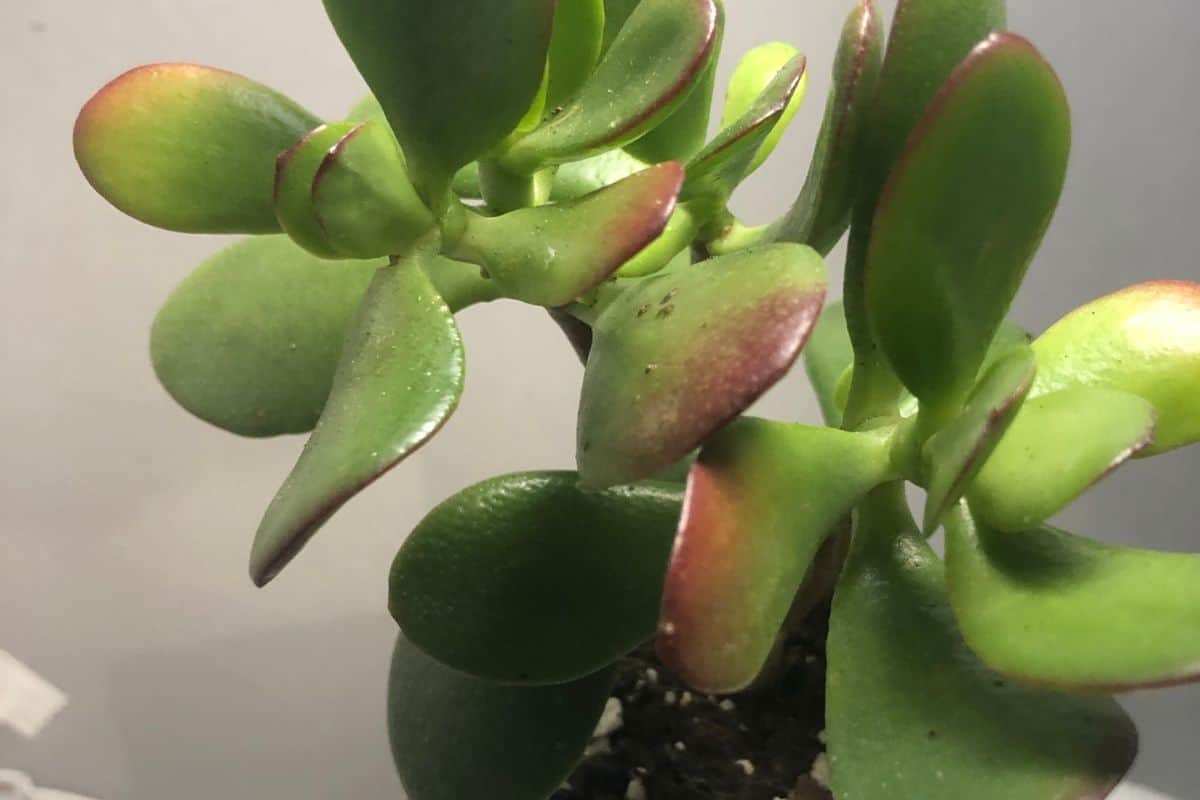
- Leaves developing red tips due to the pigment anthocyanin’s response to drought stress
- Wrinkled leaves
- Yellowing or browning leaf tips
- Limp stems that might sometimes feel brittle
You can fix the problem with the following tips:
- Soak the plant’s pot in water for about 20-30 minutes if the soil is extremely dry and has become hydrophobic (repelling water).
- Water the plant more frequently—ideally, as soon as the upper half of the soil mix is completely dry.
- Ensure that the soil is thoroughly moistened to allow the roots access to moisture. While watering, run the narrow spout of the watering can over the entire soil surface.
- Bottom water your plant once every 2 months or after 3-4 times of regular watering to ensure it’s evenly rehydrated.
3. Inadequate Lighting
Jade plants require bright light to photosynthesize and stimulate their metabolic activities. Mature indoor jades do great with four hours of direct morning light daily, whereas younger ones thrive in 8 hours of bright, indirect light.
If your home has inadequate lighting, the branches may stretch toward the window or any light source and become thin and limp. The leaves will also become sparse and small.
To fix the problem, follow the steps below:
- Prune the leggy stems using sterile shears. Cut about a quarter inch (0.6 cm) above the node where you want new, healthy growth to sprout.
- Move the plant closer to an unobstructed, sunny window (i.e., east, west, or south). Gradually transition the plant by moving it about a foot (0.3 m) every 2-3 days to avoid relocation shock due to sudden changes in light intensity.
- Adjust your watering frequency accordingly because brighter light dries the soil faster.
- Give the plant a quarter or a half-turn every time you water it to promote stronger stems and balance in new growth.
Pro tip: Be patient. It can take some time for jade plants to replace the cut leggy stems with new, healthier ones.
If you don’t have access to bright natural light, you can use full-spectrum grow lights with the following tips:
- Position a 40-watt lamp 6-12 inches (15-30 cm) above your plant at a 45° angle.
- Keep it on for 12-16 hours daily during the growing season or 10-14 hours from fall to mid-winter.
- Rotate the plant weekly to prevent legginess or droopiness.
4. Temperature Stress
Extreme temperatures and inadequate humidity can also lead to drooping stems and leaves in jade plants.
Heat Stress
Although jade plants can survive temperature spikes up to 100 °F (38 °C), they’re not accustomed to such temperatures in their native habitat.
Prolonged exposures to temperatures over 85 °F (29 °C) with low humidity (less than 30%) can increase the risk of dehydration associated with sun and drought stress.
The dehydrated stems may then become limp, especially those that haven’t developed a bark yet. The leaves will appear wrinkly and wilted.
You can revive heat-stressed jade plants with the following tips:
- Maintain temperatures between 65 and 75 °F (18 and 24 °C) during the day and around 60 °F (15.6 °C) at night.
- Keep your plant away from heating vents.
- Move the plant away from direct sunlight. Keep it up to 8 feet (2.4 m) away from a sunny window or hang sheer curtains to filter the light.
- Water your plant when the top half or ⅔ of the potting soil dries out. Don’t let the soil become bone-dry all the way down, as it can become hydrophobic over time.
- Switch on a humidifier for 4-5 hours at midday during hot and dry days to help relieve heat stress. Keep it around 2 feet (0.6 m) away from your plants. Placing the pot on a pebbled tray with water or grouping plants with similar needs may also help boost the humidity although with minimal effect.
- When it’s hot and humid (over 50%), you can switch on a fan to help reduce both the temperature and humidity. Use a thermometer or hygrometer to measure the values around your jade plant.
Cold Shock or Chill Injury
Jade plants are sensitive to the cold and may experience cold shock or chill injury when exposed to temperatures below 40 °F (4 °C).
The cold can affect the plant at a cellular level by weakening the cell wall and membrane. Affected plant tissues may then collapse, giving your plant a limp appearance and mushy stems. The weakened stems and branches may dangle off the pot’s edges.
You can squeeze the trunk to see if hard spots remain. If so, you can try the following tips to save your plant:
- Use a sharp, sterile knife to slice a half-inch (1.3 cm) below the mushy section.
- Check the inside of the stem. It should be light green without black or brown mushy spots.
- If there are mushy spots inside the stem, keep cutting downward ½ inch (1.3 cm) at a time until you find where the damage stopped.
- Brush cinnamon powder over the stump.
- Keep the plant in bright indirect light for 8 hours daily and water the soil as soon as it’s dry halfway down.
- Place the plant in a room with stable and moderate temperatures, away from drafty doors, windows, or cooling vents.
I’ve seen jade plants recover from chill injury with the abovementioned steps. Note that no new growth will occur above the stump. New branches and leaves will sprout from random nodes below the stump.
New growth is also slow and it can take several years of meticulous pruning before the plant looks presentable.
5. Nutrient Imbalance
Jade plants are light feeders but require adequate nitrogen, phosphorus, and calcium to develop strong stems and cell walls.
Insufficient nutrients or applying excessive amounts of fertilizer at once can harm your plant and lead to flimsy stems and foliage.
Nutrient Deficiency
Fresh, high-quality succulent soil or a homemade soil mix with compost usually contains enough nutrients to feed jade plants for 1-2 years. Soil nutrients can be depleted over time from regular watering (leaching) or plant consumption.
Without enough nutrients, the plant will have slow or stunted growth, weak or droopy stems and leaves, and yellow leaves due to a lack of nitrogen, iron, and/or magnesium.
To fix nutrient deficiency, you must feed your plant a balanced 10-10-10 soluble or liquid fertilizer. Dilute it to half the recommended strength and incorporate it every other time you water your plant from spring until summer.
Keep an eye on new, green growth, indicating that your plant is recovering.
Over-Fertilization
Feeding your plant too much or too often can lead to the following structural issues:
- Young plants will produce more green stems to utilize the surplus of nutrients in the soil. However, the new growth will be weak, leggy, and limp.
- The roots become weaker due to fertilizer burn. The excess salts in the soil can draw moisture from the roots and dry them out. As the roots become desiccated, the stems and leaves can’t receive enough water and start drooping.
You can fix over-fertilization with these steps:
- Scrape the soil’s top ¼ inch (0.6 cm) to remove the dried-out fertilizer salts (only when using granular fertilizers).
- Backfill the soil surface with fresh compost.
- Flush the soil with filtered or distilled water equal to the volume of the pot. Pour the water gradually, letting the excess drain and leaching the fertilizer salts out of the drainage holes.
- Wait until the soil is dry halfway down and repeat the process.
- Revert to regular watering once the soil is completely dry.
- Avoid fertilizing your plant for a year or until the following spring.
When it’s time to fertilize your plant, be careful with the dosage and application frequency. A good rule of thumb is to apply slow-release granular fertilizers once in spring and/or summer. On the other hand, you must dilute liquid fertilizers to half the recommended strength.
I’ll discuss proper fertilizing tips in more detail later in the article.
6. Rootbound
Overgrown jade plants in small pots may also droop from the weight of their foliage, especially if the growth is bushier on one side.
The roots may also become rootbound or displace the soil. As a result, they may have insufficient access to moisture and nutrients, causing the plant to droop the same way when dehydrated or underfed.
You’ll know your plant is rootbound with these additional symptoms:
- Roots growing out of the drainage holes or soil surface
- Poor water infiltration on the soil surface
- Water drains too quickly through the gaps along the edges of the pot
- The leaves appear wrinkly or yellow due to insufficient moisture and nutrients
You must repot a rootbound jade plant with these steps:
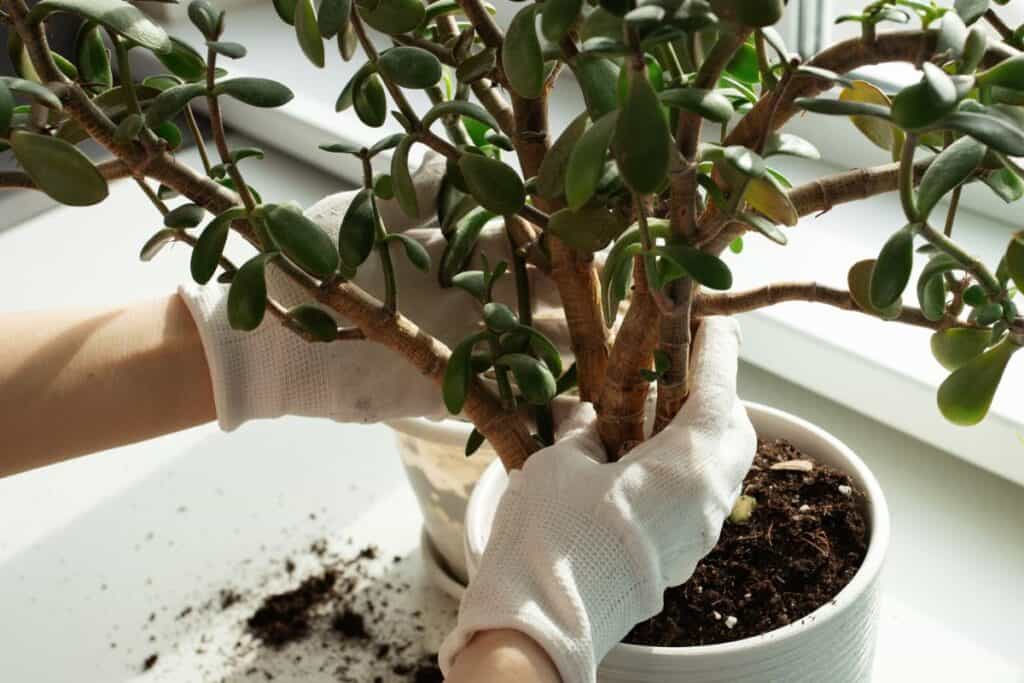
- Cut the roots below the drainage holes using sterile scissors to remove resistance when sliding the plant out.
- Loosen the soil from the pot’s edges using a spatula or flat knife.
- Slide the plant out of the pot and soak the rootball in water for 5-10 minutes.
- Carefully detach the old soil from the roots using a wooden chopstick and/or a hand cultivator.
- Prune dried or damaged roots. Healthy roots should be light brown with white tips. Dark brown, black, mushy, or brittle roots should go.
- You can also prune up to ⅓ of the foliage to relieve the weight off the main stem or trunk and prevent further drooping.
- Prepare a pot 2 inches (5 cm) wider and deeper than the rootball. Ensure the pot has drainage holes. Pro tip: Choose a pot with a wider mouth to make it easy to slide the plant out the next time you repot it.
- Fill the bottom of the pot with well-draining succulent mix. You can also use a homemade recipe with equal parts compost and perlite.
- Spread the roots over the soil and firmly bury them an inch (2.5 cm) deep.
- Water the plant deeply to help the roots settle and rehydrate the leaves. Severely rootbound jade plants are usually dehydrated.
7. Poor Soil Quality
Inadequate soil can cause a myriad of problems in jade plants, including weak and limp stems and leaves.
Here are some common issues with poor soil quality:
- Dense, clayey, or peaty soil can hold too much water, leading to overwatering and root rot.
- Sandy soil can drain too quickly and is more likely to become hydrophobic when frequently allowed to dry out. It may also be too light to keep a jade plant anchored, especially if the pot is shallow.
You can repot your plant in the appropriate soil. Here are the best options for jade plants:
- High-quality cactus or succulent mix: Most products have good proportions of moisture-retaining, well-draining, and loose materials suitable for jade plants. Some may even have heavy materials like gravel.
- Compost-perlite mix: Both compost and perlite are lightweight materials. However, compost can hold a good amount of moisture and weigh down the roots when well-watered. The perlite can help drain the excess moisture and keep the soil mix fluffy.
- Equal parts standard potting soil, coarse sand, and perlite/pumice: This mix also has adequate weight, drainage, and moisture retention for jade plants.
8. Diseases
Bacterial soft rot is a serious and often fatal infection in jade plants. It is caused by Erwinia spp., which can be transmitted to plant wounds through contaminated soil or pruning tools.
The disease can spread through the plant tissues via the xylem or phloem and cause affected cells to collapse. This can lead to mushy and weak sections along the stem, making the plant look droopy.
Unfortunately, this condition doesn’t have a cure. Properly discard the infected plant and contaminated soil mix.
You can reuse the pot after carefully sterilizing it with 10% bleach and rinsing it with hot water.
9. Pest Infestation
Although mature jade plants can survive pest infestations, younger ones with frail stems are more likely to succumb to the damage.
The fleshy stems and leaves of young jade plants are attractive to the following pests:
- Mealybugs: Crawling insects with a cottony white waxy covering
- Scale insects: Immobile insects with brown outer shells that make them look like tiny bumps
- Spider mites: Tiny black insects that are hard to spot with the naked eye and are usually identifiable through their fine webs
- Aphids: Tiny insects with translucent bodies that can be orange, brown, green, or black
Severe infestations can affect a jade plant in the following ways:
- Impede moisture transport along the young and tiny stems. Dehydrated leaves may appear wrinkly and limp before falling off.
- Sap-feeding pests excrete a sticky, sugary liquid called honeydew.
- Honeydew attracts sooty mold and ants. Although sooty mold fungi don’t directly damage the plant tissue, they can spread over the leaf surface, block sunlight, and inhibit photosynthesis.
- Affected leaves may turn yellow or droopy and new growth may be stunted or distorted.
You may still save your plant with these tips:
- Rinse the plant under gentle running water while rubbing the pests off the leaves.
- Dry the leaves with a clean cloth.
- Isolate the plant from other houseplants. Keep it in bright, indirect light. Avoid direct sunlight during treatment.
- After sunset, spray the plant with neem oil solution. Aim for areas frequented by pests, such as along petioles and underneath leaves.
- Inspect the plant weekly and remove visible pests using a cotton swab with alcohol. Pluck or scrape scale insects using tweezers.
- Repeat neem oil spray application weekly for up to 8 weeks.
10. Transplant or Relocation Shock
Drastic changes in environmental conditions when transplanting or relocating can cause jade plants to become droopy.
Here are the conditions to watch out for, their corresponding effects, and recommended solutions:
| Environmental Condition | Effect | Treatment and Prevention |
| Low light | Moving the plant to an area with significantly lower light levels after getting accustomed to bright light will cause the stems to become leggy and limp. | Jade plants will do well with at least 8 hours of bright, indirect, natural light daily. You can supplement its light deficit with around 4-8 hours of exposure under a full-spectrum 40-watt grow light. Position it 6 inches (15 cm) above the plant at a 45° angle and rotate the pot weekly. |
| Poor drainage (Dense soil and/or glazed pots without drainage holes) | Poorly draining soil rich in clay or peat can stay wet for longer, drowning the roots and increasing the risk of root rot. Even well-draining soil will also remain wet if the excess water has nowhere to go below the pot. Rot-causing pathogens may climb to the stems, leading to weak and mushy sections and eventual drooping. | Repot the plant in well-draining soil, such as a high-quality succulent mix or a homemade mix with equal parts compost and perlite. Use a breathable pot (i.e., unglazed terracotta) with drainage holes to wick away or drain excess moisture. A jade plant is sturdy and will survive another repotting much better than staying in dense soil for too long. |
| Temperature stress | Cold shock can damage the integrity of plant cells, whereas heat stress can increase the risk of dehydration. Both conditions can lead to drooping or limping. | You can control indoor temperatures using a thermostat. Electric fans can also help reduce heat and humidity during hot and humid days. Place jade plants in an indoor spot with stable daytime temperatures between 65 and 75 °F (18 and 24 °C) and nighttime temperature of around 60 °F (15.6 °C) for easier maintenance. Avoid spots near drafty windows or heating and cooling vents because they have fluctuating temperatures throughout the day. Be mindful when moving jade plants outdoors in the summer. Choose a spot that receives shade from the harsh midday and afternoon sun. If temperatures are expected to rise over 90 F (32 °C) for extended periods, consider installing shade covers or increasing watering frequency to keep the plant hydrated. Bring the plant back indoors before nighttime temperatures fall below 50 °F (10 °C) in the fall. |
Preventative Measures

Seeing your valued jade plant getting droopy or limp can be distressing. Thankfully, the issue can be prevented with these tried-and-tested measures:
Regular Monitoring and Maintenance
Make it a habit to inspect your plant every 2 weeks to diagnose and fix any problems before they become irreversible.
During inspection, you can perform the following:
- Inspect the plant’s leaves for signs of pests. Remove any visible pests right away.
- Wipe the leaves with a clean, moist cloth to prevent dust buildup and white spots. Too much dust can inhibit transpiration and photosynthesis, contributing to moisture-related problems and slower growth.
- Pick up and properly discard fallen leaves.
Proper Care Routine
You must also maintain a solid care routine to keep your plant in the best shape.
Here are some tips:
Establishing a Regular Watering Schedule
Water your plant as soon as the top half of the soil mix is completely dry. Jade plants are generally drought-tolerant, but they require more moisture during spring and summer for more active growth.
Check the soil moisture 10-14 days after watering. Use a wooden chopstick to see if the soil is dry halfway down. Alternatively, you can use a moisture meter and water your plant when the reading shows 2 or 3 (dry).
In addition, here are some watering tips to keep in mind:
- Avoid wetting the foliage, as it can increase the risk of pests and diseases.
- Use a watering can with a narrow spout to direct the water at the base of the plant.
- Pour the water gradually into different spots around the pot to evenly saturate the root zone.
Ensuring Proper Light Exposure
Jade plants do well with the following light conditions and care practices:
- 4 hours of direct morning sunlight from an eastern window for mature jade plants
- 4-8 feet (1.2-2.4 m) from a southern or western window for bright indirect light for both mature and young jade plants
- 6-12 inches (15-30 cm) below a full-spectrum grow light placed at a 45° angle for 12-16 hours daily
- Pot rotation every 1-2 weeks for balanced and upright growth
Maintaining Stable Temperatures
Maintain moderate temperatures around your jade plants for optimum growth. Drastically fluctuating conditions can cause plant stress that can lead to limp foliage.
Keep the daytime temperature between 65 and 75 °F (18 and 29 °C) and lower it to around 60 F (15.6 °C) at night.
Regular Pruning
Prune about ⅓ of the foliage in spring to evenly distribute the weight of the leaves as the plant becomes top-heavy. Use sterile shears and sterile them between cuts to prevent infection.
You can brush cinnamon powder over large wounds to prevent microbial infection.
Pinch new leaf buds growing in unwanted spots along the plant’s stems. You can use your fingernails, but make sure they’re clean to avoid introducing pathogens to your plant.
Fertilizing
Use a 10-10-10 NPK fertilizer with micronutrients like calcium, magnesium, and iron. Feed your plant in spring and/or summer with either of the following considerations:
- Slow-release granular fertilizer: Spread a thin layer of fertilizer over the soil and water it in deeply. Check the soil’s moisture regularly and water it as soon as the upper half of the soil is dry. This will gradually release the nutrients and prevent the salts from drawing moisture from the roots. For more robust growth, you can reapply in early summer.
- Liquid or soluble fertilizers: Dilute or dissolve the fertilizer to half the recommended strength and mix in the watering can. Start feeding your plant in early spring and every 2 months thereafter until mid-summer. Avoid applying more often unless you’re treating signs of nutrient deficiency.
Seasonal Adjustments
In the fall and winter, you must adjust your care routine to give your jade plant environmental cues similar to their native environment. Doing so will help your plant live longer and healthier.
Here are some adjustments to consider:
- Water: Wait until the top ⅔ of the soil is dry before watering your plant deeply.
- Light: Give your plant at least 8 hours of bright indirect light daily. Alternatively, place it under grow lights for 10-14 hours daily.
- Temperature: Keep daytime temperatures around 70 °F (21 °C) and nighttime temperatures from 50-55 °F (10-13 °C). Avoid places where the temperatures drop below 50 °F (10 °C) to prevent chill injury.
Final Thoughts
Droopiness indicates that your jade plant is stressed and requires adjustments in its care and environment. Most causes, including watering, light, temperature, nutrients, potting, and pests, are often reversible with proper diagnosis and treatment.
Limping due to a bacterial infection, on the other hand, can kill a jade plant, so it’s important to be careful with your gardening practices. Follow a consistent care routine and use sterile tools to keep your jade plant thriving and vibrant.
Leave a comment to share your questions, experiences, or tips on common jade plant problems. Don’t forget to subscribe to my blog for more care tips and explore related articles you may find helpful.