
Why Your Fiddle Leaf Fig Is Leaning (& How to Fix It)
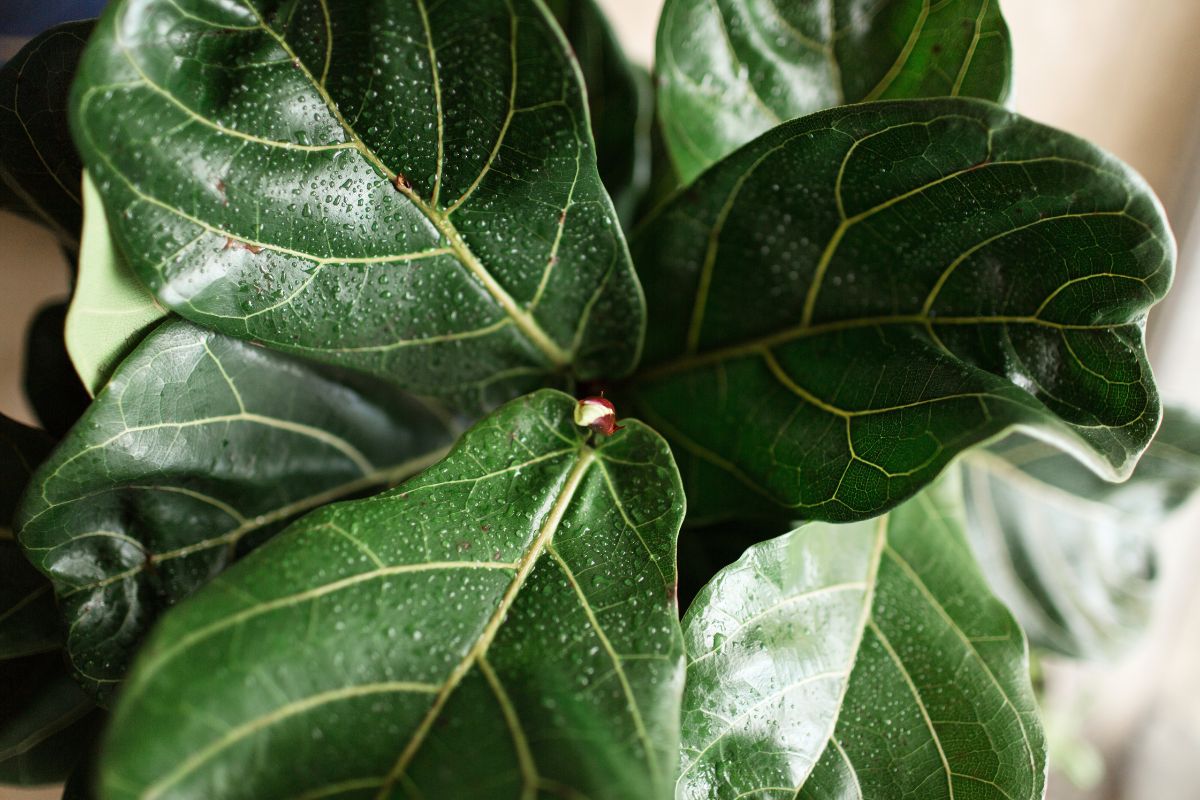
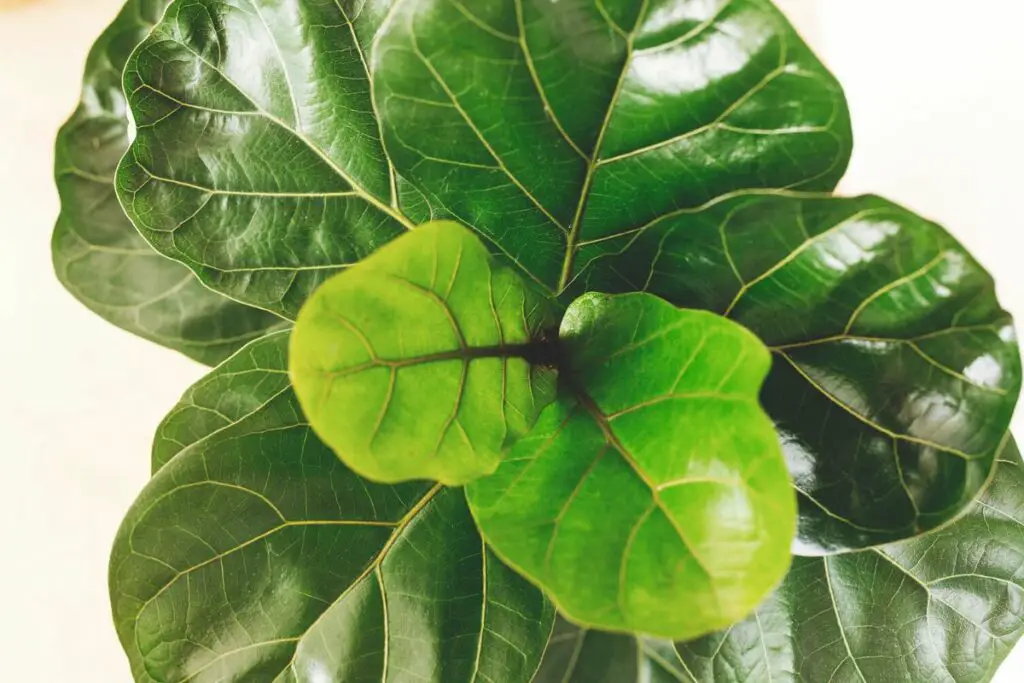
Fiddle leaf figs are popular houseplants because of their showy, fiddle-shaped leaves. It’s like growing a small tree and bringing a tropical vibe into your own home. Unfortunately, they can grow quite tall and tend to lean when the conditions aren’t right, so the challenge in growing them indoors is keeping them upright.
A fiddle leaf fig may lean due to the following issues:
- Inadequate light exposure
- Improper watering practices
- Pot size and rootbound issues
- Nutrient deficiency
- Pest infestation
In this article, I will explore the reasons your fiddle leaf fig is leaning. I’ll also share practical solutions to these issues and tips on how to ensure your plant remains upright.

The Fiddle Leaf Fig: An Overview
Fiddle leaf figs (Ficus lyrata) are native to the tropical regions of Western and Central Africa. They’re famous for being finicky when it comes to their light and water requirements, making them challenging to grow for inexperienced gardeners.
In their natural habitat, they typically receive the following conditions:
- Abundant rainfall ranging from 45 to 90 inches (115-230 cm) of precipitation annually
- Bright, dappled sunlight for young plants and direct sunlight for mature plants
- Well-draining, sandy loam soil rich in organic matter
- Warm temperatures with an average of 73-79 °F (23-26 °C)
With the conditions listed above, it’s not rare to find full-grown fiddle leaf figs reaching 25-50 feet (7.6-15 m) tall in their native environment.
Although you can control water and temperature conditions in indoor settings, fiddle leaf figs can’t grow to these heights due to limited light and soil space. They’re also likely to develop thinner or weaker trunks when grown indoors, making them prone to leaning.
Symptoms of Leaning
To correctly identify the cause of leaning, you must assess the plant’s symptoms. Here are the signs to look out for:
- The plant is leaning toward the window
- The base of the stem feels tender or mushy
- Yellowing leaves
- Leaf drop
- Wet soil surface several days after watering
- Roots poking out of the soil surface and the drainage holes
- Stunted growth or fewer new leaves
- Tiny brown bumps along the stems (soft scales)
Common Causes of Leaning in Fiddle Leaf Figs
A few reasons can cause fiddle leaf figs to lean.
Below, I’ll list the issues by probability from highest to lowest.
1. Inadequate Light Exposure
Fiddle leaf figs love sunlight and grow towering heights when there’s plenty of access to it. Inadequate light exposure is the primary reason most indoor fiddle leaf figs start leaning.
In an indoor setting, plants remain compact due to lower light conditions. Although fiddle leaf figs can adapt to bright indirect sunlight, prolonged exposure to inadequate light will force your plant to lean toward windows or lamps.
If the only source of natural light in the room is a window, your plant will gradually lean toward it until you notice a significant change in your plant’s growth pattern. This plant behavior is called phototropism, which is vital for plant survival.
Auxin is a light-sensitive plant hormone responsible for cell elongation. The side of the stem that’s exposed to sunlight will have lower auxin levels. The higher concentration of auxin at the part facing away from the sunlight will cause the cells there to become longer. This imbalance will result in the plant stem’s growth, making the plant lean toward the light.
In addition, your fiddle leaf fig may exhibit the following symptoms:
- Fewer leaves on the side of the plant facing away from sunlight
- Yellow or pale leaves
- Leaf drop
To fix the problem, consider the following solutions:
- Move the plant closer to a sunny window. A spot next to an eastern window with bright morning light is excellent for fiddle leaf figs. Alternatively, you can plant it around 5 feet (1.5 m) from a southern window. Hang a light curtain on the window to filter the light during midday and prevent leaf scorch.
- Give your plant a quarter or a half turn every time you water it so the foliage can grow evenly.
- To speed up the recovery, you can double the time the leggy side is exposed to sunlight compared to the other side with dense foliage. Sunlight can reduce auxin concentration on the leggy side and halt the cell elongation that causes your plant stem to lean.
The plant will gradually have a more balanced growth as long as the other suitable growth conditions are met.
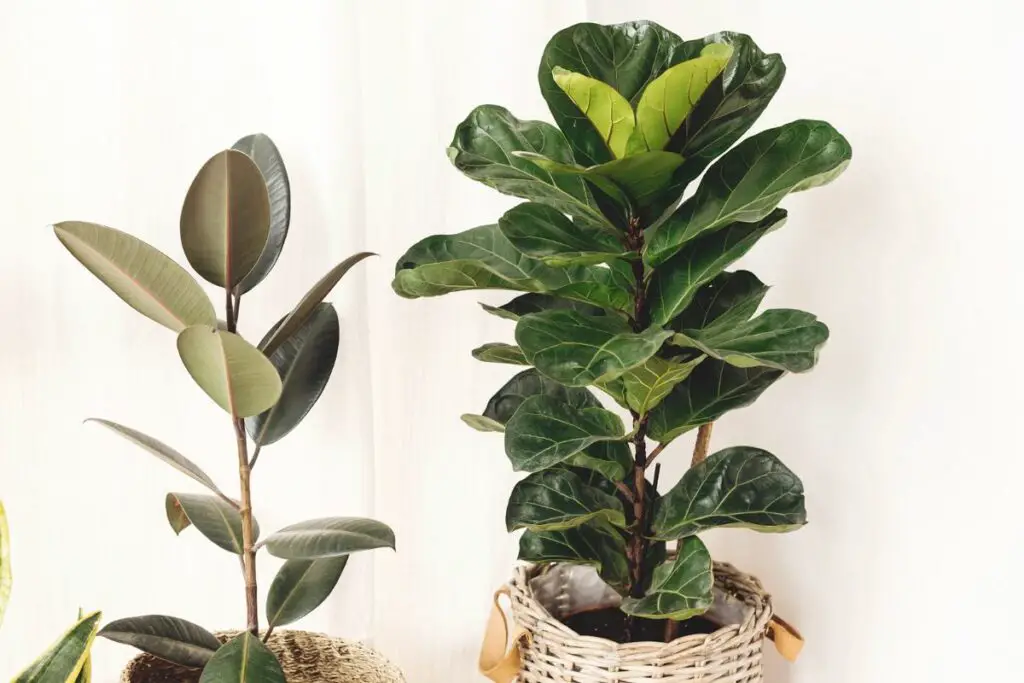
Moving them outdoors during the warm season will also help them develop stronger trunks. Aim for when daytime temperatures are around 75-90 °F (24-32 °C) with nighttime temperatures of at least 55 °F (13 °C).
Choose a spot outdoors that receives morning sun and afternoon shade. Although already outdoors, you will still need to rotate your plant regularly, especially if it’s next to a wall or fence.
Pro tip: I place my larger houseplants, including my 5-foot (1.5 m) tall fiddle leaf fig, on a plant caddy with wheels to make it easier to move them around the house or out to the porch when the conditions are right.
I prefer caddies with trenches because they double as a drip tray. That way, I don’t have to lift the heavy pot onto a separate drip tray every time I water the plant.
2. Improper Watering Practices
Since potted plants have limited soil space, they require more frequent watering. In addition to watering frequency, proper soil texture and drainage are crucial to get the right watering routine for a fiddle leaf fig.
In general, fiddle leaf figs like moisture but don’t like sitting in wet soil.
Severe underwatering can lead to dry, brittle stems vulnerable to bending and breaking. On the other hand, overwatering can lead to root and stem rot, turning some sections at the base of the trunk mushy. this consequently leads to leaning and potential plant death.
Here are the common symptoms of poor watering practices and their corresponding fixes:
| Cause | Symptoms | Diagnosis | Solutions |
| Underwatering | Crusty, cracked soil Yellow leaves Brown, crisp leaves Leaf drop Brittle stems that eventually lean or break | Pour water over the soil surface and see how long it takes to absorb the moisture. If it takes longer than 10 seconds or the water slides through the cracks or pot edges without rehydrating the surface, then the soil has become hydrophobic. | Non-hydrophobic soil: Water the plant deeply until the excess drips out of the drainage holes. Avoid shallow watering that doesn’t adequately rehydrate the root zone. Hydrophobic soil: Soak the pot in a tub of water for 10-30 minutes until the soil surface feels moist. You may also add a wetting agent to the water to break apart hydrophobic soil clumps. |
| Overwatering | Soggy soil Yellow leaves Brown, mushy spots on leaves Leaf drop Mushy stem Black, rotten, smelly roots | Check if the soil surface remains soggy two days after watering. It means the soil has poor drainage. Root rot also gives off a foul smell similar to rotten eggs. | You must promptly but carefully unpot the plant and prune the rotten roots and damaged leaves. Repot the plant in a sterile, breathable pot with well-draining soil. I’ll discuss this further below. If the rot has spread to the stem, it’s almost impossible to revive the plant. The best option is to locate healthy sections with at least three leaf nodes at the terminal branches and propagate them. |
In addition, you can follow the watering tips below to prevent recurrence:
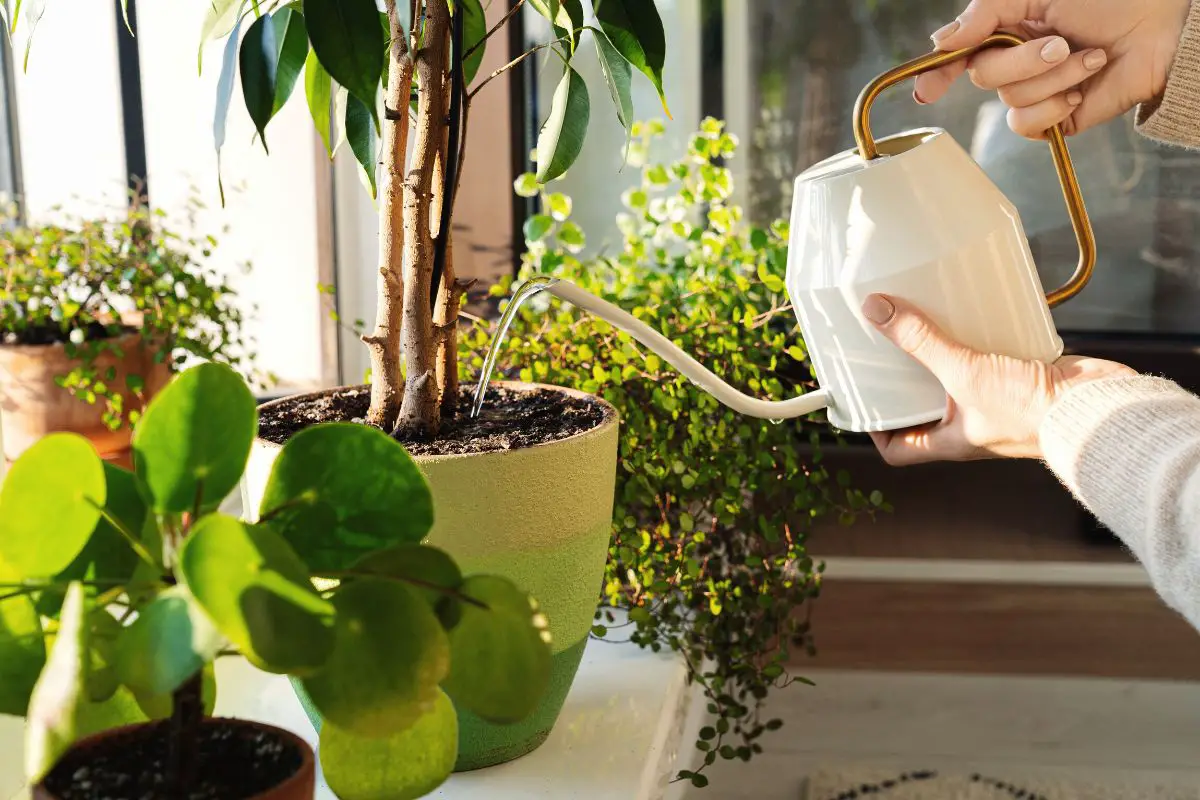
- Deeply water your plant until the excess drains out of the drainage holes. A good rule of thumb is to pour a half gallon (1.9 l) of water for every gallon (3.8 l) of pot volume.
- Let the excess drain completely to prevent the soil from sitting in water and increasing the risk of root rot.
- After 5-7 days, check the soil moisture. You can water the plant deeply if the top 2 inches (5 cm) are dry. For younger fiddle leaf figs in small pots (up to 6 inches or 15 cm), you can water as soon as the top inch (2.5 cm) is dry to promote faster growth.
Take note of the number of days it takes for the soil to dry out as needed. This method will help you make a schedule or set an alarm for when to water your plant and control how much to feed it. Note that this only works for about 2-3 months.
You’ll need to reassess again as the plant grows bigger or every time you move your plant outdoors in the summer because it’ll have higher watering needs.
3. Pot Size and Rootbound Issues
Fiddle leaf figs are fast-growing plants, sometimes putting out 1-2 feet (30-60 cm) of growth within a year. The roots will also grow rapidly and displace some soil in the pot.
Once the plant outgrows the pot, the downward root growth becomes restricted, so the roots circle within the pot.
This will cause instability in your plant’s growth. Depending on the rate and direction of the root growth, your plant may lean to one side. The heavy foliage will add to the weight and gradually increase the angle of the leaning.
A severely rootbound fiddle leaf fig may also show these symptoms:
- Roots poking out of the drainage holes and soil surface
- Stunted or slow growth
- Water quickly draining out of the pot because of displaced soil
Some gardeners might tell you to repot your fiddle leaf fig every 2 years. However, the best way to decide is to check if the roots are poking out of the soil or if the plant is exhibiting signs of root rot.
Here are the steps to evaluate and repot your plant:
- Water your plant deeply two days before the scheduled repotting. You must then move the pot near a sink, bathtub, or outdoor faucet on the day of repotting.
- Loosen the soil from the original pot by scraping the inner walls of the pot with the blunt edge of a knife.
- Tip the pot to the side, hold the plant firmly at the base, and gently slide the plant out of the pot.
- Remove most of the soil from the root ball using your hands. You can rinse the remaining soil using fresh water from the tap so you can inspect for root damage.
- Use sterile pruning shears to trim away brown, black, and mushy root sections. Wipe your shears with a cotton ball dipped in 70% isopropyl alcohol before moving on to the other root sections. This will prevent the spread of disease.
- As an optional treatment, you can dip the root ball in a 1% hydroxide solution for 10 minutes to treat root rot. If you’re interested in using this method, just ensure your plant remains upright during the soaking period.
Rinse the roots with fresh water and let them dry on a clean towel for the next 30 minutes as you prepare your plant’s new home.
- Prepare a pot 2-4 inches (5-10 cm) larger than the original. However, if you pruned about a third of the root volume, you can use a similar-sized pot. I recommend choosing an unglazed terracotta pot with drainage holes and a wider mouth than the base. It has breathable walls and its weight can support the heavy leaves, preventing your plant from leaning.
- Prepare a potting mix that consists of 2 parts potting soil, 1 part perlite, and 10% compost or coco peat. I prefer using compost because it can lightly nourish the newly repotted plant while waiting until it’s safe to fertilize.
- Place a wire mesh or coffee filter over the drainage holes. The mesh or filter will prevent soil loss from regular watering.
- Fill the pot with 3-4 inches (7.6-10 cm) of moist potting mix.
- Place the rootball over the potting mix. Ensure that the crown of the plant is an inch (2.5 cm) below the mouth of the pot.
- Fill in the spaces around the root ball with potting mix and lightly tamp it down to keep the plant firmly upright.
- Water your plant deeply until the excess drains out of the holes.
Fiddle leaf figs don’t go dormant, so you can repot them anytime, especially if it’s a pressing issue, such as root rot.
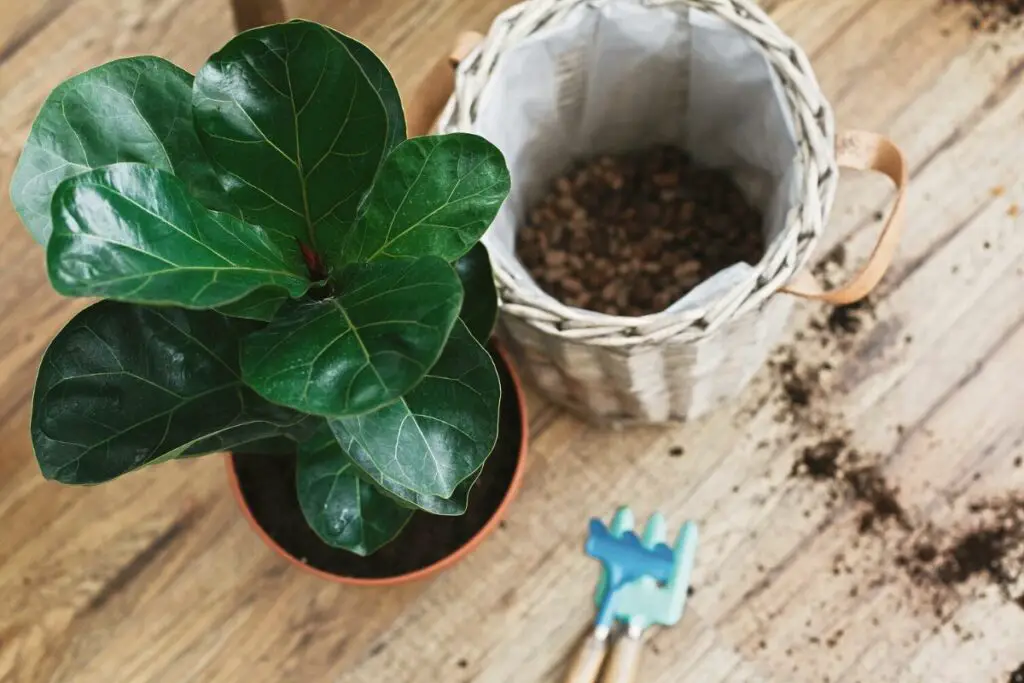
These plants grow more actively in spring and summer. Repotting them during the growing season will make them hungry for nutrients, but don’t feed them too soon. Otherwise, you risk other issues, such as transplant shock or fertilizer burn.
As mentioned, you can use compost in the potting mix to feed the plant temporarily. After 4-6 weeks, you can apply a thin layer of slow-release 3-1-2 granular fertilizer over the soil. Keep the granules an inch (2.5 cm) away from the base of the plant and water deeply.
If you’ve repotted your plant in the fall or winter, avoid applying fertilizers altogether. Let the compost nourish the plant, and only start applying fertilizers in spring.
4. Nutrient Deficiency
Fiddle leaf figs are fast-growers, so they also need regular fertilization. They need frequent fertilizer applications during the growing season because the nutrients can quickly leach out of the pots due to well-draining soil and regular watering.
Calcium, nitrogen, and phosphorus are all essential for healthy trunk development. A deficiency in these nutrients can lead to flimsy trunks that can lean from the weight of the heavy foliage.
Although nutrient deficiency alone cannot cause your plant to bend immediately, it can worsen the leaning due to issues like low-light conditions and poor watering practices.
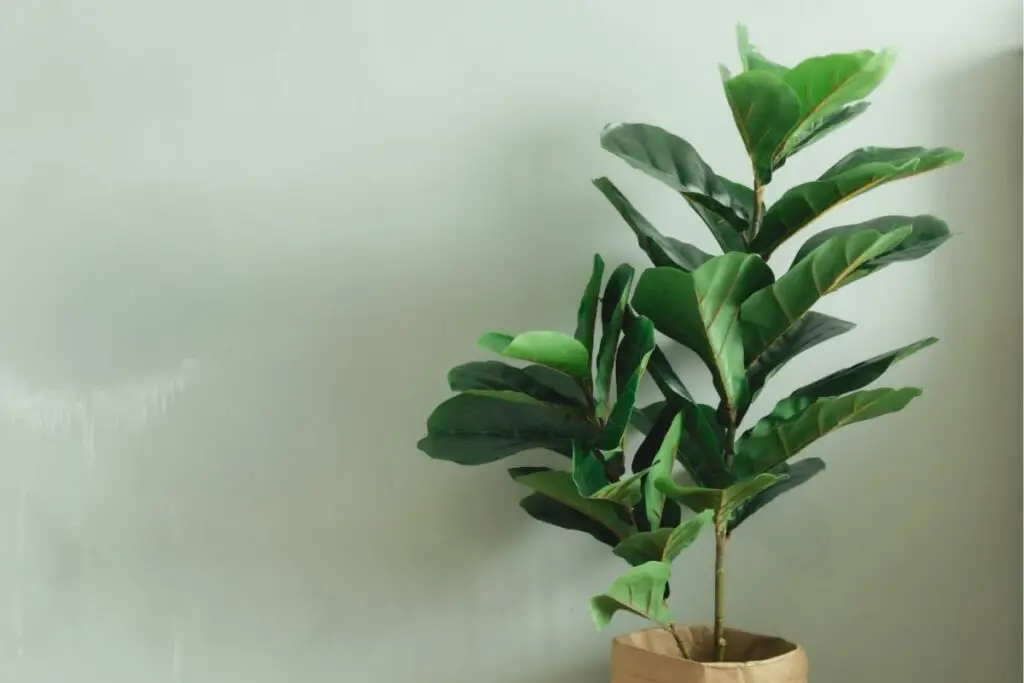
Regular fertilizer applications from spring until summer will ensure that your plant receives all the nutrients it needs to thrive indoors. It also helps the plant develop a sturdy trunk that will grow upright. In addition, a healthy fiddle leaf fig has more resistance to pests.
I recommend feeding your plant with 3-1-2 NPK fertilizer enhanced with low doses of calcium and sulfur to ensure your plant remains healthy. Always check the label and instructions on how to use the product.
Here are some tips to properly feed your fiddle leaf figs and avoid over-fertilization risks:
- Liquid Fertilizer: Dilute it to half the recommended dose and apply every other time you water your plant.
- Slow-release granular fertilizer. Apply a thin layer over the soil surface and water it deeply. Reapply every 6-8 weeks in spring and summer and gradually increase the interval as fall approaches.
Stop fertilizing 2-4 weeks before the first fall frost for outdoor fiddle leaf fig. For indoor fiddle leaf figs, you can also use the first fall frost as a reference to stop fertilizing. The shorter daylight hours and lower nutrient feedings will trigger your plant to slow down its growth.
5. Pest Infestation
Occasional pest attacks don’t cause severe damage to plants and fiddle leaf figs are resistant to most pests. However, a stressed young plant with a weakened stem will become more susceptible to pest damage.
Brown soft scales (Coccus hesperidum) love the woody trunk of indoor figs. These are brown and small (⅛ in or 3.2 mm) and have brown tortoise-like shells. Adult female scales attach to the stem and remain immobile. They will continue to feed in the same spot for several weeks or months.
The scale’s feeding habit can cause further weakness in the stem of a stressed plant and gradually lead the plant to lean.
Brown soft scales are sensitive to neem oil spray. You can treat the problem with the following steps:
- Mix 1 tablespoon of neem oil with a liter (0.26 gal) of water and a teaspoon of liquid dish soap.
- After sunset, spray the solution liberally all over your plant, targeting the adult scales along the trunk and twigs and the crawlers underneath the leaves.
- Repeat once weekly for the next 3-4 weeks until you don’t see pests anymore.
- Continue using the spray once every 2 weeks as a preventive measure against pests and fungal diseases, such as powdery mildew.
Note: Some sources claim that strong winds may also cause leaning in fiddle leaf figs. However, this is unlikely in indoor plants. Even if you move a mature fiddle leaf fig outdoors in the summer, occasional strong winds are unlikely to cause permanent leaning.
If you move your fiddle leaf figs outdoors during the warm season, you can prevent the branches and stems from breaking by placing the plants near a wall that blocks the strongest winds. Also, keep your plants in a bright spot indoors during bad weather (i.e., storms).
Additional Fixes and Tips
The fixes above will not immediately remedy the leaning that has already occurred on your fiddle leaf fig. For instance, structural damage due to root or stem rot and pest attacks can take time to heal.
Changes in growth orientation due to poor watering, nutrient deficiency, and low-light conditions can also take time to fix. Below are some additional care tips that can help your plant as it recovers from leaning:
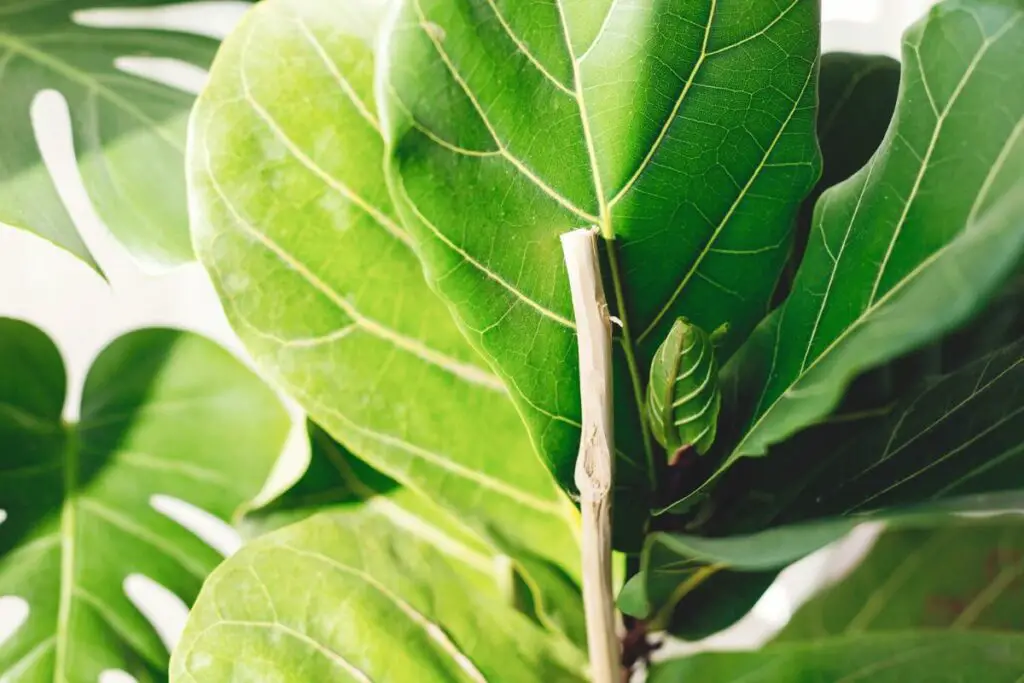
Staking and Physical Support
In severe cases of leaning, you can train your plant to grow upright as it recovers from the issues above.
Here are some things to remember when using a stake for physical support:
- Use a long bamboo or wooden stake 1.5-2 inches (3.8-5 cm) in diameter.
- Place it behind the plant, away from the direction of leaning.
- Bury the bottom end around 3-4 inches (7.6-10 cm) away from the trunk. Be mindful of the roots below.
- The stake length above the soil should be at least ¾ of the height of your plant.
- Use a few soft ties about 4 inches (10 cm) apart along the length of the trunk. Ensure that the stake is straight up so the plant will follow the direction as it grows.
- Check the ties weekly as the plant grows to ensure they’re not digging into the trunk. Note that fiddle leaf figs grow quickly, especially if the conditions have been fixed.
After about 3 months, you can try to loosen the ties and check if the plant can remain erect by itself. It means that you can remove the stake. Otherwise, tie it again and keep the stake for a few more months until your plant grows properly.
Pruning for Balance and Health
Fiddle leaf figs have large leaves, sometimes reaching up to 18 inches (45 cm) long. The size and weight of these leaves can worsen the angle of leaning, making pruning equally important as the other fixes.
You can prune fiddle leaf figs anytime during the year to remove dried leaves but the best time to prune for balance and health is during its active growth from spring until early summer.
When pruning, focus on removing damaged foliage first. Fiddle leaf figs have alternate leaf arrangements, so it’s easier to identify which leaves need to go to maintain balance.
Some fiddle leaf figs will have branches. You may need to remove an entire branch if the plant is leaning heavily toward it. Just remember to avoid removing more than 30% of the foliage to avoid plant stress, and always use sterile shears to prevent infection.
Long-Term Care Tips
To prevent your plant from leaning again in the future, you can refer to the tips below:
- Move your plant outdoors in late spring to early fall as long as temperatures don’t fall below 55 °F (13 °C). This regular outdoor experience will give your plant healthy access to natural light and gentle wind, which can encourage a stronger trunk.
- When indoors, keep your plant next to a curtained eastern window and rotate the pot by 90-180° weekly.
- Water your plant deeply only after the upper 2 inches (5 cm) of the soil is dry.
- Inspect your plant for signs of pests and treat it promptly using an organic neem oil spray.
- Prune your plant in spring to maintain foliage health and balance.
- Fertilize your plant every 6-8 weeks from spring to summer with a slow-release 3-1-2 NPK fertilizer with calcium and sulfur for optimum health.
- Repot your plant every 3 years or when you notice roots poking out of the soil surface.
Common Mistakes to Avoid
As a new fiddle leaf fig parent, you may come across sources saying this plant needs filtered light, constant moisture, and frequent fertilization. These are the three factors that are easy to overdo and commonly lead to plant leaning.
Filtered Light
Fiddle leaf figs, like any other houseplant, require sunlight to manufacture food. The key is to give young plants bright, indirect light and older plants up to 4 hours of direct sunlight daily. They need less light intensity than their outdoor counterparts, but suboptimal light conditions can lead to serious and sometimes fatal consequences.
While your plant is young, try to experiment in different areas in your home to find which spot works best for your plant. Fiddle leaf figs grow quickly, so you can see signs of stress like yellow or pale leaves and a bit of leaning if they don’t receive enough light.
However, once you find the best location for your plant, avoid relocating it too frequently. Fiddle leaf figs dislike frequent and drastic changes in light, humidity, temperature, and watering conditions and will likely respond with leaf drop, discoloration, and even leaning.
Constant Moisture
This plant likes moist soil, but it hates wet feet. The roots are sensitive to excess moisture and will likely rot in constantly wet conditions.
You can often get away with occasional overwatering if your soil has excellent drainage. My recipe is 2 parts standard potting soil, 1 part perlite or pumice, and 10% compost.
Still, it’s best to water your plant only when the soil is dry enough. Stick a finger two knuckles deep into the soil. Alternatively, you can use a chopstick and poke it 2 inches (5 cm) deep. If the soil is completely dry at this layer, then it’s time to water your plant.
Frequent Fertilization
Fiddle leaf figs need regular feedings during their active growing period but too much will lead to a growth spurt and subsequent leaning.
If unsure, use a liquid fertilizer diluted to half its recommended strength or apply a thin layer of slow-release granular fertilizer over the potting mix once in spring and once in summer.
Observe your plant’s response for the next couple of weeks. Positive results will lead to new, healthy foliage. Conversely, over-fertilization will result in yellowing or browning leaves (leaf scorch).
Final Thoughts
Fiddle leaf figs are not for beginner gardeners because these plants are finicky. They have a unique way of communicating their dissatisfaction, but it takes an experienced gardener to recognize the issue.
The primary reason fiddle leaf figs lean is inadequate sunlight. Moving your plant closer to the window and rotating your plant regularly will gradually fix the issue.
Root rot from overwatering and rootbinding can also cause leaning. Both issues can be fixed by removing damaged roots and repotting the plant.
Nutrient deficiency and severe scale infestation can also cause your plant to lean.
It’s crucial to accurately identify the root cause so that you can provide the right solutions and adjust your plant care routine accordingly.