
15 Common Problems With Fiddle Leaf Figs (and How to Fix Them)
Fiddle leaf figs (Ficus lyrata) are famous for their large fiddle-shaped leaves that can liven up any indoor space. However, they’re notorious for being temperamental and quickly showing signs of stress that can be alarming for beginner gardeners.
Here are the common problems with fiddle leaf figs:
- Yellow leaves
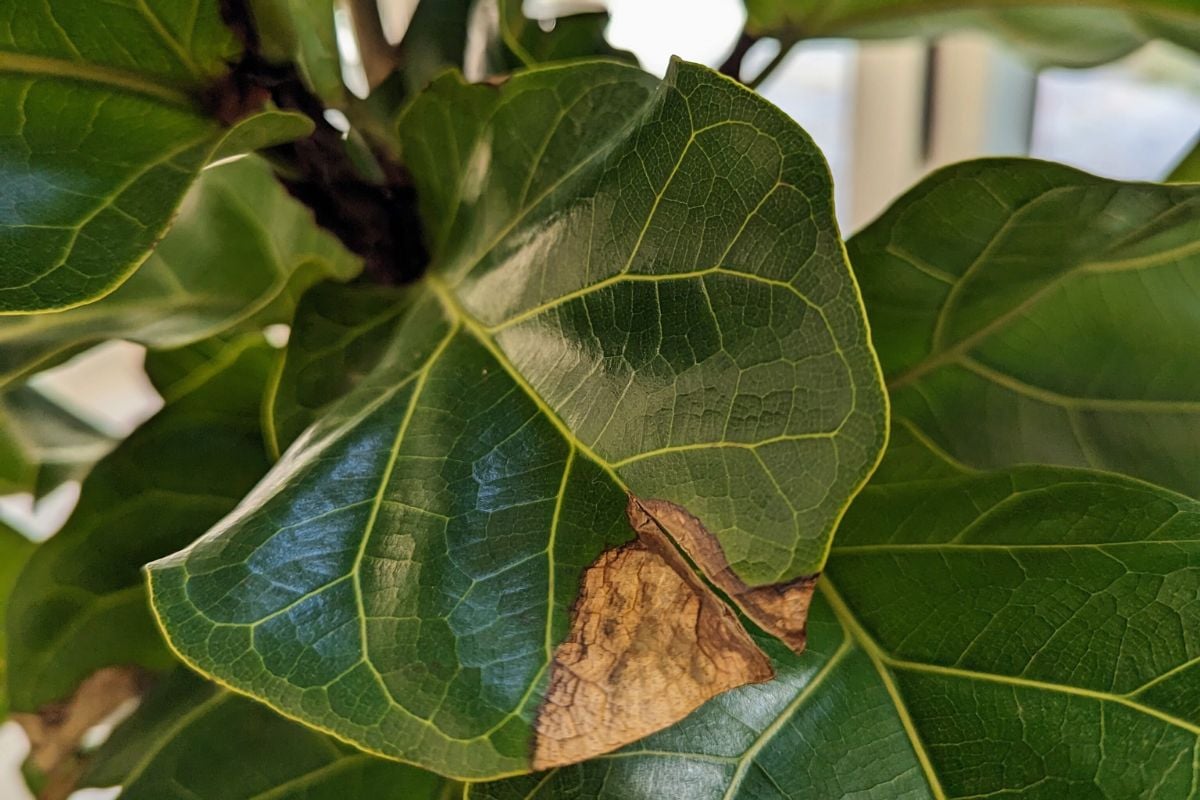
- Brown spots on leaves
- Brown edges or leaf tips
- Leaf drop
- Drooping leaves
- Holes or cracks on leaves
- Black spots on leaves
- Red dots or edema
- White or brown patches
- White fluff or fuzz
- Dull leaves
- Webbing on leaves and stems
- Leaning, lopsided, or leggy growth
- Slow or stunted growth
- Pest infestation
In this article, I’ll explore these problems in more detail and provide practical solutions to keep your fiddle leaf fig looking healthy and stunning.

Native Environment and Care Essentials
Ficus lyrata is a broadleaf tree native to tropical regions in Central and Western Africa. It has lyre or fiddle-shaped leaves, earning the name fiddle leaf fig or FLF. The large, leathery leaves look almost synthetic, making them attractive to home gardeners and plant enthusiasts.
Fiddle leaf figs belong to a family of fruit-bearing fig trees. They typically grow around 50 feet (15 m) tall in the wild and can live for 25-50 years.
To reach such towering heights and maximize their lifespan, they require the following conditions:
- Abundant rains during the wet season (average of 79 inches or 2000 mm annually)
- Loamy but well-draining soil rich in organic matter from plant litter
- Bright filtered light for young plants and full sun as they mature or get taller
- Warm temperatures (70-86 °F or 21-30 °C)
- High humidity (around 70%)
Fiddle leaf figs grown indoors have moderate maintenance needs but are well-adapted to the following environmental conditions:
- Water: Deep watering once a week or as soon as the top 2 inches (5 cm) of the soil is dry (1 inch or 2.5 cm for younger plants)
- Soil: Well-draining soil mix rich in organic matter (i.e., a mixture of 2 parts standard potting soil, 1 part cactus mix or perlite, and 10% compost)
- Light: 4 hours of direct sunlight from an eastern window or 8 hours of bright indirect light 4-8 ft (1.2-2.4 m) from a southern window
- Temperature: 65-85 °F (18-29 °C)
- Humidity: 40-60%
- Fertilizer: Start feeding in spring a year after repotting. Apply half-strength 3-1-2 liquid fertilizer every 2 weeks or granular fertilizer every 2 months.
Indoor fiddle leaf figs can reach only around 10 feet (3 m) tall because of different environmental conditions, especially in colder regions like North America. They also live only up to 15 years before losing vigor. As a result, they seldom reach reproductive maturity.
It’s crucial to replicate their native environment as closely as possible. Otherwise, fiddle leaf figs are highly susceptible to the 15 problems I’ll discuss below.
Common Problems and Fixes
If you’ve had a fiddle leaf fig, you might have encountered one of the problems on the list. Don’t fret, as I’ll explain the causes of each problem and their corresponding fixes.
1. Yellow Leaves
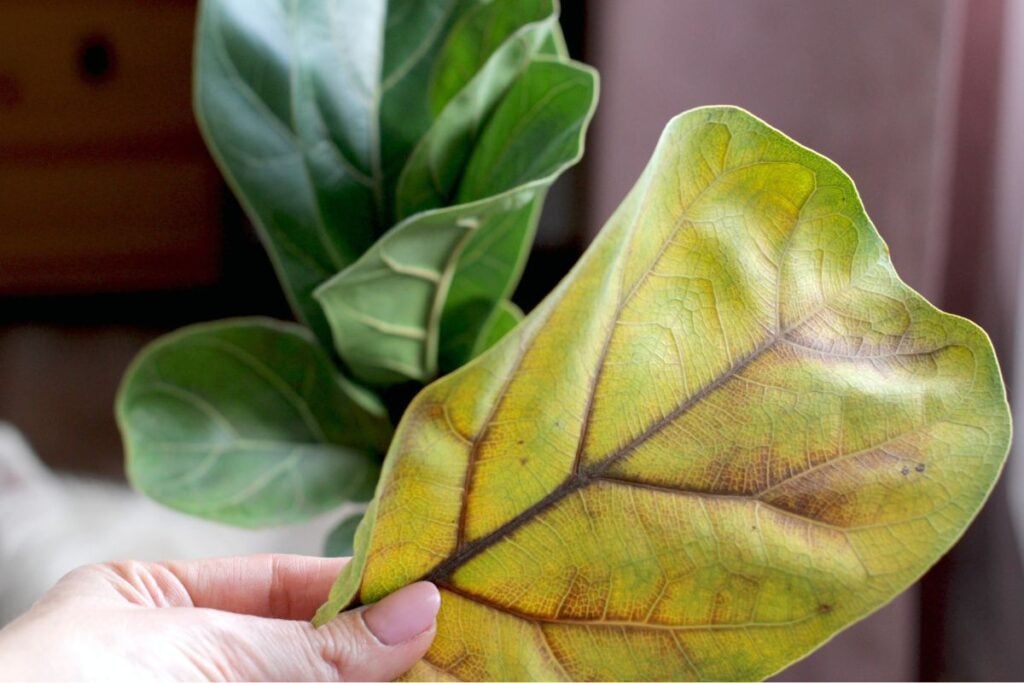
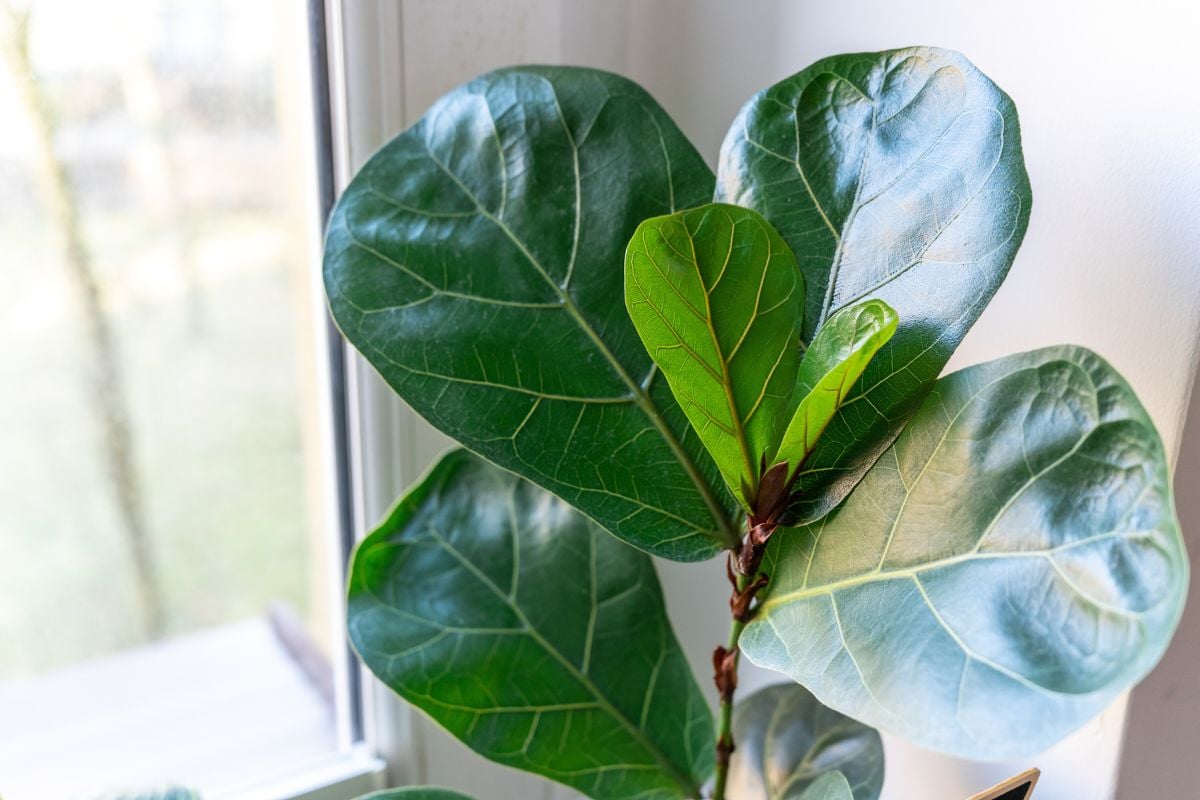
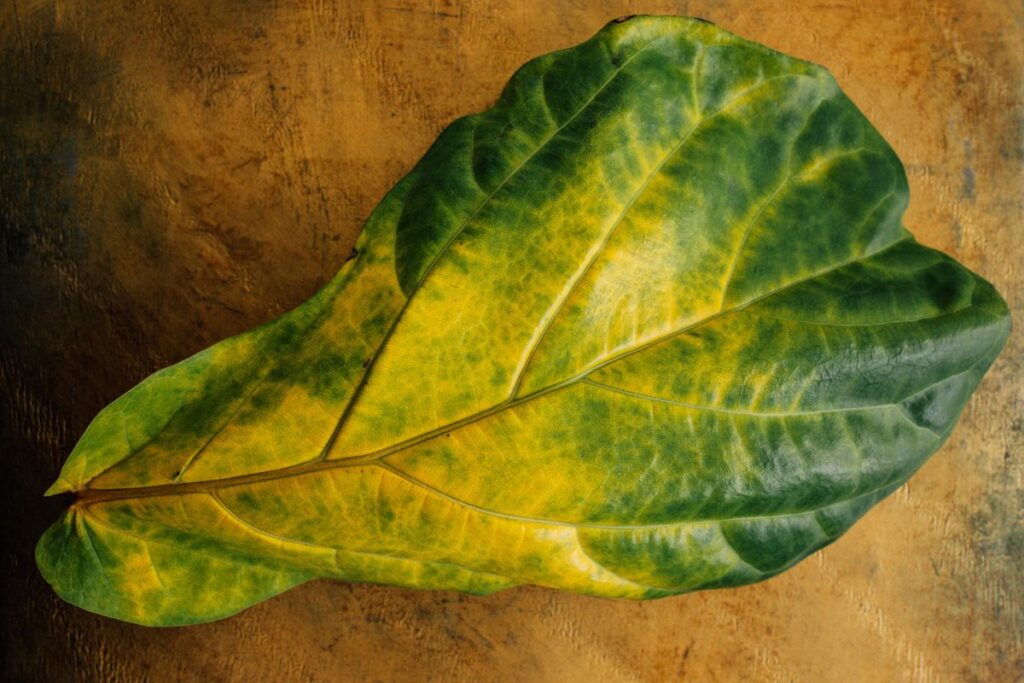
A healthy indoor fiddle leaf fig should have large, green, leathery leaves up to 18 inches (45 cm) long and 12 inches (30 cm) wide.
Yellowing is a common sign of stress, which may be caused by the following:
Incorrect Watering
Watering problems are the primary causes of yellowing leaves in fiddle leaf figs. As tropical natives, they prefer evenly moist soil rich in organic matter and has good drainage.
Here’s how poor watering practices can affect fiddle leaf figs:
| Causes | Symptoms | Solutions |
| Underwatering | Dehydrated leaves typically start turning yellow from the edges followed by browning. Lack of moisture can also inhibit the plant from absorbing nutrients like nitrogen, iron, and magnesium, leading to yellowing leaves. | Deeply water the plant until the excess drips out of the drainage holes to saturate the root zone evenly. If the soil has become dry and hydrophobic, submerge the pot in a tub of water for around 30 minutes and let the excess drain on a drip tray. You can also use a wetting agent to ensure thorough rehydration. Water the soil again as soon as the top 2 inches (5 cm) is dry. |
| Overwatering | Excess water in the soil can drown the roots, leading to root rot and inhibiting proper moisture and nutrient transport. Yellowing due to overwatering is often preceded by soggy soil and mushy leaves. | Limp, mushy, and yellow leaves indicate that root rot has already started. You can confirm this by digging 1-2 inches (2.5-5 cm) into the soil to check for black, mushy, and smelly roots. You must repot the plant with the following steps to help it recover:
|
In addition to the solutions listed above, here are some essential watering tips to remember to keep your fiddle leaf fig vibrant:
- Ensure the pot has drainage holes to prevent waterlogging. Fiddle leaf figs dislike sitting in wet soil, which increases the risk of root rot.
- Avoid shallow watering, as it cannot adequately rehydrate the roots. The parts of the soil that remain dry for too long will also likely develop hydrophobic clumps and repel water from the roots.
- Check the soil moisture using your finger or a wooden chopstick 3-5 days after watering. Fiddle leaf figs grown in appropriate soil mix typically need weekly watering during spring and summer or as soon as the top 2 inches (5 cm) of the soil is dry (1 inch or 2.5 cm) for younger plants or new transplants).
Insufficient Light
Leaves on the side of the plant facing away from the sunlight appear pale or yellow because of a lack of chlorophyll from insufficient light.
You can fix the problem with the following tips:
- Give your plant at least 8 hours of bright indirect light daily from a south-facing window. If you have an eastern window, indoor fiddle leaf figs will do well with up to 4 hours of direct morning sun.
- Turn the pot by 90-180° every time you water the plant for even light distribution and balanced growth.
Aging
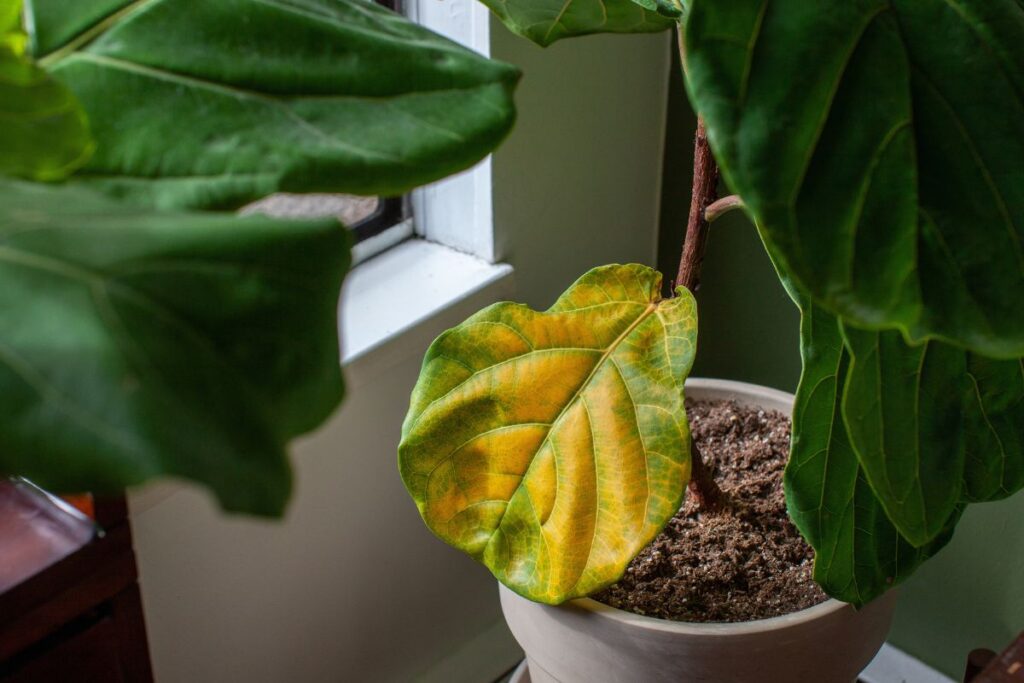
On average, I observed that each leaf on a healthy FLF lasts about 12 months or so before gradually fading.
The bottom leaves naturally turn yellow first. The discoloration due to aging spreads evenly over the entire leaf surface area instead of developing in patches.
Aging is a natural process and doesn’t require treatment. Instead, you can prune the yellowing leaves using sterile shears to maintain your plant’s lush, green appearance.
Nutrient Deficiency
As soil nutrients deplete over time, chlorophyll synthesis may be affected and FLF leaves may turn yellow.
Here are the possible issues to watch out for:
- Lack of nitrogen: Premature yellowing of bottom leaves (less than 12 months old), slow-opening buds that may come out distorted.
- Lack of iron or magnesium: Distinctly yellow veins and/or interveinal chlorosis
It’s costly to send potting soil samples to the laboratory for testing. At-home soil test kits may also inaccurately read plant-accessible NPK values.
If you see the abovementioned symptoms, you may try to fix the problem by feeding the plant a half-strength 3-1-2 liquid fertilizer with micronutrients like iron and magnesium. You can add the soluble fertilizer to the watering can when you water the plant.
Liquid fertilizers are fast-acting, so you should see an improvement within 2 weeks. The yellowing leaves will gradually turn green and the leaf buds will unfurl. However, the young leaves may appear stunted or distorted due to the initial effects of nutrient deficiency.
You may continue to feed your plant every other time you water it from spring to summer until the leaves turn green again. The plant will produce new leaf buds with healthier leaves. You can then prune the distorted growth.
Spider Mite Infestation
Ficus lyrata leaves are also susceptible to yellowing due to spider mite infestation.
Spider mites are so tiny that they’re almost invisible, but you can confirm their presence through their fine webs on the leaves and stems and yellow specks on the leaves.
You can eliminate spider mites by spraying the plant liberally with neem oil solution after sunset once a week for 4-6 weeks or until there are no more signs of pests. You may also remove severely discolored leaves using sterile shears to keep your plant green.
Leaf Spot Disease
Tiny yellow spots that gradually turn brown or black indicate a leaf spot disease typically caused by the bacteria Xanthomonas campestris. There’s no cure for this disease, and infected plants are not ideal candidates for propagation.
However, you may confirm if you can still save the plant with these steps:
- Isolate infected plants and prune discolored or symptomatic leaves using sterile shears. Be sure to sanitize the blades with alcohol between cuts.
- Observe if the other leaves develop similar symptoms within the next 2-4 weeks. If so, properly discard the plant to prevent the spread of the disease.
Bacterial leaf spots may be prevented by regularly spraying copper-based bactericides/fungicides. However, it can be costly and impractical for indoor fiddle leaf figs.
Xanthomonas campestris bacteria thrive in warm, moist conditions, and you can prevent their spread by following these plant care tips:
- Avoid misting or wetting the leaves when watering your plant, as water splashes can spread the pathogens.
- Use sterile gardening or cutting tools when handling the plant. Contaminated tools can introduce pathogens into the plant wound.
Temperature and Humidity Stress
Environmental factors like temperature and humidity also play a vital role in the appearance of FLF leaves.
| Causes | Symptoms | Solutions |
| Extreme Temperatures | High temperatures: Prolonged exposure to temperatures over 90 °F (32 °C) from hot, sunny windows in the summer can increase the risk of dehydration. Low temperatures: A cold snap (below 32 °F or 0 °C) and drafty windows in winter can cause chilling injury to nearby FLFs, leading to mushy brown spots on the leaves with yellow margins. | Hang a sheer curtain over the window to filter the light and heat during hot summer days. Keep the windows closed during winter, and ensure the leaves aren’t touching the window panes. |
| Inadequate Humidity | High Humidity (over 60%): This can increase the risk of overwatering because the plant transpires less. Low Humidity (below 40%): Dry conditions can increase the risk of yellowing due to dehydration. Spider mites also thrive in warm and dry environments. | Maintain indoor humidity levels between 40-60% around your FLF. You can monitor it using a hygrometer. Increase the humidity using a humidifier. Wide pebbled trays with water may work on FLFs less than 3 feet (0.9 m) tall but are usually ineffective on larger plants. Switch on a fan or a dehumidifier to reduce the humidity as needed. |
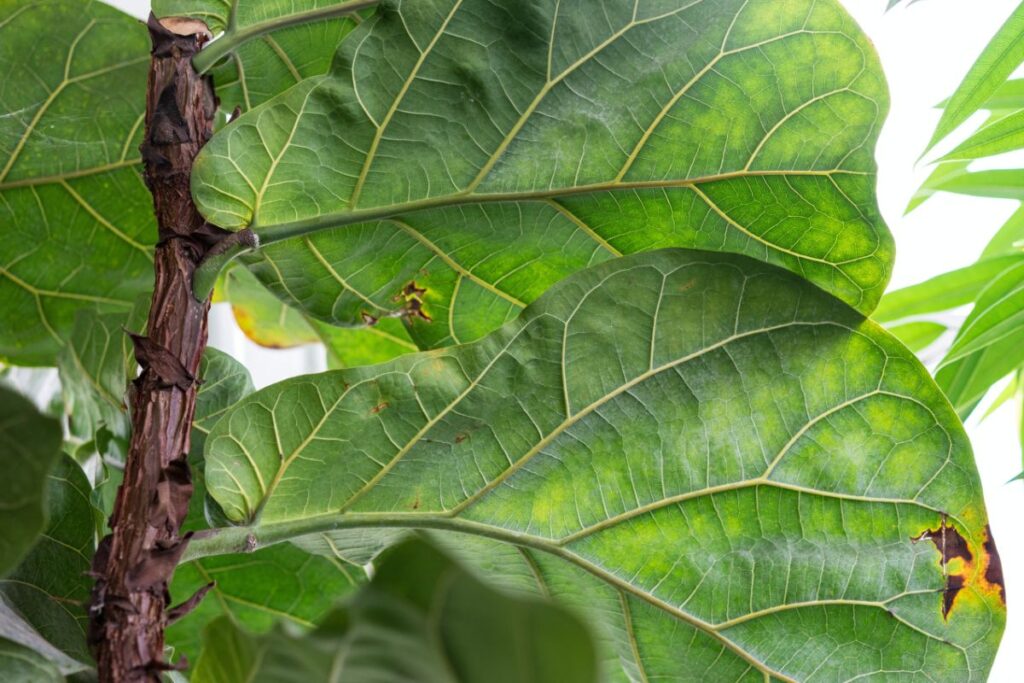
2. Brown Spots on Leaves

Brown leaf spots are also common among fiddle leaf figs and may be caused by the following:
Underwatering
Dry and crisp brown spots that follow right after yellowing indicate dehydration from prolonged drought or hydrophobic soil. To prevent further browning, soak the pot in water for about half an hour to properly and evenly rehydrate the soil.
Pro tip: You can prevent recurrence by bottom watering the plant at least once a month to relieve any hydrophobic clumps. For larger plants in heavy pots, use a watering can with a narrow spout to deeply and evenly saturate the root zone.
Overwatering
Wet soil and mushy or water-soaked leaf spots are common signs of overwatering or poor soil drainage. The leaf spots have irregular sizes and shapes and may appear over the leaf surface or edges.
Inspect the roots 1-2 inches (2.5-5 cm) deep and repot the plant in fresh soil and sterile pot if there’s a sign of root rot. Otherwise, adjust your watering routine and wait until the soil is completely dry two knuckles deep.
Sunburn
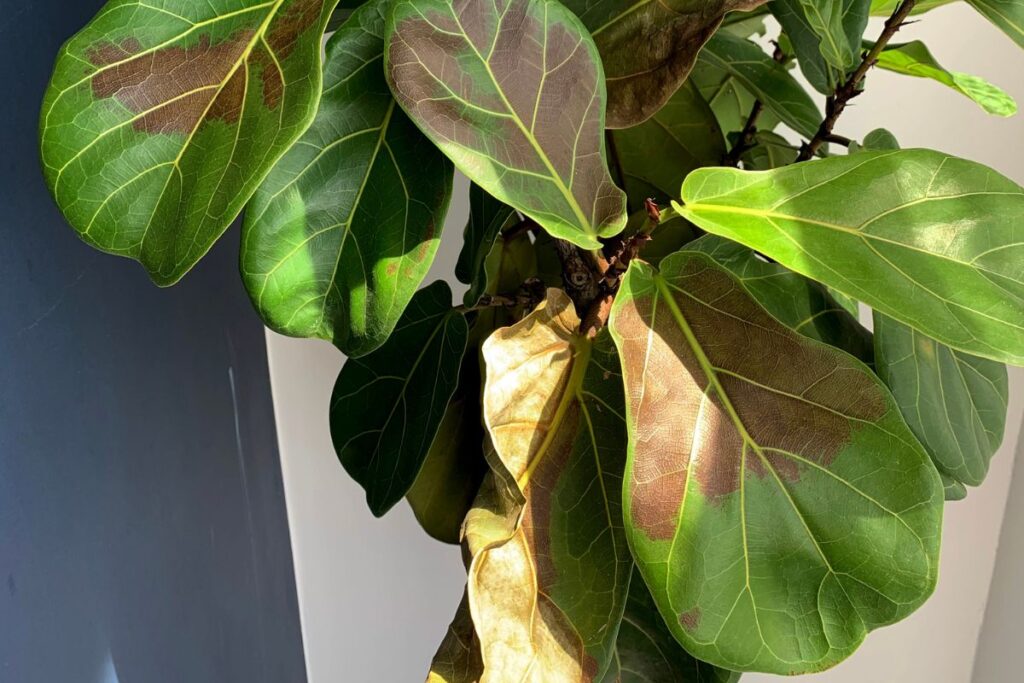
Pale brown, dry, and crisp spots on the leaves on the sun-exposed side of the plant can indicate sunburn.
Here are some tips to prevent the damage from worsening:
- Move the plant a few feet (+0.6 m) from a bright window to give it respite from the scorching sun.
- Hang sheer curtains at midday to filter the light.
- Rotate the pot by 90-180° weekly to prevent prolonged exposure to intense sunlight and promote balanced growth.
Chill Injury
Spots from chill injury initially appear pale brown and small and gradually expand until they cover the leaf surface between the veins. The leaves may also droop or curl at the tips.
Although frost-sensitive, a fiddle leaf fig may survive chill injury with the following tips:
- Prune discolored leaves because they won’t recover.
- Leave the new leaf buds (dark brown buds) on the stem, and move the plant away from cold window panes or drafty windows.
- Maintain temperatures of around 75 °F (24 °C) and observe for new growth. If the roots survive the chill, the leaf buds should gradually unfurl into pale green leaves that will darken over time.
Bacterial Leaf Spots
The tiny yellow spots from Xanthomonas campestris may turn dark brown or black over time.
Pseudomonas cichorri is another leaf-spot-causing bacteria commonly affecting Ficus plants, including fiddle leaf figs. The brown spots are surrounded by a yellow halo or margin and gradually increase in size. It typically affects new growth instead of older leaves.
Bacterial leaf spots have no proven cure. You may try to isolate, prune, and observe your plant for 2-4 weeks. If the symptoms progress, you must properly dispose of the plant immediately.
Avoid overhead watering, use sterile gardening tools, and maintain optimal environmental conditions to prevent the occurrence of the disease.
Over-Fertilization or Salt Stress
Too much salt in the root zone may also cause brown and dry leaf spots.
Excess salt can draw moisture from the fibrous roots and inhibit proper moisture uptake. The condition worsens if the plant is underwatered.
Here are the steps to relieve the problem:
- Scrape away visible white salt crust over the soil surface from excess granular fertilizers. Top up the soil with compost or fresh soil mix. (You can skip this if you use liquid fertilizer.)
- Flush over-fertilized soil with filtered or distilled water to leach the excess salts or dilute the nutrients in the soil to safe levels. Flushing once or twice should be enough if you have well-draining soil.
- Refrain from fertilizing the plant after treating salt stress. You can wait until the following spring before fertilizing it. Ensure the liquid fertilizer is diluted to half-strength. When using granular fertilizer, apply a thin layer once every 2 months, and water your plant regularly.
Scale or Thrip Infestation
Some pests can also cause browning in FLF leaves, including the following:
- Adult female scale insects are brown, immobile insects that appear like brown spots or bumps along the FLF leaf veins over and under the leaf surface. You can scrape the adults off with cotton swabs dipped in alcohol and spray the plant with neem oil solution once a week to eliminate the eggs and larvae.
- Thrips are slender flying insects that dig into the leaf tissue to feed, causing a silvery or brown spot. You must prune the affected leaves to eliminate the adults within them. You may also spray the plant with a Spinosad-based spray every two weeks to prevent further infestations.
3. Brown Edges or Leaf Tips
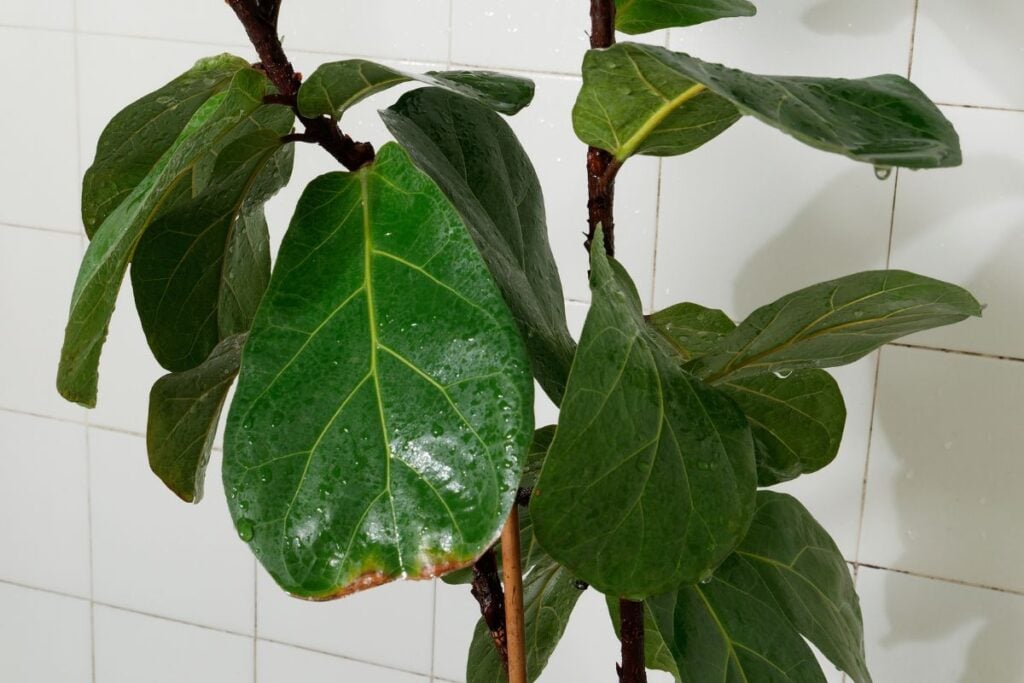
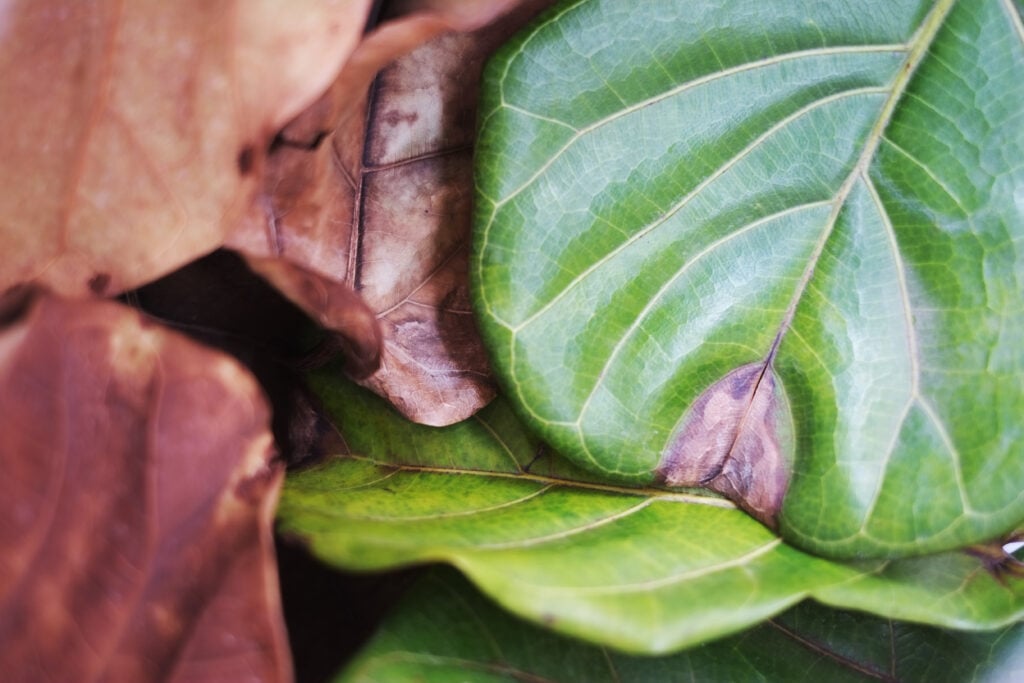
Dehydration is the primary cause of browning edges or leaf tips, which are often dry and crisp. Left unattended, the discoloration can spread toward the center of the leaf.
A fiddle leaf fig can is likely to become dehydrated due to the following:
- Underwatering: Avoid letting the soil become bone-dry between watering. Check the soil moisture 3-5 days after watering using a wooden chopstick or your index finger. If the soil is dry two knuckles (2 inches or 5 cm) deep, it’s time to water the plant deeply.
- Poor moisture retention in the soil: A soil mix rich in sand or perlite will likely dry out faster. Standard potting mixes rich in peat moss are also hard to re-wet when allowed to dry out completely.
- Intense sunlight: Indoor fiddle leaf figs thrive in up to 4 hours of direct morning sunlight when properly acclimatized. However, they tend to dry out more quickly in brighter light conditions, so they’ll need more frequent watering.
- High temperatures: During hot summer days, the potting soil and FLF leaves can dry out more quickly.
- Low humidity: Dry conditions indoors (below 40% relative humidity) can draw moisture out of the large FLF leaves through transpiration, increasing the risk of browning leaf edges due to rapid moisture loss.
- Salt stress: Fertilizer salts can accumulate in the potting soil over time due to over-fertilization, poor soil drainage, and irregular or shallow watering. Excess salt can draw moisture from the roots and dry them out, consequently dehydrating the leaves.
You can treat signs of dehydration and encourage the fiddle leaf fig to grow new and healthy leaves with the following tips:
- Trim the brown leaf edges using sharp and sterile pruning shears to improve your plant’s appearance. Wipe the wound with a clean cloth.
- Ensure the soil has enough organic matter, such as 10% coco peat or compost, to help retain moisture long enough for the roots to absorb. You can loosen the crusty soil surface with a hand rake and work an inch (2.5 cm) of compost over it for better water infiltration.
- Water the plant deeply to rehydrate the leaves and help speed up the healing of the wounds.
- Draw some light curtains at midday during the peak of summer to filter the light and avoid leaf scorch.
- Maintain moderate temperatures around 75 °F (24 °C) and keep your plant away from heating vents.
- Switch on a humidifier during dry days, especially at midday. Monitor the humidity using a hygrometer, and maintain it at around 50%. Pebbled trays with water may work for smaller plants but are typically insufficient to provide the humidity requirement of a large fiddle leaf fig during dry days.
- Flush over-fertilized soil with filtered or distilled water to remove or dilute excess salts. Moving forward, dilute soluble or liquid fertilizer to half the recommended dose and apply every 2-4 weeks only during the growing season in spring and summer.
- When using granular fertilizer, apply it only once every 1-2 months and water your plant regularly. Deeply and evenly water the soil to send the nutrients to the root zone and leach the excess salt through the drainage holes.
Browning due to bacterial leaf spot may also appear or expand close to the edges, especially for younger leaves with a small surface area. You must remove the entire damaged leaf using sterile shears to prevent the spread of the disease. Moreover, avoid misting or wetting the foliage.
4. Leaf Drop
It’s common for a fiddle leaf fig to show signs of stress after bringing it home from a gardening store because of the different environmental conditions. Fiddle leaf figs dislike sudden environmental changes and may drop some leaves in response.
However, you can prevent the plant from losing more leaves by introducing the changes gradually.
Place the plant in a suitable area with bright, indirect natural light. Ensure the area has moderate and stable temperatures and humidity. Keep it several feet (around 2 m) away from other plants for at least 8 weeks to prevent the spread of pests and diseases.
Choose a spot that receives at least 8 hours of bright, indirect natural light. If the plant starts leaning toward the window, move it a foot (0.3 m) closer every week while keeping an eye on browning from leaf scorch.
Refer to the tips below if your plant still keeps on shedding leaves after two weeks or so:
- Light stress: Sudden exposure to intense sunlight can cause leaf scorch and increase the risk of dehydration. A fiddle leaf fig tends to shed its leaves to protect itself and preserve moisture. You can hang some sheer curtains against the window to filter the light. Alternatively, move the plant a few feet (0.6 m) away from sunny windows.
- Temperature stress: Fiddle leaf figs dislike sudden and extreme temperature fluctuations and will go into self-preservation mode by shedding leaves. Move your plant away from the path of air from heating or cooling vents to prevent unwanted temperature spikes of over 10 °F (5-6 °C) throughout the day.
- Drought stress from underwatering: Drought stress can prompt the plant to shed leaves to conserve moisture within the stems and support new growth when conditions improve. Water your plant deeply and regularly (as soon as the soil is dry two knuckles deep), and avoid letting the soil become bone-dry between watering sessions.
- Low humidity: FLF leaves have a large surface area through which moisture can be lost from transpiration. Avoid placing the plant near areas like the kitchen or bathroom because of drastic humidity and temperature fluctuations throughout the day.
5. Drooping Leaves
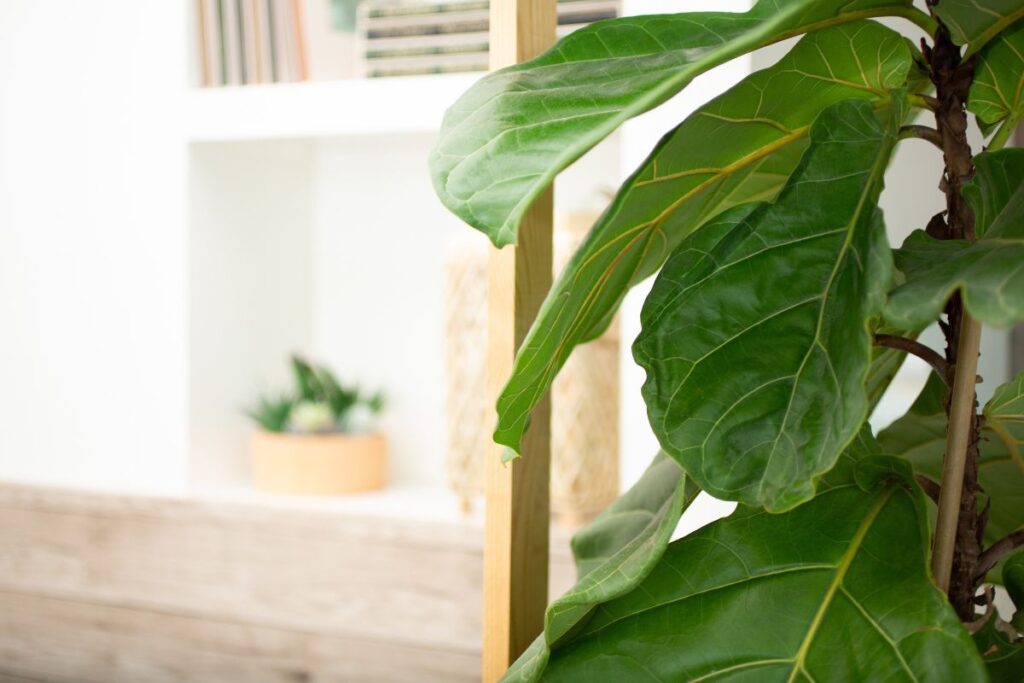
Young FLF leaves typically grow close to the stem at an angle of around 45°. As they increase in size, they naturally spread farther from the stem to a 90° angle. Large, bottom leaves eventually droop as they age and fall off.
If young FLF leaves are drooping, it can indicate a lack of moisture due to underwatering or low humidity. The symptom is typically preceded by yellowing or browning. Left unaddressed, the drooping leaves may fall off.
Remember the following tips to keep your plant properly hydrated and maintain perky leaves:
- Keep the soil evenly moist by watering the plant deeply as soon as the soil is dry (two knuckles deep). Check the soil moisture 3-5 days after watering, as it can dry out more quickly during hot, sunny, or dry days.
- Avoid shallow watering, as it might not adequately rehydrate the root zone, resulting in dry, droopy leaves.
- Switch on a humidifier to maintain the humidity level at 40-60%.
- During mild weather, you can place small fiddle leaf figs (up to 3 feet or 0.9 m) tall over a pebbled tray with water. Ensure the tray is twice the diameter of the pot for better results.
- Group houseplants with similar environmental needs, such as ZZ plants (Zamioculcas zamiifolia) or rubber trees (Ficus elastica), to boost the local humidity.
6. Holes or Cracks on Leaves
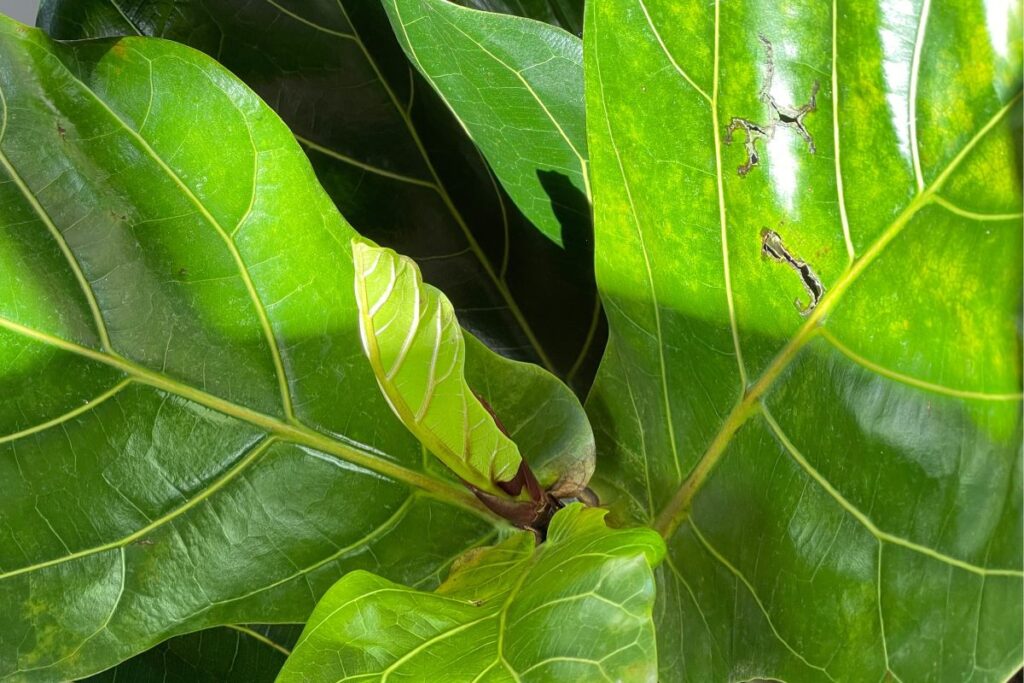
The large leaves of fiddle leaf figs are also susceptible to developing holes or cracks under the following conditions:
- Drought stress: Underwatering can dehydrate mature leaves, causing them to turn brown and crisp. Touching the brittle spots may create holes or cracks in the leaves. If the holes are tiny, you don’t have to prune the leaves. Improving your watering routine will prevent the damage from getting worse.
- Relocation stress: Drastic changes in the environment (i.e., higher temperature, change in watering frequency, and low humidity) can stunt the growth of a newly relocated fiddle leaf fig. The new leaf buds may stop growing for a while until the plant recovers. Once they unfurl, the leaves may have tiny holes due to improper development. With proper care, the newer leaves will grow normally without holes.
- Pest damage: Sap-feeding pests like aphids, mealybugs, and spider mites can leave tiny holes in FLF leaves as they feed. Manually remove visible pests (green or white fluffy crawlers) using cotton swabs with alcohol, and spray the plant with neem oil solution once a week for at least 4 weeks.
- Physical injury: The large leaves are prone to damage if you place the plant in high-traffic areas, such as corridors and doorways. Curious pets like cats and dogs may also nibble on the leaves. Ingestion of the sap containing calcium oxalate crystals can cause oral irritation and excessive drooling. Keep pets away from the tree or acclimatize it before permanently moving to a spot away from heavy foot traffic or inaccessible to house pets.
In general, you don’t have to remove FLF leaves with tiny holes or cracks because addressing the underlying cause will prevent the damage from worsening.
However, if they severely affect your plant’s appearance, you may prune damaged foliage using sterile shears. Limit removal to less than one-third of the foliage because your plant needs the leaves to absorb light for photosynthesis.
7. Black Spots on Leaves

Black spots on FLF leaves usually indicate a fungal infection caused by the following pathogens:
- Pythium or Phytophthora: These fungi proliferate in wet soil conditions due to overwatering, leading to root rot. The leaves may turn yellow or develop dark brown to black, mushy spots. Pruning the rotten leaves and roots and repotting the plant don’t guarantee recovery, especially when a large portion of the root system is rotten. If the entire root system is damaged and the stems feel mushy, you must dispose of the sick plant and contaminated soil.
- Botrytis cinerea: Young stems and leaves may develop dark brown to black spots when infected. You must prune the affected tissue or cut the growing tip (topping) because blight affects the new and younger leaves first. This will remove the pathogen and promote bushier or lateral growth. To prevent infection, you must also wipe off the milky sap with a damp cloth and brush the stump with cinnamon powder.
Fungal diseases commonly occur in cool, damp, and bright conditions. Overwatering, high humidity, and wet foliage can increase the risk of these diseases.
Here are some tips to prevent fungal diseases in your fiddle leaf figs:
- Sterilize the pot with 10% bleach and rinse well with water before planting the fiddle leaf fig in it.
- Use a sterile soil mix to ensure it doesn’t harbor pathogens. You may amend it with 10% compost to introduce beneficial microbes.
- Let the soil’s top 2 inches (5 cm) dry out completely before watering the plant.
- Avoid misting or wetting the foliage when watering.
- Prune damaged or discolored old leaves using sterile shears to improve air circulation. However, limit pruning to less than 30% of the foliage.
- Isolate new plants for at least 8 weeks before introducing them to your indoor garden to prevent the spread of diseases. Remember that fungi spread through airborne spores and can affect multiple plants in your home.
- Spray a neem oil solution generously on the leaves and the soil once every 2 weeks. Although considered a weak fungicide, it effectively prevents common fungal plant pathogens like Pythium, Phytophthora, and Botrytis.
8. Red Dots or Edema

Tiny red dots or edema on FLF leaves indicate the following issues:
- Overwatering: If the soil remains wet for too long, the roots naturally draw the moisture from the soil and send it to the leaves. Too much water can cause underdeveloped leaf cells to swell and burst, appearing as red dots (edema) on the leaf surface.
- Inconsistent watering: Letting your plant go too long without water, followed by deep watering, can prompt the roots to draw moisture to rehydrate the foliage rapidly. This sudden water uptake can cause the leaf cells to burst, creating red dots or blisters.
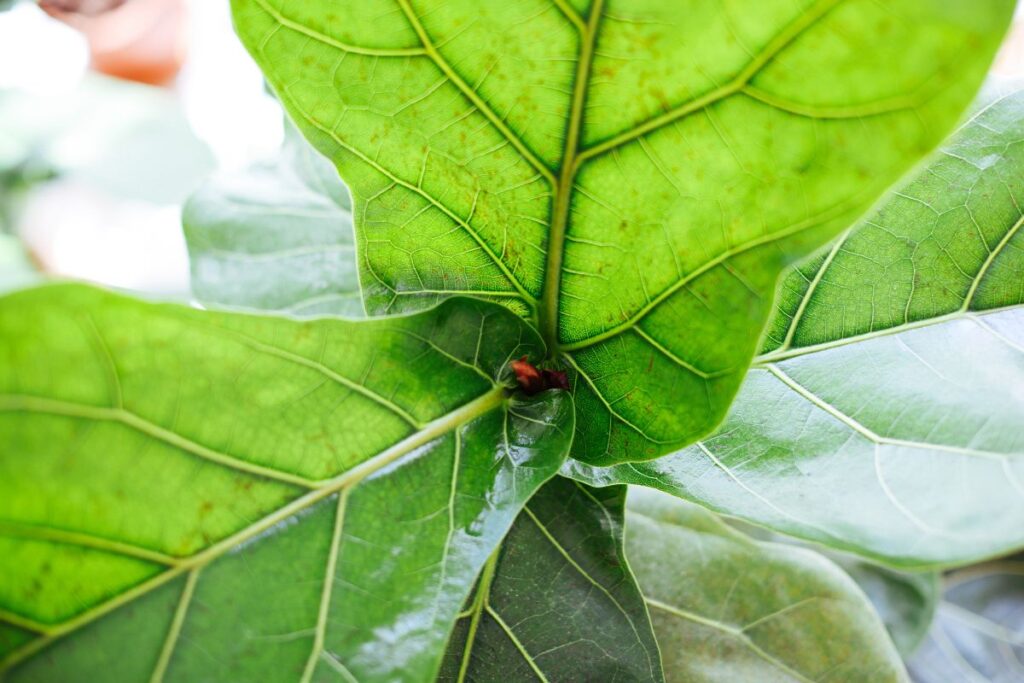
You can fix the problem by improving your watering routine.
Here are some tips:
- If the soil and pot are of poor quality, repot the plant in well-draining soil and a pot with drainage holes to prevent waterlogging.
- Make it a habit to check the soil moisture 3-5 days after watering to avoid over- or under-watering.
- Evenly rehydrate the soil by watering deeply until the excess drips from the drainage holes. Let the water drain completely before placing the plant back on its saucer.
Edema is more apparent in younger, paler leaves. With proper watering practices, the red dots will gradually disappear as the leaves grow bigger and become a darker shade of green.
9. White or Brown Patches
Your fiddle leaf fig may also develop white or brown patches over the leaf surface or the undersides due to the following:
Intense Sunlight
Too much direct sunlight can bleach the leaves of fiddle leaf figs, causing them to develop thin and white or pale brown patches. The discoloration may spread quickly if the plant is exposed to underwatering, high temperatures, and low humidity.
To treat the problem and prevent recurrence, you may try the following tips:
- Prune severely damaged or discolored leaves using sterile scissors or pruning shears.
- Move the pot a few feet (+ 0.6 m) away from a sunny window to a spot that receives bright indirect light.
- If there’s not enough space away from the window, hang a sheer curtain to filter the light.
- Give the pot a quarter or a half turn every time you water the plant to give the leaves respite from intense sunlight. It can also promote balanced growth and prevent legginess or leaning.
Hard Water Stains
Hard water from misting, overhead watering, or humidifiers may also cause white stains or patches over the leaf surface that easily rub off with a moist towel.
You can prevent the issue by avoiding wetting the foliage when watering your plant. It’s also best to use distilled water in your humidifier to prevent the spread of mineral salts in the air.
Thrips
Cuban laurel thrips (Gynaikothrips ficorum) feed on a wide variety of houseplants, including philodendrons and Ficus species.
The larvae may burrow into the soil, whereas the slender, winged adults burrow into the leaf tissue. As they feed on plant sap, they leave behind a white or silvery patch on the leaves.
If you see adult thrips hovering on your fiddle leaf figs, I recommend spraying your plant with a Spinosad-based spray once every 10-14 days. It’s effective against thrips, but remember to follow the application instructions on the product label for safety.
Pro tip: I usually wheel my fiddle leaf fig to a roofed balcony before spraying in the morning and move it back in at noon. Thrips thrive in warm temperatures, so moving my plant outdoors for a bit during treatment is safe. In addition, the east-facing balcony is only a few feet (around 2 m) away from my fiddle leaf fig’s usual spot.
10. White Fluff or Fuzz
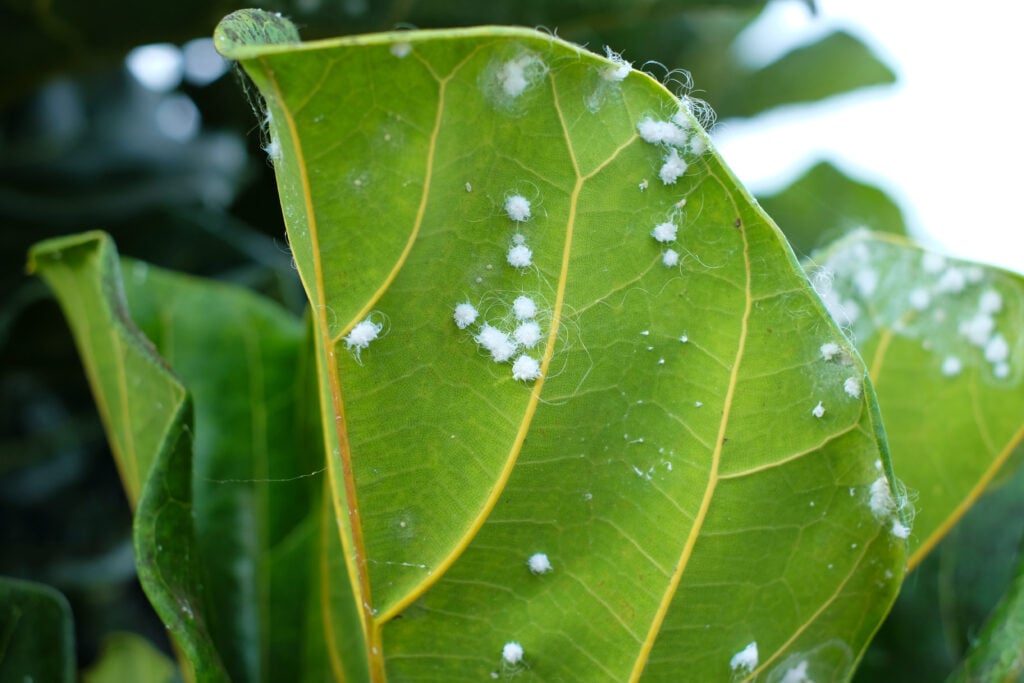
Fiddle leaf figs may have white fluff or fuzz on the leaves and stems due to the following:
- Mealybug infestation: Mealybugs are tiny insects about ⅛ inches (3.2 mm) long with a white waxy covering. They appear like white fluff underneath the leaves and feed on plant sap.
- Powdery mildew: White powdery fuzz on FLF leaves and petioles may also be caused by powdery mildew. Higher humidity at night can encourage spore development and lower humidity during the day can spread the spores.
- Botrytis blight: The fungi causing the disease (Botrytis cinerea) spread mycelia as part of their growth cycle. Mycelia appear as white or gray fuzz over young stems and leaves. You can distinguish it from powdery mildew through the brown or black leaf spots.
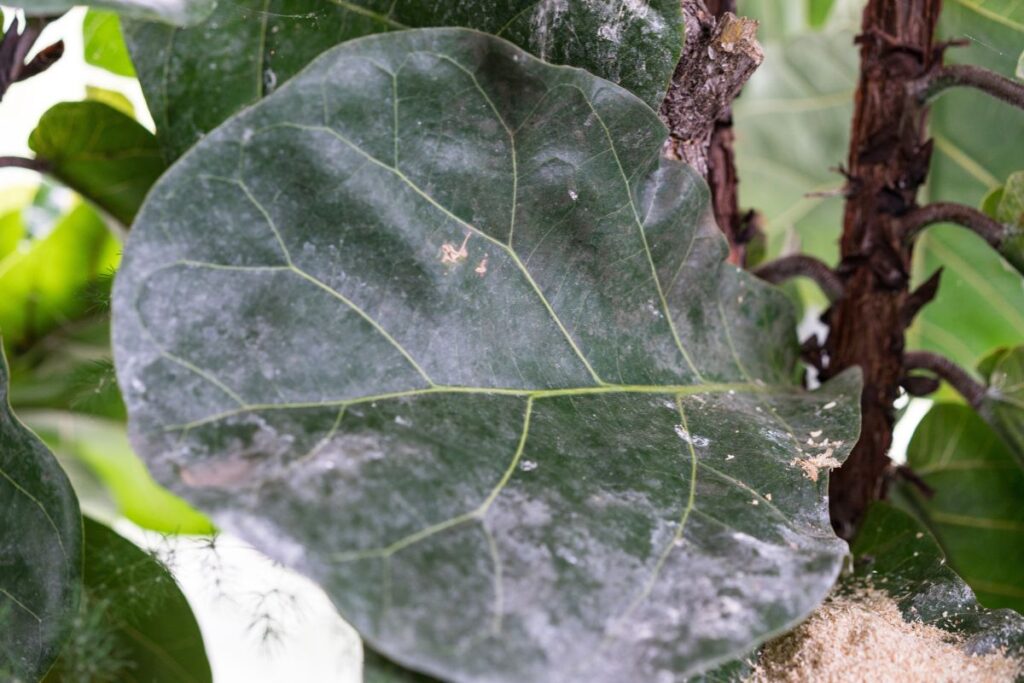
Here are some tips to solve these problems:
- Remove mealybugs using a cotton swab with alcohol.
- Prune the leaves with white fuzz from powdery mildew or botrytis blight. Use sterile scissors or pruning shears and clean the blade with 70% isopropyl alcohol between cuts.
- Properly discard infected foliage to prevent the spread of fungal spores.
- Spray the plant with neem oil. It is effective against soft-shelled insects like mealybugs and has antifungal properties. It can inhibit the development of fungi that cause powdery mildew and botrytis blight.
11. Dull Leaves
Healthy fiddle leaf figs naturally have waxy and glossy leaves.
However, they may appear dull due to the following issues:
- Intense sunlight: Too much direct sunlight can bleach and burn the leaves. Rotate the pot regularly to prevent sunburn and filter the light with sheer curtains.
- Excessive use of insecticidal soap: Although effective against common pests, frequent use of insecticidal soaps can break down the waxy coating on the leaves. I recommend using neem oil spray instead to deal with common plant pests.
- Alcohol spray: Similarly, alcohol may kill pests but will likely make the leaves look dull and dehydrated. Use neem oil spray to eliminate pests. When using cotton swabs with alcohol to scrape insects off, minimize contact between the leaves and the alcohol.
- Dust buildup: Due to the large size of FLF leaves, they can easily catch dust floating in the air. Wipe the leaves with a damp cloth once a week to remove the dust and restore your plant’s shine.
12. Webbing on Leaves and Stems

Spider mites are tiny plant pests about 0.04 inches (1 mm) in diameter. They may be white or red and typically move fast when disturbed, making them hard to catch.
You can confirm their presence through fine webs on leaves and stems and yellow specks on the leaves. You may also tap the FLF leaf over a white sheet of paper and roll a chopstick over it to squish the spider mites.
Since they’re hard to spot, you can eliminate them with the following methods:
- Wipe the webs off with a clean, damp cloth.
- Spray the plant liberally with neem oil solution, including the undersides of the leaves. Do this at night once a week for at least 4 weeks.
- Treat the nearby houseplants with neem oil to eliminate pest problems in your indoor garden and prevent recurrence.
13. Leaning, Lopsided, or Leggy Growth

Potted fiddle leaf figs naturally have thinner trunks due to a lack of environmental stimulus (i.e., wind) that prompts trunk thickening. Studies show that trees exposed to stronger winds tend to remain short with wider trunks due to thigmotropism.
Note: Many gardening blogs may recommend mimicking similar conditions by regularly shaking your fiddle leaf fig to encourage a thicker trunk and prevent leaning. However, I’ve also tried this method on my fiddle leaf figs to no avail.
That said, there’s not enough evidence to support this claim. It’s best to focus on the possible cause of leaning and address the problem.
Fiddle leaf figs can sometimes lean or bend due to the following issues:
- Insufficient or uneven light: The sun-loving fiddle leaf fig tree will naturally lean toward the window if kept in low-light conditions. The fleshy tip may become leggy, with sparse leaves trying to reach the light source. You can chop off the leggy top and your plant will stop getting taller. This will promote lateral branching and bushy growth. Give your plant up to 4 hours of morning sun or at least 8 hours of bright indirect light daily. Rotate the pot regularly to promote balanced and upright growth.
- Poor watering practices: Underwatered FLF stems may become brittle and more susceptible to leaning or breaking. On the other hand, overwatering can make the stems mushy and more likely to bend from the weight of the leaves. Ensure the plant has appropriate soil and observe proper watering practices to prevent this problem.
- Overgrowth and rootbound issues: Fiddle leaf figs can become top-heavy over time and prone to leaning if kept rootbound in a small pot. If roots are poking out of the soil surface or through the drainage holes, it’s time to repot your plant. Carefully unpot the plant and repot it in a container that’s 2-4 inches (5-10 cm) wider than the old one.
- Nutrient deficiency: As the plant cells along the stems develop, they need nutrients to become structurally stable. A lack of nitrogen, phosphorus, and calcium can cause the stems to lean, especially in young fiddle leaf figs with underdeveloped stems. Feed the plant a half-strength liquid fertilizer every 2 weeks from spring to summer for faster nutrient absorption. Choose a product with 3-1-2 NPK and essential nutrients like calcium, magnesium, and iron.
- Soft scale infestation: Scale insects are brown, immobile pests that like feeding on the sap from fleshy stems or leaf veins. Young fiddle leaf figs with fleshy stems may lean or bend from severe scale infestation. You may eliminate these pests using a cotton swab with alcohol and neem oil spray.
14. Slow or Stunted Growth
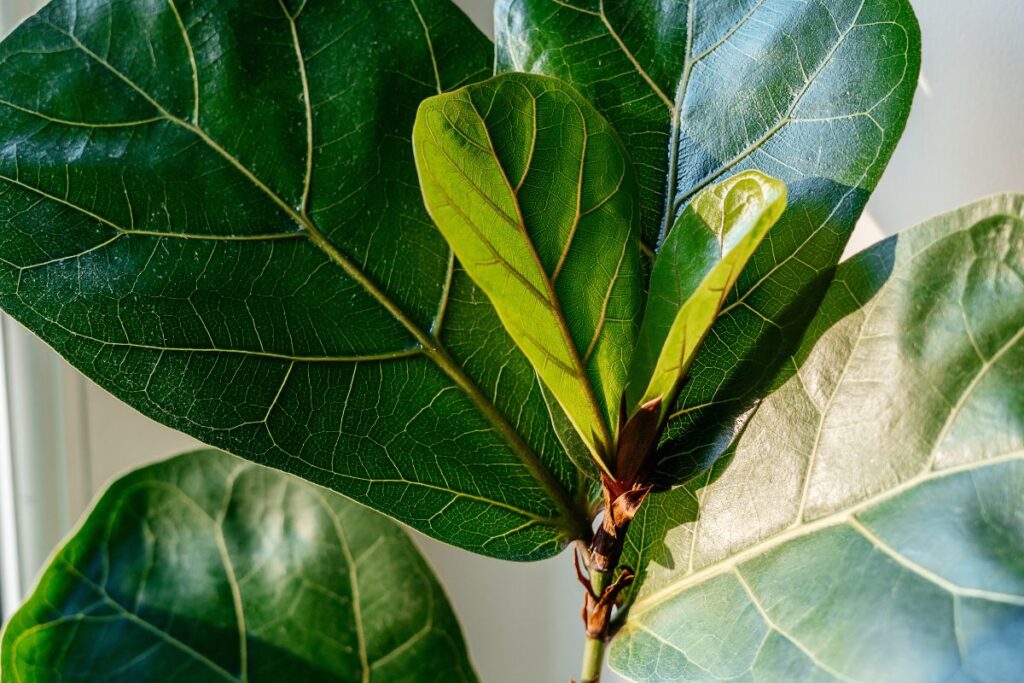
Fiddle leaf figs are naturally fast-growing plants. When grown in pots indoors, they can grow 1-2 feet (0.3-0.6 m) taller and 5 or more leaves in one year (mostly during spring and summer).
If your plant is growing more slowly than usual or doesn’t put out new leaf buds, it could be due to one of the following reasons:
- Nutrient deficiency: Fiddle leaf figs need fertilizers during the growing season to support their rapid growth rate and maintain the appearance of the leaves. When nutrients become depleted from the soil, the plant will grow more slowly or stop growing. New leaves may even appear distorted or fail to reach full size.
- Being rootbound: Fiddle leaves can tolerate being slightly rootbound due to their fibrous roots. However, they will likely grow more slowly when severely rootbound. A good rule of thumb is to repot your plant every 3 years to avoid stunted growth. You’ll know your plant is ready for repotting when you see roots emerging from the soil or drainage holes. Repot the plant in fresh soil and a pot 2-4 inches (5-10 cm) larger than the old one to encourage new growth.
- Insufficient light: Fiddle leaf figs like lots of sunlight to generate enough energy for rapid growth. Low light conditions may slow down growth or cause legginess. The stem may grow longer and bend toward the light, but there won’t be new leaf growth on the sun-deprived part of the plant. Grow lights can supplement your plant’s needs during cloudy days. However, you must strategically place them at a 45° angle 1-2 feet away from the plant to ensure the lower leaves also receive light.
- Underwatering: As tropical natives, fiddle leaf figs require evenly moist soil for optimal health and growth. During drought stress, they tend to shed leaves and inhibit growth to conserve water.
15. Pest Infestations
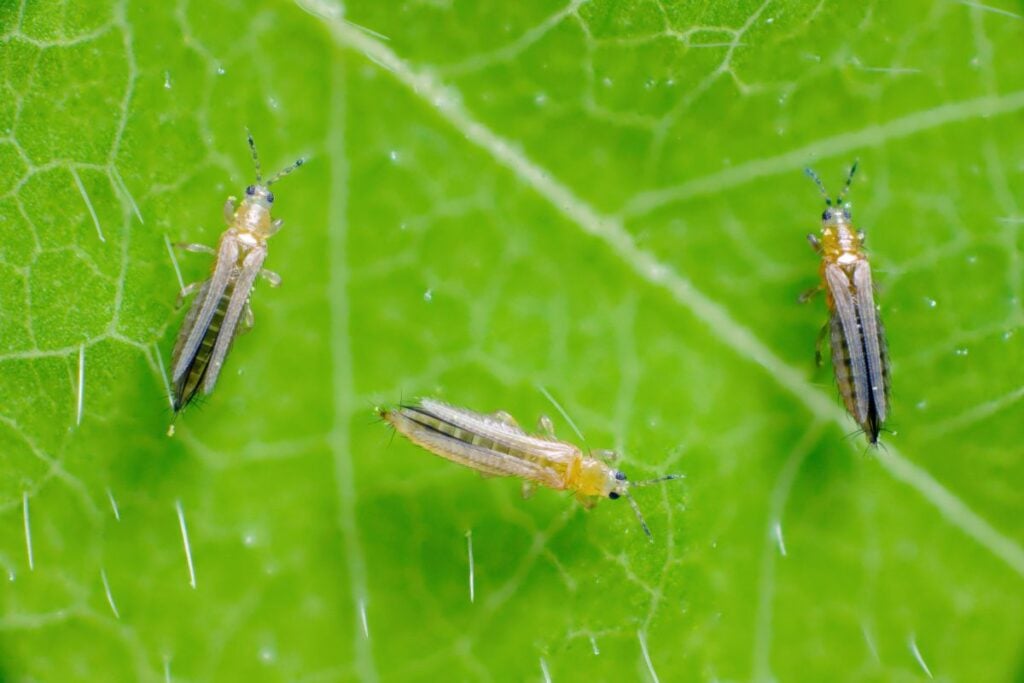
Healthy fiddle leaf figs are generally resistant to chewing insect pests because of the calcium oxalate crystals in their sap.
On the other hand, stress from watering problems, dehydration, or nutrient deficiency can reduce the concentration of the crystals, making fiddle leaf figs susceptible to the following houseplant pests:
- Aphids: Translucent white, green, or orange insects about ⅛ inches (3.2 mm) in diameter. They usually feed on the sap from leaf undersides and excrete a colorless, sugary substance called honeydew.
- Mealybugs: Tiny insects around ⅛ inches (3.2 mm) in diameter and covered with fluffy white wax. They also excrete honeydew.
- Spider mites: Spider-like insects that weave fine webs on leaves and stems. They’re so tiny (0.04 in or 1 mm) that they’re almost invisible to the naked eye. They leave behind a speckled white or yellow appearance on the leaves they feed on.
- Scale insects: Nymphs and eggs are so tiny and almost invisible, whereas adult males are winged insects that seldom stay on the leaves. Conversely, adult females appear as brown, immobile bumps along stems and leaf veins, feeding on plant sap.
- Thrips: Slender, winged insects that quickly fly away when disturbed. Some adults may burrow into the leaves and cause a white or silvery patch in the area when they feed.
- Fungus gnats: Mosquito-like winged insects that lay eggs on wet soil. Once the larvae hatch, they feed on decaying roots and organic matter in the soil, worsening the effects of root rot.
You can eliminate these pests with the following tools or methods:
- Cotton swab with 70% isopropyl alcohol: Use it to scrape the pests off the leaves. The alcohol will dehydrate the soft-bodied insect, but it won’t be enough to kill them. Drop the insects in a cup of soapy water to immobilize and kill them.
- Yellow sticky card: Place sticky traps near the soil to catch adult fungus gnats. You may also hang or stick the traps on the wall near your houseplants to catch thrips. However, ensure the leaves don’t touch the glue on the sticky trap.
- Neem oil spray: It’s effective against most insect pests but only marginally effective against thrips. Spray the solution liberally over and under the leaves and the soil to eliminate eggs, larvae, and adults. Apply it once a week and only after sunset.
- Spinosad-based spray: This commercial product is effective against spider mites and thrips. Apply it after sunset every 10-14 days and ensure the room is well-ventilated. Keep children and curious pets away from the plant up to 24 hours after application.
Pro tip: I don’t recommend using insecticidal soaps on fiddle leaf figs because they might break down the waxy coating on the leaves and make them dull. Moreover, insecticidal soaps are only effective upon contact, requiring frequent application. This can increase the risk of damage to the leaves.
Here are additional tips to treat and prevent pest infestations:
- Isolate new plants for around 8 weeks to avoid introducing pests into your home garden. You must also isolate severely infested plants to prevent the spread of pests.
- Space companion plants properly so the leaves aren’t touching. Crawling pests can transfer from one plant to another through the leaves,
- Treat the other plants near your fiddle leaf fig because pests can escape and survive on nearby plants without protection (i.e., neem oil spray).
Final Thoughts
The number of common problems for fiddle leaf figs may be discouraging for aspiring and beginner gardeners. However, the problems discussed in the article can be mitigated and prevented with proper care.
Give your fiddle leaf fig plenty of bright natural light, evenly moist soil, warm temperatures, and moderate humidity to keep it thriving. You may also feed the plant a 3-1-2 fertilizer every spring and summer for continuous growth.
Remember that fiddle leaf figs dislike drastic environmental changes, so be consistent with your care routine. Although they might seem more demanding than other houseplants, they’ll reward you with lush green leaves and give your home a tropical feel.
Tell us about your experience with fiddle leaf figs and let us in on some helpful tips for a thriving indoor garden. You may also leave a comment or explore the other articles on our site if you have questions about general plant care.