
Brown Spots on Fiddle Leaf Figs: Symptoms, Causes, & Fixes
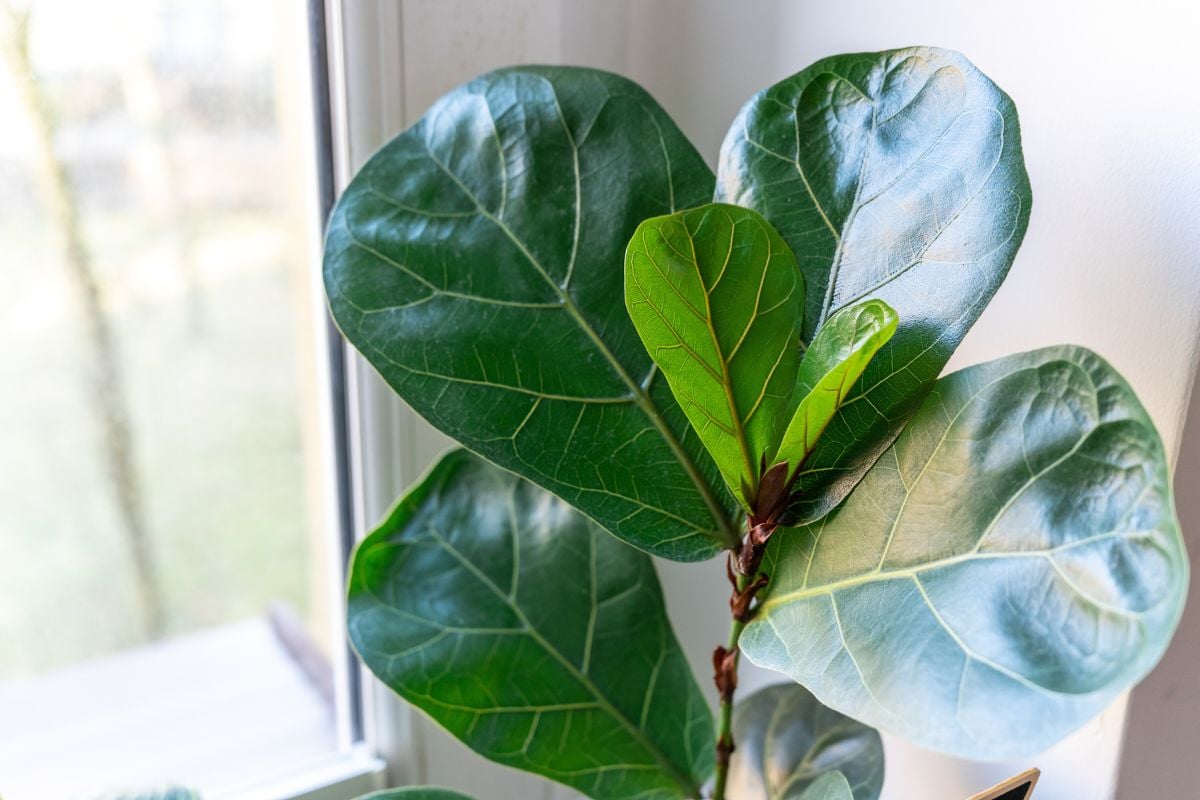
Fiddle leaf figs (Ficus lyrata), famous for their large, glossy leaves and stunning aesthetic, are a beloved choice for houseplant enthusiasts. However, these plants can develop brown spots on their leaves, a common issue that signals stress and poor health.
Here are the common reasons for brown spots on fiddle leaf fig leaves:
- Underwatering
- Overwatering
- Sunburn
- Chill Injury
- Bacterial Leaf Spots
- Pest Infestations
- Over-Fertilization
This article will explore the common causes of brown spots on fiddle leaf figs and provide practical solutions to help your plant recover.

Native Origin and Care Essentials
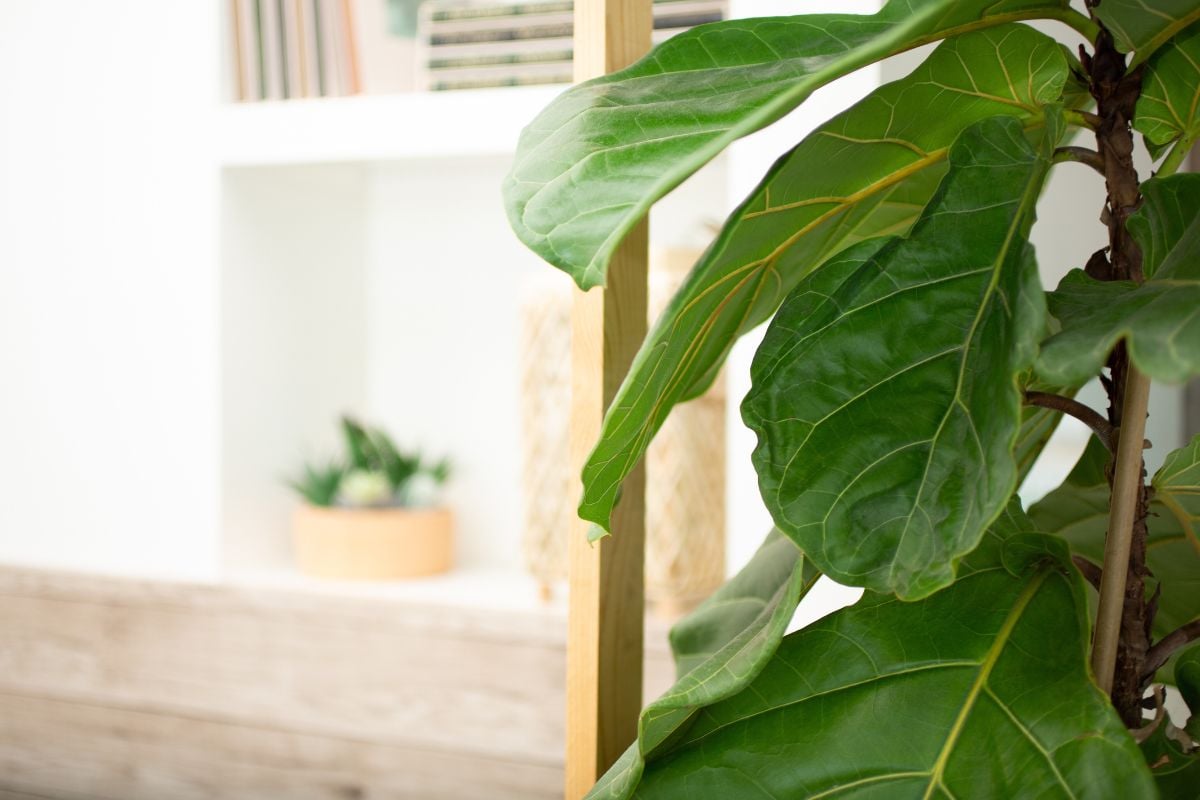
Fiddle leaf figs (Ficus lyrata) are members of the large family of fruit-bearing fig trees. They’re famous for their fascinating fiddle-shaped leaves that can reach up to 30 inches (76 cm) long and 18 inches (45 cm) wide in the wild.
They’re native to the tropical rainforests of Western and Central Africa with the following natural conditions:
- Filtered or dappled light for younger or shorter plants and full sun (around 8 hours of direct sunlight) for taller plants
- Abundant rainfall during the wet season and sporadic rains during the dry season
- High humidity (over 70%) all year round
- Frost-free temperatures of around 70-86 °F (21-30 °C)
- Loamy soil rich in organic matter
Although it’s challenging to replicate such conditions in a home or office setting, you can successfully grow fiddle leaf figs in pots indoors with these environmental and care conditions:
- Light: Provide at least 8 hours of bright indirect light for young plants with pale green leaves or up to 4 hours of direct sunlight for older plants with fully developed, deep green leaves.
- Water: Young plants require evenly moist soil as they establish their roots, so you should water them when the soil is dry one knuckle (an inch or 2.5 cm) deep. Larger plants with established roots can wait until the soil is completely dry 2 inches (5 cm) deep.
- Humidity: Maintain indoor humidity between 40 and 60% to prevent the leaves from drying.
- Temperature: Fiddle leaf figs can tolerate indoor temperatures of 65-85 °F (18-29 °C). However, it’s best to avoid sudden temperature spikes or dips of over 10 °F (5-6 °C) anytime during the day, as they can stress the plant.
- Soil: Use a well-draining soil mix rich in organic matter. You can combine 2 parts standard potting mix, 1 part cactus mix or perlite, and 10% compost.
Fiddle leaf figs are very sensitive to sudden changes in the environment (i.e., light, temperature, and humidity), so it’s crucial to maintain optimal conditions to keep the plant in good shape and thriving.
Abrupt changes can stress fiddle leaf figs, leading to health issues, such as brown spots on leaves.
Symptoms of Brown Spots
A stressed fiddle leaf fig (FLF) may develop brown spots with varied patterns or textures depending on the underlying cause.
The browning may appear in the following forms:
- Brown, dry, and crisp on the leaf surface and edges
- Water-soaked or mushy spots
- Partly bleached and brittle patches on sun-exposed leaves
- Very dark brown and almost black spots surrounded by a yellow margin or halo
- Reddish-brown spots on young leaves
- Brown bumps
- Translucent and bronze-like (sometimes silvery)
The brown spots may be preceded or accompanied by the additional stress symptoms below:
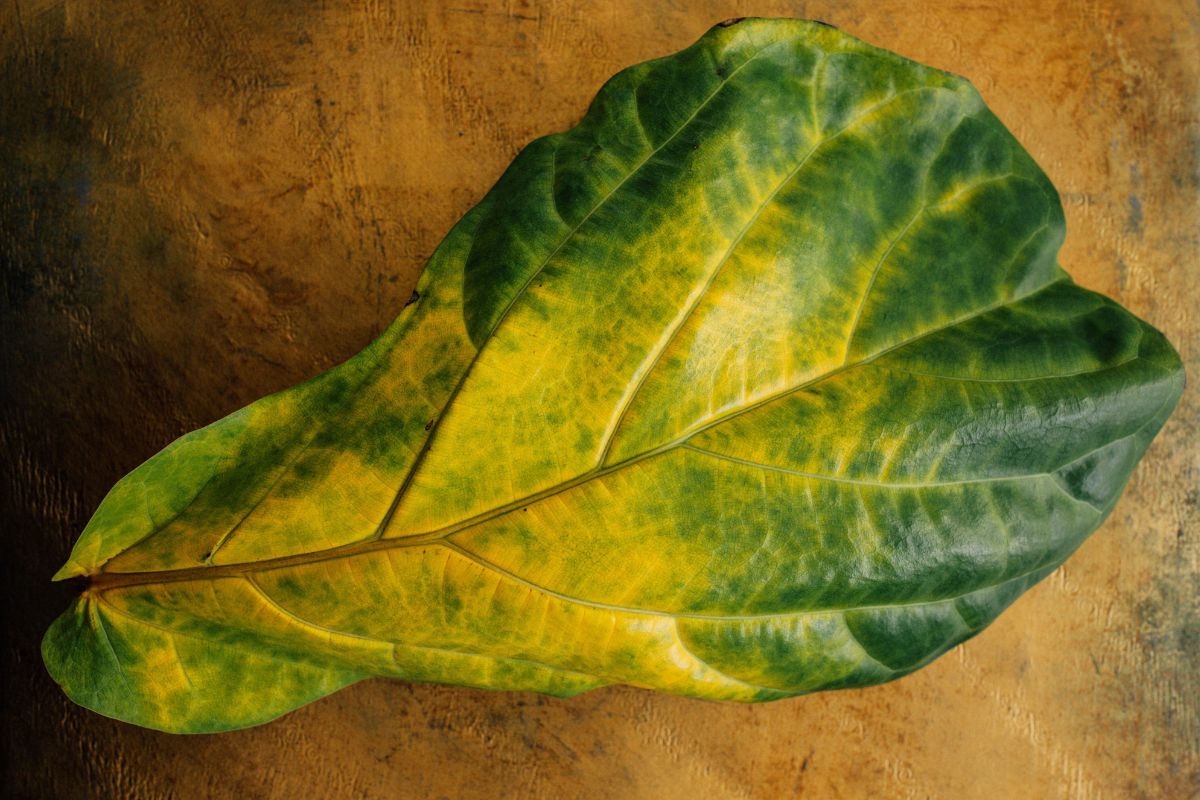
- Yellowing leaf surface that gradually turns brown
- Wilting
- Leaf drop
- Brown edges
Identifying the symptoms and catching the issue early allows you to treat the problem before it worsens and causes further damage.
Common Causes (& Fixes)
Refer to the list below to correctly identify the cause and corresponding solutions to potentially save your fiddle leaf fig and restore it to better health:
1. Underwatering
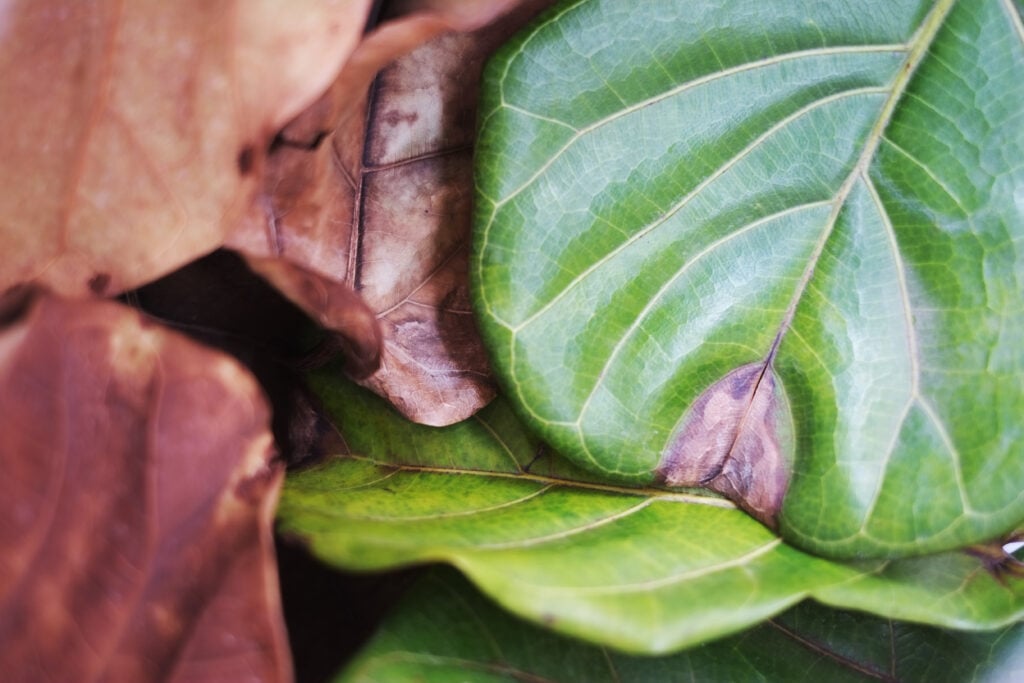
Fiddle leaf figs like evenly moist soil to keep the leaves hydrated. The large surface area on the leaves allows for faster transpiration, so keeping the plant on a regular watering schedule is important.
When allowed to dry out for too long, FLF leaves may show the following symptoms in progression:
- Yellowing leaf spots and edges
- Yellow parts gradually turn brown
- Wilting or drooping leaves
- The brown spots or edges become dry and crisp
- Leaf drop
The soil surface may also appear crusty and cracked. Potting mixes rich in peat moss and sand tend to become hydrophobic when allowed to become bone dry. They’ll be harder to re-wet and may repel water from the roots, worsening the dehydration of the leaves.
Other factors that can worsen dehydration symptoms include high temperatures (over 85 °F or 29 °C) and low humidity (below 40%)
You can fix the problem with the following steps:
- Use sharp and sterile scissors to cut off the brown leaf edges. If the brown spots take up less than one-third of the leaf surface, you may keep the leaf on the plant to continue photosynthesizing.
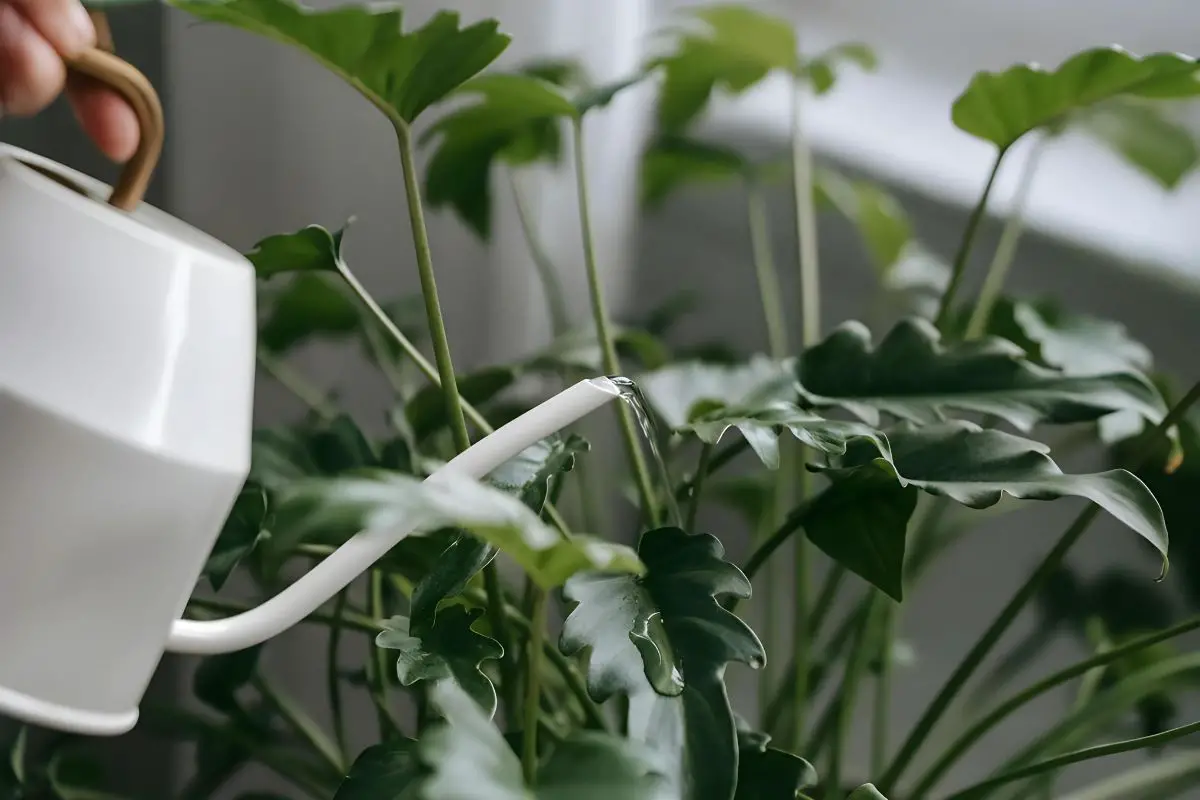
- Water the plant deeply using a watering can with a narrow spout to ensure the root zone gets evenly rehydrated. If the soil has become hydrophobic, soak the pot in water for about 30 minutes to allow thorough rehydration.
- Let the excess water drain completely from the drainage holes before placing the pot back on its saucer.
Here are additional tips to prevent the issue from recurring:
- Water the plant regularly, ensuring the soil’s top 1-2 inches (2.5-5 cm) are dry before watering again.
- Occasionally bottom water the plant (i.e., once a month or after 3-4 times of regular watering) to prevent hydrophobic soil.
- For larger plants in heavy pots, use a watering can with a narrow spout to pour water evenly over the soil until the excess drips from the drainage holes.
- Maintain humidity levels at 40-60% using a wide pebbled tray with water for plants up to 3 feet (0.9 m) tall or a humidifier for larger plants.
- Maintain stable temperatures of 70-75 °F (21-24 °C) during the day and around 65 °F (18 °C) at night. Keep the plants away from drafty windows or hot or cold air paths from heating or cooling vents to avoid temperature fluctuations.
- Avoid placing fiddle leaf figs in areas like kitchens and bathrooms because, although they have higher humidity than the rest of the house, the temperature and humidity fluctuate a lot throughout the day.
Note: Being severely rootbound can also contribute to underwatering since overgrown roots may displace the soil and inhibit proper rehydration. Rootbound fiddle leaf figs typically have roots poking through the soil surface and drainage holes.
Repotting the plant in a larger pot with fresh soil is the best way to fix underwatering problems due to severe rootbinding. It’ll help improve soil quality (moisture retention and drainage) and provide more soil space for the roots to grow.
Here’s how to repot a rootbound and dehydrated fiddle leaf fig:
- Cut the roots growing outside the pot (i.e., through the drainage holes) using sharp, sterile scissors.
- Run a spatula around the edges to detach the roots and soil from the pot.
- Carefully unpot the plant and examine the rootball, which most likely takes on the shape of the pot.
- Using sharp, sterile scissors, cut through the roots vertically at 3-4 points around the rootball. Don’t worry about losing a few roots in the process, as it’ll help disentangle the root mass and redirect their growth when planted in new soil.
- Prepare a pot 2-4 inches (5-10 cm) wider and deeper than the old one.
- Place a wire mesh over the drainage holes and fill the pot with 2 inches (5 cm) of fresh, well-draining soil shaped into a mound.
- Position the fiddle leaf fig in the middle of the pot and spread the roots outward over the soil.
- Cover the roots with more soil and tamp firmly to keep the tall plant in place.
- Water the soil thoroughly until the excess drains out of the pot. Follow the watering tips above to prevent future underwatering problems.
2. Overwatering
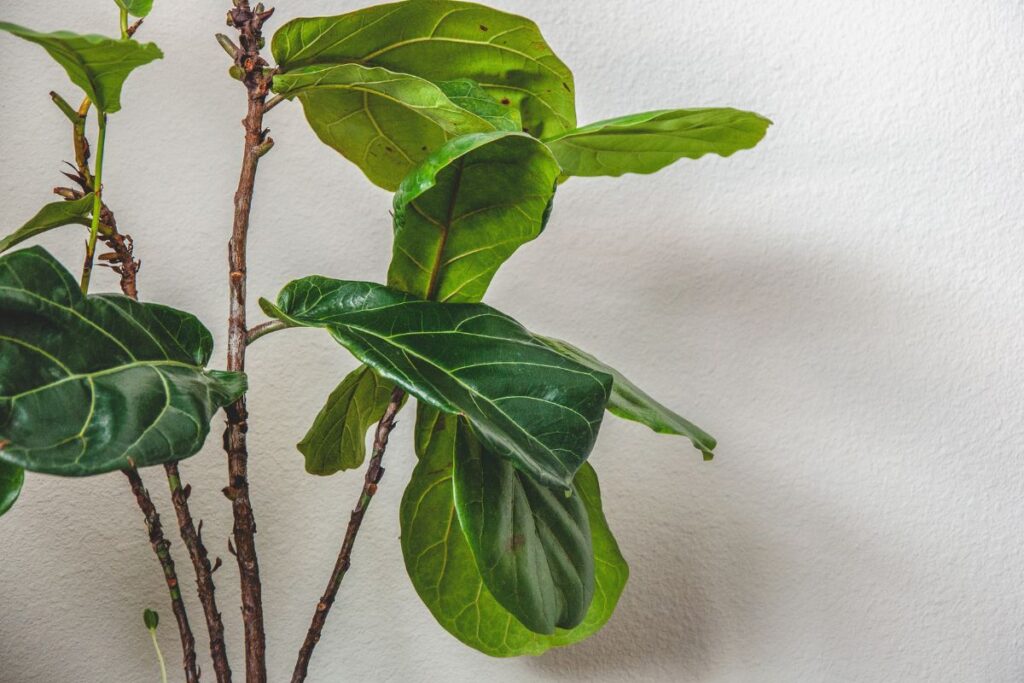
Overwatering occurs when you water fiddle leaf figs too often or the soil or pot has poor drainage.
You can confirm overwatering problems by checking the soil moisture. Dig into the soil 2 knuckles (2 in or 5 cm) deep about 5-7 days after watering.
If the soil remains soggy for too long, it means the soil isn’t draining water properly, leading to the following symptoms:
- Soft, mushy, water-soaked brown spots on leaves
- The leaf spots appear irregular in size and shape
- Red spots or edema from burst cells
- Root rot (black, mushy, smelly roots)
- Yellowing leaves (prolonged wet soil conditions can inhibit proper nutrient and water uptake)
- Leaf drop
Inspect the roots by gently digging about 1-2 inches (2.5-5 cm) into the soil to address the issue properly.
If there is no root rot, check the soil condition. Good soil should drain well, have an earthy smell, and feel crumbly between the fingertips. Adjust your watering routine—wait until the top 2 inches (5 cm) of soil are dry before watering again.

Conversely, if the soil appears compacted or root rot is present (black, mushy, foul-smelling roots), you may follow the steps below to save your plant:
- Run a spatula or flat knife along the edges of the pot to loosen the soil and slide the plant out. Lay the pot on the side to carefully unpot the plant and minimize damage to the roots.
- Remove the soil around the roots by combing through using a hand cultivator or hand rake.
- Trim away the rotten roots using sterile shears. Sanitize the blades between cuts using rubbing alcohol and cotton balls or a clean cloth.
- Optional: Soak the roots in 1% hydrogen peroxide solution for 10 minutes to kill the remaining pathogens and rinse in distilled water. Let the plant air-dry for 30 minutes before repotting.
- Repot the plant in fresh, moist, well-draining soil and a sterile pot with drainage holes.
- Avoid watering for about a week after repotting.
The fiddle leaf fig may shed several leaves after repotting, which is part of its stress response and recovery. Maintain optimal environmental and care conditions and monitor the new leaf buds. Your plant should put out new growth within the next few months.
Note: Some sources may recommend using a specific number of cups of water depending on the plant size to avoid overwatering. However, different soil conditions and plant metabolic rates at different seasons can lead to a varying rate of water consumption.
Sticking strictly to a measured amount of water can lead to a myriad of other problems, such as inadequate rehydration or hydrophobic soil.
Instead, gradually pour the water over the soil using a watering can with a narrow spout. Move the spout around to evenly rehydrate the soil until the excess water drains from the holes below the pot.
3. Sunburn (Intense Sunlight)
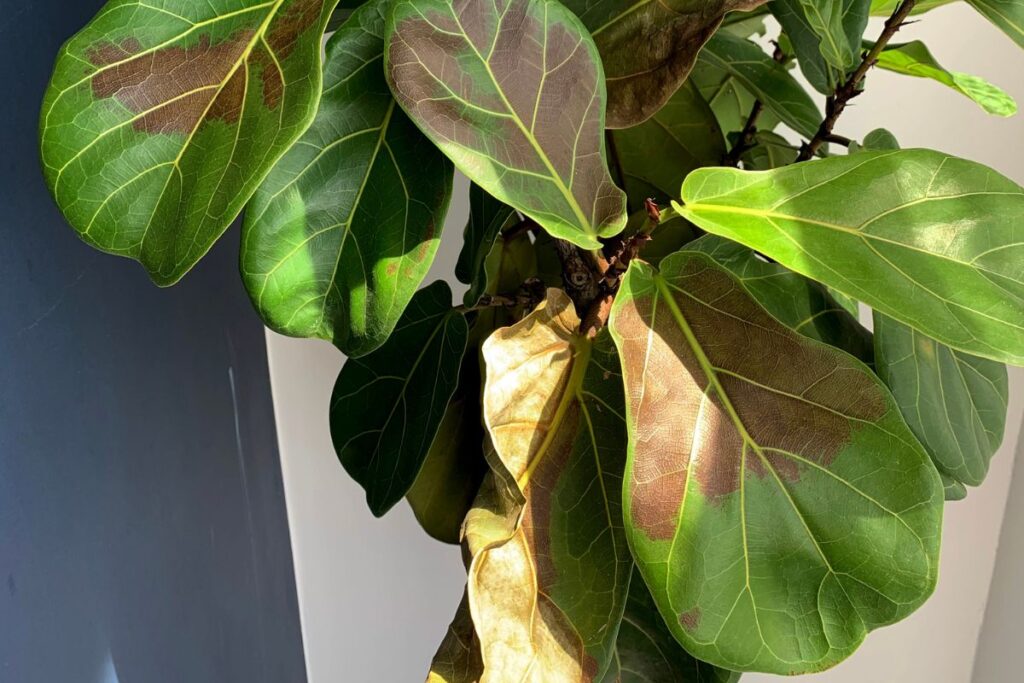
Young fiddle leaf figs prefer at least 8 hours of bright indirect sun daily because the pale green leaves are less tolerant to intense light. The underdeveloped roots also can’t absorb and deliver adequate moisture to keep the leaves well-hydrated against intense heat and light.
On the other hand, older plants with darker leaves and established roots do great with up to 4 hours of direct morning sun from an eastern or southern window.
Sunlight intensity and duration inside the home can vary depending on the season, so leaving the plant in the same spot all year round may sometimes cause light stress.
Too much sunlight can lead to the following symptoms:
- Brown, crispy leaf spots on the sun-exposed side of the plant (leaf scorch)
- Bleached patches on the leaves, especially the top leaves which receive the most sunlight
- Browning leaf edges (if the plant is also underwatered and exposed to high temperatures and low humidity)
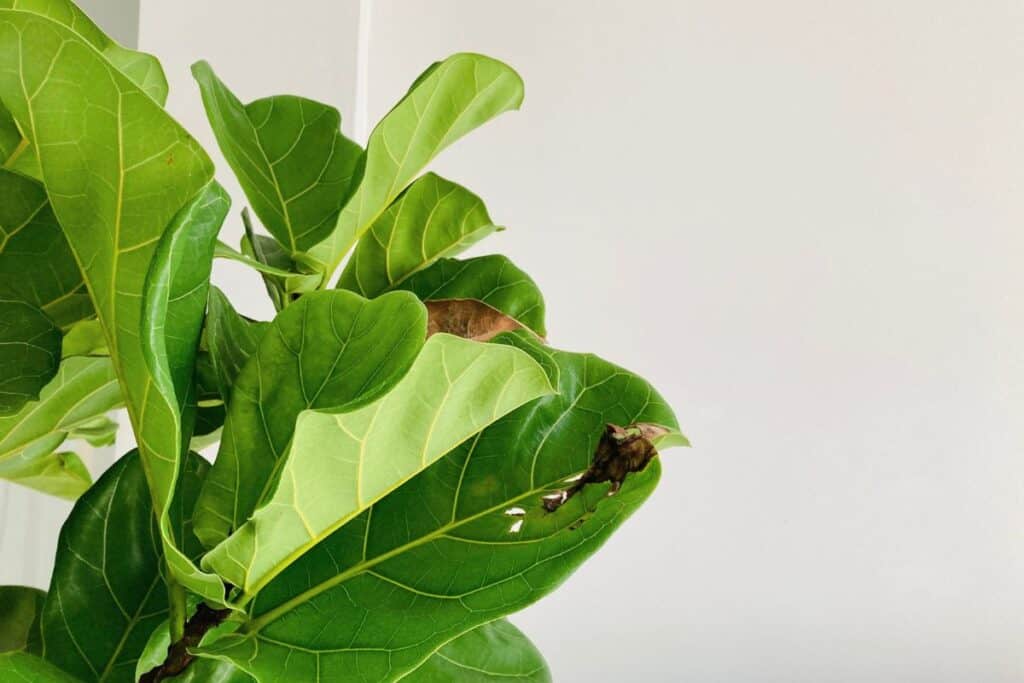
To provide immediate relief, move the plant a few feet (+0.6 m) away from the window during hot and sunny days (i.e., peak of the summer) until it receives only bright, indirect light. Alternatively, hang sheer curtains to filter the harsh midday sun.
Pro tip: Place the pot on a wheeled plant caddy to make it easier to move toward or away from the window, depending on the seasonal light intensity changes. I usually mark spots in the room or record them in a sun diary so I can safely move my houseplants around for optimal light exposure.
Here are additional tips to help your plant recover from sunburn:
- Prune severely damaged leaves using sterile scissors. The brown spots on the leaves won’t revert to green.
- Properly water the plant to help improve the leaves’ resistance to sunburn.
- Rotate the plant by 90-180° every week to ensure balanced light exposure and prevent leaning or leggy growth.
You’ll know your plant is recovering if the leaves don’t develop new brown spots or scorch marks.
4. Chill Injury
As tropical trees, fiddle leaf figs are sensitive to cold drafts or exposure to temperatures below 50 °F (10 °C), which can cause chill injury.
Affected plants are likely to show the following symptoms:
- Pale brown spots that gradually expand over the leaf surface
- The spots eventually darken to almost black as the leaf tissues die (necrosis)
- Curling leaf tips
- Drooping
Here are some tips to help your plant recover:
- Prune discolored leaves using sterile shears since they won’t recover.
- Move the plant to a warmer location (around 75 °F or 24 °C) and monitor for new growth. The leaf buds will eventually unfurl if the roots are still healthy.
5. Bacterial Leaf Spots
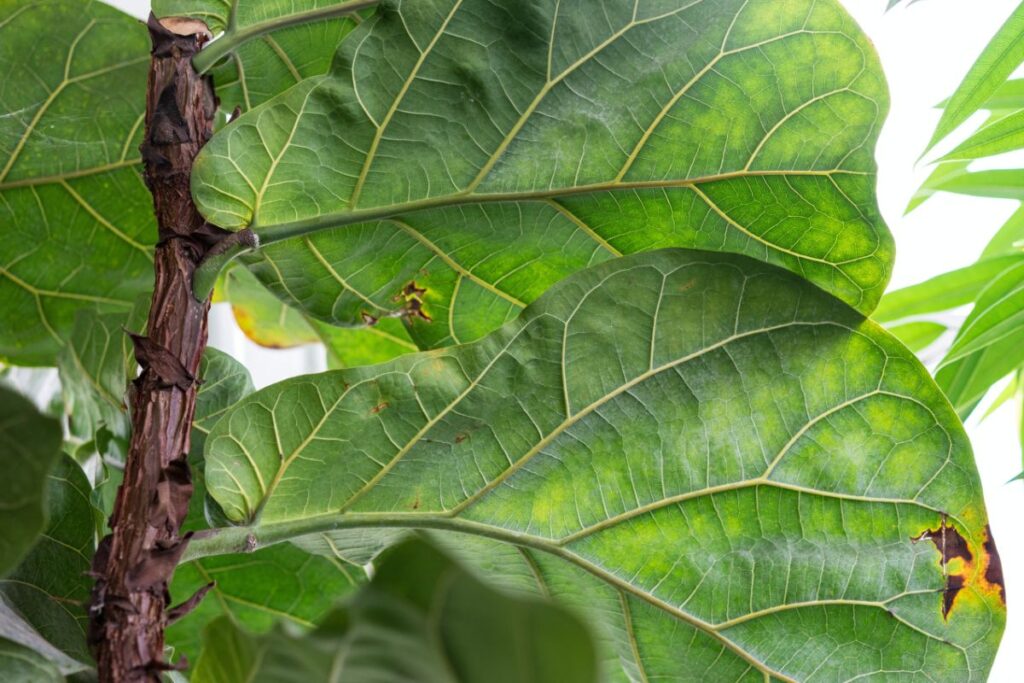
Fiddle leaf figs are susceptible to leaf spot diseases that affect many Ficus species, such as Ficus elastica (rubber plant).
Here are some bacterial diseases to look out for:
- Xanthomonas campestris: This bacterial infection is typically diagnosed through tiny yellow spots on the leaves. Over time, the spots gradually turn brown or black.
- Pseudomonas cichorii: This bacterial pathogen causes brown leaf spots surrounded by yellow halos, commonly affecting new growth.
There is no cure for bacterial leaf spots, but you may still try to save your plant with the following tips:
- Isolate the plant and prune infected leaves using sterile shears.
- Properly discard the infected plant matter to avoid the spread of infection.
- Prevent future infections by watering the soil directly. Avoid wetting the leaves, which can spread the bacteria. You may also prune the bottom leaves, which are in direct contact with the soil.
- Use sterile gardening tools when handling plants. Sterilize the tools before moving from one plant to another.
Keep an eye on the remaining leaves. If symptoms persist, the plant may need to be disposed of to avoid spreading the disease to other plants in the home garden.
6. Pest Infestation
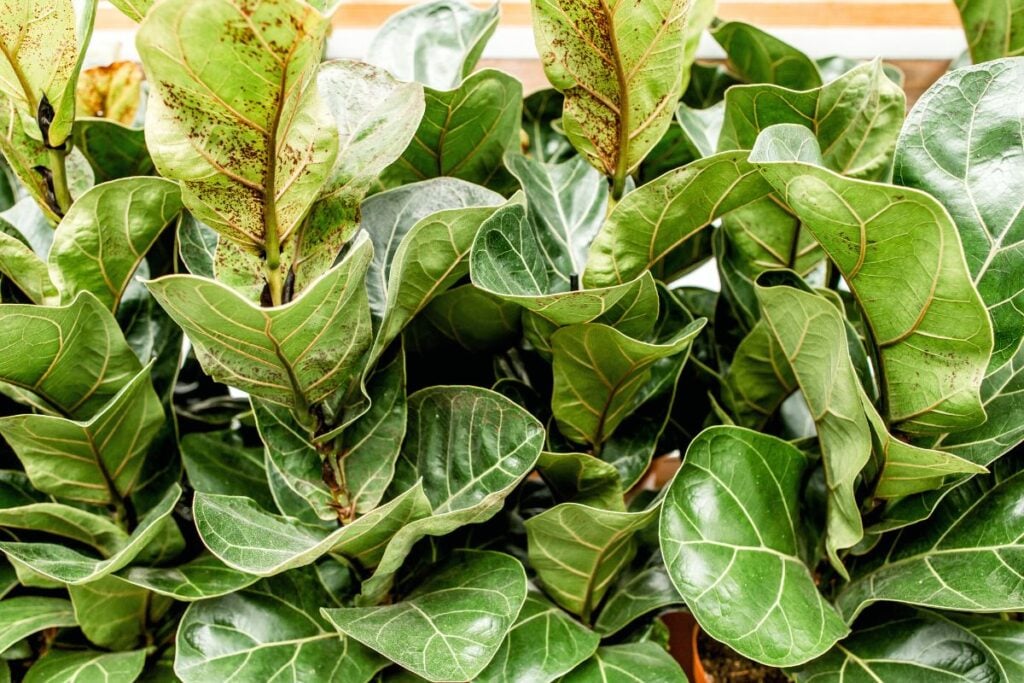
Healthy fiddle leaf figs are generally resistant to sap-feeding and chewing insects because of the calcium oxalate crystals in their sap. The crystals are sharp and insoluble, causing discomfort to the pests and preventing further damage.
However, stressed plants (especially underwatered and nutrient-deficient plants) are likely to contain lower concentrations of calcium oxalate in their sap, making them vulnerable to pest infestations.
Here are some pests that can cause brown spots on FLF leaves:
- Spider mites: Tiny spider-like insects less than 0.04 in (1 mm) long and almost invisible. They weave fine webs over or under leaf surfaces and between stems. They primarily feed on plant sap and cause speckled yellow or white marks on the leaf surface. In some cases, they may cause reddish-brown spots on younger leaves.
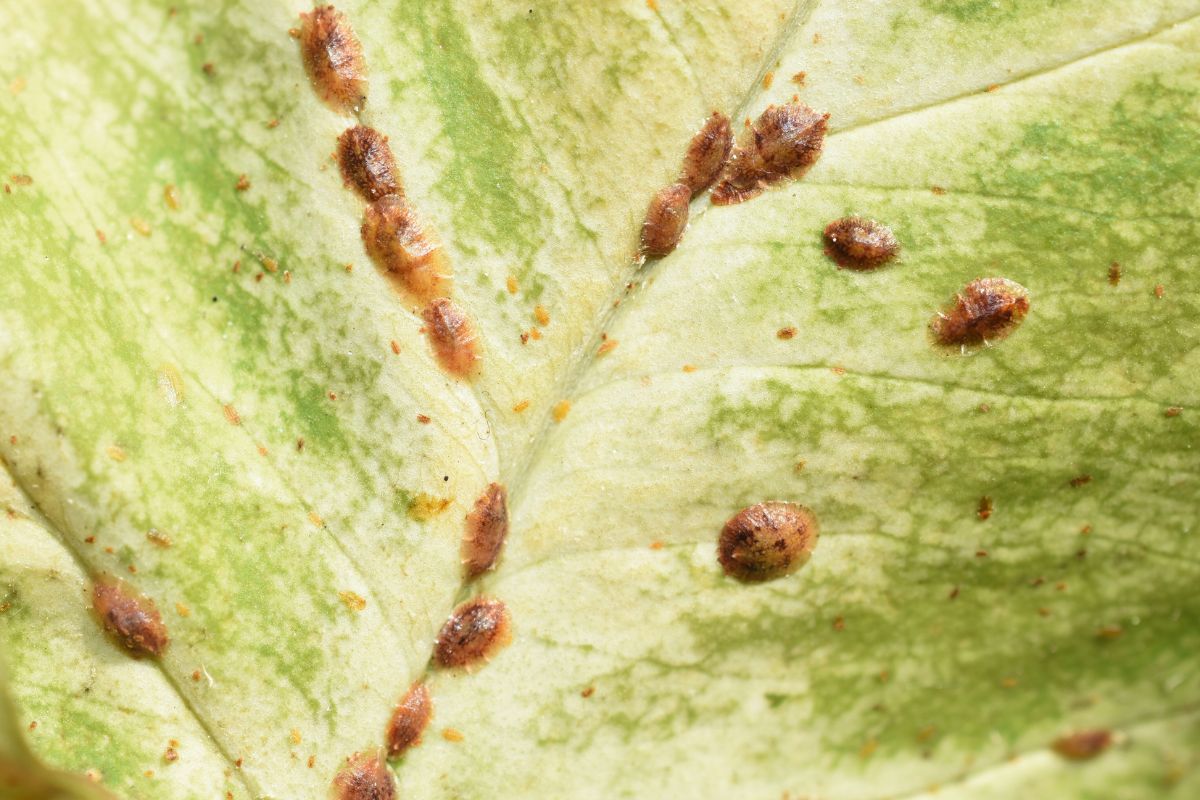
- Scale insects: Adult female scale insects are immobile and appear as tiny brown bumps on leaf veins. They’re about 1/16 to ⅛ in (1.6-3.2 mm) in diameter.
- Thrips: Adult thrips are slender and winged up to ⅛ in (3.2 mm) long. They burrow into the leaves of fiddle leaf figs, causing silver or brown (bronze) specks or patches. They also excrete tiny black specks, which help confirm their presence.
You can treat the pest problem with these tips:
- Gently scrape off the scale insects with a cotton swab dipped in 70% isopropyl alcohol. Minimize contact between the alcohol and the leaves to avoid damaging the plant’s waxy coating. Follow up with weekly neem oil treatments until the infestation is resolved.
- Prune speckled leaves from spider mite damage. You may also wipe away the webs using a clean, damp cloth moistened with water or neem oil solution.
- Prune leaves with visible thrip damage (i.e., silvery or bronze patches) using sterile scissors to eliminate the thrips that burrowed into them.
- Ensure the plant is in a well-ventilated area and spray it with Spinosad spray every 10-14 days to eliminate thrips. This can also work against spider mites.
- Avoid insecticidal soaps as they can break down the leaves’ waxy coating.
- Inspect nearby houseplants for signs of infestation and treat them as well.
- Isolate severely infested plants to control pest populations in the indoor garden.
7. Over-Fertilization
Salt stress from over-fertilization may sometimes manifest as brown spots or scorch marks on FLF leaves. Too much salt in the soil can draw water from the roots and inhibit proper moisture transport to the leaves.
As a result, the leaves appear dehydrated with the following symptoms:
- Brown leaf tips
- Crisp and curly leaf edges
- Brown spots on the leaf surface
If the brown spots appear within 2 weeks or so after fertilizing, your plant is most likely suffering from salt stress.
Here are the immediate actions to treat the problem:
- Granular fertilizer: Scrape off the white film of insoluble fertilizer salts over the soil surface and replace it with fresh soil mix or compost. Flush the soil with filtered or distilled water until the excess drips from the drainage holes.
- Liquid fertilizer: Flush the soil with filtered or distilled water to dilute the nutrients to safe levels or leach the excess through the drainage holes.
In case of severe over-fertilization or poor soil drainage, it’s best to repot the plant with the following tips:
- Carefully unpot the plant and remove as much old soil as possible.
- Prune desiccated or brittle roots using sterile scissors.
- Rinse the roots with distilled or filtered water to remove the excess fertilizer salts around them.
- Plant the fiddle leaf fig in fresh, well-draining soil with 10% compost in a pot with adequate drainage holes. If the plant appears rootbound, you may use a pot one size larger (2 inches or 5 cm wider and deeper).
- Water the plant deeply and be mindful of your care routine and environment until it recovers.
After flushing or repotting, refrain from feeding your plant until the symptoms disappear. Wait until the next spring to fertilize your plant with half-strength 3-1-2 liquid fertilizer every 1-2 weeks or granular fertilizer every 2 months.
I’ve also tried using pre-measured food spikes or capsules specially formulated for fiddle leaf figs or Ficus plants and found that they work quite well to keep the leaves green and vibrant. They’re designed to release nutrients slowly over time to nourish your plant.
Follow the product label for the recommended dosage and application to avoid over-fertilizing your plant.
Pro tip: Water your plant regularly when using slow-release fertilizers like granules and food spikes. You may also flush the soil once every 2-3 months during spring and summer to leach the insoluble salts or dilute the concentration to safe levels.
Routine Care and Maintenance
You can maintain your fiddle leaf figs vibrant green leaves with the following maintenance tips:
- Follow a regular watering routine. Deeply water the plant when the top 1-2 inches (2.5-5 cm) of soil are dry. The rate at which the soil dries out can vary based on the season and humidity levels, so make it a habit to check the soil moisture 5-7 days after watering.
- Ensure proper light exposure. Place the plant in bright, indirect light for at least 8 hours daily. Hang sheer curtains to avoid direct midday sunlight and prevent sunburn.
- Maintain stable and moderate temperature and humidity. Keep the temperature between 65-75 °F (18-24 °C) and ensure humidity levels are between 40 and 60%.
- Regularly inspect the leaves and stems for pests. Use preventive treatments like neem oil spray or manual pest removal to protect the plant.
- Fertilize the plant only during the growing season (spring and summer). Use half-strength 3-1-2 liquid fertilizer every 2 weeks or a thin layer of granular fertilizer every 2 months. Ensure your plant is properly hydrated when fertilizing.
- Prune your plant as needed during the growing season. Fiddle leaf figs may need occasional pruning in spring or summer to remove old and yellowing leaves.
- Dust the leaves weekly to keep them shiny. Avoid using waxy products, as the ingredients may block the stomata and inhibit proper transpiration. Instead, you may use water for daytime misting and wipe the leaves dry with a clean cloth. Avoid leaving water droplets on the surface. You can also apply neem oil solution at night when the stomata are closed and the plant is safe from sunburn.
- Repot your plant every 2-3 years or as soon as it shows signs of being rootbound (i.e., roots growing out of the drainage holes). Regular repotting in appropriate soil and pot can help prevent common problems like overwatering (root rot) or underwatering (hydrophobic soil) that cause brown spots on leaves.
Final Thoughts
Fiddle leaf figs are famous for being temperamental, showing distress through their leaves. The deep green foliage can develop brown spots due to a myriad of issues, such as poor watering practices, sunburn, chill injury, pests, diseases, and salt stress.
Thankfully, you can identify the root cause based on the size, pattern, location, and accompanying symptoms of brown spots.
Note that browning is usually a sign that the problem has progressed. It’s important to monitor an affected plant closely to prevent the issue from worsening and improve your plant’s chances of recovery.
I know that fiddle leaf figs are not the easiest plants for beginner gardeners. However, don’t let anyone stop you from getting your dream plant. Leave a comment if you have any questions and I’ll share more practical tips. Or you can share your experience for a fun-filled fiddle leaf fig plant care journey.