
Black Spots on Fiddle Leaf Fig Leaves: Causes & Fixes
Fiddle leaf figs (Ficus lyrata) are iconic houseplants famous for their stylish and dramatic foliage but notorious for their sensitivity to environmental changes. The large leathery leaves are prone to discoloration, such as black spots when stressed.
A fiddle leaf fig may develop black spots on the leaves due to the following:
- Overwatering
- Root rot
- Fungal infection
- Bacterial infection
- Pest infestation
- Sunburn
- Chill injury
Black leaf spots are common stress symptoms in fiddle leaf figs that can indicate a wide range of issues from minor to irreversible. This article will explore possible causes to help you identify, understand, and address the problem to ensure the plant’s survival.
Leaf Characteristics and Black Spot Development
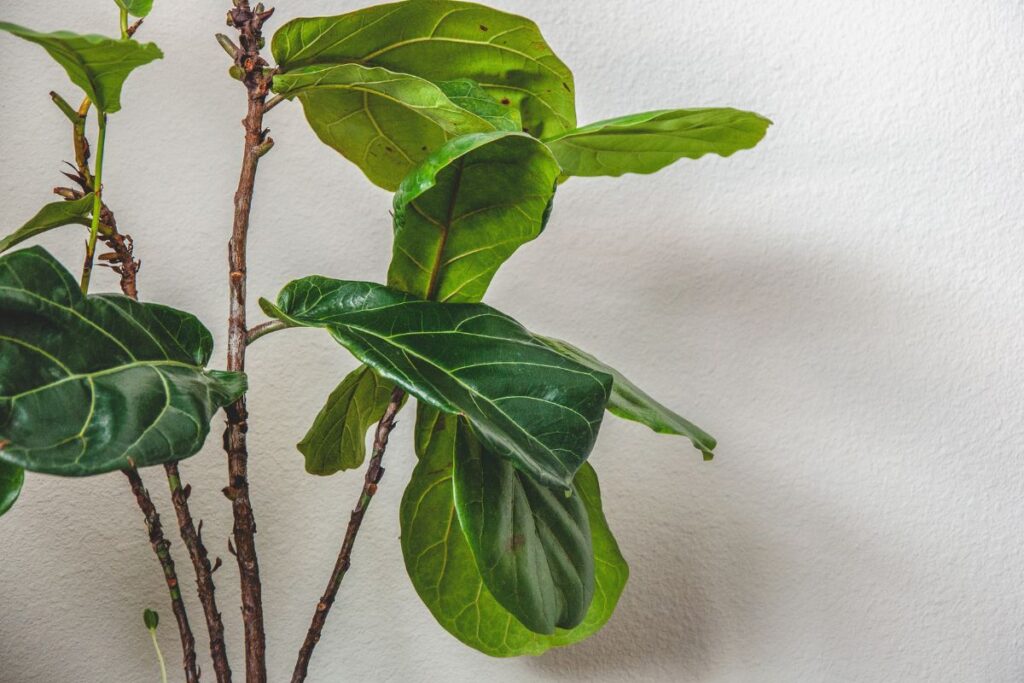
Fiddle leaf figs (FLFs) are tropical broadleaf trees native to West and Central South African rainforests.
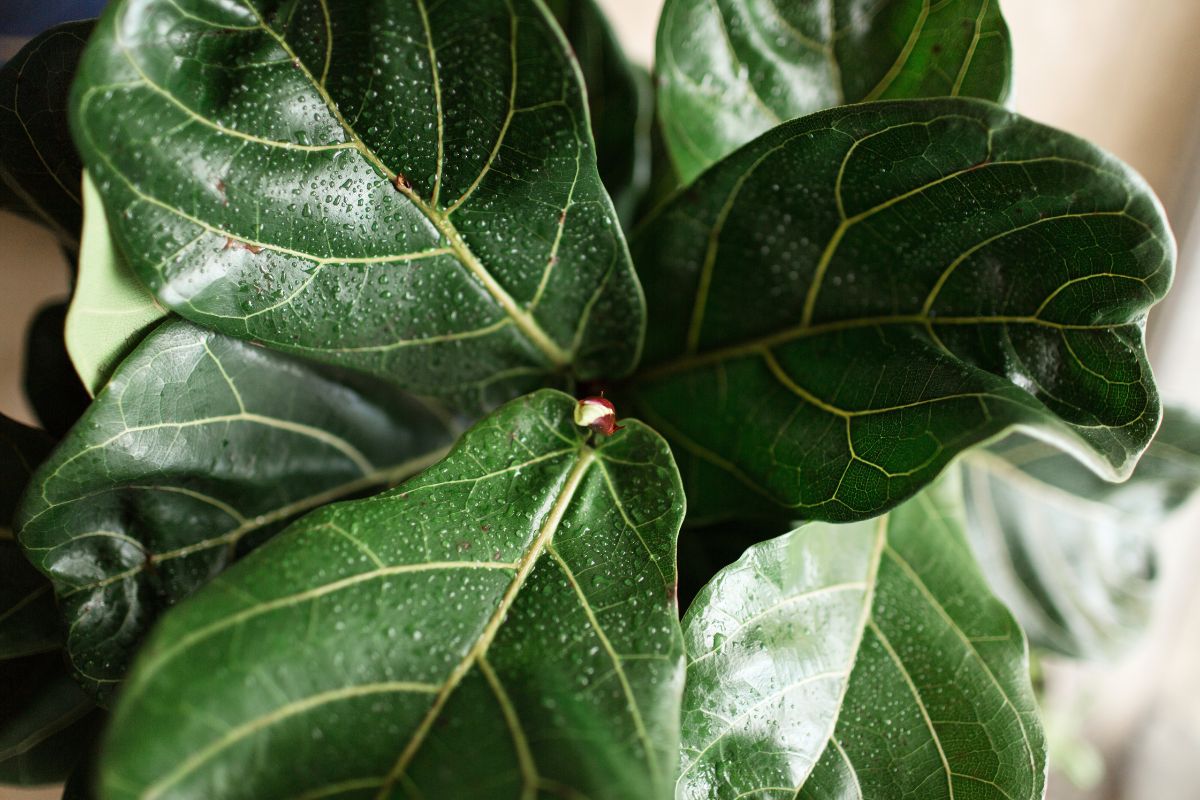
They’re famous for their magnificent foliage, which possesses the following traits:
- Shape: Fiddle or lyre-shaped
- Size: Over 2 feet (0.6 m) long and up to 18 inches (45 cm) wide
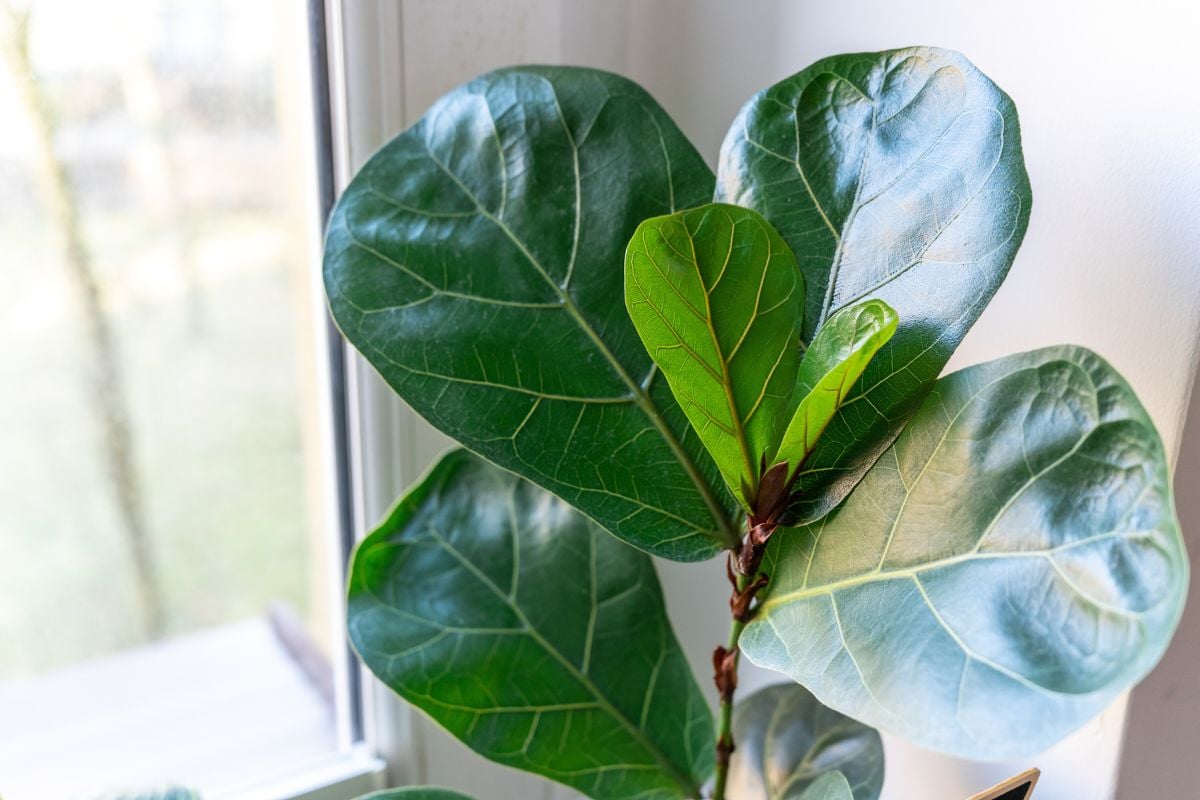
- Color: Light green for younger leaves and deep green for older leaves
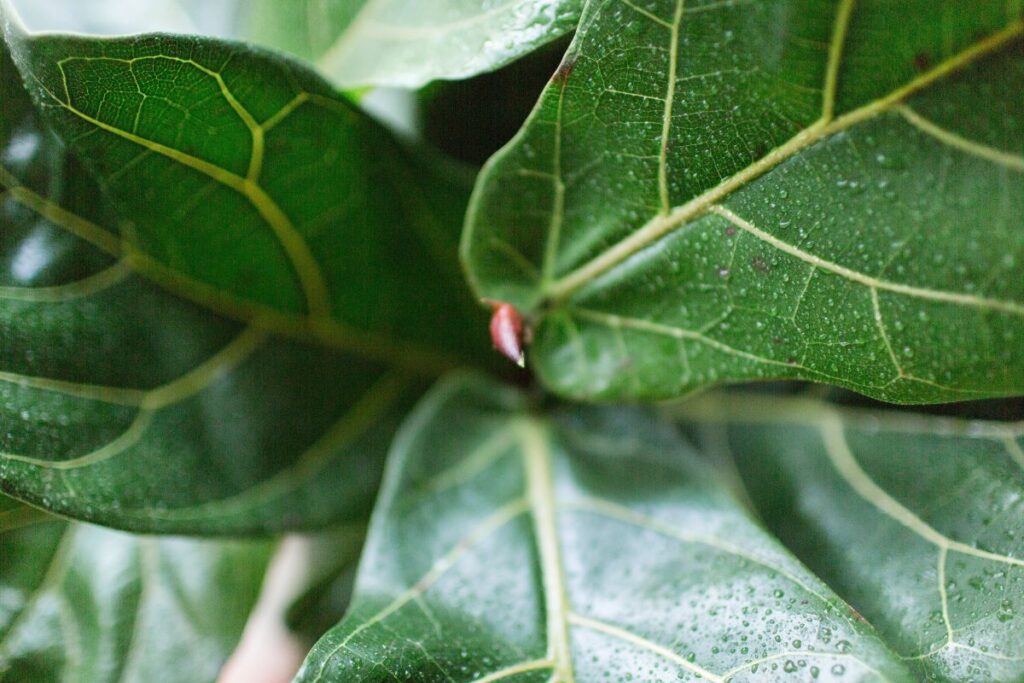
- Venation: Pinnate with tiny web-like veins in the middle for mechanical support to the large leaf size and optimal moisture distribution
When environmental problems like wet soil, intense sunlight, and pests stress the plant, the leaves begin showing symptoms like dark brown or black spots.
Black spots on FLF leaves may develop in the following ways:
- Cells burst from high water pressure due to soggy soil conditions, resulting in irregularly sized deep brown or dark spots
- Necrosis from rot-causing pathogens passing through leaf veins or localized bacterial infections on the leaf surface
- Blackish patch over older, well-hydrated leaves exposed to intense heat and sunlight
- Sooty mold mycelia spreading over honeydew excreted by insect pests
Fiddle leaf figs earned their reputation as fussy houseplants because they shed symptomatic leaves almost instantly when exposed to drastic environmental changes. This is a defense mechanism to preserve their energy and increase their chances of survival.
Early detection of the symptoms of black spots and identification of the underlying causes is crucial to the fiddle leaf fig’s health and longevity.
Symptoms
Fiddle leaf figs usually show earlier symptoms before the black spots appear, including the following:
- Soggy soil
- Water-soaked spots on the leaves
- Reddish brown spots (edema) on the leaves
- Brown spots with a yellow halo on the leaves
- Sticky liquid droplets (honeydew) on the leaf surface
- Droopy leaves
Left unaddressed, the symptoms may progress into the following:
- Foul-smelling soil indicative of root rot
- Mushy black spots on the leaf surface that spread to the edges
- Localized necrotic spots with yellow halos
- Sooty mold mycelia spreading over the honeydew
- Dark brown to black patches over sun-exposed leaves
- Leaf drop
- Mushy stems with brown or black core
Common Causes and Fixes
Below are the common causes of black spots on fiddle leaf figs:
1. Overwatering
Poor soil drainage and frequent watering can lead to overwatering problems in fiddle leaf figs with the following progression of symptoms:
- Waterlogged soil: Soil surface remains soggy several days after watering, indicating poor water infiltration or drainage
- Wet leaf spots: Water-soaked spots develop on the leaves
- Edema: Cells burst, appearing as tiny reddish spots on young, pale green leaves and brown spots on old, dark green leaves
- Black leaf spots: Prolonged or continuous overwatering inhibits proper healing, turning the burst cells into black, necrotic spots

You can fix minor overwatering problems with the following tips:
- Poke the soil through the drainage holes using a wooden chopstick to relieve compacted soil or plugging that inhibits proper drainage.
- Let the soil’s top 2 inches (5 cm) dry out completely between watering sessions. Pro tip: For larger pots about 12 inches (30 cm) deep, you may let the top ⅓ of the soil dry out during the growing season—or up to ½ during the fall and winter.
If the tips above don’t work due to poor soil quality (i.e., compaction or excessive moisture-retaining materials), it may be best to repot the fiddle leaf fig in fresh soil with the following steps:
- Scrape the inner edges of the pot to loosen and slide out the rootball.
- Remove as much old soil as possible using a hand cultivator or your gloved fingers.
- Cut off any black or mushy roots using sharp, sterile scissors. Clean the blades with rubbing alcohol and cotton balls between cuts to prevent the spread of infection.
- Rinse the roots with running water to remove the remaining soil. Optional: You may use 1% hydrogen peroxide solution to eliminate any existing soil pathogen.
- Prepare a breathable pot 2 inches (5 cm) wider and deeper than the rootball.
- Place a wire mesh over the drainage holes to prevent the formation of soil plugs over time.
- Fill the pot’s bottom 2 inches (5 cm) with a mound of moist, fresh, well-draining soil. Pro tip: Pre-moisten the soil with tepid water until it feels like a wrung-out sponge. I recommend using 2 parts of standard potting soil, 1 part perlite, and 10% compost for optimal balance between aeration, drainage, and moisture retention.
- Spread the roots over the mound and cover them with more soil until they’re buried about an inch (2.5 cm) deep. To prevent crown rot, ensure the crowns of the roots are partially visible over the soil surface.
- Keep the plant in a warm room (65-75 °F or 18-24 °C) with bright indirect light for optimal plant activity and moisture use.
- Water the plant deeply only when the soil’s top 2 inches (5 cm) dries out. You can determine the soil moisture using your index finger (2 knuckles) or a wooden chopstick calibrated to 2 inches (5 cm) from the pointy end.
Note: Black spots on fiddle leaf figs may sometimes be incorrectly associated with underwatering.
However, from my experience, underwatering causes FLF leaves to turn brown (sometimes pale) and crisp. That said, dehydration doesn’t cause black spots. Even sunburn usually thins an underwatered FLF leaf and turns it white (bleached) or pale brown and crisp
2. Root Rot
If overwatering problems persist or remain unattended, the problem can lead to root rot. Phytophthora and Pythium are the most common rot-causing fungi-like pathogens that thrive in wet potting soil.
They can occur in potting soil in the following ways:
- Phytophthora can spread through contaminated gardening tools.
- Pythium can be transmitted by fungus gnats, which like constantly moist soil.
Prolonged wet conditions can encourage a rapid increase in pathogen population in the soil.
As a result, the fiddle leaf fig will exhibit the following stress symptoms:
- Black, mushy, smelly roots
- Wilting leaves
- Black necrotic spots on random places over the leaf surface
- Yellowing or browning and crisp leaves due to poor moisture uptake through decayed roots
- Leaf drop
Rot-causing pathogens travel through the xylem within the leaf veins and break out over the leaf surface, causing dark brown or black, mushy spots.
After losing a few plants to root rot early in my FLF journey, I’ve made the following observations:
- Young plants are likely to succumb to root rot because the pathogens can spread quickly through the shallow, fragile roots. This is especially true for newly rooted cuttings or those with unestablished roots.
- Older plants with extensive roots have better chances for survival, especially when less than 50% of the roots have been damaged and require pruning. The plant will recover with improved care as long as the stem looks green and firm inside (without brown or black mushy spots).
You can fix the problem with the following tips:
- Pruning: Prune symptomatic leaves using sterile pruning shears. Sanitize the tool between cuts using rubbing alcohol.
- Inspection: Inspect the wound on the stem if there are no black or brown spots. Note: The discoloration inside the stem can indicate that the problem will persist and eventually kill the plant.
- Propagation of healthy stem cuttings: Locate healthy terminal branches with healthy, asymptomatic leaves and propagate stem cuttings. You can root the cuttings in tepid filtered water in a clear glass and leave it in a warm room with bright indirect light. Replace the water every 3-5 days, and the roots will develop within 6-8 weeks.
- Disposal of sick plants: If the entire stem and branches have a rotten core, properly dispose of the infected plant to prevent the spread of disease.
- Root-pruning salvageable plants: If the main stem appears healthy, carefully unpot the plant and prune all the decayed roots. Remember to sterilize the tool between cuts.
- Eliminating rot-causing pathogens: Rinse the remaining roots in 1% hydrogen peroxide solution. For plants smaller than 3 feet (0.9 m), you can soak the root ball in the solution for 5-10 minutes. Leave the roots to dry over a clean towel in a room with bright indirect light and good ventilation.
- Repotting: Repot the plant in a similar-sized pot with a moist, fresh soil mix. Pro tip: Use a breathable pot with drainage holes (i.e., terracotta) to prevent recurring overwatering and root rot problems.
- Proper Environment: Keep the plant in a warm room with moderate humidity (around 50%) and bright indirect light to encourage it to grow new healthy roots and prevent further leaf drops.
3. Fungal Infection

Some fungal diseases that affect houseplants may also affect a stressed fiddle leaf fig and cause blackish spots on the leaves.
Here are some diseases to watch out for:
- Anthracnose: The common causative agents of anthracnose in Ficus spp. are Colletotrichum spp. or Glomerella cingulata. Although rare, anthracnose can enter the home through infected Ficus plants like variegated rubber trees (F. elastica) and fig trees (F. carica) and spread to susceptible houseplants, causing circular masses of brown spores with a black, necrotic center.
- Botrytis blight: Botrytis cinerea is an opportunistic fungus that infects fig fruit or shoot tips injured by frost. Airborne fungal spores can enter through the wounds left behind by falling leaves or improper pruning. Infected young leaves and stems typically develop dark brown or black lesions as the fungi feed on nutrients. Severely damaged leaves eventually fall off.
- Myrothecium leaf spot: Caused by Myrothecium roridum, this fungal disease causes concentric brown spots with a dark black center containing spores. The disease can spread through water droplets from overhead watering or splashes from misting.
Fungal leaf spots are usually localized infections that you can treat and prevent with the following methods:
- Pruning: Locate all the symptomatic leaves and cut close to the stem using sterile pruning shears. If multiple leaves on one branch have fungal leaf spots, cut off the entire branch to prevent the spread of infection to other healthy-looking branches. Regular pruning of aging or yellowing leaves in spring can also help improve air circulation, inhibiting fungal growth.
- Sealing: Brush some cinnamon powder over the cut to promote faster healing and prevent secondary bacterial or fungal infection.
- Humidity management: Fiddle leaf figs can tolerate indoor humidity as low as 40% when well-watered. Avoid humidity levels over 60% which can encourage fungal growth.
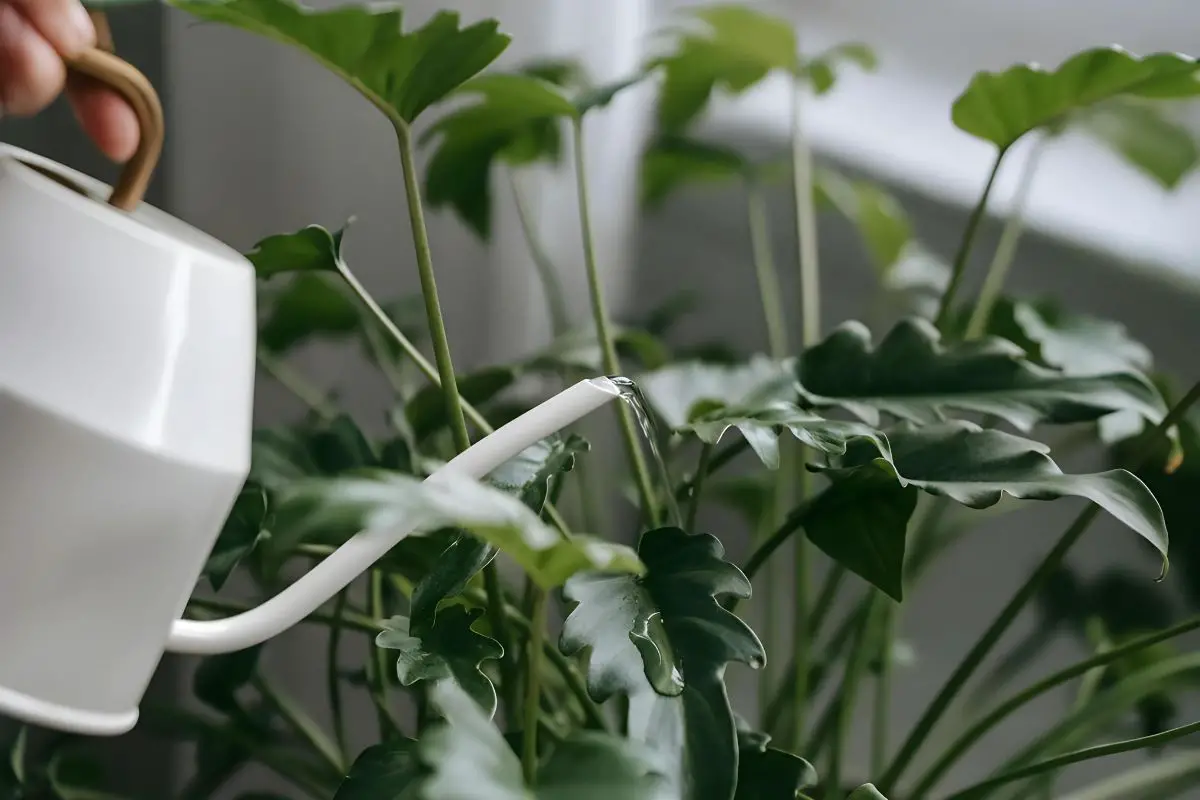
- Proper watering: Avoid wetting or misting the foliage when watering your houseplants, including fiddle leaf figs. Pour the water directly into the root zone to properly rehydrate the roots. Unwanted moisture on the leaf surface can promote fungal growth and the spread of disease through droplets.
Note: I don’t recommend using copper-based bactericides or fungicides because they:
- Are only effective as prevention when applied regularly
- Can quickly add up to the cost of maintaining an indoor garden.
- Don’t have a significant effect on pathogens that have already infected the leaves
- Tend to be species-specific (working only on certain bacterial species listed on the product label)
- Have a risk of phytotoxicity or tissue damage on fiddle leaf figs
4. Bacterial Infections
A few bacterial species can affect fiddle leaf figs and cause black spots on the leaves, especially during warm, wet, and humid conditions in the summer.
Here are the bacterial diseases to watch out for with their corresponding symptoms:
- Pseudomonas Leaf Spot: This disease is caused by Pseudomonas cichorii and typically manifests as randomly spaced circular necrotic (dark brown or black) spots over the leaf surface.
- Xanthomonas Leaf Spot: Caused by Xanthomonas campestris, this disease starts as tiny yellow water-soaked spots on the leaves that gradually develop a brown necrotic core. The discoloration can appear blackish on older, darker leaves.
Bacterial leaf spot diseases are transmitted through water droplets from infected leaves to lower leaves. The symptoms typically emerge on the area of the leaf where the contaminated water droplets land.
Here are some ways to treat and prevent bacterial diseases in fiddle leaf figs:
- Isolate symptomatic FLFs in a room with bright indirect light and moderate temperatures (around 70 °F or 21 °C) and humidity (around 50%). Avoid placing fiddle leaf figs in kitchens or bathrooms, where humidity and temperature levels can fluctuate drastically.
- Prune all symptomatic leaves right away using sterile pruning shears, which must be sterilized with rubbing alcohol before use, between cuts, and after use.
- Dispose of all infected plant parts properly to prevent the spread of diseases.
- Avoid misting or wetting the foliage when watering the plant to prevent the potential spread of pathogens.
- Maintain the humidity level at 40-60% to keep the plant happy while discouraging bacterial growth. You can switch on a humidifier to raise the humidity. Alternatively, switch on an electric fan or dehumidifier to improve ventilation.
- Inspect the leaves regularly and prune any new symptomatic leaves.
- If symptoms persist, discard the infected fiddle leaf fig to avoid spreading the disease to other houseplants. A sick FLF isn’t a good candidate for propagation, as it carries bacterial pathogens within its tissues.
5. Pest Infestation
Several sap-feeding insects can also cause black spots on FLF leaves, including the following:
- Aphids: Tiny, translucent pests about ⅛ in (3.2 mm) long and may be green, white, black, orange, or pink. They typically crawl underneath the leaves.
- Scale Insects: Brown, hard-shelled, immobile insects about ⅛ in (3.2 mm) in diameter. They usually attach to leaf veins or petioles for better and steady access to sap.
- Mealybugs: Tiny crawlers about 1/16-⅛ in (1.6-3.2 mm) in diameter covered with a cottony white wax. They usually form clusters on leaf undersides.
- Thrips: Slender, winged insects about 1/16-⅛ in (1.6-3.2 mm) long. They burrow into the leaf tissue to feed on sap and plant matter, causing a silvery or bronze patch on the leaf surface.
The black spots caused by pests may appear in the following forms:
- Round and sticky: Aphids, scale insects, and mealybugs excrete a clear, sugary liquid called honeydew after feeding on plant sap. When airborne sooty mold spores land over FLF leaves, they develop black, threadlike mycelia that take on the shape of the honeydew droplets.
- Tiny black dots like fine coffee grounds: Thrips excrete fine black dots on the leaf surface after feeding on plant sap.
Luckily, the black spots caused by pests don’t pose actual damage on the leaf tissue.
You can deal with them with the following tips:
- Cleaning: Wipe the sooty mold or thrip excrement with a clean damp cotton ball that you can quickly discard. Use a different cotton ball before moving on to the next leaf to prevent the spread of spores.
- Pruning: Cut off leaves with thrip damage (silvery or bronze patch), as they typically contain more thrips (eggs or larvae) inside.
- Manual pest removal: Use a cotton swab dipped in alcohol or tweezers to remove pests from the leaves and drop them into a cup of soapy water.
- Sticky trap: Place a yellow sticky card/trap near your houseplants to draw winged insects like thrips away from the leaves.
- Neem oil spray: Apply neem oil spray generously at night once a week for up to 8 weeks until there are no more signs of pests. You can reduce the frequency to once every 2 weeks for continued prevention. Neem oil is effective against aphids, scale insects, and mealybugs.
- Spinosad-based spray: Apply spinosad-based spray on your fiddle leaf fig once every 10-14 days for up to 2 months during the warm season to eliminate thrips. Be sure the indoor garden is well-ventilated at least 24 hours after treatment to avoid lung problems due to inhalation of the chemical. I also recommend wearing gloves and goggles to prevent skin and eye irritation.
6. Sunburn
Too much light and heat from the sun on dehydrated FLF leaves can cause pale brown spots or white patches that feel dry and crisp.
I used to believe well-watered fiddle leaf figs were resistant to sun damage. However, during the summer, I occasionally noticed dark brown to blackish patches over older leaves exposed to direct sunlight, especially for plants sitting comfortably next to my unobstructed east-facing window.
That said, proper watering doesn’t make the plant immune to sunburn from prolonged exposure to intense sunlight, especially at the peak of summer.
Here are the tips to fix the problem and prevent recurrence:
- Prune discolored leaves, as they won’t revert to their green color. Remove 1-2 leaves weekly to avoid an imbalance in your plant’s appearance.
- Move the plant a few feet (+ 0.6 m) from the sunny window or hang light curtains to filter the light.
- Rotate the pot weekly or right before watering to give the leaves equal time in the sun and prevent prolonged exposure to intense light and heat.
Note: Although indirectly, insufficient light can also contribute to plant stress, leading to black leaf spots.
Here’s how:
- Overwatering or root rot risk: Low light can reduce a plant’s metabolic rate and water usage or evaporation, resulting in prolonged wet conditions in the soil.
- Prolonged moisture on leaf surface: Humidifiers can cause moisture to accumulate on leaf surfaces. Without sufficient light to promote evaporation, the water stays on the leaves long enough (12-24 hours) for pathogens to cause an infection.
Be sure to provide your fiddle leaf figs with sufficient light, which I’ll discuss further below.
7. Chill Injury
Fiddle leaf figs are tropical natives, making them frost- or chill-sensitive to temperatures below 55 °F (13 °C). Freezing temperatures can freeze the fluid within plant cells, forming ice crystals that can puncture the cell walls and create blisters on the leaf surface.
I once left a few potted fiddles outdoors for too long after summer, and a cold snap in the fall killed almost all the leaves.
The damage progressed quickly with the following symptoms:
- Droopy leaves
- Brown, water-soaked spots (almost black) that quickly spread to the leaf edges
- Leaf drop
- Mushy branches and stems
In my experience, a healthy fiddle leaf fig can tolerate a brief exposure to temperatures around 50 °F (10 °C). However, an overnight or a few hours of exposure to freezing temperatures (32 °F or 0 °C) could kill the plant entirely.
Here are some tips to check whether your fiddle leaf fig can still be saved from a chilling injury:
- Squeeze the stem or branch downward with your fingertips to locate where the mushiness stops.
- Use a sharp, sterile knife and cut off the mushy portion of the stem or branch.
- Inspect the inner layer of the wood. Brown or black spots indicate chill or freeze injury that will not recover.
- Continue cutting downward (above a leaf node) until you find a green core without discoloration.
- Wipe the sap off the wound with a clean, damp cloth.
- Brush some cinnamon powder over the cut to promote faster healing and prevent infection.
- Keep the plant in a room with stable warm temperatures (around 70 °F or 21 °C), moderate humidity (around 50%), and at least 8 hours of bright indirect light. Avoid areas with fluctuating conditions like kitchens, bathrooms, or spots near drafty windows or heating/cooling vents.
- Water the soil only when the top ⅓ or ½ dries out.
Note: The chill-injured fiddle leaf fig will likely continue to shed more leaves for up to a month. But with consistent care and stable indoor conditions, it will eventually grow new leaves.
Preventive Measures for Healthy Fiddle Leaf Figs
You can prevent black spots on FLF leaves with the following care tips:
- Quarantine new plants: Isolate new plants before introducing them to your indoor garden to identify, treat, and prevent the spread of pests or diseases.
- Water: Allow the soil’s top 2 inches (5 cm) to dry out completely between watering. For pots over a foot (0.3 m) deep, wait until the top ⅓ dries out. Avoid misting or overhead watering to prevent water splashes that can spread plant pathogens.
- Soil: Always use a fresh, sterile potting mix with optimal balance in aeration, drainage, and moisture retention. My go-to recipe for fiddle leaf figs contains 2 parts high-quality potting mix, 1 part perlite or pumice, and 10% compost.
- Light: Give young plants at least 8 hours of bright indirect light, commonly found 4-8 feet (1.2-2.4 m) from an east or south-facing window. Older plants can handle up to 4 hours of direct morning sun from an east-facing window. Be sure to rotate the pot regularly to promote balanced growth and prevent leaning or sunburn.
- Temperature: Maintain stable and moderate temperatures between 65 and 75 °F (18 and 24 °C) to prevent heat stress or chill injury.
- Humidity: Maintain the humidity level at 40-60% all year round. You can use a humidifier and monitor the levels around your indoor garden using a portable hygrometer. Or, switch on a fan to improve ventilation when indoor humidity rises during the warm months to inhibit fungal or bacterial growth on the leaves.
- Fertilizing: Nutrient deficiency can make a weaker and more susceptible to infection, such as leaf spot diseases. Feed your fiddle leaf figs a half-strength 3-1-2 liquid fertilizer every 2 weeks during spring and summer or a slow-release granular fertilizer in early spring and early summer for optimal health and growth.
- Pruning: Regular pruning, such as removing aging or yellow leaves, can improve light access and air circulation, which can prevent the progression of leaf spot diseases. Promptly prune sick leaves (i.e., those with brown or black spots) to prevent the spread of infection and improve the plant’s appearance.
- Routine Maintenance and Inspection: Dust the leaves with a clean, damp cloth weekly or before watering the plant to keep them shiny and ensure optimal light absorption for photosynthesis. Check the leaf undersides also for signs of pests and treat them promptly to keep the population under control.
Seasonal Adjustments
Proper seasonal adjustments can also help prevent plant stress that can cause black spots.
Here’s a brief guide:
| Care or Environment | Spring and Summer | Fall and Winter |
| Water | Wait until the top 2 inches (5 cm) or ⅓ of the soil completely dries out between waterings. | Allow the soil to dry out ⅓-½ down because the lower plant activity during the cold season can slow down moisture use. |
| Light | Filter the light with sheer curtains during the peak of summer. | Regularly clean the windows of dust and snow to ensure optimal light access to your indoor garden. |
| Temperature | Daytime: around 75 °F (24 °C) Nighttime: around 65 °F (18 °C) | Avoid nighttime temperature dips below 60 °F (15.6 °C). Keep the plant away from drafty windows or heating vents. |
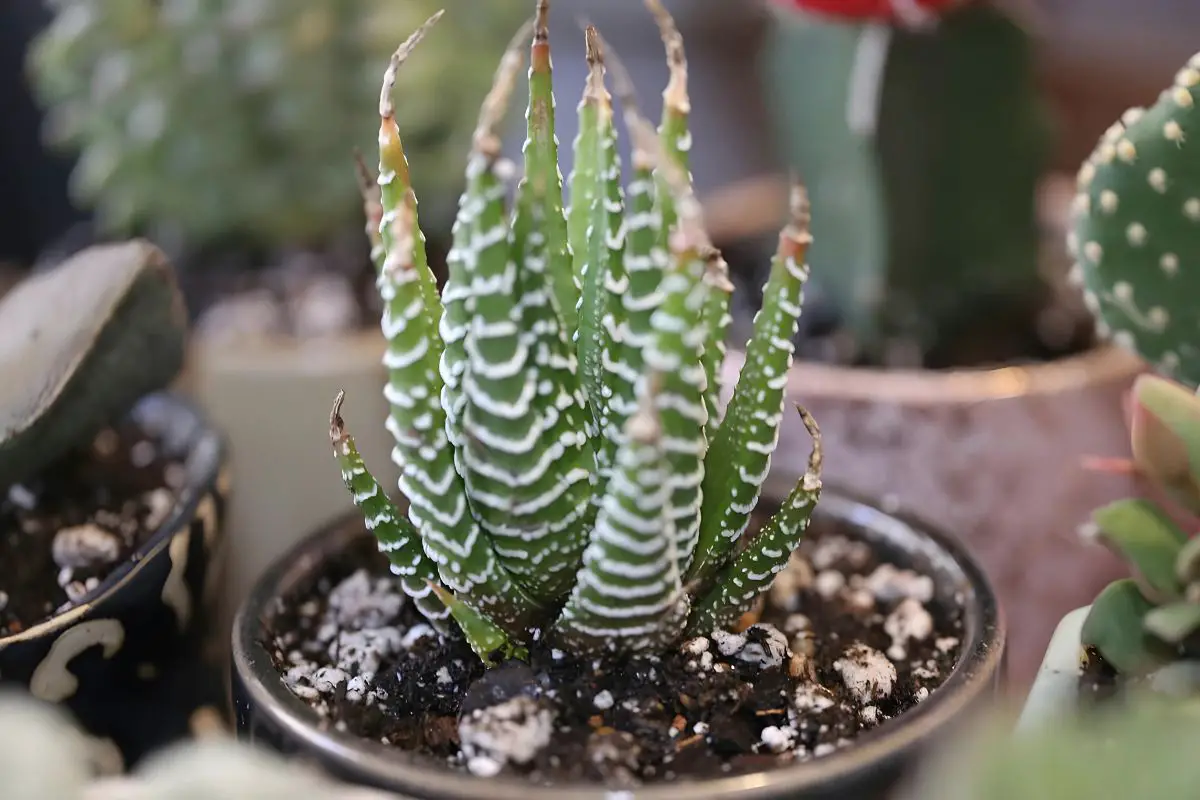
| Humidity | Switch on a humidifier for around 4 hours during midday to boost the humidity in your indoor garden. | Monitor the nighttime humidity using a hygrometer, as indoor heaters can dry out the air. Switch on a humidifier as needed and group FLFs with succulents like jade plants and haworthias, which transpire at night. |
| Pruning | Hard-prune the plant in spring by removing unwanted branches and discolored leaves to improve air circulation and light access. Limit pruning to up to 20% of the plant at a time. Wait 2-4 weeks before pruning again. | Remove aging or damaged leaves as needed. Limit pruning to 1-2 leaves every 1-2 weeks, as the plant’s slower growth rate can delay recovery. |
| Fertilizer | Feed the plant every other time you water using a 3-1-2 liquid fertilizer diluted to half the recommended strength. Alternative: Apply a thin layer of granular fertilizer over the soil in early spring and early summer. | Avoid feeding the plant to prevent salt buildup due to less frequent watering and lower plant metabolic rate. |
Final Thoughts
Fiddle leaf figs are a favorite among interior designers because their dramatic leaves give any indoor space an elegant touch.
However, they’re also known for being emotional and vulnerable to unstable environmental conditions, often responding with leaf discoloration, such as black spots.
Black leaf spots on fiddle leaf figs are common problems you can address and/or prevent with proper pruning, watering, and maintenance of optimal environmental parameters.
Inspect your plant regularly to catch early signs of stress and prevent symptom progression that may end with necrotic spots that signal plant decay and death.
Don’t be discouraged when you see black spots on your fiddle leaf fig. Explore the solutions and care tips I shared above to help your plant recover.
You can also leave a comment to ask questions or share some expert tips about general fiddle leaf fig care!