
Dull Leaves on Fiddle Leaf Figs: Symptoms, Causes, & Fixes
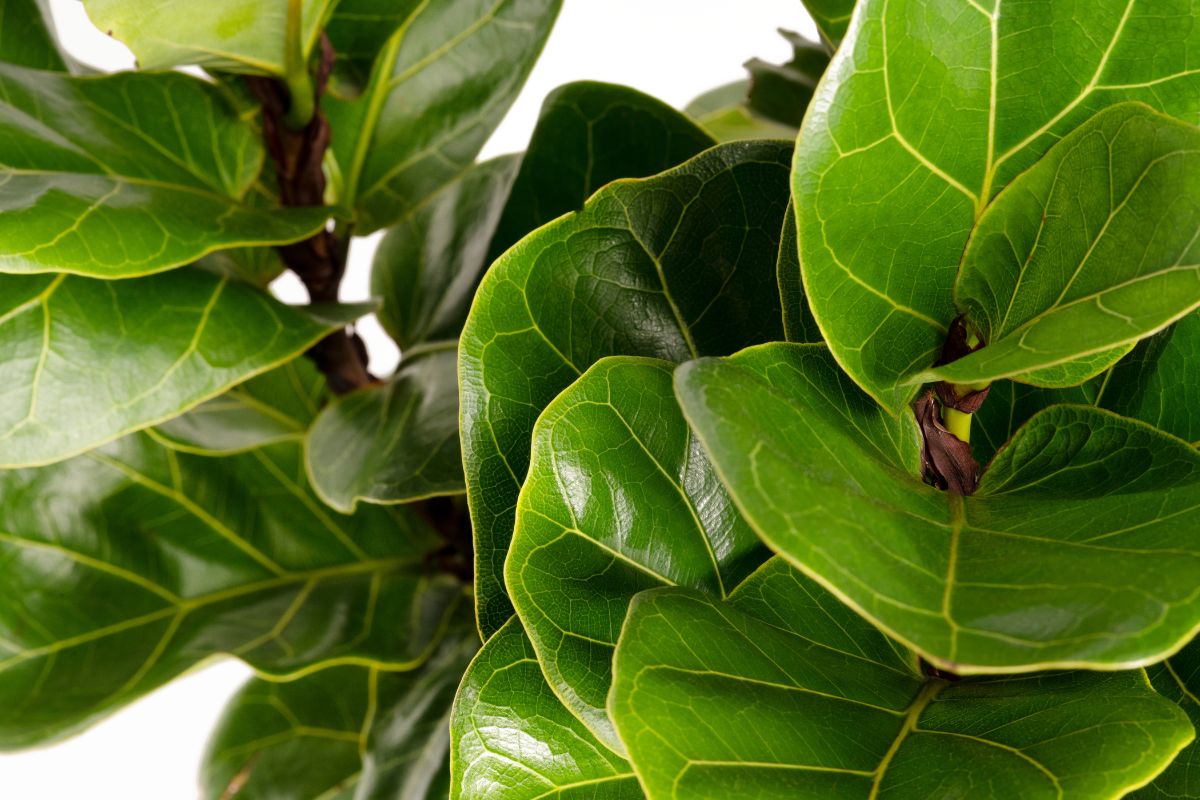
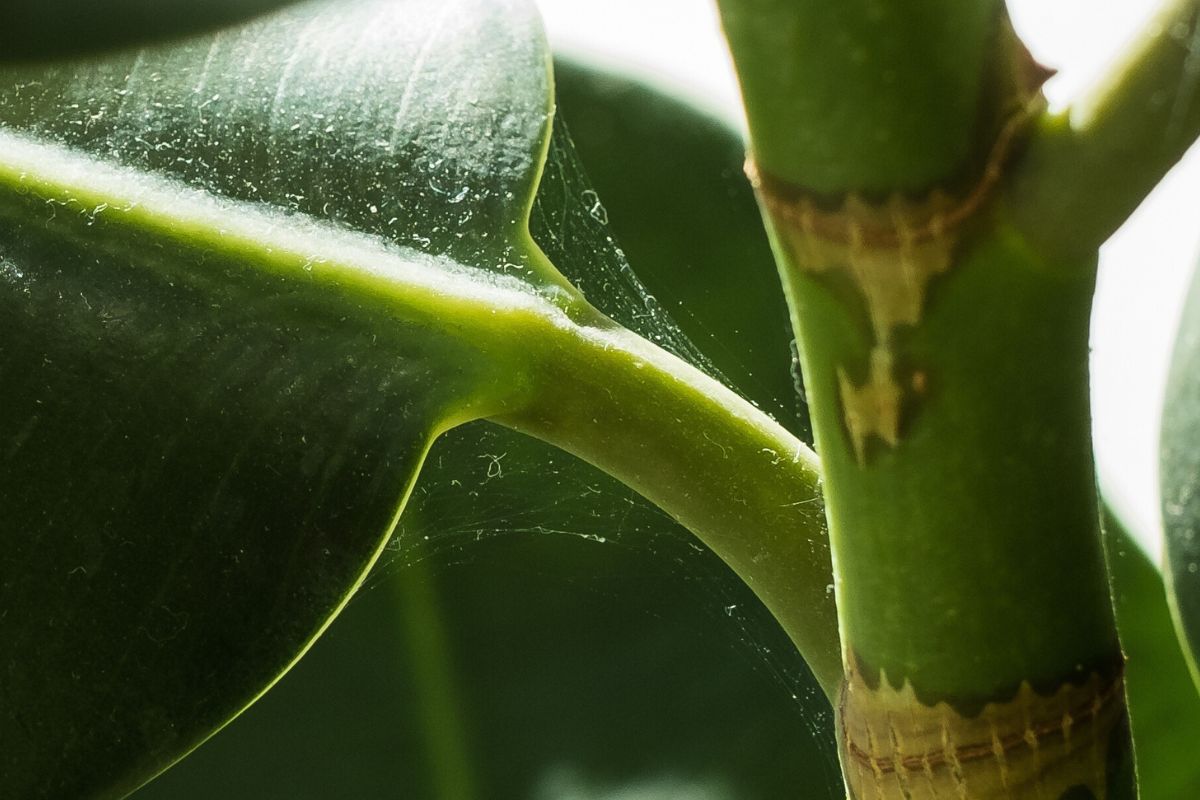
Fiddle leaf figs are celebrated for their lush, glossy leaves that add elegance to any indoor space. However, dull, lackluster leaves can detract from their appeal and often signal underlying issues.
A fiddle leaf fig’s foliage may appear dull due to the following:
- Dust buildup
- Improper lighting
- Pest infestation
- Excessive use of chemical treatment
- Improper watering
- Low humidity
- Nutrient deficiency
This article will explore the symptoms, causes, and practical fixes for dull leaves on fiddle leaf figs, helping you restore their natural shine and health.
Origins, Traits, and Aesthetic Appeal
Fiddle leaf figs (Ficus lyrata) or FLFs are tropical trees from West and Central Africa that entered the U.S. market and became popular indoor plants in the 1970s. They were highly sought-after plants that graced homes, offices, and commercial spaces.
The fiddle leaf fig’s popularity gradually faded in the 1990s because of its reputation for being fussy and hard to care for. The rise of online gardening blogs and social media sites in the early 2010s made gardening tips easily accessible and reignited novice gardeners’ interest in collecting fiddle leaf figs.
Fiddle leaf figs are valued for their striking leaves with the following unique traits:
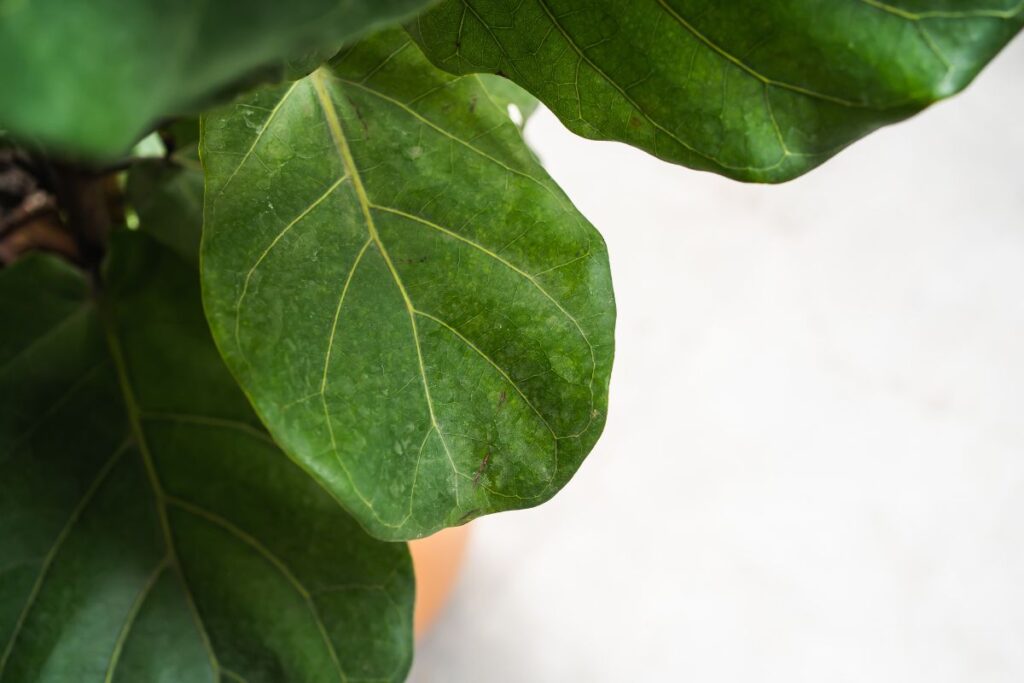
- Color: Young leaves are bright yellow-green, while mature leaves are deep emerald.
- Texture: The leaf feels firm, with a smooth and leathery upper surface and a rough and veiny underside.
- Size: Each leaf can grow up to 18 inches (45 cm) long and 12 inches (30 cm) wide indoors.
- Shape: A mature leaf is flat and lyre- or fiddle-shaped with a wide tip and narrow base.
A fiddle leaf fig tree typically grows 3-10 feet (0.9-3 m) indoors with moderate light, but it can grow taller and may even bend over after hitting the ceiling when exposed to bright light and adequate care.
I usually cut the growing tip of my tree when it reaches over 6 feet (1.8 m) tall to encourage branching and promote a bushy appearance. More importantly, it’s easier to maintain the health and shine of the leaves of a shorter plant.
Glossy and perky leaves signify good health and vitality for fiddle leaf figs. If the leaves on your plant start to look pale and dull, carefully evaluate the symptoms and treat the issue to restore your plant’s health.
Symptoms of Dull Leaves
A healthy fiddle leaf fig naturally has shiny, leathery leaves. Young leaves are typically light green, whereas mature leaves get darker. Dull leaves in fiddle leaf figs can indicate plant stress due to suboptimal care or environmental conditions.
The dullness may occur with the following characteristics:
- Pale green color in older leaves
- Lack of shine
- Rough texture on the upper leaf surface
A stressed fiddle leaf fig may also exhibit the following associated symptoms:
- Dusty leaf surface
- Yellow or brown spots on leaves
- Bleached leaf surface
- Thin, brittle, or cracked leaf surface
- Silvery or bronze patches on the leaves
- Yellow leaf edges
- Brown, dry, and crisp leaf edges
- Drooping leaves
- Slow or stunted growth
- Leaf drop
Inspect the fiddle leaf fig carefully and take note of the accompanying symptoms of dullness to identify and treat the root cause of stress and restore the plant’s vigor.
Common Causes (& Fixes)
Let’s explore the causes of dull leaves in fiddle leaf figs:
1. Dust Buildup

Due to the size of FLF leaves, dust naturally accumulates over time, potentially inhibiting proper light absorption and photosynthesis.
Without routine cleaning, fiddle leaf figs may exhibit the following symptoms:
- Dull, matte appearance
- Visible film or layer of dust on the leaf surface
- Pale green leaves
Try one of the following methods to treat the issue:
- Wipe each leaf with a clean, damp, lint-free cloth. I usually moisten the cloth with tepid water.
- Mist the leaves with a fine spray to dislodge dirt and dust, and then wipe away the excess moisture with a clean, dry cloth.
Risks of Leaf Shine Treatment
Other sources may recommend commercial or homemade leaf shine remedies.
However, I don’t recommend them for the following reasons:
- Horticultural oils, mayonnaise, or commercial leaf shine products: These products may contain substances that can block the leaves’ stomata and inhibit proper transpiration, especially when applied frequently.
- Homemade recipes containing lemon juice, vinegar, alcohol, or soap: These may contain phytotoxic ingredients that can break down leaf cuticles or draw moisture from leaf cells, causing tissue injury and, consequently, yellow or brown spots.
- Oil-based leaf shine products: Wiping fiddle leaf figs with coconut or neem oil using a cotton ball can provide temporary shine. However, the oil on the leaves can increase the risk of sunburn, leading to thin, brittle leaves with brown, crisp spots or edges.
- Milk leaf cleaner: Undissolved milk particles can block leaf stomata, inhibiting proper plant transpiration. Sugary milk can also encourage the rapid growth of plant pathogens that may be present on the leaf surface.
- Regular misting: If you don’t wipe away the water droplets on the leaves, they can drip and potentially spread pathogens to lower leaves. In addition, the large and wet FLF leaf surface can trap dust, causing dullness.
- Occasional shower: Excess moisture on the leaves can encourage plant pathogens to multiply quickly and damage the leaf tissue. Plants can use a shower treatment only when dislodging pests like aphids and mealybugs. It’s important to wipe the leaves individually after the shower to remove the excess moisture and honeydew excreted by sap-feeding pests.
To sum it up, FLF leaves naturally have a waxy or fatty cuticle and don’t require the above commercial or DIY leaf shine remedies. I strongly recommend using only water and a microfiber cloth for gentle, streak-free cleaning. Soft microfiber cloths are non-abrasive and safe on plant leaves.
Pro Tip: Gently wipe the leaves with a slightly moistened microfiber cloth, using pure water, to reveal their natural shine. Avoid rubbing too hard against the leaf surface to prevent damage.
2. Improper Lighting
A fiddle leaf fig will exhibit optimal growth and health when it receives around 8-12 hours of bright indirect light (200-500 foot candles) daily. Such light conditions are available next to an east-facing window or up to 8 feet (2.4 m) from a south-facing window.
Improper light exposure can stress fiddle leaf figs, leading to a myriad of aesthetic issues.
Too Much Sunlight
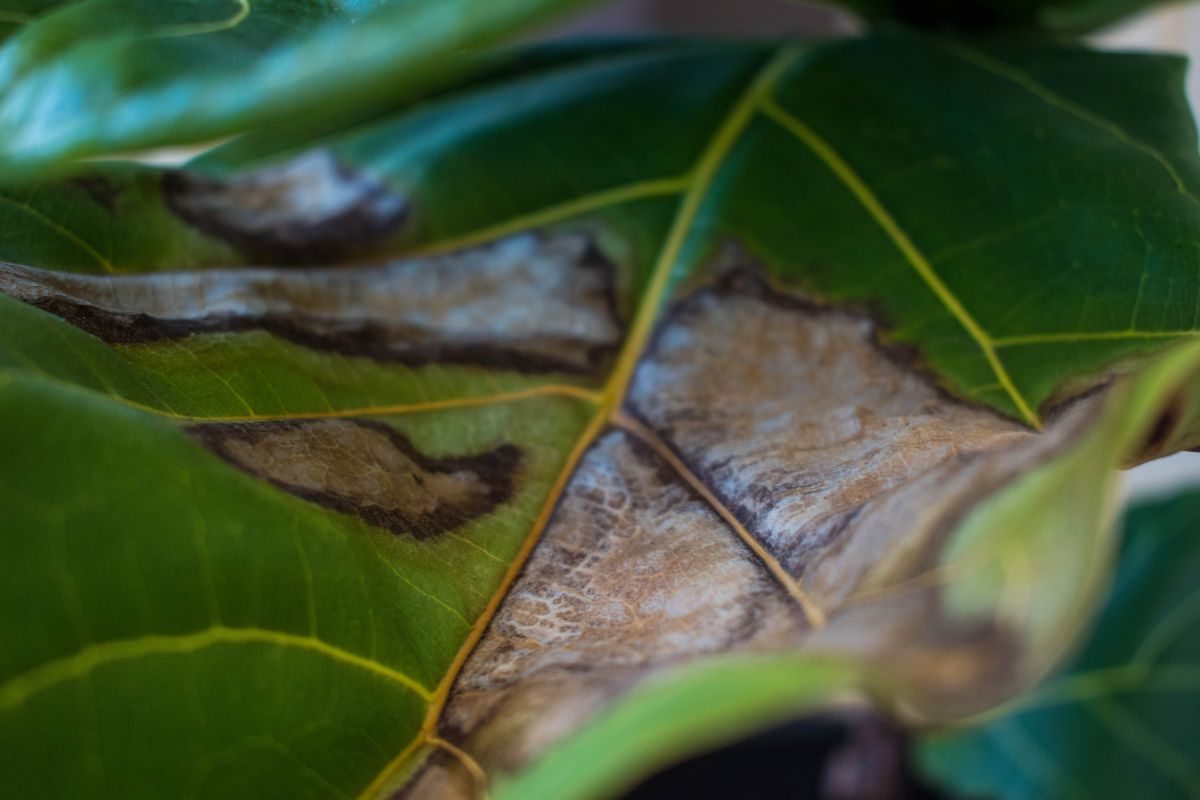
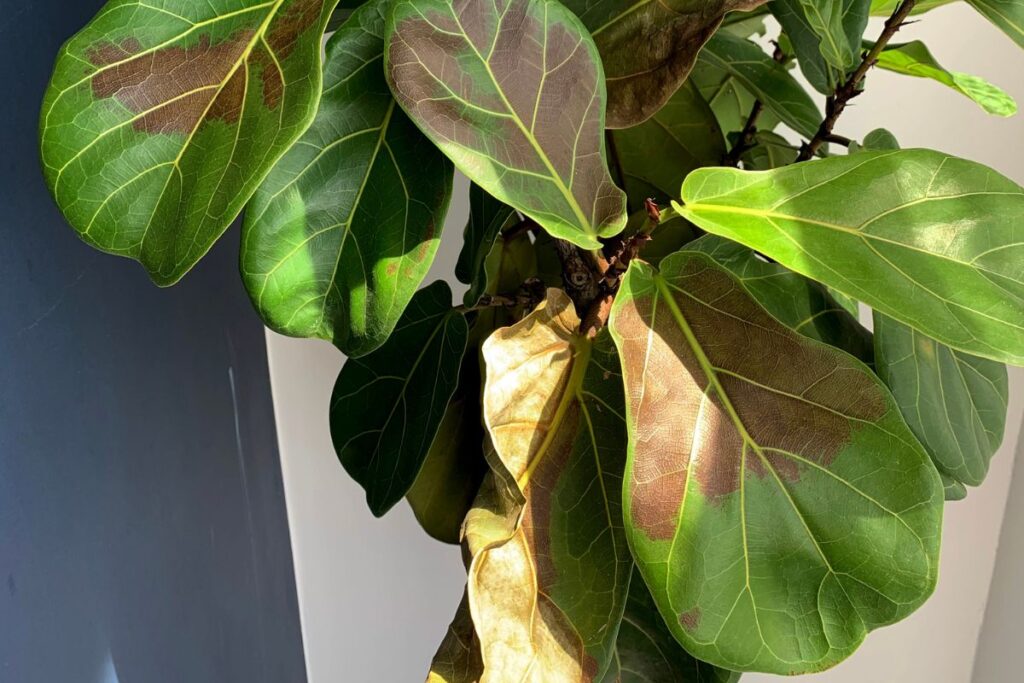
Prolonged exposure to direct sunlight, especially at the peak of summer, can harm fiddle leaf figs and lead to the following symptoms on the leaves facing the sun:
- Dry brown spots or edges
- Bleached or white spots
- Dull leaf surface
- Thin and brittle leaves
Leaves with visible sun damage cannot revert to their original green color and leathery texture, but you can prevent further damage to your plant with the following tips:
- Move the pot a few feet away from a sunny window. Keep it about 4 feet (1.2) from an east or west window or up to 8 feet (2.4 m) from a south window. Alternatively, hang a sheer curtain to filter the light in the afternoon.
- Prune leaves with large burn marks (brown or white patches). Use sharp, sterile pruners or scissors, and limit pruning to only 10% of the plant or 1-2 leaves per week to avoid further stressing the plant.
- Water the plant regularly. Check if the soil is dry by inserting your index finger or a wooden chopstick 2 inches (5 cm) or halfway down. You may also use a moisture meter and water the plant when the reading shows 4. Proper hydration can help fiddle leaf figs recover and grow new, healthy leaves.
- Rotate the pot weekly or every time you water. Give the plant a 90-180° turn regularly to promote even light access to all the leaves and avoid prolonged exposure to intense sunlight.
Inadequate Light
Fiddle leaf figs will thrive at indoor light levels as low as 75 foot candles, though prolonged exposure to low light conditions can lead to the following issues:
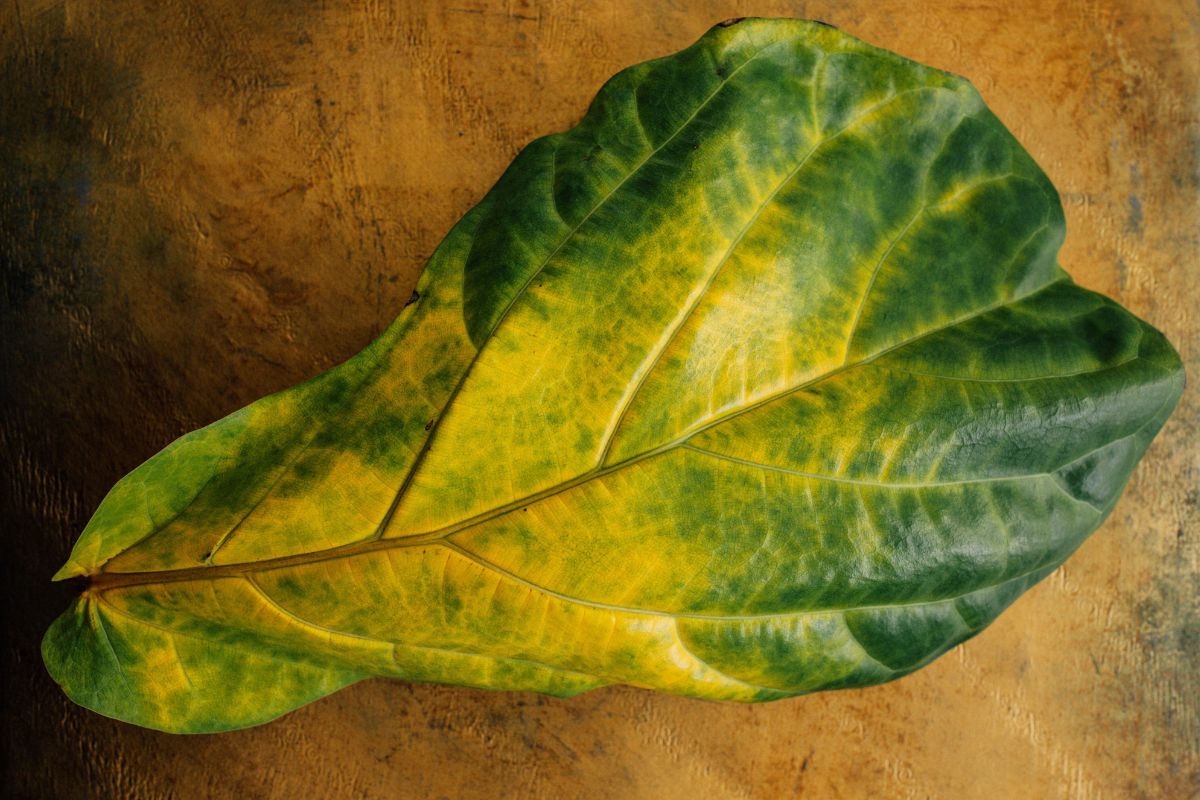
- Pale, dull, or yellowing leaves
- Droopy leaves
Left unattended, the condition can worsen and lead to:
- Legginess or leaning toward the light source (windows or lamps)
- Sparse leaves (at the side facing away from the light source)
- Leaf drop
You can improve your plant’s overall appearance by gradually acclimating it to brighter light conditions, such as moving the pot about a foot (0.3 m) closer to a brighter window every week.
Pro Tip: Place the plant near an east-facing window for optimal morning sunlight. Brighter light conditions can prompt more active growth and faster moisture use, so increase the watering frequency accordingly.
3. Pest Infestation
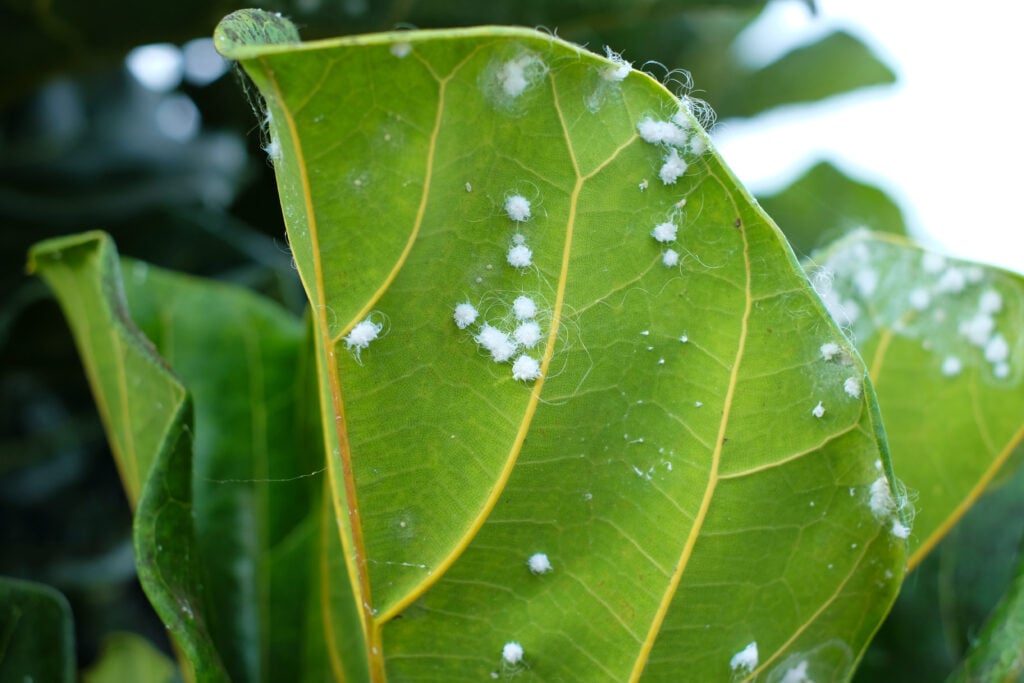
Several houseplant pests may infest a fiddle leaf fig and cause severe leaf damage.
| Pest | Appearance | Damage |
| Thrips | About 1/16-⅛ in (1.6-3.2 mm) long Brown, green, or white Slender and winged | Adults burrow into the leaf tissue, causing rough, silvery or bronze patches on the leaves Tiny black dots near the patches (excrement) |
| Spider Mites | Less than 1/50-1/20 in (0.5-1 mm) Translucent with 2 dark dots, green, yellow, or orange-red Spider-like (6-legged larvae or 8-legged nymphs and adults) | Stippled appearance (fine yellow, white, or brown dots on the leaves) Webbing between leaves and stems or leaf undersides |
| Aphids | 1/16-⅛ in (1.6-3.2 mm) in diameter Translucent, green, black, brown, orange, or pink | Tiny yellow dots on leaf undersides close to the feeding site (typically near the leaf veins) In severe infestations, the discoloration can appear on the leaf surface Sugary liquid (honeydew) on random spots on the leaves Sooty mold can grow on the honeydew, and the black mycelia can inhibit light access |
| Mealybugs | 1/16-⅛ in (1.6-3.2 mm) in diameter White, fluffy outer covering | Tiny yellow dots on leaf undersides close to the feeding site (typically near the leaf veins) Severe infestations can lead to droopy leaves or leaf drop Sugary liquid (honeydew) on random spots on the leaves Sooty mold can grow on the honeydew and the black mycelia can inhibit light access |
| Scale insects | 1/16-⅛ in (1.6-3.2 mm) in diameter Hard, brown shell Immobile brown bumps along leaf veins or petioles | Severe infestations can lead to drooping leaves due to weaker leaf veins Sugary liquid (honeydew) near the leaf veins can attract sooty mold and ants |
Here’s a brief guide on common FLF pests that cause dull leaves:
Use the following integrated pest management methods to effectively treat a pest infestation in fiddle leaf figs and prevent a recurrence:
- Isolation: Identify infested plants and move them to a separate room with similar light, temperature (65-75 °F or 18-24 °C), and humidity (40-60%) conditions to prevent relocation shock.
- Pruning: Prune severely damaged or infested leaves, particularly the leaves with patches from thrips or stippling from spider mites, because the pests are likely hiding within the leaf tissue or on leaf undersides
- Manual removal: Manually remove visible pests like aphids, mealybugs, and scale insects using tweezers or a cotton swab dipped in alcohol. Drop the pests in a cup of soapy water to prevent escape and re-infestation. Repeat this every 2-3 days to promptly catch new generations of pests.
- Neem oil solution: Dilute the oil by thoroughly mixing 1 tablespoon neem oil, 1 teaspoon liquid soap, and 1 liter (0.26 gal) water. Spray the solution on the leaf undersides after sunset to prevent leaf scorch, and repeat once a week for about 8 weeks or until you don’t see any signs of pest anymore.
- Insecticidal soap: You can use commercially available and well-formulated insecticidal soap to eliminate pests. Before a thorough application, spray a small amount directly onto the FLF leaf surface and wait 24 hours. If the spot remains green and glossy, you can spray the leaf undersides after sunset to target larvae, nymphs, and adults. Keep in mind: Insecticidal soaps are only effective on contact and don’t always kill the eggs. Reapply once a week between manual pest removal or neem oil applications.
- Spinosad treatment: Thrips burrow in leaf tissue or fly away when disturbed, making neem oil sprays only minimally effective. Spinosad, on the other hand, works as a low-level systemic pesticide that can kill thrips that feed on plant tissue. It’s also effective against severe spider mite infestations. Spray the leaves with spinosad every 10-14 days. Open the windows or switch on the fans for up to 24 hours after treatment to ensure proper ventilation in the room.

4. Excessive Use of Insecticidal Soap and Alcohol
Homemade insecticidal soaps and alcohol spray are popular gardening hacks for cleaning fiddle leaf figs or managing pests. DIY leaf cleaners and pesticides are beneficial when properly formulated and tested for plant safety before use.
Here are some problems I encountered when I used them on my FLF leaves.
- Homemade insecticidal soap (2-3 spoons liquid dish soap, 2-3 spoons vegetable oil, and 1 gal (3.8 l) water): Applying the treatment on stressed fiddles with pale and dull leaves allowed the soapy components to cause further tissue damage, leading to leaf scorch (yellow or brown spots) and leaf drop.
- Alcohol spray (equal parts rubbing alcohol and filtered water): When I encountered a pest problem from an infested new FLF, a fellow garden enthusiast told me that alcohol spray works against aphids and mealybugs and doubles as a leaf shine remedy. Although it did immobilize the bugs, they started moving around as soon as the liquid dried up. The leaves also developed scorch marks (brown, dry spots).
Follow these tips to treat leaf scorch or dullness from a chemical burn on fiddle leaf figs:
- Prune symptomatic leaves using sharp, sterile pruners. Limit pruning to around 10% of the plant every 2 weeks or 1-2 leaves weekly.
- Mist the leaves with distilled or filtered water once a week and wipe the moisture off the surface with a clean, lint-free cloth.
Note: Although I personally learned that homemade recipes can do more harm than good, I won’t try to stop you from exploring gardening hacks using readily available and cheap materials in your home.
However, here are some reminders that may help mitigate (or hopefully cancel out) the potential damage to your houseplants from DIY chemical treatments:
- Test the treatment on a healthy young leaf and wait for 24-48 hours. Young leaves are more vulnerable to the phytotoxic properties of soap and alcohol. If they can survive up to 48 hours without visible damage, such as yellowing or dullness on the treated spot, there’s a good chance the treatment is safe for fiddle leaf figs.
- Protect the plant from direct sunlight during treatment. Intense sunlight and high temperatures (around 90 °F or 32 °C) can worsen the potential damage from chemical treatments. Apply chemicals after sunset and shield the plant from direct sunlight with sheer curtains for up to 24 hours after application.
- Mist the plant with distilled water between treatment applications (i.e., 3 days after the initial application if you do weekly treatments). Be sure to wipe the excess moisture off the leaves with a microfiber cloth to prevent microbial growth. Occasionally rinsing the plant with water can remove residue that would otherwise dry out the plant cells or block the leaf stomata.
5. Improper Watering
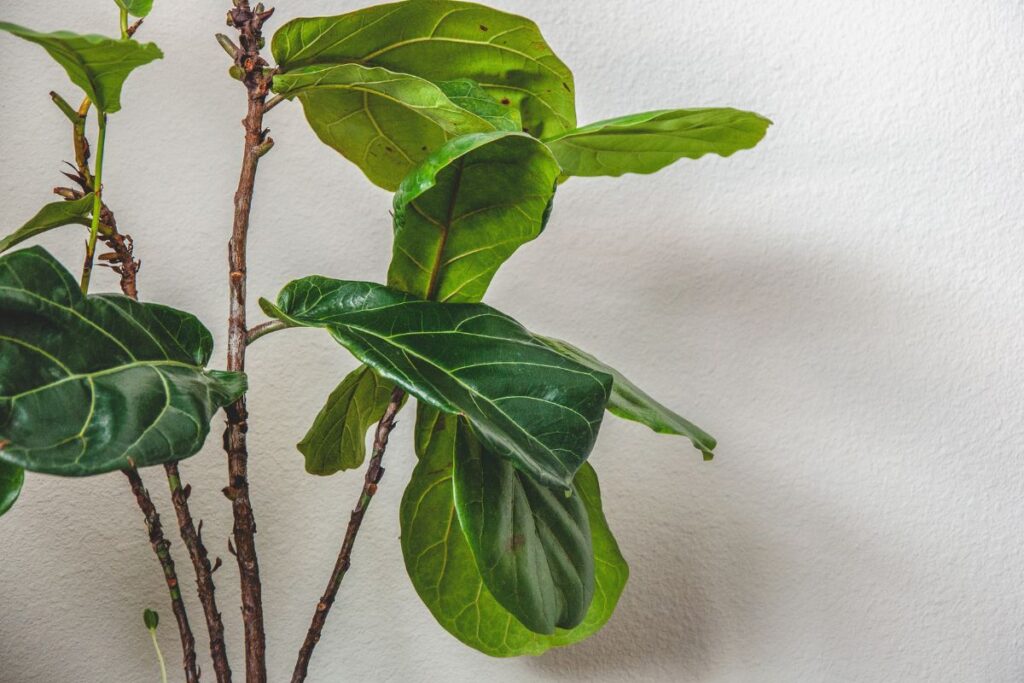
The following poor watering practices can cause stress or dull leaves in fiddle leaf figs.
- Overwatering leads to soggy, unhealthy roots, which inhibits proper moisture and nutrient uptake in the leaves. As a result, the leaves appear pale, yellow, or dull. In worst cases, the issue can lead to root rot and kill the plant within a few weeks.
- Underwatering can dehydrate the plant, leading to droopy leaves with yellow or brown and crisp leaf tips. The lack of moisture can also inhibit nutrient transport from the roots to the leaves, resulting in dullness or a lack of shine.
- Using hard water when cleaning the leaves can cause salt buildup on the leaf surface.
- Wetting the foliage when watering allows the leaves to trap dust.
Follow these tips to treat water-stressed fiddle leaf figs:
- Loosen the soil to relieve crusting or compaction. You can do this non-invasively by poking the soil at the drainage holes with a wooden chopstick to relieve soil plugs. You may also rake the top inch (2.5 cm) of the soil using a hand cultivator to improve water infiltration.
- Monitor the soil moisture between watering sessions. Allow the top 2 inches (5 cm) or upper 1/3 of the soil to dry between waterings. You can also insert a moisture meter ½ or ⅔ deep into the soil and water the plant only when the average reading shows 4. The wooden chopstick or moisture meter probe can also help aerate the soil and ensure proper moisture infiltration to the root zone.
- Adjust the watering frequency in the fall and winter. Allow the top half of the soil to dry out completely between waterings.
- Bottom water the plant occasionally to hydrate the root zone evenly. Soak the bottom half of the pot in filtered water and let the soil soak up the moisture for up to 30 minutes or until the surface feels moist. Allow the excess moisture to drain completely from the drainage holes. You can do this once a month during the growing season or after 3-4 regular watering sessions during fall and winter.
- Avoid wetting the foliage when watering, especially when using tap water, as the minerals can form a powdery white film on the leaf surface. Note: Fiddle leaf figs have good salt tolerance, so the plant won’t sustain immediate damage from using tap water for regular watering as long as you pour it directly into the soil.
- Gently wipe the leaves with a dry microfiber cloth to remove water droplets from accidental spills caused by watering or humidifiers.
6. Low Humidity
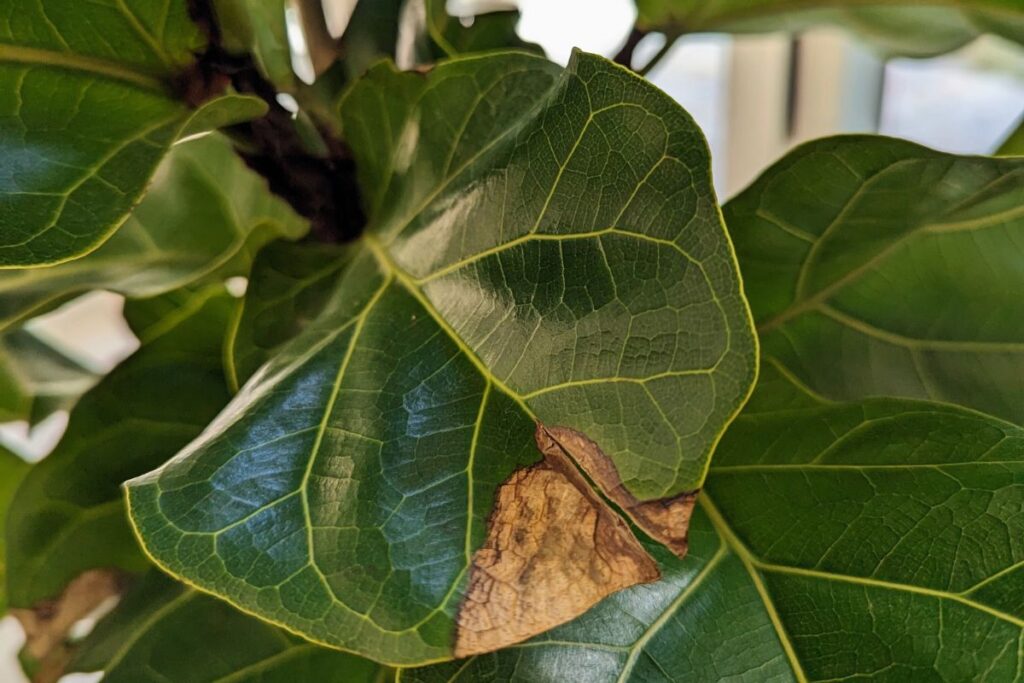
Dry indoor air can contribute to rapid moisture loss from the leaves through transpiration, especially when the fiddle leaf fig is exposed to intense sunlight, high temperatures, and underwatering.
As a result, FLF leaves may develop the following symptoms:
- Pale or dull leaves
- Drooping leaves
- Yellow or brown leaf edges
- Brittle and curling leaf edges
- Leaf drop
You can improve the humidity around your fiddle leaf figs with the following tips:
- Humidifier: Maintain humidity levels between 40-60% by switching on a humidifier during the driest part of the day. Place the device around 2 feet (0.6 m) away from your houseplants. Alternatively, monitor the humidity using a portable hygrometer, and move your humidifier as needed to maintain optimal conditions near your plants (i.e., about a foot closer if the reading is below 40% or a foot away if the reading is over 60%).
- Water tray: Pebbled water trays may lightly boost the local humidity when placed underneath the pot of smaller FLF plants, typically below 3 feet (0.9 m) tall.
- Grouping plants: Putting houseplants with similar environmental needs together can create a natural humidity boost. However, it may not be enough if the indoor air is too dry.
7. Nutrient Deficiency
Fiddle leaf figs are naturally fast-growing plants as they feed heavily from humus in the wild. As houseplants, they require regular feedings of nitrogen, magnesium, and iron during spring and summer to support green growth.
Without adequate nutrients, the fiddle leaf fig will exhibit the following stress symptoms:
- Yellowing leaves (whole or between veins)
- Pale or dull leaves
- Slow or lack of new growth
You can revitalize your plant with the following fertilization tips:
- Fertilize the plant every time you water during the growing season with a 3-1-2 liquid fertilizer diluted to half strength.
- Gradually reduce the application frequency (i.e., every other time you water) in mid-summer or when you see an improvement in the color and texture of the leaves.
- Pro Tip: Flush the soil every few months (i.e., in late spring and late summer) to prevent salt buildup from fertilizers. Use filtered water equal to the volume of the pot, and allow the excess moisture to drain freely from the drainage holes to leach unwanted salts.
Note: Other sources may recommend localized feeding using foliar fertilizers. However, I don’t recommend it on fiddle leaf figs, as the negative charge around pores in leaf cuticles repels negative ions like nitrates and defeats the purpose of foliar feeding.
In addition, you must be careful to identify the specific nutrient deficiency in plants to find an appropriate foliar fertilizer—an expensive and impractical solution for under-fed fiddle leaf figs.
Routine Care and Maintenance
Fiddle leaf figs are fussy indoor plants that require a patient and consistent care routine to maintain their lush and vibrant leaves.
Follow the care tips below to keep the leaves shiny:
- Cleaning leaves: Wipe leaves regularly with a clean, damp cloth to prevent dust buildup and maintain their shine.
- Optimizing light: Position the plant in bright, indirect light (up to 4 feet (1.2 m) from an eastern window or up to 8 feet (2.4 m) from a southern window).
- Pest prevention: Inspect the leaves regularly for pests and treat infestations promptly with neem oil or cotton swabs with alcohol. You may also proactively spray your plant with neem oil every 2 weeks to inhibit pest development and reproduction.
- Balanced watering: Water only when the top 2 inches (5 cm) of the soil is dry to the touch, and ensure proper drainage to prevent root rot. Use a well-draining soil mix, such as a homemade blend containing 2 parts potting soil, 1 part perlite/pumice, and 10% compost.
- Maintaining moderate humidity: Monitor the humidity around your fiddle leaf figs and ensure they stay within 40-60%. Switch on a humidifier about 2 feet (0.6 m) away for up to 4 hours until the area reaches optimal humidity levels.
- Fertilization: Feed the plant proactively during the growing season to promote vibrant, glossy leaves. Apply a half-strength 3-1-2 liquid fertilizer every other time you water your plant from spring to summer for steady growth and healthy, green leaves. Increase the frequency only when nutrient deficiency symptoms (i.e., interveinal chlorosis) appear.
Final Thoughts
The leaves of fiddle leaf figs can appear dull due to a number of care issues that you can treat or avoid with the following tips:
- Dust buildup: Routinely clean the leaves with a moist microfiber cloth.
- Too much or insufficient light: Ensure the plant receives at least 8 hours of bright indirect light.
- Pest infestation: Monitor the plant for signs of pests. Isolate the plant as needed, and treat it with plant-safe materials, such as neem oil spray or lab-formulated insecticidal soap.
- Too much or incorrect use of chemicals: Avoid using homemade leaf shine or pest management recipes without testing them on a leaf first. Even after the test, avoid using homemade solutions too frequently, and keep the plant away from direct sunlight during application.
- Poor watering practices: Water the plant only when the top 2 inches (5 cm) or ⅓ of the potting mix is dry (up to ½ during the cold season). Use a well-draining soil mix and pot with drainage holes whenever you repot the plant to prevent waterlogging.
- Low humidity: Maintain moderate humidity levels of around 40-60%.
- Nutrient deficiency: Proactively fertilize your plant during spring and summer using a half-strength 3-1-2 liquid fertilizer every other time you water the plant.
Remember that fiddle leaf figs are sensitive houseplants that require consistent, attentive care to remain healthy and vibrant.
If you know helpful tips and tricks to keep shiny leaves on fiddle leaf figs, share your experience or questions in the comments to foster a community of plant enthusiasts.