
How to Plant, Grow, and Care for Fiddle Leaf Figs
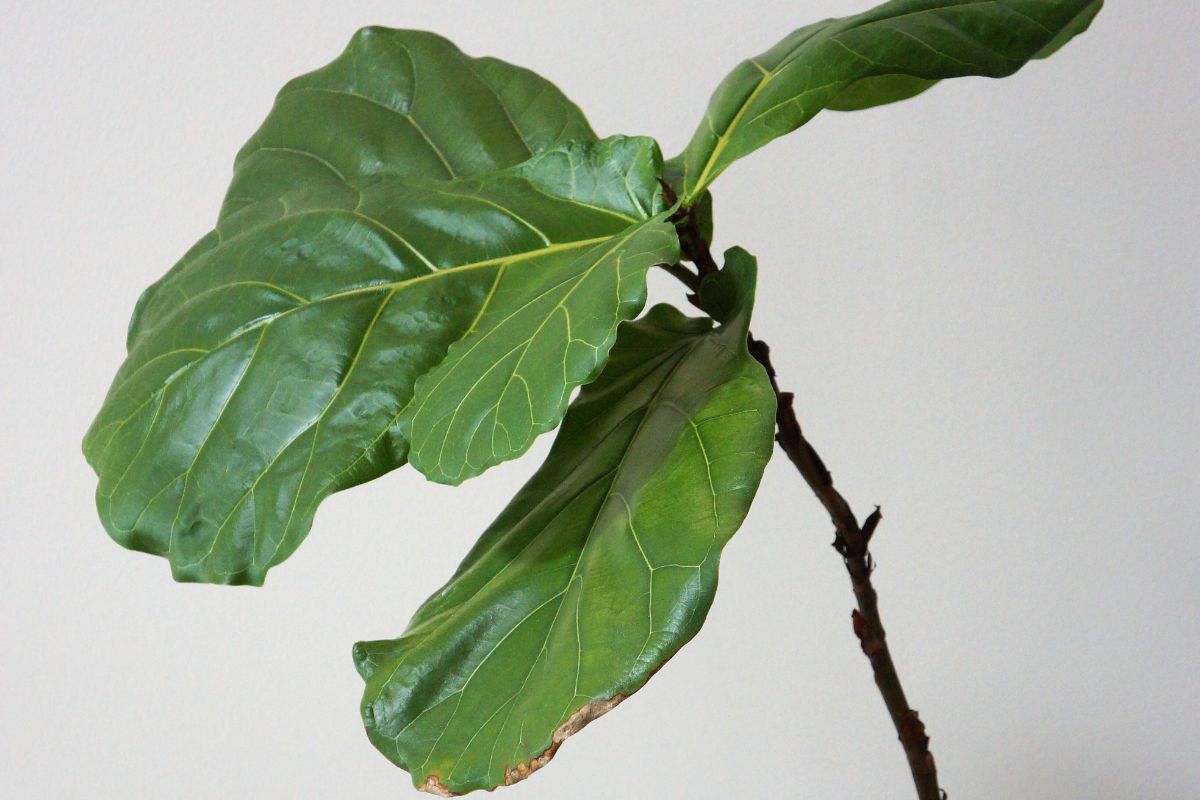
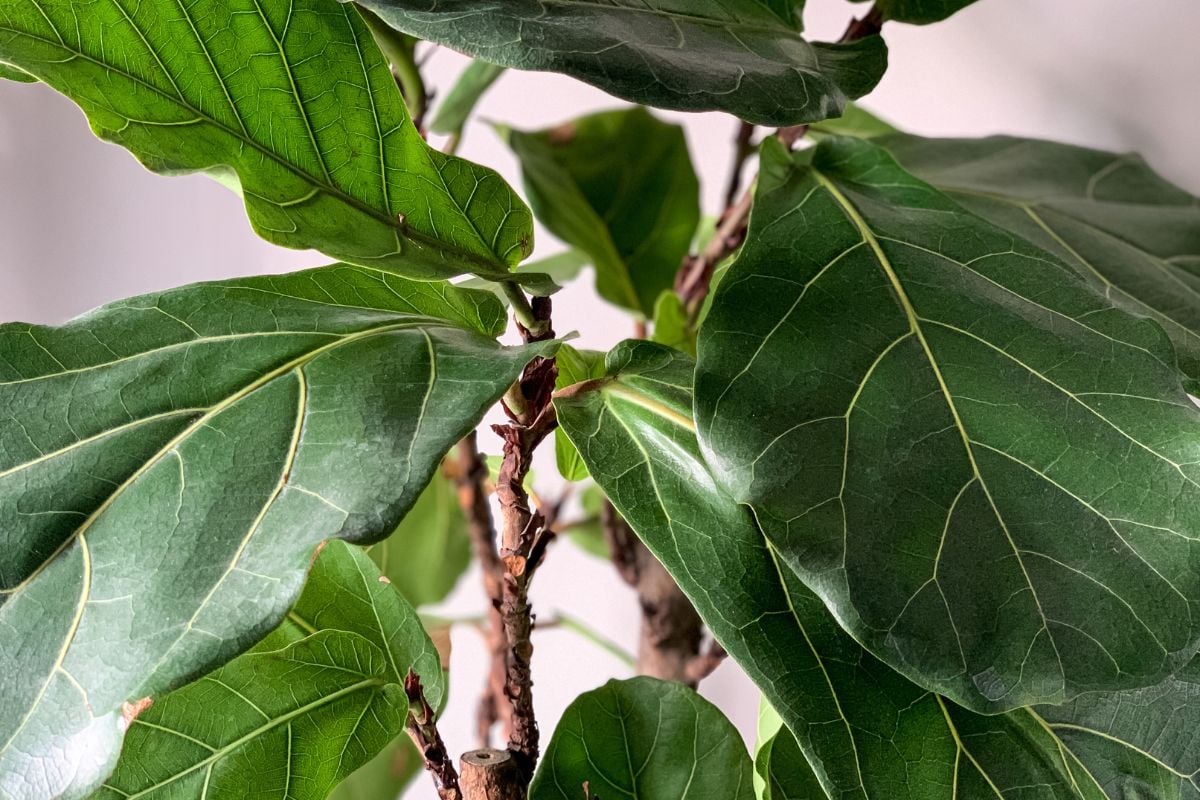
Fiddle leaf figs are fantastic tropical trees you can grow indoors. Their large, fiddle-shaped leaves grow compact against a slender stem, making them an excellent addition to your home without taking up too much space.
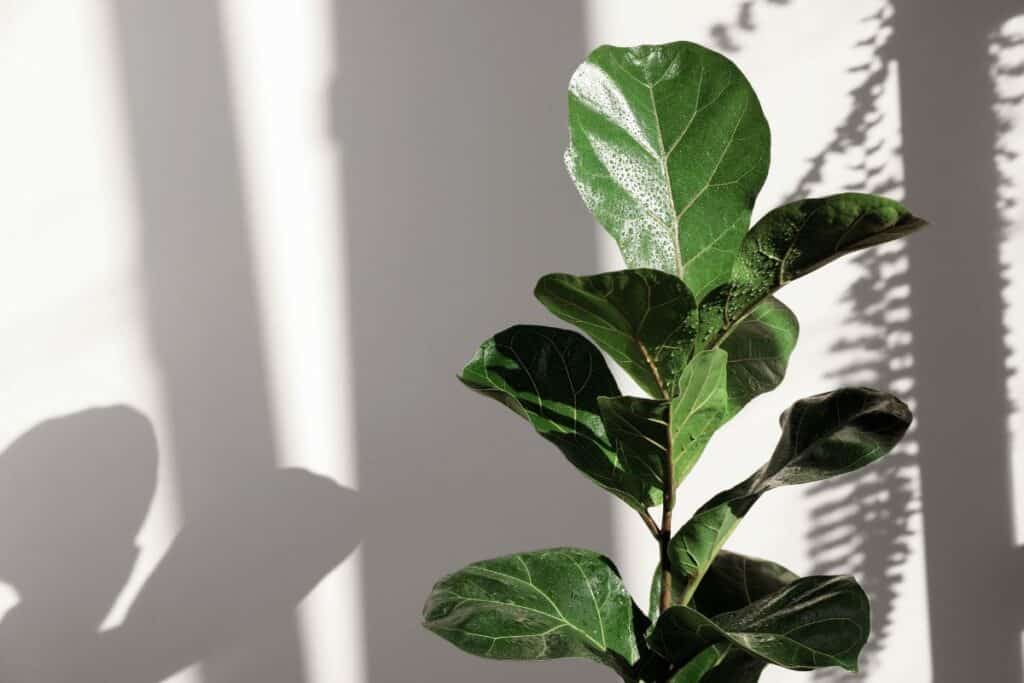
You can grow fiddle leaf figs in a bright area indoors where they can receive filtered or indirect light. They have moderate moisture, temperature, and humidity requirements, so there’s no need for extensive adjustments in your home environment.
This article will explore the growth requirements of a fiddle leaf fig to help ensure it thrives in your home garden. I’ll also discuss some common problems you might encounter and share troubleshooting tips for a pleasant gardening experience.

Quick Guide
| Common Name(s) | Fiddle leaf fig |
| Botanical Name | Ficus lyrata |
| Family | Moraceae |
| Plant Type | Evergreen tree |
| Native Area | Tropical Central and Western Africa |
| Height & Spread | Up to 50 feet (15 m) in the wild or 10 feet (3 m) indoors |
| Bloom Time | Rarely indoors; may bloom anytime throughout the year when kept at moderate temperatures |
| Flower Structure | Syconium |
| Color | Cream or off-white |
| Sun Exposure | Partial sun or bright, indirect light |
| Soil Type | Sandy loam rich in organic matter |
| Soil pH | 6.0-7.0 |
| Watering | Moderate, deep watering once weekly or as soon as the top 2 inches (5 cm) of the soil is dry |
| Pests, Diseases, Common Problems | Aphids, mealybugs, scale insects, spider mites, thrips, fungus gnats Root rot, powdery mildew, leaf spot |
| Toxicity | Mild (calcium oxalate crystals are present in all plant parts) It can cause mild skin irritation upon contact with plant sap or oral irritation and vomiting when ingested. |
| Required Maintenance | Low maintenance at stable environmental conditions |
Fiddle Leaf Figs: An Overview
Fiddle leaf figs (Ficus lyrata) are native to the tropical rainforests of Central and Western Africa.
They live 25-50 years in their native environment, growing upright and reaching around 50-100 feet (15-30 m) tall. The large fiddle-shaped leaves can reach up to 30 inches (76 cm) long and 18 inches (45 cm) wide.
This massive size is possible due to the following environmental factors:
- Fiddle leaf figs don’t enter dormancy in their native habitat because of abundant rainfall and warm temperatures between 70 and 86 °F (21 and 30 °C) all year round. As a result, they can put on about 2 feet (0.6 m) in height annually.
- Those growing outside woodlands or exposed to strong winds can develop a trunk diameter of up to one foot (0.3 m).
On the other hand, insufficient light and limited soil space in pots restrict their growth. You may also prompt them to enter dormancy and shed leaves in winter with lower temperatures and reduced watering frequency to keep them at a manageable size.
With proper care, indoor fiddle leaf figs typically exhibit the following traits:
- Only 2-10 feet (0.6-3 m) tall
- Leaves up to 18 inches (45 cm) long and 12 inches (30 cm) wide
- A slender trunk about an inch (2.5 cm) in diameter
- Tolerate being rootbound due to thin fibrous roots that can wrap around the potting soil
- Grow up to one foot (30 cm) per year and can stay in the same pot for up to 3 years
Flowering and Fruit Development
Ficus species, including fiddle leaf figs, are fruit-bearing plants. Their flowers are stored in a syconium, which has a hollow interior containing the male and female parts. In fiddle leaf figs, the syconium has a green exterior with tiny dents.
The distal end of the syconium has a narrow opening called an ostiole, which serves as an important structure for fig pollination.
Here’s how pollination occurs in nature:
- An Agaonidae fig wasp enters through this opening to lay eggs inside.
- The male wasps hatch first and mate with unhatched female eggs.
- The male then digs tunnels out of the syconium before dying.
- When the female wasps hatch, they try to exit the syconium through these tunnels, carrying some pollen along with them.
- They fly toward another fruit and enter through the ostiole.
- As the female crawls through the syconium, the pollen falls off and fertilizes the female parts.
- The fruit will then ripen within 2-3 months.
Pro tip: Fiddle leaf fig fruits are edible when fully ripe, although not very palatable. Ripe fruits are distinct, with a purplish brown hue and softer texture.
Unripe fruits, on the other hand, are green and contain calcium oxalate crystals that can cause oral irritation when ingested. The sap on the leaves and stem contains the same crystals, causing skin irritation upon contact.
Fiddle leaf figs are unlikely to reach reproductive maturity and bear flowers when grown indoors due to suboptimal environmental conditions. They may live 10-15 years indoors with appropriate care but might not mature.
Even if they mature sooner or live long enough to produce flowers, they’re still unlikely to bear, fruits because of the absence of Agaonidae wasps in most Northern American regions.
Reports about indoor fiddle leaf figs bearing fruits are possible, but they remain a mystery and require more research.
Natural Reproduction
Fiddle leaf figs can reproduce in two ways in the wild: through seeds or fallen leaves or branches.
Seed Propagation
Due to the height of fiddle leaf fig trees, the birds feeding on the ripe fruits may disperse the seeds over shorter trees.
With sufficient sunlight and moisture on treetops, the seeds germinate and thrive as a hemi epiphyte. They can develop long, thick roots as they mature and strangle the host tree.
Alternatively, the seeds may fall to the ground, germinate, and grow as a regular tree.
Fallen Leaf or Branch Propagation
Fallen fig leaves may also root since the soil in rainforest floors remains evenly moist. However, single leaves without nodes may root but won’t develop into a plant, as it has no nodes to sprout new branches.
The nodes contain the hormones for tissue differentiation and development. They’re also crucial areas for metabolic activities that facilitate new growth. That said, fallen leaves or branches with nodes have better chances of growing into a new plant.
Strong winds and physical damage from animals or neighboring trees can dislodge the leaves or branches of a fiddle leaf fig. For instance, African pygmy squirrels are known as bark gleaners that feed on pests or figs. This sometimes results in broken branches.
This natural occurrence—aided by a suitable environment—allows fiddle leaf figs to self-propagate efficiently in the wild.
Popular Varieties for Home Gardens
Aside from the classic fiddle leaf fig, here are some popular varieties you can grow indoors:
| Variety | Physical Traits |
| Audrey | Grows 5-8 feet (1.5-2.4 m) tall indoors Has rounded, glossy leaves instead of the characteristic fiddle-shape |
| Bambino | Dwarf variety that grows only 2-4 feet tall The leaves are slightly smaller at 8-18 inches (20-45 cm) long and 8-12 inches (20-30 cm) wide |
| Variegata | Grows the same size as the classic Ficus lyrata The leaves have white or cream edges and the middle is a mix of deep and light green streaks or specks. |
These varieties make excellent indoor plants for the following reasons:
- They have moderate temperature, light, water, and humidity requirements.
- They don’t branch out extensively and require only a narrow space.
- Their large, glossy leaves can brighten up and add color to your home.
Potential Toxicity
The sap of fiddle leaf figs is mildly toxic to cats and dogs. It contains calcium oxalate crystals, which can cause mouth irritation and vomiting when ingested.
Skin irritation may also occur in susceptible individuals upon contact with the sap.
Selecting Your Plant
Larger fiddle leaf figs (over 3 feet or 0.9 m tall) from nurseries or gardening stores can be quite expensive. They’re notorious for being finicky, so commercial growers put in a lot of effort to get them to that size.
Here are some tips to consider to get your money’s worth and a higher probability of success from rehoming the plant:
- Choose a plant at least 1 foot (30 cm) tall with signs of new growth. Small leaf buds getting ready to unfurl is a sign that the plant is thriving.
- Inspect the leaves for discoloration. Red spots are edema, which indicates overwatering. If the soil is also wet, there’s also a risk of root rot. Yellowing or browning, on the other hand, can indicate dehydration, sunburn, or overwatering. These symptoms show that the plant is stressed and relocating them to your home might worsen the condition.
- Ensure no roots are poking out of the soil surface or drainage holes. The plant should stay in the same pot for about a year before repotting.
- Check the stem for signs of leaning or legginess. This issue is primarily due to insufficient light. Although it can be corrected, it can take much time and effort.
- Look for signs of pest infestations. Watch out for cottony mealybugs, spider mite webbing, aphid honeydew, tiny brown scale insects along the stems, and fungus gnats hovering around the plant. Thrips lay eggs within the leaf tissue, causing silver streaks or flecks. They also leave behind pepper-like excrement.
After bringing home your first fiddle leaf fig from the store, consider the following initial care tips:
- Isolate your plant for 6-8 weeks. Even without visible pests, some eggs or larvae may be hiding in the soil. This will give you time to detect and treat pest infestations before introducing the new plant to your home garden.
- Choose a bright spot with indirect sunlight—whether it’s for isolation or a permanent plant location.
- Keep the plant in the same pot for a year or until the following spring before repotting. A sudden change in environment can be stressful for a fiddle leaf fig. Give them enough time to adjust to your home environment before repotting in fresh soil.
Initial Planting

Follow these steps when repotting your fiddle leaf fig for the first time:
- Water your plant deeply 2-3 days before repotting. Moist soil is easier to slide out of the pot. It can also rehydrate the roots enough to minimize damage from unpotting.
- Prepare a heavy pot 2 inches (5 cm) wider and deeper than the old one. You can use a ceramic pot or a glazed or unglazed terracotta with drainage holes. The heavy base can help prevent the plant from tipping over as it grows taller.
- Fill the bottom 2-3 inches (5-7.6 cm) of the pot with well-draining potting mix. I recommend using 2 parts standard potting soil and 1 part cactus mix or perlite. You may also add 10% compost to introduce organic matter into the soil mix.
- Carefully unpot the plant and remove as much old soil as possible from the roots. Loosen the soil and disentangle the roots using a wooden chopstick.
- Inspect the roots for signs of rot or damage. Trim mushy or desiccated roots using sterile shears. Limit root pruning to up to 30% of its total volume.
- Place the roots over the fresh soil in the new pot and spread them out evenly. Fill in the gaps with more soil mix until the base of the trunk is about an inch (2.5 cm) below the pot’s rim. Tamp the soil down tightly to remove air pockets and keep the stem upright. Pro tip: Water the soil gradually after adding a few handfuls at a time. Moist soil can hold the stem in place better than dry soil.
- Water the soil deeply using a watering can with a narrow spout. Swirl the spout around the soil to evenly saturate the root zone until the excess moisture drains out of the bottom holes.
- Let it drain for 10-15 minutes before placing the plant back to its original spot.
- Wait until the top 2 inches (5 cm) of the potting mix is dry before watering again. With an appropriate soil mix, this can be done once every 7-10 days.
Optimal Growing Conditions
The consensus regarding fiddle leaf fig care is that they’re finicky and will quickly show signs of stress when dissatisfied with the growing conditions. This gives them the image of being high-maintenance and difficult plants to grow.
However, after caring for a few fiddle leaf figs for about 10 years now, I can confidently say that they’re resilient plants. They’re expressive when kept in suboptimal conditions, but they can bounce back after a few tweaks to the environment and care practices.
Refer to the important factors below for an optimum environment for fiddle leaf figs:
Location and Light Requirements
Fiddle leaf figs have different levels of tolerance to direct light at different life stages:
- Younger plants require bright indirect or filtered light for 8 hours daily to avoid leaf scorch.
- Established plants prefer up to 4 hours of direct morning sunlight.
It can take up to 3 years before stem cuttings become established indoors due to a slower growth rate compared to those growing in the wild.
Here are some tips regarding proper locations and adjustments:
- A spot next to a bright eastern window for established plants
- Around 5 feet (1.5 m) from an unobstructed eastern window for bright indirect light
- 4-8 feet (1.2-2.4 m) from a curtained western or southern window
Rotate the pot by 90-180° every time you water the plant to ensure even growth and light distribution. This is also crucial in preventing leaning or legginess.
Pro tip: Avoid growing fiddle leaf figs near northern areas of your home where there isn’t sufficient daylight. The slender stem is susceptible to leaning toward the light source if the plant isn’t happy with the light conditions.
Low light may also reduce plant respiration, delaying growth and moisture loss from the soil. This may keep the soil moist for longer and contribute to the risk of root rot.
Large varieties of fiddle leaf figs don’t do well under grow lights because the bottom leaves won’t have access to light.
If your home has low-light conditions, I recommend getting a Bambino or dwarf variety. You can position an artificial light at an angle of about 45° one foot (30 cm) away from the plant. Keep it on for 10-12 hours daily and rotate the pot by 90° every 3-5 days.
Temperature and Humidity
Fiddle leaf figs don’t like drastic temperature or humidity changes. Such conditions can stress them and cause leaf drop or discoloration. Maintaining moderate indoor temperatures and humidity is enough to keep your fiddle leaf fig happy.
Aim for the following parameters:
- Temperature: 65-85 °F (18-29 °C) indoors. Keep them away from drafty doors or windows and heating or cooling vents.
- Humidity: 40-60%. You can switch on a humidifier near your houseplants to maintain the humidity at optimal levels. Alternatively, switch on a fan to improve the air circulation if the room is too humid.
Watering
Fiddle leaf figs like evenly moist soil. They’re pretty expressive when there’s something wrong with the watering practices.
Here are some symptoms to distinguish between overwatering and underwatering:
| Overwatering | Underwatering |
|
|
You can avoid the abovementioned symptoms with these tips for proper watering:
- Water the soil directly using a watering can with a narrow spout. Move the spout in a circular motion to moisten the root zone evenly.
- Leave the pot over a drip tray for 10-15 minutes to drain the excess water.
- Check the soil moisture using your finger (up to the second knuckle) or a wooden chopstick. Wait until the top 2 inches (5 cm) is dry before watering again.
- Bottom water your plants once a month or after top watering for 3-4 times. This will help rehydrate the soil evenly and remove hydrophobic clumps that build up over time. However, this watering method may not be practical for large and heavy pots.
- Flush the soil once every 2-3 months in spring and summer to prevent salt buildup from fertilizers.
Fertilizing and Nutrient Requirements
Fiddle leaf figs grown indoors have moderate nutrient requirements. I recommend using a 3-1-2 NPK fertilizer for more vibrant foliage growth.
Choose a product with trace amounts of micronutrients, including iron, magnesium, calcium, and manganese.
Here’s a guide on the recommended fertilizer types and application frequency:
- Slow-release granular fertilizer: Apply in early spring until late summer at 8-week intervals. Water the plant deeply after sprinkling a thin layer of granules over the soil to activate the nutrients and deliver them to the roots.
- Liquid fertilizer: Dilute to half the recommended strength and apply directly into the soil every 2 weeks from early spring to late summer.
Nutrient-deficient plants may exhibit the following symptoms:
- Interveinal chlorosis from iron or magnesium deficiency
- Yellowing bottom or older leaves due to lack of nitrogen
- Weak or limp stems from calcium, nitrogen, or phosphorus deficiency
Once you rule out the other causes of yellow leaves and confirm nutrient deficiency, you can increase the application frequency. Apply the granular fertilizers at 6-week intervals or the half-strength liquid fertilizer weekly until the symptoms disappear.
Conversely, over-fertilization can cause leaf scorch with the following symptoms:
- White crust over the soil surface from undissolved fertilizer salts
- Brown, crisp leaves
Excess salts in the soil can draw moisture out from the fibrous roots. As a result, the water can’t go up and the shoots become dehydrated.
You can fix the issue with these steps:
- Prune the damaged foliage using sterile shears. If only the leaf tips or edges are brown and crisp, you can remove only those sections.
- Scrape a quarter inch (0.6 cm) off the soil surface to remove the crusted fertilizer salts.
- Replenish with fresh soil mix.
- Water the soil gradually but thoroughly to leach the remaining fertilizer from the soil.
- Let the water drain freely from the drainage holes.
- After 2-3 days, flush the soil again by repeating steps 3 and 4.
- Refrain from fertilizing your plant for at least 8 weeks until it recovers. If it’s almost fall, you can wait until the following spring before fertilizing your plant.
Seasonal Care and Maintenance
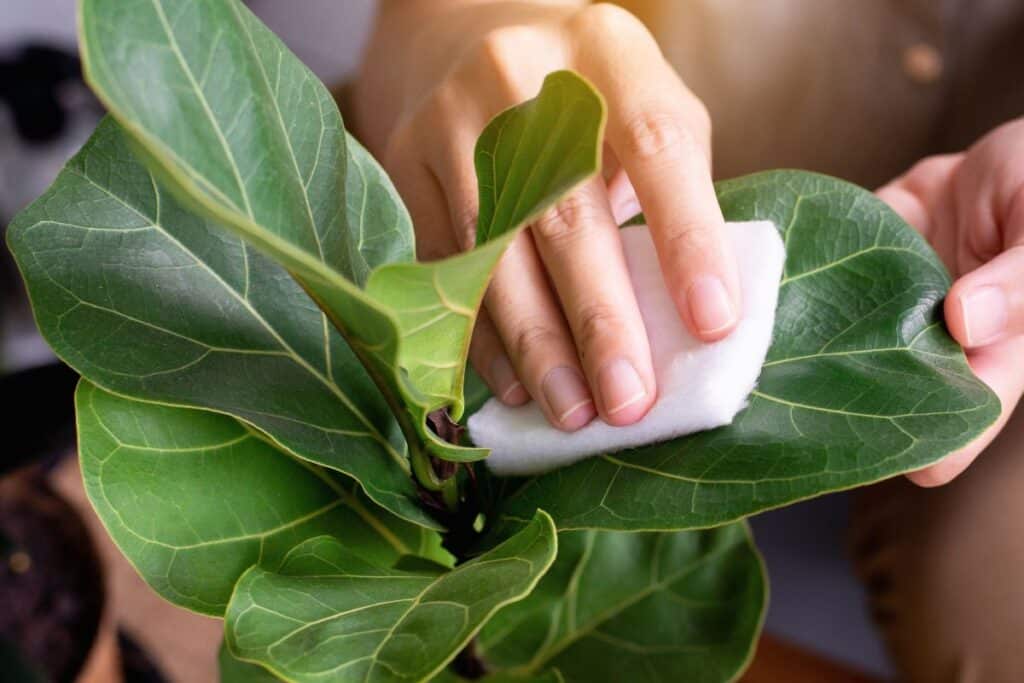
You can maintain your plant’s health and appearance with a weekly inspection. I recommend doing the following simple maintenance tips at watering time:
- Inspect the leaves and stems for signs of pests or diseases.
- Mist the leaves with filtered water and wipe them with a clean piece of cloth. Removing the dust will improve the leaves’ ability to capture light energy.
- Give the pot a quarter or a half turn for even light distribution and growth.
- Aerate the soil once a month to improve air circulation. You can use a three-pronged hand cultivator and rake the crusty surface about an inch (2.5 cm) deep.
Fiddle leaf figs are native to tropical rainforests without freezing winters, so they don’t naturally go dormant in winter in the US. Nevertheless, they enter a period of slower growth during dry seasons to conserve energy before entering another cycle of growth spurts.
In countries with darker and freezing winters, it’s important to make a few adjustments in your seasonal care routine.
Spring and Summer Care
Warm temperatures and bright light are environmental cues for fiddle leaf figs to grow actively and put out new leaf buds. They will also need more water to support their growth.
Here’s how to keep up with your indoor plant’s growth:
- Increase your watering frequency accordingly to ensure the soil is hydrated as soon as the top 2 inches (5 cm) are dry.
- Start applying granular or liquid fertilizer when you see new leaf buds form. This will encourage the leaves to unfurl within a week and the nodes to produce new leaf buds.
Winter Care
Your plant may or may not slow down its growth in the fall. This can be tricky because fiddle leaf figs don’t automatically go dormant in winter.
Observe your plant and reduce your watering frequency depending on how quickly the top 2 inches (5 cm) of the potting mix dries out. Make it a habit to check the soil moisture around 5-7 days after watering your plant.
You can then make the following transitions to your care routine:
- In late summer, increase the fertilizer application interval. For instance, schedule three granular fertilizer feedings at 6, 8, and 10-week intervals. You may also adjust the biweekly liquid fertilizer application in spring to once every 3-4 weeks in summer. Remember to stop fertilizing around 2-4 weeks before the first fall frost.
- In mid-fall, wait until the top half of the potting mix is dry before watering your plant. Keeping this up until winter (along with lower light intensity and cooler temperatures) will prompt your plant to become less active.
Don’t let the soil become bone-dry in winter. Fiddle leaf figs typically still grow indoors—albeit slowly—and require enough water to maintain their foliage.
Pruning and Shaping
Fiddle leaf figs naturally grow on a single trunk and the leaves start growing from the base. This may look attractive on a short plant up to 3 feet (0.9 m) tall. However, as it grows taller, the leaves appear largely spaced apart and the stem looks lanky.
Pruning can help control the height and shape of your fiddle leaf figs. However, before chopping off the growing tip of your plant, it helps to have a vision.
Here are some pruning points to consider:
- You can prune anytime during the year but the best time is between spring and summer. Fiddle leaf figs grow more actively in warm and bright conditions.
- As your plant reaches your desired height, you can remove the bottom leaves to expose the trunk and give your plant a tree-like appearance with a bushy top. Don’t remove more than a third of the plant’s foliage at a time.
- Topping or cutting off the top of the trunk will encourage lateral branching. You must cut between two nodes so new branches can grow out of the lower node within 1-2 weeks.
- Wipe the sap off the cut using a clean cloth and brush some cinnamon powder over the stump to prevent microbial infection.
- Sterilize the knife with 70% isopropyl alcohol between cuts to prevent infection.
- Cut off old or brown leaves to rejuvenate the plant and improve air circulation.
Notching is another technique to prompt your plant to grow branches right where you want them.
Here are the steps:
- Locate a spot half an inch (1.3 cm) above the node where you want branches to grow.
- Using a sterile knife, make a diagonal cut downward until you see the sap seeping out. Avoid cutting more than a quarter of the way through the trunk.
- Sterilize the knife with alcohol and make another diagonal cut upward to meet the initial cut. Extract a tiny triangular chunk out of the trunk.
This process will disrupt the flow of plant growth hormones and trigger the node below the notch to put out new growth (or branches). You should see the new bud within 1-3 weeks.
Staking for Vertical Support
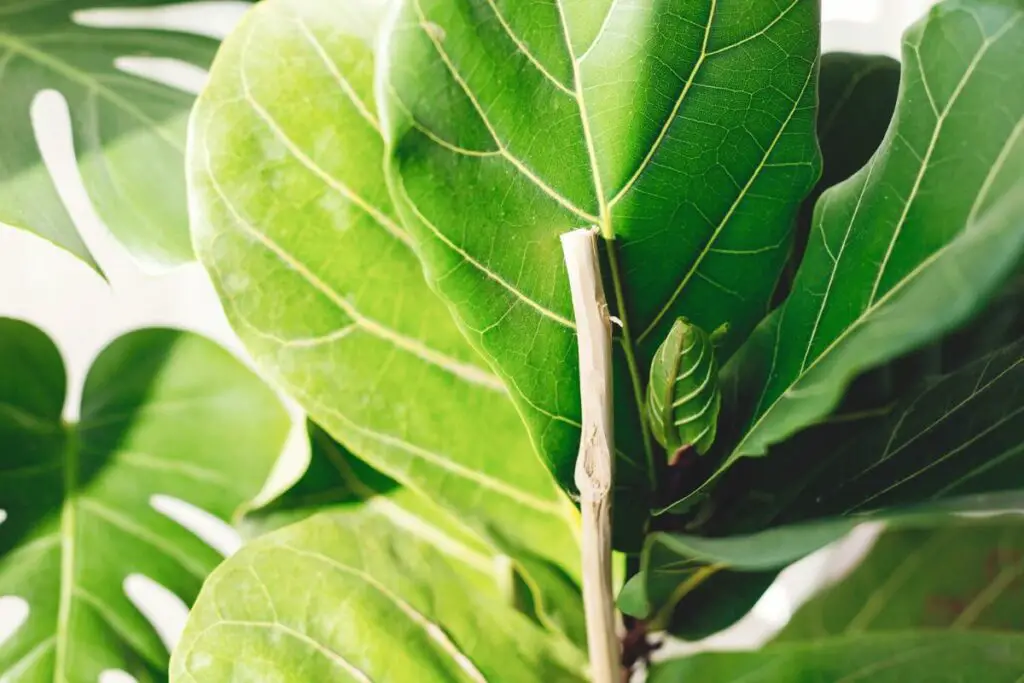
Due to their lanky stems, potted fiddle leaf figs are likely to lean or fall over from the weight of the leaves. Staking is often necessary to keep it upright.
Follow these steps to properly install a stake:
- Prepare an extendable PVC garden stake with a 1-inch (2.5 cm) diameter. This material is excellent as it won’t rot in constantly moist soil. You can also extend it as needed. Ensure it has an extra 6-12 inches (15-30 cm) you can bury into the potting soil for more stability.
- Carefully twist the stake into the soil about 1-2 inches (2.5-5 cm) away from the base of the plant. Position it behind the point of leaning so you can pull the stem toward it.
- Secure the stem against the stake using Velcro garden tapes or soft twist ties. Place the tapes or ties at 4-6-inch (10-15 cm) intervals.
Stakes are temporary solutions to leaning, and your plant should soon be able to stand firmly on its own. However, there’s no harm in keeping the stake beside your plant for much longer. I even repotted my plant along with the stake still attached.
Propagation Techniques
Indoor fiddle leaf figs can be propagated through stem cuttings or air layering.
Stem Propagation
You don’t have to throw away the perfectly healthy top of your fiddle leaf fig after pruning. You can also use this method to save a plant showing signs of rot as the terminal end might not exhibit symptoms yet.
Depending on its size, you may even get multiple cuttings from the distal end of the plant. Ensure that each cutting has at least three leaf nodes.
Pro tip: The cutting containing the growing tip will naturally grow upright with a singular stem. The cuttings collected below it, on the other hand, may have two or more stems as they grow because no new growth will occur from the stump.
Prepare your cuttings with these steps:
- Remove the leaves from the bottom node.
- Slice the bottom of the cutting to make a 45° angle for more efficient water absorption.
- Wipe off the dripping sap using a clean piece of cloth.
- (Optional) Dip the cut end up to the first node from the bottom in a rooting hormone.
Once your cuttings are ready, you can root them in soil or water.
Rooting in Soil
The rooting in soil process is simple, and the cuttings will develop enough roots within 4-6 weeks.
Here are the steps:
- Prepare a rooting mix with excellent moisture retention. I prefer using a perlite-coco peat mix, but you may also use a perlite-vermiculite mix.
- Place the potting mix in a 4-6-inch (10-15 cm) pot with drainage holes.
- Bury the bottom node in the potting mix and firmly tamp it down to keep it upright.
- Spray the soil mix with water.
- Cover the setup with a plastic dome to trap the humidity and prevent the large leaves from losing moisture too quickly. Note that the cutting doesn’t have roots yet to replenish the lost moisture in the plant cells.
- Place the setup in a warm room with bright indirect light for at least 8 hours daily.
- Spray the plastic dome with water every 2 days to keep the leaves from drying out.
- After 4-6 weeks, your plant will develop roots and you may remove the plastic dome.
- Water your rooted cutting as soon as the top half inch (1.3 cm) of the soil is dry.
Your plant should be ready to transplant in regular fiddle leaf fig soil mix after another 4-6 weeks when the roots are at least 2 inches (5 cm) long and the cutting has a new leaf bud.
Rooting in Water
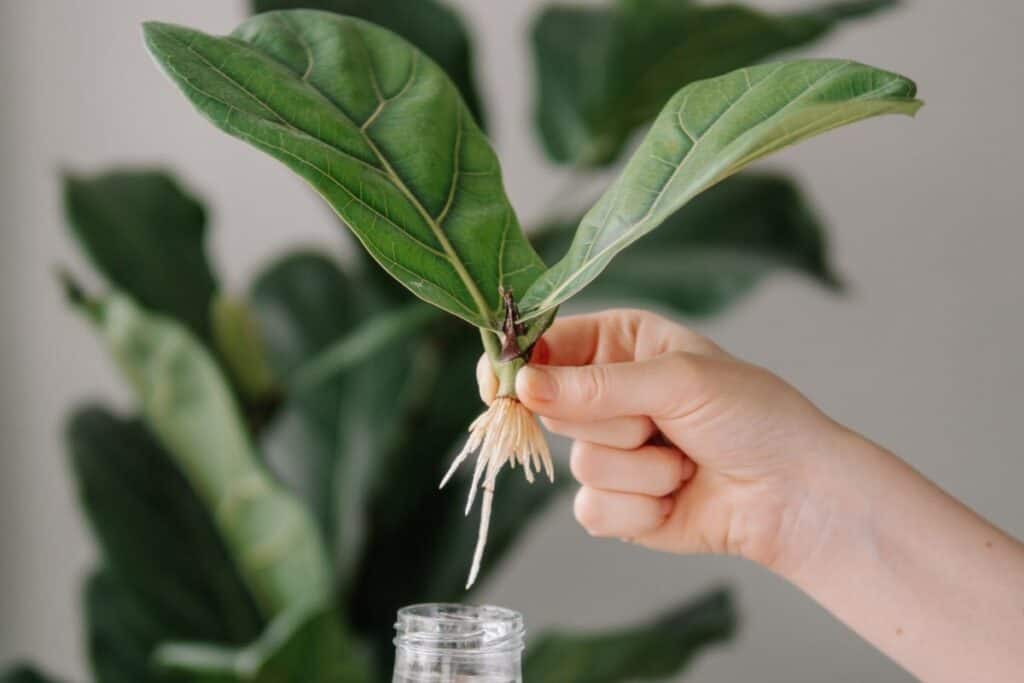
The rooting in water process is pretty straightforward, and you can see the progress in about 6-8 weeks.
Here’s how to do it:
- Put the cutting in a jar or vase of filtered water, submerging the bottom node completely. Ensure no leaves are touching the water.
- Place the setup in a warm room with bright indirect light.
- Replace the water every 3-5 days or as soon as it becomes murky.
- When the roots are at least 2 inches (5 cm) long, transplant the rooted cuttings in your usual fiddle leaf fig soil mix and a 4-6-inch (10-15 cm) planter.
- Keep the soil moist by spraying the surface with water daily to facilitate a stress-free transition from water to soil.
Air Layering
Air layering is an excellent alternative to stem propagation if you want a larger plant. The idea is to prompt the branches to form roots while still attached to the mother plant.
You’ll need the following tools:
- Sphagnum moss
- Sharp sterile knife
- Toothpick
- Twist ties or zip ties
- Clear plastic wrap
- Rooting hormone
- Pruning shears
- Cinnamon powder
- 6-inch pot
- Regular fiddle leaf fig soil mix
Once the tools are ready, follow the steps below:
- Pre-soak a handful of sphagnum moss in water and squeeze it out until it’s as moist as a wrung-out sponge.
- Locate a branch with healthy leaves. The branch should be at least ½ inch (1.3 cm) thick and have at least four nodes (excluding the node the branch comes out of). Avoid pest-infested branches or those with discolored leaves.
- Remove the leaves from the bottom two nodes to expose the internodal space.
- Use a sharp sterile knife to make an upward incision about 1/2-1 inch (1.3-2.5 cm) long at a 30° angle. The goal is to cut a quarter of the way through the stem and node. Be careful not to remove the outer stem layer and expose the inner layer.
- Place a toothpick in the gap in the wound to keep it from closing. Otherwise, the wound will scab and no roots will form.
- Lightly brush the wound with rooting hormone. Avoid putting too much, as it can cause the leaves along the branch to turn yellow.
- Wrap the moist sphagnum moss around the wound and cover it with clear plastic.
- Tie the plastic above and below the wound to trap all the sphagnum moss and moisture. Tighten the ties to firmly lock the plastic in place.
- If the moss reverts to its pale color, remove the tie at the top and add enough water to moisten the moss. Squeeze the moss to release the excess moisture and tie the plastic again.
If done in early spring, it typically takes 2-3 months before the roots grow long enough for transplant. Under suboptimal conditions, it can take 6-12 months.
You’ll know the branch is ready if the roots are at least 2 inches (5 cm) long and are poking out of the moss.
You can then pot the rooted branch with these steps:
- Prepare a 6-inch (15 cm) pot and fill the bottom 2 inches (5 cm) with your regular fiddle leaf fig soil mix.
- Using sterile shears, cut the branch right below the plastic wrap.
- Apply cinnamon powder to the wound on the mother plant for protection frm pathogens.
- Unwrap the plastic and sphagnum moss to reveal the roots.
- Cut just below the section of the stem where the roots emerged.
- Place the roots over the soil mix and cover it with more soil.
- Water the soil evenly and press it tightly around the rooted branch to keep it upright.
- Place the pot in an area with similar environmental conditions as the mother plant.
- Water the soil as soon as the top inch (2.5 cm) is dry. Keep up this watering routine until your plant is ready for repotting in an 8-inch (20 cm) pot the following spring.
Repotting
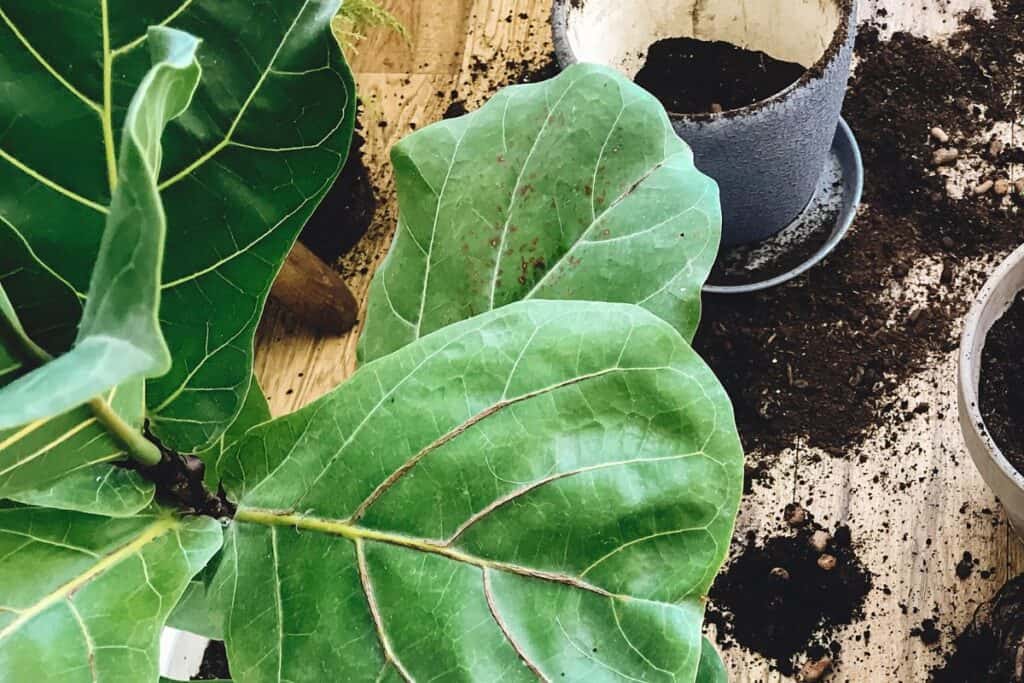
Young fiddle leaf figs may require repotting every year in spring. Although they generally don’t mind being rootbound, younger plants will likely wilt from lack of space and nutrients. Moreover, their rapid growth rate will cause them to outgrow their pots quickly.
You’ll know it’s time to repot your plant when you see the following signs:
- Roots poking out of the soil surface and drainage holes
- Significantly slower growth (new leaf buds typically form every 2 weeks in spring and summer)
- Plant leaning to one side and the point of leaning starts from the base
I often use a 6-inch (15 cm) pot when initially planting my rooted cuttings. I then increase the pot size by 2 inches (5 cm) annually until the plant is about 2-3 feet (0.6-0.9 m) tall. At this point, they should be in a 12-inch (30-cm) pot.
You can reduce the repotting frequency to once every 3 years once your plant reaches this size. I recommend repotting in early or mid-spring for faster recovery.
The only exception is when treating your plant for root rot, which should be done regardless of the season.
Choose a container 4 inches (10 cm) wider and 2 inches (5 cm) deeper than the old one to accommodate growth for the next 3 years. A large, moisture-loving fiddle leaf fig with an established root system doesn’t mind an oversized pot as long as the soil has good drainage.
Avoid using decorative pots because they drain poorly and may not be heavy enough to support the weight of the fiddle leaf fig.
Other than the pot size, the repotting steps are essentially the same as the initial planting steps discussed above.
A good sign that your plant is snug in its new container is when it puts out new leaf buds 2-3 weeks after repotting.
Pest and Disease Management
Fiddle leaf figs are vulnerable to numerous pests and diseases.
Common Pests
A stressed plant has little resistance to pest infestations, and many gardeners will tell you that fiddle leaf figs are one of the most easily stressed houseplants.
The leaves quickly wilt or turn yellow from watering issues or fluctuations in light, temperature, or humidity. This earned them the reputation of being fussy or finicky.
So if your fiddle leaf fig is visibly stressed, watch out for these pests:
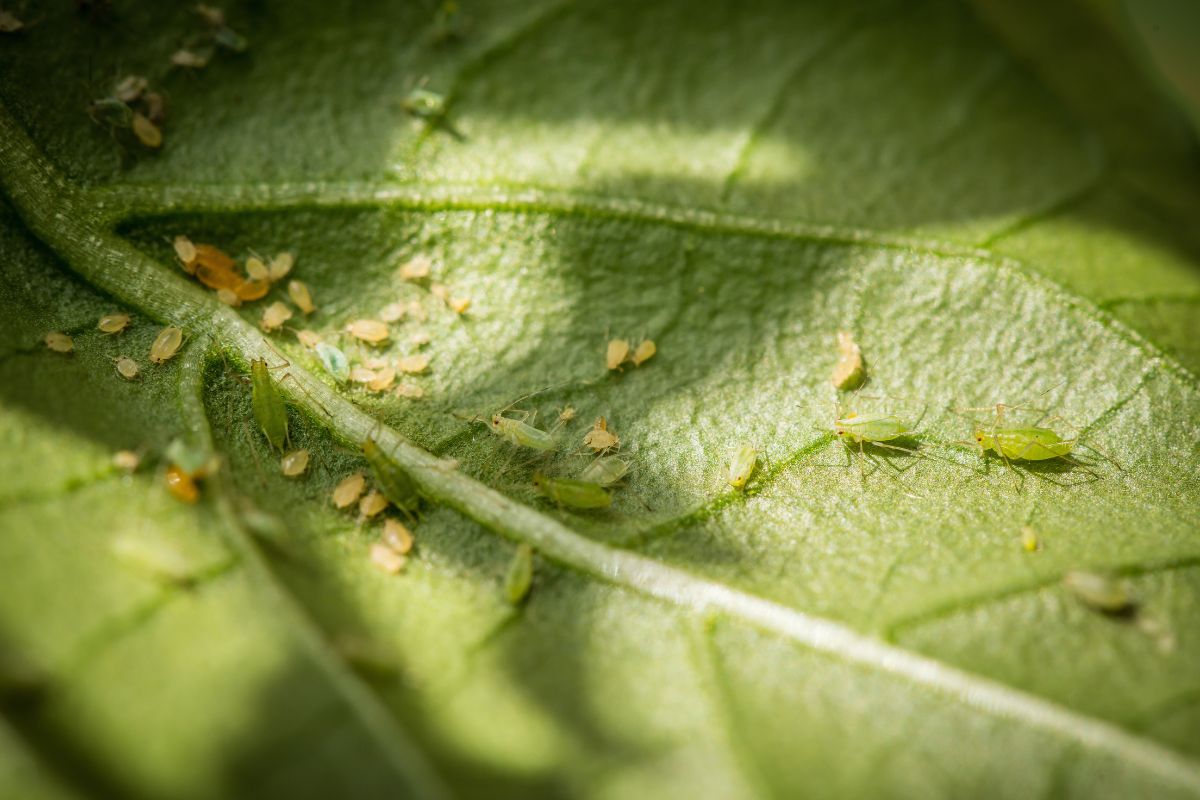
- Aphids: These tiny, crawling insects like to hide underneath the leaves and feed on plant sap. They may appear translucent green, brown, pink, or black. They also leave behind honeydew, a sticky, sugary liquid that can invite sooty mold.
- Spider mites: They cause a distinct yellow or white speckled damage on the leaf surface. You can identify these pests based on their spider-like appearance and fine webs on or between leaves.
- Scale insects: These are tiny, brown, immobile bumps that stick to plant stems, petioles, or leaf veins to feed on the sap.
- Mealybugs: They have a distinct cottony outer covering, making them easier to spot underneath leaves or along the stems. They also feed on plant sap and excrete honeydew.
- Thrips: These are slender, winged pests that lay eggs inside leaf tissues. The microscopic and translucent larvae hatch from the eggs and feed directly from the plant cells, leaving behind a silvery streak or scar. They then excrete pepper-like waste over the leaves.
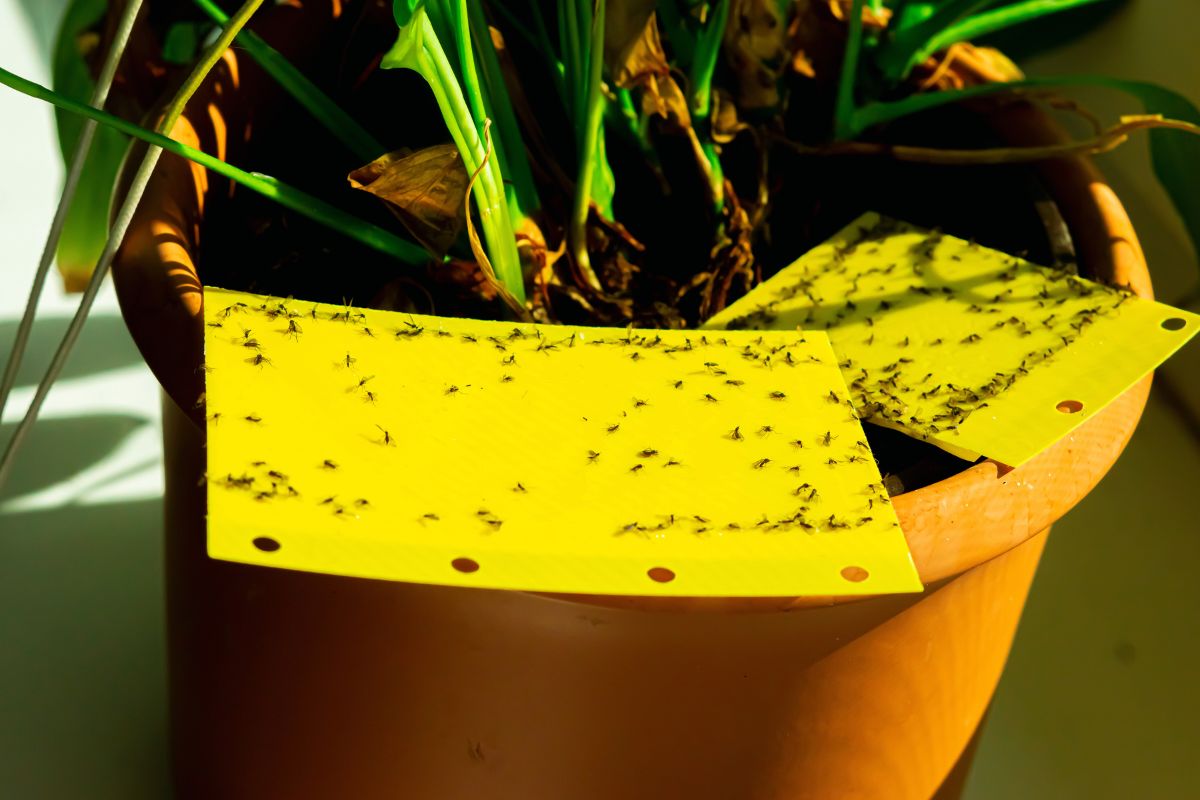
- Fungus gnats: Fiddle leaf figs like regular watering and evenly moist soil. Unfortunately, this can be inviting for fungus gnats, which require a moist substrate to lay their eggs in. The adults look like mosquitoes hovering around your plant while the translucent larvae can penetrate the top 1-2 inches (5 cm) of the soil and feed on the plant roots. If the plant is already stressed, the larvae can worsen the damage.
Proper gardening practices can prevent pest infestations from getting out of hand. Here are some tips to fix and prevent this problem:
- Isolate new plants accordingly before introducing them to your indoor garden. New plants or the potting mix they came with may contain pest eggs and larvae just waiting to cause havoc to your garden.
- Maintain optimal growing conditions to avoid plant stress. Avoid moving your fiddle leaf figs around your home too often. It’s best to find a steady spot for them to bask in bright indirect light and enjoy stable temperature and humidity.
- Let the top 2 inches (5 cm) dry out completely before watering the soil. This will deter fungus gnats from laying eggs in your potting mix.
- Inspect your plants regularly. A weekly dusting or misting can help detect and address early signs of pest infestations. Pests can jump, crawl, or fly between nearby plants and spread the problem, so it’s important to eliminate them promptly.
- Manually remove pests using an alcohol-soaked cotton swab. Then, drop them in a cup of soapy water to immobilize and kill them.
- Eliminate pests using neem oil spray. You can make it by mixing one tablespoon of neem oil solution, one tablespoon of liquid soap, and a quart (1 liter) of water. Spray it at night once a week for treatment or once every 2 weeks for prevention.
- Place a yellow sticky trap close to the soil to catch flying insects.
Common Diseases
Poor watering practices are the primary culprit for fiddle leaf fig diseases, including the following:
Root Rot
Poor soil drainage or frequent watering can keep the soil soggy for too long, which can lead to the following problems:
- The roots may be suffocated due to the lack of oxygen.
- Plant pathogens will reproduce exponentially in moist soil and attack the roots.
- The roots eventually rot and become mushy.
- Rot-causing pathogens climb up toward the stem, spreading the rot.
- The plant may then die.
It’s crucial to fix the problem before the rot takes over the entire root system. Here’s how to treat root rot in fiddle leaf figs:
- Carefully unpot the plant. If the soil is moist, the rootball should slide out of the pot readily. Otherwise, scrape the edges of the pot with a flat knife to release the rootball.
- Remove the soil around the roots. Do this gradually using a hand cultivator or wooden chopsticks to minimize the damage to the remaining healthy roots.
- Prune the black, soft, and mushy root sections. Use sterile shears and spray or wipe it with alcohol between cuts to avoid spreading the infection.
- Cut off the discolored or damaged leaves to help preserve the plant’s energy and encourage the growth of healthier foliage.
- Rinse the roots thoroughly with clean water to remove the remaining soil.
- Soak the roots in 1% hydrogen peroxide solution for 10 minutes to kill the remaining pathogens. The oxygen released from the solution may also help the roots breathe again.
- Let the roots dry for an hour over a clean towel in a warm room with good ventilation.
- Repot the plant in fresh soil mix with better drainage and a similar-sized sterile pot. Since the root volume has been reduced, avoid planting the recovering plant in excess soil to prevent overwatering and the recurrence of root rot.
- Give your plant bright indirect light as it recovers. Avoid direct sunlight (even in the morning) as it can dehydrate the plant quickly. As the roots recover and grow, the plant will have limited access to water from the soil and it must preserve the moisture in the stem and leaves.
- Maintain moderate temperatures and boost the humidity to 50-60%. This will help reduce moisture loss through evaporation or transpiration.
- Be mindful of your watering routine. To avoid recurrence, remember the proper watering tips discussed above.
Powdery Mildew
Misting your plant frequently without wiping away the excess moisture on the leaves can cause fungal spores to grow and become visible over the leaf surface. Powdery mildew then manifests as white spots or webbing on the leaves.
To treat the disease, you may follow these steps:
- Prune leaves that exhibit symptoms. Infected plant sections won’t recover and will likely spread the spores to the rest of the plant or neighboring houseplants.
- Properly discard the infected plant parts. Don’t add them to your compost pile, as there’s no guarantee the composting process will kill the pathogen.
- Spray the plant with neem oil solution. This is an organic way to treat and prevent fungal infections. However, it might not be effective in completely eliminating the pathogens causing powdery mildew.
Alternatively, you can use a copper fungicide spray. Note that this chemical is harmful when inhaled, so you must move your houseplant to a shaded but well-ventilated area before application. Wear appropriate masks and gloves when using the fungicide, and follow the application instructions carefully.
Once the plant is treated, you can avoid the same problem from happening again with these tips:
- Prune discolored or damaged leaves regularly to improve the air circulation within the foliage.
- After misting the leaves during regular inspection and maintenance, wipe them down using a clean piece of cloth to remove moisture from the leaf surface.
- Avoid spraying or wiping the leaves showing signs of damage from disease as this can spread the infection. You must prune the leaves and treat the plant first. I’ll discuss this in more detail below.
Leaf Spot
Leaf spots can result from bacterial or fungal infections. The spots may appear brown and mushy with yellow margins. Unfortunately, there is no effective treatment for this issue.
You can prune the visibly affected leaves, discard them, and hope that your plant doesn’t develop the same problem. In the meantime, you can prevent the potential spread of infection with these tips:
- Avoid misting or wiping your plant for the next 2-4 weeks because you may unknowingly spread dormant pathogens to another houseplant.
- Water the soil directly and avoid wetting the foliage.
- Maintain the humidity at 40-50%. Levels above 60% are ideal for microbial growth.
Observe for any new signs of infection. If the remaining leaves start showing similar symptoms within 2-4 weeks, you must dispose of the plant entirely.
Otherwise, you can revert to your regular plant care routine, but make sure not to leave the foliage wet.
Troubleshooting Common Problems
Fiddle leaf figs are very expressive plants. They show discomfort primarily through the appearance of the leaves or the shape of the trunk.
Here’s a quick guide to common problems and their corresponding causes and fixes:
Yellow Leaves
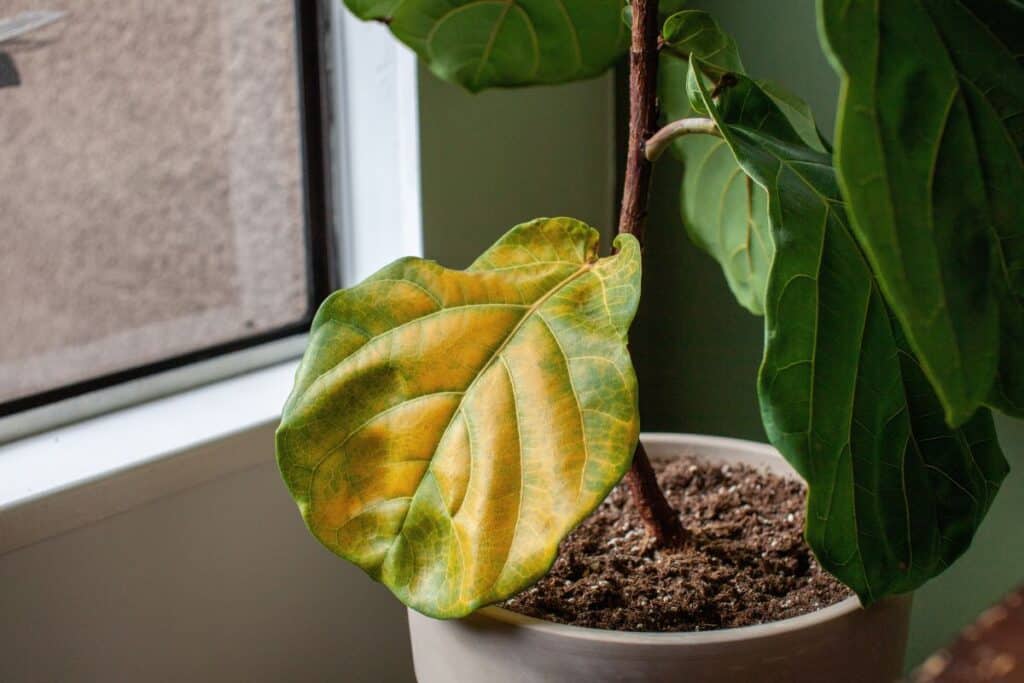
Leaf yellowing in fiddle leaf figs is primarily due to the following factors:
- Dehydration: If you let the soil dry out completely between watering, the leaves may wilt and turn yellow due to dehydration. Properly rehydrating the soil and improving your watering schedule will help the leaves regain their green color.
- Overwatering: Yellowing due to overwatering may indicate that rot has already started. It’s best to repot your plant before the rot consumes the entire root system.
- Nutrient deficiency: Lack of iron, magnesium, and nitrogen can cause chlorosis or yellowing of leaves. Feeding your plant with a 3-1-2 NPK fertilizer from spring to summer should help relieve the symptoms.
- Insufficient light: A lack of sunlight can cause leaves to turn pale or even yellow. Rotate the pot regularly to give the foliage balanced access to sunlight.
- Aging: Bottom or older leaves naturally turn yellow and fall off eventually. You may remove them before they fall off to keep your plant looking green.
Brown Leaves
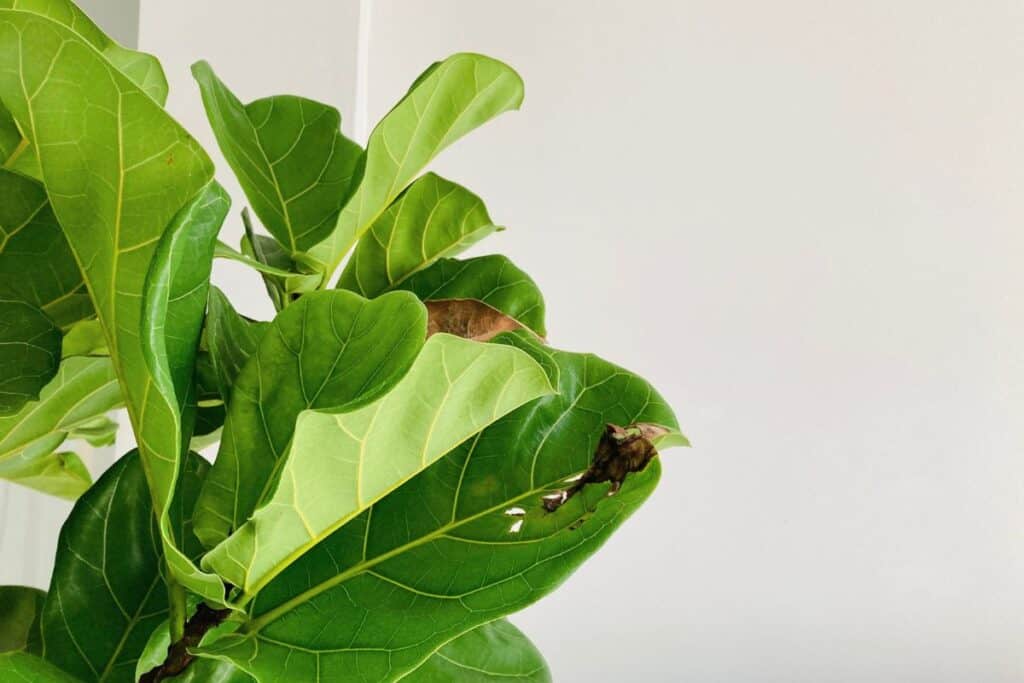
Browning in fiddle leaf figs can occur in different ways depending on the causes.
Here’s a quick reference to the symptoms, causes, and solutions:
| Symptom | Causes | Solutions |
| Brown and crisp leaf tips or edges | Underwatering High temperatures Too much sunlight |
|
| Brown or black and crisp spots on sun-exposed leaves | Sunburn |
|
| Brown mushy leaves | Overwatering |
|
| Brown spots with yellow margins | Fungal or bacterial infection |
|
Leaf Drop
Fiddle leaf figs are notorious for shedding leaves when stressed. Some factors that can cause this behavior include:
- Heat or cold shock: Temperatures above 90 °F (32 °C) or below 55 °F (18 °C) can stress your plant. High temperatures can cause rapid moisture loss from the soil or through the leaves. Shedding leaves can help preserve moisture within the plant. On the other hand, evergreen tropical plants drop their leaves under cold shock as a way to trap moisture and heat within the stems.
- Over- or underwatering: Overwatering that has escalated to root rot eventually causes symptoms similar to underwatering. The roots are unable to deliver moisture to the shoots, so the dehydrated leaves fall off.
Considering the abovementioned factors, it’s easy to understand that a consistent care routine is crucial in keeping your fiddle leaf fig healthy and thriving.
Leaning or Limp Stems

It’s not rare to see fiddle leaf figs reaching over 10 feet (3 m) indoors if you have enough vertical space. However, such a height makes them more susceptible to leaning or falling over.
Here are the common reasons for leaning in fiddle leaf figs:
- Insufficient light: Phototropism causes plants to lean toward the light source if they don’t receive enough light in their current spot. You can fix this by moving your plant closer to the window and rotating the pot regularly.
- Nutrient deficiency: Lack of calcium, nitrogen, and phosphorus can lead to weaker stems that are prone to bending or leaning. Feed your plant a balanced fertilizer during their active growing season in spring and summer.
- Overwatering or root and stem rot: Rotten roots and stems cannot support the weight of the plant. The dense foliage will eventually pull the plant down. Avoid overwatering your plant to prevent life-threatening issues like root and stem rot.
- Small pot or rootbound issues: The overgrown roots may push the plant and soil out of the pot. Depending on the severity of the issue, the stem may visibly lean to one side. Repot your plant in a larger container when you see the roots poking out of the soil.
- Pest infestations: Scale insects can feed on the fleshy stem of young fiddle leaf figs. A severe infestation on a stressed young plant can weaken the structure of the stem, causing it to lean. Inspect your plants regularly and remove pests as soon as you spot them.
- Sudden strong winds: Moving your plant outdoors during the warm season without proper protection from strong winds will naturally push the slender stem to bend—or even break. Secure your plant against a PVC stake before moving it outdoors. Place it in a partially shaded spot with protection from the wind, such as a fence or a wall.
Small or Stunted Growth
Fiddle leaf figs are fast-growing plants with large leaves. Small or slow growth are clear indicators of environmental or care issues, such as the following:
- Being rootbound: Overgrown roots can displace the soil, reducing its ability to hold and absorb moisture. As a result, the plant may put out smaller or deformed leaves. In some cases, the plant may stop growing entirely. Repot your plant every 3 years or as soon as it shows signs of being rootbound.
- Nutrient deficiency: Fiddle leaf figs require regular feedings during the warm months to support their rapid growth and maintain the existing foliage. Without enough nutrients, the leaf buds may fail to unfurl or have stunted growth. Regular fertilization and repotting can help your plant grow lush foliage.
Display and Companion Plants
Fiddle leaf figs are quite versatile plants if your home has the right light conditions for them. Here are some of my favorite aesthetic locations for these giants:
- They’re best placed across an east-facing doorway to draw positive energy into your home. However, you may need to move them away from the door in winter if you live in a cold climate.
- You may also place them in the corner of a bright living room.
- They also look fantastic on a shaded patio, porch, or balcony if you live in a frost-free region.
I have an 8-foot (2.4 m) tall fiddle leaf fig in my living room, and I’ve been using it as a Christmas tree for 3 years now. I started decorating it with Christmas balls and faux Poinsettia flowers since it was only 5 feet (1.5 m) tall.
These giants make excellent companions to the following houseplants:
- Monstera deliciosa: If you’re a fan of large leaves, putting fiddle leaf figs side-by-side with a monstera is an absolute vibe. They thrive in similar light, temperature, and humidity conditions. You may also water them on the same schedule.
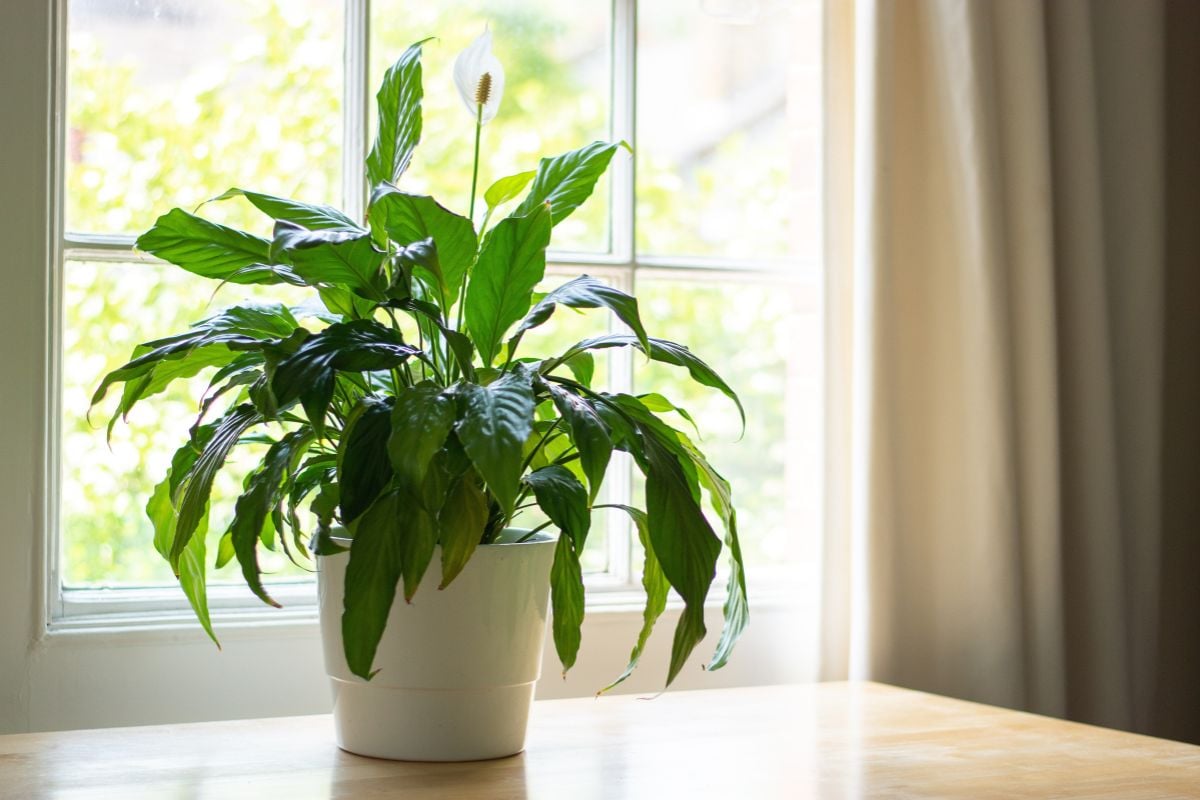
- Peace lilies: Their fragrant and showy white flowers can add an interesting diversity to your foliage garden.
- Rubber plant: This Ficus relative complements the fiddle leaf fig foliage with its equally attractive rubbery leaves. It’s also less fussy and easier to care for than its cousin.
Final Thoughts
Fiddle leaf figs have a reputation for being fussy or hard to please. They turn yellow or shed their leaves at minor issues other houseplants typically don’t mind.
Still, they’re a great houseplant to brighten up your home. They’re quite sturdier than they get credit for. Just remember to give them lots of bright morning light, regular fertilization in spring and summer, evenly moist soil, and a warm room with moderate humidity.
So don’t be discouraged by what you read online about fiddle leaf figs. They’ll thank you with their vibrant and huge green leaves, which are an absolute win as a gardener.
Please reach out or leave a comment if you have any questions or want to know more about fiddle leaf figs.