
Red Edges on Jade Plant Leaves: Symptoms, Causes, and Fixes
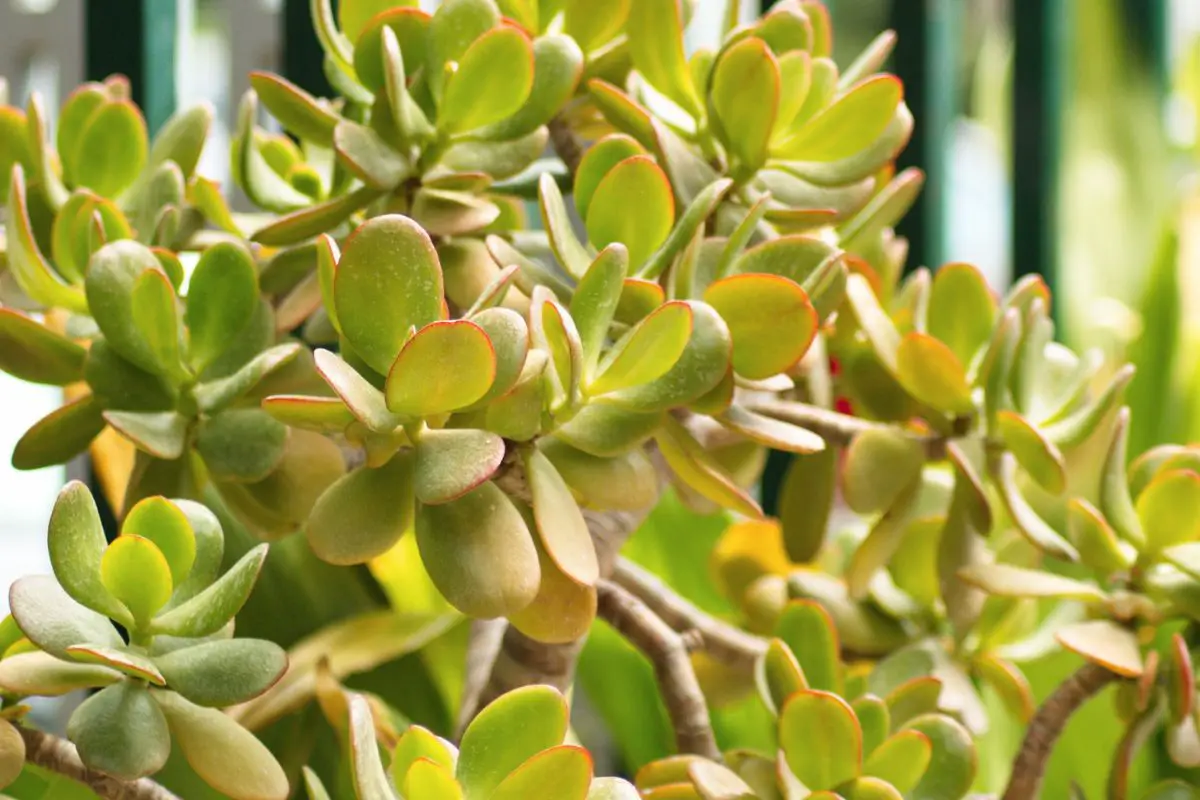
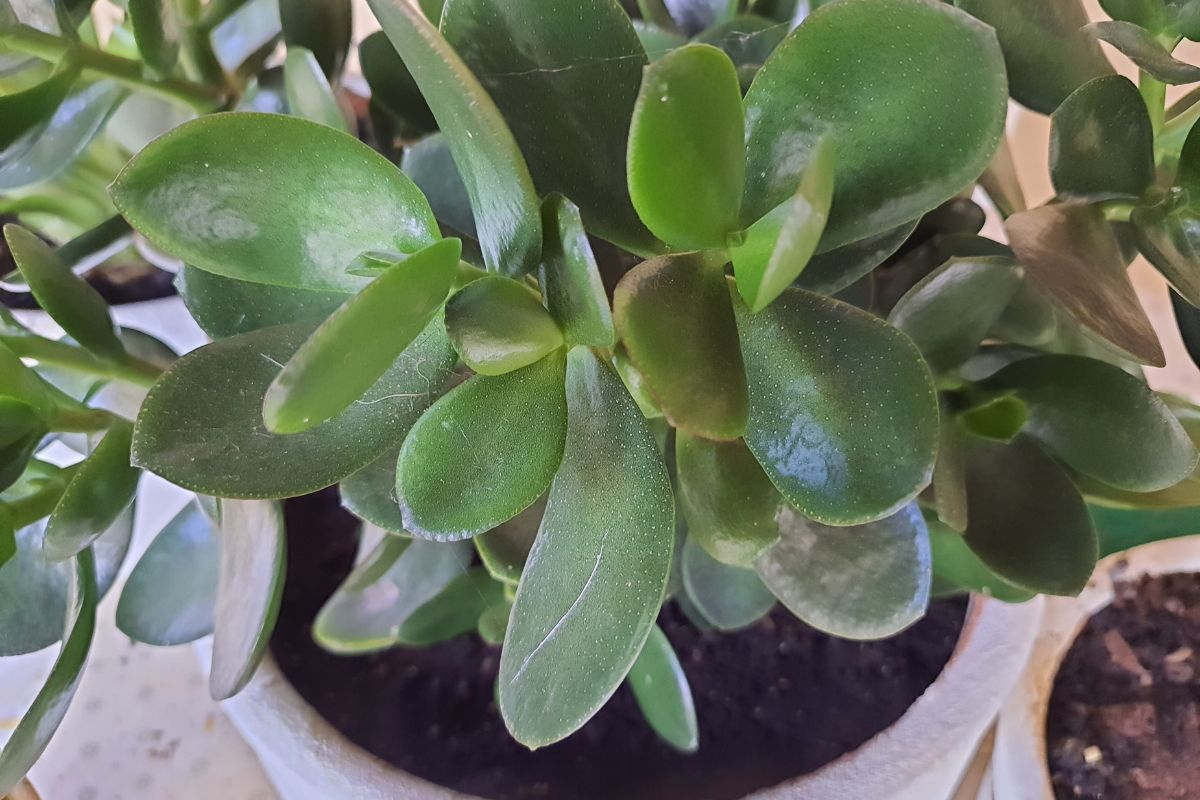
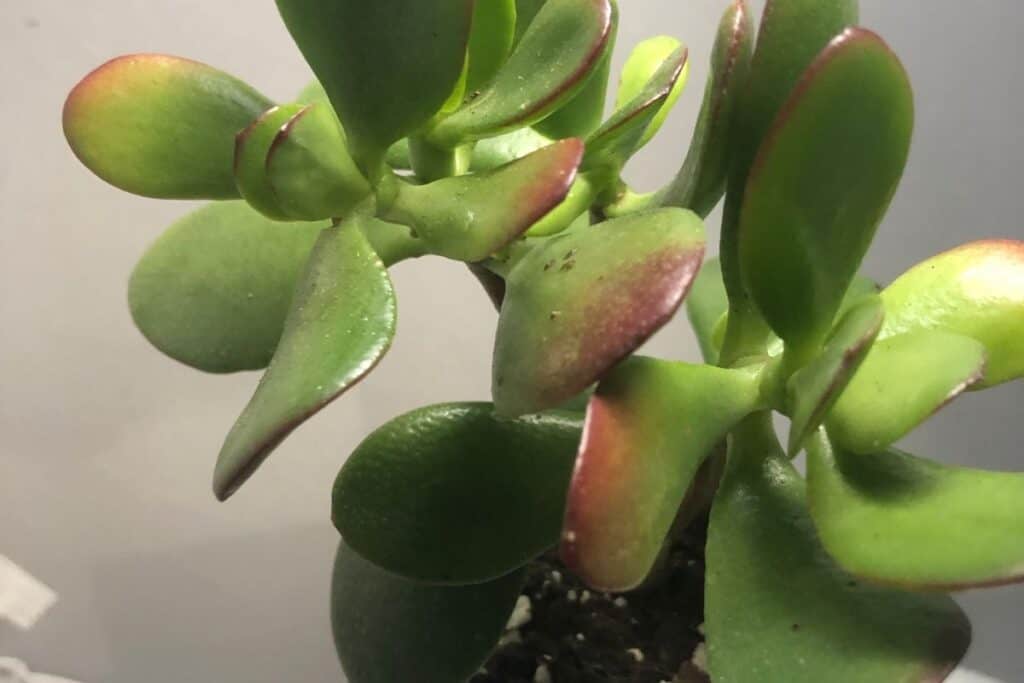
Jade plants are famous for their solid-green, succulent leaves, which symbolize wealth in Asian culture. That’s how they earned the nickname ‘Money Plant’. However, the leaves’ edges sometimes lose their classic jade color and turn red.
Red leaf edges in jade plants result from an increased anthocyanin concentration due to common plant stressors:
- Intense sunlight
- High temperatures
- Drought
- Over-fertilization
Red leaf tips are usually not a cause for concern, as they indicate a plant’s protective response against common stressors. The rest of the article will discuss why it occurs and situations where the symptom can indicate a care or environmental problem.
Jade Plants: An Overview
Jade plants (Crassula ovata) are native to semi-arid regions of South Africa. Younger jade plants are usually shaded by taller shrubs since they’re susceptible to dehydration and sunburn from intense sunlight.
On the other hand, mature and taller jades receive direct sunlight throughout the day. Due to this environmental condition, they have developed several protective mechanisms to resist light stress and desiccation.
Here are some notable adaptations:
- Thick succulent leaves and stems: The extra moisture in the shoots can keep the plant hydrated and maintain biological functions despite several weeks of drought.
- Red anthocyanin pigments: They grant the leaves photoprotective properties by absorbing excess sunlight to prevent stress or damage to the chloroplast (a part of the plant cell that facilitates photosynthesis).
Genetic Predisposition to Anthocyanin Expression
Plants have different pigments that serve multiple biological functions, such as photosynthesis and stress response. In jade plants, anthocyanins are the primary pigments that react to stress.
Anthocyanins are naturally red at mildly acidic conditions of around 6.0, which is the recommended pH for jade plants.
Under suitable environmental conditions, the anthocyanin concentration is generally too low to see the redness. That’s why classic jade leaves appear green. However, when the plant is stressed, you’ll see a distinct red tinge on the edges.
The intensity of the color change can vary across different cultivars because of the varying levels of anthocyanin or genetic probability for expression.
For instance, some jade plant varieties may exhibit color gradients of red, orange, yellow, and/or green (from the edges to the center) during the cold season.
Some examples include:
- Botany Bay Jade
- California Red Tip
- Campfire
- Harbour Lights
- Hummel’s Sunset
- Red Coral
This seasonal transition is a natural response to changing temperatures, which I’ll discuss further below.
Symptoms of Red Leaf Edges
Depending on the environmental conditions, jade plants may take on a red hue in the following ways:
- Redness concentrated on the leaf margins
- Red edges expanding toward the center of the leaves
- Leaves and fleshy stems turn red
Red leaf edges indicate a healthy plant response to stress. If the discoloration expands beyond the leaf tips, it means the problem has progressed, and you may need to adjust your plant’s environmental conditions or care routine.
Understanding the symptoms and underlying causes is important to determine when they could present a potential problem.
Common Causes and Fixes
Here’s a summary of the factors that may influence anthocyanin synthesis, resulting in red edges in jade leaves:
| Factors | Effect at High Levels | Effect at Low Levels |
| Sunlight | Change in color | No expression |
| Temperature | Change in color if the plant also has light stress | Change in color in red jade hybrids |
| Water | No expression | Change in color during severe drought stress |
| Salt Stress or Over-fertilization | Change in color | No expression |
1. Too Much Sunlight
Excessive or intense sunlight is the primary cause of red leaf edges in jade plants. Bright light triggers anthocyanin synthesis, increasing the pigment’s concentration to sufficient levels that you can see the color changes.
Mature jade plants tolerate full sun in the wild. In contrast, indoor jades are less tolerant to a full day of intense sunlight without proper acclimatization.
If you give your indoor jade plants around 4 hours of direct sunlight daily, you may notice the leaf tips turning red. This is more apparent if your plant is exposed to the intense afternoon sun.
Developing red leaf edges is the plant’s natural defense mechanism to intense sunlight. The red pigment (anthocyanin) absorbs excess ultraviolet light, allowing the green pigment (chlorophyll) to absorb only enough light to photosynthesize normally.
Without the red tips on the leaves, the excess light energy that cannot be utilized for photosynthesis may burn the leaves, turning them wrinkly, brown, or dry.
Unfortunately, red leaves are less efficient photosynthetically. If the redness spreads all over the leaf surface or to the stems, the plant might not be able to photosynthesize properly. This can lead to common problems like stunted growth and lack of flowers.
To restore your jade plant’s solid-green leaves, you must move it away from intense sunlight. Here are some tips and placement options:
- Place your plant next to or up to 4 feet (1.2 m) away from an eastern window where your plant can receive around 4 hours of gentle morning sunlight.
- Choose a spot with at least 8 hours of bright, indirect light.
- Keep your plant up to 8 feet (2.4 m) away from a southern or western window or hang sheer curtains to filter the light.
- Rotate the pot by 90-180° every time you water your plant to prevent prolonged exposure to intense sunlight. This can also promote balanced growth and prevent your plant from becoming leggy.
- Grow your plant under full-spectrum grow lights for 10-12 hours daily.
2. Improper Temperatures
Temperature has a tricky effect on anthocyanin biosynthesis or degradation. In classic jade plants, temperature fluctuations seldom cause red leaf tips unless the plant is also suffering from light stress.
Here’s how extreme temperatures can affect red pigment expression:
Heat Stress
Under optimal light conditions, high temperatures can degrade anthocyanin, reducing its concentration in plant cells. However, high temperatures can worsen the reddening if the plant is stressed due to intense sunlight.
Photosynthesis generates heat, while transpiration dissipates it. If the light intensity and environmental temperature are high, the leaves may become redder to limit the photosynthetic activity and reduce heat produced.
The plant will naturally try to transpire more to release the excess heat. However, this increases the risk of dehydration.
To protect the plant from rapid moisture loss, anthocyanins can reduce stomatal density and limit the transpiration rate.
There’s a limit to how much anthocyanins can protect plants from light and temperature stress. Prolonged exposure to extreme conditions can lead to leaf scorch (brown or black spots on the leaves).
Natural Response to Low Temperatures in Select Cultivars
There isn’t sufficient research to distinguish the thermal threshold at which anthocyanin biosynthesis starts or stops. However, visual observation of some hybrid jade plants’ seasonal behavior may help.
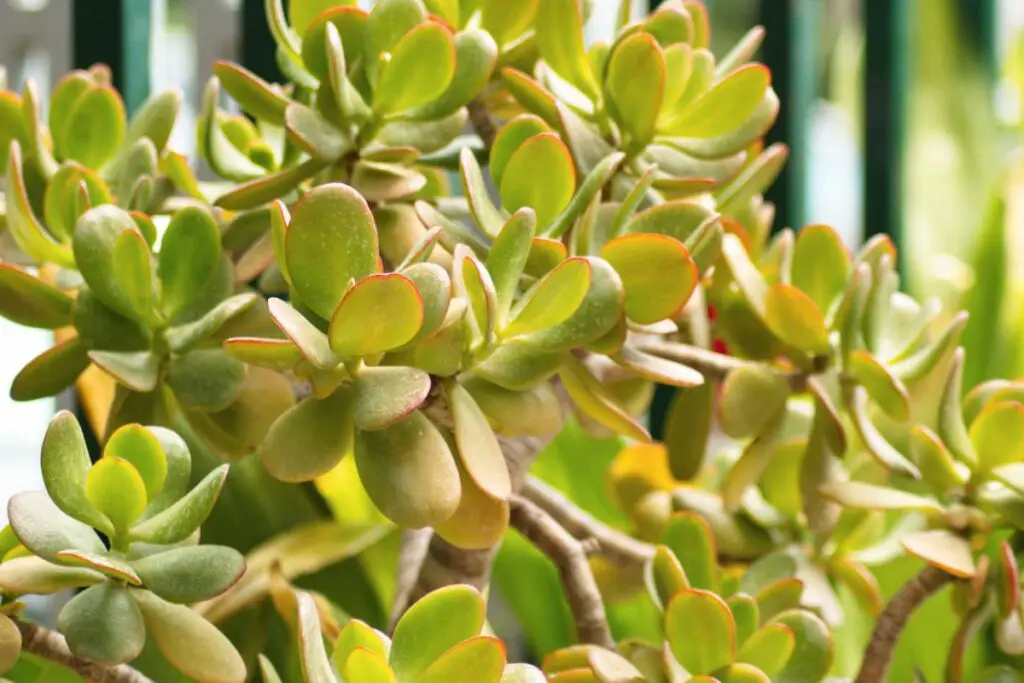
For instance, the leaves of some jade cultivars like ‘Campfire’ and ‘Hummel’s Sunset’ naturally transition from solid green to red, yellow, and/or orange as temperatures drop in the fall or winter.
Jade plants prefer fall temperatures as low as 50-55 °F (10-13 °C), which typically prompt hybrids to change the color of their foliage. This behavior is associated with anthocyanin biosynthesis initiated by the seasonal temperature drop.
On the other hand, this doesn’t usually have a similar effect on classic jade plants with naturally green leaves throughout the year. There isn’t sufficient research that explains the correlation between low temperatures and red leaf tips in classic jade plants.
If anything, cold shock from exposure to temperatures below 40 °F (4 °C) typically causes the leaves to turn yellow.
I’ve observed red tips on my jade leaves in winter, but I associated the symptom with intense sunlight. Jade plants typically have lower metabolic activities during the cold season, so giving them too much light can cause red leaf edges.
Sure enough, the red tips gradually reverted to green after moving my plant away from the sunny window.
Optimal Thermal Conditions
To fix the discoloration and prevent temperature-induced stress, follow these care tips:
- During spring and summer, keep the environment within the optimal temperature range of 65-75 °F (18-24 °C).
- Reduce the nighttime temperature to 50-55 °F (10-13 °C) in the fall, as this can also prompt flowering in winter.
- Keep your plant away from heating or cooling vents and drafty doors or windows in winter.
3. Underwatering or Drought Stress
Jade plants are highly drought-tolerant and can survive several weeks without water. However, extended periods of drought can cause irreversible damage to the foliage.
Here’s how drought can affect jade plants:
- In the early stages of underwatering, the plant may exhibit wrinkly leaves or leaf drops.
- As the issue progresses, the plant produces higher concentrations of reactive oxygen species (ROS), such as hydrogen peroxide and superoxide. Excess ROS can kill plant cells.
- To counter the problem, the plant will synthesize more anthocyanins or similar antioxidants to remove the excess ROS. This increased anthocyanin concentration may result in red leaf edges.
- If the plant goes several weeks more without enough water, the antioxidants won’t be able to keep up with the high concentration of ROS, which can lead to cell or tissue death.
- The leaves will then turn brown and dry.
You can’t recover the leaves once they dry out and fall off. However, you can rehydrate the soil to fix the wrinkled leaves, revert red leaves to green, and encourage your plant to produce new foliage.
Here are some helpful tips:
- Soak the pot in water for 10-30 minutes to evenly saturate the soil, especially if it has accumulated hydrophobic clumps from severe underwatering.
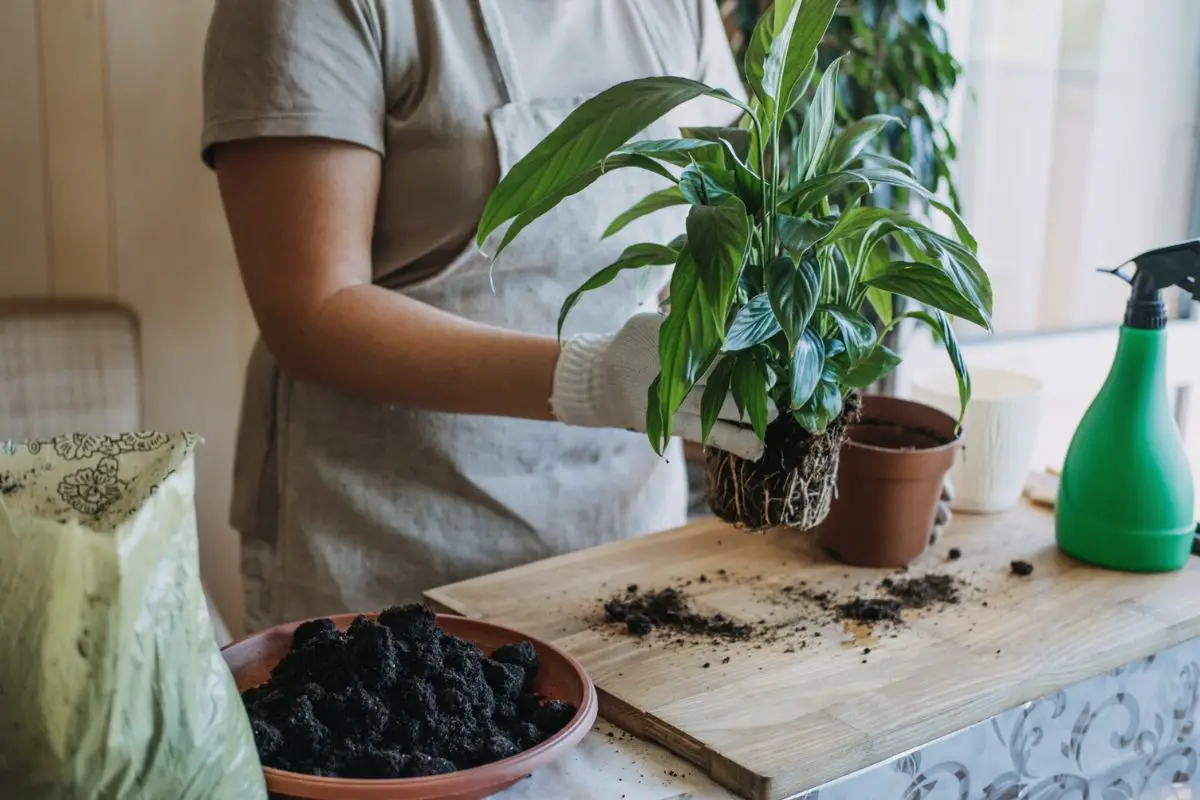
- If the soil is sandy and severely hydrophobic, you must carefully unpot the plant and transplant it in a sterile pot with fresh and moist jade soil mix. I recommend using a soilless mix containing equal parts compost and perlite because it has excellent drainage and is easy to re-wet.
- Water the plant as soon as the top half of the soil mix is dry. Don’t let the soil become bone-dry between waterings, as this can increase the buildup of hydrophobic clumps.
4. Salt Stress or Over-Fertilization
Over-fertilization can cause salt buildup around the jade plant’s fragile roots. The excess salts can draw moisture from the roots and dry them out, increasing the risk of drought stress.
As discussed, drought can increase ROS concentrations and the plant will initiate anthocyanin production to relieve the problem. The leaves may briefly exhibit red leaf tips, gradually escalating to leaf scorch if left unattended.
Jade plants are usually fertilized in spring and summer. You can distinguish over-fertilization from the other factors discussed above by checking the following:
- Check the soil surface for a white crust (insoluble fertilizer salts from granular fertilizers).
- Review the last time you fed your plant and the dosage or concentration of the liquid fertilizer. Ideally, it should be half the recommended dose because jade plants are light feeders.
To fix the problem, you must first rid the soil of the excess salts.
Here are the steps:
- Scrape about ¼ inch (0.6 cm) from the soil surface to remove the salt crust. Be careful not to damage too many roots.
- Top the soil with fresh, well-draining soil mix. You can add compost to the soil mix to improve water infiltration.
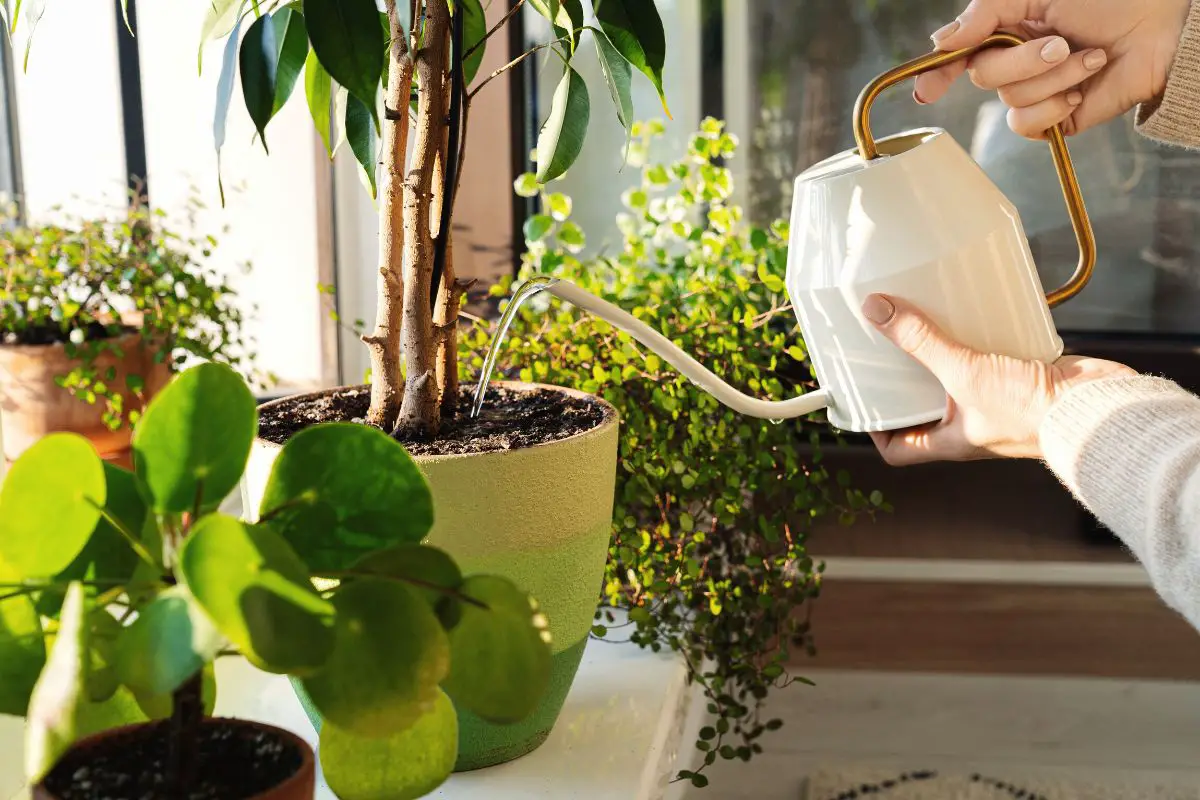
- Saturate the soil evenly using filtered water. Swirl the spout of the watering can slowly over the surface.
- Keep pouring more water (equal to the volume of the pot) to flush the remaining salts.
- Leave the pot on a drip tray for up to 30 minutes to let the excess water drip out of the drainage holes.
- Flush the soil again after 3 days. This works if your soil mix has excellent drainage. To be on the safe side, you can wait until the top half of the pot is dry before flushing again.
After flushing, avoid fertilizing your plant right away. The added compost will slowly and gently feed your plant as it recovers. Alternatively, you can feed your plant after 2-3 months if it’s still within the growing season.
Remember the following tips to avoid over-fertilizing your jade plant:
- Slow-release granular fertilizer (10-10-10): Apply a thin layer over the soil surface and water it in deeply. Keep an eye on the soil moisture and water your plant as soon as the top half of the pot is dry. Feeding a jade plant once in spring should be enough. If you want a faster-growing plant, you can reapply every 2 months until mid-summer.
- Liquid fertilizer (10-10-10): Use a liquid fertilizer you can water directly into the soil. Dilute it to a quarter to half the recommended strength and apply once a month until 2-4 weeks before the first fall frost.
Preventive Measures for Healthy Growth
Jade plants can be expressive when they experience poor environmental conditions, showing stress through discoloration and leaf drop.
To catch early signs of stress and ensure your jade plant grows healthily, schedule a thorough inspection every 2-3 weeks. During this inspection, you can perform some maintenance and preventive measures:
- Water the plant as needed. Ideally, the soil should be dry halfway through before watering.
- Give the pot a quarter or a half turn to ensure the leaves on all sides receive sunlight and have more balanced, bushy growth.
- Check the stems and undersides of leaves for signs of pests, such as webbing, white fluff, brown bumps, and white specks. Remove the pests as you spot them using a cotton swab with rubbing alcohol.
- Inspect the leaves for discoloration, such as red edges, yellowing, or browning. Evaluate the environmental conditions surrounding your plant to identify the underlying cause and fix the problem.
In addition, you must also tailor your care routine depending on the season. I’ll discuss this further below.
Seasonal Considerations
It’s crucial to make seasonal adjustments to light, temperature, water, and fertilization for optimum jade plant growth and health. This can prevent plant stress and the unhealthy reddening of the leaves that may lead to leaf scorch.
Here are some important considerations:
Spring and Summer Care
Jade plants grow actively during spring and summer. To support their growth, they require the following conditions:
- Light: 4 hours of direct morning sun or 8 hours of bright, filtered light from a southern window.
- Temperature: Daytime temperatures of around 75 °F (24 °C) and around 60 °F (15.6 °C) at night.
- Water: Once every 2-3 weeks or as soon as the upper half of the pot is dry.
- Fertilizer: Granular fertilizer every 2 months from spring until midsummer or half-strength liquid fertilizer once a month until 2-4 weeks before the first fall frost.
Fall and Winter Care
Although they don’t enter dormancy, jade plants grow more slowly during the cold seasons to store energy. Proper transition to the cold season may also encourage flowering in winter.
Here are the ideal conditions in fall and winter:
- Light: 8 hours of bright indirect light (no direct sunlight). You can move your plant 4-8 feet (1.2-2.4 m) away from a sunny window or hang sheer curtains to filter the light.
- Temperature: Daytime temperatures of around 70 °F (21 °C) and 50-55 °F (10-13 °C) at night.
- Water: Once a month or as soon as the upper ⅔ of the soil is dry.
- Fertilizer: Stop feeding 2-4 weeks before the first fall frost until early spring.
Final Thoughts
Jade plants produce anthocyanins to overcome minor problems, such as intense light, heat, drought, or salt stress. Anthocyanin is a plant pigment with photoprotective and antioxidant properties that can grant plants stress tolerance.
However, there’s a limit to how much the pigment can mitigate the effects of suboptimal environmental and care conditions.
Jade plants are generally low-maintenance and resilient houseplants. Still, it helps to pay close attention to your plant’s symptoms to identify and promptly fix the issue before it becomes irreversible.
Don’t hesitate to leave a comment if you have questions or valuable insights regarding red leaf edges on jade plants. You can also follow our social media pages for more gardening tips and updates.