
Temperature Requirements for Jade Plants Explained
Jade plants are among the most adaptable houseplants due to their flexible environmental requirements and impressive drought tolerance. However, they can be rather sensitive to extreme temperatures.
Here are the essential facts to know about a jade plant’s temperature requirements:
- Jade plants thrive at moderate daytime temperatures between 65 and 75 °F (18 and 24 °C).
- The optimal nighttime temperature is around 60 °F (15.6 °C) during the growing season in spring and summer. It can be reduced to 50-55 °F (10-13 °C) in the fall and winter to prompt the plant of the changing seasons and to preserve energy for potential flowering.
- Prolonged exposure to temperatures over 90 °F (32 °C) can increase the risk of heat and drought stress, leading to wrinkled, yellow, brown, dry, and/or thin leaves.
- Even brief exposure to freezing temperatures below 32 °F (0 °C) can cause cold shock or chill injury, leading to weak, mushy, and droopy stems and leaves.
Temperature plays a crucial role in jade plants’ growth, development, and overall health. In this article, I’ll share practical tips on providing the ideal environment for jade plants and troubleshooting common temperature-related problems.
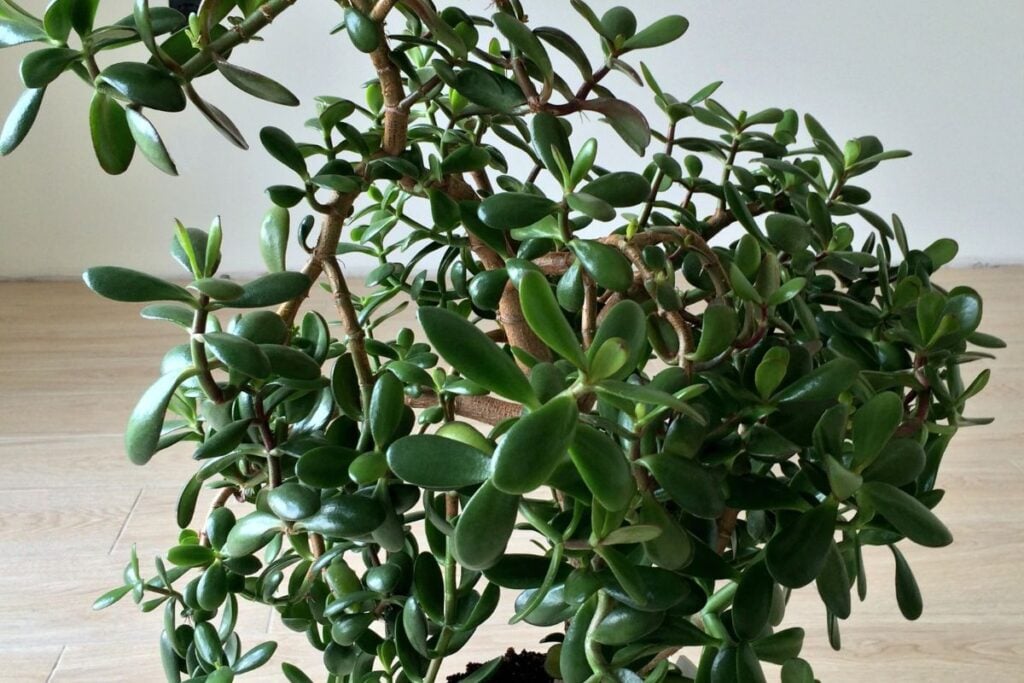
Native Climate and Care Implications
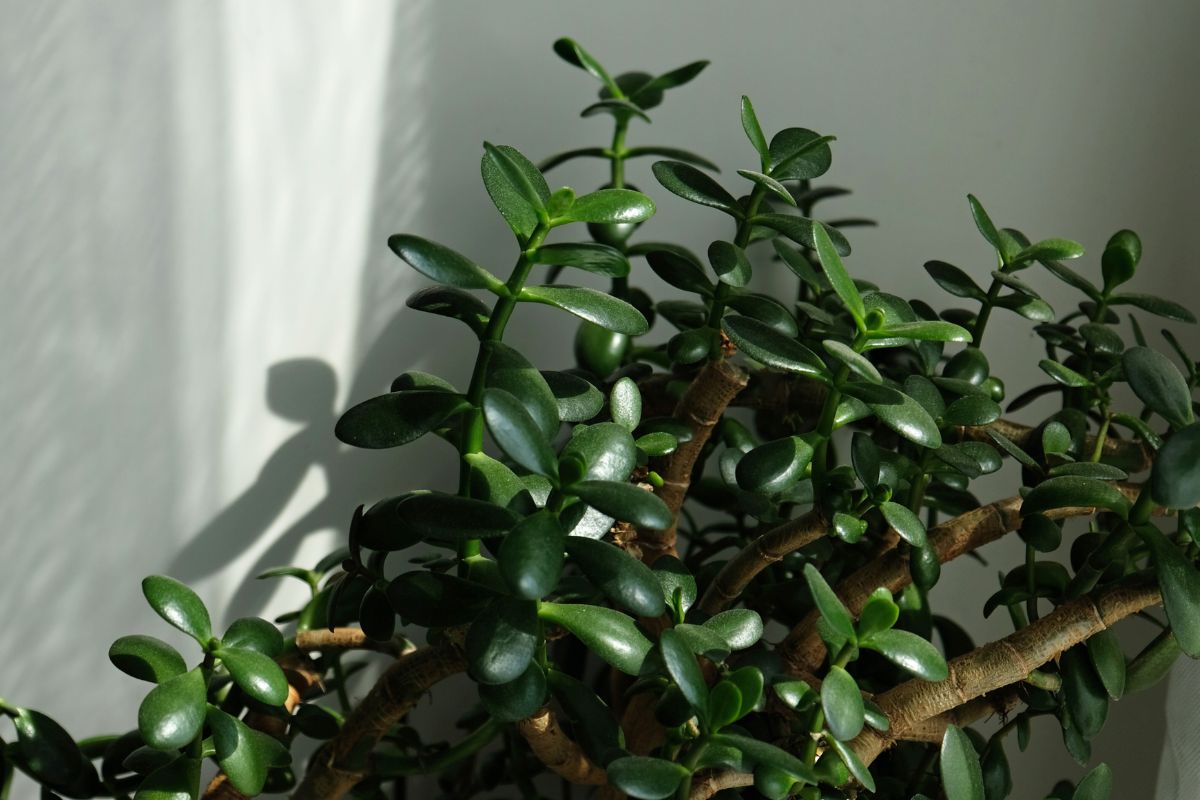
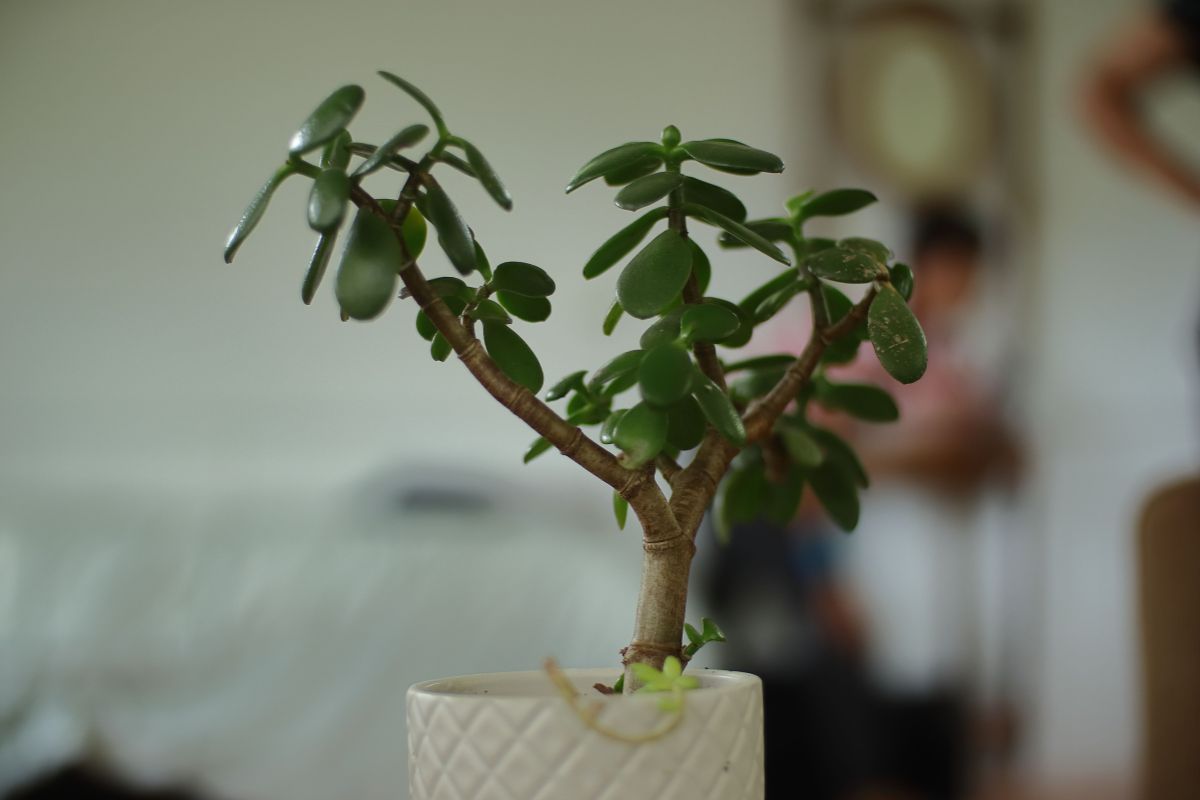
Jade plants (Crassula ovata) come from semi-arid or arid and frost-free regions in South Africa with the following seasonal conditions:
- Spring & summer: More frequent rains and average daily temperatures of 60-90 °F (15.6-32 °C)
- Fall & winter: Less frequent rains and daily temperatures of 45-70 °F (7-21 °C)
The humidity levels can vary depending on the location. In general, areas closer to the coast have humidity levels of around 70%, whereas inland slopes and hills typically have around 30%.
In the U.S., jade plants can grow outdoors in hardiness zones 10-12. They can tolerate a wide range of humidity levels if the temperature is moderate.
On the other hand, extreme temperatures coupled with inadequate humidity levels negatively affect the plant’s growth and appearance and even inhibit flowering.
Here’s how prolonged exposure to incorrect temperatures can affect jade plants:
- High temperatures (over 85 °F or 29 °C) and low humidity (below 30%) can increase the risk of dehydration, causing wrinkled, yellow, brown, or thin leaves.
- Low temperatures (below 40 °F or 4 °C) and high humidity (over 60%) can cause chill injury, leading to mushy leaves and droopy stems.
Maintaining moderate temperature levels at home is crucial to help jade plants thrive indoors. Understanding the climate pattern in your area will also help determine whether you can grow your jade plants outdoors or take them out for the summer.
Temperature Requirements
Let’s explore a jade plant’s indoor temperature requirements below.
Ideal Temperature Range
Jade plants thrive at daytime temperatures between 65 and 75 °F (18 and 24 °C) all year round. As subtropical succulents, they don’t naturally go dormant in winter. They require consistently warm daytime temperatures to keep growing or metabolizing.
This range is similar to the conditions in their native habitat and also within the comfortable and recommended range for human health.
During the growing season in spring and summer, jade plants do well with nighttime temperatures around 60-65 °F (15.6-18 °C) for optimal transpiration rate.
Crassula ovata belongs to a family of plants that undergo Crassulacean Acid Metabolism (CAM), wherein they close their stomata during the day to reduce moisture loss.
The pattern of warm days and cool nights helps maintain a jade plant’s biological functions, contributing to its vibrant appearance and longevity.
Here’s how:
- The lower nighttime temperatures allow them to open their stomata for transpiration and carbon dioxide absorption and storage.
- The warm temperatures during the day help stimulate enzyme activities that release carbon dioxide in plant cells to fuel light-sensitive metabolic activities during the day.
In the fall, letting nighttime temperatures further drop to 50-55 °F (10-13 °C) can help encourage flowering. However, this temperature range can be challenging to maintain indoors, explaining why jade plants rarely bloom in typical home environments.
Measuring Temperature
You can regulate indoor temperature and humidity using a thermostat with a hygrometer. However, temperatures can vary at different spots in your home.
Here are some tips for measuring and maintaining the temperature within the optimal range around your jade plants:
- Use a portable digital thermometer with a hygrometer to measure the temperature and humidity on your jade plant’s spot.
- Keep the windows open during mild weather (spring and early fall) and see how outdoor temperatures affect indoor temperatures around your jade plant. In my case, there’s usually around a 5 °F (2 °C) difference between outdoor and indoor temperatures if the windows are open. Note: My succulent garden is right next to an eastern window.
- In summer, you can use electric fans or cooling systems to regulate and maintain indoor temperatures within optimal levels.
- During freezing winters, keep the windows closed and monitor the temperature in your indoor garden. I usually place a Vornado space heater about 5 feet (1.5 m) away from the succulent garden. I adjust the heat setting (eco or low-heat mode) and distance based on the temperature reading on the portable thermometer near my plants.
Signs of Inadequate Temperature
Extreme temperatures can cause stress and affect a jade plant’s health and appearance.
Heat Stress
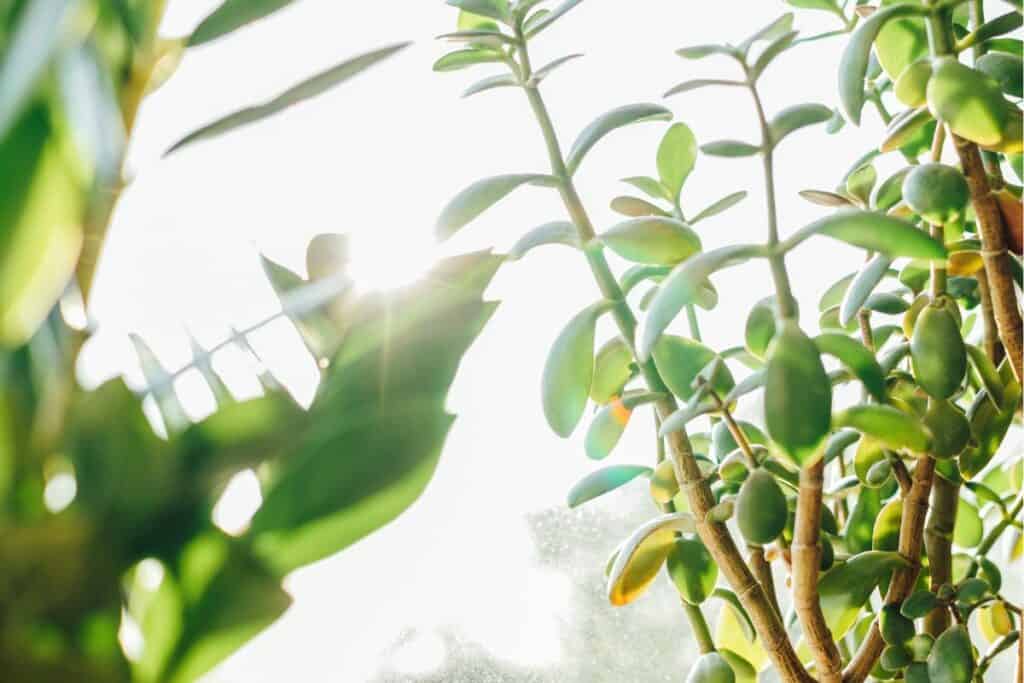
Jade plants can tolerate occasional temperature spikes up to 100 °F (38 °C) if they’re well-hydrated. However, prolonged exposure to temperatures over 85 °F (29 °C) can lead to plant stress and a higher risk of dehydration.
A heat-stressed jade plant may exhibit the following symptoms:
- Wrinkled or shriveled leaves
- Drooping or wilting
- Yellowing leaves
- Brown, thin leaves
- Red leaf edges (usually with intense light)
- Leaf drop
- Stunted growth
Prolonged exposure to direct sunlight, drought stress, and low humidity (below 30%) can aggravate these symptoms and the plant may take a while to recover.
They can lead to the following additional symptoms:
Early detection and prompt adjustments to environmental conditions can help prevent severe damage.
Here are some ways to address the issue:
- Move the plant away from a hot and sunny window at the peak of summer.
- Hang sheer curtains to filter the light and reduce the temperature.
- Switch on a fan to help reduce indoor temperatures and improve air circulation.
- Keep the plant away from the path of hot air from heating vents or space heaters.
- Check the soil moisture about a week after watering and water the plant thoroughly as soon as the top half of the soil mix is dry. A well-hydrated plant has a better tolerance to heat stress.
Chill Injury or Cold Shock
Jade plants prefer frost-free conditions because temperatures in their native habitat seldom dip below 50 °F (10 °C).
Temperatures below 40 °F (4 °C) can cause chill injury by weakening plant cell walls. Even brief exposures to freezing temperatures (below 32 °F or 0 °C) can freeze the moisture in their cells and damage the cell walls.
Affected plants may then show the following signs:
- Soft, mushy leaves
- Spongy stems
- Droopy leaves and stems
- Black or brown blisters on leaves
- Stunted growth
Chill injury can often kill jade plants, especially young ones with fleshy stems.
Indoor jades may experience cold shock or chill injury when:
- Placed in the direct path of cold air from cooling vents
- Placed next to drafty or open windows during freezing winters
- The leaves touch cold window panes
Jade plants brought outdoors in the summer may also suffer a cold shock if left outside for too long until the first fall frost.
Follow these tips to check if your plant survived the chill and help it recover:
- Squeeze the stems downward to find where the mushiness ends. The parts closer to the base are more likely to survive than the terminal ends because the soil usually remains warmer.
- Use a sharp, sterile knife to cut a half-inch (1.3 cm) below the mushy stems. Sterilize the blade with a piece of cloth moistened with rubbing alcohol between cuts.
- Inspect the inside of the stem. A healthy stem should be pale green. Brown or black spots or lines indicate rot or cold damage.
- Slice another half-inch (1.3 cm) below the discolored section until you reach a healthy stump. Don’t worry if you end up cutting off the entire top (foliage and branches). As long as the roots and stump are alive, a jade plant will sprout new shoots from the base with proper care.
Moving forward, remember the following tips to protect your plant from chill injury or cold shock:
- Keep drafty windows closed in winter and avoid placing jade plants near frequently used doors to prevent drastic temperature fluctuations.
- Move the pot away from the windows to prevent the foliage from touching cold window panes.
- Keep your plant away from the path of cool air from cooling vents.
- Switch on a space heater to raise the temperature to optimal levels, especially in freezing winters.
- If you bring your plant outdoors in the summer, bring it back indoors when nighttime temperatures are expected to fall below 50 °F (10 °C).
Here’s a summary of the symptoms to watch out for and their corresponding remedies:
| Temperature Issue | Symptoms | Remedy |
| Heat Stress (over 85 °F or 29 °C) | Move the plant away from a hot and sunny window at the peak of summer. Hang sheer curtains to filter the light and reduce the temperature. Switch on a fan to help reduce indoor temperatures and improve air circulation. Keep the plant away from the path of hot air from heating vents or space heaters. Check the soil moisture about a week after watering and water the plant thoroughly as soon as the top half of the soil mix is dry. A well-hydrated plant has a better tolerance to heat stress. | |
| Chill Injury or Cold Shock (below 40 °F or 4 °C) |
| Keep drafty windows closed in winter and avoid placing jade plants near frequently used doors to prevent drastic temperature fluctuations. Move the pot away from the windows to prevent the foliage from touching cold window panes. Keep your plant away from the path of cool air from cooling vents. Switch on a space heater to raise the temperature to optimal levels, especially in freezing winters. If you bring your plant outdoors in the summer, bring it back indoors when nighttime temperatures are expected to fall below 50 °F (10 °C). |
Optimizing Temperature Conditions
Jade plants are tolerant of mild temperature fluctuations. However, frequent or prolonged exposure to extreme temperatures can negatively affect plant health.
It’s relatively easier to maintain temperature conditions in the lab or a greenhouse, as household temperatures can fluctuate throughout the day due to the following factors:
- The climate in your area
- The insulation capacity of your home based on materials (i.e., wood, concrete, glass)
- The type of heating, cooling, and/or ventilation systems you use
Proper Placement
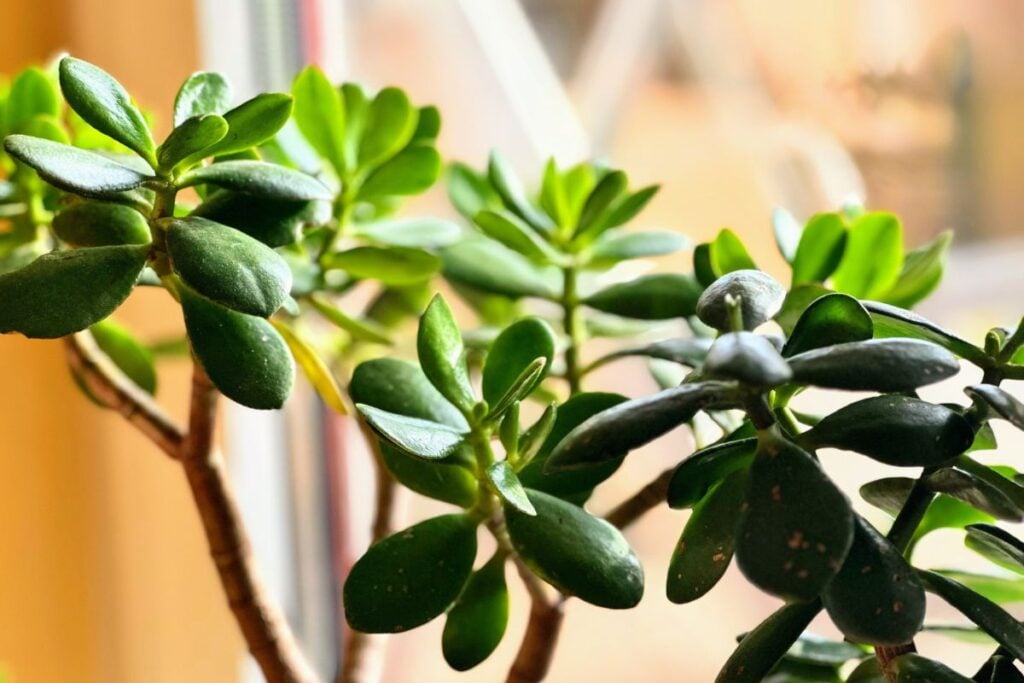
To prevent drastic temperature fluctuations or suboptimal conditions, you may refer to the placement recommendations below:
- Choose a spot next to or near an unobstructed east- or south-facing window for direct morning sun. Jade plants that are well-acclimatized to direct sun are more heat-tolerant.
- Avoid kitchens, bathrooms, or laundry rooms because the temperature and humidity levels in these areas can fluctuate drastically throughout the day.
- Hang sheer curtains or move the plant a few feet (+ 0.6 m) away from a hot and sunny window during the peak of the summer.
- Keep the windows closed in the winter to prevent cold drafts. Jade plants prefer up to 6 hours of direct sunlight in the winter to bloom, so it’s best to let them sit next to an unobstructed south-facing window. However, ensure they’re protected from the cold using space heaters, and keep the leaves from touching the cold window panes.
- Avoid areas in the path of cold or hot air from cooling or heating vents, as they can increase the risk of cold shock or heat stress.
Seasonal Changes and Outdoor Considerations
Truth be told, I let my younger jade plants sit in the same spot next to an eastern window or several feet (1.5 m) from a south-facing window all year round without a problem.
I open the windows during mild spring weather, draw the curtains during hot summer days, and adjust the watering frequency as needed. My young jades respond happily with plump green leaves with occasional red tips. This is the beauty of caring for low-maintenance houseplants.
However, as the jade plants get older, I expect to see more from them, such as their fascinating pinkish-white blooms.
Note: Longer nights and lower nighttime temperatures of around 50-55 °F (10-13 °C) for around 2 months in the fall encourage flower bud development. Frequent temperature fluctuations, on the other hand, can cause the flower buds to abort and inhibit flowering.
You can place your plant in an unheated room, garage, or conservatory in the fall to promote flower development.
Below are some tips for seasonal adjustments in jade plant care that promote healthy growth and increase the chances of flowering:
- Early to mid-spring: Keep jade plants indoors where they can receive 4 hours of direct sunlight in the morning. Open the windows during mild weather for optimal temperature and air circulation.
- Late spring: After all threats of frost have passed and nighttime temperatures are steadily above 60 °F (15.6 °C), acclimatize your plant to outdoor conditions by placing it outside for an hour and gradually increasing the duration every 3-5 days. Choose a spot that receives morning sun and afternoon shade. Pro tip: Put full-grown jade plants on plant caddies to make it easier to move them around.
- Summer: Install shade covers when temperatures are expected to rise above 85 °F (29 °C) for several consecutive days. Increase the watering frequency accordingly because of faster moisture loss from plant consumption, evaporation, and transpiration.
- Fall: Move the plant indoors when nighttime temperatures are expected to drop below 50 °F (10 °C). I usually place my plant next to the window in my unheated garage for 1-2 months in the fall because it’s challenging to maintain a 50-55 °F (10-13 °C) temperature in my succulent garden. The cooler and longer dark hours in the garage can really do wonders with how well my older jades bloom.
- Late fall to winter: I place my jade plant back in the succulent garden to bask in direct morning sun. The freezing winter temperatures and proper placement of the space heater can help maintain the daytime temperatures between 65 and 75 °F (18 and 24 °C) and nighttime temperatures in the mid-50s. Pro tip: Make it a habit to wipe snow and condensation off the windows for better lighting.
Companion Plants
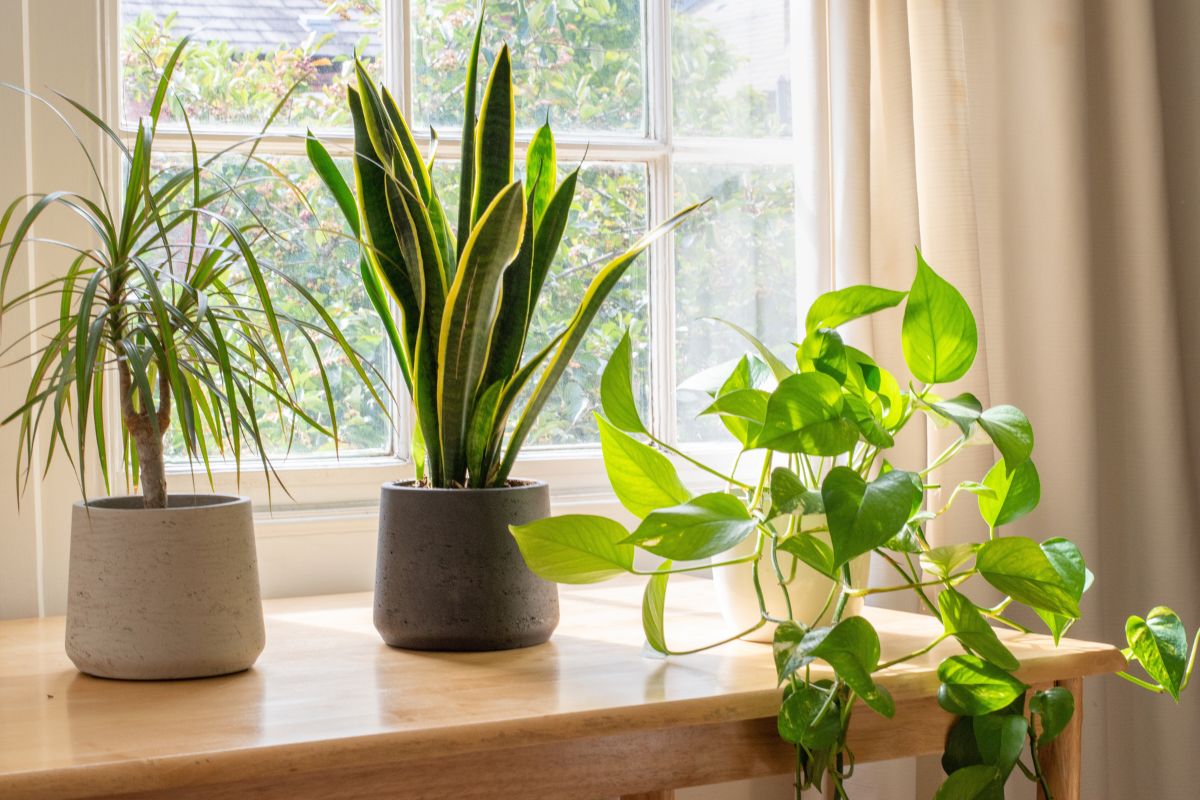
Jade plants are sturdy succulents with low-maintenance needs.
They share this trait with several common houseplants, including the following:
Lipstick Echeveria (Echeveria agavoides)
Lipstick echeveria is a low-growing succulent with red leaf tips and is such a perfect companion for my young jade plants that I sometimes grow them together in the same pot. They have similar temperature, soil, and water requirements. The taller jade provides shade to the slightly sun-sensitive echeveria.
Croton (Codiaeum variegatum)
Although non-succulent, crotons share traits similar to those of jade plants: sun-loving and frost-sensitive. I usually place them together near the sunny eastern window and move them outdoors at around the same time in late spring or summer. The colorful foliage of crotons can also add interest to the predominantly green succulent garden.
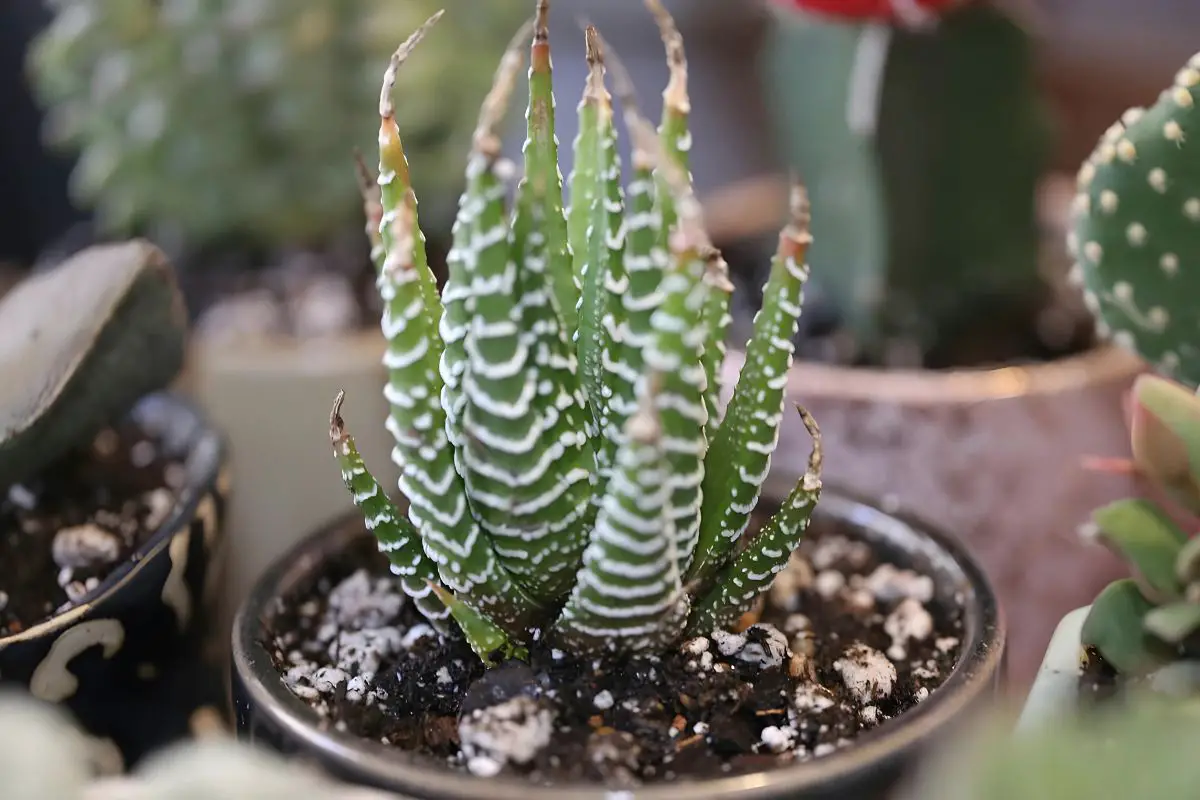
Haworthia (Haworthia or Haworthiopsis spp.)
Haworthias also like moderate temperatures and humidity and can benefit from outdoor exposure in the summer. You can schedule its summer transition outdoors along with older jades.
Final Thoughts
Jade plants thrive at moderate temperatures ranging from 65-75 °F (18-24 °C) during the day and around 60 °F (15.6 °C) at night. In the fall, you can let nighttime temperatures drop to 50-55 °F (10-13 °C) for better chances of flowering in winter.
Although jade plants don’t mind occasional dips and spikes, prolonged exposure to extreme temperatures can cause plant stress and damage. Avoid temperatures over 85 °F (29 °C) or below 40 °F (4 °C) to keep the plant healthy.
You can open the windows in spring, draw the curtains in the summer, and use space heaters in winter to help regulate the temperature around your jade plants. Monitor your plant’s response to the seasonal adjustments and make changes as needed to ensure healthy growth.
Feel free to leave a comment to ask questions about jade plant care and temperature requirements or share your plant care journey.