
When and How to Fertilize Fiddle Leaf Figs
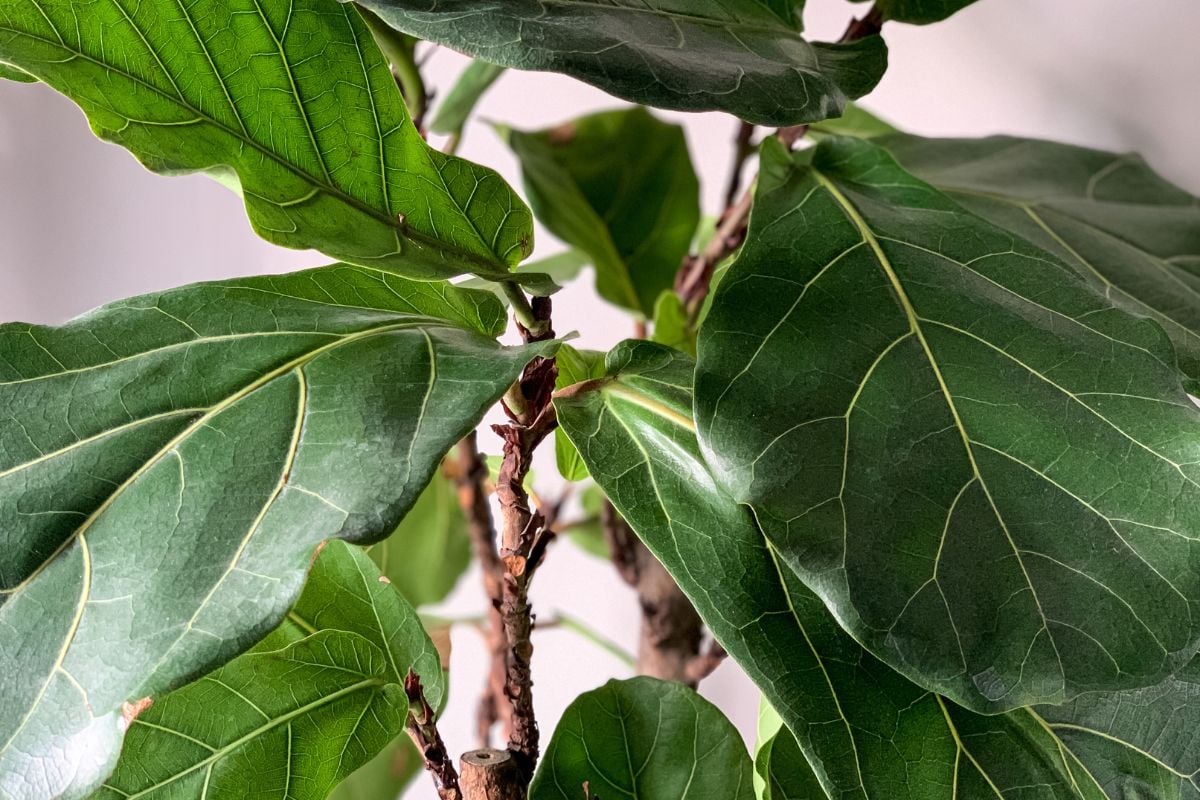
Fiddle leaf figs are fast-growing trees known for their dramatic, large leaves and unique indoor appeal. However, they can also be fussy and likely to show stress symptoms like yellowing or browning leaves if their nutrient needs aren’t met.
Here are the key points for fertilizing indoor fiddle leaf figs:
- Ensure the soil pH is between 6.0 and 7.0 for optimal nutrient uptake.
- Fertilize the plant during the active growing season in spring and summer.
- Use a 3-1-2 fertilizer with added micronutrients for balanced nutrition.
- Dilute liquid fertilizers to half the recommended strength and apply directly into the soil every 2 weeks.
- When using granular fertilizers, apply every 2 months and ensure the soil remains evenly moist.
This article will discuss the proper ways to fertilize a fiddle leaf fig and share tips on identifying and addressing common problems, such as nutrient deficiency and over-fertilization.

Native Habitat and Nutrient Requirements
Fiddle leaf figs (Ficus lyrata) are native to tropical West and Central African rainforests where soils are generally nutrient-poor and plants depend on the nutrient density in the top humic layer.
Here are some insights into how fiddle leaf figs gain nourishment in their native environment:
- The rich flora in the forest contributes to the high nitrogen content and abundant population of decomposers (beneficial microbes) in the topsoil layer.
- Plant litter decomposes well under wet, warm, and humid conditions on the forest floor.
- The lack of winter conditions enables beneficial soil microbes to stay active all year round, allowing uninterrupted nutrient cycling.
- Thanks to their shallow roots that can spread laterally, fiddle leaf figs can utilize the nutrients available near the soil surface.
- The climate in the rainforest remains moist all year round but with more frequent rains during the wet season. Nutrients become more accessible to plant roots when the soil is moist.
Fiddle leaf figs don’t naturally go dormant. However, they tend to grow faster during the wet season when rainwater and nutrients are more readily available.
You can replicate this condition indoors with regular watering and feeding in spring and summer.
On the other hand, gradually reduce the watering frequency and stop fertilizing during the cold season in the fall and winter. You may also apply a thin layer of compost over the soil in mid-fall to slowly and gently nourish your plant during the cold season.
After following this feeding schedule for several years, I noticed a growth spurt during spring and summer. Although my fiddle leaf figs don’t put out much growth during the cold season, the low dose of nutrients from the compost helped keep the leaves green and prevent leaf drop.
Ideal Soil Mix for Indoor Growth
It’s important to use an appropriate and well-draining soil mix that replicates native conditions to ensure your fiddle leaf fig can efficiently access nutrients from fertilizers.
You can select from the soil mixes below:
Commercial Potting Mix
Commercial mixes for fiddle leaf figs are widely available at gardening stores because of the plant’s popularity. They’re specifically formulated to match your plant’s moisture and drainage requirements.
Potting mixes also typically contain sufficient nutrients to feed your plant for 6-12 months, depending on the quality and storage conditions of the product. The rate at which the nutrients are depleted can also vary based on the plant’s size and growth rate.
Since fiddle leaf figs are generally fast-growing plants, they require supplemental fertilization during the growing season and regular repotting to replenish soil nutrients and improve soil quality.
Remember these tips when choosing a bag of potting mix:
- Ensure the soil mix indicates a pH of 6.0-7.0 (ideally 6.5) on the packaging. You can check this again at home using a pH meter.
- Choose a bag that’s within 6 months of the manufacturing date. The quality and nutrient content of a bagged soil mix deteriorates after 1-2 years.
- Avoid bags with tears or holes because they can dry out the soil mix or hint at subpar quality due to degradation from the elements. Dried-out potting soil can also be hard to re-wet.
Note: Most commercial potting mixes are sterile to prevent common soil-borne plant pathogens like rot-causing fungi and bacteria. This also means that they lack beneficial soil microbes, which are crucial for the cycling and conversion of nutrients into forms accessible to plants.
Mixing in about 10% compost to a high-quality potting mix can improve its suitability for fiddle leaf figs.

Homemade Soil Mix
You may also make a homemade soil mix recipe with the following ingredients:
- Two parts high-quality potting mix (60%) for good moisture and nutrient retention
- One part perlite (30%) to improve drainage
- Compost (10%) for organic matter and to support microbial life in the soil mix
Perlite has a neutral pH (around 7.0), so it doesn’t affect the acidity of the soil mix. Similarly, a small amount of compost won’t significantly alter the soil pH.
Still, it’s best to check the pH of the finished soil mix using a pH meter to ensure it’s within optimal range for optimal nutrient availability to the roots when fertilizing your plant.
Basic Nutrient Needs
Fiddle leaf figs need the three primary nutrients nitrogen, phosphorus, and potassium in a 3-1-2 ratio. They also need trace amounts of iron, magnesium, and calcium for healthier growth.
Below are the benefits of proper fertilization:
- Vibrant leaf growth: Nitrogen, magnesium, and iron are key for lush, green foliage. Deficiencies can lead to pale, yellowed, or sparse leaves.
- Strong stems for foliage support: Fiddle leaf figs need nitrogen, phosphorus, and calcium for structural support, reducing the risks of leaning or drooping.
- Potential flower development (in rare cases): Adequate phosphorus may promote bloom formation, though flowering is uncommon indoors.
Signs of Nutrient Deficiencies
The potting mix eventually loses nutrients from plant use and leaching from regular watering.
When not replenished regularly, a hungry fiddle leaf fig will show the following symptoms:
- Premature yellowing of bottom leaves less than 12 months old usually indicates a lack of nitrogen.
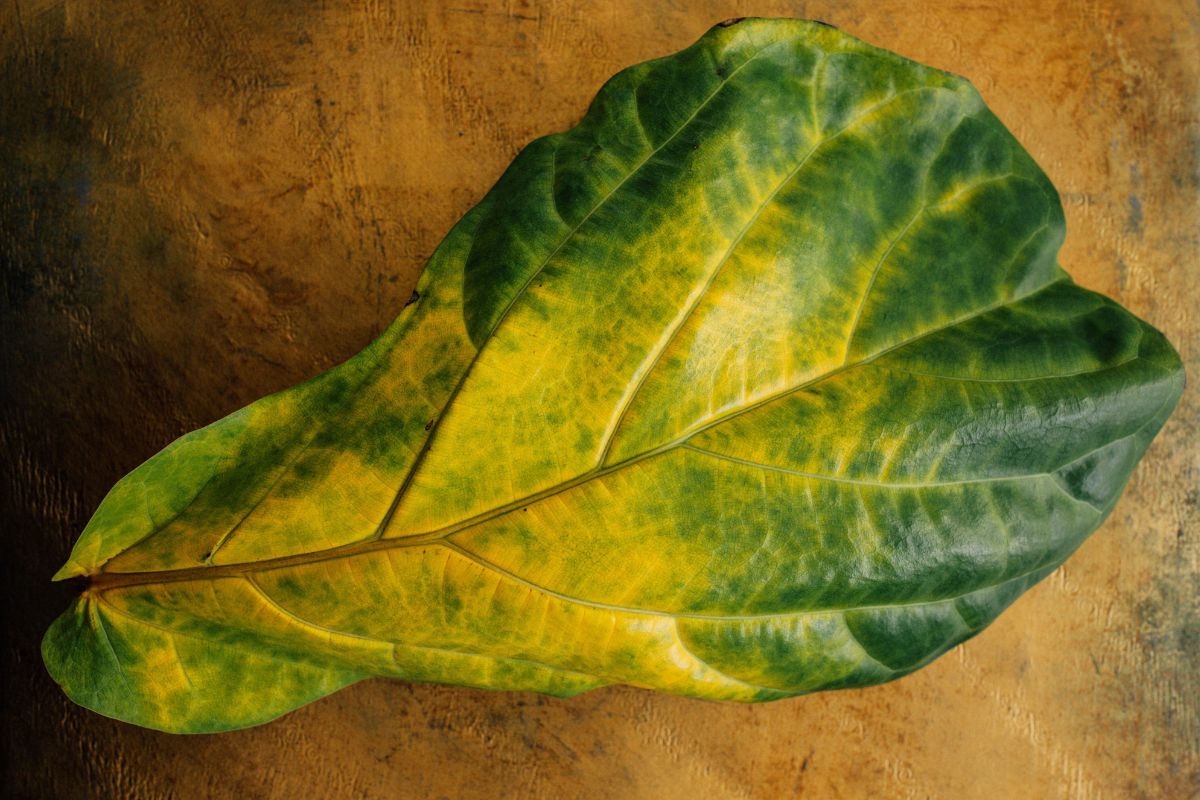
- Interveinal chlorosis in younger leaves (top) indicates iron deficiency. A similar symptom in older leaves (bottom) indicates magnesium deficiency.
- Drooping stems could indicate insufficient nitrogen, phosphorus, or calcium.
- Slow or stunted growth is a general symptom of nutrient deficiency, especially during the growing season.
Note: I don’t send soil samples to the lab to confirm nutrient deficiency in fiddle leaf figs because they can be costly. Unfortunately, at-home soil tests or 3-in-1 moisture meters are also not very accurate in confirming soil nutrient levels.
Recognizing the telltale signs listed above is usually effective in confirming your plant needs fertilization.
When to Fertilize Fiddle Leaf Figs

The growth rate of fiddle leaf figs can vary depending on the age or environmental conditions.
Here’s how:
- Age: Young fiddles grow fast and require more nutrients to support growth. Conversely, older plants close to 10 years old tend to have significantly slower growth and lower vitality as they near the end of their lifespan.
- Environmental conditions: Plants grown in bright light, evenly moist soil, stable warm temperatures, and consistent moderate humidity grow quickly and may require regular fertilization and frequent repotting. On the other hand, those kept in suboptimal conditions may tolerate the environment but grow relatively slower.
Note: Fiddle leaf figs naturally don’t enter dormancy. However, when grown in colder regions like the USA, distinct seasonal differences in indoor light conditions, temperature, and watering frequency can prompt them to grow more slowly.
Therefore, it’s best to hold off on fertilizing during the cold season unless you can maintain stable, bright, and warm conditions indoors all year round.
Here are some things to consider the timing of fertilizer application:
Regular Application
Young and fast-growing fiddle leaf figs (under 5 years old) do best with regular feeding during spring and summer to prevent deficiency symptoms and promote steady growth.
During the younger stage, fertilize when watering (or every other time you water) using a liquid fertilizer or every 6-8 weeks using a granular fertilizer during spring and summer.
I usually find it safer to feed fiddle leaf figs a liquid fertilizer every other time I water them to avoid risking over-fertilization. They may not enter a significant growth spurt, but the leaves remain green and vibrant.
You can start feeding the plant in spring when new leaf buds appear, gradually increase the application interval, and stop at the end of summer.
Symptomatic Treatment
You may fertilize less frequently for slower-growing or older plants (close to 10 years old). For instance, you may apply slow-release fertilizers once in early spring and once in early summer.
Fertilization helps older fiddle leaf figs develop new green leaves to replace the aging or discolored ones and promote a healthy and bushier appearance. It can also help maintain the aging trunk and develop sturdy new branches.
You may supplement feeding with a half-strength liquid fertilizer when deficiency symptoms appear.
Pro tip: Don’t fertilize your plant right away when you see the following stress symptoms:
- Yellowing leaves accompanied by browning: This may be caused by over- or underwatering, sunburn, disease, or pest infestation.
- Yellow spots on leaves: Interveinal chlorosis from nutrient deficiency is a distinct yellowing between leaf veins. Inspect the spots carefully, as they are more likely caused by a fungal or bacterial infection or spider mite infestation.
Ensure other care factors (watering, lighting, etc.) are optimal first to avoid unnecessary fertilization.
Types of Fertilizers
Different types of fertilizers have varying levels of effectiveness and purpose. Avoid using multiple fertilizer types simultaneously to prevent over-fertilization or fertilizer burn.
That said, it’s important to understand the differences when deciding which fertilizer type to use.
Liquid Fertilizer
Liquid fertilizers are clearly formulated and easy to apply evenly into the root zone. They’re also fast-acting, so you can see the improvement after one or two applications. As such, liquid fertilizers are ideal for regular use and when treating symptoms of deficiency.
I use liquid concentrates specially formulated for Ficus plants as they typically contain 3-1-2 NPK and essential micronutrients.
I dilute the concentrate to half-strength for regular application or use it at full strength when treating nutrient deficiency symptoms. However, I apply it every other time I water the plant instead of the weekly recommendation.
If you come across 6-2-4 or 9-3-6 liquid fertilizers, they’ll also work well for fiddle leaf figs, but you must dilute them to a quarter or a sixth of the recommended dose, respectively (half-strength or quarter-strength for symptomatic treatment).
Slow-Release Granular Fertilizer
Granular fertilizers are simple to use but don’t guarantee timely release or even distribution of nutrients into the root zone. They require ample water and a healthy microbial population in the soil to break down the nutrients and deliver them to the plant’s roots.
I occasionally use alfalfa meal products, such as Espoma (2-0-2) and Down to Earth (2.5-0.5-2.5), on my fiddle leaf figs, especially those I bring outdoors in the summer. I use them on my outdoor rose bushes, and they work well on potted fiddle-leaf figs, too.
Compost

Compost can supplement the fiddle leaf fig’s nutrient requirement after repotting and during the cold season when you normally skip inorganic fertilizers.
You can use it to top up the soil in early or mid-fall, about a month after your last fertilizer application. The compost will help improve moisture infiltration and retention in the soil and help alleviate the drying effects of indoor heaters during the cold season.
Since fiddle leaf figs don’t completely go dormant during winter, the gentle dose of nutrients from compost can help sustain its slow growth.
How to Fertilize Fiddle Leaf Figs
Follow the tips below for proper fertilizer preparation and application:
Preparation
Gather the following materials before fertilizing your fiddle leaf fig:
- Liquid or granular fertilizer
- Teaspoon for liquid fertilizer
- Tablespoon or scoop (⅛ or ¼ cup) for granular fertilizer
- Hand cultivator or rake
- Watering can with a narrow spout
Here are some essential reminders to ensure correct fertilizer application:
- Bottom water your fiddle leaf fig a week before feeding. For larger pots, water the soil deeply using a watering can with a narrow spout. Evenly rehydrated soil will facilitate proper nutrient distribution in the root zone.
- Read the product label and dosage instructions carefully and follow the safety precautions.
- Keep the fertilizers in their original containers and keep them sealed before and after use.
- Wash the gardening tools (i.e., teaspoon, scoop, hand cultivator, or rake) with 10% bleach and rinse thoroughly with water before use.
Application Techniques
Each fertilizer type has a different application technique.
Here are the steps:
Liquid Fertilizer
- Dilute the fertilizer to half the recommended dose. For instance, the Fiddle Leaf Fig Tree Plant Food recommends diluting a teaspoon of liquid concentrate in 2 cups of water. I usually add a teaspoon of plant food for every quart (1 liter) of water. It usually takes 2 quarts or ½ gal (~2 liters) of water to evenly saturate an 8-inch (20 cm) or 1-gallon (3.8 l) pot.
- Stir the solution thoroughly using a wooden chopstick.
- Pour the water over the soil gradually to evenly drench the root zone. Keep adding water until the excess drains from the drainage holes.
- Repeat the process every 2 weeks.
Granular Fertilizer
- Rake about ½-1 inch (1.3-2.5 cm) deep into the soil surface. Be careful not to damage the roots. If the roots are exposed, top the soil up to an inch (2.5 cm) of fresh fiddle leaf fig mix. This will prevent direct contact between the roots and the fertilizer salts, which can cause fertilizer burn.
- Scoop the recommended amount of fertilizer and sprinkle evenly over the soil surface. It usually takes 2 tablespoons (⅛ cup) of alfalfa meal to feed a plant in an 8-inch (20 cm) or 1-gallon (3.8 l) pot. Note: Keep the granules from touching the base of the stem to prevent damage.
- Water the soil thoroughly until the excess drips from the drainage holes.
- Check the soil moisture after 5-7 days and water the plant again as soon as the soil dries two knuckles (2 inches or 5 cm) deep.
Encouraging Blooms with Fertilization
Fiddle leaf figs hardly bloom in home gardens because indoor and potting conditions stunt their reproductive development. Indoor figs also rarely live long enough to reach reproductive maturity, typically after 10-15 years.
Nevertheless, some growers have reported seeing the elusive flowers.
The flowers are not showy as they’re hidden inside a syconium—a green round shell the size of a golf ball (they have a similar texture, too). They’re unlikely to develop into fruits due to the absence of the Agaonidae wasp Agaon spatulatum, which is the only pollinator of Ficus lyrata flowers.
Due to their lack of aesthetic and practical value, fiddle leaf fig flowers only indicate that your plant is happy and thriving.
Note: I don’t recommend fertilizing your fiddle leaf fig with the goal of bearing flowers. This plant is famous for its large fiddle-shaped leaves. Reducing the nitrogen and increasing the phosphorus content of the fertilizer can disrupt the plant’s natural growth and negatively affect its overall health and appearance.
Potential Mistakes and Risks
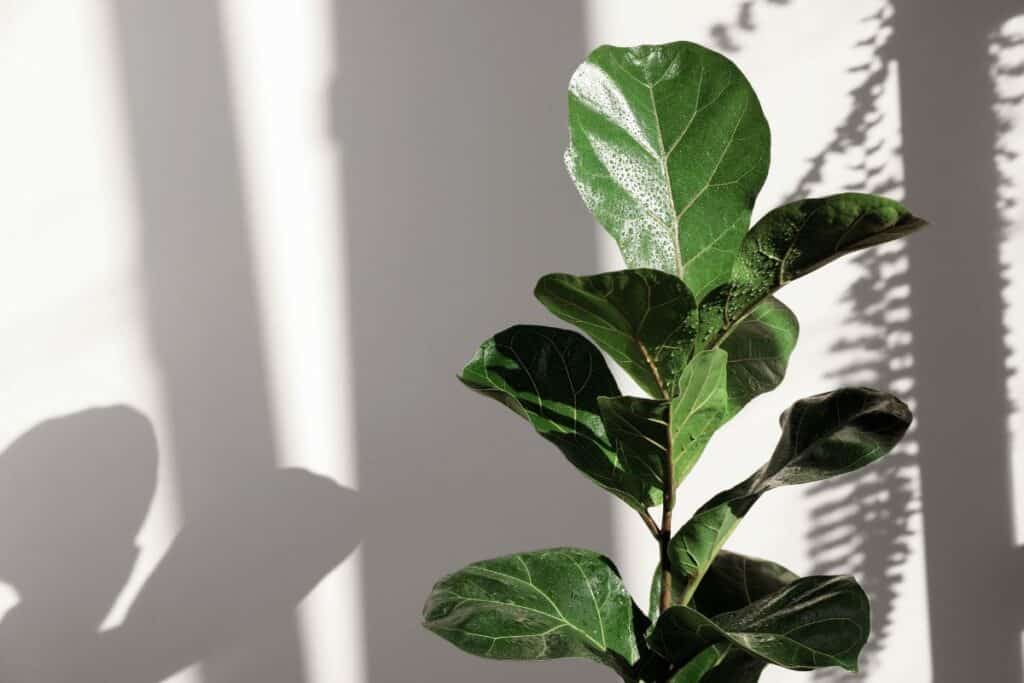
Fiddle leaf figs enjoy regular feedings to maintain their lush foliage. It’s crucial to remember the tips previously discussed to avoid the following problems:
Wrong Soil pH
Most potting mix products indicate the pH on the label. Fiddle leaf figs will thrive in soil with a pH of around 6.5 (6.0-7.0).
Incorrect soil pH can cause the following problems:
- Low pH (below 5.5) can reduce phosphorus, nitrogen, and magnesium accessibility to the roots. A nitrogen or magnesium deficiency can lead to the yellowing of the bottom leaves.
- High pH (close to or over 7.0) can inhibit iron uptake, causing yellowing in younger leaves.
It usually takes a long time for the acidity or alkalinity of potting soil to change naturally. The problem usually arises from using soil with incorrect pH at the time of planting, especially when using a homemade soil mix.
Here are some ingredients that may lead to extreme soil pH:
- Large portions of Canadian sphagnum peat moss (typically has a pH of 3.0-4.5): Peat moss is usually added to fiddle leaf fig soil mixes to improve moisture retention.
- Acidic compost (as low as 5.0): It can also reduce soil pH when added in large amounts (up to 30%).
- Urea or ammonium nitrate fertilizer: Adding inorganic nitrogen fertilizers to the soil mix before planting will gradually decrease the soil pH because of the nitrification process.
On the other hand, it’s unlikely for fiddle leaf fig soil to become too alkaline unless you use the following ingredients in large portions:
- Ground lime
- Wood ash
If you suspect the soil acidity is off, you may check it using a soil pH meter. Follow the product-specific instructions and check multiple spots in the potting mix. Once confirmed that the pH is incorrect, it’s best to repot your plant in appropriate soil with the recommended components discussed above.
Over-Fertilization
Fertilizing your fiddle leaf fig too much at once or too often can lead to the following symptoms:
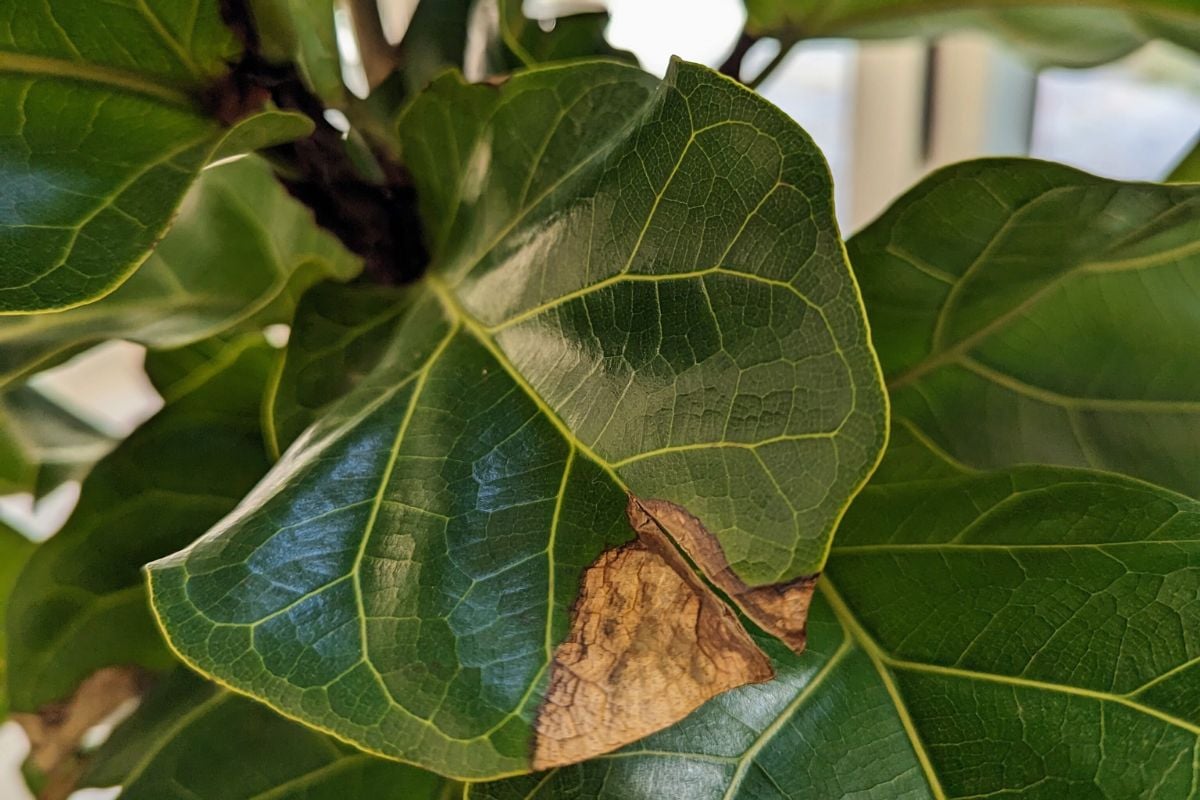
- Yellow or brown leaf edges that curl inward (dehydration from root burn)
- Brown or black spots on the leaves (leaf scorch)
- Salt crust on the soil (excess and insoluble granular fertilizer)
You can fix the problem with the following tips:
- Prune damaged leaves with sharp, sterile shears. If the damage is concentrated on the edges, you may snip them using scissors.
- Scrape the white salt crust (from granular fertilizers) on the soil surface using a hand trowel. You may skip this if you used liquid fertilizer.
- Top up the soil with compost to improve water infiltration.
- Flush the soil with distilled water twice the usual volume used at watering. For instance, if it takes 1 gallon (3.8 l) to evenly rehydrate the soil, use 2 gallons (7.6 l) to leach the unwanted fertilizers or dilute it to safe levels.
- Pour the water gradually and let the excess drain completely.
- Refrain from fertilizing the plant until the next spring. Moving forward, use a half-strength liquid fertilizer and observe your plant’s response after 2 weeks before feeding again.
Using the Wrong Fertilizer
Fiddle leaf figs don’t benefit much from homemade fertilizers like coffee grounds or boiled banana peels. Although they contain essential nutrients, the unpredictable concentration may not be enough to provide all the nutrients fiddle leaf figs need for optimal health and balanced growth.
High-nitrogen fertilizers like fish emulsion and ammonium nitrates, on the other hand, may lead to rapid foliage growth without structural strength, making the plant prone to pests.
Ignoring Plant Health
Yellowing leaves are a common sign of nutrient deficiency in fiddle leaf figs. However, it can also indicate numerous other problems, such as aging, watering problems, and even wrong soil pH.
Feeding your plant without first ruling out the other potential causes can worsen the underlying issues.
Pay attention to your plant’s symptoms and assess if any changes in your plant care routine may have caused the problem. Avoid fertilizing your plant unless you’re certain that the symptoms are due to nutrient deficiency.
Post-Fertilization Care
Here are some tips for post-fertilization maintenance:
- Watering: Water your plant consistently, allowing the top 1-2 inches (2.5-5 cm) to dry completely between watering sessions. Proper rehydration is crucial for the roots to access the nutrients in the soil.
- Light: Ensure your plant receives 4 hours of direct morning sun or at least 8 hours of bright, indirect light to promote nutrient uptake.
- Temperature and Humidity: Keep stable conditions, with temperatures around 65-75 °F (18-24 °C) and 40-60% humidity.
- Monitoring: Watch for over-fertilization symptoms and flush the soil as needed.
Final Thoughts
Fiddle leaf figs benefit from a light fertilization routine during active growth seasons (spring and summer).
Monitor your plant’s response to fertilization and adjust your feeding routine accordingly. Note that fiddle leaf figs may consume nutrients differently depending on their age and environmental conditions.
When unsure, begin with a conservative routine and gradually increase the dosage or frequency as needed. Feel free to reach out through the comment section to seek guidance for any uncertainties.
You’re also welcome to share valuable experiences regarding general fiddle leaf fig care to support fellow plant enthusiasts.