
White Spots on Jade Plant Leaves: Symptoms, Causes, & Fixes
Jade plants are generally low-maintenance and can thrive for decades with proper care. However, they sometimes develop white spots on their leaves, which can diminish their aesthetic appeal.
Here are the reasons for white spots on jade leaves:
- Dust accumulation
- Hard water deposits
- Pest infestation
- Mineral salts or over-fertilizing
- Powdery mildew
- Sunburn
Jade leaves developing white spots can be concerning. Fortunately, the underlying causes are relatively easy to fix and manage. This article will explain the issue and share practical tips to resolve it effectively.
Jade Plants: An Overview
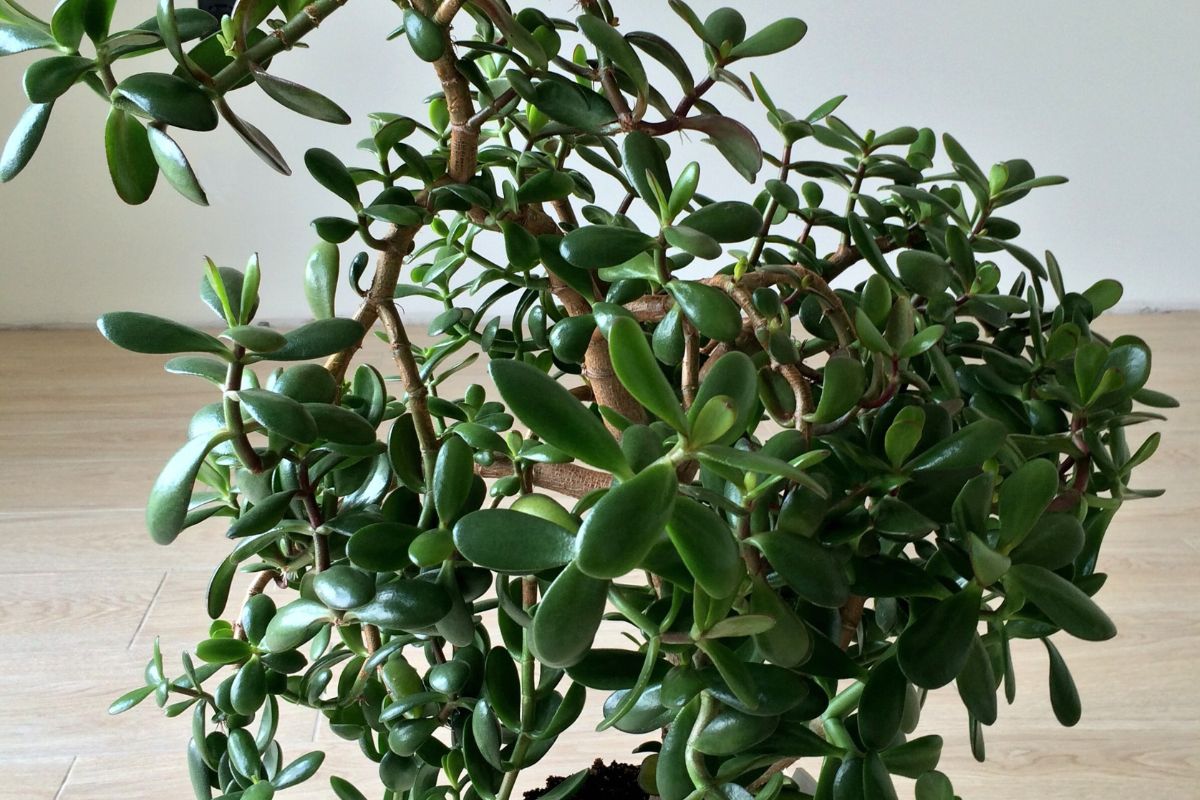
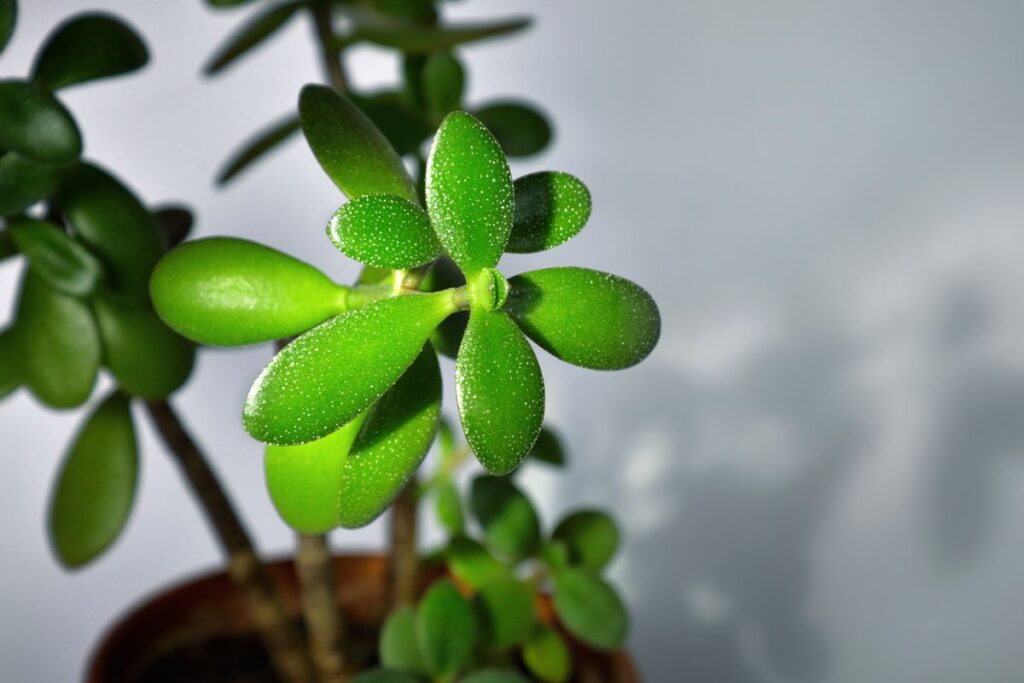
Jade plants (Crassula ovata) are long-living succulents from South Africa. They’re native to arid regions and have developed fleshy leaves that store extra moisture to survive drought.
Young jade leaves are smooth and coin-shaped. As the plant ages, the leaves can reach up to 4 inches (10 cm) long and 1.5 inches (3.8 cm) wide, becoming ovoid or egg-shaped. The pores on the leaves become more noticeable as the plant matures.
The leaves also go through some natural color transitions that add to their appeal.
Here are some examples:
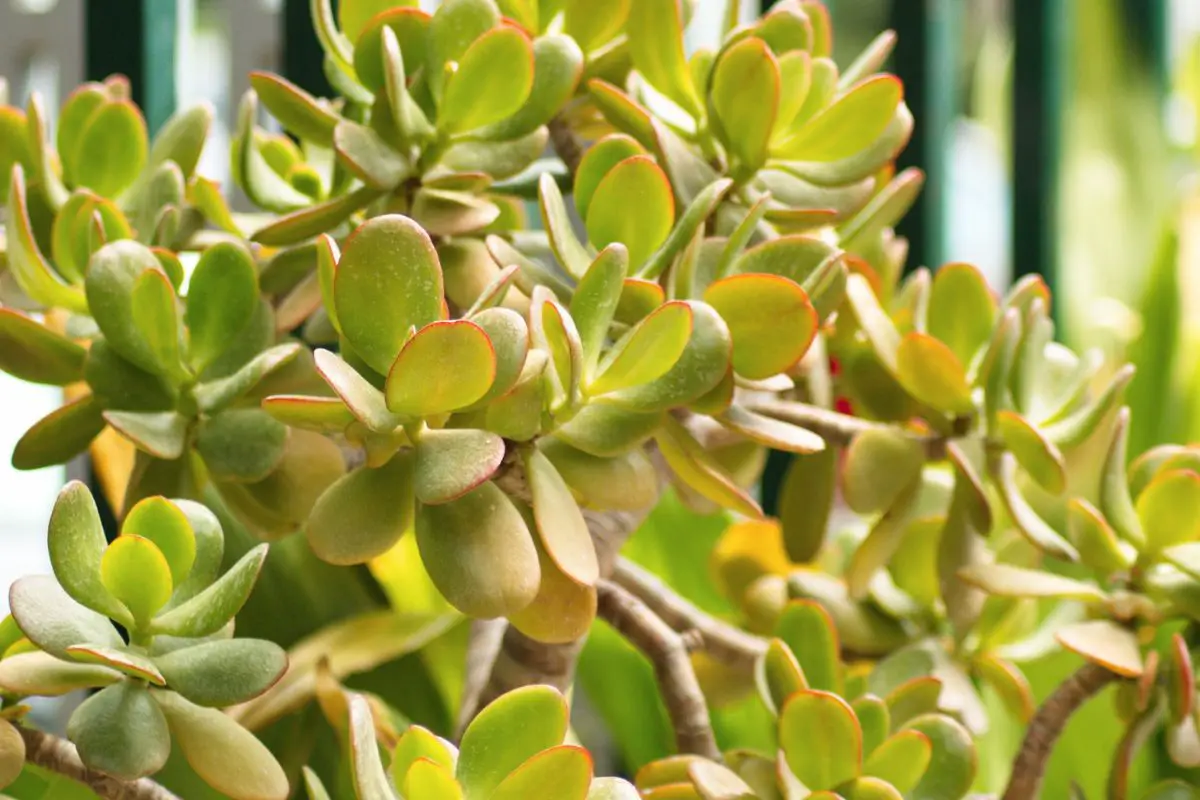
- Classic Crassula ovata has solid-green leaves that naturally develop red tips when exposed to intense sunlight. However, reddening that spreads too wide along the edges and reaches the petioles or branches can indicate stress.
- The leaves of some unique hybrids like ‘Campfire’ and ‘Hummel’s Sunset’ transition to yellow, orange, and red during the cold seasons. This seasonal transition shouldn’t be confused with yellowing or reddening caused by plant stress.
Conversely, unnatural discolorations, such as white spots, can indicate a plant issue that needs to be addressed.
Symptoms of White Spots on Leaves
The white spots may affect a few leaves or the entire jade plant and may appear in the following ways:
- Tiny specks
- Chalky deposits
- Mobile and cottony (white fluff)
- Crystalline salts
- Powdery patches
- Wrinkly and thinned in the middle
If left unattended, the issue may progress with the following symptoms:
- Sticky, sugary liquid (honeydew) close to the white fluff
- Sooty mold developing over the honeydew trails
- Yellow, brown, or black scab that feels rough
- Yellowing leaves that eventually turn dry and brown or black (leaf scorch)
Take note of the appearance and texture of the white spots and the associated symptoms to help you identify the cause and correct solution.
Common Causes and Fixes
White spots on jade leaves may range from minor issues like dirt to serious problems like diseases. Below are the common reasons for this problem:
1. Dust Accumulation
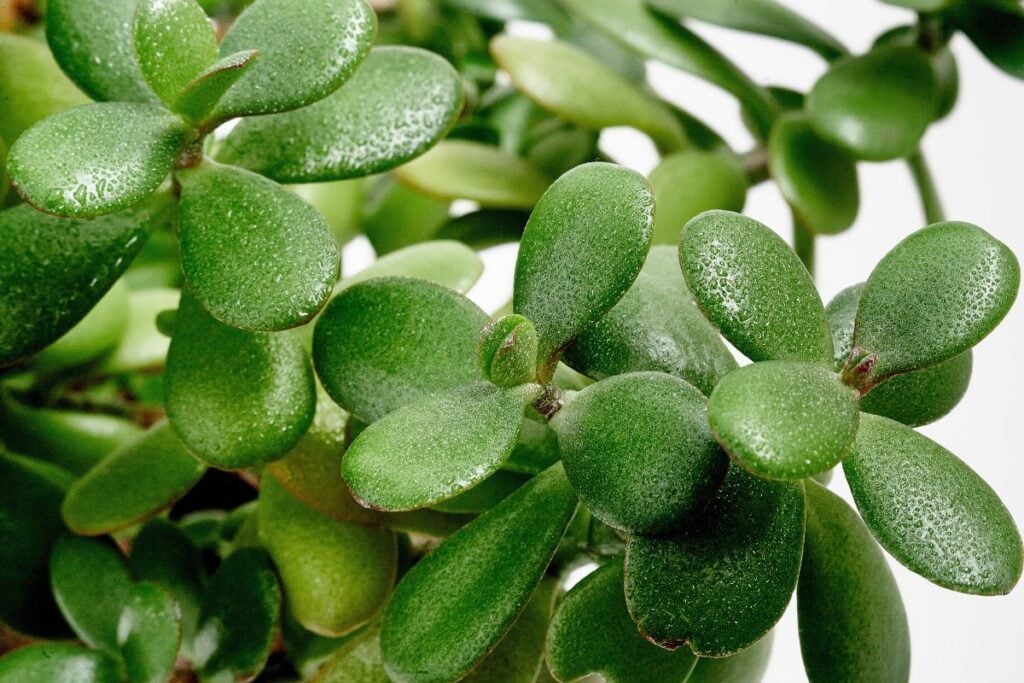
Jade plants grow dense foliage that’s prone to collecting dust over time. When overwatered, the leaves may expel moisture through guttation (xylem sap secretion). This process involves releasing water droplets from the hydathodes or pores on the leaves.
Dust may accumulate with the water droplets, especially when the leaves have a high moisture content but a low transpiration rate. Once the droplets dry, the leaves will have white spots.
You can simply wipe the dust off with a clean, moist cloth when this happens. Doing this every time you water your plant will reduce the likelihood of white spots due to dust buildup.
2. Hard Water Deposits
Hard water contains over 61 mg of calcium or magnesium salts per liter of water. This level exceeds the ideal or safe concentration for metal pipe maintenance or fabric quality.
In potted plants, prolonged use of hard water can increase the soil pH and affect nutrient uptake. Jade plants are generally tolerant of hard water.
However, the salts can leave white spots on the leaves in the following ways:
- As the roots draw water to the shoots, the leaves release the unwanted salts through their pores. As they dry up, the salts form white, crystalline spots on the leaves.
- When misting or treating jade leaves with neem oil dissolved in hard water, the salts can stay on the leaves and solidify into chalky deposits.
- Hard water in humidifiers can also land on plant leaves and cause white, chalky spots.
To remove the spots, wipe the leaves with a clean, damp cloth. Water your plant using filtered or soft water (below 60 mg/L). Distilled or filtered water is also best when making neem oil solutions or refilling humidifiers.
3. Pest Infestation
Some common jade plant pests may also leave white spots on the leaves.
Two pests worth noting include:
- Mealybugs: Eggs and adult mealybugs have a white, waxy covering, making them look like white fuzz on jade leaves. They tend to cluster on the undersides of the leaves. After feeding on plant sap, they excrete honeydew, so you may also notice sticky liquid on the leaves, which eventually attract sooty mold and ants.
- Spider mites: These pests are so tiny that you can confirm their presence mainly through the fine webs on leaf surfaces. They may also cause yellow or white specks that don’t rub off even after wiping.
Note: Other sources may recommend using a diluted alcohol spray on jade plants to eliminate pests. However, I don’t recommend this solution, as it isn’t always effective and can even harm plants. It usually takes at least 70% ethanol or isopropanol concentration to work as a pesticide, but only 5% to cause stunted growth once it reaches the roots.
Instead, you may opt for plant-safe options, such as the pest management tips below:
- Scrape the pests off the plant using a cotton swab with rubbing alcohol. Minimize the contact between the alcohol and the leaves to prevent damage. Drop the pests in soapy water. Repeat this every 2-3 days until you no longer see the pests.
- Move the plant away from direct sunlight before using oil treatments. You can place the pot 4-8 feet (1.2-2.4 m) away from a sunny window and hang sheer curtains to filter the light.
- After sunset, spray a neem oil solution generously all over your plant. Aim for the nooks underneath the leaves and between the branches and petioles. Repeat the process once weekly for up to 8 weeks to prevent recurrence.
- Isolate severely infested plants.
- Treat the other neighboring houseplants using the same methods listed above.
4. Mineral Salts or Over-Fertilizing
Applying too much granular or concentrated liquid fertilizer at once can also cause white spots on jade leaves. The roots will draw the excess salts from the soil upward and release them through the pores on the leaves.
They will appear like white, crystalline salts on the leaf surface.
The remaining salts in the soil can draw moisture out of the roots and dry them out. The plant will then exhibit similar symptoms to underwatering or dehydration and develop leaf scorch.
Here’s how to fix the problem:
- Wipe the mineral salts off the leaves using a damp cloth.
- Prune leaves with signs of leaf scorch or fertilizer burn using sterile scissors.
- Scrape the soil’s upper ¼ inch (0.6 cm) to remove the white film of mineral salts and replenish it with compost. If you use liquid fertilizer, you can skip this step.
- Prepare filtered water equal to the volume of the pot (i.e., 1 gal (3.8 l) of water for a gallon of potting soil.
- Pour the water gradually to prevent it from spilling from the pot’s rim. The goal is to leach the excess fertilizer salts from the soil.
- Let the excess drain completely.
- Repeat the process as soon as the soil is dry halfway down.
- Revert to the usual watering routine afterward.
- Avoid fertilizing the plant for the rest of the year.
Pro tip: Repot your jade plant regularly to refresh the soil because infrequent watering can cause fertilizer salts to accumulate over time.
You can transplant young jade plants every 1-2 years to encourage faster growth. On the other hand, you can wait 3-5 years to repot plants that are over 10 years old.
5. Powdery Mildew
Powdery mildew is a fungal infection that causes white or gray powder over the leaf surface. The fungi thrive when the leaves remain moist for too long, especially with high humidity, overwatering, and poor air circulation.
The disease doesn’t kill the plant but will eventually create yellow, brown, or black scabs on the affected leaves. Sick leaves may also drop prematurely.
You can treat the problem with the following steps:
- Cut the affected foliage using sterile shears. Sanitize the tool between cuts.
- Properly dispose of fallen and pruned leaves to prevent the spread of infection.
- Prune overlapping branches or offshoots to promote better air circulation through the foliage and prevent fungal growth. Using a sharp sterile knife, slice the offshoots or branches as close to the trunk as possible. Brush the wound with cinnamon powder to prevent infection.
- Spray neem oil solution generously once every 1-2 weeks to deactivate the remaining fungi. You may need to move the plant to an area with bright indirect light for 2-3 days after treatment. Pro tip: Neem oil doesn’t eliminate powdery mildew but works well to suppress it. Therefore, it’s best as a preventive measure.
- Maintain moderate humidity levels (30-50%) around your plant to deter fungal growth. Use a hygrometer to measure the humidity in the room. You can switch on a dehumidifier or an electric fan close to your plants and switch it off when the room is at the ideal level based on the reading on the hygrometer.
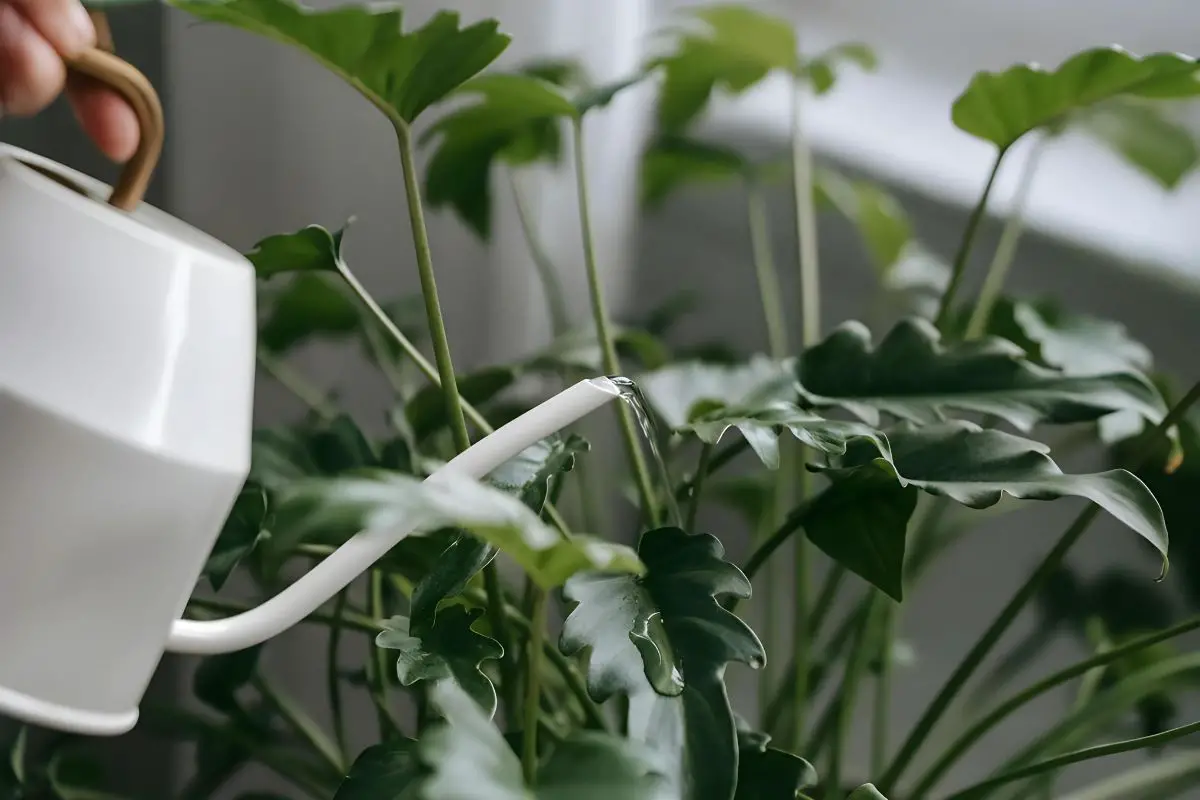
- Water your plant only when the soil is dry halfway through. Avoid overhead watering to keep the leaf surface dry and inhibit fungal growth. Pour the water directly into the soil using a watering can with a narrow spout.
Note: Many sources recommend a DIY spray with baking soda, dish soap, and water to deal with powdery mildew. However, I don’t recommend this treatment for jade plants.
Baking soda is a salt that can raise soil pH. It can also build up in the soil and eventually dehydrate the roots or leave white residues on the leaf surface once it dries.
On the other hand, high concentrations of dish soap can degrade the waxy coating on jade leaves, making them more vulnerable to sun damage and dehydration.
6. Sunburn
Jade plants like a few hours of direct sunlight daily. However, too much can bleach the leaves, causing them to turn white.
Here’s how intense sunlight affects jade plants:
- Intense sunlight can turn the jade leaf tips red due to anthocyanin activation. The red pigment accumulates along the leaf edges to absorb the excess sunlight energy and protect the plant from stress.
- Prolonged exposure to intense sunlight, high temperatures, and insufficient moisture can increase the risk of sun stress and sunburn. The leaves may turn yellow, brown, or black (leaf scorch).
- In some cases, the leaves may appear bleached. The burnt spot will appear white to light brown, thin, and wrinkly.
- Premature leaf drop occurs on sunburnt foliage.
You may fix the problem with the following tips:
- Prune the damaged leaves with sterile shears. You can also pinch them with clean fingernails. You can spray the tool or your nails with rubbing alcohol between cuts.
- Move the plant several feet (+0.6 m) away from a sunny window to an area with bright indirect light. Alternatively, you can also hang sheer curtains to filter the light if it’s too hot and bright.
- Water the plant as soon as the potting soil is dry halfway down. A well-hydrated plant has a better tolerance to sun or heat stress.
- Rotate the pot by 90-180° every 10-14 days or every time you water your plant.
Preventative Measures
White spots are easy to avoid with adequate care and optimal environmental conditions.
Here are some essential things to remember:
- Water Quality: Use filtered or distilled water to avoid mineral buildup.
- Watering Frequency: Water the plant when the top half of the potting soil is dry (⅔ during the cold season). Stop adding water when the excess starts dripping from the drainage holes.
- Humidity Management: Avoid humidity levels over 50%, which can encourage fungal growth. Switch on dehumidifiers as needed and keep your plant away from humid areas like the kitchen or bathroom.
- Pruning and Maintenance: Prune less than a third of the foliage in spring to rejuvenate the plant and ensure good air circulation. Regular removal of plant debris from the soil can also prevent pest and pathogen populations from increasing to critical levels.
- Pest Monitoring and Control: Check your plant every 2 weeks to catch early signs of stress. Look for pests, and treat the plant promptly if found. Isolate severely infested plants to control the spread.
- Lighting Conditions: Give mature jade plants (over 5 years old) 4 hours of direct morning sunlight from an eastern window. If you have southern or western windows, keep your plant 4-8 feet (1.2-2.4 m) away for bright indirect light. Younger plants also do best in bright, filtered light.
- Regular Cleaning: Wipe the leaves with a clean, damp cloth to remove dust and water stains.
- Fertilizer: Feed your plant a balanced 10-10-10 fertilizer only during the growing season. You can apply a thin layer of granular fertilizers once in spring (and/or summer) and regularly water the plant. Alternatively, you can dilute a liquid fertilizer to half-strength and incorporate it into your regular watering once every 2 months from spring to mid-summer.
Final Thoughts
Jade plants typically get by with minimal care because of their resilience and drought tolerance. However, this makes it easy to overlook stress signals like white spots due to pests, diseases, intense sunlight, improper watering, and over-fertilization.
Routine cleaning can prevent dust and salt buildup on the leaves. Proper water quality, a solid watering routine, and regular environmental assessment can also effectively prevent white spots on jade leaves.
Review the symptoms discussed in this article to help you evaluate your plant’s condition. Refer to the tips on how to identify and fix the underlying problems.
Please leave a comment with any questions or insights into the topic. For more tips on plant care, explore the other articles on my site.