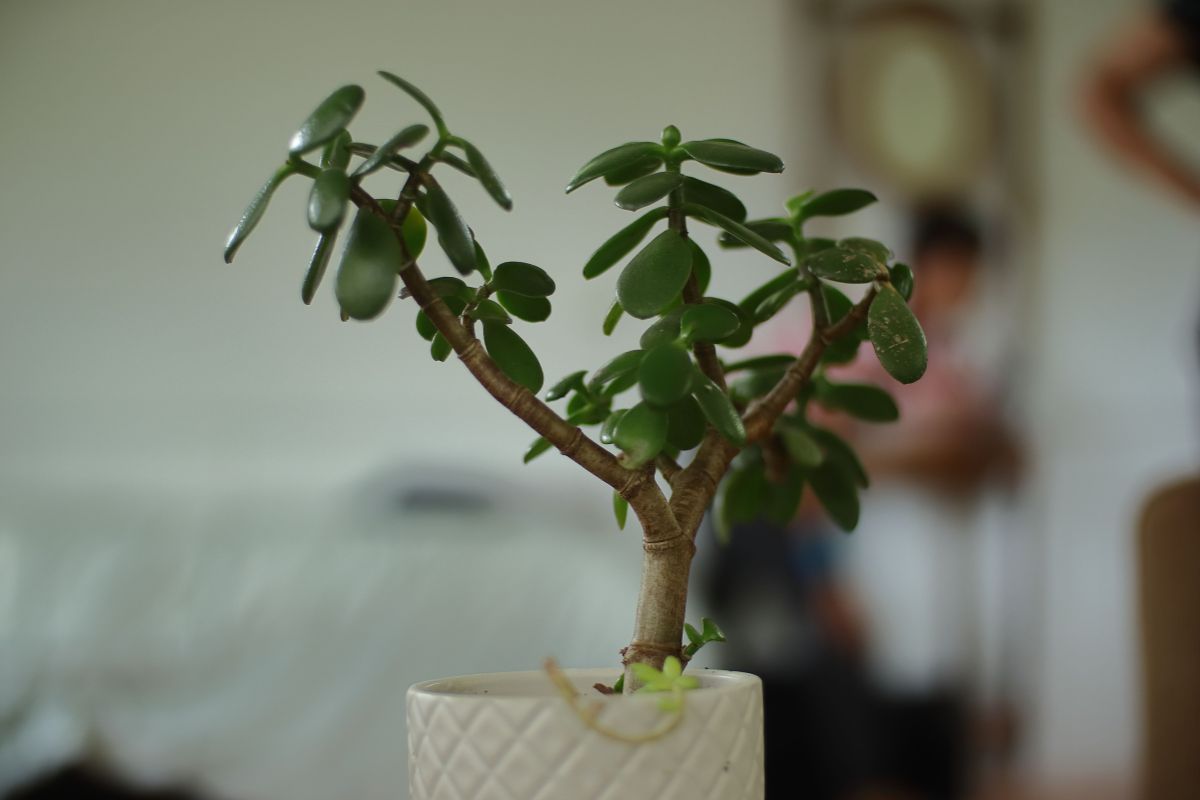

Why Your Jade Plant is Stunted: Symptoms, Causes, and Fixes
Jade plants are naturally slow-growing evergreen succulents that are more active during the warm seasons. If your jade plant isn’t putting out new growth in spring and summer, it might be due to stress.
A jade plant may be stunted due to the following:
- Inadequate light
- Underwatering
- Overwatering
- Improper potting
- Nutrient deficiency
- Temperature stress
- Pest infestation
This article will help you distinguish between a jade plant’s naturally slow growth and stress-induced stunting. I’ll also discuss the common causes and share practical tips on fixing the problem.

Natural Growth Patterns of Jade Plants
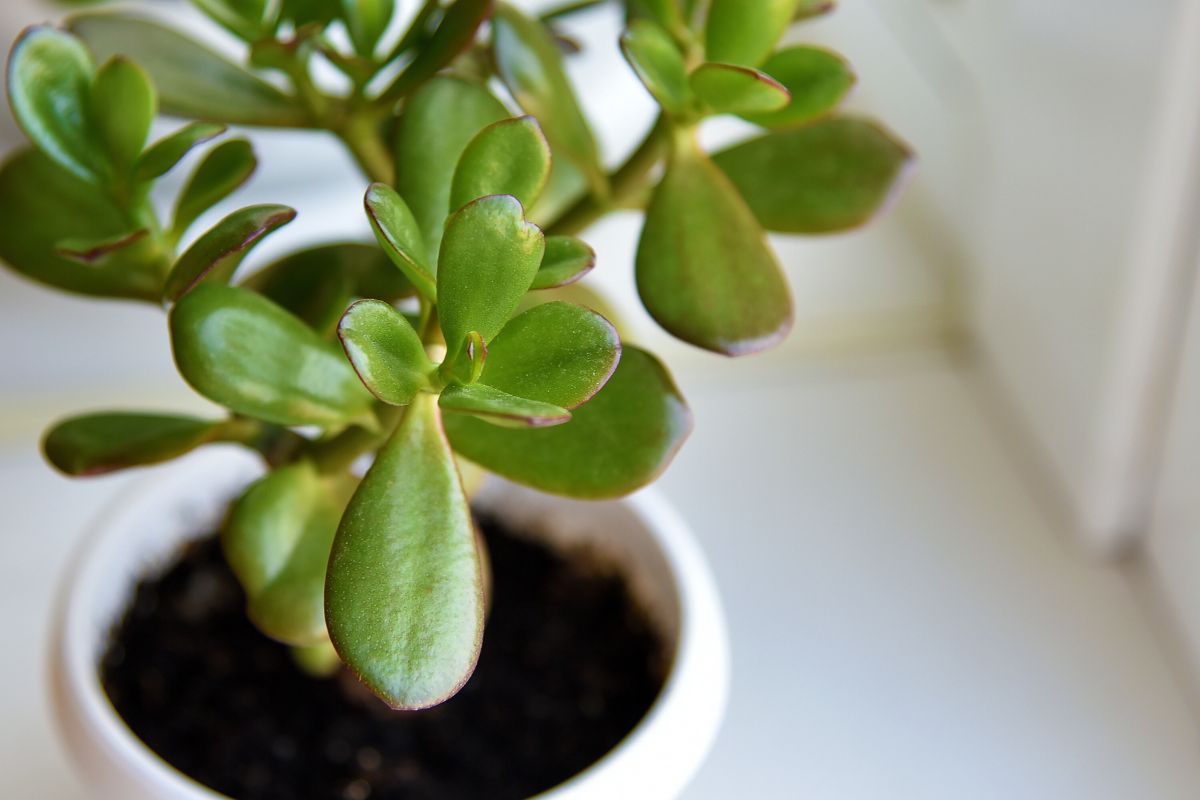
Jade plants (Crassula ovata) have a slow to moderate growth rate.
They tend to noticeably increase in height during the first 5-10 years. Vertical growth gradually slows down as the plant ages and reaches its ultimate height of up to 6 feet (1.8 m) indoors.
With adequate care, jade plants grown from stem or leaf cuttings typically exhibit the following growth behavior:
- The young stems and branches are green and fleshy, the leaves are less than an inch (2.5 cm) long and wide.
- As the main stem/trunk thickens and becomes woody, it starts to branch out more. The leaves become thicker and larger.
- The trunk of a jade plant older than 10 years can grow up to 6 inches (15.0 cm) thick and has grayish-brown bark. The older branches also become woody and the leaves reach up to 4 inches (10.0 cm) long and about 1.5 inches (3.8 cm) wide.
The rate at which a jade plant reaches these developmental stages can vary depending on the following factors that influence its growth:
- Amount of sunlight: On average, jade plants that receive direct sunlight daily grow 4-6 inches (10-15 cm) with three or more new branches per year (mostly in spring and summer). Those in moderate light conditions tend to grow more slowly, with about 1-4 inches (2.5-10 cm) annually.
- Watering frequency: Proper hydration can facilitate cell expansion and growth. However, too much can drown the roots and cause them to rot.
- Transition between warm and cool seasons: Jade plants grow actively in spring and summer. They don’t enter dormancy in the winter. Instead, the cooler fall and winter temperatures (along with shorter daylight hours and infrequent watering) prompt them to grow more slowly to preserve energy and potentially bloom in late winter.
- Regular fertilization: Applying fertilizers during the growing season can encourage the plant to grow faster.
- Pot size: Young plants require regular repotting (every 1-2 years) because being rootbound in a small pot can inhibit growth. In contrast, oversized pots contain excess soil that can hold extra moisture and increase the risk of overwatering and root rot.
Jade plants typically mature in 5 years or so and start producing flowers when properly cared for. In East and Southeast Asian cultures, the plant’s maturity is measured based on the first appearance of flowers. A blooming jade plant is also associated with good fortune and prosperity.
In reality, a jade plant can be over 10 years old and never produce flowers due to suboptimal conditions indoors that stunt growth and inhibit flowering.
Diagnosing and distinguishing between stunted growth and the plant’s naturally slow growth is important. This helps you identify the underlying cause and apply the appropriate solutions.
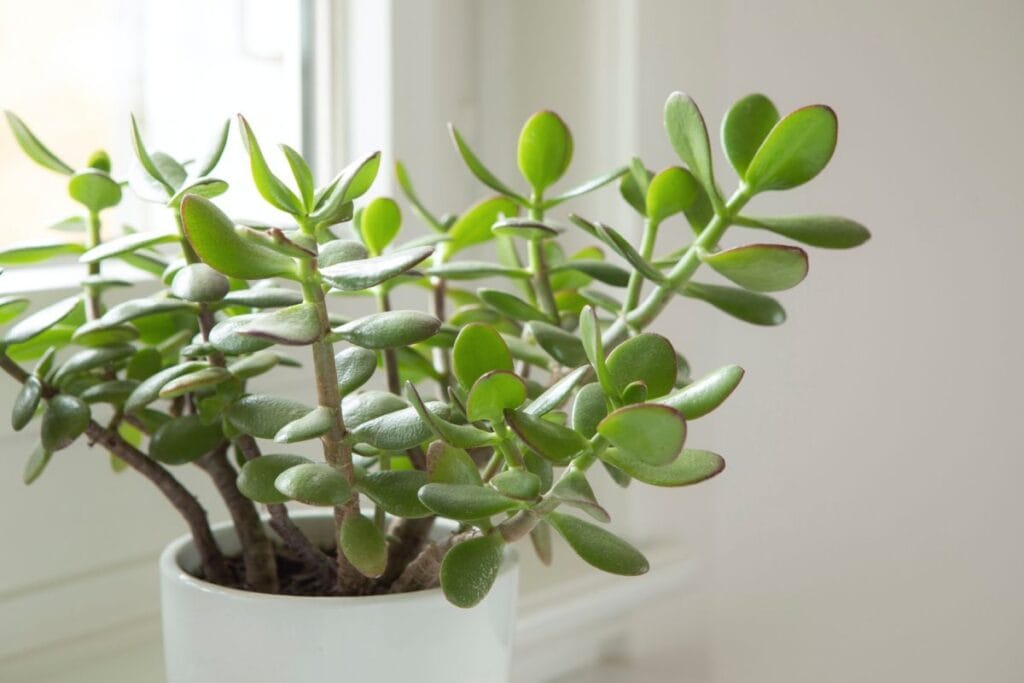
Symptoms of Stunted Growth
A stunted jade plant may exhibit the following symptoms:
- Noticeably slower vertical growth (less than 2 inches or 5 cm) per year
- Few to no new branches, even during the growing season
- New leaves are small, deformed, or curled
Stunted growth can indicate a minor or severe problem with your jade plant.
The following signs may accompany it:
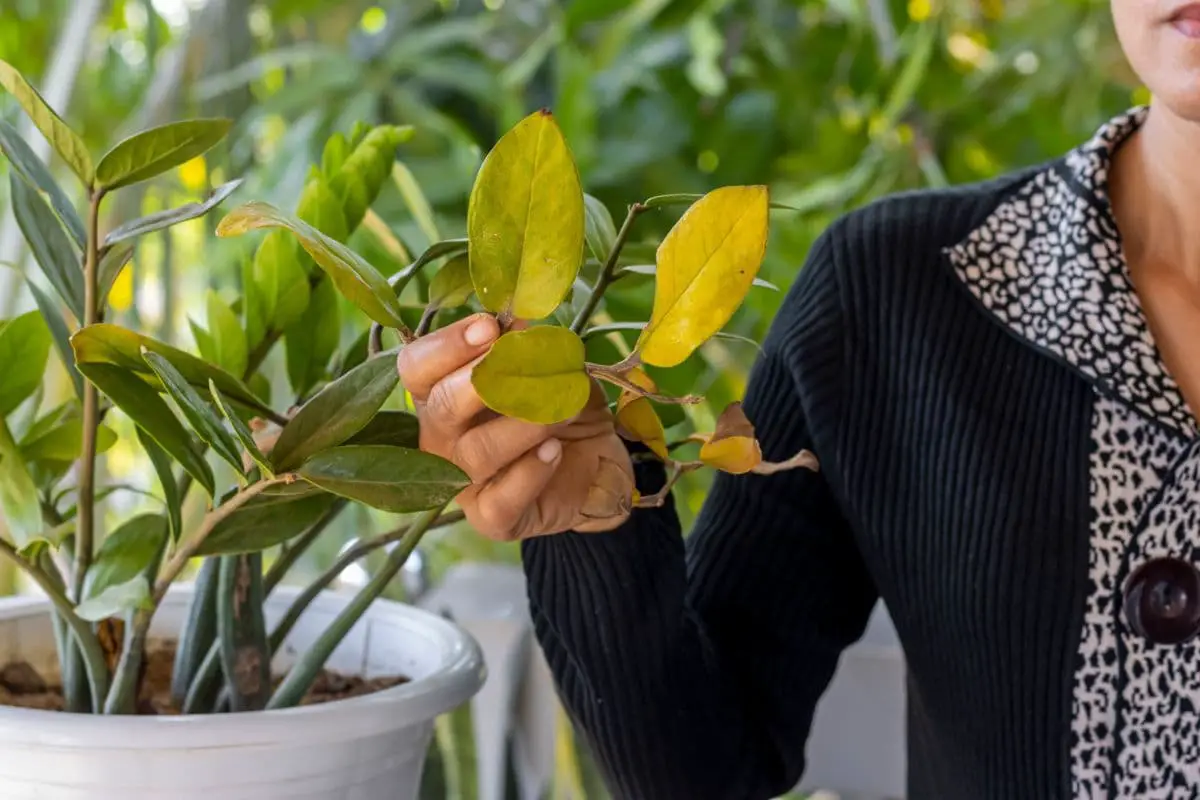
- Yellowing leaves
- Drooping or leaning stems
- Sparse leaves
- Brown or black spots on leaves
- Wrinkled leaves
- Bone-dry soil
- Wilted leaves
- Crisp, brown leaves
- Soggy soil
- Black, mushy, and smelly roots
- Mushy leaves and stems
Take note of your plant’s additional symptoms, so you can identify the potential cause, which I’ll discuss further below.
Common Causes and Fixes
Below are the common reasons jade plants have stunted growth:
1. Inadequate Light
Mature jade plants receive full sun in the wild and reach tree-like sizes of up to 10 feet (3 m) tall. On the other hand, younger jades are often shaded by taller neighboring plants. This protects the fleshy stems and underdeveloped leaves from losing moisture too quickly.
Without enough light, they will grow more slowly due to lower photosynthetic and metabolic activities.
You can confirm that insufficient light is the cause of stunted growth with the following additional signs:
- The stems are leaning toward the light source (i.e., windows, doors, or light bulbs).
- There are sparse leaves on the side of the plant facing the wall or away from light.
- The leaves become a solid green without any hint of red along the edges.
In worse cases, the stems may become leggy trying to reach for the light. As the stems get longer, they become droopy and the plant loses its aesthetic appeal.
You can encourage your indoor jade plant to grow more quickly with the following tips:
- Give mature jade plants at least 4 hours of direct sunlight—preferably morning sun from an unobstructed eastern window—for optimum growth and health.
- Younger plants will do well with 8 hours of bright indirect light daily. A good rule of thumb is to wait 3-4 years after leaf or stem propagation before exposing your plant to direct sunlight.
- Rotate the pot by 90-180° every time you water your plant to encourage balanced and bushy growth.
- If your indoor garden doesn’t receive sufficient natural light, you can keep your plant a foot (30 cm) below a full-spectrum grow light for 12-16 hours daily. Younger plants will thrive with a 10-12-hour exposure.
2. Underwatering
Jade plants are drought-tolerant and can last several weeks without water. However, frequent underwatering and drought stress can inhibit growth because plant cells require water to grow.
Adequate moisture is also necessary to deliver nutrients to all parts of the plant and facilitate cellular division and plant growth.
Underwatered jade plants may exhibit the following symptoms:
- Wrinkled leaves
- Yellowing leaves
- Droopy or wilting stems
- Brown and crisp leaf edges
- Leaf drop
You can help your plant recover from underwatering with the following tips:
- Soak the soil in a tub of water until it’s evenly saturated.
- Let the excess water drip from the drainage holes.
- Check the soil moisture using a wooden chopstick 7-10 days after watering. You can also use the finger test for shallow pots or a moisture meter for larger pots.
- Water the plant as soon as the soil is dry halfway through.
Avoid letting the soil become bone-dry between watering sessions. Some succulent mixes may contain sand, whereas standard potting soil contains peat moss. These potting materials can become severely hydrophobic when allowed to dry out completely.
It will worsen the plant’s dehydration and stunted growth because hydrophobic soil will repel water, preventing it from rehydrating the roots. You can fix the problem by repotting the plant in fresher soil with better moisture retention.
Here are the steps:
- Carefully unpot the plant by loosening the rootball from the pot edges using a spatula or flat knife.
- Soak the rootball in water for around 10 minutes to make detaching the old soil from the roots easier.
- Break apart the soil using your fingers or a wooden chopstick.
- Prune desiccated roots (i.e., brown, crisp, and easily fall off) using sterile scissors. Healthy growing roots have distinct white tips.
- Clean the blades with rubbing alcohol between cuts.
- Rinse the remaining soil off the roots with gentle running water.
- Repot the plant in a fresh soil mix. You can use a high-quality succulent mix or a homemade compost-perlite mix. Pro tip: I prefer using compost-perlite mix because it’s easier to rewet and more resistant to becoming hydrophobic. It also contains a gentle dose of nutrients and has excellent drainage.
- Use a similar-sized pot with drainage holes.
- Water the soil deeply until it’s evenly saturated.
- If your plant is growing in direct sunlight, check the soil moisture more often (every 7-10 days) to prevent the recurrence of the problem.
3. Overwatering
Soggy soil from overwatering or poor drainage can suffocate and damage a jade plant’s fibrous roots.
In the early stages of overwatering, jade plants may exhibit the following signs:
- Guttation
- Yellowing leaves
- Mushy leaves
- Leaf drop
Constantly wet soil will encourage existing soil pathogens to grow and cause root rot. As the roots decay, they can no longer send moisture and nutrients to the shoots, leading to stunted growth.
Root rot is characterized by black, mushy, and smelly roots. If it spreads upward, some sections of the trunk may also rot and turn mushy. Before this happens, you must fix the problem to save your plant.
Here’s how:
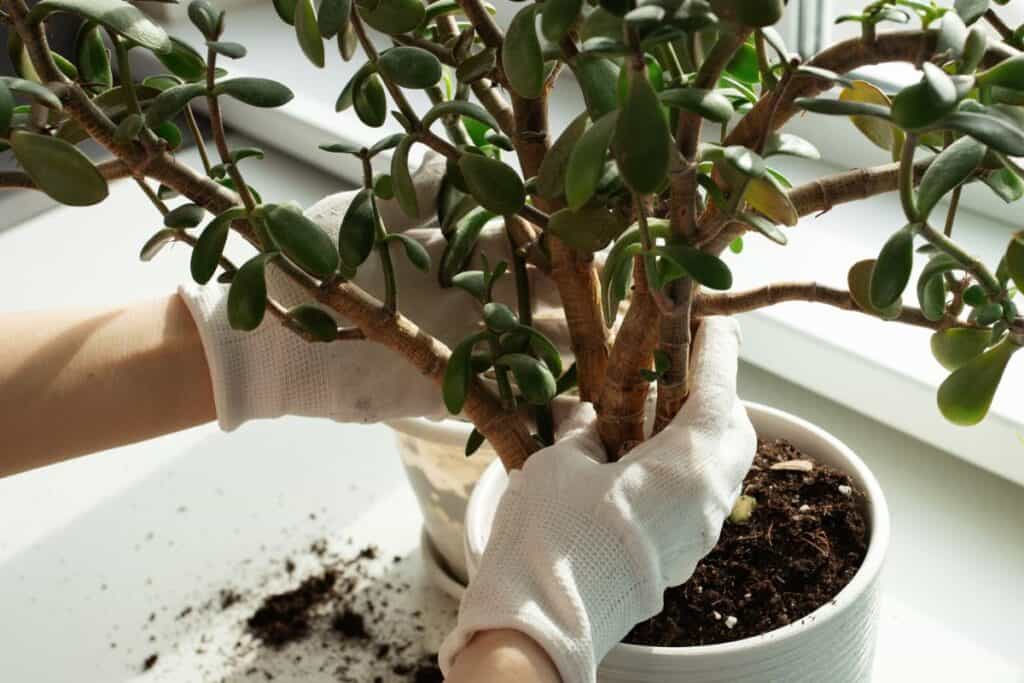
- Carefully unpot the plant while keeping the rootball intact. You can scrape the edges of the pot with a flat knife to release the rootball.
- Loosen the soil around the fragile roots using a wooden chopstick and detach it with your gloved hands.
- Inspect the roots for signs of rot. Healthy roots have white growing tips, while damaged roots are brown or black and mushy.
- Cut all the damaged roots using a sterile pair of scissors. Sterilize the scissors with rubbing alcohol between cuts.
- Rinse the remaining soil off the roots with gentle running water.
- Soak the roots in 1% hydrogen peroxide solution for 5-10 minutes to eliminate the remaining rot-causing pathogens.
- Leave the plant unpotted for 5-7 days in a cool room (70 °F or 21 °C) with moderate humidity (50%).
- Repot the plant in a sterile pot with drainage holes filled with fresh and moist succulent mix. You can also use a compost-perlite mix.
- Place the pot in brigh, indirect light until you see signs of growth, such as new leaf buds or offshoots.
- Wait one week before watering the soil deeply and evenly. Allow the soil to dry out halfway down or ⅔ deep between waterings.
4. Improper Potting
Incorrect pot size can also stunt a jade plant’s growth.
- Undersized pots: It’s common to plant jade plants in shallow containers like a bonsai dish to keep them compact intentionally. However, choosing an appropriately sized pot is crucial if you want your plant to grow faster. Otherwise, the roots become potbound and start poking out of the soil surface or drainage holes. The overgrown roots may also displace the soil, so water may drain quickly without rehydrating the plant.
- Oversized pots: Jade plants have a shallow root system, so they don’t require too deep pots. They also grow slowly, so placing them in large pots with too much excess soil can increase the risk of root rot and stunted growth.
In addition, pots with poor drainage can aggravate the effects of overwatering. You must repot the plant in an appropriate container with fresh soil mix to encourage it to grow.
Here are some tips for choosing the right pot for jade plants:
- Prepare a pot that’s 2 inches (5 cm) wider and deeper than the rootball. There should be enough space above to bury the roots about an inch (2.5 cm) deep and help keep the top-heavy plant upright.
- Ensure the pot has drainage holes to drain the excess moisture and prevent waterlogging.
- Choose a breathable pot like an unglazed terracotta to allow air circulation around the roots and wick away excess moisture through the walls.
- If you prefer to use a glazed container for aesthetics, ensure it has adequate drainage holes. You must also water your plant carefully. Water it deeply and wait until the soil is completely dry before the next watering session.
- Use a porous, well-draining soil mix to avoid waterlogging.
5. Nutrient Deficiency
Potting soil may lose nutrients from plant consumption or leaching from regular watering over time. Although jade plants don’t require frequent fertilization, they will likely show symptoms when kept in nutrient-depleted soil for a long time.
Some symptoms to watch out for include:
- Yellowing leaves (lack of nitrogen, iron, or magnesium)
- Lack of flowers (phosphorus deficiency)
- Lack of new growth
- New leaves are small or deformed
- Weak stems
Soil testing for nutrient concentrations can be impractical for potted houseplants. At-home soil test kits typically check soil pH and NPK levels but don’t accurately measure how much of these nutrients are in the forms accessible to plants.
You can confirm your jade plant is nutrient deficient by evaluating when you last repotted or fertilized it.
High-quality succulent or homemade mixes with fresh compost should nourish your plant for 1-2 years after repotting.
If your plant is showing signs of stunted growth due to nutrient deficiency, feed it with a balanced (10-10-10) liquid or soluble fertilizer in spring or summer.
Here are the steps:
- Dilute the fertilizer to half the recommended strength and mix it in the watering can.
- Pour the fertilizer solution directly into the soil, saturating the entire root zone.
- Observe your plant’s response for 1-2 weeks. Liquid fertilizers are fast-acting and the yellowing leaves should gradually revert to green.
- Reapply the fertilizer every 2 weeks or every time you water your plant.
- Increase the interval to once a month when most of the leaves regain their green color. Note that some bottom leaves naturally turn yellow and fall off as they age, so they’re unlikely to turn green again.
- Stop fertilizing the plant 2-4 weeks before the first fall frost.
6. Temperature Stress
Extreme temperatures or drastic fluctuations (over 15 °F or 8 °C) can stress jade plants and inhibit growth in the following ways:
Heat Stress
Prolonged exposure to temperatures above 90 °F (32 °C) can dehydrate jade plants more quickly. The low moisture in plant cells can inhibit metabolic activities and stunt growth.
Young jade plants are more vulnerable to heat stress because their cells lack secondary cell walls, which help maintain rigidity despite dehydration.
As a result, the cells collapse and the plant exhibits the following symptoms:
- Wrinkled leaves
- Wilting
- Drooping stems
- Browning or yellowing leaves from dehydration
You can fix heat stress with the following tips:
- Move the plant out of direct sunlight into an area that receives 8 hours of bright indirect light daily. It can be about 4-8 feet (1.2-2.4 m) from a sunny window. If you have a southern window, you can filter the light at midday using sheer curtains.
- Keep your plant away from heating vents.
- Maintain temperatures around 70 °F (21 °C).
- Water the plant as soon as the top half or 2/3 of the pot is dry to prevent dehydration and promote growth.
- Boost the humidity around your plants using a humidifier or by placing the pots over a pebbled tray with water. Grouping plants with similar environmental requirements can also help create a more humid microclimate in your indoor garden space.
- Prune unwanted offshoots and intersecting branches to promote good airflow within the foliage.
Chilling Injury or Cold Shock
Jade plants are not accustomed to temperatures below 50 °F (10 °C). Prolonged exposure temperature drops below 40 °F (4 °C) can injure the cells and cause stunted growth.
On the other hand, even brief and sudden exposures to freezing temperatures below 32 °F (0 °C) from cold drafts or open windows can result in freezing and thawing of moisture in plant cells and kill a jade plant.
A jade plant’s leaf functions both for water storage and photosynthesis.
Chilling injury or cold shock can negatively affect the leaves’ functions and often result in severe damage, including the following:
- Droopy leaves and stems
- Mushy stems
- Leaf drop
You can check and try to save your plant with these steps:
- Look for any remaining firm section on the stem.
- Cut off ½-1 inch (1.3-2.5 cm) below the mushy top using a sharp, sterile knife.
- Brush the stump with cinnamon powder to prevent infection.
- Keep your plant in a room with moderate temperatures around 65-75 °F (18-24 °C). Ensure nighttime temperatures don’t fall below 50 °F (10 °C) in the fall and winter or 60 °F (15.6 °C) in spring and summer. Keep it away from open windows or cold drafts.
Even when the plant survives, new growth may become distorted. It can take a year or so of proper care and environmental conditions before the plant starts producing healthy growth.
7. Pest Infestation
Common pests that can cause stunted growth in jade plants include sap-feeding pests, such as:
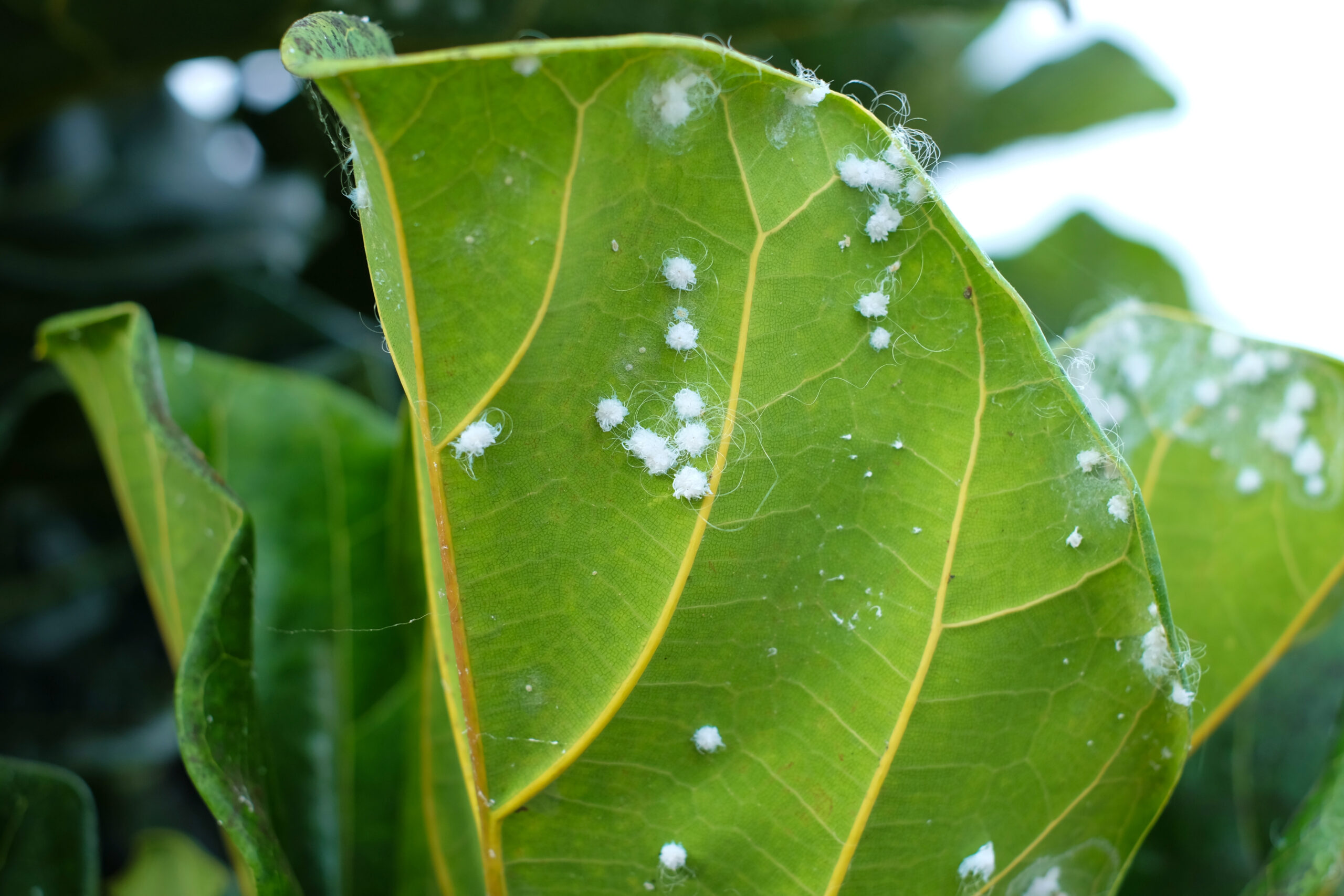
- Mealybugs: Active crawlers that usually hide underneath leaves. They have a waxy covering that looks like white fluff.
- Scale insects: Immobile insects that firmly attach to fleshy leaves or stems. They look like tiny brown bumps.
Severe pest infestations can cause the following symptoms in jade plants:
- Honeydew: This is a sticky, sugary liquid excreted by sap-feeding insects.
- Sooty mold: A type of fungi that is drawn to honeydew. As they grow, they form black mycelia that take on the shape of the honeydew droplet, giving them the characteristic sooty appearance. Although they don’t directly damage plant tissue, they can spread over the leaf surface, block sunlight, and inhibit photosynthesis.
- Leaf drop: If the pests form clusters around a fleshy branch or leaf, they may cause the entire branch or leaf to fall off.
- Stunted growth: Small or young plants have underdeveloped roots and leaves, so they can’t absorb or store moisture as efficiently as mature plants. Large pest populations can interrupt nutrient transport, resulting in a lack of new growth or deformed leaves.
Treat pest infestations with these methods:
- Manually remove the pests using a cotton swab with rubbing alcohol. Avoid using too much alcohol as it can damage the waxy coating on the leaves. Minimize contact between the alcohol and the leaves. You can also scrape stubborn scale insects using tweezers or a blunt tool and drop them in soapy water.
- Spray the plant with insecticidal soap or neem oil solution once a week. You must move the plant out of direct sunlight for up to 6 weeks while using this treatment to prevent sun damage.
- Wipe honeydew and sooty mold off the leaves using a clean cloth moistened with soapy water.
- Prune severely affected leaves that have turned yellow.
- Treat all the affected houseplants in your indoor garden and isolate those that are severely infested.
Preventive Measures for Healthy Jade Plants
You can prevent stunted growth or diagnose common jade plant problems early with the following tips:
Regular Monitoring and Maintenance
Pro tip: You don’t have to check your plant daily to keep it healthy. Jade plants are resilient and generally easy to care for. Inspect your plant every 2 weeks or every time you water it.
You can perform the additional maintenance tips below while inspecting your plant:
- Clear the soil of plant debris, such as fallen leaves, to remove hiding places for pests.
- Check the leaves for signs of pests or discoloration (i.e., yellowing, browning, or black spots).
- Wipe the leaves with a moist and clean cloth to remove dust.
- Give your plant a quarter or a half turn for even light exposure and balanced growth.
Proper Care Routine
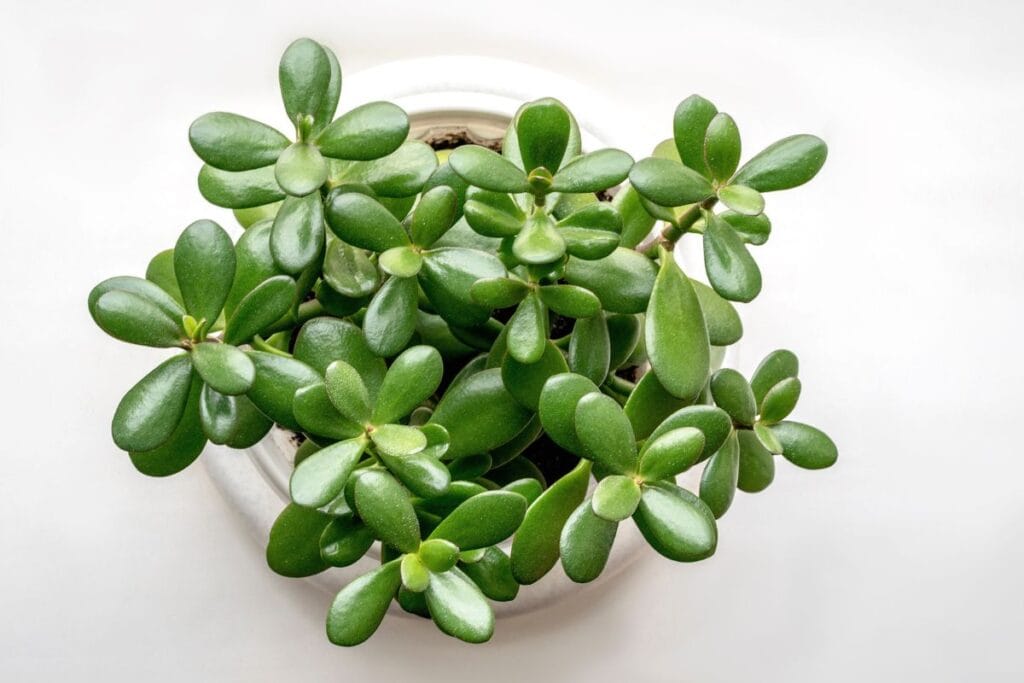
Remember the following spring and summer care tips for optimum jade plant health:
- Water: Water your plant as soon as the top half of the potting mix is dry. You can check the soil moisture using a wooden chopstick 10-14 days after watering your plant.
- Light: Give mature jade plants 4 hours of direct morning sunlight from an eastern window. If you have a southern window, filter the light at midday to prevent sunburn and leaf scorch. Younger plants will do well with 8 hours of bright indirect light daily until they’re 3-4 years old.
- Temperature: Maintain moderate temperatures between 65 and 75 °F (18 and 24 °C) during the day and around 60 °F (15.6 °C) at night. Keep your plant away from heating or cooling vents and drafty doors or windows.
- Humidity: Maintain 30-50% humidity around your plant for optimal transpiration rate.
- Fertilizer: Feed your plant a slow-release granular fertilizer in spring. A single application annually is usually enough for jade plants. However, your plant will grow faster with a second feeding in summer. You can also use a half-strength liquid fertilizer from spring to mid-summer.
- Pruning: Use sterile shears to remove discolored or damaged leaves in spring. You can also cut off unwanted offshoots and crisscrossing branches. Brush cinnamon powder on the wounds from cut stems and branches to prevent infection.
Seasonal Adjustments
Seasonal adjustments in fall and winter can also help your jade plant preserve energy and use it for more active growth during the warm seasons.
Here are some tips to adjust plant care routine and environmental conditions during the cold season:
- Water: Increase the interval between watering sessions by waiting until the top ⅔ of the soil is dry. This typically means the watering frequency can be reduced to once every 3-4 weeks.
- Light: You can reduce the light intensity for your jade plant in the fall by filtering the light with sheer curtains or moving the pot to an area with bright indirect light. However, if you want better chances to see jade flowers in late winter, you can gradually move the plant back to direct sunlight by mid-winter.
- Temperature: Maintain similar daytime temperatures (65-75 °F or 18-24 °C) around your plant, but you can let the nighttime temperatures drop to 50-55 °F (10-13 °C).
- Humidity: Moderate humidity levels between 30-50% are suitable all year round.
- Fertilizer: Avoid feeding your plant during the cold season.
Final Thoughts
Stunted growth is a common problem with jade plants but can be easily overlooked because of their naturally slow growth. Fortunately, it is often preceded or accompanied by other stress symptoms so you can diagnose and fix the problem.
Inspect your plant every 2 weeks or every time you water it to recognize the problem early. You can also prevent stunted growth by being consistent with your jade plant care routine and making seasonal adjustments as needed.
If you have more questions about jade plant care, feel free to reach out by leaving a comment. You can also share personal experiences with slow-growing jade plants and tips on encouraging more robust growth.