
8 Common Causes for Holes in ZZ Plant Leaves (and Fixes)
You can never go wrong with a ZZ plant if you want a vibrant touch of nature but have suboptimal environmental conditions for plant growth. This low-maintenance plant can maintain its vibrant green leaves even with low light and infrequent watering. If your ZZ leaves have holes, you might be wondering what could possibly hurt this resilient plant.
Here are the causes of holes in ZZ plant leaves:
- Environmental Stress
- Physical Damage
- Pest Infestation
- Overwatering
- Underwatering
- Over-fertilization of Nutrient Deficiencies
- Fungal Disease
- Chemical Burns
These issues can lead to more severe problems when left unattended, so it’s crucial to address them promptly. I’ll explore these causes in more detail and share some tips on how to fix and prevent them in the future.
ZZ Plant: An Overview
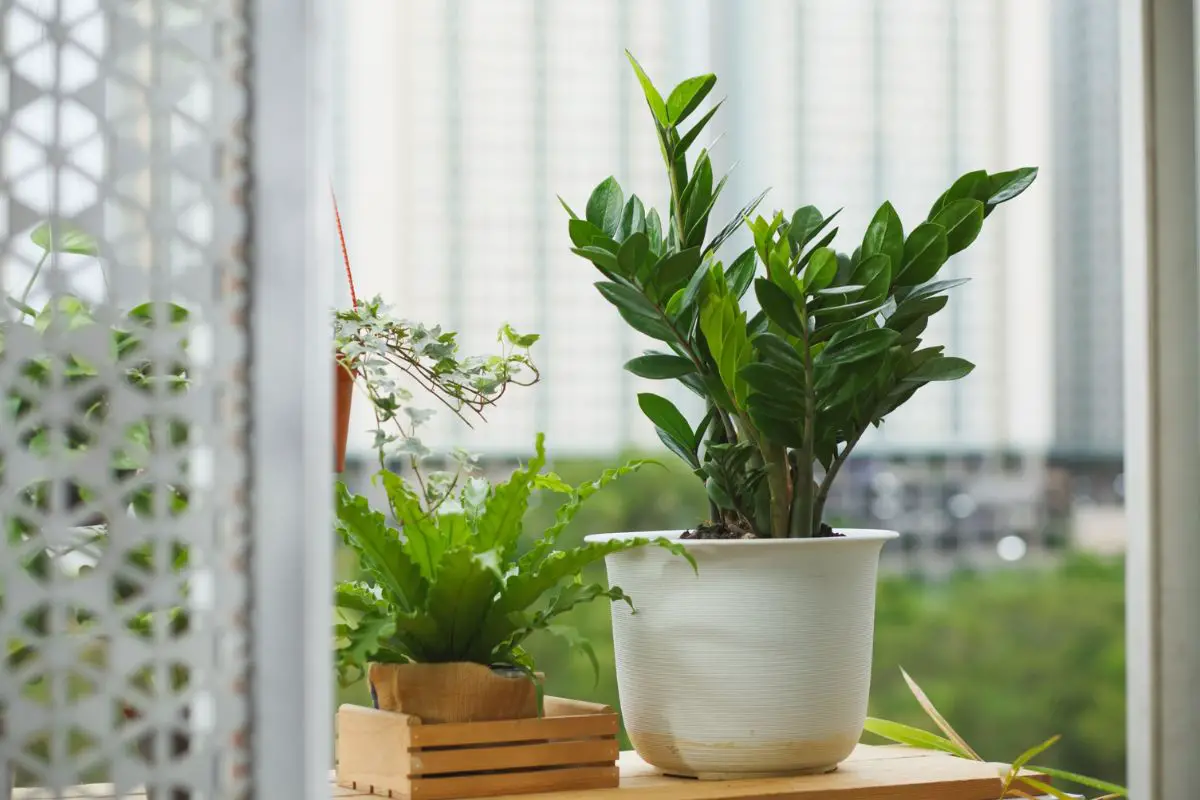
Scientifically known as Zamioculcas zamiifolia, the ZZ plant or Zanzibar gem is a perennial originating from Eastern and Southern Africa.
In their native environment, ZZ plants grow in shady forests with sandy soils and sparse rains, allowing them to adapt to filtered light and partially dry conditions indoors.
ZZ plants have thick roots, fleshy stems, and bulbous rhizomes that store extra moisture and nutrients and feed the plant during periods of drought. Moreover, the leaves are glossy with a waxy coating that helps slow down water loss from transpiration.
A ZZ plant’s anatomy and natural adaptation to suboptimal environmental conditions make it an excellent choice for an indoor garden and laidback gardeners.
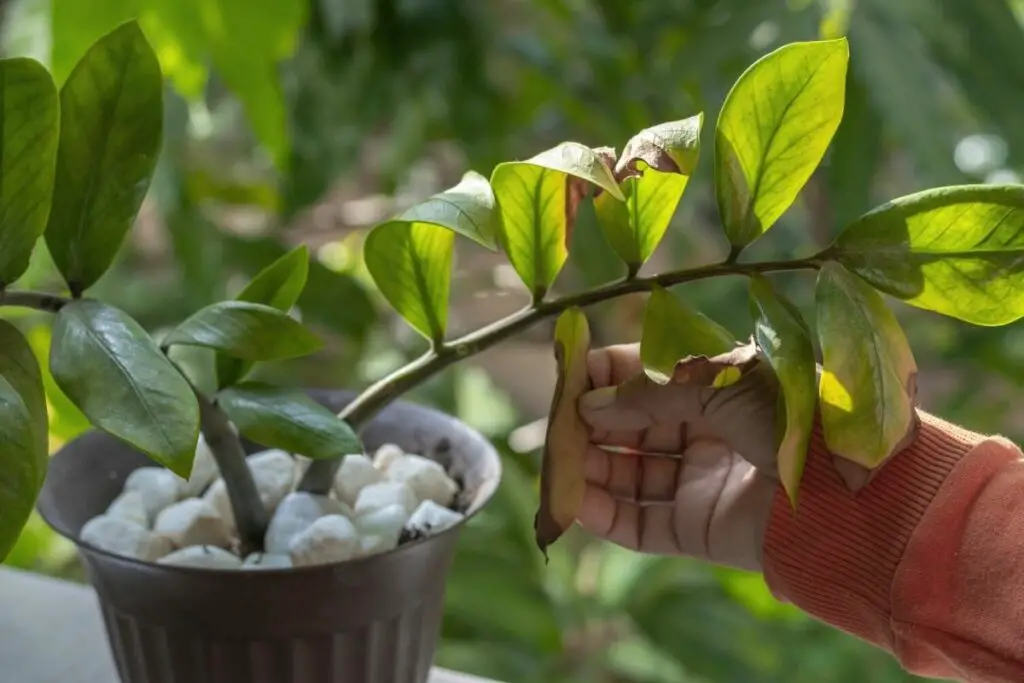
Nevertheless, ZZ plants are not immune to damage from constant neglect and poor environmental conditions. They usually show signs of stress through their leaves in the form of discoloration and/or leaf holes.
Common Signs and Associated Symptoms
Here are the common symptoms associated with holes in ZZ plant leaves:
- Crisp brown spots on the leaf surface that gradually fall off and leave a hole
- Irregular holes and tears
- Ragged holes or bite marks
- Tiny holes with a yellow halo
- Honeydew
- Sooty mold and ants
- Water-soaked lesions
- Wrinkled leaves
- Yellow or brown and crisp leaf edges
- Necrotic spots on the leaves
- Black or brown spots along the stems or stalks
Holes in ZZ leaves can indicate a minor or severe issue. It’s crucial to inspect your plant for associated symptoms to correctly identify and treat the underlying cause.
Common Causes & Fixes
Many gardeners may tell you it takes much neglect to kill a ZZ plant. I can attest to this because my dried-out, almost lifeless ZZ plant was able to bounce back even from rootless rhizomes.
Still, it can take a few years before your plant can grow to a mature size and regain its vibrant green hue. That’s why it’s important to diagnose the cause of leaf holes and fix the issue as soon as possible.
Here are the common causes:
1. Environmental Stress
ZZ plants can tolerate low light and infrequent watering. However, they’re not tolerant to long periods of bright, direct light and high temperatures (over 90 °F or 32 °C).
When exposed to such conditions, the waxy coating on the leaves deteriorates, and some sections turn brown and crisp. The sun’s heat can then burn a hole through the weakened leaf surface.
You can fix the problem with the following tips:
- Prune severely damaged leaves using sharp, sterile shears or scissors.
- Move your plant a few feet (0.6+ m) farther from the window, ensuring it receives at least 8 hours of bright indirect light throughout the day.
- Hang a sheer curtain to filter the light at midday, especially during the peak of summer when light intensity and air temperatures are at their highest.
- Keep the plant away from constantly running home appliances that can generate much heat and worsen the condition.
- Rotate your plant by 90-180° weekly or at watering to distribute the light evenly throughout the foliage.
Although the damaged leaf sections won’t heal after making the recommended adjustments, the new growth will be healthier.
2. Physical Damage
It’s rare for ZZ plant leaves to have holes. The most common sign of stress from environmental factors is leaf discoloration. So, if your plant has irregular holes or tears without discoloration, it could be due to physical damage from human activities or curious pets.
Keeping your plants in busy areas of your home can expose them to accidental cuts from passersby or playing kids.
Cats and dogs, on the other hand, naturally chew on plant leaves for play, out of curiosity, or as a self-medicating behavior. Regardless of the reason, this behavior can leave puncture wounds on the leaves.
Warning: ZZ plant leaves contain calcium oxalate, which can be toxic. When ingested, it can cause vomiting, diarrhea, and stomach pain. The sap of the leaves can also cause irritation and itchiness upon skin contact.
Here are some tips to fix the issue:
- Prune severely damaged leaves to preserve the plant’s energy as it grows new shoots with healthy leaves.
- Place your plant in a safe spot inaccessible to dogs or kids. Place them on wall shelves so they don’t easily get stepped on or bumped into. If you have cats that love to climb, you can place your ZZ plant in a separate room
3. Pest Infestation
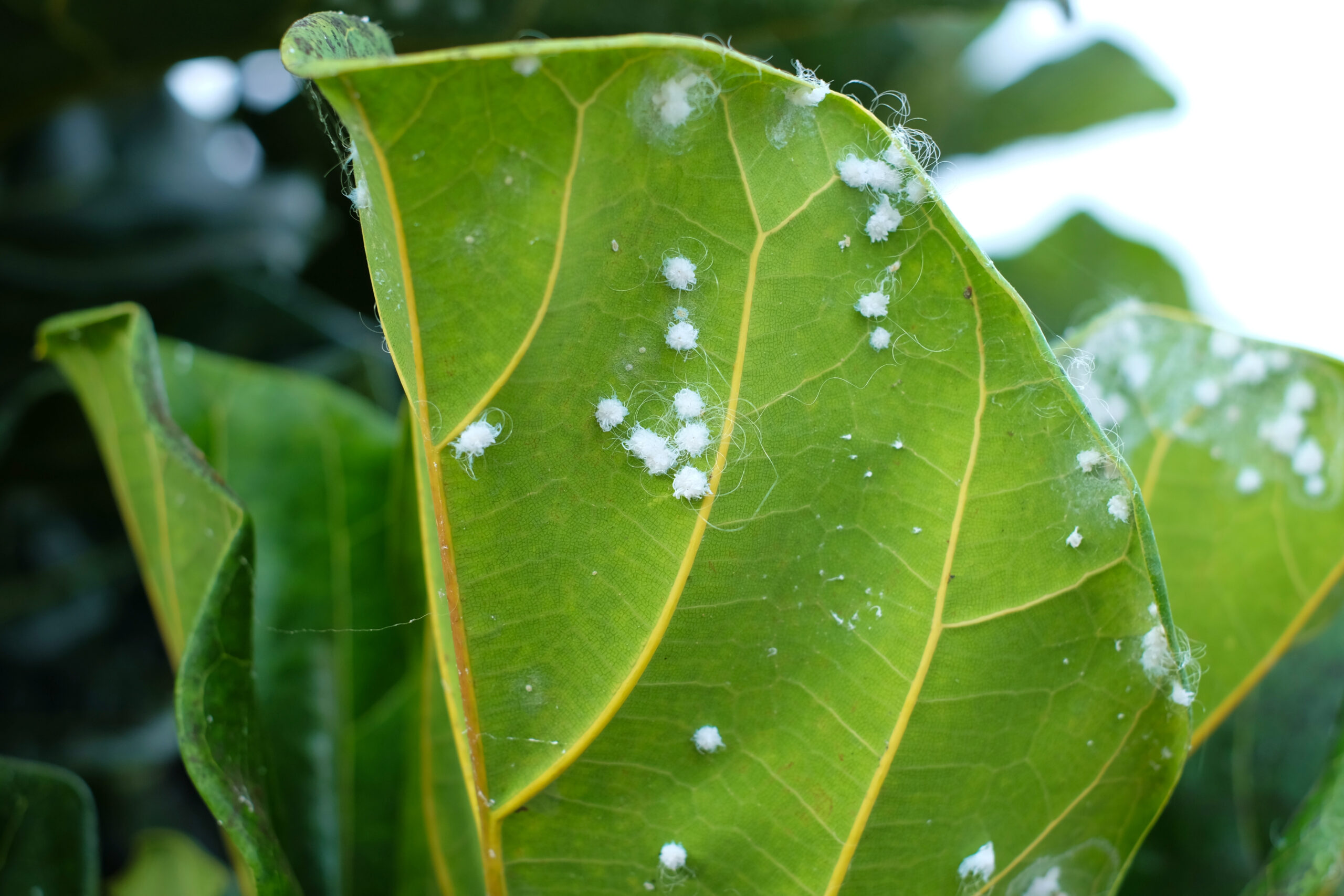
ZZ plants are resistant to pests when kept relatively dry. In moist conditions or when overwatered, their succulent stems and thick leaves become attractive to sap-sucking insects like aphids, mealybugs, and scale insects.
If you leave your ZZ plant in a shady spot outdoors, the leaf holes may be due to slugs or caterpillars.
A few pests won’t kill your ZZ plant and it can even survive moderate to high levels of infestations. However, large enough pest populations can cause physical damage to the leaves, including the following:
- Sugary, sticky liquid (honeydew)
- Yellow or brown spots
- Tiny holes with a yellow halo
- Sooty mold or ants drawn to honeydew
More importantly, pests can move from your ZZ plant to more vulnerable neighboring houseplants. It’s crucial to eliminate or manage pest populations to prevent the issue from getting out of control.
Refer to the table below to identify these pests:
| Pest | Appearance and Identification | Damage |
| Aphid | Translucent white, green, orange, or brown Hides under the leaf surface | They suck the sap out of plant leaves and leave behind honeydew—a colorless and sticky liquid. Honeydew then invites sooty mold fungi, which leaves black spots on the leaves. Although these fungi don’t directly damage the leaves, they can block sunlight and prevent photosynthesis. |
| Scale insect | Immobile, brown or black bumps Feeds along the stem or petioles | |
| Mealybug | Cottony white waxy covering Hides under the leaf surface | |
| Slug | Shell-less mollusc with two optical tentacles White, yellow, or brown Leaves behind a slimy trail Loves moisture and comes out at night | It feeds on plant leaves, creating ragged holes. |
| Caterpillar (or maggot) | Larval form of flying insects Can vary in color and size depending on species Feeds on leaf surface | It feeds on plant leaves, creating ragged holes. |
Here’s how you can fix this problem:
- Locate the pests from the undersides of the leaves or along the stems.
- Manually remove them using tweezers or cotton swabs with alcohol.
- Drop the pests in a cup of soapy water.
- Spray the plant with a neem oil solution at night once a week for 6-8 weeks until you can no longer see pests. You can use a coffee-based foliar spray when dealing with slugs.
- Continue spraying once every 2 weeks as a preventive measure.
4. Overwatering
ZZ plants are drought-tolerant and are more forgiving to underwatering than overwatering. The plant naturally absorbs and stores moisture within its stems and rhizomes.
When there’s excess moisture in the soil that doesn’t drain out of the pot’s holes, a ZZ plant sends it to the leaves and releases the droplets in a process called guttation.
However, if the plant is chronically overwatered, the excess moisture can burst on the leaves, creating holes or water-soaked lesions.
You can fix this issue with the following tips:
- Prune the damaged leaves with sterile shears or scissors.
- Reduce the watering frequency. Wait for the top half of the potting mix to dry out completely between watering sessions.
- Use a moisture meter to check soil moisture. Insert the probe 2/3 deep into the soil and water the plant only when the reading shows 2-3.
You may also need to check for signs of rot, such as black, smelly roots and mushy bulbs. If the plant has root rot, you need to repot it in fresh, well-draining soil and sterile pot.
5. Underwatering
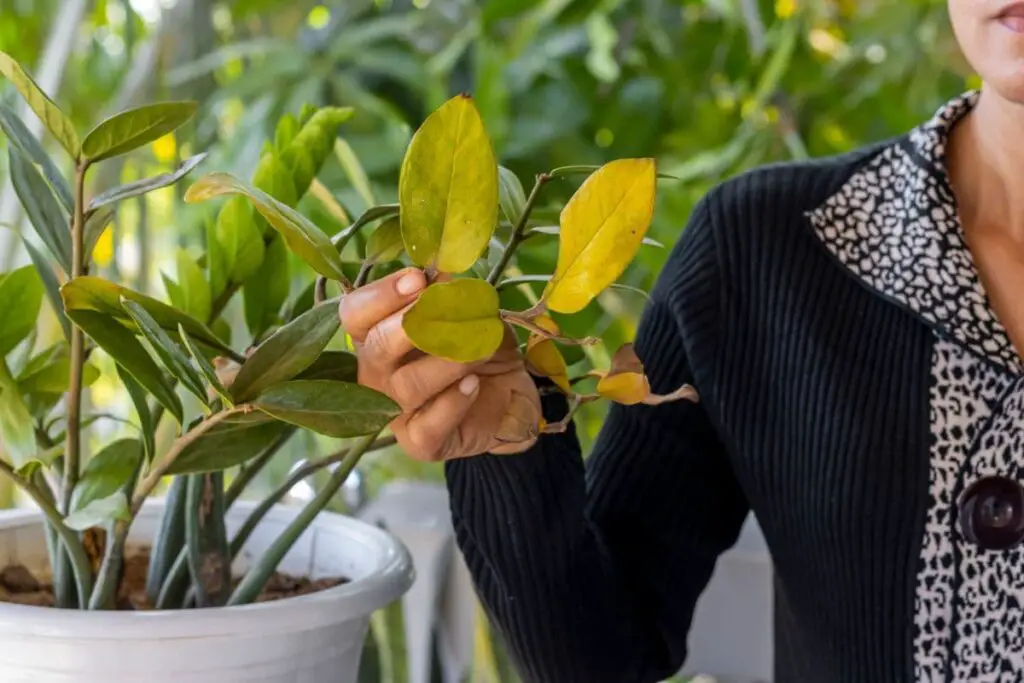
Although drought-tolerant, ZZ plants can also show signs of stress when they don’t receive water for extended periods (i.e., a month or so during the hot season).
Prolonged underwatering can lead to the following issues:
- Wrinkled leaves
- Yellow leaf edges that eventually turn brown and crisp
- The crisp sections may fall off and leave some tiny holes
You can help your plant recover with these adjustments:
- Mild Underwatering: Water the plant deeply until the excess moisture exits the drainage holes. If the soil has plenty of organic matter, a few sessions of deep watering can rejuvenate the wrinkly leaves.
- Severe Underwatering: Sandy soil may become hydrophobic, and your plant will remain thirsty, even after watering. You need to fix the soil first by soaking it in water with a wetting agent. Alternatively, you can repot the plant in fresh potting soil with better moisture retention.
6. Over-fertilization or Nutrient Deficiencies
ZZ plants don’t need frequent fertilization because they grow slowly and use the sugars stored in the rhizomes. When over-fertilized, the plant will show signs of fertilizer burn, such as:
- Yellowing leaves
- Leaves gradually turn brown and crisp
- Crisp spots may fall off and leave some holes
You can fix this issue by flushing the soil with clean, filtered water to leach the excess nutrients out of the pot. If you have a one-gallon (3.8 l) pot, you must pour 2 gallons (7.6 l) of water and let it drain completely.
This works if you have well-draining soil. If the soil has poor drainage, you must repot the plant in fresh soil with better drainage and avoid fertilizing it up to 1 year after repotting.
On the other hand, nitrogen, magnesium, iron, or manganese deficiency can lead to yellowing leaves and necrotic spots. These nutrients are required only in trace amounts, so they’re often ignored.
It may be impractical to conduct a soil test on potting soil to confirm the availability of micronutrients.
To fix the issue, you can try the following methods:
- Apply a balanced 10-10-10 NPK fertilizer with added micronutrients in spring (and early summer).
- Top up the soil with high-quality compost in spring because it likely contains iron, magnesium, and manganese in trace amounts.
7. Fungal Diseases
ZZ plants hardly experience diseases because they’re usually kept dry and indoors. Leaf holes due to fungal diseases are rare but not impossible.
In order for these diseases to take hold of your ZZ plant, one or a combination of the following conditions must be present:
- Use of contaminated soil: Other than being prone to compaction, garden soil shouldn’t be used in potted plants because it can contain soil pathogens like Fusarium and Phytophthora, which cause root rot and leaf blight.
- Application of unfinished or contaminated compost: Composting kills pathogens and weed seeds due to high temperatures generated within the first few weeks. However, homemade composters usually add new organic materials to the pile regularly. Adding contaminated plant matter in an almost-finished compost will not eliminate the pathogens. This can then affect your plants later.
- Severe case of overwatering: Constantly wet soil can activate existing soil pathogens, which can cause root rot.
- Growing infected seeds or seedlings indoors: In cold regions, it’s common to start seeds indoors. The plants may seem healthy at first because the cool temperatures keep Fusarium spores dormant. However, as the air temperatures warm up to over 75 °F (24 °C)—which ZZ plants like—the fungal spores can become activated and spread by air or through contaminated hands and tools.
Once the pathogens are activated, the infection can travel along the stems to the leaves, causing necrosis. As the leaves decay, you will notice black or brown spots and water-soaked lesions.
As discussed, this is extremely rare, but if it does happen, it is beyond fixing. The symptoms usually indicate that the infection has spread throughout your plant. The best thing to do is to dispose of the infected plant and potting mix properly.
If you want to reuse the pot in the future, you must sterilize it using a 10% bleach solution and rinse it with hot water.
8. Chemical Burns
Another rare but possible cause of holes in ZZ plant leaves is chemical burn. For instance, if you use bleach cleaners or soapy sprays on nearby windows or furniture, droplets may land on the ZZ plant’s waxy leaves.
These chemicals can degrade the leaves’ waxy coating, leaving behind unprotected spots vulnerable to dehydration.
No special action is necessary to fix the issue because the damage will likely be minimal. However, if you spill a large amount of a chemical on your plant, you must rinse the plant thoroughly.
Dunk the affected plant in clean, filtered water to dilute the chemical and allow the plant to dry in a well-ventilated room away from direct sunlight.
It’s also important to prevent the same issue from occurring to maintain the healthy appearance of your plant.
Regular Care Tips & Prevention Strategies
The above causes are avoidable with proper care routine and a few preventive measures, including the following:
- Keep your plant away from direct sunlight. Place it 4-8 feet (1.2-2.4 m) away from bright curtained windows. It’s also important to rotate the pot regularly.
- Maintain temperature between 65 and 85 °F (18 and 29 °C).
- Water the plant only when the upper half of the potting mix is dry.
- Inspect your plant at watering for signs of pests.
- Spray a neem oil solution to your ZZ plant if the other houseplants have pest infestations. Pests can travel to adjacent and unprotected plants.
- Use a well-draining substrate like a compost-perlite mix to avoid overwatering issues.
- Adjust your watering routine depending on the season. Check the soil moisture 10 days after watering during hot weather or 14 days during warm seasons.
- Fertilize your plant sparingly and use high-quality fertilizers/compost. Avoid fertilizing immediately after repotting in nutrient-rich soil. Fertilize only once or twice a year starting from the second year after repotting.
- Use pure, filtered water when wiping or dusting the leaves. Temporarily cover your plants with plastic when using chemical cleaners around them.
Final Thoughts
ZZ plants seldom have holes in the leaves because plant stress initially shows through leaf discoloration. The holes can indicate that the issue has progressed and you need to address it to save the plant promptly.
It’s important to correctly diagnose the cause to apply the appropriate fixes and prevent the issue from recurring.
ZZ plants typically don’t have high demands in their care routine and are sturdy enough to withstand suboptimal conditions. Still, it helps to be patient and consistent in your plant care to prevent problems, which can sometimes be time-consuming to fix.
If you have any questions about ZZ plant care, I’ll be glad to answer them through social media or email.